
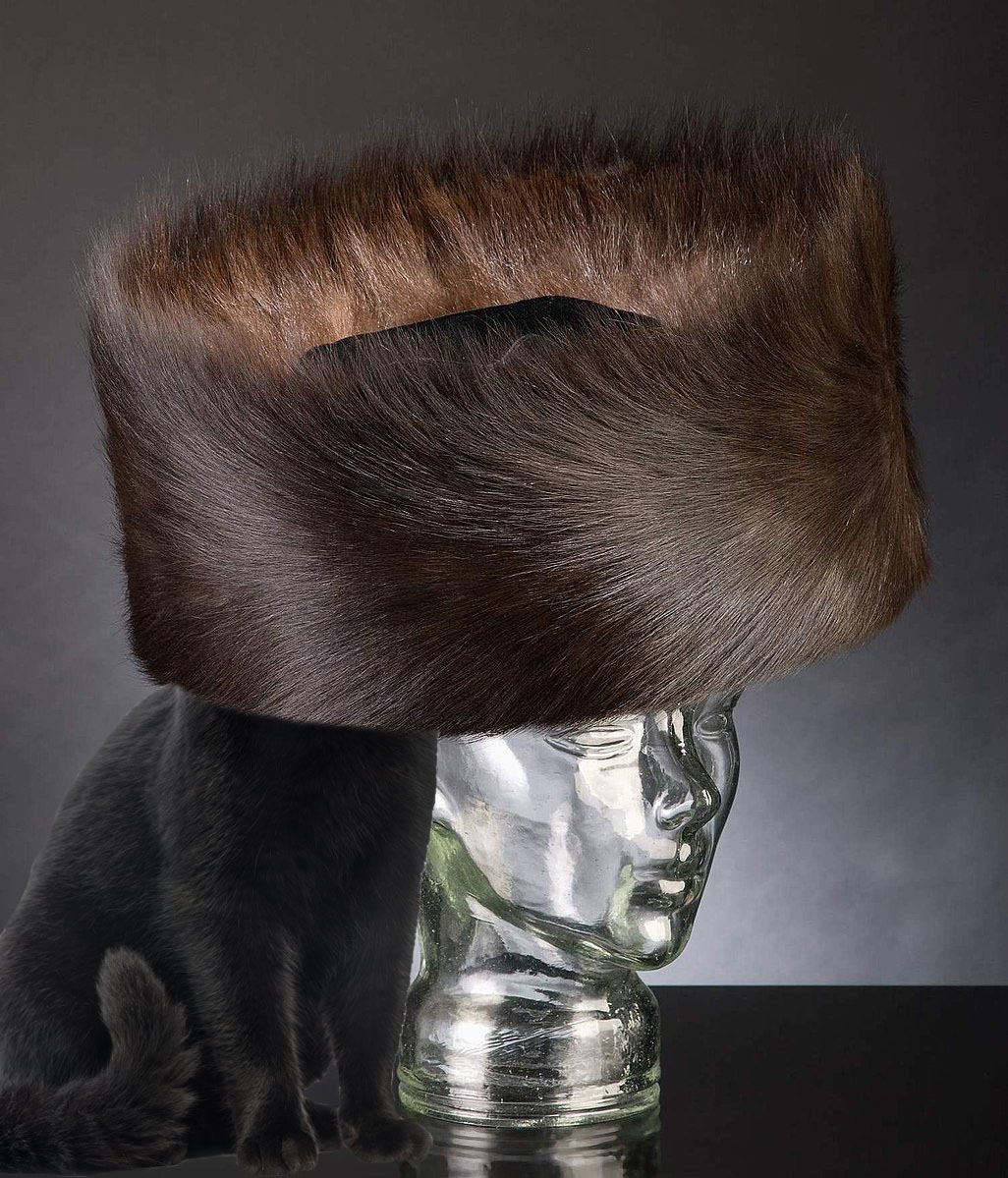
My suggestion to my wife that Sacher-Masoch’s book
‘Venus in Furs’ may have inspired the Kotsker Rebbe’s slur
about all sinful Jewish people who attempt to look
just like a tsaddik who’s im Peltz, which means “tsaddik in fur,”
inspired my wife to tell me she would buy me the fur hat
worn by tsaddikim, called a shtreimel, making me a poet
in fur. Though I’m no Venus or a tsaddik, she’s a cat
who lives with me, her hot tin rov, but if she will
bestow it
I hope no protests will be made by Figaro, the cat who
monopolizes in our home a coat of blackest fur,
his pelt, in German Pelz, in Yiddish Peltz. This
hatless Jew
trusts his shtreimel will not cause this purrer to demur,
though if it does protest, he may enjoy this masochistically,
recalling Sacher Masoch, strangely, he a philosemite,
a paradox explained here in this poem cappermystically.
I hope my wife enjoys it and this poem, and she might.
Leopold von Sacher-Masoch, the 19th-century Austrian writer who inspired the term masochism, was an ardent philo-Semite. Born in Galicia, Spain, Sacher-Masoch wrote a volume of short stories, “Jewish Life: Tales from Nineteenth-Century Europe,” and edited a literary magazine expressing tolerance for Jews in Saxony. “Masochism and Philosemitism: The Strange Case of Leopold von Sacher-Masoch” is a 1982 article by David Biale, now Emanuel Ringelblum distinguished professor of Jewish history at the University of California, Davis.
Gershon Hepner is a poet who has written over 25,000 poems on subjects ranging from music to literature, politics to Torah. He grew up in England and moved to Los Angeles in 1976. Using his varied interests and experiences, he has authored dozens of papers in medical and academic journals, and authored “Legal Friction: Law, Narrative, and Identity Politics in Biblical Israel.” He can be reached at gershonhepner@gmail.com.































 More news and opinions than at a Shabbat dinner, right in your inbox.