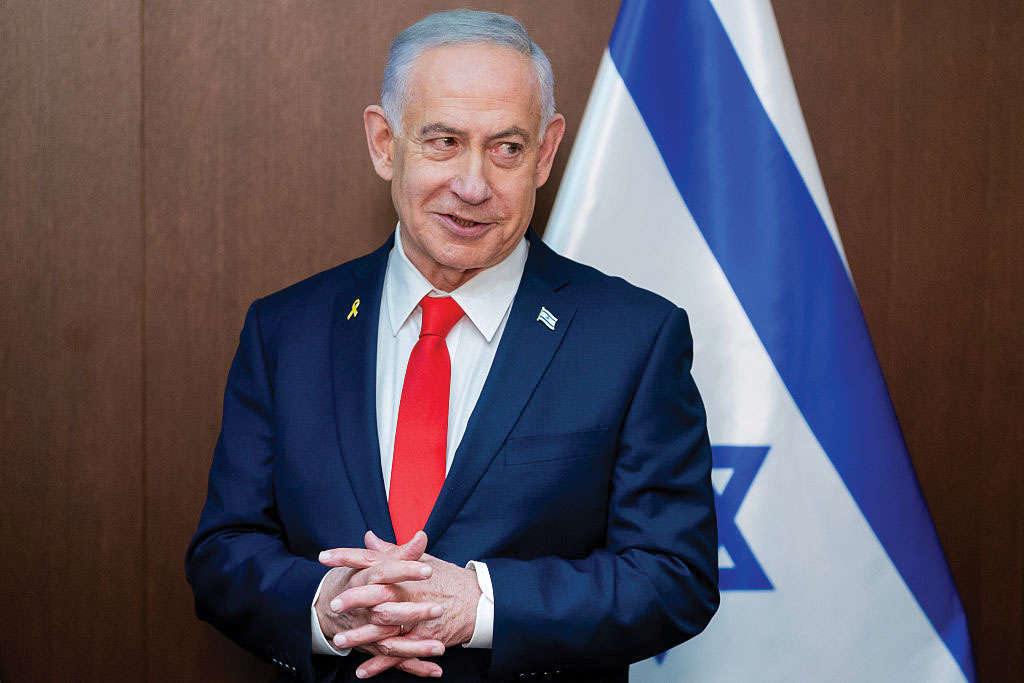
Prime Minister Netanyahu seeks a pardon. He asked the president, Isaac Herzog, to end his long-running corruption trial. Why? “For the good of the country.” What other reason can there be? One should never suspect that Netanyahu expects the trial to end for his own good. It can only be “the country.”
The trial is a headache. It has dragged on for many years, and the public can barely follow the many details. Supporters of Netanyahu believe he was framed; opponents believe he is corrupt to the core. Most believe that the country would be in better shape when the controversial trial ends. Even Donald Trump pushed for the trial to end.
So the question isn’t about the “if,” it is about the “how.” Netanyahu, in his lawyers’ long letter to the president, and in his own short video explaining this sudden, surprising move, offered nothing in exchange for a pardon. That’s a problem, both legal and fundamental. Legally, the president pardons criminals. Netanyahu denies any criminality in his actions and doesn’t offer even a slight admission of guilt. He didn’t even use vague terms such as “mistakes were made,” or “I should have been more careful.” He denies all allegations and still asks for a pardon. It’s not clear that such a request can be granted, but maybe what we see here is just the beginning of a negotiating process. Netanyahu begins by giving nothing and expects to give something when a deal is hammered out.
The basic question about any deal is simple: does it or doesn’t it include a concrete, enforceable process that marks the end of the Netanyahu era? All other concessions are insignificant. If Netanyahu says “I’ve sinned” and then keeps his hold on power – only his supporters would back the deal. If he doesn’t say I’ve sinned and yet departs, the same opponents would not complain. For his supporters, the same rule holds true. What he says doesn’t much matter as long as he can stick around.
The idea that the “good of the country” will be served by ending the trial isn’t farfetched. The trial is polarizing. The trial makes it essential for Netanyahu to keep his coalition intact – as the worst-case scenario for him is to face the court when he no longer has the intimidating presence of the PM. Releasing him from the trial would also release him from certain political shackles. His plea for pardon hints that if the trial is over, his hands will be freer to rein in the radicals in his own camp who aim to revolutionize the judicial system – a hint that some see as a sweetener and others as a threat.
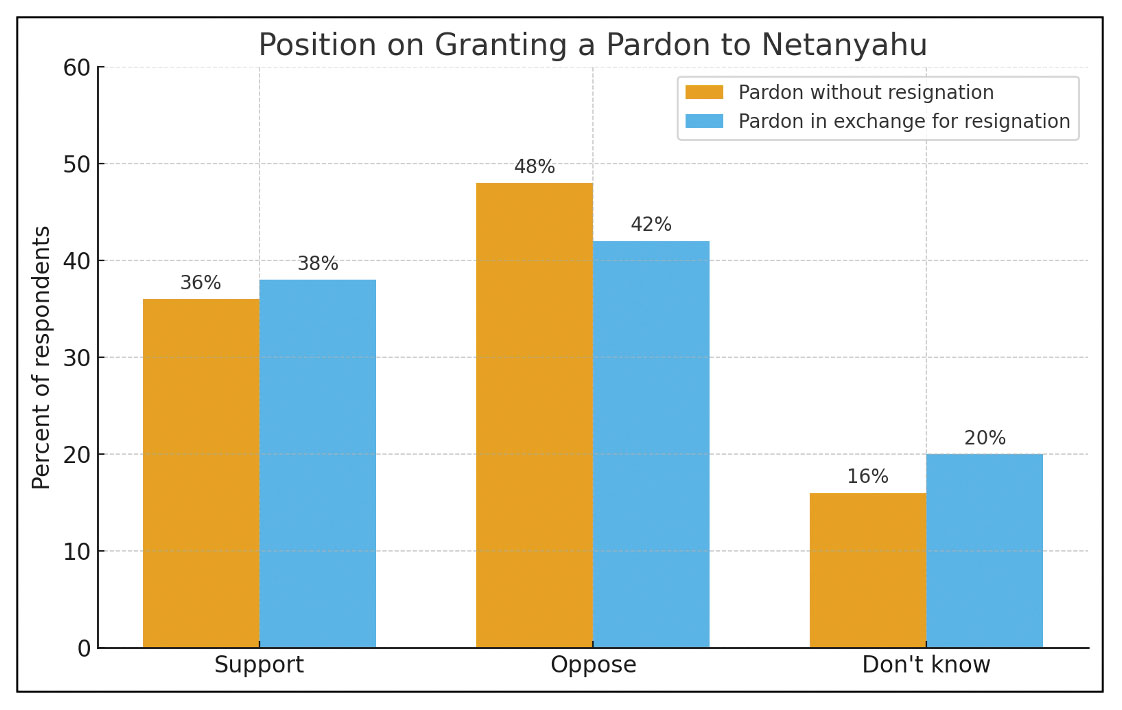
The public is split. When presented with a for and against question, it is about 40% for each side, with a fairly large group still undecided. When presented with a more sophisticated choice, the group that supports a pardon remains about the same size, but the other 60% are split. A minority wouldn’t accept any deal that puts an end to the trial – a majority would accept a deal that includes retirement.
That’s the game that the PM, the president and the legal elite are going to play in the coming weeks. Netanyahu doesn’t signal any willingness to retire. That’s not his goal. In fact, a former official who worked with Netanyahu in the past told me earlier this week that “You should seriously consider another decade with him still around” (Netanyahu is currently 76, so, why not …). The legal elite would gladly accept a deal that includes retirement, but doesn’t show any willingness to compromise for any less. The president has the key to square this circle of competing interests and ambitions. Can he extract from the PM something significant enough to put the legal elite at ease? Can he convince the state lawyers and the justices to accept the little that Netanyahu is willing to give?
A lot depends on Netanyahu’s assessment of his legal and political position. If he believes that the trial is likely to end with him in jail, and that in the next election he is likely to lose – the pressure is on him to find a way out of it before it’s too late. If, on the other hand, he believes that whatever happens now he gains – because either he is off the hook without any concessions, or he has a useful tool with which to win the next election (hammering those who wouldn’t agree to end the trial) – then the pressure is on the other side to prevent even more damage to Israel. It is a high stakes game, and Netanyahu was the one to raise. It is not the president’s time to call.
Something I wrote in Hebrew
Explaining antisemitism to Israelis:
Antisemitism will not be directed only at the Jews who remain in Diaspora communities. Antisemitism will be directed at all Jews. It will harm the State of Israel. It is already harming the State of Israel. When a popular podcaster feels free to host a guest who admires Hitler and allows him to hint that the State of Israel is maliciously influencing the American arena, he is not only endangering the Jews who live in the United States; he is also endangering pro-Israel activity in the United States and, as a ripple effect, American aid, American support, the American backing… This is a point that must be stressed, because Israelis are not accustomed to antisemitism. For them, antisemitism is something that belongs in the foreign-news section, to what happens to Jews elsewhere… That is a mistake we would be wise not to repeat.
A week’s numbers
Ch.12 News survey, on the day Netanyahu asked to be pardoned.
A reader’s response
Deborah asks (following last week’s article): “When Israelis move rightward, do they also change their views on the economy?” My response: No. Right-Left in Israel isn’t about economic issues. They might change their minds on economic issues but not as part of this dynamic.
Shmuel Rosner is senior political editor. For more analysis of Israeli and international politics, visit Rosner’s Domain at jewishjournal.com/rosnersdomain.