
When Benjamin Netanyahu was first elected prime minister, Bill Clinton was the U.S. president. When he was reelected almost a decade after his departure, he had to deal with President Obama, then President Trump. Shortly, Netanyahu will have to deal with his fourth American president — a record number for an Israeli PM. Ben Gurion had three (Truman, Eisenhower, Kennedy), and Yitzhak Rabin had four (Ford, Carter, Bush, Clinton). All other Israeli leaders had worked with only one or two American leaders.
Relations between the countries do not depend on leaders alone. There are ties, wide and deep, between people, offices, businesses, and organizations. There is a tradition of friendship. There are strategic interests and the vague concept of “shared values.” These are fundamentals that do not change when a new administration takes its place. Beyond them, there are also uncertainties.
In the case of President-elect Joe Biden, we should count four uncertainties that could significantly impact U.S.-Israel relations in the coming years. The first one concerns the president’s sentiments and priorities; the second concerns the president’s party and its long-term trajectory; the third concerns policy on Iran; and the fourth concerns policy toward the Palestinians. Of course, there are also many other issues that Biden ought to take into account (China is one example). And yet, the big four are the most crucial. And all of them present challenges and opportunities for U.S.-Israel relations.
Biden
Joe Biden proved more than once that from an Israeli perspective, his heart is in the right place. But his relationship with Netanyahu has had ups and downs. They’ve known each other for many years, and both have established a firm view of one another. In other words, Biden and Netanyahu’s relationship is not a clean slate. They will come to the table with baggage of cooperation and frustration, familiarity and disappointments. It is hard to imagine them suddenly becoming best friends, like Rabin and Clinton. It is also hard to imagine them becoming antagonists, like Carter and Begin.
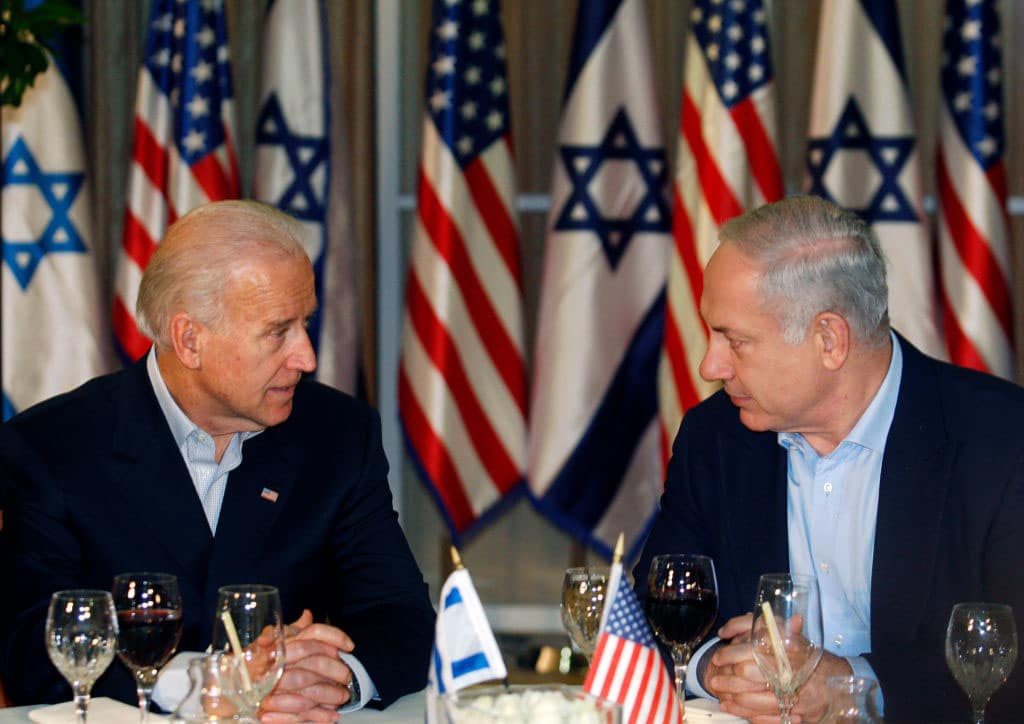
Biden is not expected to make Israel and its needs a high priority for his incoming administration. There is COVID-19 and other domestic concerns to address, China and Russia to deal with, and global issues to tackle, such as climate change. If Biden wants to reverse some of Trump’s policies, he has many areas to explore before turning to Israel. And yet, it is up to him to set the tone of the relations by deciding, among other things, how long will it take before he invites Netanyahu for a White House visit.
Biden surely remembers that Obama’s relations with Israel soured when he skipped Israel on his first Middle East trip. Obama thought he was being clever, but in fact, he ruined his chances of being trusted by Israelis. Biden is not as clever as Obama, and that’s a good thing. Cleverness is often the enemy of simple wisdom.
Democrats
The Democratic Party is of two minds when it comes to Israel — in fact, it is of two minds on many other policies. Biden will have to listen to the more radical faction of the party. He may have to let the left-wing of the party have its way on some matters to keep it placated. We are already hearing rumors about the left pressuring Biden to appoint this or that Treasury Secretary (the left wanting a more radical appointee), and we know that such battles will take place over many appointments and policy directions.
Israel is a sideshow. It is not one of the main portfolios that Biden must address. And yet, if Israel becomes one of the issues where Biden feels pressured to pay tribute to the sentiments of leftist voters, Biden will face a tough choice. Does he defend Israel from this pressure and pay someplace else, or will he decide to pay in Israeli currency to lift the pressure on another policy issue?
Israel is a sideshow. It is not one of the main portfolios that Biden must address.
Here, is it Israel’s job not to be annoying — namely, not to give Biden a reason to throw Israel like a bone to the hungry wolves on the radical left.
Iran
Iran is a serious matter. This is where Biden and Netanyahu must find a way to communicate.
If he wants to have Israel’s back and some measure of cooperation, Biden’s first mission is not to keep Israel’s leaders in the dark. When Obama and Kerry negotiated with Iran, they wanted Israel out of the picture. Israel became suspicious, with good reason, and at some point, lost all confidence in the negotiating team. Obama earned Israel’s suspicion when he drafted a policy of “daylight” between the countries. Biden could quickly prove to Israelis that he is not an Obama 2.0 by going back to a “no daylight” policy.
Of course, this doesn’t mean that the United States and Israel will agree on what to do with Iran. If Biden decides to lift sanctions and sign a nuclear deal with Iran (which may give Iran the green light to have nuclear weapons in the near future), Israel will have to protest and respond. I assume that Biden is looking to get an agreement that will prevent war without accepting a reality of a nuclear Iran. I assume that achieving this goal will be very difficult. I assume that it will be easier to have a deal with Israel on board than it will be with Israel fighting against the deal.
Palestinians
If I’m Biden, I’d stay away from the Palestinian issue. There is little to gain and a lot of energy to spend on this issue. Starting what would probably be his last dance as a leader, he better not waste time on unripe processes.
If he does want to address this issue – or pretend to do something with it because of pressure from the left — I’d urge him to take a serious look at the Trump plan.
Yes — the Trump plan.
It is hardly as bad for the Palestinians as their leaders claim. It is more realistic than all other plans thus far (not that I’ve seen any since the 1990s. All other plans were just versions of each other). Trump’s plan is one that Israel would have a hard time rejecting, and the Palestinians might accept it if Biden promotes it as a Biden Plan. It is, after all, something new. And looking at something new and relevant to current circumstances is better than going back to plans that might have been relevant thirty years ago.