fbpx

November 11, 2020

AJU Announces Business School Dedicated to Management and Social Impact

American Jewish University (AJU) announced Nov. 11 that it is creating its first business school to teach students about management and ethical business models.

Named the School of Enterprise Management and Social Impact (SEMSI), the new program will aim to empower a new generation of business leaders to serve as ethical change-agents who lead purpose-driven ventures, generate sustainable value for diverse stakeholders, in order to better the world.

It will also train non-profit leaders, providing them with the management skills to create innovative and effective organizations. The school will also try to examine the intersection of business needs and wider societal concerns, prompting students to consider stakeholder capitalism, focused on a broader set of actors beyond shareholders.

“Society has arguably never faced a more challenging moment, and businesses and nonprofit organizations that elevate morally-centered leaders will pave the way to meet the needs of today and the future,” AJU President Dr. Jeffrey Herbst, said. “At American Jewish University, we apply age-old Jewish wisdom and teachings to inspire students of all backgrounds to lead. These values are at the core of the curriculum at our School of Enterprise Management and Social Impact, and they are the foundation for stronger communities.”

SEMSI will offer a variety of degrees and certifications, including a reimagined and cutting-edge MBA program set to begin Fall 2021 and a BA completion program also set for 2021.

AJU also said in a statement that brands around the world are taking a more ethical approach to business, and businesses are reconsidering ways to maximize value for all stakeholders, by measuring their impact against new metrics, such as the triple bottom line (people, planet, profit). The coronavirus pandemic has further catalyzed this shift in the private sector, as businesses are being called on to help meet the needs of this challenging moment.

“The business leaders of tomorrow require an education that arms them with the ability to drive companies that prioritize communities, the environment and society, not solely equity holders,” David Groshoff, Dean of SEMSI said in a statement. “That’s precisely what we are doing at AJU’s School of Enterprise Management and Social Impact—not just in a single chapter or course, but in the entirety of our programmatic offerings, throughout our business school.”

AJU Announces Business School Dedicated to Management and Social Impact Read More »

Drinking Tea with the Chief Rabbi

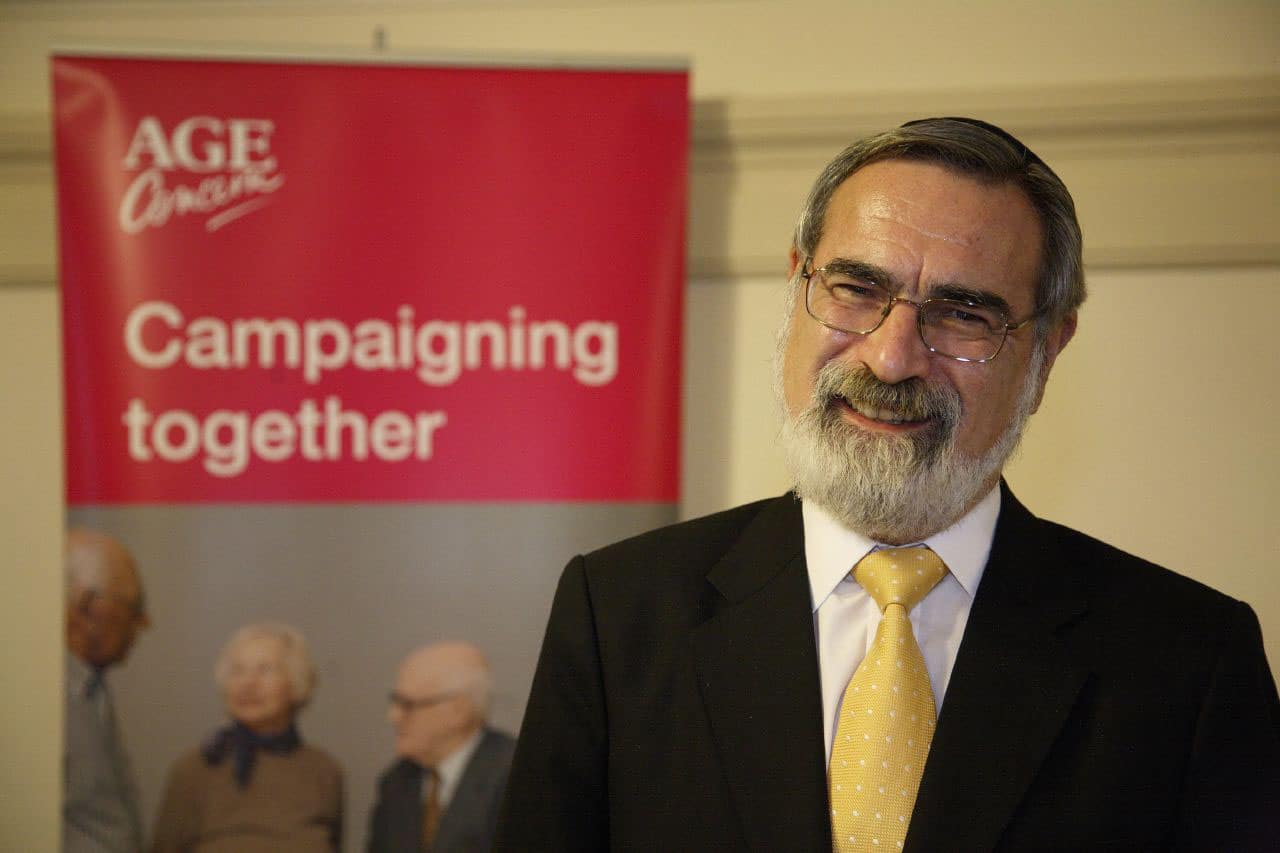
Along with so many, I have been crying. Feeling winded. Reeling. A great light has just left our world, and I am deeply mourning the loss of my teacher and guide, Rabbi Lord Jonathan Sacks, Rav Ya’akov Zvi Ben David Aryeh. He changed my life in so many ways, and I loved him for it.

Here’s just one way he inspired me: Rabbi Sacks once told me to start listening to “Hamilton,” started rapping the lyrics, said he had heard the musical at least 30 times. “It’s free if you’ve got Amazon Prime and the book is currently on sale at £19.99,” he specified. It was helpful shopping advice from the most famous living Rabbi in the Western World and one of the great intellects of our time. Naturally, I listened and got hooked on “Hamilton.”

We also talked about Beethoven, Haydn, and Mozart. Eminem was on his most recent playlist. “It’s music that comes from pain,” he said. Around the time of his 72nd birthday this year, I reached out on his behalf and set up a meeting between Rabbi Sacks and Lin-Manuel Miranda, which was due to take place on his planned trip to New York City in September. Since COVID-19 happened, the meeting was canceled and now it will never take place. I also sent him a video of a stage performance I’d recently done of my Hebrew “Hamilton” song (an upbeat retelling of the Passover story set to the opening of “Hamilton”). He sent me a text. “Absolutely brilliant. Looking forward to seeing the finished version! All good wishes. JS”. I’m gutted that he will never see the finished version of the piece he inspired, a production we shot in Los Angeles just 10 days before the first lockdown.

I am devastated that we won’t be able to get together again in person. He had an extraordinary impact on my life, which only continued to grow as the years went on.

The Chief Rabbi’s Grant

Rabbi Jonathan Sacks was Chief Rabbi of the United Hebrew Congregations of the Commonwealth from 1991 to 2013. The British Commonwealth currently includes 54 member states, so he technically had a global parish. More official titles followed in 2005, when he became Sir Jonathan Sacks. Then he was elevated to the House of Lords in 2006 and became “Baron Sacks, of Aldgate in the City of London” Yet he signed his emails humbly, without titles. Perhaps this was what made him such a great leader; he never sought power, only to teach and serve.

His spiritual association with Los Angeles began in 1968, when a 20-year-old Sacks was on summer vacation from Cambridge University and stayed with his aunt in Beverly Hills. He received a much-awaited call from the Lubavitcher Rebbe’s office in Crown Heights, New York, saying that he had been granted a private meeting with the Rebbe, Menachem Mendel Schneerson. He promptly got a 72-hour non-stop Greyhound bus to meet the great man. The Rebbe encouraged Sacks to get more Jewish students involved in their Jewish life. In a subsequent meeting[1]  sSeveral years later, Sacks told me he was considering becoming an academic, economist or barrister, but Rabbi Schneerson told him to become a congregational rabbi and to train rabbis. Schneerson’s legendary prophetic vision undoubtedly saw his potential to become Chief Rabbi.

I first met Rabbi Sacks in 1995, when he spoke to the Jewish Society at Birmingham University, where I was an undergraduate. Our group was mesmerized by his teaching, and the following year, I interviewed for a Chief Rabbi’s Scholarship to study at Yeshivat HaMivtar in Israel. The scholarship panel consisted of his first Chief of Staff Syma Weinberg and his office’s Chief Executive Jonathan Kestenbaum (who later became Lord Kestenbaum, also known as Baron Kestenbaum of Somerset).

Chief Rabbi Jonathan Sacks speaking to the Jewish Society of Birmingham University, March 22, 1995. From left: Rabbi Sacks, Rabbi Fishel Cohen (Jewish student chaplain for the University of Birmingham), Jeremy Stowe-Lindner, Daniel Myers, Marcus J Freed, Adam Overlander-Kaye. Photo credit: Simon Kisner.

The one thing the panel asked was that I give one year’s service to the Anglo-Jewish community upon my return from yeshiva, such as teaching at a Sunday Hebrew school. I agreed, but felt some trepidation at my ability to fulfill the promise. Little did I realize that I would embark on a career as a creative Jewish educator that has, so far, spanned 18 countries.

By 1997, I was serving as National Education Director for the United Kingdom’s Union of Jewish Students (UJS). I quickly found myself in a difficult position trying to program speakers for our annual student conference while satisfying the then-warring factions of Orthodox, Masorti (Conservative), and Reform movements. I was at my desk, and someone said “Marcus, it’s the Chief Rabbi on the phone for you.” Rabbi Sacks invited me into his office for a meeting and found a stressed 21-year-old graduate of English Literature of Drama completely out of his depth. “Rabbi Sacks,” I asked, “what do I do?”

He put me at ease, relaxed in his chair, lit his pipe, took a deep breath and exhaled a cloud of smoke. As the smoke cleared, his face was beaming. He said, “Marcus, it’s all nonsense. I’m not a politician. I’m not good at this stuff. Just do your best.” So I did, and it all worked out fine.

Orthodox or Reform?

Four months later, Rabbi Sacks spent Shabbat at the UJS Spring Seminar along with his lovely wife, Elaine. Rabbi Sacks graciously sat through my lunchtime Torah teaching, and on Shabbat afternoon he mixed with the students. A girl came up to him and said, “Chief Rabbi, I’ve just discovered I’m Jewish. Should I be Orthodox or Reform?”

It was an innocent question posed to one of the most brilliant Jewish minds of our time. He responded along the lines of “learn about Judaism and see what speaks most to you.” I loved the inner confidence of his answer, his innate trust in God that truth would prevail, without having to impose a choice on the young student, even though he was the leader of Orthodox Judaism.

This theme continued years later, when I was having tea with Rabbi Sacks at his home in London. He told me about his new BBC radio series and a fascinating conversation he had with Professor Jordan Peterson, and another leading Jewish academic who is an atheist. “Did you try to mekarev him? (make him religious)” I asked. “Absolutely not.” “What was your objective?” I enquired. “It is good for someone to have a friend who is a religious Jew.”

I found this story powerful for many reasons, including how it teaches the value of promoting a Torah-observant lifestyle through non-judgmental relationships. We can learn Torah from traditional writings but also from the actions of our sages. As Rabbi Sacks would say, “there are text books and there are text people.”

Limmud

Jewish community politics can become a firestorm, and British Jewry’s hot topic in the late 1990s was the Limmud Conference, a flagship cross-communal festival of Jewish ideas. I first attended in 1993, when it was a small conference of 250 educators, but it now comprises 93 international satellite communities. Limmud began in Great Britain, but the Chief Rabbi was unable to attend due to pressure from the Beit Din, which believed his attendance would endorse non-Orthodox movements.

Every September, Rabbi Sacks hosted a private pre-Rosh Hashanah class for our cadre of young Modern Orthodox educators. We visited the Chief Rabbi’s residence in St John’s Wood, close to the famous Abbey Road, and ate smoked salmon and bagels while he shared Maimonides’ teachings on repentance. Someone asked, “Chief Rabbi, can I go to Limmud?” His answer was unequivocal. “Absolutely. You can do what I can’t. When I walk in certain places, landmines explode. Go with my blessing.”

Sixteen years later, Orthodox participation was no longer a major issue, and in 2013, one of the first acts of the newly-appointed Chief Rabbi Ephraim Mirvis was to attend Limmud. Times change. And Rabbi Sacks was ahead of them.

Sacks’ Creativity

Creativity was always a major part of Rabbi Sacks’ leadership. He frequently launched new initiatives and once told me that he wanted to do even more. I remember a Shabbat in the mid-2000s, when I saw him at the Kiddush following services at St John’s Wood shul. “Marcus! What are you up to?” I filled him in on my latest exploits: touring Europe teaching my “Kosher Sutra” yoga and performing one-man Biblical comic plays. He looked at me seriously. “Marcus, don’t let Judaism become boring.” I accepted my mission.

Creativity was always a major part of Rabbi Sacks’ leadership. He frequently launched new initiatives and once told me that he wanted to do even more.

Rabbi Sacks not only recognized these different ways to connect with God but also celebrated and encouraged them. In doing so, he gave me tremendous chizuk (strength, affirmation, motivation, and inspiration).

He occasionally spoke of the differences between Ancient Greece and Biblical Judaism. The former was a culture of the eye, since the Greeks built statues, great art, and beautiful architecture. Judaism, he said, is a culture of the ear, with our key prayer being the Shema (Hear O Israel) and our emphasis on listening to the Torah rather than gazing at a visual image. In a public lecture at the University of London in 2001, Rabbi Sacks described the visual aspects of Greek culture and asked, “In Judaism, where’s the art? Where’s the architecture? Where are the paintings? Where’s the drama, the theatre? There isn’t any. And this is fascinating because this shows us that Judaism is a culture not of the eye but of the ear.”

I raised my hand and asked, “What about the tradition of theatrical Purimspiels? What about the Talmud’s discussion of aesthetics, where it says that a beautiful man is someone with a beard (Bava Metzia 84a) or the beautiful passage where it says that comic actors/jesters will inherit the world to come because they cheer up people who are depressed? (Taanit 22a)” Besides that, I noted, dismissing the visual arts was bad for my business!

Rabbi Sacks took it in the friendly-but-serious way I’d intended it, and immediately responded with perhaps the most beautiful compliment I ever received. He said, “Marcus. Listen! Of course, you are doing great stuff here. You’re doing the Jewish thing! Marcus, amongst his many talents, is a playwright and dramatist and actor-manager and all the rest of it.”

It may be profoundly immodest and un-British that I’ve shared this, but it was such a striking contrast with all of the Rabbis who had said to me over the years that I should just use my acting skills for teaching drama lessons at Hebrew school. That may be one application, but Rabbi Sacks saw the bigger vision. “Judaism is drama,” he said. “But it is not drama on the stage. But now we are in a culture where we have to use that instrumentality, and I am in favour of using all cultural instrumentalities. What I think Judaism misses most right now is a first-rate religious film director. A first-rate religious poet.”

He then went on to pronounce, “Marcus, I say: Use your many, many wonderful talents to bring a Jewish presence to the arts. I will even give you ‘Certified under Chief Rabbinate supervision’ — not that it will do very much for you!” It got a great laugh, but he was wrong. His encouragement inspired my work for years to come, eventually leading me to move to Pico-Robertson, where I found my tribe of professional, Shabbat-observant artists. Rabbi Sacks’ tenure as Chief Rabbi was dedicated to creating the “nation of leaders” that prophet Elijah spoke of, allowing us to be who we are and encouraging us to realize our highest individual potential.  (The full transcript of this conversation can be found at: https://rabbisacks.org/covenant-conversation-5768-vayakhel-the-beauty-of-holiness-and-the-holiness-of-beauty/)

I was once a little envious when he told me that his recent dinner guest was Sir Mark Rylance, one of our most accomplished theatrical knights. At other times he met with Archbishops, Heads of State, and world experts in many disciplines. None of this was for personal gain, but all of it was part of his mission to fulfill the prophet Isaiah’s mission of being a light unto the nations.

Liberation

The most life-changing conversations I had with Rabbi Sacks took place at the end of 2017. I had been discharged from Cedars-Sinai hospital after having two emergency brain surgeries following a near-death experience of being hit by a car while walking to a Shabbat dinner. Rabbi Sacks called to wish me a refuah shlemah (complete healing) and offer support. He told me that just as Jacob had wrestled with the angel and emerged a changed man with the new name ‘Israel,’ I too had wrestled through the night and changed my name; he hinted that I would be all the stronger for it. “But now is the time to do yourself chesed,” he advised.

We spoke a few weeks later, and I shared my turmoil about that name change, which took place when I had passed my Rabbinical exams. I was immediately criticized by the governing authorities for not being religious enough. “Don’t chase titles,” Rabbi Sacks said. “They won’t help you. Marcus, you are a free spirit and you are meant to be free.” In that last sentence, it felt like he had seen into the depths of my soul, understood my essence, and gave me permission to be myself.

Rabbi Sacks taught me how to be Freed.

The Chumash

In 2017, Rabbi Sacks was working on his translation of the Chumash (his edition will probably become the key version used worldwide for the next hundred years). I enquired how it was going, and he responded, “don’t ask!” When we met in 2018, I asked again and his slightly frustrated response was “I’m currently writing three other books that are under contract and on deadline.” Presumably that’s part of the deal once you are a brilliant bestselling philosopher in high-demand, I thought.

September 2nd, 2018. Rabbi Sacks & Marcus J Freed. At Rabbi Sacks’ home in Golders Green, London.

I once asked Rabbi Sacks how he was dealing with this growing public spotlight, and he told me of a recent trip to Israel, where he spoke at the Great Synagogue in Jerusalem and was met by over a thousand admiring fans. “They want to put me on a pedestal. Historically, these things do not end well. I want no part of it.” He knew that fame is fickle, public opinion can always change for the worse, and his unspoken humility dictated that his work was about God and the Torah, never about himself. The mission was teaching and not becoming a celebrity.

Ironically, the only way that public opinion changed about him was to increase his popularity and influence during the last decade of his life.

Our Final Meeting

Our final meeting was on January 22, 2020, in the lobby of the Beverly Hilton Hotel. Rabbi Sacks was in Los Angeles for a 48-hour-visit, but found time for a cup of tea just before leaving for the airport. This memory brings me the most joy but also great sadness for all that was begun but not completed. He asked how the accident, brain surgery and near-death experience had changed me. I explained how it had awakened and focused my attention to my true mission in life, made me aware of my relationship with time, and convinced me of the need for fast action.

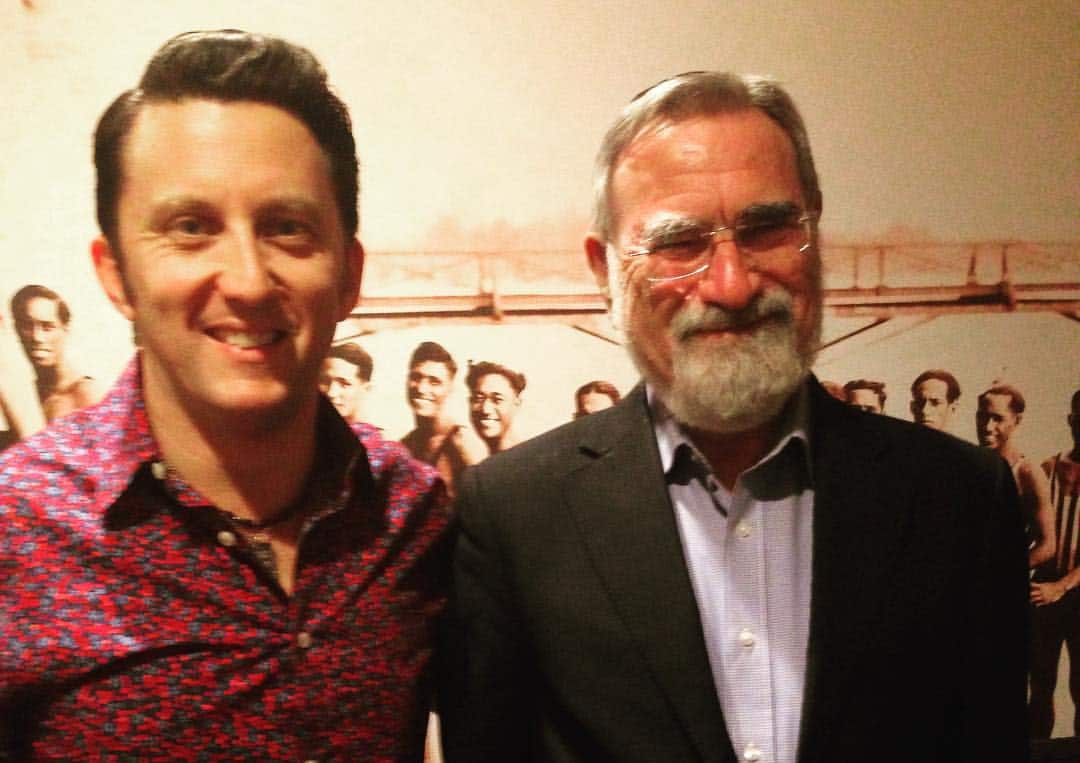
January 23rd, 2020. Photo credit: Joanna Benarroch. Rabbi Sacks & Marcus J Freed. Beverly Hilton Hotel, Wilshire Boulevard, Beverly Hills

I asked his advice on getting married, since building a family is something I want more than anything. “How are old are you now?” he asked. “44.” The man of a million words then gave me four: “Get on with it!”

“What do you advise to look for? I keep getting attracted to women who are not good for me,” I said. “Find someone who is kind and understands you. The rest is icing on the cake.”

He spoke glowingly of his wife Elaine, who has been very warm whenever we have met at events or when I would visit their house for tea. “I married Elaine young. She was the breadwinner while I was studying to become a Rabbi.” In a recent podcast with Tim Ferris, Rabbi Sacks said, “Elaine is a happy person.” What more can one ask for in a partner?

I said that one day, I look forward to calling him up and asking him to be metzadei kiddushin (officiant) at my wedding. He nodded.

As our meeting ended, I walked Rabbi Sacks and his Chief of Staff Joanna to their airport taxi and carried his bag. He started quoting “Hamilton.” “Marcus, don’t throw away your shot. This the room where it happens.” I replied, “Rabbi Sacks, I’m looking forward to reading your Chumash. No pressure, but history really does have its eyes on you.”

He cracked up laughing and gave me a massive hug. I’ll miss him.

“Light is sown for the righteous, and joy for those with an upright heart” (Psalms 27:11). Rabbi Sacks brought great light into the world and today it shines more brightly than ever before. May his soul rise ever higher.


Marcus J Freed is an award-winning actor and bestselling author. Online at www.marcusjfreed.com and on social media @marcusjfreed.

Drinking Tea with the Chief Rabbi Read More »

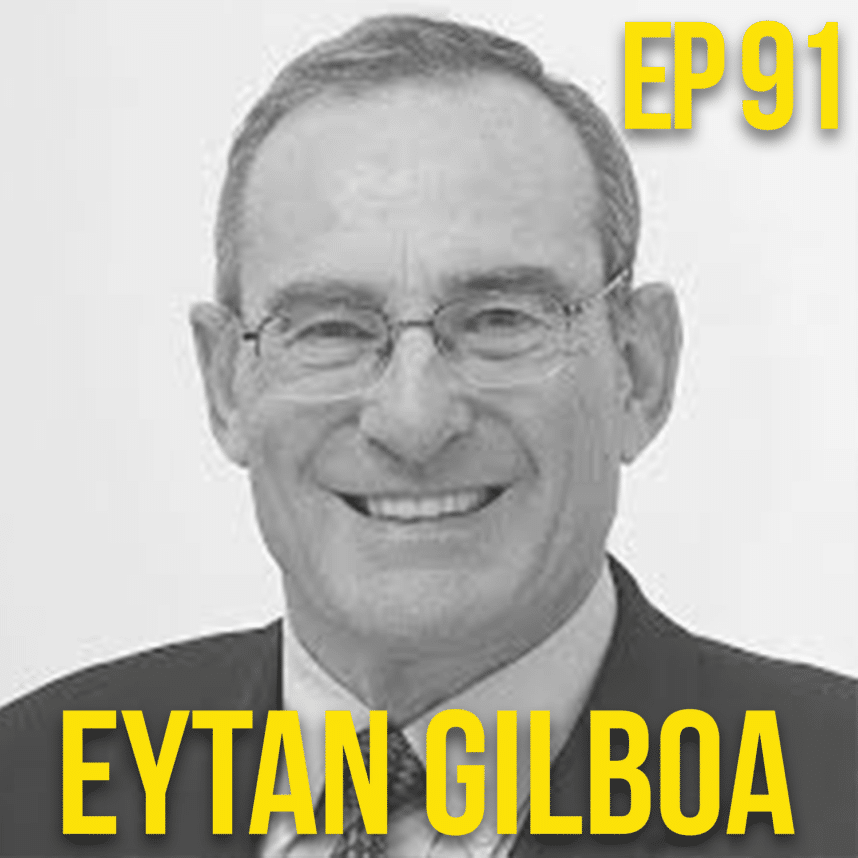
Eytan Gilboa

Professor Eytan Gilboa: The American Public and Israel in the Twenty-First Century

Shmuel Rosner and Professor Eytan Gilboa discuss his latest article and Israel-US relations under future president Joe Biden.
Prof. Eytan Gilboa is a renowned expert on international communication, public diplomacy and US policy in the Middle East. He is the Chair of the Israel Communication Association, the academic and professional organization of scholars serving in departments and schools of communication in all Israeli institutions of higher education.

Professor Eytan Gilboa: The American Public and Israel in the Twenty-First Century Read More »

Palestinians Bury Longtime Peace Negotiator Saeb Erekat

The Media Line — Saeb Erekat, the chief peace negotiator for the Palestinians, was buried in his West Bank hometown of Jericho on Wednesday after succumbing the day before to COVID-19. He was 65.

As the recipient of a lung transplant and survivor of a heart attack, he was considered to be at high risk during the pandemic. He had been hospitalized for the past several weeks at Jerusalem’s Hadassah Medical Center after testing positive on October 15.

Palestinians Bury Longtime Peace Negotiator Saeb Erekat Read More »

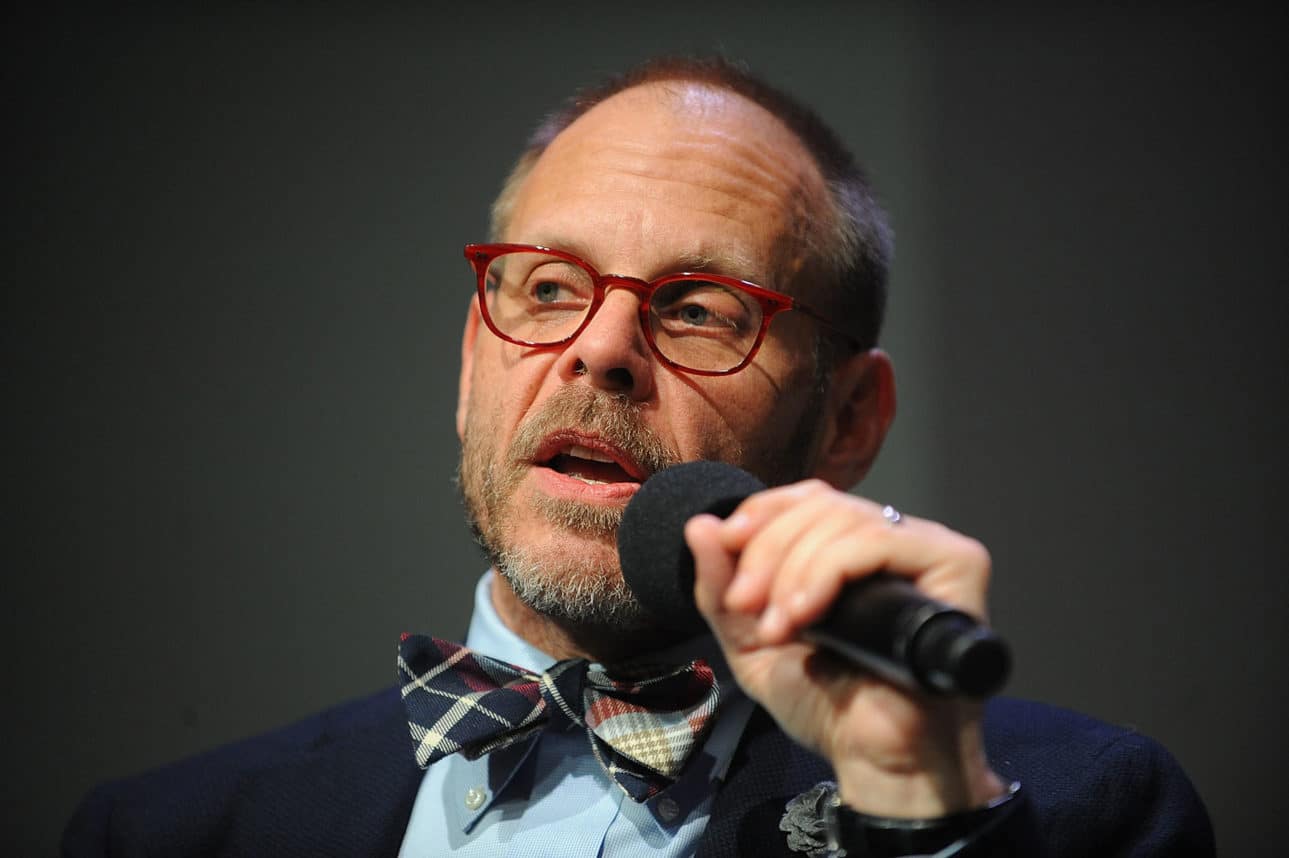
Alton Brown Apologizes for Tweeting Holocaust Joke

Alton Brown, American television personality and chef, apologized on November 11 for tweeting a joke about the Holocaust.

After issuing a series of since-deleted tweets speaking out against President Donald Trump on November 10, Brown tweeted, “Do you think the camp uniforms will be striped, like the ones at Auschwitz or will plaid be in vogue?” This tweet has also been deleted.


One Twitter user said in a reply, “Depends on what you’re worth going in,” prompting Brown to respond, “I have no gold fillings.” The Nazis had removed gold teeth and fillings from Jews at the concentration camps. Brown’s “gold fillings” tweet has not been deleted.

Additionally, Brown wrote, “F— you” in response to someone who told him to “take it easy.”

Following a backlash from the Auschwitz tweet, Brown issued an apology.

“I apologize for the flippant reference I made to the Holocaust in my tweet last night,” he tweeted. “It was not a reference I made for humorous effect but rather to reflect how deeply frightened I am for our country. It was a very poor use of judgement and in poor taste.”

The StopAntisemitism.org watchdog didn’t buy the apology.

“@altonbrown is sorry he got called out for his vile #Holocaust rhetoric,” they wrote. “And the only thing he’s trying to do with his ‘apology’ is save his multi-million dollar @FoodNetwork @Discovery contract.”


On the other hand, David Teicher, chief content officer of the digital marketing firm Brand Innovators, thanked Brown for his apology.

“As the grandson of a [H]olocaust survivor and huge fan of yours, I appreciate that,” Teicher tweeted. “Many of us were hurt and offended, for me, it was difficult to reconcile with my long-standing respect and appreciation for your work. [W]e are all fearful of the division and hate in this country.”


Brown is the host of the Food Network’s “The Good Eats: The Return,” the sequel series to “The Good Eats.” The Food Network did not respond to the Journal’s request for comment.

Alton Brown Apologizes for Tweeting Holocaust Joke Read More »

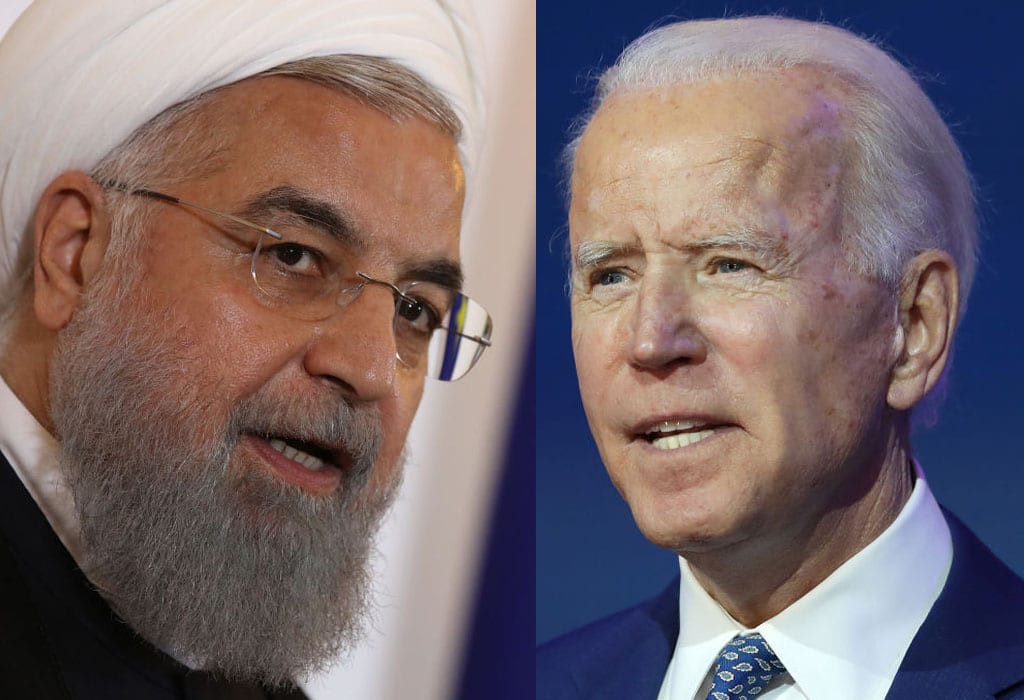
Brilliant and Cunning: Iran Already Saying No to Biden

Well, that didn’t take long. With Joe Biden presumed to be our next president, Iran is already refusing to renegotiate the Joint Comprehensive Plan of Action (JCPA), also known as the Iran Deal, which President Trump abandoned in 2018 in favor of tougher sanctions.

Trump’s “maximum pressure” approach has severely hurt Iran, both economically and militarily. One would think, then, that Iran would jump at the chance to get back in the deal, especially since Biden has already expressed his desire to do so.

But there’s a hitch: Biden has his own demands. As Tom O’Connor reports in Newsweek, “Biden has pledged to return, but only if Iran restored some of the commitments it has since walked away from due to other participants’ failure to normalize trade ties with the Islamic Republic in the wake of the U.S. exit.”

These commitments include “restricting uranium enrichment back down to 3.67 percent, halting production at the Fordow Fuel Enrichment Plant, and [stopping the installation] of advanced centrifuges.”

Quoting Biden’s official foreign policy page, O’Connor adds, “If Tehran returns to compliance with the deal, President Biden would re-enter the agreement, using hard-nosed diplomacy and support from our allies to strengthen and extend it, while more effectively pushing back against Iran’s other destabilizing activities.”

Now compare this “hard-nosed” warning to recent statements from Iranian officials, who not only refuse to renegotiate but, according to Newsweek, are “eager to pressure Washington to be held accountable for billions of dollars in lost revenue due to the unilateral U.S. sanctions imposed by the Trump administration after the U.S. departed the agreement.”

Do you see a Battle Royale shaping up?

So do the Iranian mullahs, which is why they’re racing to exploit the #1 weapon in the art of gaining leverage in negotiations: Saying no.

The Iranian mullahs are racing to exploit the #1 weapon in the art of gaining leverage in negotiations: Saying no.

Perhaps they’re hoping that a Biden administration will repeat the overeager routine of the Obama administration, which appeared desperate to notch a foreign policy victory in Obama’s waning months. The blunder was not so much the eagerness itself but showing that eagerness to a cunning adversary who took full advantage.

It’s no coincidence that we ended up with a deal that freed up tens of billions in sanctions relief to the world’s #1 sponsor of terror, while permitting a “sunset clause” that would effectively allow Iran to build a nuclear weapon after a 10–15 year period. When you’ve been around 5,000 years, what’s another 10 or 15?

I suspect Iran anticipates Biden to be a little tougher than Obama. But by refusing to renegotiate and instead trying to recoup billions, money that will surely help support terror activities, they will severely test Biden’s commitment to “hard-nosed” diplomacy and pushing back against “Iran’s other destabilizing activities.”

If you just look at these two starting positions, the parties look very far apart in any renegotiation of the JCPA. We can only hope that whatever hand a Biden team decides to play, it won’t be the overeager one.

Brilliant and Cunning: Iran Already Saying No to Biden Read More »

Joshua Kirshbaum’s Plan to Change the World

Joshua Kirshbaum has a passion: to make the world a better place. The 30-year-old Los Angeles native runs a non-profit organization in New York called Nonviolence International New York (NVINY),  which advocates for nonviolent solutions to conflicts through peace education and international advocacy. The organization connects college youth to Civil Society at the United Nations through internships, mentorships, and training initiatives. Civil Society at the U.N. brings  governments, businesses, civil society organizations, and non-governmental organizations to work within the U.N. as consultants to the Economic and Social Council or in association with the U.N. Department of Global Communications.

The 30-year-old organization has five branches around the world. Kirshbaum’s father, David Kirshbaum, founded the New York office in 2014; his son came on board as one of the organization’s first interns in April of that year.

Joshua, who started as an intern in the NVINY’s communications department , noticed that  older U.N. members, though eminently qualified, didn’t seem to notice the interns’ ideas. “No one asked what our thoughts were,” he says. “When I became head of this office,” he added, “I was so disappointed to find programs that had so much promise, but did not provide any help or leadership training opportunities.”

In late 2016, Kirshbaum’s filmmaking and photography background (he has produced over 60 independent short films and seven feature films) qualified him for the position of communications director within the organization. He took over Nonviolence International New York in mid-2018, when his father retired and the Nonviolence International Network chose him as executive director of the New York office. He runs the organization in conjunction with Administrative Director Marcellus Henderson and his sisters, Creative Director Amelia Kirshbaum and Educational Director of the New York Graduate Plan Sarah Kirshbaum.

In parallel with the founding of the U.N.’s Sustainable Development Goals in 2015, Kirshbaum started an internship program that brings young college students to the U.N. in order to “empower Civil Society” at the U.N. and give participants a head start on their U.N. careers. Since the COVID-19 lockdown closed off physical access to the organization, Kirshbaum has shown the interns how to access the organization digitally.  “We connect young people with the U.N. community,” Kirshbaum stresses. “We teach direct advocacy, mediation, and legislation change, non-profit business management, networking skills, how to create awareness and information campaigns, and more.”

“We teach direct advocacy, mediation, and legislation change, non-profit business management, networking skills, how to create awareness and information campaigns, and more.” — Joshua Kirshbaum

In the new year, NVINY  will partner with the U.N. Institute for Training and Research (UNITAR) on the New York Graduate Plan. The New York Graduate Plan Online seeks to train future diplomats by exposing graduate students to peace-building and international affairs. Students learn from U.N. diplomats in diplomatic training sessions, master the art of peace-building in workshops at NVINY and lead digital fieldwork with Civil Society at the U.N. The program was  reorganized to be completely online, allowing students in areas outside of New York to participate. It also allows participants to learn from leaders in the field, even if that leader is in Ukraine or the Philippines.

Interns receive college credits for volunteer hours spent working with the U.N. Kirshbaum explains that most of the NVINY interns attend an undergraduate program while completing these hours. The Graduate Plan, on the other hand, involves a more intensive, five-day-a week regimen. Participants  will receive individual certifications of completion from the various peace-building organizations where the students worked.

Kirshbaum’s passion for empowerment and change-making is in his blood. After witnessing the horrors of Dachau as a young soldier at the end of World War II, his maternal grandfather, Oscar- and Grammy-winning songwriter Robert B. Sherman, wanted to make people happy with his music, and, with his brother Richard, wrote “It’s A Small World” and the scores for dozens of movies, including “Mary Poppins,” “Chitty Chitty Bang Bang” and  “The Jungle Book.” Kirshbaum’s mother, Laurie Sherman, worked as co-director of the National Environment Centre in Australia, a training center in natural resource management. She also co-founded Greater Vail Community Resources in Tucson, Arizona.

The young activist credits his Jewish upbringing with fueling his passion for helping others. “If I have more, I give more,” Kirshbaum explains. He tells a story from his childhood, when he came across a fellow student who never seemed to have any lunch. He told his mother, who then started putting an extra sandwich in his lunchbox.

The young activist credits his Jewish upbringing with fueling his passion for helping others.

When Kirshbaum became a bar mitzvah at London’s Marble Arch Synagogue, he realized that we have a responsibility, as “keepers of the book,” to remain honest. “Each letter in the Torah has a mythical value,” he explained. “Hebrew words are valued in Jewish terminology.” Now, Kirshbaum feels guided by Jewish core values, such as honesty, leading by example, and protecting others.

Although it is not a religious organization, Nonviolence International New York runs on core Jewish values: loyalty, transparency, liability, respect, fairness, sharing with community and identifying with others. “Part of the culture of peace aligns with Jewish values,” Kirshbaum notes. “These values are part of everyday life.”

Kirshbaum relates that he taught a class to interns about “how to non-violently get on a subway.” Learning such skills actually promotes the Jewish values of tznius, modesty; and anava, humility: “We don’t want to think so highly of ourselves as to cause discomfort to anyone else (humility), and we don’t want to draw attention to ourselves by aggressively pushing our way in (modesty).”

Kirshbaum also cites inspiration from past Jewish activists, such as Rabbi Abraham Joshua Heschel, who marched with Dr. Martin Luther King, Jr., during the civil rights era, and Julius Rosenwald, a nineteenth-century clothier who became co-owner and president of Sears Roebuck,  whose foundation built over 5,000 schools for African American children in the rural South.

Kirshbaum hopes to include more Jewish students in both the internship program and the Graduate Plan.

“The more I learn about historically who we are as a people,” he says, “the more inspired I become.”


Brenda Goldstein is a Los Angeles-based journalist.

Joshua Kirshbaum’s Plan to Change the World Read More »

Shameful Acts

As I have watched the election unfold, I have done exactly what I vowed not to do: scroll through Facebook and Instagram. And while many comments call for action and advocate for a better world, others directly shame people, attack “friends,” and amplify hateful speech and dangerous rhetoric.

Whatever this day brings, I am reminded of this important verse from our tradition:

“You shall not hate your brother in your heart. Reprove your countryman so you will not be guilty because of him.”

Meaning, don’t harbor hate because you have something to say to someone with whom you disagree. Civil discourse is not about being polite, silent, and holding back. However, civil discourse involves a thoughtful strategy and method that involves an immense amount of listening and understanding. This is a difference between engaging in a conversation and offering verbal abuse.

The Orchot Tzadikim, a book of Jewish ethics, asks and answers the question, “How shall you rebuke? At first, secretly and gently. However, if you rebuke him at the beginning in public and shame him, then you have sinned because of this.”

Our tradition reminds us that shaming someone is akin to murder. There is no room for understanding or insight. The other person only remembers that another human being took the time to engage in public embarrassment and deep humiliation.

State that you disagree. Reveal your own hurt and disappointment. But public attacks, verbal and physical aggression, and name calling further divides this already polarized nation.

Let us carefully choose our words. Let us thoughtfully choose where to say them. Our words can build or destroy worlds; it is a choice we make every single day.

I choose to build. I hope you will too.

Shabbat Shalom.


Rabbi Nicole Guzik is a rabbi at Sinai Temple. She can be reached at her Facebook page at Rabbi Nicole Guzik.

Shameful Acts Read More »

Feeling the Loss of Rabbi Lord Jonathan Sacks

When my husband Jeff and I learned that Rabbi Lord Jonathan Sacks had passed away on November 6, we could not help but cry. Neither of us had ever met the former chief rabbi of the United Kingdom, whose towering achievements as a Torah scholar, speaker, and writer made him among the most influential and respected Jewish thinkers of his time. Nonetheless, he was a favorite guest at our Shabbat table every week. Nearly a dozen of his books grace our bookshelves, coffee tables, and nightstands. Each has been read at least once; many have been reread several times.

Jeff is a voracious reader of Rabbi Sacks’ “Covenant & Conversation” series, collections of commentaries on the weekly parsha; he brings the appropriate volume to our Shabbat table to share an insight from one of the essays. With content so rich and written with such brilliant clarity, rereading the same essays year after year only deepens our appreciation and understanding of the Torah’s depth and Rabbi Sacks’ insights.

We have both been changed by Rabbi Sacks’ teachings. Today, there are many outstanding Torah scholars, but Rabbi Sacks stood alone in his combination of erudition and vast knowledge of Torah, history, social sciences, literature, and philosophy. He had been enrolled in a philosophy Ph.D. program, in fact, when a transformative meeting with the Lubavitcher Rebbe redirected his career toward the rabbinate. Open almost any of Sacks’ books, and you will see as many references to Shakespeare, Tolstoy, Piaget, Sartre, Rousseau, and Homer as you will to Rashi, Rambam, and Talmudic citations.

None of this was intellectual showmanship. It was a way of underscoring Torah truths by taking the best of what secular knowledge had to offer and, when appropriate, showing the falseness of many popular theories, including Freudian notions about relationships. His genius at taking sophisticated concepts and translating them with clarity and elegance made him an ambassador of Torah values and ethics to a broad audience, including Jewish and non-Jewish, religious and secular, common man or woman, as well as members of the British Royal Family.

I believe Rabbi Sacks’ influence is so vast because he emphasizes the heart and soul that is foundational to Jewish law. In his book “To Heal a Fractured World,” he writes, “Jewish ethics is refreshingly down-to-earth. If someone is in need, give. If someone is lonely, invite them home. If someone you know has recently been bereaved, visit them and give them comfort.” These are deeds that emulate God and represent “religion at its most humanizing and humane.”

I believe Rabbi Sacks’ influence is so vast because he emphasizes the heart and soul that is foundational to Jewish law.

As Jeff and I slowly absorbed the shocking news of Rabbi Sacks’ passing, I received a text from a client of mine, Dr. Mark L. Brenner, who is an L.A. based marriage and family counselor and the author of several books. Brenner also felt the pang of loss, having first encountered Rabbi Sacks’ writings many years earlier while working with some individuals in a Chabad community. His favorite among Rabbi Sacks’ books is “Ceremony & Celebration: Introduction to the Holidays.”

“Rabbi Sacks was a man who loved God as much as he loved Man,” Dr. Brenner wrote to me. “He was a true originalist in this thinking and writing. His brilliant commentary in 2016 on Leonard Cohen’s final album song, ‘You Want it Darker,’ about a week after Cohen’s death, will forever live in my heart as how to live with truth and pain.”

Just this past September, Rabbi Sacks published a new book, “Morality,” in which he further develops a recurrent theme — the devastating impact in society from the focus on “we” to the focus on “I.” Our self-absorption erodes the common good in many ways, including our retreat into political echo chambers. This furthers the divide among us while hardening our positions. It leads to dangerous extremism on both sides. Judaism’s mandate to embrace individual andcommunal responsibility helps to shift the balance toward more “we” than “I.” Rabbi Sacks points to studies showing that the more we focus on “I” and less on “we,” the unhappier and more anxious we become — something God taught us thousands of years ago.

Rabbi Sacks frequently refers to the concept of tzimtzum — of making space, an idea that I have found useful in many contexts. God “made room” for human beings when He created the world, and, Sacks teaches, we need to emulate God by making space for others—again, more “we” than “I.”

At his London funeral, attended by only thirty people due to COVID-19 restrictions , his youngest daughter, Gila Sacks, spoke of two gifts her father gave to her and her siblings. The first was his belief that there is no problem too big for people to try to solve, a teaching that was underscored in an essay he wrote on the parsha of Vayeira, (this past Shabbat’s reading), where Abraham asks God to save Sodom if ten righteous people are found in that city. “My father believed that problems are here to be challenged and to be challenged by,” she said.

Second, Ms. Sacks observed that Abraham, whose name means “father of nations,” broke the mold in the ancient world, no longer following his own father’s path and allowing his children to become who they were meant to be. “That is what he gave us overwhelmingly … he never lost any opportunity to tell us how proud he was of us, of what we achieved and of who we were … Because he loved us, we could become the people we are, and no child could wish for more.”

Jeff and I sat quietly that evening talking about Rabbi Sacks, but the loss somehow felt so personal that we soon felt emotionally wrung out. Jeff said, “In today’s world, when you ‘friend’ someone, it’s a verb. Rabbi Sacks was also a friend, an intellectual companion who helped me make sense of the world. So many values we had learned as kids have been turned on their heads through a Torah lens. Reading him every week felt like coming home. Talking about his teachings made it feel like he was right there in our living room or dining table. The finality is very hard to accept. He was my spiritual partner on my spiritual path.”

I write about Rabbi Sacks in the present tense because great Torah scholars remain with us forever, their words feeding spiritual and intellectual sustenance to subsequent generations. The door to Rabbi Sacks’ physical life has closed, but the door to open his treasure trove of teachings will always remain wide open.

This ten-minute commencement speech by Rabbi Sacks, titled The Jewish Algorithm, is a popular and succinct introduction to his thinking. You can watch it here: 


Judy Gruen is the author of “The Skeptic and the Rabbi: Falling in Love With Faith.” 

Feeling the Loss of Rabbi Lord Jonathan Sacks Read More »

Analysts: Tehran Will Not Renegotiate Nuclear Deal With Biden

The Media Line — President-elect Joe Biden has promised a change in US policy on Iran, but with the myriad domestic issues demanding his immediate attention, chances are any rapprochement with the Islamic Republic will have to wait.

Alex Vatanka, a senior fellow and director of the Iran program at the Middle East Institute in Washington, told The Media Line the president-elect will be preoccupied with domestic issues at the onset of his term.

“I think Biden for a couple of reasons will not be focused on foreign policy. His energy will be on COVID, the economy, on race relations and healing the country. But he at least wants to salvage the 2015 Iran nuclear deal. I don’t think Biden wants to go back to it [in its original form].”

Prof. Mohammad Marandi, head of American studies at the University of Tehran, told The Media Line that President Donald Trump’s “aggressive policy” against Iran failed to achieve its stated goals.

“It remains to be seen how different Biden is. Obviously, Trump’s ‘maximum pressure’ campaign has failed; the United States has isolated itself across the globe and it’s facing an internal crisis,” Marandi says.

Trump withdrew the US from the 2015 Iran nuclear agreement in 2018 and imposed crippling sanctions on the Islamic Republic, calling the accord “a horrible one-sided deal that should have never, ever been made.”

While the threat of more sanctions still looms over Iran, Marandi, says this is “for psychological effect.”

“Iranians don’t take that seriously. The United States has sanctioned everything, and all the recent sanctions have simply been a repetition of older sanctions and they have no real effect on the ground. There is nothing more for the Americans to sanction.”

Biden was part of president Barack Obama’s administration that forged the 2015 nuclear accord, which included the partial lifting of sanctions.

The president-elect has said he will offer a “credible path back to diplomacy.”

Dr. Hamed Mousavi, a professor of political science at the University of Tehran, told The Media Line that “the fundamentals of US foreign policy in the Middle East are largely the same, whether Republicans or Democrats are in power.”

Biden’s immediate task is to defuse the tensions between the archenemies. Iranians say Trump broke trust by withdrawing from the nuclear deal.

Mousavi does not think Biden will be different on Iran than Trump has been.

“Donald Trump’s approach was to launch the ‘maximum pressure’ campaign, to force Iran to give concessions on regional issues and on Iran’s missile program, things that are completely unrelated to the nuclear deal. That didn’t work,” the professor adds.

He concedes that with Biden the situation is going to be more complex.

“I do think that Biden wants the same things that Trump wants, but he wants to achieve them in a different way, using diplomacy and multilateralism compared to Trump’s unilateralism and sanctions.”

Marandi says for relations to get better between the countries, the new administration must make the first move.

“It’s really up to Biden. The Iranians have said that the United States has to implement the nuclear deal in full, something which has never been done even under Obama and Biden.”

Vatanka says once the president-elect takes office, things will start moving.

“When Biden is in the White House, the US and Iran will decide on a date when the US will lift certain sanctions, not all. Obama didn’t lift all the sanctions. And the Iranians will quickly return to the number of centrifuges and lower the level of nuclear activity as agreed in the 2015 deal.”

He says this is the simple part of repairing the tumultuous relationship.

“That part should be relatively easy, but that doesn’t solve US-Iran tensions. That’s the challenge: Can they broaden the conversation to talk about Iran’s involvement in the region, and about its missile program,” Vatanka says.

Ali Bakeer, an Ankara-based political analyst and researcher, told The Media Line there is “a big difference” between Trump’s and Biden’s approaches on Iran, “especially if Biden is going to follow Obama’s path while dealing with Tehran.

“Biden is giving the priority to returning the US to the JCPOA [the 2015 nuclear agreement]. There certainly will not ‘maximum pressure’ anymore. Sanctions will be lifted sooner or later, and the Iranians will start putting conditions on what is acceptable for them and what is not, and what Biden should pay as compensation [for Tehran] to go back to the JCPOA agreement, whether money-wise or influence-wise,” Bakeer says.

He argues that the worst times for the Iranians are behind them with the election of Biden.

“Regardless of the time, the Iranians know they passed through the worst under Trump and that no ‘maximum pressure’ campaign will be there under Biden. In my opinion, the Iranians will have the advantage of reading Biden’s next moves, just as they did with Obama, and unless Biden is willing to deal with them in a different way, things will go back to where they were before Trump,” Bakeer says.

Since the Trump Administration pulled out of the agreement with Tehran two years ago, Washington has applied a “maximum pressure” campaign that included crippling sanctions, and in January 2020, Trump ordered the killing in Iraq of Iran’s most renowned military strategist, in a move that brought the two countries to the brink of war.

Mousavi says the White House under Trump has been “hostile toward Iran.”

“As soon as Trump came to power, he started pressuring Iran diplomatically and economically, and he eventually withdrew from the nuclear deal and then escalated hostilities and tensions by assassinating [Quds Force commander Maj. Gen. Qasem] Soleimani.”

And on Monday, Trump fired his secretary of defense, Mark Esper, leading some to speculate he is planning a pre-emptive strike on Iran.

“It’s very unlikely,” Vatanka says, adding that even if the president wants to do it, he will not find any support. “He will find resistance including in the Pentagon, which is very reluctant to start new wars in the Middle East when they are trying to wrap existing wars up.”

Vatanka also argues that a military confrontation with Iran “won’t be a breeze.

“This will be the mother of all wars. Let’s not kid ourselves: A war with Iran will not be a limited affair. What the Iranians do in retaliation is not something Trump can control.”

Washington’s policy toward Tehran failed to force it to the negotiation table. Iran’s position is that the nuclear deal is already in place and is a done deal.

Washington’s policy toward Tehran failed to force it to the negotiation table. Iran’s position is that the nuclear deal is already in place and is a done deal.

Iran’s response to the US withdrawal from the agreement, and to the barrage of tough sanctions, came in May 2019, when it publicly reduced its compliance with most of the accord’s key commitments.

Vatanka says the barrage of US sanctions aimed at exerting pressure on the Iranians makes it harder for the incoming Biden Administration to resurrect the 2015 nuclear deal.

“They [the Americans] kind of sanctioned themselves out. There’s not much else they can sanction. The oil, which is what used to be Iran’s big source of income, is entirely sanctioned, the banking sector is entirely sanctioned, the central bank, even the supreme leader is sanctioned. More sanctions will not bring Iran to the table to negotiate or make them capitulate.”

Iran’s foreign minister, Mohammad Javad Zarif, said on Twitter Sunday that “the world is watching” whether the new US administration “will abandon disastrous lawless bullying of outgoing regime and accept multilateralism, cooperation & respect for law.”

US Secretary of State Mike Pompeo is to visit Israel on November 18, and is expected to hold meetings in the Gulf states as well. The purpose of his visit is to talk with Washington’s allies about Iran.

There is speculation as to exactly why Pompeo is coming.

“He could be visiting the region to plan covert operations aimed at undermining the [Tehran] regime. Could be on a tactical level, it could be sabotage against Iran’s nuclear program, or ways to help the Iranian opposition,” says Vatanka.

Sami Hamdi, editor-in-chief at The International Interest, a geopolitical risk consulting firm based in London, told The Media Line the outgoing US administration is coordinating closely with Israel and several Gulf states on pushing thorough another wave of sanctions on Iran in the 10 weeks left until Biden’s inauguration on January 20.

“Whether sanctions will be lifted is dependent upon the pace of the negotiations between Washington and Tehran. There is much opposition from US allies to any prospect of talks, from Tel Aviv, Riyadh and Abu Dhabi, while there is consternation in Doha, Kuwait and Abu Dhabi that such talks may well lead to a recognition of Iran’s influence that has been secured via its militias and sectarian foreign policy, and at the expense of the interests of the Arab Gulf states,” Hamdi says.

“Moreover, Biden will not want to be seen to be giving in too easily to Tehran’s demands. Even if there is progress, Biden will seek to maintain sanctions as leverage.”

“Biden will not want to be seen to be giving in too easily to Tehran’s demands. Even if there is progress, Biden will seek to maintain sanctions as leverage.” — Sam Hamdi

To appease the US allies, Biden has promised to be “tough on Iran,” insisting that his country’s return to the 2015 agreement would depend on the Islamic Republic coming back to “strict compliance with the nuclear deal.”

While Iran insists the United States can return to the agreement, Tehran says it will not accept any changes to it and that the Americans must first make amends and lift all sanctions reimposed or initiated by the Trump Administration.

“There has to be some sort of compensation because of the damage done. Otherwise, the Americans will have the incentive in the future to violate the agreement again. There has to be a price paid for these violations by the Americans,” says Marandi. “If Biden is serious about returning to the nuclear deal, he has to reverse all of Trump’s presidential decrees immediately, because they are all violations of the deal.”

Iran’s own presidential election is to be held next summer, and Vatanka says this will affect President Hassan Rouhani’s ability to negotiate with the new US administration.

Rouhani is not eligible to run in the election, having already served two terms.

“Iran’s president is only there for six more months; the elections weaken his hand, and gives more power to the hardliners in the Islamic Republic,” Vatanka adds. “I don’t think he has much space to maneuver, because the hardliners will keep him under tight control. They want him to rescue the 2015 deal, as much as it is possible.”

Analysts: Tehran Will Not Renegotiate Nuclear Deal With Biden Read More »