
I never envisaged that my life journey would take me to study the Jews of my southern Moroccan oases and North Africa. Growing up as a practicing Muslim in a Moroccan village, I never could have imagined that I would, one day, do research with the United States Holocaust Memorial Museum on Vichy and Nazi policies in North Africa, or that I would become affiliated with the UCLA Center of Jewish Studies, one of the oldest centers in the United States, and become a member of the Association for Jewish Studies.
How did this happen to a Muslim Moroccan boy?
One starting point is that I experienced discrimination in my youth. In southern Morocco, where I grew up, race is a factor in determining social and economic status. The Haratine, who have a darker skin color and are seen as socially inferior, farmed lands owned by the local Maraboutic families known as Shurfa (historically light-skinned). For decades, my father served these families as a day laborer. I grew up affected by this.
When I began my research on Jews, on a few occasions I was called a Falashi (Black Jew from Ethiopia), signaling that I was not only breaking rules by studying Jews but also highlighting my lower social status as a dark-skinned Muslim.
But the more I learned about Jews and the more opposition I received, the more I wanted to continue. Maybe subconsciously, I identified with the foibles of a minority. But there was something else: I also was moved by the deep attachment that Moroccan Jews have for their Moroccan heritage and the positive feelings toward Mohammed V as a righteous king for protecting Jews during World War II. This helped me persevere and overcome personal and professional obstacles.
Still, I have to say I got lucky. My parents, illiterate and with no comfortable income, raised a family of four sons and four daughters on subsistence farming and herding. Having a child who would end up earning a doctorate in socio-cultural anthropology in the United States was never part of their agenda. But I was always thirsty for knowledge, and my educational ambition got the attention of some prominent people in Morocco. Their support gave me my first break and my perseverance did the rest.
In my first year in graduate school at the University of Arizona, I struggled to come to terms with the option of specializing on the Jews of Morocco. I knew that going back home with a degree with a limited audience would be a big risk, especially in the context of a negative political environment over the Palestinian-Israel conflict.
What kept me going was becoming immersed in the amazing story of the Jews of Morocco. Moroccan Jews worldwide represent one of the largest Jewish communities of the Arab world. Despite the politics of the Arab-Israeli conflict, most of them remain deeply connected to their Moroccan homeland. While fewer than 4,000 Jews currently live in Morocco, Jewish shrines and cemeteries are protected and maintained by the local Arab population and the government.
In my studies, I wanted to tell a Muslim story about living with Jews as neighbors. My book, “Memories of Absence: How Muslims Remember Jews in Morocco,” was an attempt to describe Jewish life in the southeastern Moroccan region based on Muslim generational memories. I tried to make the point that, in Morocco at least, you cannot study Jews without factoring in Muslim participation in Jewish life and Jewish-Muslim relations.
The Moroccan Jewish tradition of Mimouna — in which Jews create a magical neighborhood feast on the last night of Passover — is a good example of the relationship of mutual respect and co-existence that existed, and continues to exist, between Muslims and Jews.
As a historical anthropologist, I was exposed over the years to strong cultural connections between Moroccan Jews and Muslims. Attending Shabbat dinners, I recognized Moroccan cuisine that I enjoyed at home. Visiting synagogues in Marrakech, France or Los Angeles, I heard sounds that reminded me of recitation of the Quran in the mosque. Researching a shrine such as Baba Sale in Netivot, Israel, I remembered the days when my village would travel to Muslim shrines.
I have come to recognize that in their language, food, music and rituals, many Moroccan Jews have preserved their Moroccan identity, no matter where they live. As I continue my research, it is this deep cultural connection, above all, that will nourish my journey.
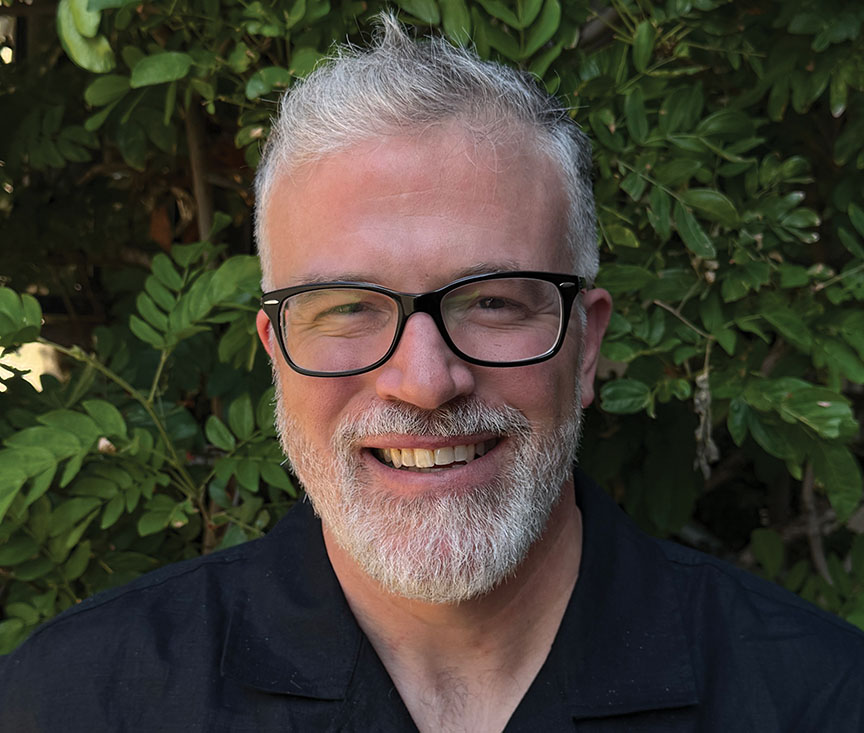
AOMAR BOUM is associate professor and vice chair of undergraduate studies in the anthropology department at UCLA.