There’s great joy in the mitzvahof building and decorating a sukkah. To introduce kids to this beloved tradition, making a toy sukkah is fun activity that also provides an opportunity to teach the little ones about the Sukkot holiday.
As you create the sukkah, you can explain what Sukkot signifies and go through the rules of sukkah-building, such as how many walls and what you can use for the schach, the roof material. The holiday will definitely be more meaningful for them — and the whole family.
What you’ll need:
Cardboard box
Hobby knife
Colored paper
Glue
Popsicle sticks
1.
1. Cut the flaps off a medium-size cardboard box with a hobby knife. I recycled a mailing box. You also can use a shoebox, which doesn’t even have flaps. (Never let the kids get near a hobby knife — they’re sharp.)
2.
2. Decide which side of the box will be your roof. Cut an opening on this side so the roof is exposed. The schach will later cover this opening.
3.
3. Glue colored paper to the interior and exterior of the box. For simplicity, you can also leave the box as is, or even paint it.
4.
4. Decorate the exterior walls, if you wish. I cut out circles and glued them to the left and right exterior walls.
5.
5. Decorate the interior walls. You can use stickers or family photos. I cut out leaf shapes and glued them onto colored rectangles to make autumn-themed artwork.
6.
6. Make garlands by attaching circle loops to one another, and hang them from the roof.
7.
7. For the wood slats of the schach, lay down wooden Popsicle sticks across the opening in the roof. Then place branches or other vegetation on them.
8.
8. Furnish the interior however you’d like. I made stools by covering wood blocks with colored paper and made a table out of a plastic lid glued onto another block.
Jonathan Fong is the author of “Walls That Wow,” “Flowers That Wow” and “Parties That Wow,” and host of “Style With a Smile” on YouTube. You can see more of his do-it-yourself projects at jonathanfongstyle.com.
Shimon Peres, one of the early and enduring leaders of the State of Israel, calls to us from the grave in his posthumously published memoir and manifesto, “No Room for Small Dreams: Courage, Imagination, and the Making of Modern Israel” (Custom House). His book is a timely reminder that Zionism calls for a strong back, a willingness to sacrifice and a generous heart, all of which Peres possessed.
Born in Poland in 1923, he made aliyah when he was 11 years old, joined the Haganah when it still was an underground army, served in 12 Israeli government cabinets, and held the offices of both prime minister and president of Israel.
“Your father is like the wind,” his wife told their children, who contribute a foreword to the book. “You will never be able to stop him or hold him back.”
His remarkable story starts when he first arrived in what he calls Mandatory Palestine in 1934. “We weren’t just living on the frontier of Jewish history,” he writes. “We were shaping it with our hands. With every seed we planted and every crop we harvested, we were extending the reach of our dreams.”
Even then, as a teenager working in the fields of an agricultural school called the Beth Shemen Youth Village, Peres was drawn to politics, a career for which he seemed to be destined: “I was blessed with an unusually deep baritone voice, one that lent my words the aura of authority, even when it hadn’t been earned.”
Soon enough, Peres was chosen by David Ben-Gurion, along with another promising young man named Moshe Dayan, to play a leadership role in Mapai, the progressive Zionist party that Ben-Gurion headed. From that day, Peres would go from strength to strength, but he always displayed the poise and restraint for which he came to be famous: “Ben-Gurion had shown me that listening is not just a key element of good leadership, it is the key, the means to unlock doors that have been slammed shut by bitter dispute.”
Peres, the man who signed the Oslo Accord on behalf of Israel, acknowledges the irony that characterizes his career. “For the past forty years I have been known as one of Israel’s most vocal doves, as a man singularly focused on peace,” he writes. “But the first two decades of my career were spent not in pursuit of peace but in preparation of war.” He was responsible for stockpiling smuggled arms in advance of the War of Independence: “I learned everything from the defects inherent in a particular type of rifle, to the fuel supply needed to carry a warship across the Atlantic.”
By the way, Peres celebrates Al Schwimmer, one of the American pilots who traveled from Los Angeles to serve with the Israeli air force during the War of Independence. “[O]f all the characters I worked with during those years, none was more fascinating, more boisterous, or more singularly invaluable than [Schwimmer].”
Peres reveals that Schwimmer built the first aircraft for El Al at a secret workshop in Southern California and remained a key man in the Israeli aircraft industry, sometimes ferrying new planes to Israel on the treacherous polar route.
Most consequential of all is Peres’ account of the Israeli nuclear program, which began in 1956 and eventually elevated the infant state into a nuclear power. He recalls what he told John F. Kennedy when the president asked him about Israel’s nuclear capabilities: “Mr. President, I can tell you most clearly that we shall not be the first to introduce nuclear weapons to the region,” Peres said. That deeply enigmatic sentence turned out to be a key element of Israel’s policy of deterrence: “For nearly fifty years, nuclear ambiguity has been Israel’s official position.”
Peres was a man of big ideas and big accomplishments, but what I admire most about “No Room for Small Dreams” is his ability to use his own life story as a biography of the Jewish state. I learned more than I previously knew about Peres, but I also felt that I was glimpsing the history of Israel through the eyes of one of its founding fathers and ultimate insiders.
JONATHAN KIRSCH, author and publishing attorney, is the Jewish Journal’s book editor.
“Tales From the Forgotten Kingdom”sounds like the name of a sword-and-sorcery television show. The truth, though, is that it’s a theatrical musical presentation that tells romantic, touching and sometimes heart-rending stories of Sephardic communities during the early part of the 20th century in cities such as Smyrna (Izmir) and Salonika (Thessaloniki) on the Aegean Sea, Sarajevo, now in Bosnia and Herzegovina, and Jerusalem.
The show features more than a dozen songs in Ladino, the Judeo-Spanish dialect Sephardic Jews took with them when they were exiled from Spain and Portugal more than 500 years ago, with an English narration that translates the songs and provides historical context.
Conceived, written, and composed in 2011 by the Israeli-born guitarist, singer and composer Guy Mendilow, 39, “Tales From the Forgotten Kingdom” has been staged dozens of times at festivals, theaters, colleges and community centers throughout the United States and Canada, including at the Skirball Cultural Center in 2014. Mendilow and his quintet, which includes a Palestinian percussionist and an Argentine vocalist, have received many honors and awards, including a grant from the National Endowment for the Arts.
The Ladino-language songs in “Tales From the Forgotten Kingdom” — always charming and occasionally mournful — are respectful to tradition but unique and fresh. And on Oct. 6, the show finally will be available on CD, with the title “The Forgotten Kingdom.” Actually, it will be two CDs, because one features the 14 songs in Ladino, while the other is the soundtrack of the entire show: all the songs, plus the English narration.
According to Mendilow, it has taken six years for the show to be recorded because it has evolved over the years, with the ensemble tweaking the songs and narration of their live performances.
The poetic and moving English narration points the audience in the direction of the story, Mendilow said from his home in Boston, “but it doesn’t give you everything, it doesn’t give you all the details, so you are left to imagine it yourself. You end up creating characters in your own image, and creating settings and scenarios and predicaments made of the fabric of your own experience. The show is intended for audiences that don’t know about Sephardic life and culture, so this kind of universality is important.”
Although not of Sephardic background, Mendilow — who has studied ethnomusicology and is very much at home with English, Hebrew, Spanish and Portuguese — has spent many years exploring Sephardic history, culture and its musical traditions.
Mendilow said that Sephardim were an integral part of the Ottoman Empire for hundreds of years. He feels it’s important to grasp how they lived, especially “the way they worked across ethnic, religious and cultural lines for generations. I’m fascinated by the historical implications of that, and how that may apply to the current world. … And then it all ended; it all crumbled in the wake of the First World War. This points to questions we could ask ourselves now. What does it mean to watch your world end? What does it mean to straddle two eras, an older world and a newer one?”
Mendilow cited World War I and the collapse of the Ottoman Empire as a “seismic shift in the history of European culture and the story of Western cultures.” It was also a seismic shift for the Sephardic cultures that were embedded in that empire.
There is one song in the show that highlights this dilemma.
“La Vuelta del Marido” [The Husband’s Return] is an old Turkish-Sephardic song, Mendilow said. “It describes soldiers riding with breastplates, the horses are wearing breastplates of silver, and the soldiers have spears … and they’re very gallant, wearing white gloves. This is how officers in the early battles of the First World War arrived. And they were met with a storm of steel. And that’s the moment the old world ended. … What was it like to have gone through that change? This is haunting for me because I wonder if we, too, are at a crossroad.”
If World War I was the great change, Mendilow said, World War II “nailed the coffin on the old world” as well as on the Sephardic communities that had existed — and often thrived — in Europe for hundreds of years. “We in the U.S. don’t really know anything about those struggles,” he said. “You talk with people about the Second World War and you ask them what happened in Greece, what happened in Turkey, what happened in Bosnia, there’s a kind of blank spot on the map; and these are stories that are important to know.”
The arc of “Tales From the Forgotten Kingdom” follows European-Sephardic communities from the period during which the Ottoman Empire still existed until 1943, when train transports took Salonika Sephardim and other Greek Jews to Auschwitz.
The songs in the show are about loss, of course, but Mendilow emphasized that they’re also about hope. “There’s a question that runs through the show: When you’ve witnessed the end of your world, and you’re still around, what does it mean to start again?”
In “Tales From the Forgotten Kingdom,” there are clear echoes of today’s headlines: old civilizations forced into exile by war and famine, loss of cultural heritage and adapting to an alien land.
Mendilow is acutely aware of the resemblances his songs and narration bear to the present.
“If [people who listen to the songs] develop a fascination for Ladino music, great. Fascination for the history, great,” he said. “But my hope is also that they’d be left with some questions. And the main question is: In what way are these stories still playing out today? How are these stories not just about long ago and far away? How are these stories also in some way about us?”
It’s complicated. How manytimes have we heard someone say this? Whether with regard to relationships, politics, culture or (perhaps, especially) Jewish identity, it’s a common response when someone is reluctant to discuss something or simply doesn’t have the language with which to articulate it. We sometimes intuit that there are nuances to a subject, but often lack the capacity to confront them directly and flesh them out in a meaningful way.
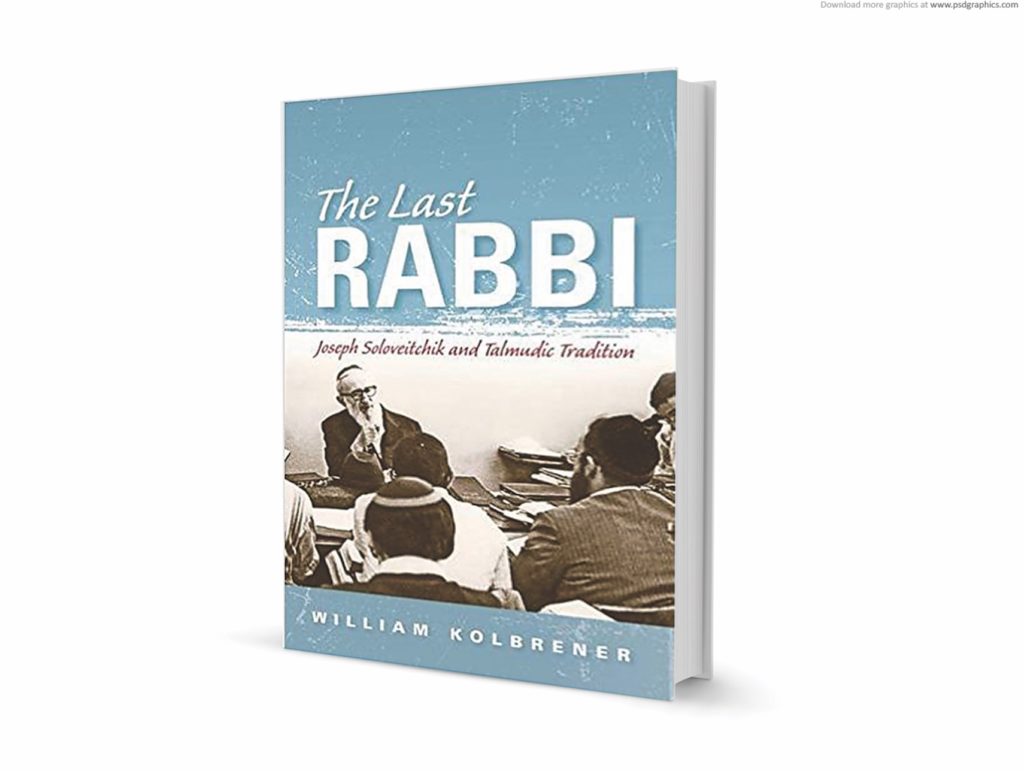
In “The Last Rabbi: Joseph Soloveitchik and Talmudic Tradition,” author William Kolbrener is not satisfied with Soloveitchik — one of the most important 20th-century American Orthodox rabbis, talmudists and philosophers — as simply the notorious “lonely man of faith” and the complexities of such a persona. Rather, he explores the ways in which Soloveitchik was consistently pulled between his radical and sometimes pluralist philosophy and the more traditional demands of his European predecessors.
Kolbrener calls on literary, philosophical and psychoanalytical means as he explores Soloveitchik’s seemingly divergent tendencies — an impulse that is somewhat uncommon in studies of the great thinker, but refreshing. Especially compelling is Kolbrener’s early disclaimer that his book begins “in disillusionment.” This very first line drew me in, for it acknowledges the degree to which some of the most insightful studies must come from personal, rather than intellectual, engagements with the subject matter.
Soloveitchik died in 1993 at the age of 90. He was born in Poland, into a family of multiple rabbis, including hisfather, with whom Soloveitchik studied until he was 23. He later studied in Berlin, where he formed a lifelong friendship with Rabbi Menachem Mendel Schneerson of Chabad-Lubavitch fame.
In 1932, ahead of what would soon become one of the darkest moments in the history of European Jewry, Soloveitchik emigrated to the U.S. and settled in Boston, where he established one of the city’s first Hebrew day schools.
For many, Soloveitchik, the author of numerous books, is the most influential person associated with the spread of Torah in the United States. However, one of his most popular books, “Halakhic Man” (1983), still read widely in the Orthodox world but in many ways rejected as a model for Jewish law by most non-Orthodox communities, reflects the way he was consistently at the crossroads of Orthodox and non-Orthodox worlds. Even Rabbi Abraham Joshua Heschel, while admitting Soloveitchik’s brilliance, criticized the book as depicting a Judaism that is a “cold, logical affair, with no room for piety.”
For the religious right, Soloveitchik was viewed as someone wanting to modernize Judaism, to Americanize it. For those on the religious left, he was seen as someone who was too much in the Old World.
For Kolbrener, he is more than a rabbinic figure to be studied and revered. This book was written over the years spanning critical changes in Kolbrener’s life, including his “turn to Jewish observance and study in yeshiva.” For Kolbrener, this book is about providing Soloveitchik with the status he has rightfully earned as a “figure within the intellectual history of the past century, a religious philosopher of consequence, independent of his rabbinic title” and institutional affiliations.
But such an agenda is not without its provocation, for Kolbrener’s disillusionment comes partly from the realization that Soloveitchik is not the idealized image perpetuated by his most loyal followers. It is this fact, or rupture, that opens up the possibility to see Soloveitchik as more than the “halakhic man” who thinks only of reciting the Shema when he bears witness to a gorgeous morning sunrise.
The idea of rupture is particularly important to Kolbrener’s understanding of both Soloveitchik’s work and the talmudic tradition. Indeed, it has been suggested by various scholars that tensions present in biblical and talmudic texts are necessary ruptures. Such breaks in textual or ideological continuity are, in fact, critical to ensuring an evolving dialogue about the subject or text in question.
The midrashim, for example, exist only because of such ruptures within the Hebrew bible. One might even say that these ruptures in the text — places where ellipses are privileged over densely detailed storytelling and absences are pushed to the forefront — are wounds of a kind. And certainly Soloveitchik was a man of wounds both buried and revealed.
In the introduction, Kolbrener reminds us that Rabbi Lord Jonathan Sacks once noted that the impact of the Holocaust on Soloveitchik was so enormous that he was consistently “terrified by death and destruction” and that all of his endeavors were focused on “bringing a dead world back to life.” Yet despite this constant terror, this focus on reviving the past in the form of halachah, Soloveitchik was also an “undeniable figure of transition.”
Like many survivors of the Holocaust and other collective tragedies, Soloveitchik stood in the worlds of both the living and the dead, giving him both the luxury and the curse of inhabiting the margins, residing both inside and outside. Kolbrener recounts the young Soloveitchik’s experience of sitting on his bed in the living room where his father, defender of the Rambam, gave daily Torah lectures. Soloveitchik was excluded from the group, but was at the same time part of it since his proximity enabled him to hear voices dissenting from the teaching of Maimonides, with the exception of his father.
As Kolbrener says, Soloveitchik would “remain in that liminal space for the rest of his life, cultivating his ambivalent identity as both insider and outsider to the group that he calls ‘halakhic men.’ ” Moreover, Soloveitchik would later suggest that he felt the presence of the Rambam, sitting there on his bed with him and listening to his father’s words.
Kolbrener calls this story a “contemporary midrash, an updated parallel to the talmudic midrash in which Moses sits in the back of a classroom” while he listens to Rabbi Akiva. Midrashic stories exist further to remind us of an inherent failure in the biblical text, the failure to tell the whole story. And with every failure — every disillusionment — comes also the responsibility to respond and to engage. Ellipses, ever present in the Hebrew bible, become opportunities for ethical response and openings for ongoing dialogue.
Kolbrener, it seems, takes this one step further, engaging the work of Freud and using it as a lens through which to read this “contemporary midrash” that becomes ultimately Soloveitchik’s “rehearsal of … his Talmudic primal scene” in which there is an “identification between his father and Maimonides.” In such a reading, Kolbrener finds that the identities of Soloveitchik, his father and Maimonides are blurred, consequently bringing together past, present and future in the figures of these three men.
Kolbrener’s midrashic reading of this “contemporary midrash” is a perfect example of the importance of midrashic thought to Jewish continuity. And he understands well the value of looking at every text from every angle through multiple lenses to reveal the life it conceals.
Even the structure of “The Last Rabbi” quietly reflects Soloveitchik’s own inner hybridity. Epigraphs from literary, philosophical and psychoanalytical greats such as Shakespeare, Adorno, Wilde, Cavell, Freud, Nietzsche and Kristeva lead chapters. And by the end of the first page of the first chapter, Kolbrener has woven in the Rolling Stones’ “Exile on Main St.,” and what he calls its own “unlikely midrash of the ‘face to face’ from Exodus, expressing an anxious response to lost presence and an impatience with language as compensation for that loss.”
One recalls the line: “Don’t wanna talk about Jesus, just wanna see his face.” It’s a surprising reference to discover in a book about Soloveitchik, but Kolbrener is right to include it given that it does, as he says, express the “desire to dispense with the trappings of language, the excrescence of the material that detract from — and veil — the unmediated truth.” Indeed, it’s complicated. And so was Soloveitchik. I’m glad for that.
MONICA OSBORNE is a writer and scholar of Jewish literature and culture. Her book, “The Midrashic Impulse and the Contemporary Literary Response to Trauma,” will be published later this year.
An L.A. Theatre Works event honoring attorney E. Randol Schoenberg raised more than $225,000 for the nonprofit media arts organization.
The event, “L.A. Theatre Works Celebrates the Pursuit of Justice,” drew a crowd that filled the Wallis Annenberg Center for the Performing Arts in Beverly Hills on Sept. 27.
Schoenberg is best known for successfully suing the Austrian government on behalf of Maria Altmann for the return of five paintings by Gustav Klimt that the Nazis stole from Altmann’s family. The case inspired the 2015 movie “Woman in Gold,” named after the most famous of the five paintings, “Adele Bloch-Bauer I.”
The evening featured a performance of L.A. Theatre Works’ national touring production of “Judgment at Nuremberg” by Abby Mann, followed by a conversation between Schoenberg and Geoffrey Cowan, director of the USC Annenberg Center on Communication Leadership & Policy.
“At a time when our country finds it almost impossible to have a conversation with itself, L.A. Theatre Works reminds us that we must, because our humanity connects all of us,” said actor Hector Elizondo, the event’s host.
In a pre-recorded video, actress Helen Mirren, who played Altmann in “Woman in Gold,” lauded Schoenberg, whom she met during the making of the film. “I got to know a man whose sense of justice, whose persistence, whose courage is exemplary,” Mirren said.
Beverly Hills Mayor Lili Bosse also praised Schoenberg’s work.
“Although there can never be adequate justice for what occurred in Europe in the 1930s and ’40s, Randy understands that we must continue to pursue it,” Bosse said. “Recent events and headlines in our own country remind us how essential this is.”
In his discussion with Cowan, Schoenberg said, “I think it’s so important to study the Nazi period because it was the worst period in the history of mankind. It shows us exactly what can happen in advanced societies and even in democratic societies.”
— Kelly Hartog, Contributing Writer
Jewish Family Service of Los Angeles (JFSLA) board members tour historic Jewish Los Angeles, led by the Jewish Historical Society of Southern California. The monument recognizes JFSLA, originally The Hebrew Benevolent Society of Los Angeles, as the first chartered charity in the city. Photo courtesy of Jewish Family Service of Los Angeles
Jewish Family Service of Los Angeles (JFSLA) board members on Sept. 24 visited the site of their organization’s first location, situated in Chavez Ravine, adjacent to Dodger Stadium.
The visit was part of a tour of historical Jewish sites facilitated by Stephen Sass, president of the Jewish Historical Society of Southern California.
The site holds special significance for JFSLA, as it was the first property acquired by the organization, originally the Hebrew Benevolent Society of Los Angeles, in 1855, a year after it was founded. The location served as the Jewish community’s cemetery until 1902, when the remains and monuments were transferred to the Home of Peace Cemetery in East Los Angeles.
A monument at the site, California State Historical Landmark No. 822, recognizes the organization as the first chartered charity in the city and dates the acquisition of the land as April 9, 1855.
“There were hardly even a dozen Jews in L.A. in 1854,” said Michael Sidman, JFSLA director of communications. “For JFSLA’s board members to see the very first act we spearheaded, it is amazing to see how far we have come.”
Among those who attended were JFSLA board chair Shana Passman and the organization’s president and CEO, Paul Castro.
“Providing Jewish burials was the first thing on the minds of the handful of Jewish pioneers who went west,” Passman said. “Seeing the place where our predecessors laid the foundation for our community made me proud of all that we have accomplished in the last 163 years and more determined than ever to continue the important work we do.
— Virginia Isaad, Contributing Writer
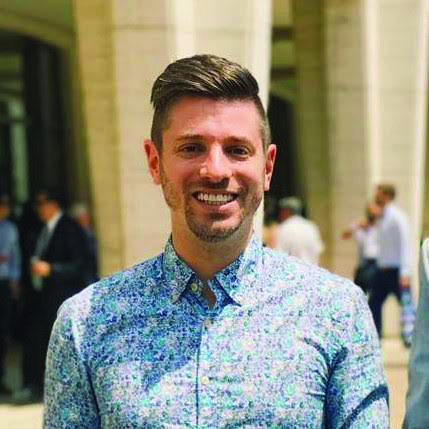
Michal Taviv-Margolese, executive director of NCSY West Coast region. Photo courtesy of Michal Taviv-MargoleseJewish Family Service of Los Angeles Director of Communications Michael Sidman. Photo courtesy of Jewish Family Service of Los Angeles
Two Los Angeles-based Jewish organizations have announced a change of leadership.
NCSY, formerly known as the National Conference of Synagogue Youth, appointed Michal Taviv-Margolese as executive director of its West Coast region; and Jewish Family Service of Los Angeles (JFSLA) named Michael Sidman its new director of communications.
Taviv-Margolese previously was the Los Angeles regional director for the Israel-based education organization AMIT.
“I’m most excited about working with an incredibly talented, passionate group of professionals to continue the mission of connecting and inspiring Jewish teens,” she said.
NCSY was founded by the Orthodox Union in 1954 to help Jewish teens build leadership skills. Today, it runs extracurricular programs across the country in partnership with public schools, synagogues and Jewish day schools.
Taviv-Margolese will take over the group’s operation in a region that ranges from Seattle to the north, Phoenix to the east and San Diego to the south. She said she is committed to “empowering teens through leadership development to become committed, impassioned leaders of the community.”
Jewish Family Service of Los Angeles is a social services organization with multiple Southern California campuses whose programs range from providing psychosocial support for Holocaust survivors to sheltering domestic violence victims, Jewish and non-Jewish.
Sidman previously held the post of communications director for the New York City Mayor’s Office to Combat Domestic Violence. Before that position, he served in leadership and communications roles at Columbia University Medical Center, the New Israel Fund and the Jewish Community Center in Manhattan.
Regarding his new position at JFSLA, Sidman told the Journal he is excited “to communicate the amazing work it does for the both the Jewish community and the Greater Los Angeles community as a whole.”
Before Sidman’s appointment, the position of communications director had been vacant for several years.
— Eitan Arom, Senior Writer
Adeena Bleich (from far left), Adam Bierman, Nick Greif, L.A. City Councilmember David Ryu, LAUSD board member Nick Melvoin, Rabbi Jason Weiner, Rabbi Joshua Hoffman and Jewish Federation Director of Public Affairs and Government Relations Aubrey Farkas Harris celebrate Rosh Hashanah at Los Angeles City Hall. Photo courtesy of Jewish Federation of Greater Los Angeles
The sound of the shofar echoedoffthe vaulted ceilings of Los Angeles City Hall on Sept. 26 in observance of Rosh Hashanah.
The Jewish Federation of Greater Los Angeles organized the event in partnership with Los Angeles City Councilmen Bob Blumenfield, Paul Koretz and Mitchell Englander. The council members gathered with Federation leaders, participants and alumni of the Rautenberg New Leaders Project (NLP), rabbis and community leaders to welcome the new year with apples and honey.
“It was an honor to partner with the city of Los Angeles and the Jewish community to recognize and celebrate Rosh Hashanah and usher in the New Year together,” said Alisa Finsten, Federation’s senior vice president for community engagement. “I would like to thank all of the elected officials who have been extremely supportive of the work of the Jewish Federation, not only today, but yesterday and tomorrow, as well. We look forward to continuing to work with our city partners to address the most pressing needs of our great city.”
Additional attendees included L.A. City Councilman David Ryu; LAUSD School Board member Nick Melvoin; Rabbi Jason Weiner of the Cedars-Sinai Spiritual Care Department; RabbiJoshua Hoffman of Valley Beth Shalom; NLP alumnus Adeena Bleich; and American Jewish Committee Assistant Director of Policy and Communications Siamak Kordestani.
“Every year during Rosh Hashanah and Yom Kippur, we reflect on the past and we make commitments to be our best selves and to better serve our communities moving forward,” Kordestani told City Council members. “This year, let us work ever harder to pursue a more just and tolerant society where all races and religious groups live in peace and with dignity.”
— Ayala Or-El, Contributing Writer
From left: Israeli lacrosse player Noah Miller; former U.S. Soccer Federation president Alan Rothenberg; sports documentarian Erit Yellen; USC Casden Institute Director Steve Ross; swimmer Lenny Krayzelburg and L.A. Tri Club co-founder Larry Turkheimer participate in a discussion on “Jews, Sports and Social Justice.” Photo by Steve Cohn
About 100 people attended a Sept.24panel discussion with Jewish sports figures titled “Jews, Sports and Social Justice,” held at the Town and Gown ballroom on the USC campus.
The Casden Institute at USC, which is dedicated to the study of the Jewish role in American life, organized the event, the 12th edition of its annual lecture series.
The panel featured four-time Olympic gold medalist in swimming Lenny Krayzelburg; Noah Miller, a member of Israel’s national lacrosse team and an Israel Defense Forces veteran; Alan Rothenberg, former president of the United States Soccer Federation; and Erit Yellen, a producer and writer of documentaries dealing with sports and social issues.
Highlights included Krayzelburg recounting his path to Olympic glory, which included facing virulent anti-Semitism growing up in the Soviet Union, and Miller outlining his work coaching Arab-Jewish youth lacrosse teams in Israel to promote tolerance through sport. Yellen, the panel’s lone female, discussed how Title IX has improved gender equality in collegiate and youth sports, but professional sports “still have a ways to go,” she said.
Steve Ross, director of the Casden Institute and a USC history professor, had a simple answer when asked why he chose this year’s topic.
“Sports break barriers better than anything else in our society,” he said.
Ruth Weisberg, a USC art teacher in attendance, said she enjoyed the event.
“It had a good representation of different points of view, different experiences,” Weisberg said. “I liked how people responded passionately to the questions both about Jewish identity and their involvement in history and sport, and I felt I learned a great deal.”
After the discussion, guests joined the panelists for a gala dinner.
Although Steven Spielberg is one of the world’s most respected and successful directors, earning critical acclaim and billions at the box office, he hasn’t been the subject of a feature-length documentary — until now. In more than 30 hours of interviews conducted over a year, filmmaker Susan Lacy (PBS’ “American Masters”) got the Academy Award-winning moviemaker to talk at length about his influences, his films, their themes and how his life has informed them, resulting in an HBO documentary, “Spielberg,” which premieres Oct. 7.
“He is very shy about interviews, does very few. So this was quite an extraordinary experience to hear him really open up,” Lacy said at the Television Critics Association’s summer press tour. She also got more than 80 of Spielberg’s colleagues, collaborators, friends and family members to comment as Spielberg dissects his work in the film.
Full of anecdotes and fun facts about iconic movies, the documentary also is intensely personal, with revelations about Spielberg’s childhood and family and how both affected his movies. His parents’ divorce and its impact on his family influenced “E.T.” and “Close Encounters of the Third Kind.” “Saving Private Ryan” was inspired by the stories he heard from his father, a pilot who served in World War II.
“His early movies drew on what he knew,” Lacy said of Spielberg, who grew up in the Phoenix suburbs watching television, reading comic books and chasing his sisters Anne and Nancy around with a Super 8 camera. He was also the target of bullying and anti-Semitism, which made him ashamed of being Jewish.
“He didn’t want to be connected to Judaism as a child because he didn’t want to be a pariah. Growing up in the suburbs of Phoenix in the only Jewish family on the street, it made him an outsider,” Lacy told the Journal.
Neighborhood kids would laugh when Spielberg’s grandfather called him by his Hebrew name, Shmuel. “I always wanted to fit in, and being Jewish, I couldn’t fit into anything,” he confides in the film. “I began to deny my Jewishness … I didn’t want to be Jewish.”
Lacy explained that when Spielberg met actress Kate Capshaw, who converted to Judaism before their wedding in 1991, “She said, ‘You must reconnect with your faith.’ Then he made ‘Schindler’s List,’ and it brought him back completely into the fold, and proud of being Jewish.”
Spielberg had read Thomas Keneally’s book about Oskar Schindler in 1982, but held onto it for a decade until it was the right time to make the film, which earned him two Oscars and led to the creation of the USC Shoah Foundation.
“It was, emotionally, the hardest movie I’ve ever made,” he told Lacy. “It made me so proud to be a Jew.”
Capshaw and Spielberg’s seven children are not in the documentary, but his sisters, his father and his late mother are “because they were there at the birth of his becoming a filmmaker and could talk about who he was at that time in his life,” Lacy said.
With 2 1/2 hours to work with, Lacy focused on Spielberg’s film directing, eschewing other projects and giving less play to his less successful movies, including “1941” and “The Color Purple.”
“He was not reticent to talk about failures,” Lacy said. “But if you want to tell a real story with a beginning, middle and end, and in any kind of depth, you simply cannot cover everything.”
It was more important, she said, to highlight the common themes in his oeuvre, including families’ separating and reuniting, the resilience of children, fighting for freedom and good people trying to do the right thing against all odds.
“Steven is actually an incredibly personal filmmaker,” Lacy said. “The box office has never been what’s driven him. What has interested him has changed and matured as he’s grown up. But that boy who loves movies, loves moviemakers — that kid is still in him.”
Just 21 when he made his first television movie, “Duel,” he stood up to the network, refusing to blow up the menacing truck at the end of the film. He insisted on shooting “Jaws” on the ocean, although it was a logistical nightmare to do so. “Having a vision and sticking to it, not letting anybody get in the way of it — that’s probably the best lesson you could learn from Steven Spielberg,” Lacy said. “ ‘Schindler’s List,’ a 3 1/2-hour, black-and-white movie about the Holocaust, could have been a huge flop. But it was something he needed to do, he knew how to do it, and he stuck with that.”
Lacy appreciated that Spielberg “in no way tried to steer this film and did not see it until it was finished.” So when he called to tell her he liked it, “I almost fell on the floor. What happens if Steven Spielberg doesn’t like your movie?” she said. “I’d set a very high bar, and I was nervous all the time that I would not achieve it. I hope I did.”
She came away from the project secure in the knowledge that Spielberg “is exactly who he seems to be. Sometimes you’re disappointed when you meet a hero and that did not happen with Steven,” she said. “He was everything I expected him to be and more. I’m not trying to be gushy here, but he’s a really, really good human being. He’s a mensch.”
Captivating audiences with rich, beautiful characters, cliffhanger plots, over-the-top fashion and the occasional catfight, the prime-time soap “Dynasty” was water cooler TV in the 1980s. Three decades later, the youth-oriented CW Television Network is updating the original formula for a millennial audience with a modern take on the series.
“It’s the same characters, but skewed to make them more contemporary,” said executive producer Esther Shapiro, co-creator of the original “Dynasty” with her husband, Richard.
The new “Dynasty” still follows the feuds and foibles of the Carringtons and Colbys and their assorted lovers and rivals, but with a more diverse cast. Main characters are Black, Latino, openly gay and transgender. The setting has shifted from Denver to Atlanta. And the focus is squarely on the ambitious 20-something daughter, Fallon (Elizabeth Gillies).
“All of it speaks to the CW audience and its demographics,” Shapiro said.
CBS Television Studios wanted to revive the show before, starting about eight years ago, but couldn’t find a concept that worked, and “I hadn’t heard any that I liked, either,” Shapiro said. “I didn’t want to tell stories about the old characters’ grandchildren. This one took the original characters and modernized them for a new audience.”
Josh Schwartz and Stephanie Savage (“Gossip Girl,” “The O.C.”) are the creative team behind the reboot, along with showrunner Sallie Patrick (“Revenge”) and producer-director Brad Silberling (“Jane the Virgin”). But Shapiro, an 89-year-old grandmother, said she and her husband have remained involved in the creative process.
“I wasn’t involved in the casting, but they come to my house for meetings and show me stuff. I gave them notes and discussed everything they did at every stage,” she said. “I give them feedback, but I don’t get in their way.”
Shapiro said she advised the new team to preserve what made “Dynasty” work in the first place: fantasy. “There is always a craving in the audience to see how the upper 1 percent lives. Yes, it’s about business and takeovers, but that’s in the background,” she said. “It was the clothes and the diamonds, and the upstairs-downstairs part of it. There’s something perennial about ‘Dynasty.’ That’s not the case with every show.”
Following in the footsteps of Nolan Miller — whose glitzy, big-shouldered gowns for Linda Evans and Joan Collins set trends on the original “Dynasty” — Meredith Markworth-Pollack is the new show’s designer, and famous names in fashion will contribute. “You want to do cutting-edge clothes but you don’t want to go so far that the audience can’t imagine themselves in it,” Shapiro said.
But it took more than clothes to make “Dynasty” a hit.
“I think the key is always story and casting,” she said. “All the other things are important too, but you have to have the right story for the time, and the casting has to be perfect.”
Then come the secrets, nefarious schemes and plot twists that leave audiences in suspense. For those, Shapiro took inspiration from Scheherazade and the Roman Emperor Claudius. “Scheherazade told a very long story to the king to keep from being decapitated, very much like a cliffhanger saves you from being killed by the network,” she said. “And I was very influenced by ‘I, Claudius,’ the poisonings and all the terrible things that they did. Nothing we came up with could beat what the Romans did.”
The success of the original “Dynasty” also had to do with timing, she said. “We had such a spate of crime shows, and I think the female audience was longing to see something from the female perspective.”
Shapiro said she believes familiarity and nostalgia will entice fans of the first “Dynasty” to tune in, and “with a character like Fallon at the heart of it,” younger viewers who watched “Gossip Girl” will, too. “There’s a huge part of the audience that likes soaps,” she said.
While there were no characters identified as Jewish on the original “Dynasty,” and there are none yet in the new version, “There’s a lot of Jewish emotion in the show,” Shapiro said. “We express ourselves more openly. It’s a cliché, but it’s true.”
The daughter of Sephardic Jewish immigrants from Greece and Turkey who met and married in New York, Shapiro grew up in a nonreligious home but celebrated major Jewish holidays. Today, she said, she is “always interested in what’s happening in Israel. I give to Jewish causes.”
Shapiro attended USC and met her husband there in a writing class. “We started collaborating before we got married” in 1960, she said. “We bring different things to the table. We complement each other. Nobody can write better dialogue than he can. I’m really good with people and story. We just clicked on every level.”
The couple wrote scripts for the 1970s TV movies “Minstrel Man,” “Sarah T.: Portrait of a Teenage Alcoholic” and other film and television projects before Esther Shapiro became an executive at ABC. During her tenure, she oversaw such projects as “Roots,” “Roots: The Next Generations,” “The Winds of War,” “The Women’s Room” and “Masada,” which collectively were nominated for 44 Emmy Awards, winning seven.
“I felt like the secretary of war — every project seemed to be associated with turmoil,” Shapiro said. “But I was very proud of that time.”
I’m sitting on thetarmac at BenGurion Airport. It’s been too many years since I’ve been home for what I’m afraid is a last goodbye to my beloved Aunt Dora, a woman whose influence on me in the kitchen, and in life, has been so profound that a world without her seems unfathomable. A phone call a few days prior from my cousin brought me to Israel from Uganda, where I work as the head chef at the U.S. Embassy in Kampala. After packing so quickly that I managed to forget one shoe out of each pair, I rushed straight from work to Entebbe Airport (yes, that Entebbe).
As always, my heart had pounded to the beat of the clapping passengers as the plane touched down in Israel. I usually laugh and clap along, but this time I’m expecting my cousins to pick me up and take me straight to the hospital, and my intuition tells me the trip will be no clapping matter.
My bag takes forever to exit the plane, so I have time to be struck by how familiar the smells are, how there is no place like Israel, no place that touches me the same way, smells the same way, for better and for worse.
My suitcase finally plops onto the conveyer belt and I grab it with impatient sabra hands to take the ever-familiar walk on shaky knees to arrivals. I see my Aunt Viola first and know immediately that my intuition didn’t fail me. I am too late. Dora passed away while I was en route, some hours prior, quietly and peacefully, following a devastating year of being confined to a wheelchair after losing the use of her arms and legs.
For the MVP of cooking in our large Bulgarian family in Israel, that chair must have felt like a prison. Being unable to cook for her grandchildren was a fate perhaps worse than death. So much so that she was gifted by my cousin with a cooking companion in the form of a caregiver named Alice. As I was to learn from my cousin, Alice’s job consisted mostly of wheeling Dora around the neighborhood supermarkets, picking out the best meat and produce, and then monitoring Alice’s hand-washing habits as she ordered her around her kitchen to re-create our family specialties to distribute to her granddaughters.
Dora came to Israel in 1948 at the age of 12 as part of a group of Zionist youth in the aftermath of the Holocaust. Like many of the intensely patriotic youth who went to Israel from that part of the world, Dora tried to create the happy childhood she never had through food and the recipes of her native Bulgaria. She was my mother’s “Gisa,” the Hebrew word for sister-in-law, and my father’s brother’s wife. She taught my mother and me through extension to cook. My mother, a Romanian Jew, was the first daughter-in-law on that side of the family who did not have Bulgarian roots, something I suspect was lamented on my father’s side until she showed promise as a fantastic cook, despite being Ashkenazi (gasp)!
That was all thanks to Dora, who at all times of the day and night could be counted on to answer the phone after my young parents snatched me away from her (her words) and immigrated to America. Those phone calls from my mother to Dora, back in the days when you had to order a call through an international operator and wait impatiently for them to ring you back, were my mother’s lifeline. Much of my youth was spent waiting for Dora’s input so that my mother could re-create some Bulgarian soul food from my father’s childhood that had been passed onto Dora from his mother.
In later years, when I had my own kitchen, it was me making those calls to Dora. When I opened my first restaurant, Dora’s techniques and kitchen hacks provided me with both an excuse to talk to her on an almost daily basis and a set of kitchen principles that have yet to fail me. I’m sure many of her recipes separated me from the rest of the pack by virtue of the originality of the Sephardic-Israeli kitchen that shows up so often on my menus. After I opened my second restaurant and then started working for the American embassy, these weekly phone calls persisted. Every Saturday, almost without exception, and particularly when I had a large catering event, I would call Dora and ask her for ideas and advice.
Many times during the shivah, in my Aunt Dora’s kitchen, we would look in the freezer where there were packed boxes of food, everything labeled and orderly, just waiting for her heating instructions. Never again would we annoy her by not bringing back the Tupperware containers so she could fill them up again. We knew that, even though we had watched her make some of our family-memory foods many times, in this freezer was the last real taste of her.
I’m back in Uganda now, cooking for this High Holy Days season in my own kitchen just like Dora would have. I’m starting to roast and peel the red peppers and eggplants the way she taught me. I’ve fallen in love with a preparation from her daughter Orly, who, like me, inherited Dora’s love of the kitchen. It’s something Orly would whip together for me after the long, hard days of the shivah, even though as the griever, she wasn’t supposed to cook, but she, like me, cooks for relief from stress and grief.
This knockout dish encompasses all the best of Dora’s kitchen and Orly’s more modern Mediterranean one, using fresh vegetables, vibrant colors and balanced flavors that develop inside your mouth with every new bite. Savory, warm, roasted and peeled eggplant and red peppers alongside freshly grated tomato drizzled with raw tahini is pure Dora-inspired food. Orly adds freshly picked chopped mint and parsley, a clove of chopped garlic, coarse sea salt, pepper and chopped fresh chili with a splash of silan (date honey) and a cascade of pomegranate seeds.
In addition to all of the above, I add a few Kalamata olives, an unashamed glug of extra-virgin olive oil and maybe some hard-boiled eggs. Then, because I usually am out of silan and can’t get it here in Uganda, I re-create the flavor profile with a sweet hit of balsamic reduction. Unfortunately, it’s not pomegranate season here, and pomegranates make this dish perfect for Sukkot.
When you’re in the kitchen, picture my Aunt Dora and I wishing you heartfelt good fortune and, in her words, “as many blessings as there are seeds in a pomegranate.”
Yamit Behar Wood, an Israeli-American food and travel writer, is the executive chef at the U.S. Embassy in Kampala, Uganda, and founder of the New York Kitchen Catering Co.
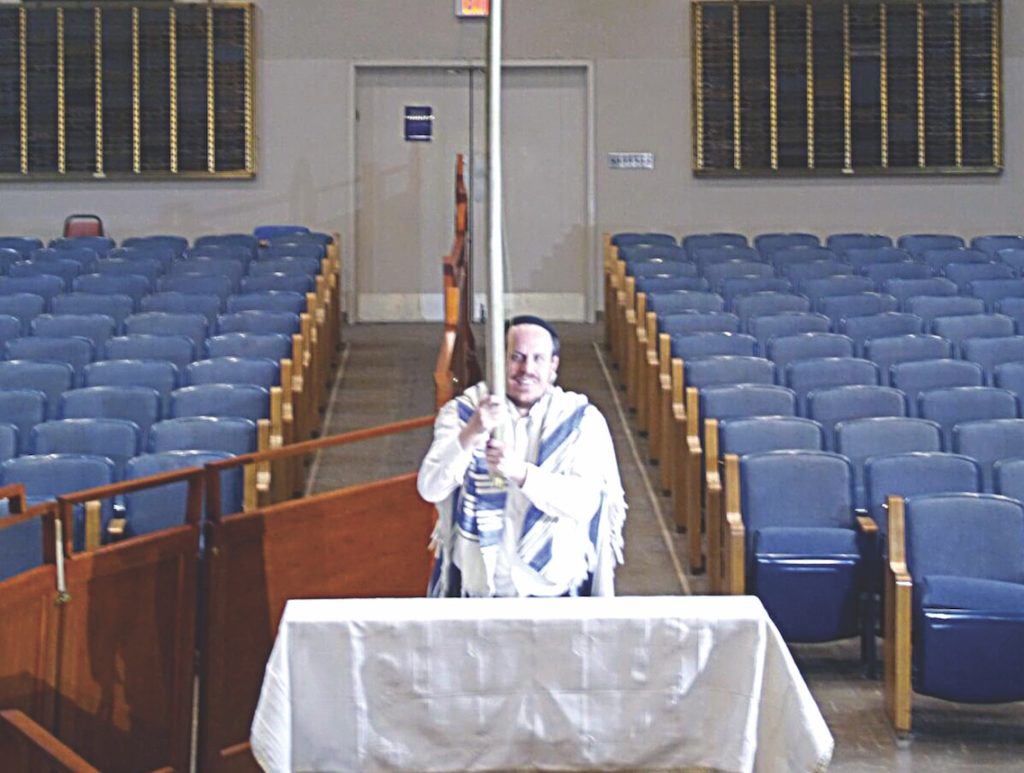
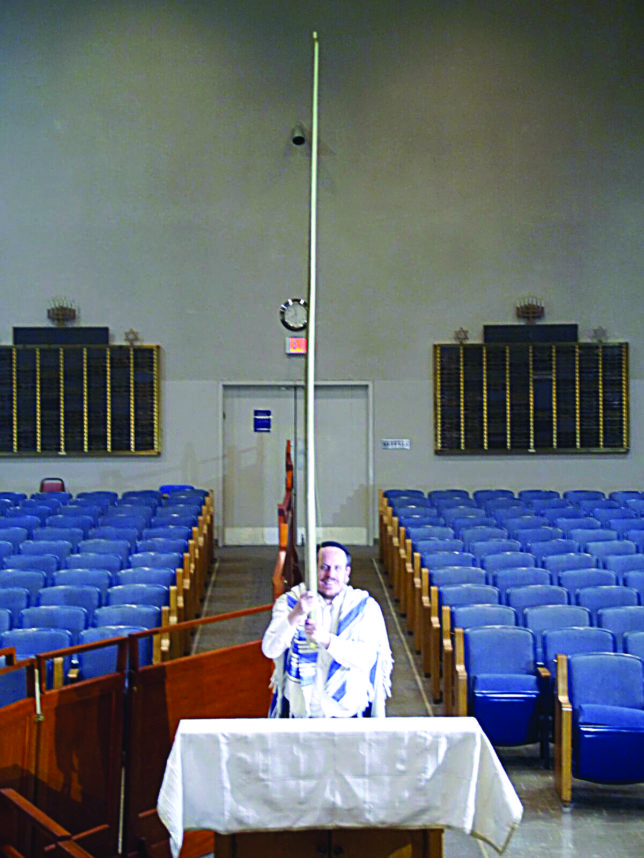
For several months now, I have been dreaming of finding the perfect lulav — a palm frond the Torah requires us to wave as part of the ritual of the four species on Sukkot.
To be kosher, a lulav needs to be at least 16 inches. Most lulavim that we see in synagogues are around 3 to 4 feet tall, but there is no maximum height limit for the lulav.
I wanted a unique lulav to demonstrate my love of the commandment and my desire to serve Hashem. And, of course, I wanted something that would be exciting for the children of our synagogue in Washington, D.C., to see.
So I set out to search for a very, very tall lulav.
The first step was to contact my friends in Israel and see if they could help. They couldn’t. The logistics were too complicated.
I then started looking in Arizona. I called the largest date farmers in the state. They were somewhat interested until they learned that I was looking only for a single frond.After that, they weren’t so quick to return my calls.
By this time, it was the eve of Rosh Hashanah, and I feared that this year my dreams would not come true.
I had one last hope. I called my friend
Rabbi Yossi Cunin, the Chabad shliach to Beverly Hills.
The night before Rosh Hashanah, every rabbi has a million things to do. But when I called Rabbi Cunin, he seemed to drop everything to help me.
He called palm tree nurseries and date farms and random farmers looking for the right lulav.
The day after Rosh Hashanah, Rabbi Cunin drove to a farm and looked at its palm trees. The owners offered him one frond that was almost 7 feet tall, the farm’s tallest. There were, however, a couple of catches. The farm wanted $650. We couldn’t justify paying that exorbitant price when an entire set of Four Species typically costs less than $65.
It already was almost Yom Kippur. I was ready to give up.
That night, Rabbi Cunin couldn’t sleep. He tossed and turned all night.
He got up early in the morning and looked up at the heavens to ask Hashem for direction. He desperately wanted to help me find my lulav.
And then, he noticed, high in the sky, way, way up where he almost never looked before, there was a single, kosher lulav growing directly over his property.
He had never noticed it before, but there it was — beautiful and glorious!
The next morning as the sun rose, he started calling gardeners to help him get it down. Finally, one man came and started climbing the palm tree. On his way up, he estimated the lulav was only 4 or 5 feet in length.
But then he cut it down and it turned out to be 9 feet 2 inches. It was the perfect size for us!
Rabbi Cunin immediately drove to Melrose Carpets, and the owner was kind enough to give him a carpet tube to ship it in across the country to Washington. It was too big for air freight, so it required ground delivery — seven days, with an arrival on the eve of the holiday of Sukkot.
I started out looking for the perfect lulav, but what I really found was the perfect friend. Here was a rabbi who dropped everything on the eve of a major holiday in order to help another rabbi in his service of Hashem.
I am so grateful that Rabbi Cunin shares with me the value that when it comes to serving Hashem, our efforts are a reflection of our values. If we put our heart and soul into performing a commandment, it demonstrates that we recognize that we are servants of our Creator.And once we recognize that, then that in turn will impact every action we do in our lives. As true servants of God, we will be better able to visit the sick, feed the hungry, comfort the mourners and inspire the weary.
So if you want to wave the perfect lulav this year, you can stop by our synagogue. But even if you can’t make it, we all can join together in recognizing that we humans have work to do on this earth: We are all servants of our Maker.
RABBI SHMUEL HERZFELD is the head rabbi at Ohev Sholom-The National Synagogue in Washington, D.C.













 Jewish Family Service of Los Angeles (JFSLA) board members tour historic Jewish Los Angeles, led by the Jewish Historical Society of Southern California. The monument recognizes JFSLA, originally The Hebrew Benevolent Society of Los Angeles, as the first chartered charity in the city. Photo courtesy of Jewish Family Service of Los Angeles
 Adeena Bleich (from far left), Adam Bierman, Nick Greif, L.A. City Councilmember David Ryu, LAUSD board member Nick Melvoin, Rabbi Jason Weiner, Rabbi Joshua Hoffman and Jewish Federation Director of Public Affairs and Government Relations Aubrey Farkas Harris celebrate Rosh Hashanah at Los Angeles City Hall. Photo courtesy of Jewish Federation of Greater Los Angeles
 From left: Israeli lacrosse player Noah Miller; former U.S. Soccer Federation president Alan Rothenberg; sports documentarian Erit Yellen; USC Casden Institute Director Steve Ross; swimmer Lenny Krayzelburg and L.A. Tri Club co-founder Larry Turkheimer participate in a discussion on “Jews, Sports and Social Justice.” Photo by Steve Cohn