The late Israeli prime minister, Yitzhak Rabin, was fond of pointing out that Israel “lives in a bad neighborhood.” The popular revolt in Egypt reminds us of the enduring truth of that comment.
Since the 1981 assassination of Anwar Sadat by members of the Muslim Brotherhood for making peace with Israel, Egyptian President Hosni Mubarak has steadfastly stood by the peace treaty with the Jewish state and has been a stalwart U.S. ally against Islamic terrorism.
Egypt’s treaty with Israel admittedly has resulted in a cold peace, but the treaty and the subsequent Israeli treaty with Jordan are vital to Israel’s security and the interests of the United States.
The populist uprising that swept through Tunisia last month now threatens not only Mubarak, but also regimes throughout the region.
Jordanian King Abdullah, under populist pressure, has already replaced his entire cabinet and there have been mass demonstrations in Yemen. There is justifiable concern that this same pressure threatens the stability of Saudi Arabia, the Gulf states, Libya, and Algeria.
These countries are among largest oil suppliers in the Arab world. If political chaos leads to chaos in the world’s largest oil fields, the economies of the United States and all of our western allies would be in jeopardy. Soaring oil prices and lack of adequate petroleum supplies would devastate the West.
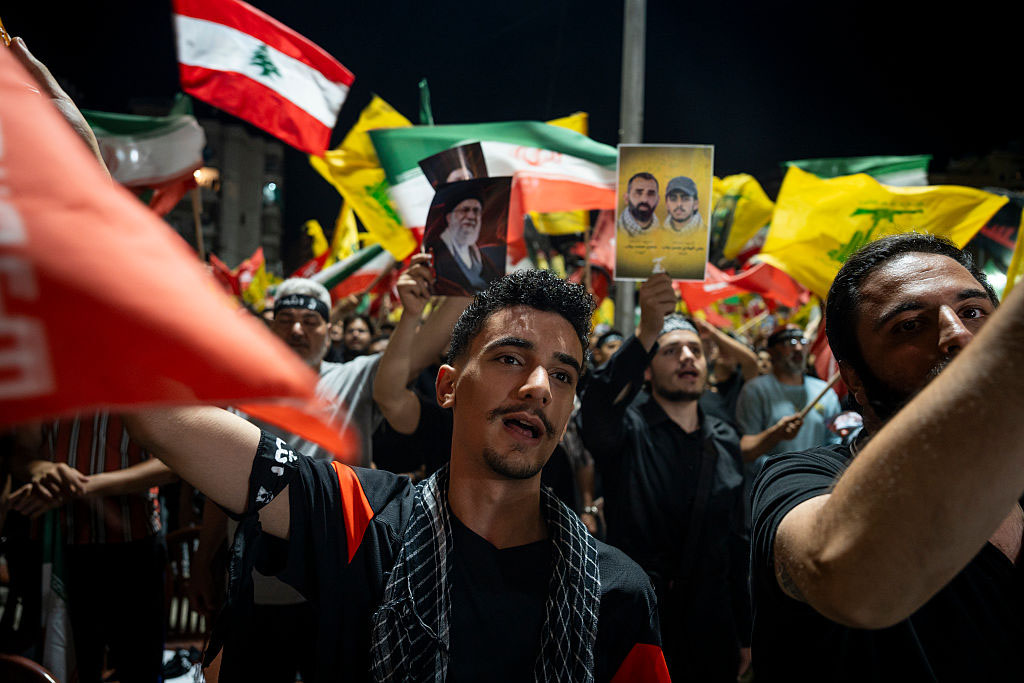
It is no coincidence that this is exactly the goal spelled out by Al Queda leader Osama bin Laden and Iranian President Mahmoud Ahmadinejad. Their dream is a Muslim-dominated world ruled by Islamic Sharia law.
The more chaotic the situation in Egypt and the less time pro-democratic elements have to organize, the more likely anti-Western groups like the Muslim Brotherhood will seize power. There simply is no democratic alternative group or leader in Egypt organized enough to resist them
The Muslim Brotherhood was founded in 1928 with the goal of establishing an Islamic empire from Spain through Indonesia. Its leaders actively supported Nazi Germany during WWII and Hitler’s efforts to exterminate the Jewish people.
The Muslim Brotherhood fought against Israel’s creation in 1948 and assassinated a number of more moderate Arab leaders, such as Jordanian King Abdullah’s grandfather.
Although the Muslim Brotherhood now claims to have given up violence, no one really believes that. Muslim Brotherhood leaders have said not only would they revoke Egypt’s peace treaty with Israel, but that if they come to power, Israel should prepare for war.
History suggests the Muslim Brotherhood is well situated to seize power in Egypt.
After popular protests in Russia forced Czar Nicholas II to abdicate early in 1917, a weak provisional government with democratic elements was established. Because the Czar’s rapid and sudden abdication left a power vacuum and democratic forces were fractured, Lenin returned to Russia and led his Communist Party to absolute power just a few months later. A similar popular revolt against the Shah of Iran in 1979 resulted in the theocratic dictatorship that still rules Iran.
Now that Mubarak has said he will not seek reelection in September, how much time is there for a truly democratic alternative to emerge and coalesce?
Given the violence which has erupted in Cairo and calls for Mubarak to leave sooner than later, will he actually leave and remove the stigma of his past election frauds from September’s scheduled election?
Will the Egyptian military, which is generally well-respected in Egypt, step in temporarily to restore calm and to run the country until the fall election?
The answer to these questions may well determine Egypt’s future as well as that of Israel and the United States. The shape of the Middle Eastern “neighborhood” will likely be established in the coming weeks and months.
Republican Rep. Elton Gallegly represents Ventura and Santa Barbara counties in Congress and is Vice Chairman of the House Foreign Affairs Committee and Chairman of the House Judiciary Subcommittee on Immigration.