If anyone harbored doubts about the sustainability of Israel’s newfound partnerships in the Islamic world, the regional response to the formation of the Jewish state’s new government should put those to bed.
Hours after the Israeli government was formally sworn in, Foreign Minister Abdullah bin Zayed of the United Arab Emirates telephoned his new Israeli counterpart, Yair Lapid, to speak about forging stronger cooperation and advancing the Abraham Accords. From Bahrain, meanwhile, Crown Prince Salman bin Hamad bin Isa Al Khalifa issued an official statement congratulating Lapid and Prime Minister Naftali Bennett for the unlikely coalition they managed to construct.
The message was clear: Israel’s historic rapprochement is bigger than any one government, president or prime minister, and will move forward. Just as the new Middle East that suddenly burst into plain view last year has continued to develop after President Donald Trump, so too will it broaden and deepen without former Prime Minister Benjamin Netanyahu.
The message was clear: Israel’s historic rapprochement is bigger than any one government, president or prime minister, and will move forward.
In the last week, I held meetings with the U.S.-based ambassadors of the U.A.E., Bahrain, Azerbaijan, Kazakhstan, Kuwait, Oman, Qatar, Saudi Arabia, Sudan and Uzbekistan. One theme common to my discussions in Washington was the desire of many of these countries to maintain the momentum of normalization from last September. No one described the passing of the baton from Netanyahu to Bennett as cause for concern or diminished enthusiasm for a new dynamic between their nation and Israel.
As someone who has led Muslim-Jewish interfaith initiatives and advocated for Arab-Israeli partnership for the last 15 years, what I heard very much heartened me. Among the post-normalization states, there is overwhelming interest in safeguarding their ties to Israel and leveraging these for the unique cultural and economic benefits they can yield. In those still holding out, there is greater hope for movement on the issue of the Israeli-Palestinian peace process that might allow them to explore a more public-facing position vis-à-vis Israel.
As one ambassador from the consortium I consulted told me, “Our relations with Israel are beyond leader-to-leader or even government-to-government; they are now about people-to-people. This relationship is built on our peoples.”
It’s important to note that statements such as these are hardly the ritualistic declarations one would expect from governments with long-standing ties to Israel. Nor are the public pronouncements by top Emirati and Bahraini officials exceptional among leaders in a region that I have witnessed—and privately cajoled to—edge closer to Israel for years.
The manifestations of a new people-to-people partnership are increasing daily, many of them behind the scenes. We all have seen—or even participated in—the once unfathomable spectacle of tens of thousands of Israeli and Emirati tourists now able to visit each other’s country, or the manifold new startups, investments and business partnerships that have sprouted since the Accords.
But relationships are developing in quieter ways, too. From North Africa through the Middle East to Central Asia, governments are more assertively staking out their Israelophilic credentials, confident in the response of publics that now want closer connectivity to Israel and its people. Many also report popular fascination with the unique makeup of the new Israeli government, a democratically constructed alliance of right-wing and left-wing parties, settler-friendly and Islamist leaders, and various centrist elements in between.
The key developments are that interest across Muslim publics is undeniably stronger, understanding of Israel is increasingly the objective, and greater interaction with Israelis is being welcomed. Contrary to many media misconceptions in the West, the process of rapprochement taking place is as much bottom-up as top-down in approach.
The key developments are that interest across Muslim publics is undeniably stronger, understanding of Israel is increasingly the objective, and greater interaction with Israelis is being welcomed.
What does it all portend? From my vantage point as someone who has liaised closely with many of these Islamic governments, I see an entire region ready to take the next step forward in its posture toward Israel.
Some of the biggest prizes—normalization with Saudi Arabia, for example—will require dramatic breakthroughs on Israeli-Palestinian peace, something Lapid appeared to address in his first day on the job as Israel’s top diplomat. That may yet prove difficult.
But as many ambassadors told me in recent days, each government is looking for a relationship with Israel that benefits their country and the wider region. And in a change probably no one expected, their people want this new relationship, too.
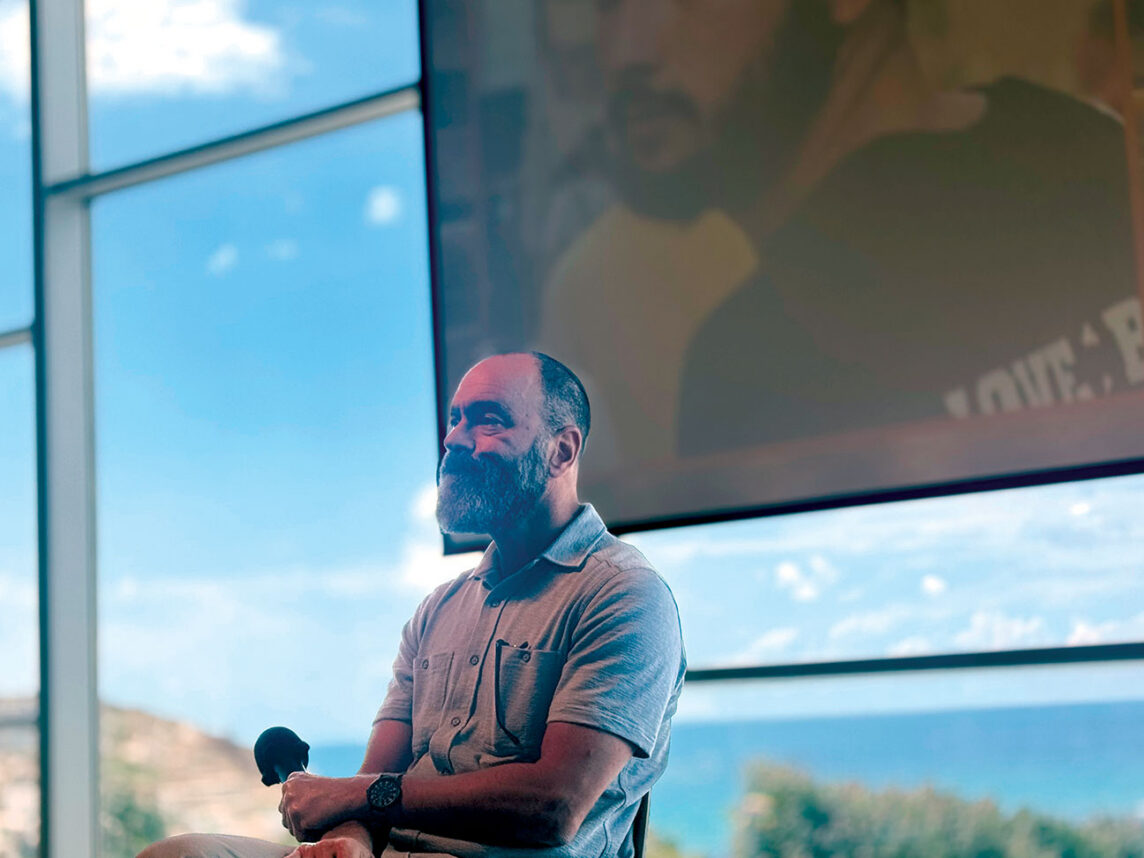
Rabbi Marc Schneier is president of the Foundation for Ethnic Understanding and co-author with Imam Shamsi Ali of Sons of Abraham: A Candid Conversation About the Issues that Divide and Unite Muslims and Jews.