fbpx

June 17, 2021

Rabbi Weinberg Reflects on Pre- and Post-Pandemic Experiences

There’s no question when it comes to whether the pandemic has challenged our ability to be creative. There is only so much that can be accomplished on Zoom, but Rabbi Norbert Weinberg of Hollywood Temple Beth El has found a way to see the experience in a positive light.

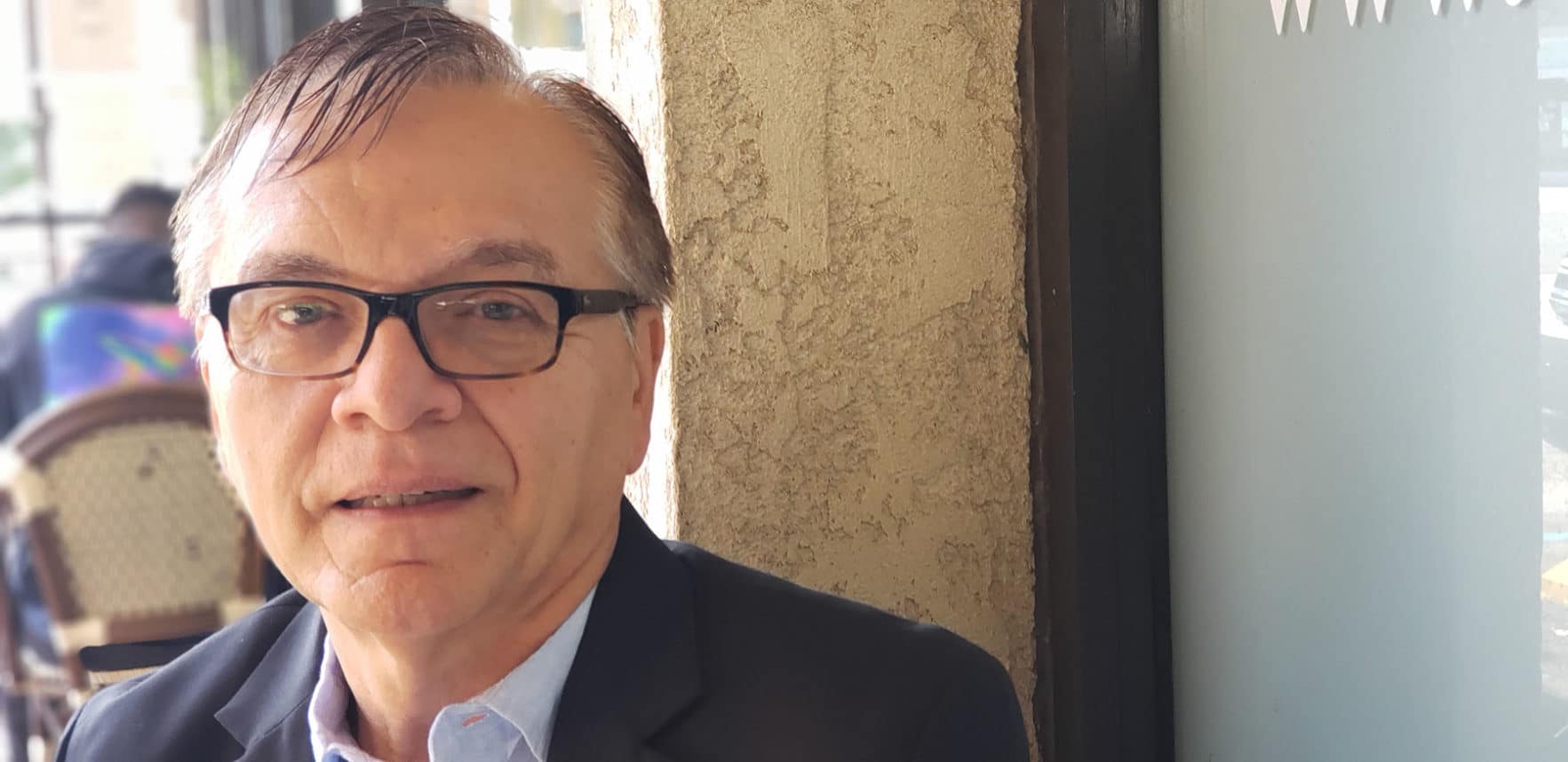
In a conversation we had at a café on Robertson Boulevard, Weinberg recalled the days leading up to the pandemic.

“My wife Ofra and I were in Shanghai on a tour the last week of October 2019, two weeks before the first official reported case of COVID,” he said.

Since COVID was not in anyone’s vocabulary at the time, “we were on the crowded subways and in the markets there. Although Wuhan [the alleged source of the virus] was far away, it is a busy and major city.

“All it would have taken,” said Weinberg, “was for one infected lab worker to have been on our subway—by chance. You get what I mean?

“We dodged a bullet,” he said, before noting that “it was a fascinating trip. And we did receive a beautiful reception at the Shanghai Ghetto Museum.”

Almost 20 months later, Weinberg is in the eighth year of his second term at Temple Beth El, and his focus is on North Crescent Heights Boulevard, West Hollywood, home of the Conservative synagogue.

Hollywood Temple Beth El may be one of the smaller, older synagogues (approaching 100 members) in this sprawling community, but it is also a pacesetter.

Under Weinberg’s leadership, it was one of the early sites to offer in-person services. Was the decision to reopen last month a tough call? “We were anxious, very anxious,” the rabbi said.

In this final month of spring, he has concluded, “People are Zoomed out. They’re worn out from watching screens, little screens, big screens. People are hungry to see each other.

“People are Zoomed out. They’re worn out from watching screens, little screens, big screens. People are hungry to see each other.”

“All during the year, people were saying, ‘The numbers are going down. We’ll be going back soon.’ But just when you thought it was safe to go back into the water–as they said in ‘Jaws’…”

Last February and March, Weinberg, the synagogue board and regular attendees realized that soon they would be able to go back inside. It finally happened last month, the weekend of the two-day holiday of Shavuot.

“For a startup, it has worked very well with a truncated service, a little shorter and more quickly than normal.”

When the rabbi reflected on the start of Zoom life, it didn’t sound that bad. “We went into lockdown a year ago March, when almost everyone else did. Then we established an online presence. This took trial-and-error ‘til we got a formula that worked.”

Even though he, like everyone else, was entering largely unexplored territory, “it was a nice experience. I could play back hazzanim [cantorial renditions] and musical versions of different kinds. We did a series with guest speakers. It was easy online because they didn’t have to schlep their way up to the synagogue. We have people from Poland, people from Jamaica. We did themes on Jewish communities around the world.”

But all new experiences have a shelf life.

“We did a series on Hasidism. It’s hard to explain Hasidism, though,” said Weinberg, “when you can’t hear the music.”

In other words, all of that was nice—but after more than a year of Zoom, enough already. It’s time to be together again.
Rabbi Weinberg Reflects on Pre- and Post-Pandemic Experiences Read More »

ADL CEO: “Deeply Disappointing” for AFT to “Take a Hands-Off Approach” to UTLA Resolution

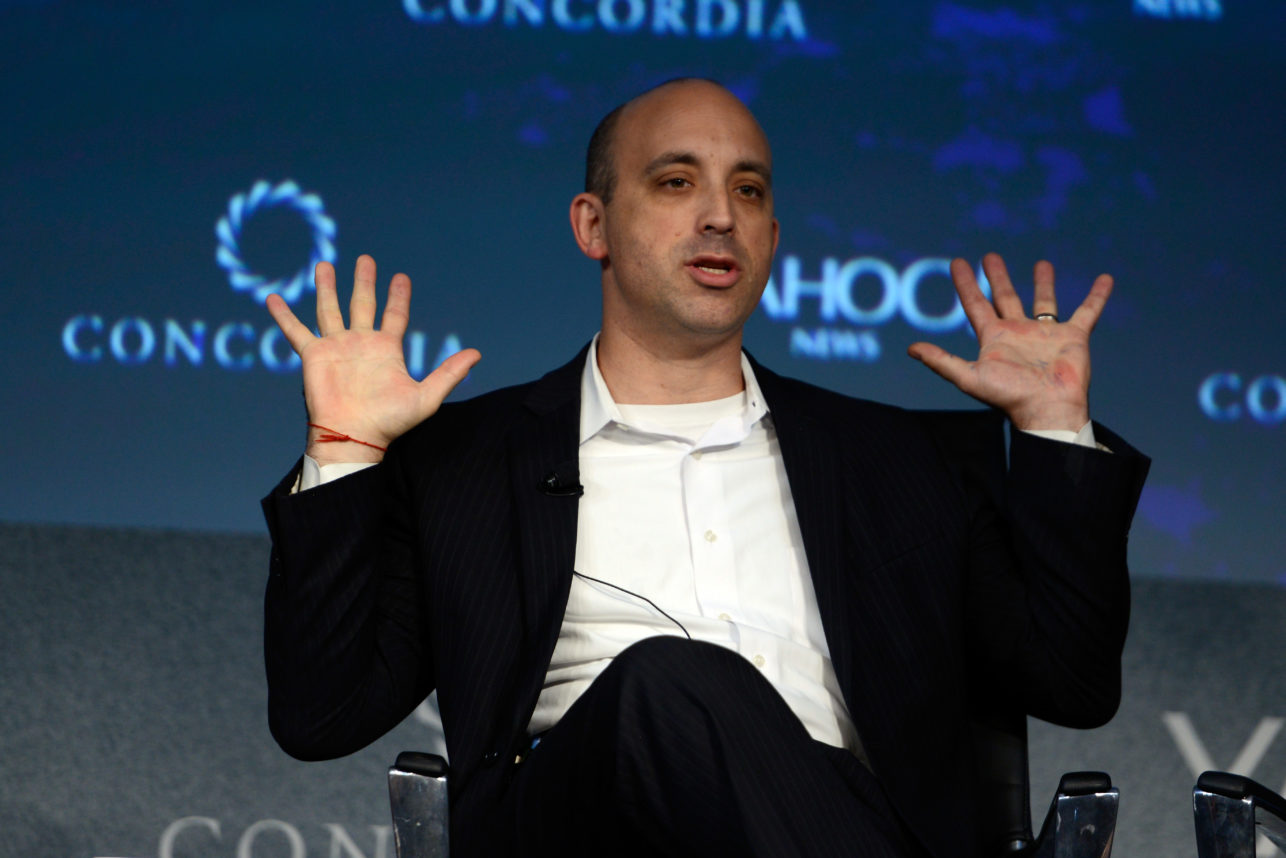
Anti-Defamation League (ADL) CEO Jonathan Greenblatt said in a statement to the Journal that it’s “deeply disappointing” that the American Federation for Teachers (AFT) will not condemn the “dangerous” resolution put forth by their Los Angeles affiliate.

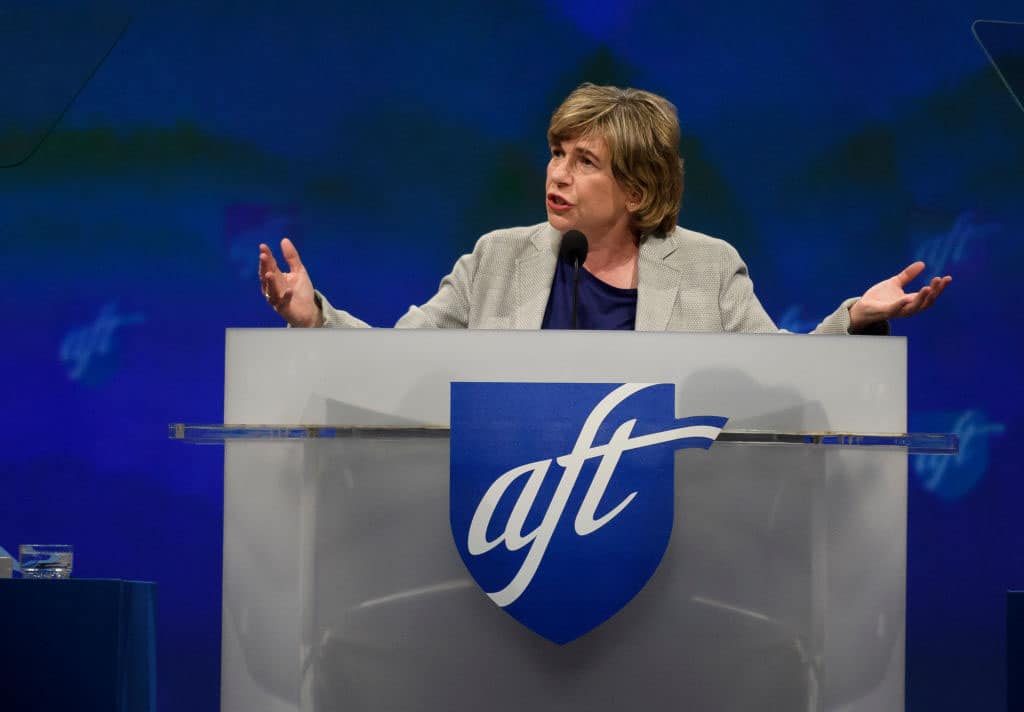
On June 9, Greenblatt sent a letter to AFT President Randi Weingarten expressing concern over the United Teachers for Los Angeles’ (UTLA) pending a vote on a motion supporting the Boycott, Divestment and Sanctions movement. Weingarten responded with a June 14 letter obtained by the Journal stating that AFT doesn’t support BDS but “locals have broad autonomy, and the national union does not override locals over differences or questions of policy.” She added that UTLA “passed a strong resolution against antisemitism, while clarifying its internal process.” The motion was passed by UTLA Area chapters on May 19, but is not reflective of UTLA leadership; it will go to a vote in UTLA’s House of Representatives in September.

“It’s deeply disappointing to see the AFT take a hands-off approach to the damaging resolution being proposed by the UTLA, which calls upon the U.S. to end all aid to Israel and engages in the kind of delegitimization that has endangered Jewish people including the very students who attend LA public schools,” Greenblatt said. “The UTLA resolution doesn’t advance peace and won’t enhance the education of a single student in Los Angeles. Instead, it demonizes the Jewish state and potentially adds to an environment antisemitism already has taken root and exploded in the streets.

“While we appreciate the commitment of Ms. Weingarten to a two-state solution … the BDS movement endorsed by UTLA doesn’t support that outcome. As we expressed in a letter to Ms. Weingarten, a simple, succinct and unqualified condemnation of anti-Jewish hate would have been a more appropriate response to this moment of crisis when Jewish students, parents, faculty and administrators are seeking support.”

Associate Dean and Director of Global Social Action Agenda at the Simon Wiesenthal Center Rabbi Abraham Cooper also said in a statement to the Journal, “This is part of [a] broader assault. American Jews have always been there to defend others. Now with raging Jew-hatred on campuses and in our streets and attacks on our values including Zionism in unions, social media, indifference in America’s board rooms and among political elite [it’s] time for Jews to defend ourselves and urge our neighbors to help.”

AFT did not immediately respond to the Journal’s request for comment.

Earlier in the day, the Journal reported that a coalition of education groups sent a letter to AFT urging Weingarten to condemn the UTLA motion as well as the United Educators of San Francisco’s (UESF) passage of a resolution endorsing the BDS movement. A spokesperson from AFT referred the Journal to Weingarten’s letter to Greenblatt when asked about the coalition’s letter.

“It’s appalling that Ms. Weingarten asserts that the embrace of BDS and anti-Semitic rhetoric is merely ‘differences or questions of policy,’” Nicole Neilly, who heads the Parents Defending Education organization that spearheaded the letter, told the Journal. “This language and these policies create a hostile environment for students, teachers, and administrators, and should not be tolerated. Failing to either acknowledge or condemn this movement is little more than tacit approval.”

This article has been updated.

ADL CEO: “Deeply Disappointing” for AFT to “Take a Hands-Off Approach” to UTLA Resolution Read More »

UMich Student, Alum Call for University to Adopt IHRA After Recent Antisemitic Incidents

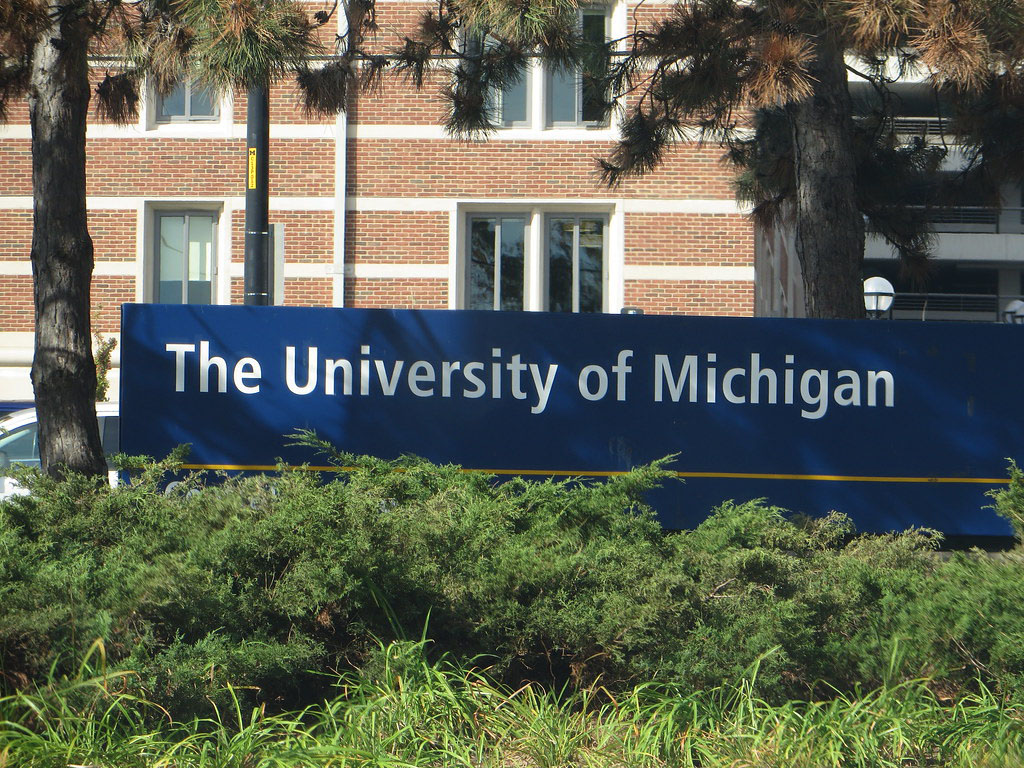
An incoming master’s student and one alumnus from the University of Michigan called for the university to adopt the International Holocaust Remembrance Alliance (IHRA) definition of antisemitism after a spate of recent antisemitic incidents on campus.

During the public comment session of the June 16 university’s Board of Regents meeting, University of Michigan graduate and incoming master’s student Samii Stoloff said, “For the past six years, I have watched antisemitism thrive on campus coming up in BDS [Boycott, Divestment and Sanctions] resolutions, CSG [Central Student Government] endorsements and most recently, incidents involving The Rock.” “The Rock,” which is located nearby campus, has been painted with various political, sporting and Greek life messages over the years. Stoloff said toward the end of the May, The Rock was painted with “phrases like ‘Israel is a terrorist state’ and words like ‘apartheid’ and ‘genocide’ appeared. Dozens of students expressed feeling unsafe on a campus that did nothing to stop the display of hate speech.”

Stoloff and her friends responded by painting the words “Stop Jewish Hate” and “Israel wants peace” over the anti-Israel rhetoric, only to later find that the words “F— Israel” were painted over their words. Stoloff claimed that when she and her friends went to paint back over those words, around 20 people walked by asking them if they were painting over the anti-Israel rhetoric because they supported “ethnic cleansing” or “genocide.”

“We made up cover stories to hide the fact that we were Jewish,” Stoloff said. “We feared that because we were Jewish, we would be attacked for defending Israel’s right to exist.” She added that when she later went to paint over the anti-Israel rhetoric on The Rock with a rainbow to celebrate Pride Month and posted to social media about it, she was swarmed with death threats and slurs like “F— Zionists” online; additionally, her photography business has since been plagued with one-star reviews, including from one student who called for students to not hire Stoloff because she uses “LGBTQ+ liberation as an excuse to silence Palestinian voices.”

“I truly believe if this were any other issue there would be more action by the administration,” Stoloff said, concluding her speech with a call for the university to adopt IHRA.

Dan Smith, a University of Michigan alumnus, similarly called the IHRA definition crucial to fighting antisemitism on campus. “To properly address a problem, you must first be able to identify it. That has become particularly evident by the events of the past couple weeks in Ann Arbor.” In response to the graffiti on The Rock as well as red handprint graffiti on the University of Michigan Hillel, the university responded with a statement denouncing “all vulgar and hateful messages.” “It did not label these messages as antisemitic, and how could it? It has no rubric to identify antisemitism,” Smith said.

Smith proceeded to criticize University President Mark S. Schlissel’s statement on the matter for not calling the graffiti antisemitic while also denouncing other forms of hate. “I’ll be clear with how that read to me: when the Jewish community on campus was targeted with harassment, at a time when Jews were being beaten in the streets across our country, your response was that ‘All Lives Matter.’ Now of course all these forms of bigotry must be condemned with equal force, but why can’t antisemitism be condemned on its own?

“Worse, your statement’s inclusion of ‘anti-Palestinian bias’ and exclusion of ‘anti-Israel bias’ politicized what should have been an unequivocal condemnation of hate. This botched condemnation of antisemitism reiterates the need for the IHRA definition to be adopted and utilized by the university when evaluating biased incidents.”

Student Matthew Jason also spoke during the meeting and criticized the CSG for its Instagram statement about the recent escalation between Israel and Hamas. The statement, which was posted on May 10, accused Israel of murdering Palestinians in their strikes against Hamas targets in the Gaza Strip and called the conflict “emblematic of Israeli settler-colonialism, ethnic cleansing and apartheid.” The statement also alleged that “anti-Palestinian sentiment” has festered on campus and that the university is “complicit” in “Israel’s violence” because the university won’t “divest from Israeli companies profiting off of the settler state’s occupation.”


View this post on Instagram


A post shared by UM_CSG (@um_csg)

Jason accused the CSG’s statement of dividing the campus and becoming a “springboard” for “acts of hatred and vandalism” on campus instead of providing a “safe space” for dialogue. He called on the university to allow students to opt-out of their $10 contribution to the CSG from their tuition this year. “If it is the current consensus of CSG to not represent the student body, the student body should not be required to fund them.”

Rick Fitzgerald, Assistant Vice President for Public Affairs, said in a statement to the Journal regarding IHRA, “The University of Michigan has a longstanding policy that prohibits discrimination of any type. That’s not to say discrimination does not exist in our community, but we are very clear about the expectations we have of students, members of the faculty and staff.” He added that the policy states in part: “It is the policy of the University of Michigan to maintain an academic and work environment free of discrimination and harassment for all students, faculty, and staff. Discrimination and harassment are contrary to the standards of the University community. They diminish individual dignity and impede educational opportunities, equal access to freedom of academic inquiry, and equal employment. Discrimination and harassment are barriers to fulfilling the University’s scholarly, research, educational, patient care, and service missions.”


UMich Student, Alum Call for University to Adopt IHRA After Recent Antisemitic Incidents Read More »

A Bisl Torah: As the Masks Come Off

It is extraordinary to watch California reopen. A year ago, our family was planning our 2020 summer routine: take three walks around the block, buy every puzzle at Target, become expert cookie bakers and figure out which movies on Netflix are most kid appropriate. We were blessed to stay at home, comfortable, well-fed with a roof over our heads. And yet, we never imagined the freedoms of flying across the country or going to summer camp would be stripped from our schedules. As our masks come off and we plan our summer vacations, we must pause and embrace this moment. We are experiencing a miracle.

I have the privilege of welcoming many congregants into the main sanctuary as they walk in for the first time. The first time in over a year. Each congregant confesses, “I feel a little emotional.” We should all feel a little emotional. Covid-19 ravaged our city and continues to wreak havoc around the world. And yet, here we are. Seeing numbers at an all-time low and reexperiencing so many “firsts” all over again.

So, pause. Give the deepest appreciation for the first responders that paved this road. Thanks to those that continue to keep our city safe and functioning. We cannot move into the next chapter of our lives without acknowledgment of loss and recognition of those that enabled our lives to move forward.

Kohelet’s words play over and over: A season is set for everything…A time for planting and a time for uprooting the planted (3:2). But do not let weeds of impatience, frustration, and annoyance so easily take root. Continue to cultivate the compassion, empathy and gratitude that were planted and nourished over the past fifteen months. These are the flowers that should flourish and grow.

So, the masks come off. Let a welcoming smile take its place. A blooming, beautiful smile ready to be seen…waiting to be received.

Shabbat Shalom


Rabbi Nicole Guzik is a rabbi at Sinai Temple. She can be reached at her Facebook page at Rabbi Nicole Guzik. For more writings, visit Rabbi Guzik’s blog section from Sinai Temple’s website.

A Bisl Torah: As the Masks Come Off Read More »

The Rebels Yell — A poem for Torah Portion Chukat

Now listen, you rebels, can we draw water
for you from this rock?
-Numbers 20:10

with apologies to Billy Idol

Last night a thirsty Israelite, came kvetching to a rock
Last night a tired leader, took his staff and gave it a knock
He said now listen, you rebels, I got a license to flow
His license expired with that and he prayed from above

In the wilderness, they wanted more, more, more
With a rebel yell, they demanded more, more more
Forty years in, they asked for more, more, more
These ungrateful rebels, just wanted more, more, more
more, more, more

They’re done with slavery, they want everything theirs.
They’re tired and want no more of these desert affairs
They forgot Who set them free and brought them this far
Their lips are parched, they’ve been following a star

Mid-day in the desert, they cried more, more, more
These hungry rebels demanded more, more, more
Decades from slavery they cried more, more, more
No-one hears when you yell more, more, more

They feel removed from any heaven
Collecting manna after haste and unleavened
Moses gets no sleep knowing what he’s done
He’ll only see the promised land from a distant mountain

He walked the desert for You, God
A thousand plagues, for You
A dried up rock for You, God
A million times for You

He gave his soul, to You, God
His crown lost, for You
Harsh words at a rock and now nothing
Just to have You here by him.

The time is now and they want more, more, more
These rebels yell for more, more, more
He’ll be left behind and they want more, more, more
Will they cross the river and still want more, more, more
more, more, more?


God Wrestler: a poem for every Torah Portion by Rick LupertLos Angeles poet Rick Lupert created the Poetry Super Highway (an online publication and resource for poets), and hosted the Cobalt Cafe weekly poetry reading for almost 21 years. He’s authored 25 collections of poetry, including “God Wrestler: A Poem for Every Torah Portion“, “I’m a Jew, Are You” (Jewish themed poems) and “Feeding Holy Cats” (Poetry written while a staff member on the first Birthright Israel trip), and most recently “The Tokyo-Van Nuys Express” (Poems written in Japan – Ain’t Got No Press, August 2020) and edited the anthologies “Ekphrastia Gone Wild”, “A Poet’s Haggadah”, and “The Night Goes on All Night.” He writes the daily web comic “Cat and Banana” with fellow Los Angeles poet Brendan Constantine. He’s widely published and reads his poetry wherever they let him.

The Rebels Yell — A poem for Torah Portion Chukat Read More »

New Middle East Bigger Than Any One Government

If anyone harbored doubts about the sustainability of Israel’s newfound partnerships in the Islamic world, the regional response to the formation of the Jewish state’s new government should put those to bed.

Hours after the Israeli government was formally sworn in, Foreign Minister Abdullah bin Zayed of the United Arab Emirates telephoned his new Israeli counterpart, Yair Lapid, to speak about forging stronger cooperation and advancing the Abraham Accords. From Bahrain, meanwhile, Crown Prince Salman bin Hamad bin Isa Al Khalifa issued an official statement congratulating Lapid and Prime Minister Naftali Bennett for the unlikely coalition they managed to construct.

The message was clear: Israel’s historic rapprochement is bigger than any one government, president or prime minister, and will move forward. Just as the new Middle East that suddenly burst into plain view last year has continued to develop after President Donald Trump, so too will it broaden and deepen without former Prime Minister Benjamin Netanyahu.

The message was clear: Israel’s historic rapprochement is bigger than any one government, president or prime minister, and will move forward.

In the last week, I held meetings with the U.S.-based ambassadors of the U.A.E., Bahrain, Azerbaijan, Kazakhstan, Kuwait, Oman, Qatar, Saudi Arabia, Sudan and Uzbekistan. One theme common to my discussions in Washington was the desire of many of these countries to maintain the momentum of normalization from last September. No one described the passing of the baton from Netanyahu to Bennett as cause for concern or diminished enthusiasm for a new dynamic between their nation and Israel.

As someone who has led Muslim-Jewish interfaith initiatives and advocated for Arab-Israeli partnership for the last 15 years, what I heard very much heartened me. Among the post-normalization states, there is overwhelming interest in safeguarding their ties to Israel and leveraging these for the unique cultural and economic benefits they can yield. In those still holding out, there is greater hope for movement on the issue of the Israeli-Palestinian peace process that might allow them to explore a more public-facing position vis-à-vis Israel.

As one ambassador from the consortium I consulted told me, “Our relations with Israel are beyond leader-to-leader or even government-to-government; they are now about people-to-people. This relationship is built on our peoples.”

It’s important to note that statements such as these are hardly the ritualistic declarations one would expect from governments with long-standing ties to Israel. Nor are the public pronouncements by top Emirati and Bahraini officials exceptional among leaders in a region that I have witnessed—and privately cajoled to—edge closer to Israel for years.

The manifestations of a new people-to-people partnership are increasing daily, many of them behind the scenes. We all have seen—or even participated in—the once unfathomable spectacle of tens of thousands of Israeli and Emirati tourists now able to visit each other’s country, or the manifold new startups, investments and business partnerships that have sprouted since the Accords.

But relationships are developing in quieter ways, too. From North Africa through the Middle East to Central Asia, governments are more assertively staking out their Israelophilic credentials, confident in the response of publics that now want closer connectivity to Israel and its people. Many also report popular fascination with the unique makeup of the new Israeli government, a democratically constructed alliance of right-wing and left-wing parties, settler-friendly and Islamist leaders, and various centrist elements in between.
The key developments are that interest across Muslim publics is undeniably stronger, understanding of Israel is increasingly the objective, and greater interaction with Israelis is being welcomed. Contrary to many media misconceptions in the West, the process of rapprochement taking place is as much bottom-up as top-down in approach.

The key developments are that interest across Muslim publics is undeniably stronger, understanding of Israel is increasingly the objective, and greater interaction with Israelis is being welcomed.

What does it all portend? From my vantage point as someone who has liaised closely with many of these Islamic governments, I see an entire region ready to take the next step forward in its posture toward Israel.

Some of the biggest prizes—normalization with Saudi Arabia, for example—will require dramatic breakthroughs on Israeli-Palestinian peace, something Lapid appeared to address in his first day on the job as Israel’s top diplomat. That may yet prove difficult.

But as many ambassadors told me in recent days, each government is looking for a relationship with Israel that benefits their country and the wider region. And in a change probably no one expected, their people want this new relationship, too.


Rabbi Marc Schneier is president of the Foundation for Ethnic Understanding and co-author with Imam Shamsi Ali of Sons of Abraham: A Candid Conversation About the Issues that Divide and Unite Muslims and Jews.

New Middle East Bigger Than Any One Government Read More »

Coalition of Education Groups Call on AFT to Denounce Pro-BDS Resolutions

A coalition of education groups called for the American Federation of Teachers (AFT) to denounce resolutions expressing support for the Boycott, Divestment and Sanctions (BDS) movement recently passed by its affiliates in San Francisco and Los Angeles.

The groups, which included Parents Defending Education, Coalition for Jewish Values and Alliance for Constructive Ethnic Studies, wrote in a June 15 letter to AFT President Randi Weingarten that the resolutions “falsely accuse Israel of ‘apartheid and war crimes’” and argued that the BDS movement aims for the “destruction of Israel.” “We are troubled that you have not condemned this egregious embrace of anti-Semitism by the United Educators of San Francisco (UESF) and United Teachers of Los Angeles (UTLA) or demanded that the AFT affiliates repeal the resolutions. You are leaving the impression that anti-Semitism, unlike other forms of bigotry, is tolerated in your ranks.

“This is a terrible message to send at a moment when clarity and leadership are needed. We saw once again in recent weeks how inflammatory and dishonest anti-Israel rhetoric, when left unchallenged, can escalate to physical attacks on Jews. It is unacceptable that the teachers’ union you head has affiliates that are using the AFT’s name and infrastructure to promote this kind of hateful rhetoric.”

The letter advocated for Weingarten to call for the repeal of the resolutions, implement “new training programs” regarding antisemitism and “develop a plan to repair the damage that has been done by [the union affiliates’] recent actions.” The letter also asked Weingarten to imagine if she were a Jewish student subjected to anti-Israel lectures from a teacher. “This teacher falsely accuses Israel of all manner of crimes and offenses, embraces in the name of ‘social justice’ the anti-Semitic and often violent BDS movement, and supports the destruction of only one country in the entire world – the Jewish country. How should that Jewish child feel about his or her teacher and school? And how should all this make the rest of us feel about your leadership of the AFT?”

Nicole Neilly, president and founder of Parents Defending Education, said in a statement to the Journal, “Jewish students deserve to learn – and Jewish teachers deserve to teach – in an environment free from discrimination and anti-Semitism. This kind of activism is wholly inappropriate and has no place in American schools.”

“Jewish students deserve to learn – and Jewish teachers deserve to teach – in an environment free from discrimination and anti-Semitism. This kind of activism is wholly inappropriate and has no place in American schools.”

When asked to respond to the letter, a spokesperson for the AFT referred the Journal to a letter that Weingarten sent to Anti-Defamation League CEO Jonathan Greenblatt on June 14 in response to Greenblatt’s concern over UTLA’s pending vote on a pro-BDS motion in September. Weingarten wrote that she understands Greenblatt’s “unease about Jewish students and educators feeling harassed and frightened in response to the wave of antisemitism that has taken hold in the United States and the world” and touted AFT’s efforts to fight antisemitism and other forms of bigotry.

“Before the COVID-19 pandemic began, I worked with AFT locals in New York and New Jersey to bring together the only multiracial coalition of trade unionists to march in solidarity with the Jewish community across the Brooklyn Bridge when antisemitic acts were on the rise,” Weingarten wrote. “Not only have we marched—but we’ve spoken out, and spoken up, passing numerous resolutions decrying antisemitism, Islamophobia, anti-Asian sentiments, racism and other forms of hate. And to help bring this conversation into our schools and teach tolerance, we offer classroom strategies on how to recognize and fight antisemitism. As you know, for years, we have been working with ADL on our model Share My Lesson program to teach issues around both antisemitism and Islamophobia. We look forward to continuing this work.”

Weingarten also lauded AFT’s efforts to build bridges between Israelis and Palestinians and blamed Benjamin Netanyahu, who was recently ousted from his position as Israeli Prime Minister, for impeding progress toward peace. “As Bibi Netanyahu gave his final speech as prime minister, he publicly opposed a Palestinian state. All peoples have rights to self-determination. This is one of the cornerstones for the creation of the state of Israel. And we have repeatedly, as a union and a labor movement, supported the right of Israel to exist in peace and security. But the Palestinians also have equal rights to self-determination. They have suffered under occupation for 54 years, and while there is countless blame on both sides for why this is so, the fact is that it must end. I believe that dialogue and education have tremendous roles in making this happen.”

She concluded the letter by stating that while AFT doesn’t support BDS, it supports “dialogue, debate and the free ability to express a range of viewpoints” and “countless have spoken out against antisemitism, including UTLA and United Educators of San Francisco. The ‘federation’ in American Federation of Teachers has real meaning: Locals have broad autonomy, and the national union does not override locals over differences or questions of policy.” Weingarten added that the UTLA motion hasn’t yet been passed by its leadership and that the union “passed a strong resolution against antisemitism, while clarifying its internal process.”

Neilly wasn’t satisfied with Weingarten’s letter to Greenblatt. “It’s appalling that Ms. Weingarten asserts that the embrace of BDS and anti-Semitic rhetoric is merely ‘differences or questions of policy,'” she told the Journal. “This language and these policies create a hostile environment for students, teachers, and administrators, and should not be tolerated. Failing to either acknowledge or condemn this movement is little more than tacit approval.”

The UESF passed a resolution on May 19 expressing “solidarity with the Palestinian people and call for Israel to end bombardment of Gaza and stop displacement at Sheikh Jarrah,” called on the Biden administration to stop providing military aid to Israel and espoused support for BDS “against apartheid in Israel.” Two UTLA Area chapters passed a similar motion on the same day; that motion will go to a vote in UTLA’s House of Representatives in September. UTLA said in a June 1 statement that motions passed by Area chapters don’t reflect the opinions of UTLA leadership. “UTLA stands against racism, sexism, anti-Semitism, xenophobia, homophobia, Islamophobia, and oppression in all forms. We stand against both anti-Jewish hate and violence and anti-Arab hate and violence wherever they occur, and we denounce the recent attacks on Jewish people in Los Angeles.” A spokesperson for UESF also told the San Francisco Chronicle that the union “unequivocally [stands] against antisemitism in all its forms and told The Jewish News of Northern California that the union also passed a resolution on June 2 condemning antisemitism calling for a two-state solution to the Israeli-Palestinian conflict.

A teacher in the Los Angeles Unified School District recently resigned from UTLA over the matter, stating that she feels “unsafe as a Jew in this UTLA.”

This article has been updated.

Coalition of Education Groups Call on AFT to Denounce Pro-BDS Resolutions Read More »

A Coalition’s First Test: Can It Save Itself – and Israel?

Israel’s new coalition is ideologically complicated. It includes parties from right to left, it includes Jews and Arabs. The opposition, a much more coherent bloc of right-religious parties, will attempt to test the coalition. And the first test is quite interesting, because it is a test for both. It is a test of partisanship versus the national interest.

On Wednesday, the government failed to extend a law that bars Palestinians who marry Israeli citizens from receiving citizenship. This law is controversial as it is essential. Without it, hundreds of thousands of Palestinians will become Israeli citizens through marrying Arab Israelis from across the 1967 line. For good reasons – the state mentions mostly security reasons, but it is clear that the core concern is demography – Israel decided to preempt such development by banning it. Support for the ban is overwhelming: the left-leaning Zionist Camp supported it when it was reissued back in 2016. The rightwing parties all support it.

But two parties in the new coalition have a problem with this ban. Raam, the Arab party, and Meretz, the most leftist member of the unity bloc. Former Meretz leaders called the ban “a disgrace” and argued that it is the product of a “rightwing government that hates Arabs”. Raam represents voters who could benefit from removal of the ban (by marrying Palestinians and making them Israeli citizens). In fact, Raam is not ready to support the extension of the ban, and talks are ongoing to find a compromise with which the party can live.

This would not have been a problem had the opposition – Likud, the Religious Zionist party, Shas, United Torah Judaism – voted their conscience. They all support the ban more enthusiastically than most coalition parties. But at least for now, they refuse to vote their conscience and insist on voting like politicians – against the coalition, which means, in this case, against a law that they deem essential to the wellbeing of Israel as a Jewish state.

At least for now, they refuse to vote their conscience and insist on voting like politicians – against the coalition, which means, in this case, against a law that they deem essential to the wellbeing of Israel as a Jewish state.

Coalition parties are furious with this development. Interior Minister Ayelet Shaked threatened to send the law to the floor, risking a failure, as a test to the opposition. Let the rightwing prove that it has nothing to do with ideology and everything to do with partisan politics. But the opposition have a counter argument to make: we said all along that the new coalition is dangerous for Israel, and now you see why. It can’t even pass a law that a vast majority of citizens see as essential to Israel’s survival – so why should we, the opposition, save it from the embarrassment?

A possible outcome would be a deal. The coalition will get the support of opposition parties for this essential ban, in exchange for something the opposition parties want, such as an arrangement that legalizes certain settlements. Of course, there’s a problem with such a deal. Once more, it will expose the ideological rifts within the unity coalition. Parties such as Yamina and New Hope might be able to swallow the deal. But Labor and Meretz wouldn’t.

And so, another possible outcome is a parliamentary equivalent of a high noon duel, with the coalition daring the opposition to thwart the law, and the opposition daring the coalition to test their insistence on reciprocation. The obvious loser could be Israel. If the law doesn’t pass – we lose. If the coalition crumbles – we lose. It’s only been a week, and it’s just a first test out of many to come.

A Coalition’s First Test: Can It Save Itself – and Israel? Read More »

A Moment in Time: It’s Your Move

Dear all,

I’m told that a good chess player needs to think many moves ahead of his or her opponent. There are those who can calculate 15-20 moves ahead. And I’m told there are grandmasters who can think 30 moves ahead.

As for me … well, if I can think 2-3 moves ahead, I feel fairly satisfied. But I want to learn how to have greater strategy. I want to learn to better understand the nuances of the game. I want to learn to be more aware of the climate surrounding me, before I make my move.

Chess teaches me so much about life.

Am I listening to facts before I react?
Do I evaluate consequences thoroughly?
Am I lured by quick satisfaction while underestimating the bigger picture?
What might I need to sacrifice now in order to succeed in the long run?

Our rabbis teach us, “Da lifnei mi atah omed/ Know before whom you stand.” This week, take a moment in time to be aware of what is before you, behind you, and within you. And then … make your move!

With love and shalom,

Rabbi Zach Shapiro

A Moment in Time: It’s Your Move Read More »

Opportunity for Real Change

With the onset of a new coalition, Israel’s 36th government will induct 28 new ministers to usher in a new framework of legislation within the country’s many domestic and international sectors. Many minister positions are changing hands, but one change in particular may bring Israel closer to securing a clean energy economy. As the new Energy Minister, MK Karin Elharrar will have the unique opportunity to revolutionize Israel’s energy profile to accelerate the development of renewable energies, thereby significantly improving the lives of its citizens.

Right now, 79% of the world’s energy production is produced from fossil fuels: coal, oil, and natural gas, and burning those fuels accounts for 87% of global CO2 emissions. But burning fossil fuels also emits various air pollutants including PM2.5 fine particulate matter with a diameter less than 2.5 micrometers (1/1000 of a mm) that are small enough to penetrate deep into the lungs and pass the lungs-blood barrier into the blood stream, which can lead to a variety of negative health outcomes such as cardiovascular and respiratory disease. In fact, a new study recently found that an estimated 8.7 million deaths were linked to emission-tied air pollution in 2018 alone. And in Israel, over 2,000 Israelis die prematurely each year from chronic exposure to it, costing the country the equivalent of more than $7 billion annually. Relying more on clean energy, therefore, would reduce morbidity and mortality and generate massive financial savings.

With the cost of solar energy production and storage still steadily declining, Israel could be on the verge of promoting and backing solar projects on a dramatic scale, especially considering the fact that Israel receives an average of nine hours of intense sunlight per day. Not only would such a move alleviate environmental stresses, but it would also generate enormous economic and social benefits as well as advantages for security and public health.

Benefits From All Angles

Because the cost of electricity is a key component of water utilities, including desalination and transmission, and tied to virtually all economic products and services, shifting the reliance away from fossil fuels to generate that electricity would do more than just decarbonize the economy and slow the pace of climate change.

In 2019, solar PV-generated electricity averaged around $0.38 per watt—99.6% lower than what it cost in 1976. But now, solar energy is considered the cheapest electricity in history, clocking in well below the levelized costs for gas and coal-fired power plants according to the IEA.

Countries that excel in this field can effectivity build up their sustainable image and more likely avoid various economic and diplomatic sanctions. Therefore, if Israel seizes this opportunity, it may very well make Israeli industry more internationally competitive, and it could very well lead to a reduction in the cost of living. Plus, transitioning to harnessing a larger share of renewable energies will create thousands of new jobs, some of which could provide opportunities for the chronically unemployed. Not only would this open up an entire industry, but it would also greatly strengthen research and development in an area where Israel has an environmental advantage over many other countries.

Socially, a distributed network of domestic and medium-sized solar systems will transfer a considerable share of revenue from electricity-generating fossil-fuel power plants to hundreds of thousands of households, farmers, and new players in the energy arena. With renewable energy becoming increasingly accessible, especially solar energy, any homeowner can easily become an electricity producer and enjoy a nearly risk-free monthly income.

From a security point of view, the vast majority of electricity production in Israel today is concentrated in a small number of power plants, which therefore represent themselves as potential strategic targets for hostile attacks from adversaries. Renewable energies provide an excellent opportunity to expand and decentralize energy production, thereby soothing national security concerns and preventing enemy states and terrorist organizations from destabilizing and paralyzing the Israeli economy.

Meet the challenges of energy

In recent years, the government has set various targets for renewable energy production but has repeatedly failed. The latest goal aimed to generate 10% of Israel’s electricity from renewable sources by 2020, but actual production only ended up amounting to less than 6%. Regardless of the explanations and excuses for this situation, the results speak for themselves.

The new minister can already decide on some quick and wise steps Israel can take to ensure that it can efficiently meet its intended renewable energy targets and beyond.

    1. Completely remove the bureaucratic barriers trivializing the installation of solar systems in a dual-use configuration.
    2. Open the energy storage market so that everyone can store electricity from renewable energy that can be used at a later date.
    3. Automatically approve anyone who does not supply a surplus solar electricity to the electricity grid to freely install production and storage systems so that people can consume electricity from them.
    4. Open the electricity sector to competition, including the purchase and free sale of electricity (aggregators).
    5. Create a special regulation for the creation of renewable energy in IDF bases. Due to the IDF’s vast military jurisdiction, they could produce an enormous amount of solar energy to avoid the construction of several fossil fuel power plants. To do this, the IDF should receive a stimulus within the first year of the newly formed government, which would later be refunded by lowering electricity tariffs.
    6. Shift the framework of Israel’s household electricity tariff to a more progressive one similar to its water tariff: If you consume over the generous predetermined monthly amount, a higher tariff will be applied and vice versa.

Over the next thirty years, Israel is currently on track to double its electricity consumption due to population growth and the proposed transition towards electrifying transportation and industrial processes. Therefore, the infrastructure needed for renewable energy production in Israel must be strengthened now alongside existing power plants. Despite notions of complexity, pushing renewable energies forward is certainly doable with determined and ambitious leadership.

On one hand, the prolonged hesitance in the field of renewable energy generation will continue to prompt the construction of additional fossil fuel power plants, which will continue to generate greenhouse gas emissions and air pollution for many decades. On the other hand, technological advancements have sparked tremendous opportunities to join and lead the renewable energy revolution, breaking our addiction to expensive and polluting fossil fuels and bringing us closer to a greener and cleaner world.

Dr. Soroker is an expert in the field of renewable energies

ZAVIT – Science and the Environment News Agency

Opportunity for Real Change Read More »