Tonight and tomorrow is Yom Hashoah, Holocaust Memorial Day.
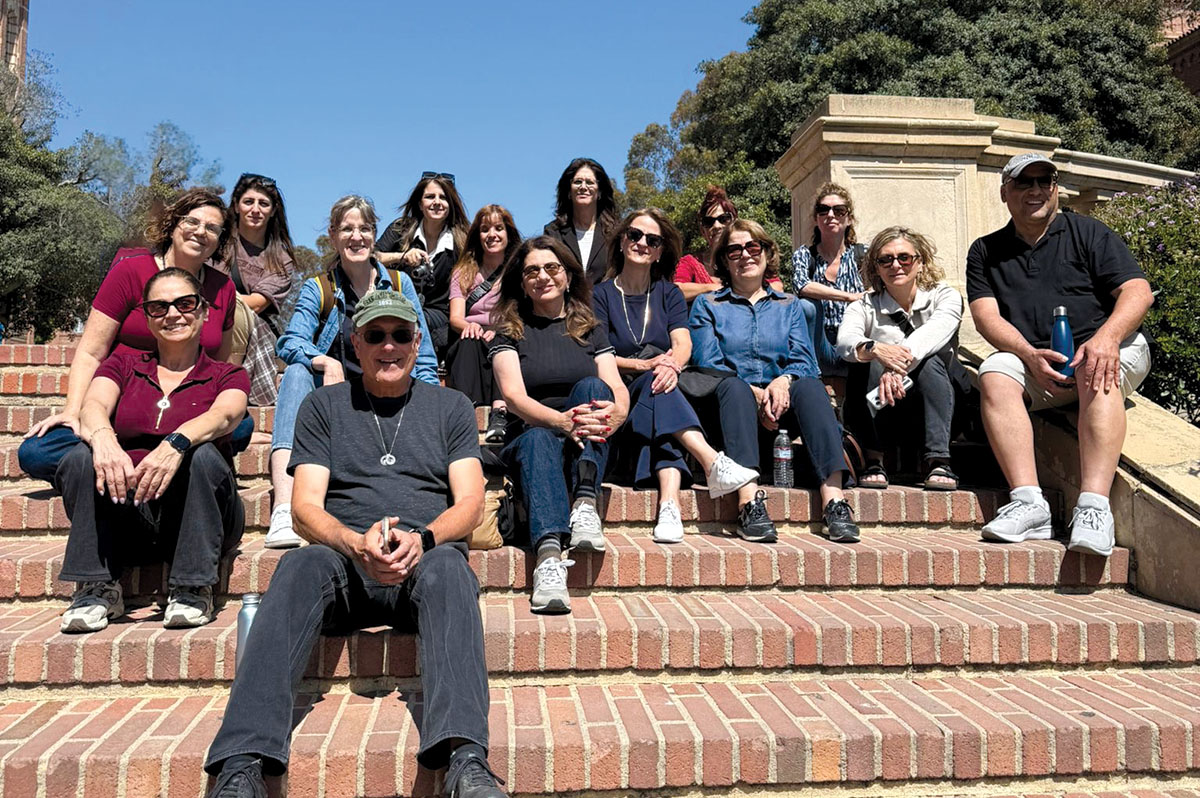
This past October, I was with a group from my synagogue that visited Terezin. We were led by a survivor of Terezin, Auschwitz and a death march back to Terezin, Pavel Stansky – now 93 years old. Pavel was a teacher then, and devoted his time with the children to try and bring them some happiness in those dark days, weeks and months.
A total of 15,000 children under the age of 15 passed through Terezin. Of these, about 100 came back.
This poem was written in 1943 by Hanus Hachenburg, z'l.
“That bit of filth in dirty walls,
And all around barbed wire,
And 30,000 souls who sleep
Who once will wake
And once will see
Their own blood spilled.
I was once a little child,
Three years ago.
That child who longed for other worlds.
But now I am no more a child
For I have learned to hate.
I am a grown-up person now,
I have known fear.
Bloody words and a dead day then,
That’s something different than bogie men!
But anyway, I still believe I only sleep today,
That I’ll wake up, a child again, and start to laugh and play.
I’ll go back to childhood sweet like a briar rose,
Like a bell which wakes us from a dream,
Like a mother with an ailing child
Loves him with woman’s love.
How tragic, then, is youth which lives
With enemies, with gallows ropes,
How tragic, then, for children on your lap
To say: this for the good, that for the bad.
Somewhere, far away out there, childhood sweetly sleeps,
Along that path among the trees,
There o’er that house
Which was once my pride and joy.
There my mother gave me birth into this world
So I could weep . . .
In the flame of candles by my bed, I sleep
And once perhaps I’ll understand
That I was such a little thing,
As little as this song.
These 30,000 souls who sleep
Among the trees will wake,
Open an eye
And because they see
A lot
They’ll fall asleep again. . .”
Notes: This poem is preserved in a typewritten copy. In the right corner, “IX. 1944” is written in and on the right side, the following is written in pencil: “Written by children from the ages of 10 to 16, living in homes L 318 and L 4176.” The poem is unsigned, but the author was identified by O. Klein, a former teacher at Terezin, as Hanus Hachenberg. He was born in Prague on July 12, 1929, and deported to Terezin on October 24, 1942. He died on December 18, 1943 at the age of 14 in Oswiecim (i.e. Auschwitz). The copy is likely from a later date.
The above notes and the poem are taken from “I never saw another butterfly… Children’s Drawings and Poems from Terezin Concentration Camp 1942-1944.” McGraw-Hill. New York. Printed in Czechoslovakia (now the Czech Republic). 1971. Pages 22-23 and 78.