

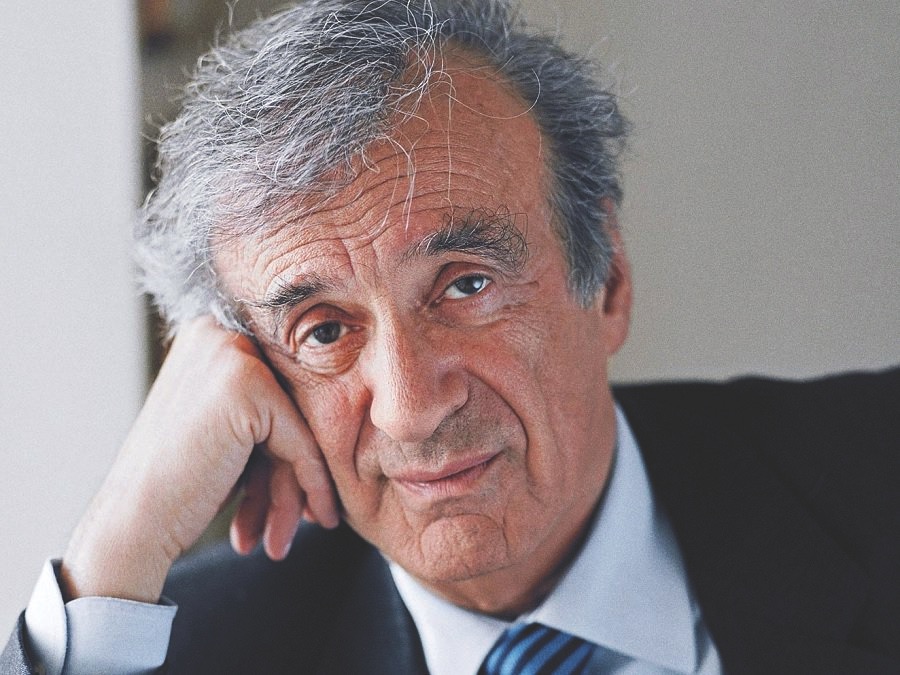
When one thinks of the late Elie Wiesel, one envisions him as the embodiment of Jewish values and a central part of the Jewish community. In an essay in the Daily Beast in July 2016, Gil Troy, professor of history at Montreal’s McGill University, wrote, “[His] faith in democracy and humanity, despite being scarred by totalitarianism and inhumanity, embodies America’s legendary optimism.”
However, at a recent talk at American Jewish University in Los Angeles, Holocaust professor Michael Berenbaum said Wiesel was a dissident at heart, a man who actively challenged established doctrines, policies and institutions.
According to Berenbaum, Wiesel’s “dissident” status was revealed in five major areas:
The Holocaust
For Wiesel, the Holocaust was the central event of the modern Jewish experience. Said Berenbaum, “He was angry with American Jewry for not caring enough, not doing enough and not moving heaven and earth to save Jews during the Holocaust.” Berenbaum added that Wiesel said Jews have a responsibility to testify to what happens when there is no restraint on evil and idolatry triumphs.
The Nature of God
Wiesel asked: “How do we deal with a God who was absent during the Holocaust?” Berenbaum said although Wiesel wouldn’t state outright that God is dead, he saw man as God’s favorite toy. Berenbaum said, “Wiesel finally arrived at the conclusion: ‘We can’t depend on God to save us. We have to save ourselves.’ ”
“Elie Wiesel was angry with American Jewry for not caring enough, not doing enough and not moving heaven and earth to save Jews during the Holocaust.” — Michael Berenbaum
Soviet Jewry
In his book “The Jews of Silence,” Wiesel condemned world Jewry for not being willing to put everything on the line for Soviet Jews. Berenbaum said Wiesel was adamant that American Jewry had the power to act this time and they should, given that they had failed to act during the Holocaust.”
Bitburg Cemetery
When Wiesel met with President Ronald Reagan at the White House in April 1985, he said of the president’s proposed visit to Bitburg — a German military cemetery where some SS members were buried — “That place, Mr. President, is not your place. Your place is with the victims of the SS.” As a result of that meeting, “Reagan also visited the Bergen-Belsen concentration camp and promised that America would “never forget” and went on to say, ‘Never again.’ ”
Challenging Jews to Fight Genocide
One of Wiesel’s central messages, according to Berenbaum, was that “in extreme situations when human lives and dignity are at stake, neutrality is a sin.” Wiesel condemned American Jewry as the Jews of Silence, and raged against Jewish passivity, indifference and complacency.
What was this dissident’s greatest gift to us?
Perhaps it was his insight into the nature of transformation. Said Berenbaum, Wiesel acknowledged, “You cannot transform the entire world, but you can transform your part of it, starting with transforming yourself. If you cannot cure the disease, you can still heal the person.”
Mark Miller is a humorist who has performed stand-up comedy on TV and written for the Los Angeles Times Syndicate and various sitcom staffs. His first book, a collection of his humor essays on dating and romance, is “500 Dates: Dispatches From the Front Lines of the Online Dating Wars.”

































