fbpx

April 4, 2018

Yom HaShoah Events, Supplies for Syria

SAT APRIL 7
“FLY”

Interfaith and multicultural teens confront their values, identity, gender and more in “Fly,” a new musical debuting at Temple Emanuel of Beverly Hills and the Pico Union Project, a multifaith cultural arts center and house of worship. An Art+Soul production directed by Stuart K. Robinson, the show is the culmination of months of exploration, creative thinking and rehearsing. April 7: 7:30 p.m. Free. Temple Emanuel of Beverly Hills, 8844 Burton Way, Beverly Hills. April 8: 3 p.m. Free. Pico Union Project, 1153 Valencia St., Los Angeles. (213) 915-0084. picounionproject.org.

SUN APRIL 8
“WHAT’S GOING ON WITH POLAND?”

Barbara Kirshenblatt-Gimblett.

Professor Barbara Kirshenblatt-Gimblett, chief curator of the Core Exhibition at the POLIN Museum of the History of Polish Jews in Warsaw, discusses “What’s Going on With Poland?” The professor emerita of performance studies at New York University will address a controversial law passed by Poland’s government that criminalizes the suggestion that Poland was complicit in the Holocaust. Presented by the Los Angeles Museum of the Holocaust and American Jewish Committee Los Angeles. 4 p.m. $15 advance purchase required. Los Angeles Museum of the Holocaust, 100 The Grove Drive, Los Angeles. (323) 651-3704. lamoth.org.

“SILENT WITNESS”

Sinai Temple holds a communitywide Yom HaShoah program. Participants include children from the MATI Masa El Habagrut program, Alice and Nahum Lainer School, Israeli Scouts, Sinai Temple Cantor Marcus Feldman, Los Angeles Museum of the Holocaust Executive Director Beth Kean and Holocaust survivor Dana Schwartz. 11 a.m. Free. Sinai Temple, 10400 Wilshire Blvd., Los Angeles. (310) 474-1518. sinaitemple.org.

THE BIG FILL

As the civil war in Syria continues, and as part of a large-scale humanitarian effort dubbed “The Big Fill,” Jewish communities across Los Angeles have been collecting supplies to send to Syrian children under siege. Participants in the effort, including congregants of Stephen Wise Temple, IKAR, Temple Emanuel of Beverly Hills and Temple Judea, come together with the founders of Save the Syrian Children, a nonprofit dedicated to delivering medical supplies directly to Syrian hospitals, to sort and ship the supplies to Syria. Guest speakers are slated to appear. Wear comfortable clothes. 11 a.m.–2 p.m. Free. Temple Emanuel of Beverly Hills, 8844 Burton Way, Beverly Hills. RSVP at thebigfill.org.

POETRY AND MEMORY
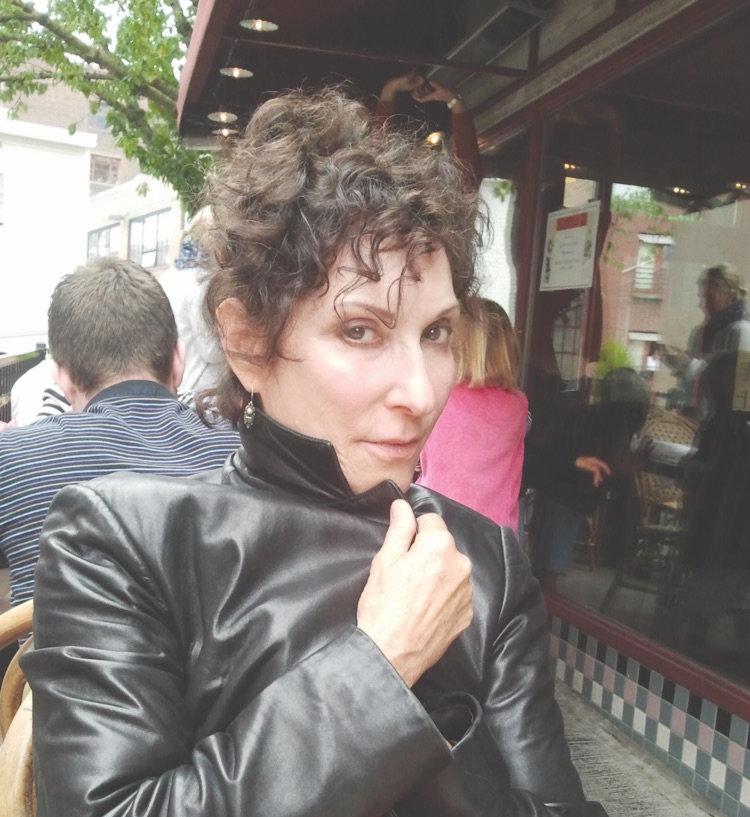
Carine Topal.

In observance of National Poetry Month and Holocaust Memorial Day, the Skirball Cultural Center holds a live poetry reading featuring poet Carine Topal, reading from “In Order of Disappearance”; American Book Award winner Dorothy Barresi; and Rock and Roll Hall of Fame inductee John Densmore of The Doors. Suzanne Lummis, editor of Beyond Baroque Books and its Pacific Coast Poetry Series, hosts the program. A meet-and-greet reception with the authors follows the program. 2 p.m. $12 general, $8 Skirball members and full-time students. Skirball Cultural Center, 2701 N. Sepulveda Blvd., Los Angeles. (310) 440-4500. skirball.org.

THE STORY OF THE KINDERTRANSPORT

A Holocaust Memorial Day commemoration program in the San Fernando Valley features stories of two children, Hilda Anker and Dave Lux, who were involved with and rescued in the historic World War II Kindertransport mission to save young Jews. Presented by The Mati Center, which seeks to build a united Israeli-American community. 3 p.m. Free. Valley Beth Shalom, 15739 Ventura Blvd., Encino. (818) 788-6000. vbs.org.

BULLETS AND BAGELS MOVIE NIGHT

Schmooze, nosh and learn about Israel’s original secret agent. Jewish shooting club Bullets and Bagels and the Long Beach Jewish Film Festival screen “The Mossad’s First, Reuven Shiloah,” a documentary about the Israeli intelligence agency’s first director, who served from 1949 to 1953. The film explores Shiloah’s contributions to the birth of Israel and his secret efforts to defend the Jewish state. The evening includes an appearance by Shiloah’s son, Dov, aka “Dubbie,” who will discuss Israel’s security. 6–9 p.m. $15 advance, $20 walk-ins. Alpert Jewish Community Center, 3801 E. Willow St., Long Beach. (562) 426-7601. bullets-bagels.com.

TEEN CENTER SEPHARDIC CULTURE NIGHT

Teens come together for a lively evening of music, food and schmoozing in celebration of Sephardic culture. Don’t miss this opportunity to make new friends and experience Arabic music, Middle Eastern food, backgammon, belly dancing and henna tattoos. Families welcome. 6–8 p.m. $20. Sinai Temple, 10400 Wilshire Blvd., Los Angeles. (310) 474-1518. sinaitemple.org.

MON APRIL 9
“HOW SLAVE LABORERS SURVIVED”

Christopher Browning.

Drawing on the testimony of 292 slave labor survivors, Holocaust historian and USC Shoah Foundation Scholar-in-Residence Christopher Browning examines their survival strategies in a lecture titled, “Jewish Slave Labor and the Struggle for Survival,” which commemorates Yom HaShoah. The Holocaust historian will probe the various survival methods Jews experimented with in the Wierzbnik ghetto and the Starachowice factory slave labor camps in south-central Poland under Nazi occupation. 7:30 p.m. Free. Temple Beth Am, 1039 S. La Cienega Blvd., Los Angeles. (310) 652-7353. tbala.org.

“ISRAEL AT 70: BEYOND THE HEADLINES”
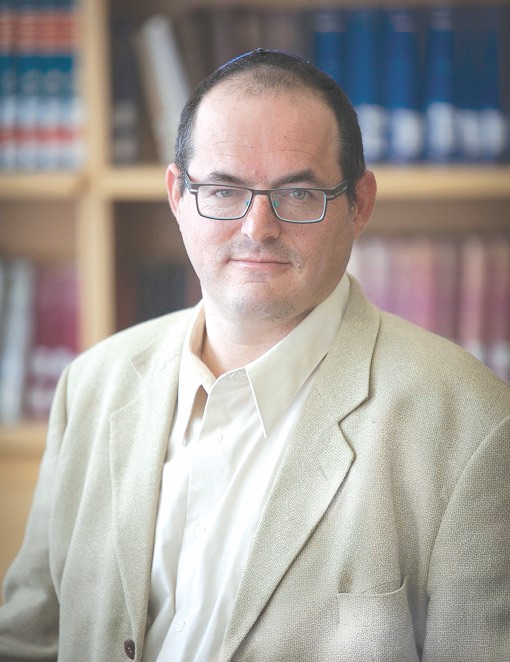
Rabbi Avi Novis-Deutsch.

Promising to go “Beyond the Headlines” and talk about seldom-seen aspects of his country in a celebration of Israel’s 70th birthday, Rabbi Avi Novis-Deutsch discusses how Israel and Israelis are changing in the face of new challenges. A former educator at UC Berkeley, Novis-Deutsch is dean of Jerusalem’s Schechter Rabbinical Seminary, where he was ordained a Masorti rabbi 15 years ago. 7:45 p.m. Free. Shomrei Torah Synagogue, 7353 Valley Circle Blvd., West Hills. (818) 854-7650. stsonline.org.

ZIKARON BASALON

Holocaust survivors share their personal stories at intimate settings around the Los Angeles area. Organized by the Israel-American Council, the event, Zikaron Basalon — Hebrew for “memories in the living room” — takes place in advance of Yom Ha-Shoah, Holocaust Remembrance Day. 7 p.m. Free. Brentwood, Agoura Hills and Tarzana, with addresses provided upon registration. (818) 451-1201. israeliamerican.org/los-angeles/zikaron.

TUE APRIL 10
“JEWISH JUSTICES OF THE SUPREME COURT”
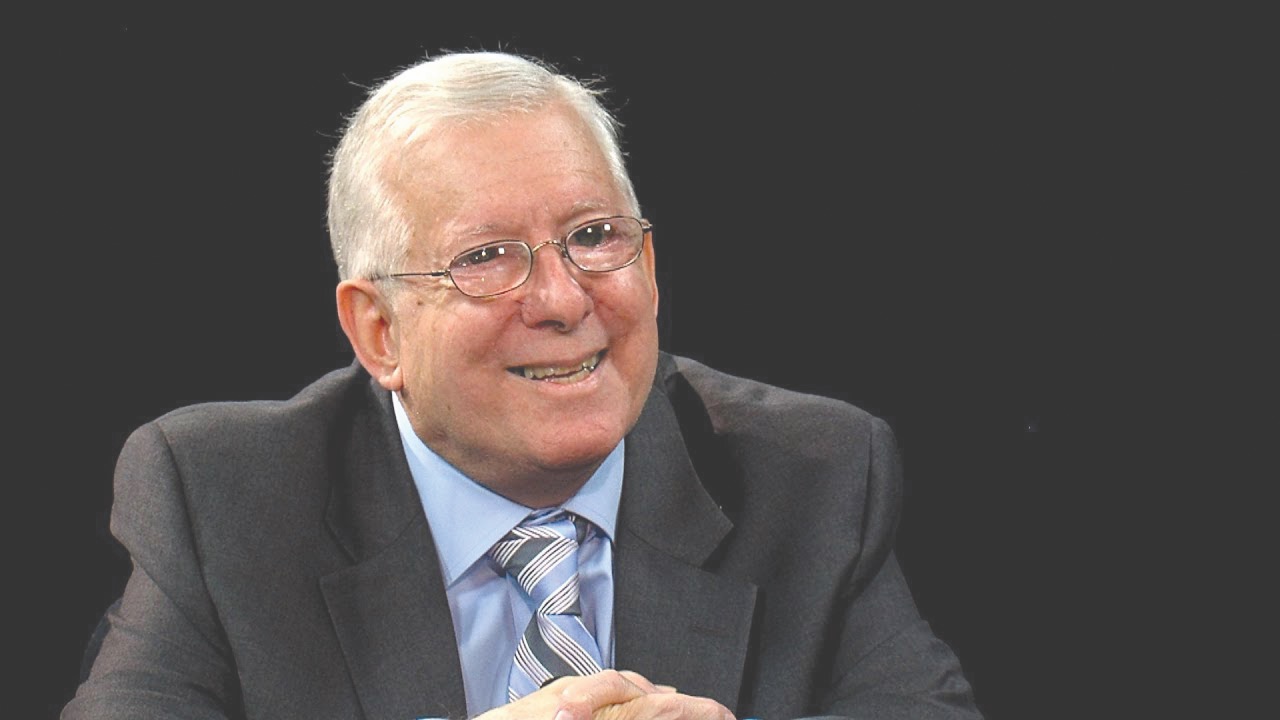
Rabbi David Dalin.

Fresh from his latest book, “Jewish Justices of the Supreme Court, from Brandeis to Kagan,” Jewish history scholar Rabbi David Dalin explores the lives and Jewishness of nine justices of the U.S. Supreme Court. He will talk about the historic appointment of Justice Louis Brandeis in 1916, which introduced the notion of a so-called Jewish seat. Dalin also will discuss the views of Justices Frankfurter, Cordozo, Goldberg, Fortas, Bader Ginsberg, Breyer and Kagan, and the role of anti-Semitism in their lives. 7:30 p.m. $15 Stephen Wise Temple members, $20 general. Stephen Wise Temple, 15500 Stephen S. Wise Drive, Los Angeles. (310) 476-8561. wisela.org.

“JUDAISM AND THE SELF”

Rabbi Shaul Magid, a senior research fellow at the Shalom Hartman Institute and a professor of Jewish studies at Indiana University, discusses “Judaism and the Self: Personal Dimensions of Jewish Identity.” He examines the relationship between internal Jewish life and external ritual performance, between Jewish ethics and physical human reality, and he explores how the American-Jewish experience has given rise to new possibilities for individual Jewish spirituality. The evening begins with a wine-and-cheese reception. 7:30 p.m. $15. American Jewish University, 15600 Mulholland Drive, Los Angeles. (310) 476-9777. wcce.aju.edu.

WED APRIL 11
FATHER PATRICK DESBOIS: “IN BROAD DAYLIGHT”

Father Patrick Debois.

Humanitarian and activist Father Patrick Desbois, founder of Yahad-In Unum, a global organization raising consciousness of the sites of Jewish and Roma (gypsy) mass extinctions by Nazi killing units in Eastern Europe during WWII, discusses his new book, “In Broad Daylight: The Secret Procedures Behind the Holocaust by Bullets.” The book, which documents mass killings in seven countries formerly part of the Soviet Union that were invaded by Nazi Germany, is a follow-up to Desbois’ National Jewish Book Award-winning book, “The Holocaust by Bullets.” Desbois will also sign his book. 7 p.m. Free. Los Angeles Museum of the Holocaust, 100 S. The Grove Drive, Los Angeles. (323) 651-3704. lamoth.org.

YOM HASHOAH SERVICE AND FILM EXCERPT
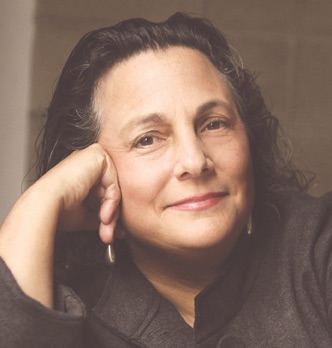
Roberta Grossman.

In her documentary film “Who Will Write Our History,” producer and director Roberta Grossman examines an archive of 30,000 pages of material, including scholarly essays, poems, underground newspapers and more, providing an unfiltered record of Warsaw Jewry and the conditions of the Warsaw Ghetto. Marking the 75th anniversary of the Warsaw Ghetto Uprising, an excerpt of the film screens at Temple Israel of Hollywood. A Q-and-A with Grossman follows. The evening also includes a Yom HaShoah service. 7–9 p.m. Free. Temple Israel of Hollywood, 7300 Hollywood Blvd., Los Angeles. (323) 876-8330. tioh.org.

THU APRIL 12
“THE RISE AND FALL OF MOSES, SERVANT OF GOD”

Temple Beth Am Rabbi Emeritus Joel Rembaum leads a class exploring the Torah accounts of Moses’ life journey. Through a close reading of selections of the Torah, participants will gain insights into Moses’ persona, his relationship with his people, his relationship with God and his impact on the generations that came after him. A reading knowledge of Hebrew is helpful but not required, as Hebrew/English texts of the Torah will be used. 7:30–9:30 p.m. Free. Temple Beth Am, 1039 S. La Cienega Blvd., Los Angeles. (310) 652-7353. tbala.org.

Yom HaShoah Events, Supplies for Syria Read More »

Finance: One of the Worst Jewish Stereotypes

The idea that Jews are innately good with money is among the oldest Jewish stereotypes, one that continues to impact perceptions of Jews today. In China, books touting the supposed secrets of Jewish financial success have been best-sellers. Worldwide, anti-Semites have long railed against Jews’ purported control of international banking.

As with many stereotypes, this one has its origins in actual events. Jews long have been well-represented in the fields of finance and business. This is commonly attributed to the fact that, for centuries, Jews were excluded from professional guilds and denied the right to own land, forcing them to work as merchants and financiers.

However, some academics contend that the historical evidence does not support this thesis and that Jewish financial success is instead due to the community’s high literacy rates.

Whatever its causes, Jewish business and financial success has been a major driver of anti-Semitism.

Shakespeare’s Shylock character in “The Merchant of Venice,” a money lender who demands a pound of flesh from a debtor who defaulted, is among history’s best-known caricatures of the Jewish businessman. That caricature lent a sinister undertone of greed and exploitation to Jewish financial dealings that would be invoked to justify anti-Jewish measures for centuries.

Over time, the Jewish community evolved into a uniquely educated population, incentivized to abandon farming in favor of better-paying professions and businesses.

Despite his Jewish ancestry (his parents converted their family to Protestantism when he was a child), Karl Marx, the philosopher who first popularized the idea that capitalism is inherently exploitative, singled out Jews for their role in promoting it.

Supposed Jewish control of the global financial system was a major theme of Hitler’s war against European Jews, Father Coughlin’s anti-Semitic rants and the czarist forgery of “The Protocols of the Elders of Zion.”

Jews have been associated with moneylending for at least a millennium.

Medieval Christian theology held that charging interest (known as usury) was sinful, which kept many Christians from becoming financiers. The field thus came to be dominated by Jews.

The historian Howard Sachar has estimated that in the 18th century, “perhaps as many as three-fourths of the Jews in Central and Western Europe were limited to the precarious occupations of retail peddling, hawking, and ‘street banking,’ that is, moneylending.” This fed the notion among Christians that Jews were morally deficient, willing to engage in unethical business practices that decent people had rejected.

An alternative explanation holds that the Jewish penchant for finance is a result of Jewish emphasis on learning and literacy. In their 2012 book, “The Chosen Few: How Education Shaped Jewish History, 70-1492,” economists Maristella Botticini and Zvi Eckstein contended that, with the destruction of the ancient temples in Jerusalem and the beginning of the Jewish Diaspora, Jewish continuity suddenly became dependent on widespread religious literacy.

Those who educated themselves remained Jews. Those who did not, assimilated or converted to other faiths.

As moneylending evolved into institutionalized banking, Jews continued to occupy major positions in the financial world. Across Europe in the 18th and 19th centuries, Jews built influential banks, further feeding anti-Semitic conspiracy theories. With mass-Jewish immigration to the United States beginning in the late 19th and early 20th centuries, Jews assumed prominent positions in the growing financial center of New York, establishing Salomon Brothers, Lehman Brothers, Goldman Sachs and others.

They also figured prominently in government financial positions. Four of the past eight U.S. Treasury secretaries have been Jews. Three of the 12 presidents of the World Bank have been Jewish.

Finance: One of the Worst Jewish Stereotypes Read More »

Letters to the Editor: Trump and Anti-Semitism, UCLA Professor and Gaza Border Clash

Trump and Anti-Semitism

The Anti-Defamation League reports that global anti-Semitism is increasing. I believe that President Donald Trump is the cause. I believe Michael Wolff’s book “Fire and Fury” indicates that Sheldon Adelson paid Trump a huge sum of money to recognize Jerusalem as Israel’s capital. It was just another payoff to Trump’s financial contributors. They pay Trump for government jobs and influence to increase their wealth, regardless of how it harms the public. In my opinion, global anti-Semitism will be mitigated only when Israel unilaterally creates a Palestinian state.

Martin J. Weisman, Westlake Village


A Seat at Yamit’s Table

I love Yamit Behar Wood’s recipes and the stories about her family in Bulgaria.

Her fish (“The Sephardic Answer to Gefilte Fish,” Feb. 9) is very similar to the Friday night one my grandmother used to make, but we hardly knew about salmon in Morocco! She made it with white fish, “alosa” or seabream, a very delicate Mediterranean fish that goes particularly well with that sauce (sorry I don’t know the English name for “alosa,” which sadly has a lot of bones but is so tasty).

As for her leek and beef patties (“Passover Meal Prep: Leek and Beef Patties,” March 16), steaming would allow the vegetable to keep its taste better, rather than the boiling method.

Keep up the good work and happy Passover!

Danielle Abitbol via email


UCLA Professor Ousted

After punishment by a formal agreement with the UCLA administration, professor Gabriel Piterberg resumed his legitimate tenured position only to be hounded off the campus by a mob and a cowardly administration (“ULCA Ousts Professor Over Harrasment Claims,” March 23). I would think the Journal would be against mobs.

Wayne Johnson, Santa Monica


The Councilman and the Rothschilds

Bravo to Democrat Trayon White for his apology in blaming a recent snowstorm on the Jews (“D.C. Councilman Apologizes for Blaming Snowstorm on Jews,” March 23).

But who voted for this man who blamed the Rothschilds for creating “natural disasters”? We need to be discerning who we elect. While intellect does not necessarily make one a good person, it sure helps in making a good leader.

Judith N. Cohen, Valley Village


He Doesn’t Miss the ’60s

Having come of age in the ’60s and been a willing participant in the protests of the anti-war movement while at a university, I realize as a senior citizen today that the era should not be thought of as “romantic” in the least.

In her column “Why I Miss the ’60s” (March 30), Dahlia Scheindlin refers to the era as one of solidarity. That was hardly the case. The reality was it was a terribly divisive time in our nation’s history. I marvel at the fact that a “movement” comprising of the likes of pacifists like David Dellinger, loonies like Jerry Rubin and Abbie Hoffman, those sworn to violence like the Black Panthers, and draft evader David Harris, who persuaded others to go to federal prisons for five years for burning their draft cards, could be termed a movement at all.

Rather, the leaders of said “movement” merely chewed up and spit out those of us who were naive enough to ride along so they could further their own egotistical adventures. In the end, they didn’t give a hoot about the rest of us. Better to have gone to Vietnam.

Marc Yablonka via email


Friendship Circle

Kudos to the high school student who wrote “Ethan and Me” (March 16). Her fresh perspective on volunteering for Friendship Circle was delightful and engaging. May other high school students read her column and may it resonate with them to do the same and contact Friendship Circle. This is coming from an adult who has cerebral palsy. Boy, I wish they had Friendship Circle during my youth. The impact must be tremendous for both recipients and givers.

May this fine organization go from strength to strength.

Susan Cohn, Redding


The Back Story of Israeli-Palestinian conflict

In her column “Our Better Angels” (March 30), Danielle Berrin blames both sides equally in the Israeli-Palestinian conflict, which ignores facts and history. This may make her feel open-minded and fair, but it’s not true and hurts Israel.

Both sides don’t teach their children to commit murder and pay successful terrorists; only the Palestinians do. When the world offered partition plans in 1937 and ’47, the Israelis accepted both; the Arabs rejected both. Israel has made a number of good-faith offers; the Palestinians have rejected them all. Finally, Israel made peace with Jordan and Egypt, painfully uprooting Sinai settlements, while the Palestinians have made peace with no one, not even one another.

Israel isn’t perfect, but failure to make peace is clearly more the Palestinians’ fault.

Rueben Gordon, Encino 


The Value of Genetic Testing

In a story about Dr. Beth Karlan and her most recent efforts focused on hereditary cancer in the Ashkenazi-Jewish community, she emphasized that knowledge is power (“Genetic Testing Could Be Life-Saving for Ashkenazi Jews,” March 23). The BRCA Founder OutReach (BFOR) study shows us that knowledge can save lives and be a helpful tool in preventing BRCA-related cancers in our families and communities.

This is an exciting step forward that empowers us to own our health. Karlan reminded us of the importance of exploring our medical family history and participating in groundbreaking medical research, not only as individuals but also for our communities. It is through the awareness and education of building a family tree and interviewing older generations that we can obtain information to make important life decisions.

This is a cause that GeneTestNow has been focused on for years; as such, we fully support Karlan’s efforts. Determining your carrier status can prevent cancer and save lives. We endorse screening for recessive conditions in individuals of all ethnic backgrounds. Recessive conditions generally do not affect the health of an individual but give information about risk for disease in his or her children.

In that spirit, we also endorse testing for BRCA mutations as this information before marriage, pre-conception, or at any point in life can provide the gift of information and options to create a healthy family, for both parents and children.

Sharon Glaser, Jerry Factor Co-founders, GeneTestNow.com


Driving in Rainy Los Angeles

The Donald Trump-esque temper tantrum of a column by Ilana Angel was an unsightly blemish on an otherwise wonderful issue of the Journal (“Rainy Los Angeles,” March 30).
To equate yourself with a New York City cab driver implies that you are a rude and aggressive driver. To say you are “fearless and able to handle all kinds of weather” is another clue that contrary to what the writer believes, she is most likely not a good, courteous driver, either.

Most drivers in Los Angeles are not natives, anyway. Most of us come from different states and countries. Yes, many drivers here are bad, but we deal with it and soldier on. If that is too much for you, please do us a favor and move back to Canada.

Chris Reiff, Ventura


Gaza Border Clash

The U.N.’s uproar about Israeli forces killing at least 16 Gazan Arabs trying to violently force their way into Israel is disingenuous. Ten terrorists were identified so far among the dead. When combatants hide among civilians, it’s worse than using human shields; it amounts to using bait for the international news media to heap wrath on the Jews.

Action Group for Palestinians of Syria reports that 23 Palestinians were killed in that country’s civil war during March 2018 alone. Since the beginning of the Syrian civil war, the body count for Arab Palestinians is 3,685. Nobody complains to the U.N. about these killings or the massacre by Syrian government forces and their allies, such as Hezbollah and Iran, of hundreds of thousands of Arabs.

It seems that the only time people care about dead Arabs is when they are killed while trying to murder Jews or overrun the Jewish state. Author Ayn Rand once said, “In any compromise between good and evil, it is only evil that can profit.” She was right.

Desmond Tuck via email


and FROM FACEBOOK:

‘Parkland Students Share Their Stories,’ March 30:

Stop confusing regulation and removal … they are two different things. Also, be aware that no security officer has ever prevented a shooting at a school when a kid is driven to lash out against one or more peers. Also, instead of pouring money into arming staff at schools, return all the funding that has been slashed for preventive programs including counseling and psych services, community outreach, parenting supports, etc. Those reduce the number of shootings.

Michelle Skigen

‘A Haggadah for Every Taste,’ March 30:

As a non-Jew, I just learned something quite new. I was aware of the Passover storytelling of the haggadah but always thought it was standard and unaltered or unalterable as in holy writ. I had no idea of the room available for telling the same story in differing ways. Very interesting!

Keith Harrison

‘Why I Miss the ’60s,’ March 30:

The real and present danger in school is from bullying. According to the CDC, 4,400 students commit suicide each year due to bullying.

Leonard Holtz

March for Our Lives could perhaps better be looked at as a watershed moment, a catalytic event preceding the many changes we need, promoted by our future leaders.

Terry Godfrey

‘In a Secular Passover, Jews Are Nothing Special,’ March 30:

Jews are here to accomplish big things and little everyday things to improve the world. I’m dismayed that you don’t know this.

Bob Manosky

Passover is about faith. No faith — no meaning.

Joseph Crews

Ben Shapiro’s opinion on how secular Jews should mark Passover is worth as much as mine on how religious Jews should do it. Nothing.

Eugene Kalinsky

‘The Seder of Repairing Ourselves,” March 30:

Very akin to “Be the change you wish to see …” This is so very important because this feeds the collective consciousness of the world.

Barbara Jordan Wampler

Letters to the Editor: Trump and Anti-Semitism, UCLA Professor and Gaza Border Clash Read More »

On a Rocky ‘Road to Unfreedom’

Holocaust Remembrance Day dares us to consider the most agonizing question of all — what have we learned from history, and how can we prevent history from repeating itself?

One answer comes from Timothy Snyder, the Yale University history professor who reframed the conventional wisdom about the Holocaust in “Bloodlands” and contributed significantly to Holocaust studies in “Black Earth.” Now Snyder turns his attention to the profoundly dangerous world in which we find ourselves today, an era that began when the promise of emerging democracy in Eastern Europe was betrayed by a resurgent Russia under its steely strong man, Vladimir Putin.

“The twentieth century was well and truly over, its lessons unlearned,” Snyder announces in the opening pages of “The Road to Unfreedom: Russia, Europe, America” (Tim Duggan Books). “A new form of politics was emerging in Russia, Europe, and America, a new unfreedom to suit a new time.”

Snyder first sounded the alarm about the advent of “unfreedom” in “On Tyranny,” a chapbook that collected his postings to Facebook in the days and months after the 2016 presidential election. “The Road to Unfreedom” is a book that drills down deeply into the distant past and argues that an understanding of the hard facts of Russian, Ukrainian, European and American history are “necessary to define the essential political problems of the present.”

The bitter irony at the core of Snyder’s book is that the current regime in Russia has borrowed from the very enemy that the Red Army defeated in the Great Patriotic War, as World War II is known in Russian usage. Among these borrowings, Snyder explains, was “the adaptation of fascist ideas of the 1920s and 1930s for the use of oligarchs of the 2000s and 2010s.” And it is precisely these ideas that have been put in service of Putin’s project to rebuild a greater Russia on the rubble of the Soviet Union.

Perhaps the best example is Putin’s ongoing campaign against Ukraine, a country that Snyder knows well. “Rather than speaking of the Ukrainian state, whose sovereignty, territorial integrity, and borders Russia officially recognized, Putin preferred to imagine the Ukrainians as a folk scattered across the broad expanse of what he imagined as Russian territory,” Snyder explains. “If Ukrainians were simply one more Russian group (like ‘Tatars, Jews, and Belarusians’), then Ukrainian statehood was irrelevant.” Thus did Russia disregard the sovereignty of Ukraine — and its formal treaty obligations — by occupying and annexing Crimea in 2014.

When Ukrainians took to the public square in Kiev, known as the Maidan, to defend their democracy, they were smeared and slandered by Russian operatives. Snyder insists on confronting the fake news with sly humor: “One can record that these people were not fascists or Nazis or members of a gay international conspiracy or a Jewish international conspiracy or a gay Nazi Jewish international conspiracy, as Russian propaganda suggested to various target audiences,” he writes.

Snyder points out that the grand scheme to weaken the Western democracies and strengthen the Russian dominance of Eurasia began first in the European Union (EU) but quickly turned to the American presidential election of 2016. “The Russian policy to destroy the EU took several corresponding forms: the recruitment of European leaders and parties to represent the Russian interest in European disintegration; the digital and televisual penetration of public discourse to sow distrust of the EU; the recruitment of extreme nationalists and fascists for public promotion of Eurasia; and the endorsement of separatism of all kinds.”

Snyder makes the case for dealings between Donald Trump and Russia that are queasy at best and probably much worse than that. “Russian gangsters began to launder money by buying and selling apartment units in Trump Tower in the 1990s,” Snyder writes. “A Russian oligarch bought a house from Trump for $55 million more than Trump had paid for it.” And Snyder insists that Trump’s Russian friends were the more calculating and successful deal-makers: “Although Americans might dream otherwise, no one who mattered in Moscow believed that Trump was a powerful tycoon. Russian money had saved him from the fate that would normally await someone with his outstanding record of failure.” The real motive of Putin and his gang, Snyder explains, was to use Trump as “the payload of a cyberweapon, meant to create chaos and weakness, as he has done.”

As he did in “On Tyranny,” Timothy Snyder argues that we are facing a challenge of potentially catastrophic proportions, but he refuses to despair.

Snyder urges us to heed what history teaches. “What has already happened in Russia is what might happen in America and Europe: the stabilization of massive inequality, the displacement of policy by propaganda, the shift from the politics of inevitability to the politics of eternity,” he explains. Indeed, Snyder allows us to see that it is already happening: “The advisor of the first pro-Russian American presidential candidate had been the advisor of the last pro-Russian Ukrainian president,” he writes. “Russian tactics that failed in Ukraine succeeded in the United States.” Trump, after all, has dared to entertain the idea that, like Putin in Russia and Xi Jinping in China, he might serve as president for life.

As he did in “On Tyranny,” Snyder argues that we are facing a challenge of potentially catastrophic proportions, but he refuses to despair. “To break the spell of inevitability, we must see ourselves as we are, not on some exceptional path, but in history alongside others.” That’s exactly why he draws an unbroken line between the darkest events and personalities of the past and the ones that confront us in the here and now.

Timothy Snyder will discuss “The Road to Unfreedom” with Jewish Journal book editor Jonathan Kirsch in a program sponsored by Writers Bloc at Temple Emanuel, 8844 Burton Way, Beverly Hills, at 7:30 p.m. April 30. For tickets and information, visit writersblocpresents.com


Jonathan Kirsch, author and publishing attorney, is the book editor of the Jewish Journal.

On a Rocky ‘Road to Unfreedom’ Read More »

Spies Take ‘Shelter’ in Twisty Israeli Thriller

Israeli filmmaker Eran Riklis (“The Lemon Tree,” “The Syrian Bride”) read the short story “The Link” three decades ago and couldn’t forget it. He bought the rights in 2012, adapted and updated it, and the result is “Shelter,” a thriller about two women on opposite sides of the Israeli-Palestinian conflict.

The film stars Israeli actress Neta Riskin as Naomi, a Mossad agent tasked with protecting Lebanese informant Mona (Golshifteh Farahani) in a Hamburg safe house while Mona recovers from plastic surgery to conceal her identity.

In a Skype interview with the Journal, Riklis described “Shelter” as “Two women, one main location that protects them but also traps them, an intense world outside the safe house and a complex plot full of twists and turns. It’s an intimate story wrapped in a thriller format,” he said. “It’s about the loneliness these two women share … and the way their personal stories represent a universal set of questions about loyalty, betrayal, honor [and] history.”

Riklis cast Lior Ashkenazi, a longtime acquaintance he’s wanted to work with for years, in the small but pivotal role of a senior Mossad agent. His son, Yonatan Riklis, composed the music for the film.

For Riskin, “Shelter” was “a unique oppor-tunity to lead a film,” one that’s specifically about women, with a compelling character in Naomi, she said via email.

“[Naomi’s] an introvert character in post trauma that needs to convey her story, character, history, and go through a change, mainly through listening to [Mona], who is her opposite,” Riskin said.

Best known for the Israeli TV series “The Gordin Cell” and “Shtisel,” Riskin became an actress “for the chance to be anyone, live different lives at different times.”

Although she played an Orthodox woman in “Shtisel,” Riskin is not religious.

“I see myself as a secular Israeli,” the Tel Aviv-born actress said. “I know Jews abroad try to keep their Jewish identity as much as possible. It is different in Israel. Either you’re religious or secular. ”

Riskin’s father is a Holocaust survivor, “and of course that affected my whole life and my choices,” she said. “But the Holocaust and Judaism are two different subjects. My father came from a family that had very loose connections to Judaism. This didn’t help them in the Holocaust, but also didn’t make them more close to religion.”

Like Riskin, Riklis describes himself as a “totally secular” Jew. Of Eastern European heritage and a 10th-generation descendant of the Ba’al Shem Tov, he has always felt “connected to Judaism … being secular is just as strong as being a believer since it’s all about being a good person or not,” he said.

As a boy, Riklis made 8mm films with his father and found that it combined his interests in literature, theater, choreography, music, architecture, science and art. He has five projects lined up and is currently shooting the thriller “Spider in the Web” in Europe. It stars Ben Kingsley as “an aging Mossad agent with something to prove,” Riklis said.

“All my stories focus on ordinary people in extraordinary situations. I paint a rich picture, and I let the audience take it to wherever it wants to take it,” Riklis said. “But like any storyteller, I am also good at manipulating the audience into taking a roller coaster ride with me.”

“Shelter” opens April 6 at the Laemmle Town Center 5, Monica and Ahrya Fine Arts theaters; and April 7 at the Laemmle Playhouse 7. 

Spies Take ‘Shelter’ in Twisty Israeli Thriller Read More »

The Playwright and the Magician

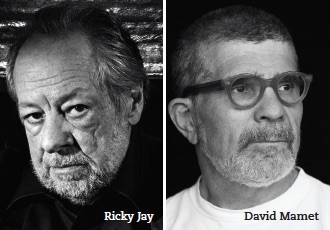
What do you get when a master writer meets a master magician? If it’s David Mamet and Ricky Jay, you get an evening of fascinating and highly entertaining conversation. The recent sold-out event to primarily discuss Mamet’s latest novel, “Chicago,” was produced by Live Talks Los Angeles at the New Roads School’s Ann and Jerry Moss Theatre in Santa Monica.

A heralded author of contemporary American literature, Mamet has written 23 plays, eight collections of essays, two novels, five children’s books, two books of poetry and 18 films, including “The Verdict” and “Wag the Dog,” for which he received Academy Award nominations. He won the Pulitzer Prize for drama in 1984 for “Glengarry Glen Ross.”

Jay is the acclaimed sleight-of-hand artist, actor and author. He’s the only magician ever profiled on the television series “American Masters” and is the subject of the documentary “Deceptive Practice: The Mysteries and Mentors of Ricky Jay.” He is the author of a half-dozen books on swindlers, con men and unusual entertainers, and has appeared in seven films and three one-man shows directed by Mamet.

A big-shouldered, big-trouble thriller set in mobbed-up 1920s Chicago — “a city where some people knew too much, and where everyone should have known better” — “Chicago” is Mamet’s first novel in more than two decades. His style of writing dialogue, marked by a cynical, street-smart edge, precisely crafted for effect, is so distinctive that it has come to be called Mamet Speak. Mixing his fictional creations with actual figures of the era, “Chicago” is suffused with Mamet Speak and explores questions of honor, deceit, revenge and devotion.

What inspired Mamet to write his first novel in 20 years? “I’m crazy about Chicago,” he said. “It’s a working people’s town. And I’m fascinated [by] the 1920s.” Mamet said he was further inspired by Rich Cohen’s 1999 novel, “Tough Jews: Fathers, Sons, and Gangster Dreams,” which traced a generation of Jewish gangsters from the candy stores of Brownsville to the clubhouses of the Lower East Side.

The two longtime friends indulged in freewheeling conversations as they discussed Mamet’s theater training with Chicago’s Goodman Theatre, writer-actress-comedian Elaine May, writer-cartoonist Shel Silverstein, Anthony Trollope’s novels and singer-songwriter Arlo Guthrie. They even discussed the cartoon character  Woody Woodpecker, of whom Jay said, “Woody Woodpecker was not actually funny; he was funny for a woodpecker.”

Mamet and Jay also discussed the similarities between drama and magic. In both, you set up the audience as best you can to go along with the internal logic, and, Mamet noted, at some point, “you’ve just got to ask for the money.”

Only the audience can teach you to write drama, Mamet said. His response to the question, “What can I do to prepare for a career in writing television?” was, perhaps, the perfect Mamet response: “Cut off your genitals and eat them.”


Mark Miller is a humorist and journalist who has performed stand-up comedy on TV and written on various sitcom staffs.

The Playwright and the Magician Read More »

‘Holocaust Escape Tunnel’ Story Uncovered

If “GI Jews” tells the story of tough, trained American Jewish soldiers battling Hitler’s army, a companion piece deals with a more familiar account of enslaved Jews trying to escape the horrors of Nazi brutality.

PBS will air the two aspects of World War II on April 11, with “Holocaust Escape Tunnel” starting at 9 p.m., followed by “GI Jews” at 10 p.m. The first documentary, linking one of the incredible escape stories of that era to breakthrough scientific techniques, is set in and around Vilna, the Yiddish and Hebrew designation for Vilnius, the capital of Lithuania.

At its peak, before World War II and the Holocaust, Vilna was known as “the Jerusalem of the North” and described as the focal point of Jewish civilization, with famous yeshivas, rabbis and scholars. It boasted a Jewish population of some 77,000, 105 synagogues, the largest Jewish library in the world and six daily Jewish newspapers.

The vigorous Jewish life in Vilna started to decline in 1940, when the Soviet Union absorbed Lithuania, and was almost completely destroyed after German armies attacked Russia in 1941, quickly conquering Lithuania. Within a year, Nazi bullets — in the days before Auschwitz-type gas chambers — were used to kill most of the Jews. Their corpses were thrown into huge pits in the nearby Ponar Forest, initially dug by the Soviets to store fuel and ammunition. One pit alone held between 20,000 and 25,000 corpses.

In late 1943, with Russian armies advancing from the east and partisans attacking German supply lines in surrounding forests, the Germans decided to cover up the monumental massacre by ordering that all the bodies be cremated.

“The exposure of this tunnel enables us to present not only the horrors of the Holocaust but also the yearning for life.” — Jon Seligman

The Germans forced the region’s surviving Jews, and some Russian prisoners of war, to first chop down large trees in the forests, cut them into planks, form huge layers of wood, spread the bodies between the layers and then set them aflame. Methodically, the Germans formed 10 “Burning Brigades,” each consisting of 80 prisoners, mainly Jewish. After a day’s work, the “burners” were held in pits and their feet shackled. One such unit, consisting of 76 men and four women, decided that it was their duty to pass on the truth to the world and future generations.

The prisoners freed their legs by cutting the shackles with a smuggled file and for the next 76 days, using only spoons and their hands, carved out a 2-by-2-foot-wide tunnel, extending 130 feet.

The last day of Passover, April 15, 1944, was set for the escape. As the first prisoners left the tunnel, guards opened fire and killed almost the entire group. However, 12 made it out, cut through the wire fence, and joined a detachment of partisans, commanded by the legendary Jewish resistance leader Abba Kovner.

At the end of the war, all but one of the escapees were still alive and eventually settled elsewhere, mainly in pre-state Israel and the United States.

Among the thousands, if not millions, of post-Holocaust remembrances, the story of the Vilna escapees was met with widespread skepticism, even by the future wives and children of the 11 survivors. That skepticism was fueled by the absence of any physical evidence of the alleged tunnel. Lithuanians, already beleaguered by charges of their country’s wartime collaboration with the Germans, showed little enthusiasm for further investigations.

In recent years, with a change of attitude by a new generation of Lithuanians, their government was ready to seek the truth about the Holocaust and to invite outside experts to participate in the endeavor. An initial contact was Jon Seligman, a leading researcher with the Israel Antiquities Authority. Another interested person was historian Richard A. Freund of the University of Hartford. Freund was well qualified for the task, having directed archaeological projects for the university at the Sobibór extermination camp in Poland, as well as at six ancient sites in Israel.

In 2014, the two scholars decided to cooperate on the project, spurred by the their similar ancestral descent from Vilna Jews. Both had initially set their sights on exploring the fate of the Great Synagogue of Vilna, once the center of Jewish worship and scholarship, which had been destroyed by the Germans. Later, the Soviets razed the remains and built a school on the site.

The two scholars, backed by other experts and by teams of young Jewish and gentile volunteers — including large contingents from the University of Wisconsin — made some dramatic discoveries at the Great Synagogue site, but they were also intrigued by accounts of the escape tunnel. In approaching the latter research task, the project leaders ruled out using the traditional method of digging into an archeological site with spades and machines.

“Traditional archaeology uses a highly destructive method,” Freund said in an interview. “You only have one chance to get it right and you can’t repeat an experiment. Additionally, in our case, we were determined not to desecrate the site and victimize the dead a second time.”

Instead, the teams used two noninvasive techniques, widely employed in gas and oil explorations. One approach was through ground-penetrating radar (GPR), which uses radar pulses to return images of objects found beneath the earth’s surface. The results were analyzed in Los Angeles by geophysicist Dean Goodman, who developed the GPR software.

In the second approach, called electrical resistivity tomography (ETR), scientists investigate sub-surface materials through their electrical properties. The same technique is widely used in medical imaging of the human body.

Thanks to these techniques, in 2016 the investigators were able to scientifically confirm the existence and dimensions of the wartime escape tunnel. The feat was listed by The New York Times as one of the top science stories of the year.

One of the successful tunnel escapees, Shlomo Gol, managed to keep a written record of his experiences, which was later translated into English by his son, Abraham (Abe) Gol, after the family moved to the United States.

Amid the darkness of the era in Vilna were rare flashes of light. One of the brightest, Freund said, was Maj. Karl Blagge, who was in charge of a large German military facility on the outskirts of Vilna that maintained and repaired military vehicles. Although an early member of the Nazi party, his scientific mind led him to reject Hitler’s racial stereotypes of Jews and anti-Semitic policies. Blagge took enormous risks to protect the facility’s 1,240 Jewish forced workers — more than half of them women and children — against the SS killing squads. He did not always succeed, but his efforts and risks equaled, if not exceeded, those of the more famous Oskar Schindler. Blagge is commemorated as a Righteous Among the Nations by Israel’s Yad Vashem Holocaust memorial.

At the time of the tunnel’s discovery, Seligman of the Israel Antiquities Authority wrote, “As an Israeli whose family originated in Lithuania, I was reduced to tears on the discovery of the escape tunnel at Ponar. This discovery is a heartwarming witness to the victory of hope over desperation. The exposure of this tunnel enables us to present not only the horrors of the Holocaust but also the yearning for life.”

‘Holocaust Escape Tunnel’ Story Uncovered Read More »

Rabbis Take a ‘Live’ Look at Passover Themes

At a pre-Passover live-streamed online video gathering at the Journal’s office on March 25, Temple Emanuel of Beverly Hills Rabbi Emerita Laura Geller, Temple Beth Am Rabbi Adam Kligfeld, Open Temple Rabbi Lori Shapiro and Rabbi Eli Fink of the Journal staff sat down with Publisher and Editor-in-Chief David Suissa to discuss the holiday for “Table for Five — Live.” They touched on the rituals of the seder, the metaphorical concept of slavery, modern twists on biblical themes and anecdotes from their own Passover experiences.

Suissa kicked off the event, co-sponsored by Global Limmud, by asking why Passover seems to resonate with so many people. According to Geller, it’s because it works on four levels at the same time. It reminds Jews of their history, and that they can’t stand idly by when others are oppressed. It’s political, because it reminds Jews that there is a Pharaoh in every generation. It’s psychological, because everyone has his or her own Egypt.

“But the most important thing is, it’s a measuring stick,” Geller said. “We grow up around the Passover table. When we were little, we asked the Four Questions, and then we get a little bigger and our little cousin asks the Four Questions. We sit in the seats where our parents sat, [and] where our grandparents sat. At some point, it moves from older generations to our homes, the family recipes to our kitchens. We change. The story doesn’t.”

“The most important thing [about Passover] is, it’s a measuring stick. … We change. The story doesn’t.” — Rabbi Laura Geller

Suissa and the rabbis dived deep into the haggadah, and explained how they bring it to life at the seder table and make it relatable for guests. Kligfeld said that a number of years ago, at his meal, he said to everyone, “Conjure your maror. Conjure a personal bitterness. Imagine it was in the middle of the table. And don’t speak about it, but speak to it.”

Kligfeld’s father, who is still alive, was battling cancer and six months into his chemotherapy treatments. “He named his cancer and spoke to his disease,” Kligfeld said. “He told his disease that although it was a bitter story inside of him, the end of the story is not bitter. The end is salvation.”

Transitioning into a talk about the meaning of “freedom,” Suissa said Passover is about “liberation. It’s about freedom. But yet the word ‘freedom’ is so mysterious and complicated.”

Fink brought up the Talmud, which says that Passover is not about being “freed,” but from moving from one master to another. “They are freed from the Pharaoh, but they don’t get to do whatever they want,” he said. “They’re now servants of this new ruler, God. There’s no such thing as real freedom, the story tells us.”

Fink said true “freedom” is about finding what traps in life you’re comfortable with, and being honest about what you can and can’t do.

On this note, Shapiro brought up that our huge egos make us believe we can be something that is impossible, like becoming the next Rev. Martin Luther King Jr. Instead, she said, “It’s being who we are meant to be. I think that’s what Pesach is asking us to do.”

Shapiro also said that Jews need to find their Mitzrayim (Egypt) and “name it, tame it, [and] find redemption.”

Looking forward, Suissa and the rabbis discussed what Jews do following Passover, and how to keep up the spirit of the holiday year round. Kligfeld said that he often spends a lot of time with engaged couples and tells them they are going to be doing tons of planning and spending money on a wedding that is five hours of their lives.

“What about the next morning?” Kligfeld said. “The most significant aspect of this is not the night you get married. It’s the morning you wake up, the next morning, and the one after that, and the one after that, and the one after that. That’s where kiddushin is found.”

Kligfeld continued, “One of the best things we can do as religious leaders in our community is undervalue the seder night so that [Jews] can start to bring Jewish rituals and concepts of freedom into their Jewish lives all other nights of the year.”

Rabbis Take a ‘Live’ Look at Passover Themes Read More »

A Judia Among Christianos

Their gravestones were simple.

Some were engraved with just the woman’s first name: Orabuena.

Some honored them only in reference to a husband: Mujer de Yuçe (Wife of Joseph).

Or a son: Madre de Mose (Mother of Mose).

The Jewish women of medieval Spain may not have been large in death, but I knew they were large in life. I wanted to find out more about them.

My husband and I, along with our youngest son, had taken a year sabbatical in Madrid. And although a religious quest was not my impetus for going, it soon became my passion.

I’m Ashkenazi by birth, but I was raised partly Sephardic because of the special man who became my adoptive father. This duality sparked my curiosity.

What happened to the Jews of Spain? How could an entire race of people, who made up 20 percent of a country’s population, who held esteemed positions in government, medicine and tax collecting, be systematically destroyed?

I read numerous books. I toured the tiny alleys of former Jewish quarters. I looked for clues.

There was the small, rectangular shape on a doorframe in Girona, a ghostly reminder of a mezuzah.

There was the Hebrew inscription over the back entrance to a pharmacy in Hervas. This is the gate of the Lord. The just will enter through it.

There were the bricks with Hebrew writing, interspersed across the municipal brick wall in Barcelona.

There was the water ring of a forgotten mikveh in Trujillo.

And everywhere there was pork — cochinillo (baby suckling pig), the specialty dish of just about every small town in the Castilian countryside. It is a remnant from the Inquisition, whose intention was to “out” crypto-Jews, those forced to convert and become “New Christians,” yet who still held onto their traditions in secret.

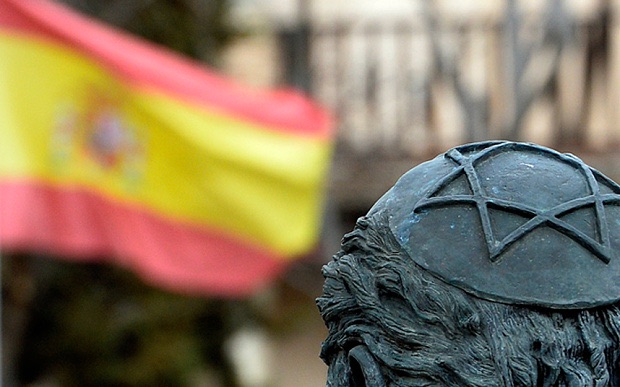
In Toledo, you can tour the Sinagoga de Santa Maria La Blanca. Think about that — the synagogue of a saint! There seems to be no guilt, no shame that the Catholics took over a Jewish house of worship after most Jews of Toledo were slaughtered or forced to convert — only a clinical explanation on an audio guide of how this building came to be. The beautiful scallop shape, where the ark was held, is still there — with a big dome and a cross over it.

When we first got to Spain we were advised by the family who lived in the apartment before us: Tell your son not to mention he’s Jewish when he’s at school. Spanish kids have never met a Jew before. It’s better left unsaid.

My son became a modern-day crypto-Jew.

One day, my son’s teacher was talking to the class about Tres Reyes, the post-Christmas Christian feast day of Three Kings, when she accidentally outed him. That was my bad. Earlier, the teacher had asked me if we were going to stay another year. Forgetting the warning, I told her my son couldn’t stay because he needed to go home to have his bar mitzvah. She was an adult, I thought. It was OK that I told her. But in an effort to create a lively Navidad discussion, the teacher announced, “Someone here doesn’t celebrate this holiday.” My son had to defend himself in Spanish: Yes, he believes in God. No, he doesn’t have a Christmas tree. Yes, he still gets presents.

Later, when a boy approached my son at school and asked him what was the difference between a Jew and a pizza — a pizza doesn’t scream in the oven — my husband and I were horrified. But not surprised.

At a fancy dinner party, a Spanish woman asked me, “Aren’t there a lot of Jews in Hollywood?” At first, I was taken aback. Did she say “studios” or “Judios”?

“About half,” I replied, hedging for some reason. I knew there were more. She seemed pleased with my answer, nodding, “That’s not so bad.”

The Spanish Inquisition led, in part, to the Holocaust. Dehumanize a people and you can do anything to them.

Calle Rabillero: It sounds suspiciously like Rabbi Street, but Rabillero is slang for “a dump.”

Marrano: The name used for Converso Jews. It also means “swine.”

San Benito: A gown of coarse fabric with a devil symbol on the front worn by any Converso found Judaizing.

Like the Nuremburg laws, anti-Jewish laws were also passed in Spain, designed to impoverish and humiliate. Juderías or ghettos, were formed, enclosing neighborhoods with locked gates. Jews could no longer practice medicine; deal in bread, wine or meat; engage in handicrafts or trades; fill public offices; or act as money brokers. They could not assume the title Don, carry arms, trim their beard or hair. They could not hire Catholic servants, farmhands, lamplighters or gravediggers. Jews were not permitted to cross the Plaza Mayor, the main center of town, en route to the cemetery. They had to walk around it, burying their dead at night so no one would hear them saying Kaddish.

We were advised: Tell your son not to mention he’s Jewish when he’s at school. Spanish kids have never met a Jew before.

I confess that at times, while living there, I felt very alone. I wanted to tell everyone I met: “I’m a Jew. You tortured me. You turned my neighbor against me. You burned me. You kicked me out. Your inquisition worked!”

Then, something amazing happened.

A friend took me to a service at Bet-El, the Masorti Synagogue with an Argentine rabbi and a congregation of mostly Ashkenazi Jews, who now live in Spain or are just passing through. When I saw the prayer book with Spanish on one side and Hebrew on the other, I nearly wept.

I met the widow of Max Mazin, the man who founded the Orthodox Synagogue Comunidad Judía de Madrid in 1948. I saw her stunning collection of Chagall paintings hanging proudly in her dining room. Her third Spanish-Jewish grandchild recently had been born.

I heard Jorge Drexler, an Oscar-winning composer, singing about being a Judio among Christianos.

Yes, a population was decimated.

But today, there are Hanukkah celebrations in the streets of Madrid, Barcelona and Malaga.

There are tour guides proudly telling Jewish visitors that they are descendants of Converso families.

Here in the United States, there are Latino families in New Mexico who are learning why they always go to the basement and light candles on Friday night.

There are Sephardic Jews in Los Angeles who are discovering why they can’t point at the stars at sundown on a Saturday night.

We can exhume the past and relearn traditions.

Doctoral candidates at UCLA are translating ancient Hebrew Aljamiado, Judeo-Spanish texts, to learn directly from the source.

My uncle reclaimed his Spanish citizenship. He studied the language, retained a lawyer, found documents of embarcation from Istanbul to the United States that proved his family tree, and took a written test.

We can teach the real story of the Spanish Inquisition to the next generation.

We can sing Ladino songs “Los Bilbilicos” and “Morenika” like my great-grandmother Fortuné Gormé sang and then taught to her daughter, Eydie. Yes, that Eydie Gormé.

We can tell our loved ones “Vaya con leche y miel” (Go with milk and honey) when they leave our house.

We can cook frittata and bourekhas, arroz con pollo and biscocho the way the Spanish mamas did.

We can travel to Spain and show school children what a Jewish boy looks like.

We can choose life.


Cambria Gordon is a children’s author and mother of three. Her current project is a young-adult novel set during the Spanish Inquisition.

A Judia Among Christianos Read More »

Elie Wiesel a Dissident? 

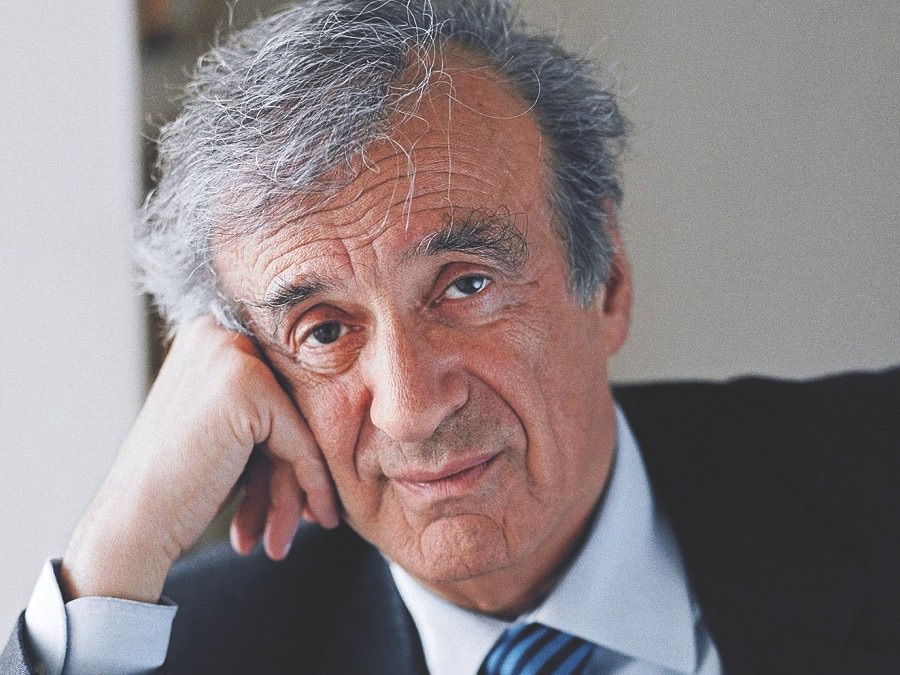
When one thinks of the late Elie Wiesel, one envisions him as the embodiment of Jewish values and a central part of the Jewish community. In an essay in the Daily Beast in July 2016, Gil Troy, professor of history at Montreal’s McGill University, wrote,  “[His] faith in democracy and humanity, despite being scarred by totalitarianism and inhumanity, embodies America’s legendary optimism.”

However, at a recent talk at American Jewish University in Los Angeles, Holocaust professor Michael Berenbaum said Wiesel was a dissident at heart, a man who actively challenged established doctrines, policies and institutions.

According to Berenbaum, Wiesel’s “dissident” status was revealed in five major areas:

The Holocaust
For Wiesel, the Holocaust was the central event of the modern Jewish experience. Said Berenbaum, “He was angry with American Jewry for not caring enough, not doing enough and not moving heaven and earth to save Jews during the Holocaust.” Berenbaum added that Wiesel said Jews have a responsibility to testify to what happens when there is no restraint on evil and idolatry triumphs.

The Nature of God
Wiesel asked: “How do we deal with a God who was absent during the Holocaust?” Berenbaum said although Wiesel wouldn’t state outright that God is dead, he saw man as God’s favorite toy. Berenbaum said, “Wiesel finally arrived at the conclusion: ‘We can’t depend on God to save us. We have to save ourselves.’ ”

“Elie Wiesel was angry with American Jewry for not caring enough, not doing enough and not moving heaven and earth to save Jews during the Holocaust.” — Michael Berenbaum

Soviet Jewry
In his book “The Jews of Silence,” Wiesel condemned world Jewry for not being willing to put everything on the line for Soviet Jews. Berenbaum said Wiesel was adamant that American Jewry had the power to act this time and they should, given that they had failed to act during the Holocaust.”

Bitburg Cemetery
When Wiesel met with President Ronald Reagan at the White House in April 1985, he said of the president’s proposed visit to Bitburg — a German military cemetery where some SS members were buried — “That place, Mr. President, is not your place. Your place is with the victims of the SS.” As a result of that meeting, “Reagan also visited the Bergen-Belsen concentration camp and promised that America would “never forget” and went on to say, ‘Never again.’ ”

Challenging Jews to Fight Genocide
One of Wiesel’s central messages, according to Berenbaum, was that “in extreme situations when human lives and dignity are at stake, neutrality is a sin.” Wiesel condemned American Jewry as the Jews of Silence, and raged against Jewish passivity, indifference and complacency.

What was this dissident’s greatest gift to us?
Perhaps it was his insight into the nature of transformation. Said Berenbaum, Wiesel acknowledged, “You cannot transform the entire world, but you can transform your part of it, starting with transforming yourself. If you cannot cure the disease, you can still heal the person.”


Mark Miller is a humorist who has performed stand-up comedy on TV and written for the Los Angeles Times Syndicate and various sitcom staffs. His first book, a collection of his humor essays on dating and romance, is “500 Dates: Dispatches From the Front Lines of the Online Dating Wars.”

Elie Wiesel a Dissident?  Read More »