fbpx

April 4, 2018

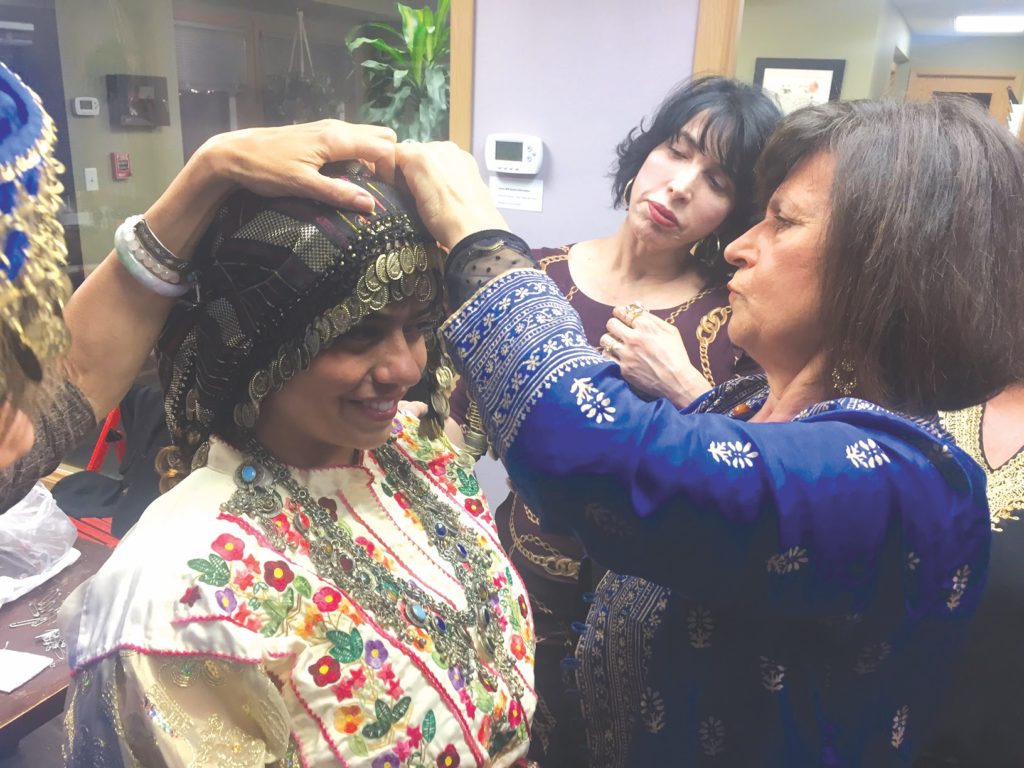
Spreading the Spirit of Mimouna

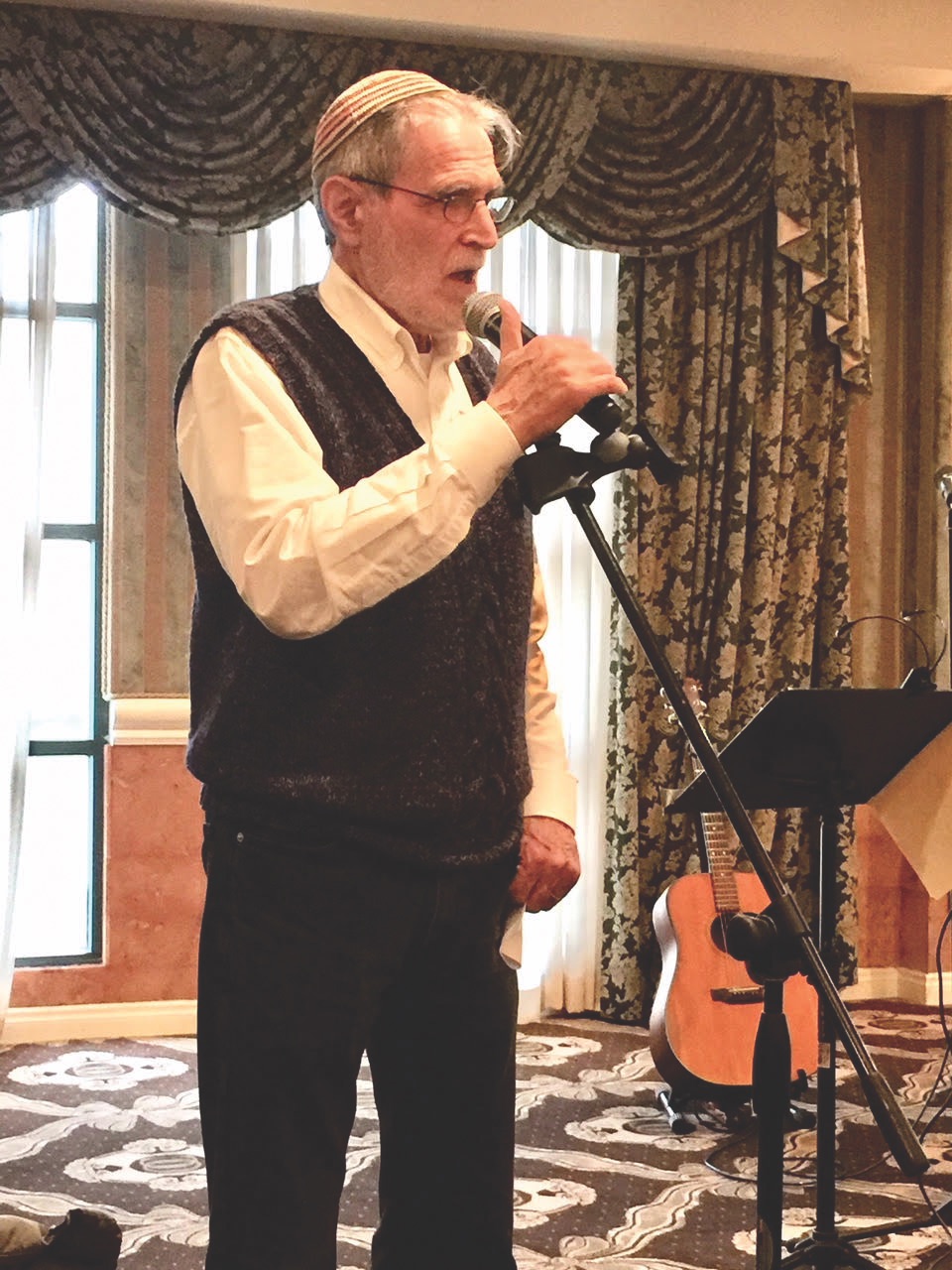
Rabbi Daniel Bouskila, director of the Sephardic Education Center, has celebrated Mimouna his entire life.

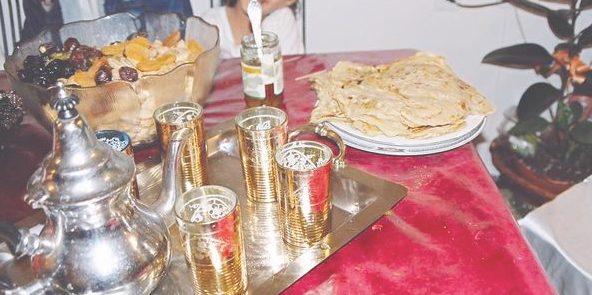
He credits his Moroccan father and Algerian mother with introducing him to the North African, post-Passover tradition, during which people feast on an array of sweet Sephardic foods, some with chametz, others without, including the popular moufleta, a sweet tortilla-like treat smeared with honey, butter or jam. Additionally, Arabic music, the blessings of good fortune and the coming together with neighbors, family and friends are important components of Mimouna.

Today, the Los Angeles Sephardic community leader carries on the centuries-old tradition. Despite being an integral part of the Sephardic Passover experience as well as something akin to a national holiday in Israel, many non-Sephardic Jews in the Diaspora do not know about Mimouna.

Mimouna commences immediately after sunset on the final day of Passover.  Havdalah is recited to mark the end of the holiday. Then, while an Ashkenazi family may head out for pizza, those who celebrate Mimouna open their homes or visit the homes of others, greet each other with the Judeo-Arabic Tirbah u’tissad,” (May you prosper and succeed), reminiscent of the Vulcan salute, “Live long and prosper,” from “Star Trek.” They then eat a date, filled with butter and honey, and scarf down two or three of the aforementioned moufleta. The ingredients are purchased before Passover and sold with the other chametz, or purchased hastily shortly before Mimouna begins.

Traditional Mimouna foods include dried fruits, marzipan pastries, sesame cookies, and other treats that celebrate the renewal of spring.

Those who celebrate often dress in traditional Moroccan garb, including a kaftan, (embroidered dresses for women), and jalabiya (long robes for men).

“There is kind of a whole rhythm to what Mimouna is,” Bouskila told the Journal in a phone interview.

When Bouskila’s father was growing up in Marrakesh before the founding of the State of Israel, Mimouna was also an illustration of coexistence between Jews and Muslims who lived side-by-side, he said.

“My father remembered that distinctly. The afternoon of the last day of Pesach, a lot of the materials that were needed for the Mimouna, the Muslims used to help them prepare for it, because it was still yom tov, and the Muslims knew that.”

While the coming together of Jews and Muslims in Arab countries on Mimouna does not happen much today, given that there are not many Jews left in Arab countries, the celebration is an opportunity for Sephardic and Ashkenazi Jews to come together, Bouskila said.

In 2015, I attended a Mimouna celebration for young professionals organized by Reform synagogue Temple Emanuel of Beverly Hills and Jews Indigenous to the Middle East and North Africa (JIMENA). Henna stations, tables featuring a buffet of Sephardic foods and the live music of Middle Eastern band Bazaar Ensemble welcomed the large crowd of Ashkenazi, Sephardic and Mizrahi Jews at a tucked-away warehouse space.

“Beyond understanding the specifics of why something began, it is what kept us as a people.” — Odin Ozdil

This year, on April 11, four days after Passover ends, JIMENA — in partnership with Students Supporting Israel at UCLA and Jewish Awareness Movement (JAM) — will hold a Mimouna gathering for college students at JAM’s UCLA location, featuring a henna station, moufletas and other Middle Eastern food and Moroccan lantern- and challah-making.

Additionally, Hillel 818, which serves Jewish students at Cal State Northridge, Pierce College and Los Angeles Valley College, is holding a students-only Mimouna party, on April 10.

Odin Ozdil, the L.A.-based program coordinator at JIMENA, said he is looking forward to introducing students to Mimouna. “It is events like Mimouna I can really rally the resources of the organization around,” he told the Journal.

Some believe the origins of the word “Mimouna” derive from the famous Jewish philosopher Maimonides. Others believe it is derived from the Hebrew word “emunah,” or “faith.” There is, however, nothing conclusive about its absolute origins.

Ozdil said that the origins do not matter as much as the result of the tradition of bringing people together.

“Beyond understanding the specifics of why something began, it is what kept us as a people,” he said. “Even not knowing is something worth celebrating that can empower a people moving forward.”

Eli Miller, 25, who runs the Sephardic community Midrasho Shel Shem out of his West Hollywood home, attracting Hebrew- and French-speaking transplants in Los Angeles, also will celebrate Mimouna this year. He plans to visit multiple homes in one night, staying at one house for about 15 minutes before going on to the next.

“It’s hard to be at a million places at once,” Miller said in a phone interview. “You make a stop and come in for a few minutes, listen to music, talk to some people and move on to the next one.”

For Bouskila, this practice of moving from one house to the next represents the essence of Mimouna.

“The idea of a Mimouna is that there is no such thing as a formal invitation. It is kind of an open house,” he said.  “People just file in and out — neighbors, friends — through word of mouth. We often had people we didn’t know, people who heard about it and it was never, ‘What are you doing here? You’re not part of our dinner plans.’ It was just a continuous open house.”

Spreading the Spirit of Mimouna Read More »
Exodus As Performance Art?

Most of the stories in the Bible are written using a traditional storytelling narrative format. It reads like a book. There is one glaring exception to this structural conformity in the Exodus story.

Immediately following the 10 miraculous plagues and their dramatic escape from Egyptian servitude, the Israelites are caught between the proverbial rock and hard place. On one side, the Egyptian legions are in hot pursuit of their coveted slaves, while on the other, the raging waters of the Sea of Reeds impede the path of the fleeing Israelites. On God’s command, Moses stretches his arm over the sea and with a Harry Potter-esque flick of his staff, the waters recede. The Israelites dash across the channel to their freedom and the waters crash down upon the Egyptian hordes.

Here the Bible inserts its first, and only, musical number into the narrative. Inspired and awakened by their newfound freedom, Moses and his sister, Miriam, lead the people in the Song at the Sea — a spontaneous ballad offering thanksgiving to God. “I sing a song to the LORD for the LORD is highly exalted … The LORD is my strength and song, and He is become my salvation; this is my God, and I will glorify Him; my father’s God, and I will exalt Him.”

To me, nothing in the Bible requires a greater suspension of disbelief than this moment. Seconds earlier, the Israelites were rescued from certain death by the slimmest of margins. Sure, they felt great relief, but real people in real life do not spontaneously burst into song. That happens only in musicals.

The Song at the Sea is built right into the original text of the Exodus story. It is ready for Broadway.

When I want to say thank you in real life, I make a phone call. I write an email or send a text. I definitely do not grab a microphone, strike up the band lying in wait just in case I need to serenade somebody and sing a song of gratitude. But that does describe the Song at the Sea. The Israelites are saved, Miriam picks up a tambourine and Moses starts singing. It is such a cliche. A classic trope of musical theater or film — singing a wordy song instead of speaking like people do in real life.

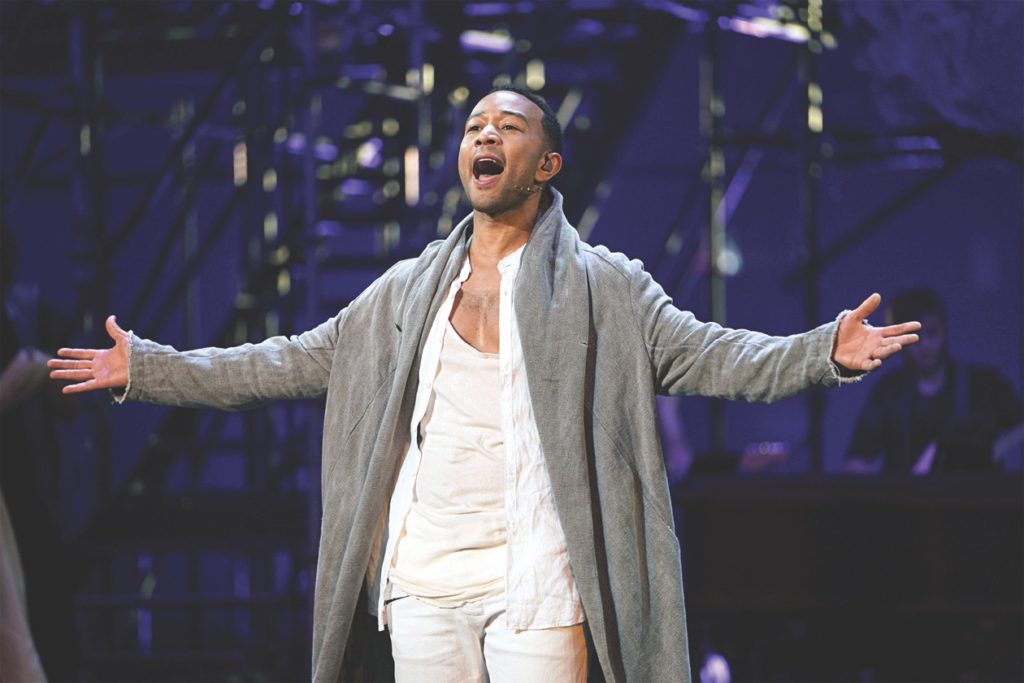
I had this epiphany while watching NBC’s “Jesus Christ Superstar Live in Concert” on NBC on Easter Sunday, along with 10 million other viewers. There are no songs in the original text of the Jesus story, so Andrew Lloyd Webber and Tim Rice created a musical version. But the Exodus story actually includes a “musical episode.” The Song at the Sea is built right into the original text. It is ready for Broadway.

Music possesses an extraordinary power to convey emotion more efficiently and effectively than words. Art does not always attempt to impart facts or historical truth. Rather, it moves us, inspires us, nourishes our souls.

In many places, the Torah is more like art than like real life. Torah is a collection of stories, ideas, rules and wisdom for improving ourselves and the world. Torah should move us, inspire us and nourish our soul. Sometimes performance art — even Torah — needs a shortcut like music to get us there.

The emotional peak of the Exodus is the moment our forefathers set foot on the other side of the sea and turned their heads to witness the entire Egyptian fleet drowning. In order to feel that moment, we need a shortcut. We need a song. At this point, we might even need an entire musical.


Eli Fink is a rabbi, writer and managing supervisor at the Jewish Journal.

Exodus As Performance Art? Read More »

B’nai Horin Celebrates 50 Years

The second night of Passover was particularly special this year for members of B’nai Horin (Children of Freedom), who gathered for a seder that celebrated their community’s 50th anniversary.

Held at the Olympic Collection in West Los Angeles, the March 31 event featured live music and a presentation that compared biblical and current events: Moses protesting to Pharaoh about the “police brutality against the Hebrews,” the 16 Palestinians killed by Israeli troops at a protest on the Gaza Strip border, and African American Stephon Clark shot eight times in the back by Sacramento police.

During the seder, B’nai Horin founder and civil rights attorney Rabbi Stan Levy said many of the issues addressed when the community first met in 1968 remain today. “Nothing much has changed,” he said.

The hagaddah he created this year focused on refugees. “Our ancestors were impoverished, persecuted Syrian refugees,” Levy said. “The word ‘Hebrew’ means ‘nomad.’ And the Torah has more laws protecting the rights of immigrants and refugees than any other system of law.”

B’nai Horin got its start when “a dozen attorneys, social workers and others involved in the civil rights movement gathered in the basement of Temple Isaiah in Los Angeles to hold [that first] seder,” B’nai Horin’s co-Rabbi Laura Owens told the Journal. “They examined civil rights issues of the day through the lens of Passover.

Rabbi Stan Levy.

“The seder proved so impactful,” Owens said, “that those involved felt that it shouldn’t be a one-time thing. They started gathering for holidays and learning, sharing and growing, and invited others.”

Eventually, they decided to keep the energy and ideas flowing by forming a congregation consisting of like-minded individuals.

“The Torah has more laws protecting the rights of immigrants and refugees than any other system of law.” — Rabbi Stan Levy

And much like the Jews who wandered in the desert for 40 years following the Exodus, B’nai Horin has moved throughout Los Angeles, without a permanent physical space to call home.

During its first 25 years, services were held at The House of the Book at Brandeis-Bardin in Simi Valley.

“It was one of the original synagogues without walls,” Owens said. “The notion being that we are wandering Jews, we are nomads, we make our home where we can.”

It’s also why B’nai Horin doesn’t have a board of directors or mandatory dues. All contributions are on a “can do” basis. B’nai mitzvot have been held at the Riddick Youth Center in Rancho Park since the early 2000s, and Shabbat services have been held there for the last two years. Prior to that, Shabbat services were held in members’ homes, while High Holy Days services have been held in the sanctuary at American Jewish University and at other locations.

B’nai Horin, is a member of ALEPH (the Alliance of Jewish Renewal), and its services are somewhat eclectic, combining “the socially progressive values of egalitarianism, the joy of Hasidism, [and] the informed do-it-yourself spirit of the havurah,” according to its website. Or, as Owens explains it: “In many congregations, they do the Hebrew first, then the English. We like to do the English first, so that when they get to the prayer, they know what it is and what they’re going for.”

It’s difficult to pin down how many members B’nai Horin has, Owens said, because, “We don’t make anyone join; we’re more invitational and welcoming.”

At this year’s seder, one of its longtime members, 77-year-old Holocaust survivor Eva Nathanson, spoke movingly about surviving World War II.

Born in Budapest, Hungary, she was barely 4 years old when her parents tried to shield her from what was happening. Cutting out yellow “Juden” stars, she was told it was an “art project.” Her family being pushed into trucks bound for concentration camps was merely “playing hide and seek.”

Nathanson spent 2½ years hidden under a hole cut in a living room floor and was moved to multiple hiding places throughout the war. She was eventually discovered and taken to the Danube River with other Jews, where she witnessed people pleading for their lives, tied two-by-two, being shot and pushed into the river.  Miraculously, she survived but lost almost all of her family in the Holocaust.

Eva Nathanson. Photo from http://survivingtheholocaust.us/.

She left Hungary in 1956 following the revolution and settled with what was left of her family in Los Angeles in 1957. She went on to earn her bachelor’s degree in business psychology and an MBA in organizational management and human resource management. Today, she is a mother and grandmother and a cancer care worker at Cedars-Sinai Medical Center.

Owens credited Rabbi Levy with the strength and depth of the B’Nai Horin community that has drawn Nathanson and other members.

“He excels at making Judaism deeply meaningful,” she said, “helping so many to view the teachings of the Torah as being directed personally to them.”


Mark Miller is a humorist who has performed stand-up comedy on TV and written for the Los Angeles Times Syndicate and various sitcoms. His first book, a collection of humor essays on dating and romance, is “500 Dates: Dispatches From the Front Lines of the Online Dating Wars.”

B’nai Horin Celebrates 50 Years Read More »

The Magic of Mimouna

Go back a few centuries and picture yourself on a small street in a Jewish neighborhood in Casablanca, Morocco, as the sun is starting to set.

You’ve just finished the late afternoon prayers on the last day of Passover, and as you head home, you see Arab grocers setting up shop and laying out butter, milk, honey and, most importantly, flour and yeast. They are doing what their ancestors did for generations: helping the Jews of Morocco prepare for the ancient tradition of Mimouna, a night when the Jews celebrated the end of Passover by opening the doors of their homes to their neighborhood.

After sundown, Jewish men would rush to gather all the supplies — either by purchasing them or receiving them as gestures of good will from local Arabs — and bring them home, where the women would prepare elaborate sweet tables.

These tables were laden with delicacies, but the star of the show was a thin, mouthwatering Moroccan crepe called the moufleta, which you would roll up with soft butter and honey. Please trust me when I tell you that to this day, few things in life are as perfect as a couple of hot, sweet, tender moufletas — right after you’ve come off a strict eight-day diet of dry matzos.

Moufletas were not the only sweet things floating in the Arabian moonlight on the night of Mimouna. According to folklore, Mimouna was known as the ideal night to meet your sweetheart. It was a night when doors and hearts were open, and young men and women, dressed in their finest, would move and mingle like butterflies from one party and sweet table to another. (I know, it sounds a lot more romantic than speed dating.)

The free-flowing and joyful atmosphere that made you feel the promise of finding love was not a coincidence. The night of Mimouna was all about bringing good fortune into your life. After eight days of prohibitions, Mimouna was the night you broke free, the night anything was possible.

For the Jews of Morocco, Mimouna was the Jewish holiday that celebrated optimism.

All night long, people would give the same greeting over and over again: “Terbach,” an Arab word that roughly means, “May you win and be fortunate.”

The word “mimouna” itself combines the Hebrew/Aramaic root “mammon,” which means riches, with the Hebrew word “emunah,” which means faith. Have faith in your good fortune: If Mimouna ever becomes a big deal in California, I bet the California Lottery would salivate to sponsor Mimouna parties.

After eight days of prohibitions, Mimouna was the night you broke free, the night anything was possible.

As many of you know, the mainstreaming of Mimouna has already happened in Israel. The tradition has morphed from magical nights among neighbors to loud daytime barbecues in public parks, where politicians of all stripes come to sell their wares. I’m guessing the politicians want in on the good Mimouna vibes, which might explain why they’ve made it a national holiday.

From what I hear, the rabbis in Israel also got involved. They were afraid that people would rush out to buy their moufleta ingredients before the holiday was officially over, so they nudged Mimouna into the bright sun of the next day.

These rabbis obviously have no feel for romance — Mimouna is for the moon, not the sun. My memories of Mimouna nights in Casablanca can never mesh with the notion of an afternoon barbecue in a public park. Even though I was only a child, I recall feeling this mysterious, nighttime magic in the air. Even the nervous rush after sundown to gather the goods and prepare the sweet tables were part of the excitement.

But the magic of Mimouna was not just the sweet tables and the Arabian nights. There was something else.

When I talk to Sephardic Jews today who spent a big part of their lives in Morocco, they go on and on about Mimouna. It’s like they’re talking about an ex-girlfriend they were madly in love with and wish they had married. There’s a sense of nostalgia, yes, but also of loss — a loss of what that one night represented.

It’s true that they have tried to take Mimouna with them. In Montreal, where I grew up and where there is a large Moroccan Jewish community, people drive to fancy Mimouna parties all over town until the early morning hours. Even here in Los Angeles, there are Mimouna parties sprinkled all over the area, especially in Moroccan Jewish homes.

But everyone knows there’s something missing. You could serve the world’s greatest moufletas (my mother’s), wear a gold-laced caftan and have a live Middle Eastern band, and there would still be something missing.

It’s the neighborhood.

Mimouna represented the love and intimacy of a neighborhood. There’s nothing like popping in to see 10, 20, 30 different neighbors on the same night, most of whom you see all the time — especially when you know your great-great-great-grandparents probably did the same thing in the same place.

According to tradition, Mimouna itself came out of a neighborhood need. Because many Jewish families in Morocco each had their own Passover customs, Passover week was the one time of the year when families would usually not eat in each other’s homes.

Mimouna was a way for the neighborhood to dramatically make up for this week of limited hospitality — a night when things got back to normal, and everyone invited everyone.

If Passover was the holiday that drew you in — toward yourself, your home, your family — Mimouna was the holiday that blew you away, back to the neighbors, your friends, your freedom, your dreams, maybe even your future love.

Many years later, I find myself living again in a Jewish neighborhood, and I can’t help wondering if my moving here had something to do with my memories of another neighborhood.

Especially on that one magical night of the year, when the moufletas were hot, the doors were open and everything was possible.

This story originally appeared in the April 6, 2007, edition of the Jewish Journal.

The Magic of Mimouna Read More »

‘Mimounizing’ Your Life

Although I consider myself a social person, I realized early on that in a party situation, I’ve always gravitated toward the kitchen. Everyone expresses themselves differently, but I think chefs tend to have this trait in common. Most of us would rather watch other people have a good time as we melt into the background while serving little slices of joy and nostalgia.

Perhaps it’s the romantic in me that remembers the atmosphere during holidays when our family cooks would gather in the kitchen. “Tombe la Neige” or Pavarotti would be playing in the background, my aunt’s favorite. She’d be singing along while working on repetitive tasks such as stuffing grapeleaves or frying leek patties.

My cousin who is also a chef told me stories of growing up in Migdal HaEmek in Israel, where roughly half the population is Romanian while the other half is Moroccan. When Passover ends, and Jews begin to eat chametz again, he and the rest of the Romanians look forward to their Moroccan friends’ Mimouna celebrations. He would find himself hiding in his neighbors’ kitchens watching the moufletas being made and wishing he was the cook standing over the stove. He described his awe at watching his friends’ grandmothers turning over the thin crepes, again and again, building up one crepe on top of the other until the stack reached over a foot tall and threatened to topple. Someone else would drench them with butter and honey while other hands would roll them up and bring them to the table.

Mimouna is a singularly Moroccan tradition, and although it’s not a religious holiday, it is a cultural phenomenon that has grown in popularity over the years. While Ashkenazi and even Sephardic Jews usually prepare a dairy feast with matzo brei taking center stage, the Moroccans break out their gold and finery and run a sweet fantasy tour through their neighborhoods, blessing and kissing, flirting and enchanting. During the Mimouna, there is an unwritten rule that even if you have been fighting with your neighbors or friends all year, that night is the time to forgive and be forgiven, to let bygones be bygones, and to hope for love and success. Mimouna is the night when “emouna” or belief meets “maimun,” the Arabic word for good fortune.

Everything about the Mimouna celebration, from the sweets-laden table with stuffed dried fruit to the buttery honey-kissed moufletas, spicy sweet tea and arak (a Levantine alcoholic spirit), tells a story of letting loose and of love. Traditionally, the ban on the time of the year when marriage is prohibited lifts and many couples receive the blessings of their families for an engagement. Matchmakers are out in full force, and romances are kindled and rekindled. It’s easy to feel footloose and fancy-free, lost in the giddiness of the Mimouna atmosphere. Why not take this feeling forward and use it as a motif for the rest of the year?

Everything about the Mimouna celebration tells a story of letting loose and of love.

It’s an unfortunate byproduct of the times in which we live that cynicism and fear often undermine romance and love. While it’s tempting to blame the media or our iPhone-driven lives for this trend, discontent is not the domain of our times. After all, we live in an age when almost anything is possible, and we have more opportunities than ever. So why are we so lonely and disconnected? Why does it take a Mimouna to help us to forgive the grievances we’ve collected?

I can tell you from watching from the background all of these years what I’ve gleaned from the safety of the kitchen while catering parties:

1) Rich or poor, it makes very little difference — all people have worries.

2) The idea of protecting yourself — forget about it; love can’t happen in the absence of disclosure.

3) Looking for someone to make you whole? You need to make yourself whole first.

4) Thinking that if only you meet the perfect person that your life would be complete. Nobody is perfect, and neither are you.

5) Holding on to the past? Past failures are an indication only that you tried, not an indictment of your character. Move on and forgive yourself.

So, before I give you a marvelous moufleta recipe, let me assure you if you start “mimounizing” your life by being generous with your love, your good words and sharing your sweetness, then the air around you will change. It won’t happen overnight, but unlike the magical Mimouna celebration that comes only once a year, your sweet vibes will attract others with good intentions — and that can lead you to relationships and connections that might last a lifetime.

MOUFLETAS — MOROCCAN CREPES WITH SWEET SYRUP
4 cups all-purpose flour
1 packet or 2 1/4 teaspoons active
dry yeast
1 1/2 teaspoons sugar
1 1/2 teaspoons salt
1 1/2 cups warm water (not so hot that it
kills the yeast)
1/2 cup vegetable oil (not olive)
1 stick butter
1/2 cup honey

Mix the flour, yeast, sugar and salt. Add warm water and mix well in a stand mixer until a soft shaggy dough forms. Knead in a machine or by hand until the dough is very silky and smooth — about 5 minutes.

Oil hands generously and form dough into a rough cylinder about 2 inches in diameter. Using a bench scraper or your hands, pinch off small balls of dough and place on a tray or plate. When all the dough is separated into balls, pour the rest of the oil on the tray and roll the dough balls over in it until they are fully covered. Cover with plastic wrap and a kitchen towel and let the dough rest for 30 minutes.

Put a nonstick pan on the stove on medium heat with a touch of oil on the surface.

Remove a ball and flatten out on a smooth, cold surface. Using well-oiled hands, press and push the soft dough into a very thin, almost transparent, circle — as thin as you can get it and about 10 inches in diameter. Don’t worry if the dough tears. Place the crepe in the warm pan and cook it for about 60 seconds while working on the next ball.

Flip over the crepe and then immediately place the next crepe on the surface of the hot crepe in the pan. Keep rolling and turning, rolling and turning until all the dough balls are used and you have a stack of crepes in the pan, each time lifting carefully and turning over the stack, taking care not to overcook.

Put butter and honey in small pot and heat until butter is melted. Separate the stack of moufletas one by one, spooning the melted butter and honey over each, and then roll into a cylinder or fold in half and then into quarters.

Makes about 30 moufletas.


Yamit Behar Wood, an Israeli-American food and travel writer, is the executive
chef at the U.S. Embassy in Kampala, Uganda, and founder of the New York Kitchen Catering Co.

‘Mimounizing’ Your Life Read More »

Dear Uncle

Uncle, it’s but a whisper,
the echo of your bare feet
kissing the ocean floor.

The tap of your staff
on a cold marble floor.

These days the roar of metal
engines, and mental ones too,
have just about drowned out
the song of our cells,
the echo of an emptied well:
Mi kamocha Ba’elim Adonai.

Sure the words still ring,
but, Uncle, our hearts
they, too, must sing!

And I wonder if but a word
was uttered before that sea
spread itself open wide
and let our people deep inside.

I wonder, can a song ever truly sound
if not upon a silent ground?

And Uncle, these days the silence
is scarce, a treasure to be found
far, far off the collective course.

You led us from the grips of chains
long ago, and now they’ve come
once more, taken a mental hold.

Clanging, clanging, clanging,
sounding over the echo of a man,
you my dear Uncle, who emptied
the well of his will, as wide as the ocean,
and let Adonai in. Uncle, it’s but a whisper,
this prayer of my heart, turn it to silence,
for any sound keeps us apart.


Hannah Arin is a junior at Pitzer College pursuing a double major in religious studies and philosophy.

Dear Uncle Read More »

Joanna Mendelson: ADL’s White Supremacy Watchdog

Joanna Mendelson is the senior investigative researcher and director of special projects for the Anti-Defamation League’s Center on Extremism. In her 17th year with the ADL, she provides expertise, analysis and training that enable law enforcement, public officials and community leaders to identify and counter emerging extremist threats.

JJ: What is the likelihood that the fast-expanding white supremacist movement will be stemmed in the near term?

Joanna Mendelson: Parts of the white supremacist movement — notably the alt right—are rapidly expanding. We should take comfort in the fact other segments are not doing so well. Traditional white supremacists, such as Ku Klux Klan groups, have been declining for years. More recently, racist skinheads have been stagnant, perhaps starting to decline.

JJ: What has changed in America in the past 20 years to make these onetime outcasts visible and almost acceptable?

JM: Although it is difficult to measure secretive extremist movements, white supremacists, as in recent decades, have been nowhere near as numerous — or as accepted — as they were during the civil rights movement or before it. What has changed: Largely due to the internet, white supremacists are more connected to each other and more visible. Online propaganda can help radicalize individuals.

“White supremacists, as in recent decades, have been nowhere near as numerous — or as accepted — as they were during the civil rights movement or before it.” — Joanna Mendelson

JJ: When there is a mass killing, some authorities say don’t publicize the names. Would white supremacists retreat if their marches were not covered?

JM: No doubt white supremacists try to take advantage of any media sunshine that can magnify their cause and real-world actions. Many things extremists do are newsworthy. The community needs to be informed to respond appropriately. Coverage must be a delicate balance between arming us with information but not giving them a greater platform to preach hate.

JJ: What is the main cause of white supremacy?

JM: There is no one cause. There are a lot of paths to radicalization. We find common themes of perceived alienation, victimization and scapegoating of others for sundry woes. They perceive themselves as minorities, creating an “us vs. them” paradigm. Others want to belong to something. Some are brought into the movement by more dominant personalities.

JJ: Do they require funding?

JM: White supremacists have costs associated with purveying hate — equipment (official uniforms or accessories, including tattoos, clothing, paraphernalia and weaponry); event organization and travel; internet and print propaganda expenses; merchandise purchasing; legal defense; and even staff/labor costs.

JJ: Who are the people financially supporting them?

JM: The white supremacist movement is poorly funded. A general assumption, fueled by rumors, holds that white supremacists raise a substantial amount from the Russian government, conservative foundations or secretive benefactors. This rarely happens. White supremacists scrape together a small amount from people already in the movement.

One very rare current wealthy donor is William H. Regnery II, a member of the well-known conservative publishing family. He developed extreme right and white supremacist views by the 1990s.

JJ: What kind of women are drawn to the white supremacy movement?

JM: The “14 Words” is a reference to the most popular white supremacist slogan, signifying “We must secure the existence of our people and a future for white children.” Women are a significant part of the equation in their role to help procure future generations of white people.

JJ: Would the white supremacists of the old days recognize latter-day supremacists?

JM: Prior to and during the civil rights movement, most white supremacists would say they stood for preserving the dominance of the white race in America. After losing the war to deny civil rights to minorities, their ideology has evolved. They claim they are fighting for the very survival of the white race, fighting against a “rising tide of color” controlled and manipulated by Jews.

More recently, white supremacists try to cloak ideology in terms more palatable to a modern audience, “culture” for “race,” “western civilization” for identity.

JJ: What drew you to this field?

JM: I was always drawn to social justice work. My family traditions were deeply steeped in values of social equity, healing and righteousness. My zayde, who passed away recently, epitomized a life of virtue and goodness. He believed in the decency of people. In this vein, I persevere, to shine a light on darkness.

Joanna Mendelson: ADL’s White Supremacy Watchdog Read More »

Mayim Bialik to Deliver UCLA Commencement

Maybe expressing an unpopular viewpoint could be the theme of Mayim Bialik’s forthcoming commencement address at UCLA.

On April 4, the public university announced its selection of the “The Big Bang Theory” actress and UCLA neuroscientist alumna as the distinguished alumna speaker for the UCLA College commencement on June 15.

“Dr. Bialik embodies the values of a Bruin,” UCLA College Senior Dean Patricia Turner said in a statement. “Throughout her career, she has shown how hard work, determination and civic duty can lead to success. I know that our graduates will be inspired by her story as they set out to make their own mark in the world.”

What she will talk about when she addresses both commencement ceremonies, scheduled for 2 p.m. and 7 p.m., in Pauley Pavilion, remains to be seen, but the experience of expressing challenging opinions during challenging times would be appropriate. Throughout her career, Bialik has never shied from supporting Israel. And following the publication of her 2017 New York Times essay, “Being a Feminist in Harvey Weinstein’s World,” she demonstrated an ability to deal with backlash among those who accused her of victim blaming.

Bialik became a household name portraying the title character in the hit 1990s sitcom, “Blossom.”

After “Blossom” ended in 1995, Bialik enrolled at UCLA. While there, she was active at the campus Hillel, founding a women’s Rosh Chodesh group and participating in Hillel High Holiday services.

She is an observant Jew.

She earned her degree from UCLA in 2000, and her doctorate in 2007, before returning to the screen.

“I had no health insurance and missed performing and making people laugh,” she said in the aforementioned 2017 New York Times piece of her return to acting.

Since 2010, she has appeared on the popular CBS sitcom, “The Big Bang Theory.” She plays Amy Farrah Fowler, a neurobiologist who is romantically involved with Jim Parsons’ Sheldon Cooper.

Mayim Bialik to Deliver UCLA Commencement Read More »

Passover and Zionism: Three Sephardic Views

“This year we are here, next year in the Land of Israel. This year we are still slaves, next year may we be a free people.” This text appears in most Ashkenazi versions of the Passover haggadah.

In the Sephardic version, the second line is slightly different. It reads, “This year we are still slaves here in exile, next year may we be a free people in the Land of Israel.”

Given the emphasis on “exile vs. Israel” in the Sephardic version, how did Sephardic rabbis in post-1948 Israel understand the haggadah in light of the newly declared Jewish state?

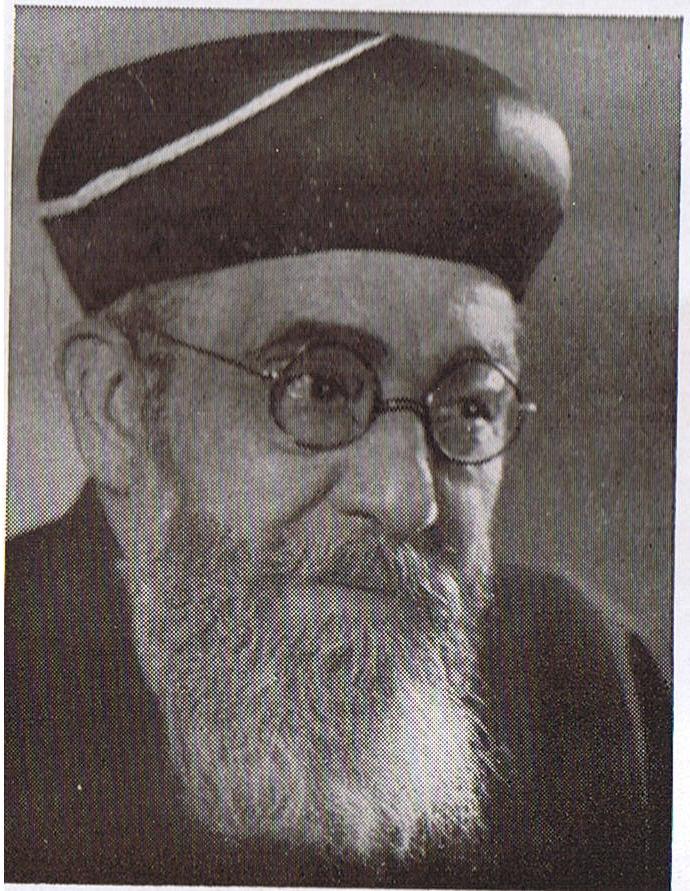
In a pre-Passover address in April 1949, Rabbi Ben-Zion Meir Hai Uziel, who was born in Jerusalem and served as Sephardic Chief Rabbi under Ottoman and British rule, recognized the paradox of saying we are still slaves in exile. Just 11 months earlier, on May 14, 1948, he was in “the room where it happened” when David Ben-Gurion said, “We hereby declare the establishment of a Jewish state in Eretz-Yisrael, to be known as the State of Israel.”

Now as the Sephardic Chief Rabbi of the first Jewish State in close to 2,000 years, Uziel said: “Throughout our lengthy exile, Passover infused us with the hope to be redeemed in our ancestral homeland. By the grace of God and the Israeli military, we are now happy to say: This year we are a free people in the Land of Israel.”

Nissim called Passover “the holiday that most deeply preserved the connection between the Jewish people and the Land of Israel.”

By mimicking the haggadah’s language to reflect the Jewish people’s new reality, Uziel seemed to infer that the change in the Jewish people’s status warranted a change in the haggadah’s text.

Uziel’s successor to the Sephardic Chief Rabbinate was Rabbi Yitzhak Nissim.

In 1958, Nissim called Passover “the holiday that most deeply preserved the connection between the Jewish people and the Land of Israel.” He proclaimed the modern State of Israel as “the beginning of our redemption,” but said that we have “yet to cross the sea into complete freedom.” Different than Uziel’s idealistic Israel of 1949, by 1958, Israel was a deeply divided society, especially along Sephardic-Ashkenazi ethnic lines. Given this reality, Nissim used the metaphor of God “tearing apart” (kara in Hebrew) the sea, saying, “we cannot declare ourselves a fully free people on Passover until we ‘tear apart’ all of these divisions in our midst.”

In 1973, Rabbi Ovadia Yosef replaced Nissim as Israel’s new Sephardic Chief Rabbi. By then a renowned scholar of halachah (Jewish law), Yosef counted among his many published books a detailed commentary to the Passover haggadah titled “Hazon Ovadia.”

Reflecting upon the stanza in the song “Dayenu” that states, “Had God given us the Torah but not brought us into the Land of Israel, that would have been enough,” Yosef writes:

“These words are directed against the secular Zionists who think you can build the Land of Israel without the Torah of Israel. The Torah precedes the Land of Israel in importance, because the Land of Israel without Torah is no better than living in the diaspora. Indeed, it is preferable to stay in the diaspora as an observant Jew rather than angering God by living a secular lifestyle in the Land of Israel.”

In a radical departure from his Sephardic predecessors, Yosef demystifies the existence of Israel and posits that the secular orientation of Zionism actually angers God. Yosef’s creative reading of “Dayenu” deems it preferable for the Jewish people to have stayed “slaves in exile” as religiously observant Jews rather than being a “free people in the Land of Israel” in a Jewish state with a decidedly secular orientation.

As we transition from Passover into Israel’s 70th anniversary, Israel’s first three Sephardic Chief Rabbis inspire a new set of “Four Questions”: Are those of us living in exile still in slavery? Does Jewish independence in Israel automatically mean Jewish emancipation? Is a polarized Israel a true expression of freedom? Can secularism and religiosity coexist in a Jewish state?

Perhaps we should have another seder on Yom HaAtzmaut to ponder those questions.


Rabbi Daniel Bouskila is the director of the Sephardic Educational Center.

Passover and Zionism: Three Sephardic Views Read More »

Telling Time in the Wilderness

We often have tunnel vision when we’re in a difficult place. “I just need to get through this,” we say. And it’s true — whether it’s biblical Egypt or a rough patch in our own lives, sometimes we need to focus our resources and attention on getting ourselves safely to the other side.

But once we get through, where are we?

Occasionally, we jump straight into a new chapter of life feeling fully resolved and at peace. But more often, when we exit crisis, we land squarely in transition. We find ourselves wandering in the wilderness, just like the Israelites after their exodus from Egypt.

My college professors in the ’90s were fond of the phrase “liminal space” — that threshold betwixt and between, neither this nor that. This term was so common that I began to suspect this love of liminality was an academic trend. Perhaps border spaces had been disregarded for years and only now were being rescued from obscurity?

But, of course, my postmodernist professors were not the first to pay attention to liminality. In fact, the fourth book of the Torah takes place almost entirely in liminal space. In English, the book is titled Numbers, but in Hebrew, the book is called Bamidbar, literally, “in the wilderness.”

I’ve long been captivated by this image of rotting manna. What can it teach us in our own times in the wilderness?

In Bamidbar, an entire generation finds itself newly freed from oppression, but also newly uncertain about its day-to-day life, not to mention its future. No longer fearing for their lives, the Israelites begin to discover things about themselves that could not emerge while they were still struggling just to survive.

For example, the Israelites discover that when faced with physical discomfort and uncertainty, their mood quickly can turn from joy to petulance. They also begin to feel out the heights and depths of their spiritual lives — from a new relationship with the Divine, who leads them in a pillar of cloud by day and of fire by night, to experimenting with idolatry in the Golden Calf episode.

Some of these lessons must have felt good in the moment; others were likely excruciating. All of them were crucial in the formation of a tribe.

In the same way, when we find ourselves in a liminal space after a crisis, we encounter parts of ourselves that surprise us. After a move; or in early parenthood; after initiating a necessary breakup; or having recovered from the initial stages after a loss — at these times we learn things about ourselves that can be discovered only in the wilderness.

During this time, we also are open to profound spiritual lessons because we’re liberated from our routines and with them, our complacency. The manna that fell from heaven during the Israelites’ journey is a perfect example of this. It is as if God is saying, yes, you need to eat, and I will help you with that, but you also need to learn to be less anxious, and I will help you with that, too.

And so, according to tradition, the manna appeared each morning like dew, it tasted like each person’s favorite food, and — my favorite part — if they gathered more than one day’s supply, it simply would rot. (Except for Fridays, when they could gather two days’ worth to avoid working on the Sabbath.)

I’ve long been captivated by this image of rotting manna. What can it teach us in our own times in the wilderness?

To me, the deepest teaching of the manna is a teaching about time.

We must be present in the moment, for time cannot be saved or stored. It can be experienced only as we live it, as it runs through our fingers.

When this mysterious, magical food appeared one morning, the Israelites asked, “Man hu?” (“What is this?”) This is where the name “manna” comes from — it essentially means, “What?”

The spirit of “what,” of open-minded inquiry, is the spirit of the wilderness. In walking out of our bondage, we also leave our preconceived notions about ourselves and the world. We are like children, looking around us, asking, “What is this?”

Perhaps that question itself is the secret heart of our being. Perhaps it is all we truly have.


Alicia Jo Rabins is a writer, musician and Torah teacher who lives in Portland, Ore.

Telling Time in the Wilderness Read More »