

















Repenting includes examining and admitting our mistakes. Seeking forgiveness. Determining to do better. Being better. Every single day.

A local teen initiative to build Jewish pride expands to other cities and shows the enduring power of curiosity and Jewish identity.

Lester brings the reader into the communications operation during the war: the videos, arguments, mistakes, debates over what to post and the race to respond to events moving faster than any communications office could control.

Among the speakers, Adam Milstein, a real estate investor, philanthropist and co-founder of the fast-growing Impact Forum, urged attendees to frame antisemitism as an American issue and not just a Jewish issue.

The Beverly Hills menu features some of Malka’s best-known dishes, including the Queen Malka Schnitzel, Branzino Hraime, onglet served with roasted white peaches and Israeli-style hummus.

One of my favorite things to cook for the Jewish holidays is a beautiful French roast. It’s so very festive and is perfect to feed a hungry crowd.

Hidden and Revealed
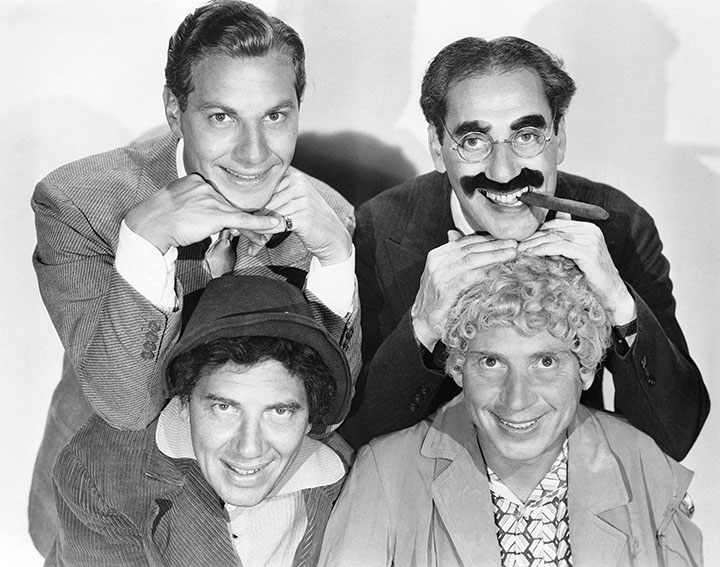
Like the greatest satirists, such as Jonathan Swift and Mark Twain, they chose comedy over accusation to mock the folly of society and add levity to dark times. But their aim was not levity alone.

From a Local Experiment to a National Program: AKLA Expands Its Vision for Jewish Teens

The Altalena was a munitions ship fired upon and sunk by the newly formed Israel Defense Forces in 1948.


Sometimes love arrives ahead of you, in spite of you. Cooking slowly became a way of being there for the people I love. A wordless language that says: I see you. I hear you. You’re worth the onion-chopping.

If an experienced professional with rare expertise leaves Israel, the impact cannot be understood simply by adding another person to a brain-drain statistic. The more relevant question is how many people with comparable experience remain, how essential that expertise is and how easily it can be rebuilt.

Conspiracy theories and antisemitism do have an affinity and important features in common, including the tendency to frame accusations in such a way that refutation does not affect the accuser. Having suffered from this for centuries, do we really want it in our public life?

Any Democrat seeking to lead the party in 2028 should embrace the politics of addition by subtraction and reject any movement seeking to end all aid to Israel and replace America’s constitutional order.

We live in an age with zero patience for uncertainty. We have answers for everything, almost magically. And somehow, we still seem to know nothing about what it means to be here.

Moses’ speech was addressed to people standing on the threshold of a new chapter. The American story is similarly turning a new page.

If renewed exclusion teaches us only to become more protective of Jewish work, we will have learned the wrong lesson from the original Borscht Belt.