There are stories that one needs to hear many times in order to remember them, in order to file them in a manner that they can be retrieved when needed. But then I’m sure you have listened to stories that you heard not only with your ears and memory, but with your soul as well; stories that you knew the moment you heard them you would never forget them. Thirteen years ago, I was standing in a store of sefarim (holy books) in Yerushalayim with my rebbe, Shlomo Carlebach. He took a book off the shelf, kissed it and handed it to me while saying, "Do you have this book? You must have it."
It looked like so many other books in the store, so many other books in my library. "It’s the Bat Ayin — the teachings of the holy Avritcher Rebbe — you must have it."
"But who is he?" I asked.
Reb Shlomo looked at me and said, "Remember the story with the precious stones? It is him!"
I smiled as my eyes teared. "Yes," I said, "I remember."
The Bat Ayin, Rav Avraham Dov of Avritch, was one of the Chasidic leadership who made aliyah in 1777. One day, a stranger entered his chazter (courtyard) in the city of Tzfat and Rav Avraham ran to greet him. The Chasidim couldn’t hear what they spoke of, but as soon as the stranger left, the rebbe returned to his study and did not emerge for three weeks. The Chasidim were puzzled: Who was that person? What did he and the rebbe discuss? Why did the rebbe lock himself in his study for three weeks? Their puzzlement grew when the rebbe finally emerged and commanded his Chasidim to prepare the most amazing tish (a rebbe’s table).
The Chasidim did as they were told. They ate and drank and sang and danced. But the whole time, all they really wanted to know was: Who was the stranger? What did he and the rebbe discuss? Why did the rebbe lock himself in his room for three weeks?
At last one of the Chasidim mustered up the courage to ask the rebbe, "Why?"
The rebbe silenced them and began: "Many years ago, while still in Avritch, I would always sit for hours with anyone that came from Eretz Yisrael. I would question them about the Holy Land and what it was like to live there. One day a shliach d’rabanan [charity collector] showed up and we talked endlessly. When he stood to leave I begged him, ‘Please, tell me more!’
"He said to me, ‘I’ve told you everything.’
"But I insisted, ‘Tell me more!’
"He said to me, ‘What more can I tell you? When you stand at Ma’arat Hamachpela along with the Patriarchs and Matriarchs you will know.’ And he turned to leave.
"I begged of him, ‘Please, tell me more!’
"He said, ‘What more can I tell you? When you stand at Kever Rachel [Rachel’s tomb] and cry with her, you will know.’ And again he turned to leave.
"I continued to beg, ‘Please, tell me more!’
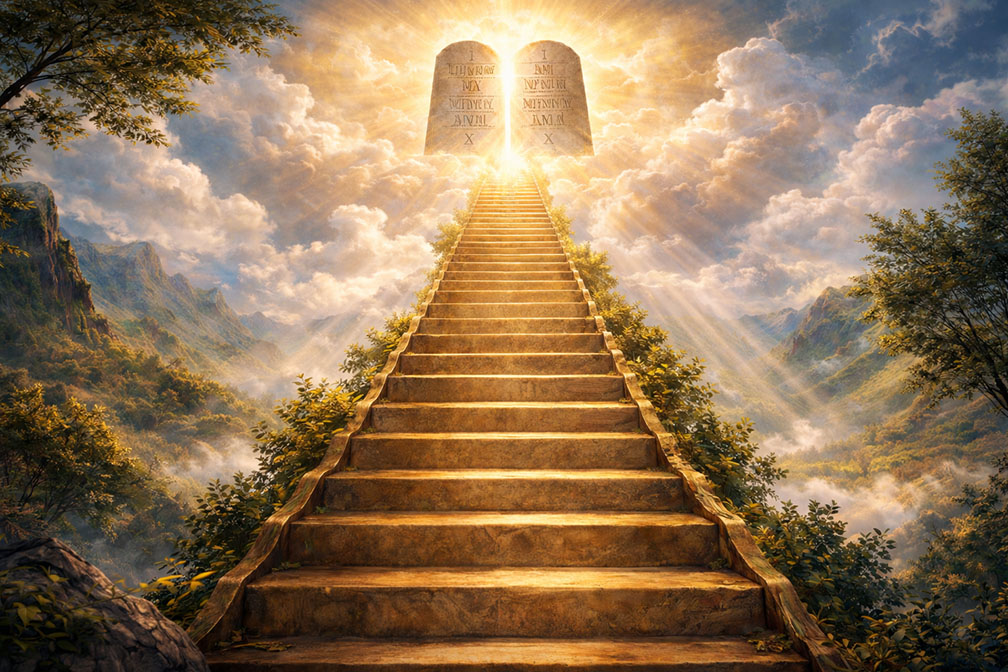
"He said, ‘I’ve told you all I can. When you get there you will see for yourself, even the stones are precious stones. Even the stones are made of emeralds and rubies and diamonds!’ And with this he left.
"So you see," the rebbe turned to his Chasidim, "when I arrived, everything was exactly as he said it would be. Everything but the stones — they were regular stones, they weren’t precious stones at all. I could never understand why he lied to me. Why the last thing he told me was not true.’
"Three weeks ago, he walked into the chatzer, and despite the passage of 20 years I recognized him immediately. I ran to him and said, ‘Everything you told me was true, but the stones! Why did you lie to me? Why did you tell me they were precious stones when they are not?!’ He looked at me and said with dismay and surprise: ‘What? They’re not?’
"So I locked myself in my study and I began to cry. Every day I would cry and look out at the stones. Today, finally, while looking out of the window I realized that every stone was precious. Every stone was an emerald or a ruby or a diamond!"
The Talmud (Rosh Hashanah 16b) tells us that on Rosh Hashanah the Books of Life and Death are opened and that between Rosh Hashanah and Yom Kippur we are all registered in one of the two books. But who does the actual signing? Who else but God could do this? The Avritcher Rebbe tells us that it is our own signature that appears in these books. If we choose to look at ourselves, at other people, at our world, at the events of our lives as jewels, then indeed we have signed ourselves in the Book of Life.
The Avritcher Rebbe had to cry in order to transform his sight. And you? Will the transformation happen through joy? Through prayer? Through dance? Through learning? What will it take for you to sign yourself in the Book of Life?
Reb Mimi Feigelson is lecturer of rabbinic literature at the Ziegler School of Rabbinic Studies at the University of Judaism.