
fbpx

This One’s For Moses – a poem for Vezot Hab’rchah

I still weep for Moses.
[additional-authors]
October 17, 2024
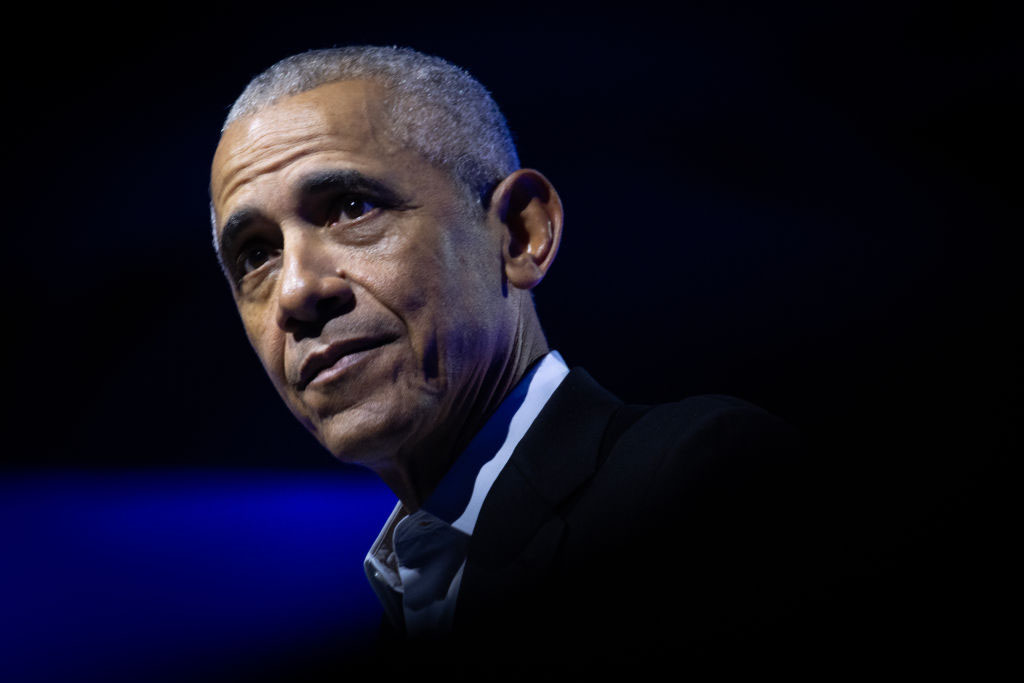
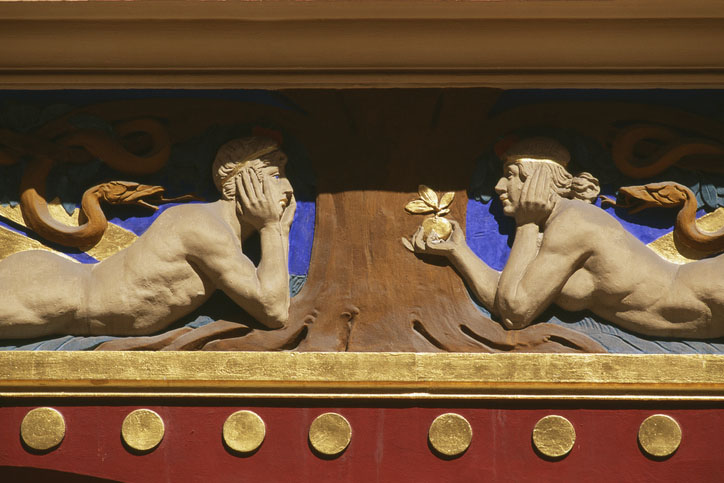
magann/Getty Images

And the sons of Israel wept for Moses in the plains of Moab for thirty days, and the days of weeping over the mourning for Moses came to an end. ~ Deuteronomy 34:8

I still weep for Moses.
The distant uncle I never knew
but know so much about,

whose words I can quote
and often sing, whose anger
I caught glimpses of

when we didn’t live up to what
he had hoped. I mourn his only glimpse
into our promised land.

Where would he have built
his tent had he been allowed in?
I want to visit his grave

and pay my respects, but it lays
across a river I have yet to cross
in a location undisclosed unto this day.

Who is unknowingly stepping on that spot?
What flocks have grazed upon where he
was laid to rest?

I want to lay stones wherever I go
in case that’s the spot. Does anyone say
Yizkor for Moses, or take out a memorial ad

in the bulletin? I’ve seen statues and
paintings, but his name rarely appears
on the leaves of the trees of life

on our synagogue walls.
I still weep for Moses
whose hand I never shook

whose eyes I never knew
whose efforts brought me to
where I am today.


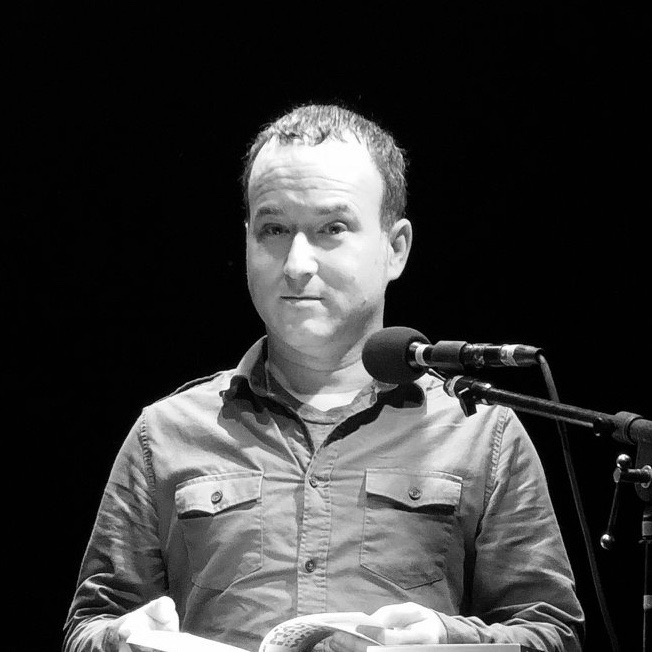
Rick Lupert, a poet, songleader and graphic designer, is the author of 28 books including “God Wrestler: A Poem for Every Torah Portion.”


Did you enjoy this article?
You'll love our roundtable.

Editor's Picks

Latest Articles

A Ka’ak By Any Other Name

A symbol of hospitality, families bake batches for holidays, family celebrations and visits with friends and relatives.

The Story That Never Goes Away

Rachel Goldberg-Polin, mother of slain hostage Hersh Goldberg-Polin, can’t stop speaking about her pain and the public love her body cannot always receive. She talks to the Journal about her son’s legacy and her new book.

Rosner’s Domain | A Dime-Store Abe: The Karhi Crisis

This week’s “Constitutional Crisis” is typical of the way the government operates. It issues a statement, or a tweet and then walks it back. Oops, we did not mean it. Or rather, we did, but we also meant to deny that we did.

Why Can’t We Be Friends?

If we want to see a less polarized society, both internally and beyond, we must emphatically reject the idea that political alignment is the predominant commonality for friendship.

Ruth-less, the Enigma of a Name

Jews spoke in two voices about Ruth, a kind of national schizophrenia, one with joyous chanting on Shavuos as the Book of Ruth was read; the other, removing her name from the chain-link of repeated names throughout the generations.

Honoring My Father: Saying Kaddish with Men

Saying kaddish every day tested my faith and commitment. It made me realize that there is no room for excuses. It taught me how to show up. It taught me that my voice can be heard, even when not expected.

More news and opinions than at a Shabbat dinner, right in your inbox.