Parashat Terumah (Exodus 25:1-27:19)
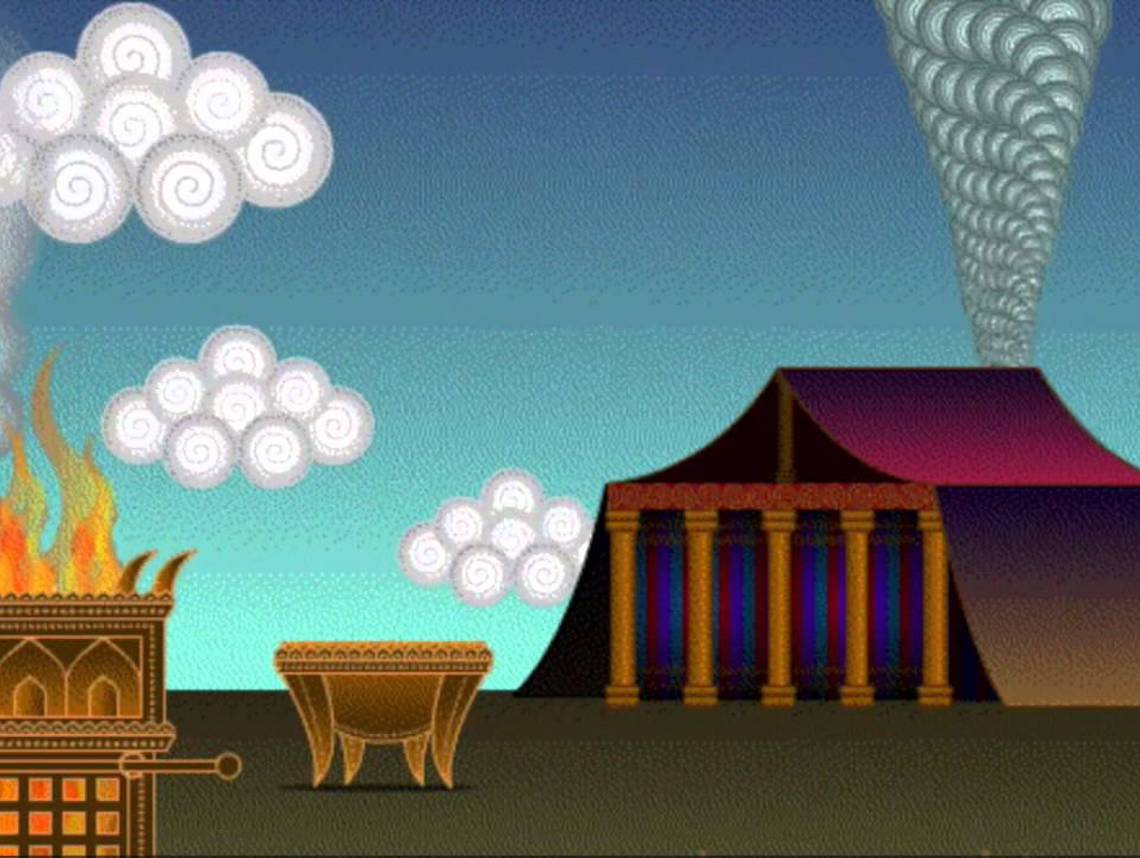
The entirety of Parashat Terumah consists of God instructing Moses, during their first 40-day “retreat” alone together atop Mount Sinai, on the details of the mikdash/Mishkan (holy place/Sanctuary) that God wants the Israelites to build. In fact, with the exception of chapters 32 through 34, which tell the stories of the golden calf and the giving of the Ten Commandments, the last 15 chapters and last five Torah portions of the Book of Exodus — starting with Terumah — focus on the construction of the Sanctuary.
God instructs Moses to tell the Israelites, “Let all those whose hearts are moved to do so, bring Me terumah (offerings/gifts)” (Exodus 25:2). Then God provides a list of precious gifts they might offer, including gold, silver, brass, fine linen, animal skins. God further explains how those gifts should be used: V’asu li mikdash v’shokhanti b’tokham — “Let them make Me a Sanctuary that I might dwell among them” (Exodus 25:8). Commentators often note God’s desire to dwell among them (the people), rather than in it (the Sanctuary).
Why so much detail about this portable Sanctuary in the wilderness? It’s not as if later generations were going to use the same blueprints for their places of worship. Was God a control freak? Did God think the human designers couldn’t figure it out? That they were incapable of making something beautiful enough to honor the Holy One?
Contemporary commentator Richard Elliott Friedman points out that God is going to be associated with this tabernacle for many generations. Friedman notes that in 2 Samuel (7:6), God reports to King David that since bringing the Israelites out of Egypt I have been “going about in a tent and a Tabernacle.” And the haftarah that accompanies Parashat Terumah reports that King Solomon began to build the Temple in Jerusalem in the 480th year after the children of Israel came out of Egypt. Perhaps so much detail on the traveling Sanctuary is simply because it will be in use for a very long time.
Or perhaps God did originally imagine the detailed descriptions would be guides for generations to come, for future sanctuaries (including Solomon’s), places built from heartfelt gifts and by skillful hands. Perhaps the details were so exacting precisely because God did not want every sanctuary to become a place of competition, each builder or each congregation vying with the others to make the most elaborate, the most expensive.
As I consider the current discussions in the news, in synagogue and church boardrooms, in city council chambers and state houses about offering sanctuary, it seems that our introduction to the first sanctuary in chapter after chapter of Exodus might provide an opportunity for a more contemporary midrash: What if God’s intention in encouraging the building of so elaborate a sanctuary as that described in Parashat Terumah was to provide a comfortable place to live for humans seeking sanctuary?
After all, included in the “furnishings” of the Tabernacle were thick curtains for privacy, bowls for washing, lamps for light, fire for cooking, tables for bread, altars for protection, and a copy of the Law — God’s Covenant with us.
What if God intended the beauty of the Sanctuary design as a sign of respect for those who might need to live (hide) there? Perhaps God thought, “Until they’d contribute so willingly and create so beautifully for people who need their help, I’ll tell them it is for Me.”
In this Torah portion, Moses has not yet received the first set of tablets up on the mountain. We know it’s coming soon, though, for also included in the Tabernacle God describes is the ark in which will be placed “the Testimony which I will give you” (Exodus 25:16). And over the Testimony Ark there is to be an “atonement cover” (kaporet), with two cherubim made of gold placed at either end of the cover.
No one knows for sure what these winged cherubim were like. Some Jewish sources say they had children’s faces; others that they were fierce looking. But God tells Moses that the cherubs will be “spreading wings above, covering the atonement dais with their wings, their faces each toward its brother: the cherubs’ faces shall be toward the atonement dais. … And there I shall meet with you and speak with you from above the atonement dais, from between the two cherubs that are on the Ark of the Testimony, everything that I shall command you to the children of Israel” (Exodus 25:20, 22).
My midrash continues: “When you come to understand My choice to speak to Moses from between two golden brothers — faces turned toward each other — atop the Ark of the Covenant I have made with you, then will your hearts be moved to build a beautiful place of sanctuary to protect the vulnerable in your midst; and then indeed will you become a people in whose midst I will choose to dwell.”
Rabbi Lisa Edwards is senior rabbi of Beth Chayim Chadashim (bcc-la.org), an inclusive L.A. congregation founded in 1972 as the world’s first lesbian and gay synagogue.