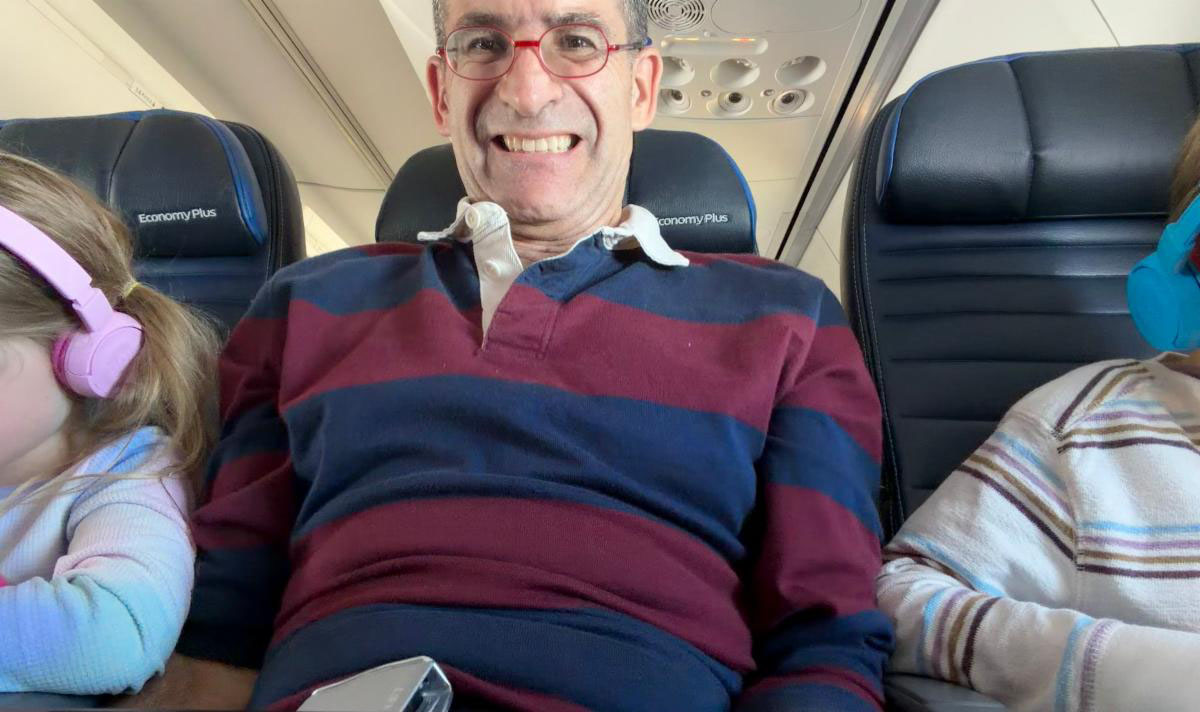
There aren’t many reporters who can segue from covering alternative bands in dingy clubs to uncovering the financial problems of a major art museum, but Mike Boehm, longtime Los Angeles Times critic and reporter who died May 2, was one of them. He was 63.
Michael Lewis Boehm was born Oct. 23, 1955, in Connecticut. He graduated from Yale University and Columbia University’s Graduate School of Journalism. Early in his career, Boehm covered government and police for the Danbury (Conn.) News-
Times and the Miami Herald. At the Providence Journal, he moved to the arts and culture beat.
After being hired by the Times in 1988, Boehm covered the burgeoning Orange County music scene, giving early and supportive coverage to emerging bands. He remained at the Times until 2015. He was working at MFour Mobile Research, an Irvine-based marketing firm, at the time of his death, but part of him remained a music critic. Earlier this year, the Times published a letter to the editor he wrote taking a music critic at the paper to task for dismissing a classic-rock performer.
Boehm spent the first half of his nearly 30-year career at the Times as a music critic and the second as an arts reporter. It was in the latter capacity that he made his biggest splash by digging into a budget crisis at downtown Los Angeles’ Museum of Contemporary Art (MOCA) in 2008. Boehm’s doggedness as a reporter, love of music and generous good nature were qualities repeatedly mentioned to the Journal and in online remembrances and memorials.
Times staff writer Carolina A. Miranda paid tribute to Boehm in her weekend arts wrap-up, writing that he turned the tax forms of L.A. nonprofits into “bedtime reading,” and “there probably isn’t a culture publicist in SoCal who hasn’t been on the receiving end of a late-deadline call from Mike, asking about finances.” Randy Lewis, who worked with Boehm at the Times, lauded Boehm’s “knowledge of the subjects he tackled, tenacity in reporting, elegance and insights of his writing, and the unwavering accuracy and authority with which he wrote every piece … [he] was second to none, and provided an example any of us could hope to follow.”
Former Times reporter Scott Timberg said that in Boehm’s reporting on MOCA, he “got something that none of us could. He could take a story that was complex and write about it in a way general readers could understand.” Timberg said Boehm was a “team player. He had no ego; he just wanted to do good work.”
Joel Amsterdam, senior vice president of publicity at Fantasy Records, said Boehm “loved great music and believed deeply in its power to change people’s lives, like it changed his.” Rick Shea, a Los Angeles-based singer-songwriter Boehm interviewed a few times, remembered Boehm as “nice, considerate and thorough as anyone” who interviewed him, and came across as “a sweet guy, quiet and observant when he wasn’t asking questions, a big supporter of local artists and a seriously good writer.”
Boehm is survived by a son, Ari.