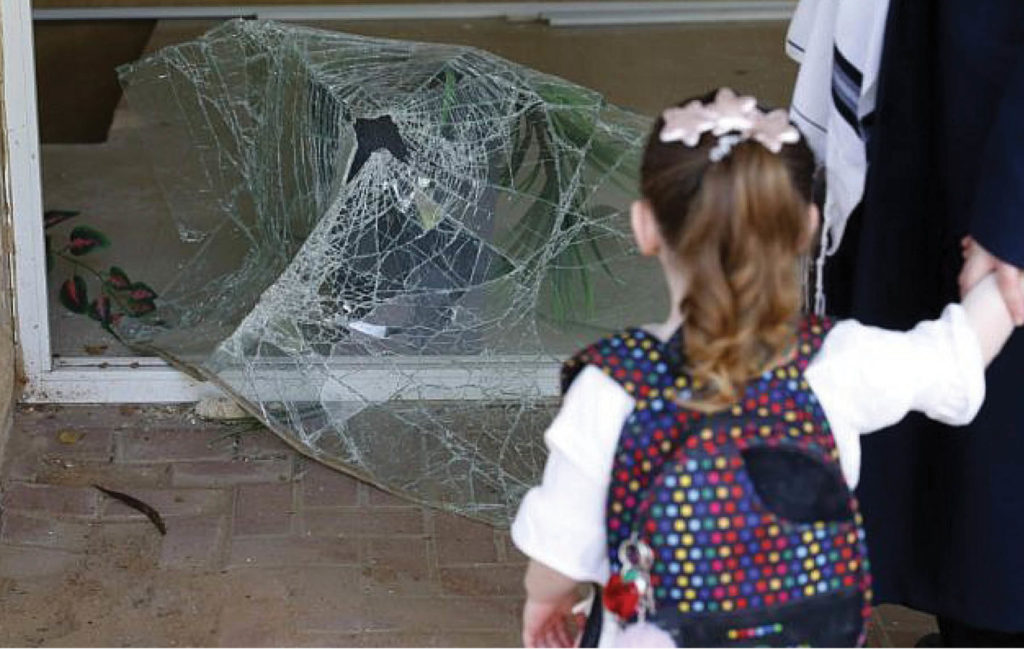
On May 6 in the southern Israeli city of Ashdod, an Israeli child looks at shattered glass at the entrance to a building damaged by a rocket strike launched from the Gaza Strip.
After chronicling her difficult pregnancy on social media, actress Amy Schumer welcomed her first child, a boy, on May 5 and announced the news on Instagram. “10:55 pm last night. Our royal baby was born,” Schumer posted.
Two days later, Schumer revealed her son’s name in the caption of a photo of her husband Chris Fischer holding their son: “Gene Attell Fischer and his dad Chris.”
Many celebrity friends including Debra Messing, Glenn Close, Cindy Crawford, Jennifer Garner posted their congratulations, with Pamela Adlon and Gal Gadot adding “mazel tov” to theirs.
Palestinian Authority Textbooks Debate The Journal’s April 23 online story concerning the introduction of congressional legislation requiring the annual review of Palestinian Authority (PA) textbooks was a one-sided portrayal (“Reps. Sherman, Zeldin Introduce Bill Requiring Review of UNRWA Palestinian Textbooks”). The Journal made no attempt to verify the validity of several “findings” in the draft legislation and included the conclusions of studies that are known to be flawed. In doing so, the Journal missed the opportunity to highlight the unique educational efforts undertaken in the region by the United Nations Relief and Works Agency for Palestine (UNRWA).
The U.S. Government Accountability Office (GAO) acknowledged in a report dated April 2018 the efforts of UNRWA in ensuring that it provides education in line with core United Nations values of neutrality, human rights, tolerance, equality and nondiscrimination with regard to race, gender, language and religion.
The curriculum of UNRWA’s 715 elementary and preparatory schools providing education to 535,000 Palestine refugee children across Jordan, Lebanon, Syria, the West Bank and Gaza is unique among educational systems in the region, especially in the persistent ways in which it prioritizes human rights, conflict resolution and tolerance through materials dedicated to these issues. Further, since the 1960s, UNRWA schools have achieved gender parity, providing equal educational opportunity to boys and girls in each of its areas of operation.
Nowhere is the importance of the education in UNRWA schools more noticeable than in Syria — mired in civil war for the past eight years, and in which Palestine refugees have become uprooted and displaced twice or three times over. Since the GAO’s April 2018 report, the agency has instituted reforms as part of its ongoing effort to continuously adapt and improve its educational materials.
UNRWA is a humanitarian institution. The agency’s mandate, as determined by the U.N. General Assembly, is to provide essential services — including health, educational and humanitarian assistance — to promote the well-being and human development of Palestine refugees until there is a just and lasting solution to the conflict. If UNRWA isn’t there to teach Palestine refugee children, and instill key values of neutrality, human rights, tolerance and nondiscrimination, who will be? Elizabeth Campbell, Director, Washington Representative Office, UNRWA
Rep. Brad Sherman (D-Porter Ranch) responds: Our bill simply requires the State Department to issue a report on the curriculum and textbooks used by UNRWA. I would think UNRWA would welcome such a report. If UNRWA’s contention that its curriculum is in line with U.N. values concerning neutrality, human rights, tolerance, equality and nondiscrimination is accurate, then I would assume the State Department report would bear this out.
The fact is, however, the PA textbooks, which are used in both PA and UNRWA schools, are flawed. The GAO report UNRWA cited in its letter notes the UNRWA efforts to provide supplemental materials that are in line with strong standards in the schools they control. However, UNRWA officials told the GAO that, due perhaps to no fault of their own — namely funding shortages — the materials were not distributed and instructors were not trained in their use, as of the period covered by the April GAO report. The fact remains, if there are flaws in the PA textbooks, they need to be fixed, regardless of who created them. Also, the U.S. should review the curricula in PA- and UNRWA-controlled schools periodically to ensure that Israel is not demonized, and that tolerance, not violence, is being taught to the students in those schools.
I would welcome a further discussion with UNRWA regarding its criticism of the reports we used in the bill’s findings. Our goal is to ensure we have an accurate picture of the curricula and textbooks in PA and UNRWA schools so that any problems can be fixed.
Poway Shooting I also share columnist Steve Smith’s concern about the disturbing aspect of the 19-year-old suspect in the Poway Chabad shooting, quoting “Christian” sources (“A Christian Shooter in Poway,” May 3). While we have unfortunately become accustomed to Islamic Jihadist terrorism around the world that cites religious texts, this case is notably different:
The shooter is connected to a mutant/hybrid form of Christianity, the same mutation as Nazism and the KKK. Christian concepts are weaved in and distorted with pseudo-scientific 19th-century German race theory plus a smattering of good old-fashioned Euro-paganism.
The notion of him protecting “Christianity from Judaism” itself is as stupid as it is delusional. In today’s America, it is inaccurate, if not unfair, to brand him as a “Christian”; satanist makes a better fit. Richard Friedman, via email
While I am sickened and angered about the white nationalist violence in Poway and Pittsburgh, I continue to hold an optimistic view of the acceptance that Jews enjoy in the United States. While it’s impossible to avoid making comparisons to the anti-Semitism in Germany that resulted in the Holocaust, there is an important distinction between 1939 and 2019: Under the Third Reich, anti-Semitism was official government policy promulgated by Hitler and his henchmen, and implemented by Nazi military and paramilitary groups to gruesome ends. In the U.S., there is no government organization nor mainstream institution that adapts anti-Semitism in any of its forms, and it seems eminently certain that that will not happen. Our friends and neighbors inside and outside the Jewish community have made their support clear. Barbara H. Bergen, Los Angeles
Thanks From the ‘Bubbies’ The bubbies from Jewish Life Television’s “Bubbies Know Best” want to thank Lisa Klug and the Journal for publishing such a wonderful article about our television show (“When It Comes to Matchmaking, ‘Bubbies Know Best,’ ” May 3). We just love finding the perfect dates for our Jewish mates.
Here we are on the set of “Bubbies Know Best” holding up the article. What a treat it was to read the piece while filming another round of episodes of our television program.
Thank you, Lisa! Thank you, Jewish Journal!
Bubbie Bunny Gibson
Bubbie S.J. Mendelson
Bubbie Linda Rich
Host Erin Davis
Executive Producer Brad Pomerance
Another Dig at Trump Debra Nussbaum Cohen can’t resist employing character assassination against President Donald Trump, even as she decries (quite properly) the real killing of a Jewish woman at the Poway synagogue, and the movement driving it (“Dealing With the Threat of Home-Grown White Nationalists,” May 3). I doubt she’ll like her fake news about Trump thus named, but character assassination is what it was.
As Karen Lehrman Bloch said in the same issue of the Journal, “Light Begins With Truth.” Cohen ought to heed her words. Stephen J. Meyers, Woodland Hills
Your turn. Submit your letters to the editor. Letters should be no more than
200 words and must include a valid name and city. The Journal reserves the right to edit all letters. letters@jewishjournal.com.
Shabbat Around the World Celebrating Yom HaAtzmaut (Israel’s Independence Day), Shomrei Torah Synagogue brings Israel to its West Hills community. On Shabbat evening, the congregation embraces Israel’s rich heritage and culture with music, prayer, story and a community dinner. Cantor Jackie Rafii and musical guests Yoni Arbel and Jamie Papish participate. 6 p.m. Shabbat services, 7:15 p.m. dinner. Adult members, $30, $15 kids. $36 general adults, $18 kids. Shomrei Torah Synagogue, 7353 Valley Circle Blvd., West Hills. (818) 854-7650.
Happy 71st Birthday Celebrating Israel’s Independence Day, Kol Tikvah organizes an event featuring dinner, fun activities for all ages, live music and Shabbat services. Rabbis Jon Hanish and Becky Hoffman, Cantor Noa Shaashua and rabbinic intern Esther Jilovsky lead the services. Guests are asked to bring a donation of cake mixes, frosting, cupcake tins or birthday candles, which will be delivered to the West Valley Food Pantry. Advance RSVP required. 5:15 p.m. Tot Shabbat service. 5:45 p.m. hosted dinner, with advance RSVP to dshayer@koltikvah.org. 5:45 p.m. Shabbat services followed by birthday cake and sweet treats. Kol Tikvah, 20400 Ventura Blvd., Woodland Hills. (818) 348-0670.
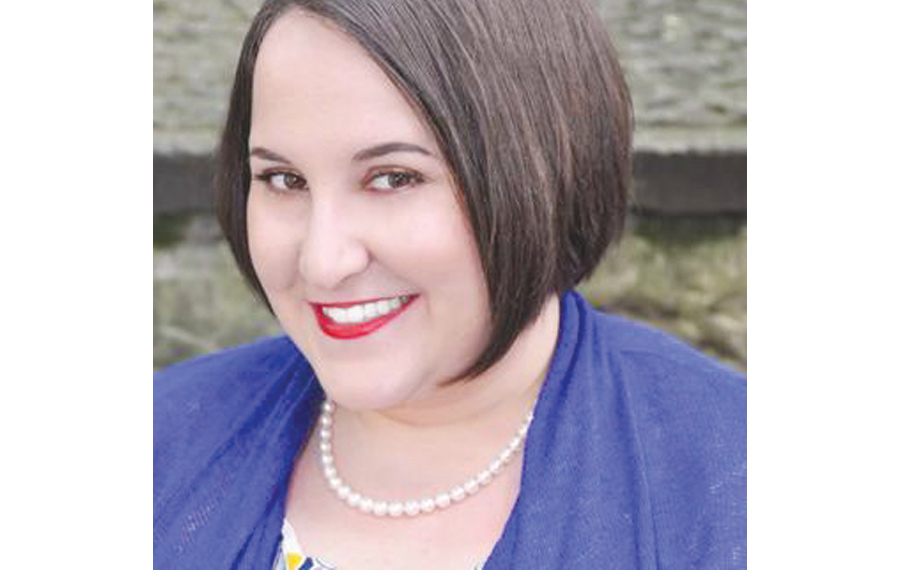
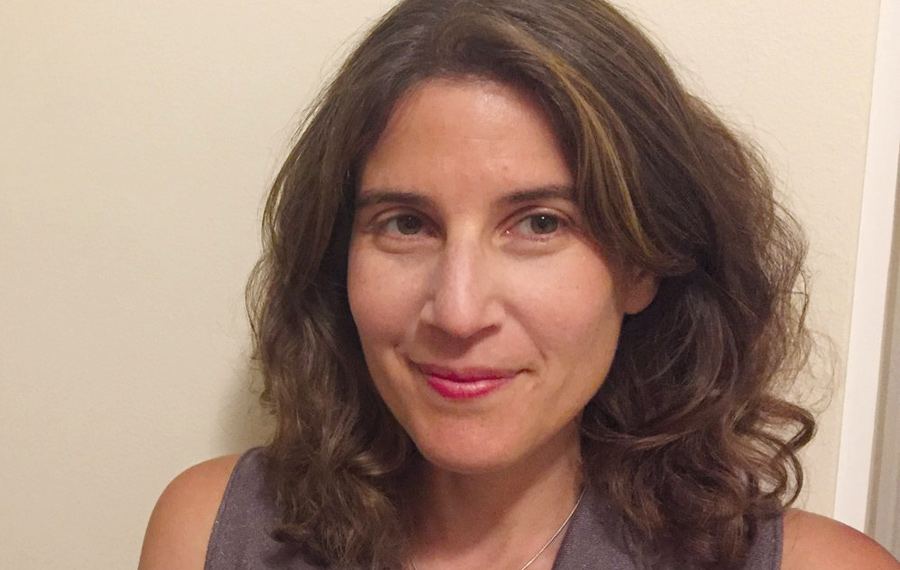
Noa Shaashua
YJP Dinner Join 100 Young Jewish Professionals in welcoming the Shabbat with dinner and services in the company of ambitious, curious and career-focused Jews. They want to connect and network as much as you do. 6-11 p.m. $70-$90. Beverly Hills Synagogue, 9261 Alden Drive, Beverly Hills. (310) 692-490.
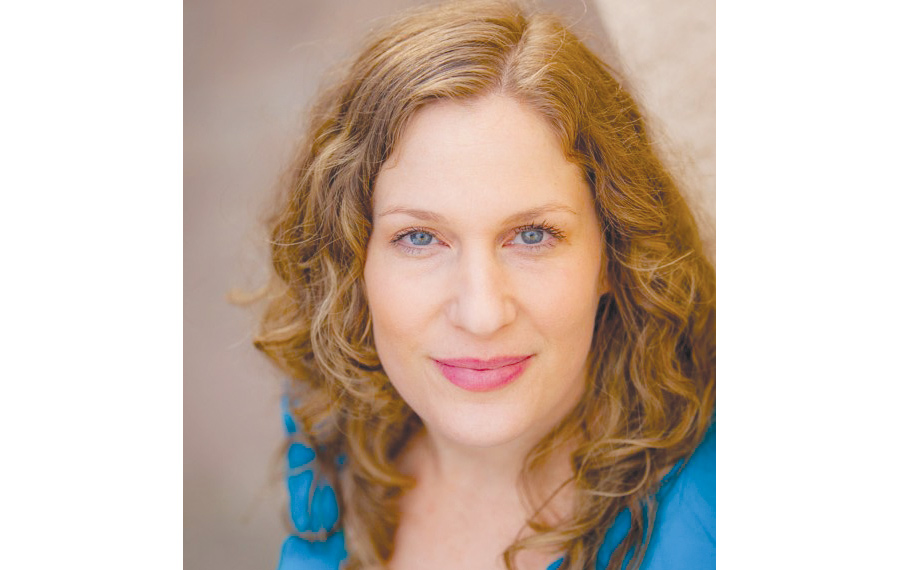
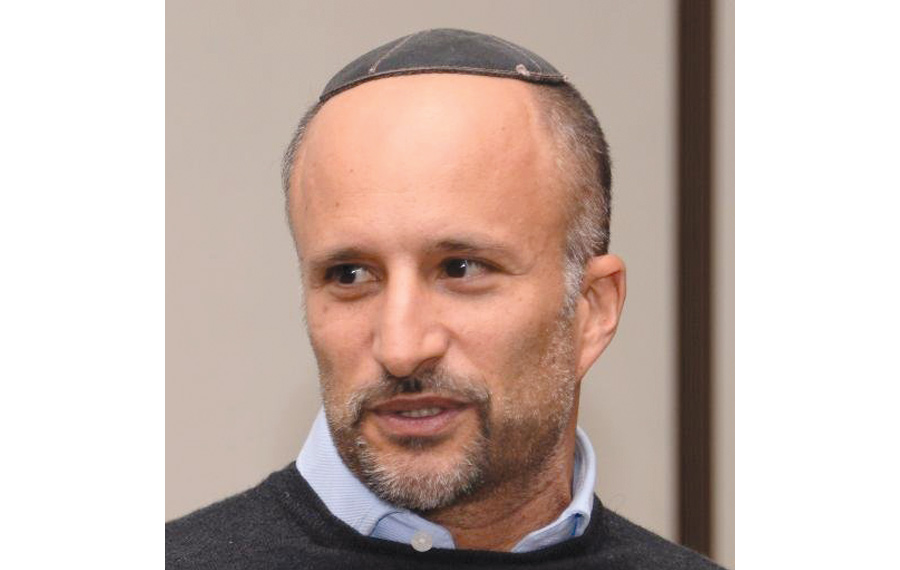
Rachel Grant Meyer
HIAS to the Rescue With a record 65 million refugees in the world, Rabbi Rachel Grant Meyer, Rabbi-in-Residence at HIAS, formerly the Hebrew Immigrant Aid Society, addresses the present refugee crises at America’s southern border and elsewhere. The motto of HIAS, founded in 1881 at the beginning of massive Jewish migration to the United States, is “Welcome the stranger. Protect the refugee.” Grant Meyer addresses what roles individual and groups of Jews are obligated to take toward resolving the crises. 5:45 p.m. pre-oneg. 6:15 p.m. Shabbat services. Dinner follows. 8 p.m. speaker. RSVP required for dinner. Temple Isaiah, 10345 W. Pico Blvd., Los Angeles. (310) 277-2772.
SAT MAY 11
Shabbat in the Park Havdalah Temple Emanuel of Beverly Hills and PJ Library team up for a Shabbat in the Park Havdalah service, featuring fun and fulfillment for children and adults. The event blends story-time and singalong. Guests are encouraged to bring friends, families and a picnic for this outdoors Havdalah. 4:30-5:30 p.m. Beverly Canon Gardens, 241 N.Canon Drive, Beverly Hills. (310) 288-3737.
SUN MAY 12
Mother’s Day Remembrance Service From generation to generation, a mother’s love is the greatest gift she can give her children. That is the theme of the community’s Mother’s Day remembrance service at Hillside Park and Mortuary. Rabbi Cantor Alison Wissot of Temple Judea, Cantor Linda Kates of Leo Baeck Temple, Cantor Patti Linsky and musical director Tali Tadmor lead services. In the spirit of tzedakah, guests are asked to bring canned and dry foods or eyeglasses or hearing aids for the Hillside Chesed Project. 10 a.m. Park hours are 8 a.m.-5 p.m. Hillside Memorial Park and Mortuary, 6001 W. Centinela Ave., Los Angeles. (310) 641-0707.
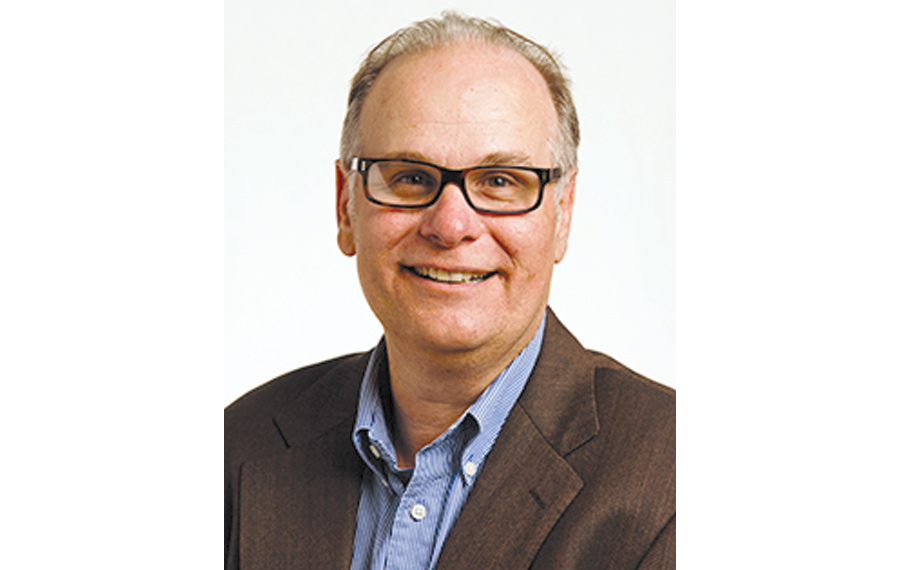
Larry Mantle
Yom IYUN at Nessah Since “fake” has become one of America’s favorite adjectives, Nessah Synagogue’s annual Yom Iyun or evening of learning is titled “Fake Truth & Virtual Living.” South African-born Rabbi Akiva Tatz and Rabbi Dovid Gottlieb, senior faculty member at Ohr Somayach in Jerusalem, identify the ubiquity of widespread fake accusations and then offer Torah solutions to current moral and social dilemmas. 6 p.m. reception. 6:30 p.m. mincha. 7:30 p.m. program. $10, $15 at the door. Students free. Nessah Synagogue, 142 S. Rexford Drive, Beverly Hills. (310) 273-2400.
TUE MAY 14
Media Freedom in Danger? Three experts address whether criticism of the media is threatening freedom of the press during “The Presidency and Freedom of the Press.” The panelists are Nicholas Goldberg, editorial page editor of the Los Angeles Times; Christina Bellantoni, director of the Annenberg Media Center at USC; and Eugene Volokh, a UCLA law professor and First Amendment scholar. KPCC radio host Larry Mantle moderates. 7:30 p.m. $10. American Jewish University, 15600 Mulholland Drive, Bel Air. (310) 440-1572.
People of the Book Conservative Rabbi Elliot Dorff evaluates the latest developments in the Conservative movement in his new book, “Modern Conservative Judaism: Evolving Thought and Practice,” in conversation with Rabbi Matt Shapiro. After the program, signed books are available for a discounted price. 7:30 p.m. Free. Temple Beth Am, 1039 S. La Cienega Blvd. (310) 652-7353.
“Money Talks” Panel Congregation Kol Ami Rabbi Denise Eger moderates a panel analyzing the ethics of money on the heels of the release of the book “The Sacred Exchange: Creating a Jewish Money Ethic.” The panelists are contributing authors and Rabbis Arthur Gross-Schaefer, Zoe Klein Miles, Leah Lewis and Max Chaiken. 6:30 p.m. Free. Congregation Kol Ami, 1200 N. La Brea Ave., West Hollywood. (323) 606-0996.
WED MAY 15
“Jews of China” Having traveled throughout China, Rabbi Arnold Belzer, who is based in Savannah, Ga., discusses the little-known Jewish communities of that country. In 1985, Belzer, co-founder and president of the nondenominational Sino-Judaic Institute, conducted the first Jewish services in Kaifeng, China in 120 years. The evening includes a “Taste of China” reception and a Q&A. 6:45 p.m. reception. 7:15-9 p.m. program. $12 per person. Kehillat Israel, 16019 W. Sunset Blvd., Pacific Palisades. (310) 459-2328.
Community Fair In honor of the month of Ramadan, join one of the largest gatherings of
Muslims and Jews in this country. NewGround: A Muslim-Jewish Partnership for Change holds its annual community Iftar, the traditional meal that concludes each day of fasting throughout Ramadan. The evening includes dinner and dialogue for Muslims, Jews and allies. Dinner is halal certified. Kosher-certified meals upon request. 6:30-9 p.m. $45 general admission. Temple Emanuel of Beverly Hills, 8844 Burton Way, Beverly Hills. (818) 856-0815.
THU MAY 16
Jeremy Gordon
“From Cromwell to Corbyn” Rabbi Jeremy Gordon, spiritual leader of the founding synagogue of British Masorti Judaism, discusses “Jewish Life in Britain: From Cromwell to Corbyn.” He examines the history of Jews in England and addresses the contemporary challenges and opportunities facing Jewish communities in Britain and across Europe. 7:30-9 p.m. Free for Sinai members. $18 general. Sinai Temple, 10400 Wilshire Blvd. (310) 481-3228.
Lila Corwin Berman
American-Jewish Politics Temple University history professor Lila Corwin Berman lectures on “When Politics Aren’t Political: The Depoliticization of American Jewish Politics,” examining the outcome of American-Jewish institutions removing themselves from politics. 4-6 p.m. Free. UCLA Faculty Center, 480 Charles E. Young Drive E, Los Angeles. (310) 267-5327.
Fake News in the U.S. and Israel Five media experts and professionals discuss the phenomenon of “fake news” in a post-truth era. Anat Bilant, a media scholar at Tel Aviv University; Jane Elizabeth, managing editor of The News & Observer in Raleigh, N.C.; Eytan Gilboa, director of the Center for International Communication at Bar-Ilan University; and Tim Groeling of UCLA’s Department of Communication examine what constitutes “fake news” and its impact on the media landscape, politics and democracy. Focusing on Israel and the U.S., the panel examines recent trends and challenges regarding facts and news in both countries and the role politicians, media owners, journalists and citizens play in the spread of fake news. Liron Lavi, a research fellow at the Y&S Nazarian Center for Israel Studies at UCLA, moderates. 6-7:30 p.m. Free. UCLA Royce Hall, 10745 Dickson Court, L.A, Room 314. (310) 825-9646.
Have an event coming up? Send your information two weeks prior to the event to ryant@jewishjournal.com for consideration. For groups staging an event that requires an RSVP, please submit details about the event the week before the RSVP deadline.
The 14th annual Los Angeles Jewish Film Festival’s (LAJFF) opening night gala was held on May 2 at the Ahrya Fine Arts theater in Beverly Hills.
The premiere of the documentary “Carl Laemmle,” a film about one of the key founders of the movie industry and an unsung hero who rescued over 300 families from Nazi Germany, kicked off the weeklong annual showcase of Jewish heritage through film. Laemmle, a German Jew, came to the United States with almost nothing and went on to found Universal Studios.
LAJFF Executive Director Hilary Helstein was in attendance at the festivities, which honored Hollywood legend Peter Bogdanovich (“The Last Picture Show,” “What’s Up, Doc?”) with the Marvin Paige Hollywood Legacy Award.
The celebratory gathering began at 7:15 p.m. with a red carpet outside the theater. Among those who turned out were Israeli actor Asaf Goldstien, star of the festival film “Back to Maracana”; Rabbi Marvin Hier of the Simon Wiesenthal Center, who appears in “Carl Laemmle”; and young star August Maturo, whose film “Shepherd: The Story of a Jewish Dog” also is part of the festival.
The program began at 8 p.m. and included the presenting of the award to Bogdanovich.
“I am very honored to be getting this tribute,” Bogdanovich said in accepting the award. “I am very touched by this.”
Speaking about the magic of the movies, Bogdanovich said, “You’re giving people little pieces of time that they never forget.”
The screening of “Carl Laemmle” — which features interviews with Bogdanovich, Hier, film critic and historian Leonard Maltin and Ron Meyer of NBCUniversal, among others — followed.
A post-screening Q&A featured “Carl Laemmle” writer-director James Freedman and other special guests.
The LAJFF, a program of the Jewish Journal, screens documentaries, comedies, dramatic features, shorts and more. This year’s festival ran through May 9.
Click here to watch a video of the festival’s opening night.
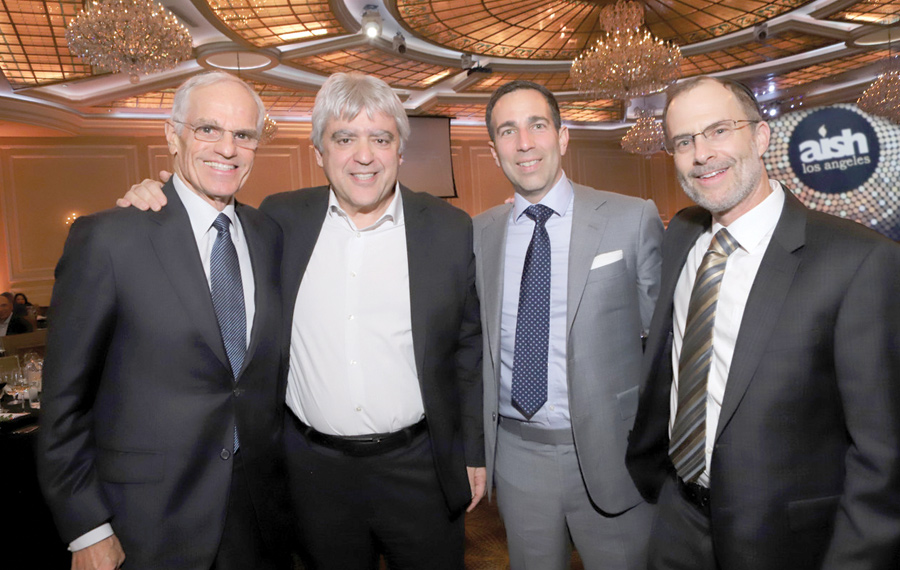
From left: Aish L.A. Banquet Chair Richard Sandler, Journal Publisher and Editor-in-Chief David Suissa, satirist Ami Horowitz and Aish L.A. Executive Director Rabbi Aryeh Markman celebrated at the Aish L.A. annual gala. Photo by Jonah Light, Jonah Light Photography
Aish Los Angeles held its annual gala at the Taglyan Complex in Hollywood on April 14 as a sellout crowd celebrated Jewish unity and connection.
Richard Sandler, executive vice president, secretary and trustee of the Milken Family Foundation and a member of the board of The Jewish Federation of Greater Los Angeles, chaired the event.
Filmmaker, journalist and political satirist Ami Horowitz participated in the event and screened video footage showing the current state of anti-Semitism in the world. Journal Publisher and Editor-in-Chief David Suissa delivered the keynote address, and 15-year-old violin virtuoso Kiev Morales performed the Israeli national anthem.
Aish L.A. honored Eddie Kahen, founder and CEO of Aggregate Real Estate Solutions, with the Young Leadership Award for his “passionate, take-charge attitude,” Aish L.A. said.
Aish L.A. Executive Director Rabbi Aryeh Markman challenged the crowd to complete a million-dollar capital campaign to buy Aish L.A.’s Morry’s Fireplace educational lounge in Pico-Robertson. The effort, according to Aish L.A., has been anchored by a lead gift from Dr. Ezra and Lauren Kest.
Aish L.A. COO Rabbi Azriel Aharon ran the proceedings, which included food and drink that was enjoyed in a spirit of unity.
Banquet attendees included Jaime and Marilyn Sohacheski, Chavi Hertz, Aish L.A. founders Dick and Beverly Horowitz, Leonard and Joyce Wilstein, and Philip and Janice Kaufler.
Aish L.A. said it was honored to have the namesake of the Boxenbaum Family Aish Outreach Center, Kharlene Boxenbaum, in attendance.
Others at the event included Sharon Janks, a Federation board member, and her husband, Leon, and StandWithUs CEO Roz Rothstein and her husband, Jerry, COO of StandWithUs.
“Let us all keep the theme of Jewish unity and connection in mind,” an Aish L.A. statement said. “It so very important for all of us.”
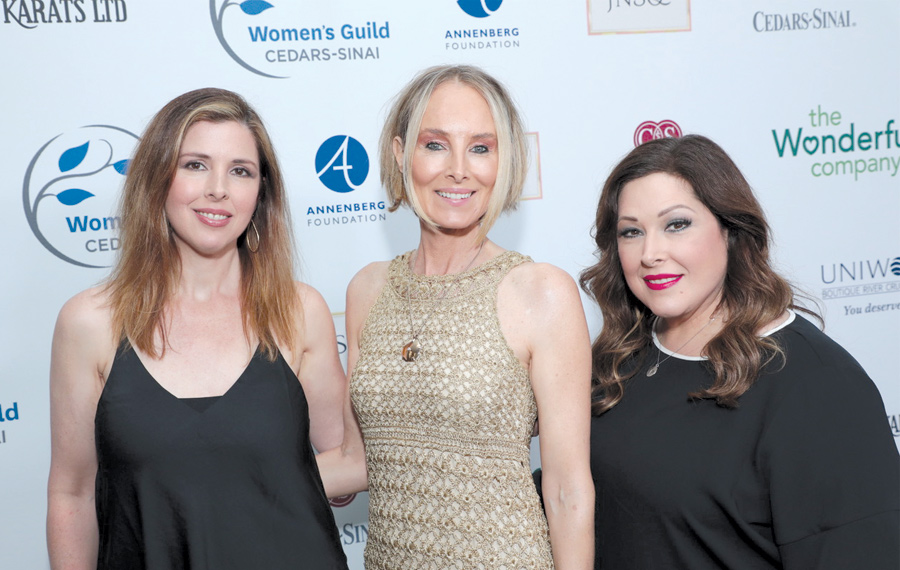
Musical outfit Wilson Phillips arrive at the annual Women’s Guild Cedars-Sinai gala at the Beverly Wilshire Hotel in Beverly Hills. Photo by Alex J. Berliner/ABImages
The Women’s Guild Cedars-Sinai held its 60th anniversary gala on May 2 at the Beverly Wilshire Hotel.
The evening honored Jane and Marc Nathanson with the Humanitarian Award, with Los Angeles Mayor Eric Garcetti introducing the couple. The event also marked the launch of the Neurology Transformation Project, which will support research and education for the understanding and treatment of complex neurological disorders.
Comedian Kevin Nealon served as the host and vocal group Wilson Phillips provided the entertainment.
Attendees included Women’s Guild President Shelley Cooper and gala chairs Wendy Goldberg, Lorette Gross and Lauren Segal.
The nonprofit Women’s Guild Cedars-Sinai helps advance the clinical and research priorities of Cedars-Sinai Medical Center. Since 1957, Women’s Guild members have raised close to $50 million in support of Cedars-Sinai, the organization says. “We listen and learn,” the group says on its website, “then roll up our sleeves and get to work.”
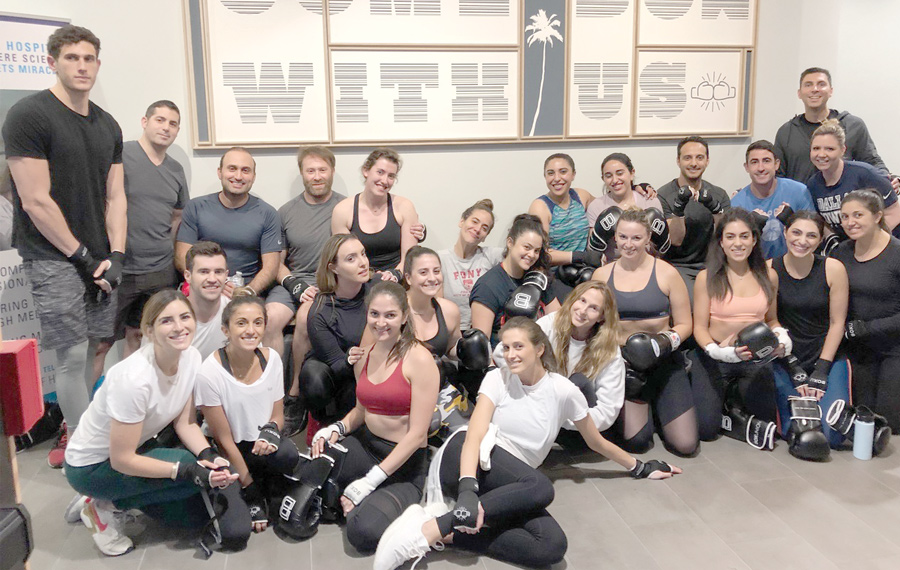
The Sheba 2.0 young leadership group boxed together to raise funds for the Israel-based Sheba Medical Center. Photo courtesy of Friends of Sheba Medical Center
More than 30 young professionals from Sheba 2.0, the young leadership group of Friends of Sheba Medical Center, came together for a workout class at BoxUnion Robertson and raised funds for Sheba Medical Center at Tel HaShomer.
Sheba 2.0 committee members Dr. Nelia Barkhordar, Dr. Nicole Barkhordar and Sorelle Cohen chaired the April 30 event, during which participants enjoyed a high-energy 45-minute boxing class and then cooled down with post-workout refreshments from Recover 180 and Juice Crafters.
The $1,800 raised at the event will support Israel’s Sheba Medical Center, recently named by Newsweek as one of the top 10 hospitals in the world. The magazine called Sheba “a leader in medical science and biotechnical innovation, both in the Middle East and worldwide. The center’s collaborations with international parties have advanced innovative medical practices, hospital systems and biotechnology.”
Sheba, which is affiliated with Tel Aviv University, is the largest and most comprehensive research and medical center in the Middle East, serving over 1.5 million patients each year. Friends of Sheba Medical Center raises funds and awareness for the hospital.
Wanna be in Movers & Shakers? Send us your highlights, events, honors and simchas.
Email ryant@jewishjournal.com.
Our Torah portion this week, Acharei Mot (After the Death), contains a ritual that bespeaks an ancient stratum of religion, and a deep, tortured chamber of the soul.
“Aaron will take two goats, and stand them before God at the entrance to the Tent of Meeting. He will place upon them goralot (“fates”), one marked “For God” and one marked “For Azazel” (the desert demon).” Aaron then expiates sin upon the goat for Azazel, and then sends the goat to Azazel, toward the desert.
The other goat, “For God,” is used as a sin offering. Even though we reject animal sacrifice, we can understand a sin offering. If we transgress, we confess, and make an offering. Ever since the destruction of the Temple, the offering is prayer.
But what do we make of the “goat sent to Azazel”, more often called “The (e)Scape-goat.” The Scapegoat brings to the foreground an inner, usually unconscious region that cannot stand to bear a life gone wrong. An ancient, almost forgotten religious idea has us transfer the inner pain of life gone wrong onto the goat sent into the desert, to the Demon – that Demon perhaps was understood as the actual source of unbearable inner pain.
Without this ritual – and believing in this ritual – we find other ways to discharge our inner pain – on to other people, for example, individuals or groups. The great American thinker Kenneth Burke (1897-1993) (whose fine works range across the humanities and social sciences) coined the term in 1935 in his book Permanence and Change. In that fascinating book, he discusses the experience of “incongruity” – who I am, what my life should be like – is incongruous with how I am, what my life is like now. One might say that a wise and psychologically mature person sees the self, and the self with others, in a constant process of change, and that we each have some degree of power to achieve a better vision of ourselves. We work toward the future. We also have some degree of power to transform with others, and the world. With what we cannot change, as Reinhold Niebuhr taught, we ask for serenity. Lacking serenity, we aim for wise acceptance, I would say.
A less psychologically mature person sees the present as “permanent” and looks for simple causes upon which to heap blame – in essence, to scapegoat. Like in the ancient ritual, one’s own inner dis-ease is placed upon the goat, and the goat is sent to the Demon. Without the belief that we can ritually discharge inner pain, we send that inner disorder onto others. In order to avoid self-hatred (or along with it), our psychological mechanism is to displace our inner “permanent dis-ease” outside of us, and try to annihilate that external cause and send that external cause to hell (often with specifics directions). Mostly we use words. Sometimes we actually kill.
Hence, hatred and haters, and I say this with a heavy heart. This tendency to place our inner pain onto others leads to hatred haters of all types – spewers of venom, ideological bigots, from the societal to the interpersonal. Scapegoating leads from the painful reality of verbal abuse and hatred in the family and civic spheres, all the way over to purveyors of putrescent prejudice, a warping of the spirit that sinks into the minds of shooters and bombers.
Every hatred is different, I know – hatred of Jews, Christians, hatred of the right and of the left – every hater and group of haters has their reasons. And every hatred is the same. The commandment not to hate in next week’s Torah portion is all encompassing, just as is the commandment to love.
When our psyche is under unbearable stress, we have an existential decision to make. We place the goral, the fate, upon ourselves: to God, or to the Demon? Sink into hatred or rise to arc wisdom.
John Oxenham wrote in 1913,
To every man there openeth, a way, and ways, and a way,
And the high soul climbs the high way,
And the low soul gropes the low.
And in between, on the misty flats, the rest drift to and fro,
But to every man there openeth a high way and a low;
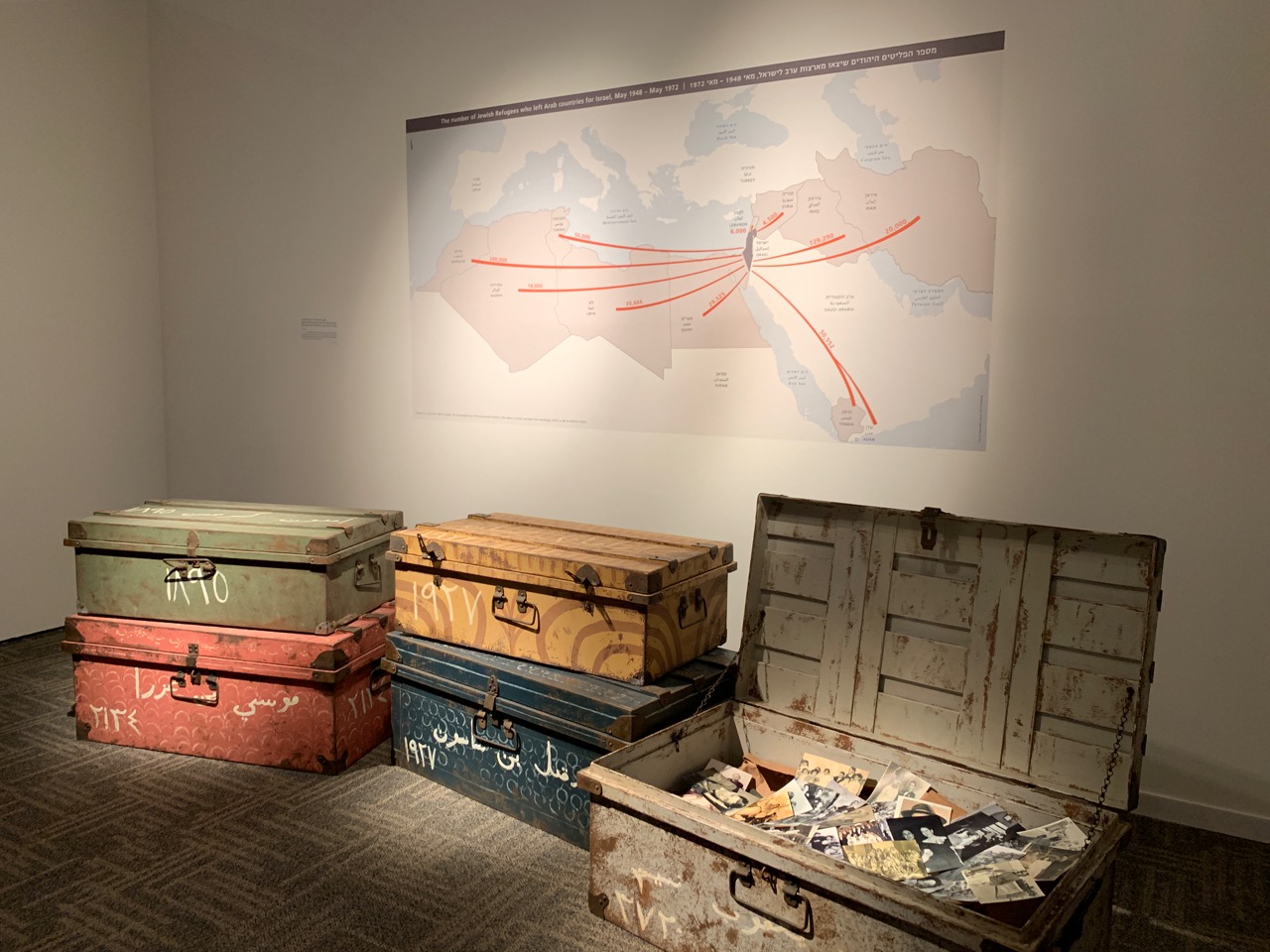
Before 1948, Jews lived all over the Middle East and North Africa, practicing their religion with pride but facing persecution and intermittent pogroms. Growing up in Israel, Dana Avrish, a third-generation descendant of Iranian, Lebanese and Syrian Jews, heard many stories from her family, including how Israel’s creation in 1948 spurred the expulsion of more than 850,000 Jews from Arab lands and Iran. They were granted one suitcase to carry their belongings. Their exit papers were stamped with warnings not to return.
“Leaving Never to Return” — a nod to the exit paper stamps — is Avrich’s exhibition currently on display at Tel Aviv’s Eretz Israel Museum and dedicated to the stories of those communities. Avrish, a former Miss Israel, opened the exhibition in February and has filled it with newspaper clippings, photos, documents and other artifacts that breathe new life into a forgotten past. The exhibit describes Jewish life in places where it’s practically nonexistent today. It highlights the communities of 10 countries: Morocco, Algeria, Tunisia, Libya, Egypt, Yemen, Iran, Iraq, Syria and Lebanon.
The Journal caught up with Avrish to discuss her exhaustive research efforts, reactions she’s getting from museum visitors and her plans to take the exhibit global.
Jewish Journal: Why is this exhibition so important to you?
Dana Avrish: Growing up, I heard a lot of stories from my father. I knew people ran away from different countries, ran for their lives, but it never occurred to me to investigate what really happened. I believe it’s a history that’s missing from the educational system throughout the world. Nobody is talking about the fact that almost 1 million Jewish refugees from Arab countries and Iran were tossed out of their homelands. I wanted to have justice brought into this.
Suitcases, installation; Creator: Dana Avrish Photo by Uri Karin
JJ: How did the exhibition initially take shape?
DA: While doing my master’s degree at Tel Aviv University in diplomacy and international relations, I took a few courses about the media’s leaving this out of history. I started to investigate it. I knew I must do something and do outreach on this subject to get it out to as many people as possible and focus on telling these stories.
JJ: How did you obtain all the artifacts for the exhibition?
DA: It started with a lot of research by myself. I was asking for the support of the Ministry of Culture and I explained the conceptual idea. I received their support once I convinced them of the importance of the project. Then there were the different archives in Israel. I was in contact [also] with people in Paris, Tunisia and elsewhere. I started to search for objects that [would] tell a story.
JJ: How long did your research take?
DA: It took me around three years: finding photos, testimonials and all the other objects you see.
JJ: How did creating the exhibit connect you with your own background?
DA: My mother is Persian and my father’s family is from Lebanon and Syria. It was an amazing experience for me. It took me inside the world of my ancestors. I got very emotional. I came to understand there were really so many stories that I need to tell people about. I started to talk more with my uncles, and they told me lots of stories in more detail. In the exhibition, I tell the story of my grandmother in Lebanon.
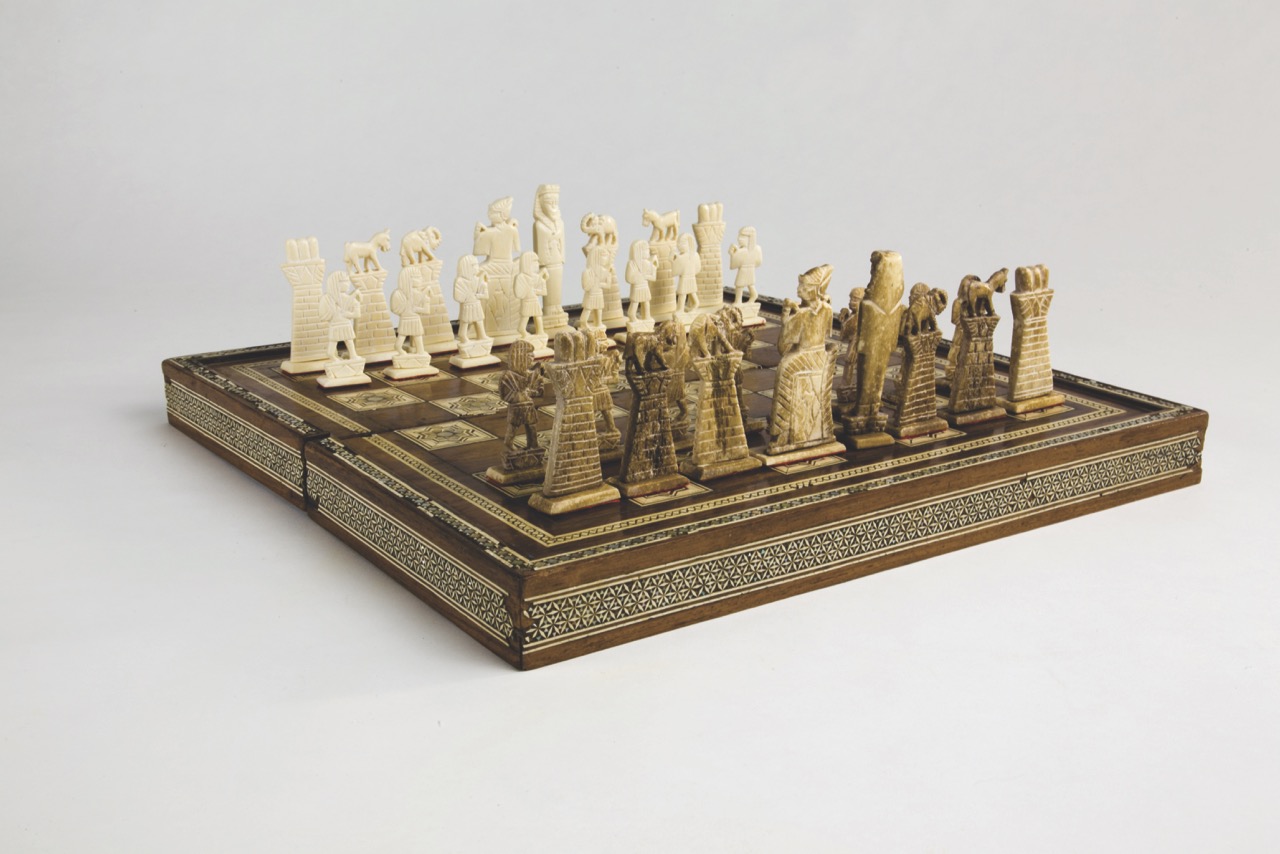
Chess set, Cairo, Egypt, 1969: Wood, inlaid mother-of-pearl, carved ivory; Courtesy of Ovadia Yeroushalmy Photo by Hadar Saifan
JJ: The exhibition also has information about day-to-day persecution, pogroms and violent riots against Jewish communities. But there’s also a lot that depicts Jewry in these places as thriving and living cosmopolitan lives. Why was that duality important to you?
DA: It was so important to show not just one side. There’s never only one side. If you want to change history, you can say everything was amazing, but for me it was important to show both sides. I wanted to give people the ability to see the whole picture.
JJ: Many people group the Mizrahim together. Does that bother you?
DA: When the State of Israel was born as a new nation, the idea was to make them all Sabras — Israelis. But, in many ways, that was to erase the pasts of many. People were changing names, even. The attitude toward so many of them was miserable. This is more than half of the population in Israel now. It’s a huge community, and to not recognize their origins, their rituals, their stories and their backgrounds is wrong.
JJ: It’s cool to see the differences of each community.
DA: It’s amazing how different they all are. The differentiation is a beautiful thing. This is my aim, to empower these communities and the people inside them. You need to be proud if you or your family are from Iraq, Algeria, Egypt or Libya. In the exhibition, I hope I’m really lighting the beauty of each community.
JJ: You’ve had guests view the exhibition who are actually in the photos. What’s that like for you to see?
DA: They are crying. They are so moved. They are thanking me. I have letters from them and emails. They are writing in the guest book: “Thank you so much — you don’t believe what you’re doing for us, our mother, our grandmother.” On the opening day, 700 people were there. People were hugging. It’s really unbelievable to see it. One person told me I brought a small piece of home back to their daily life.
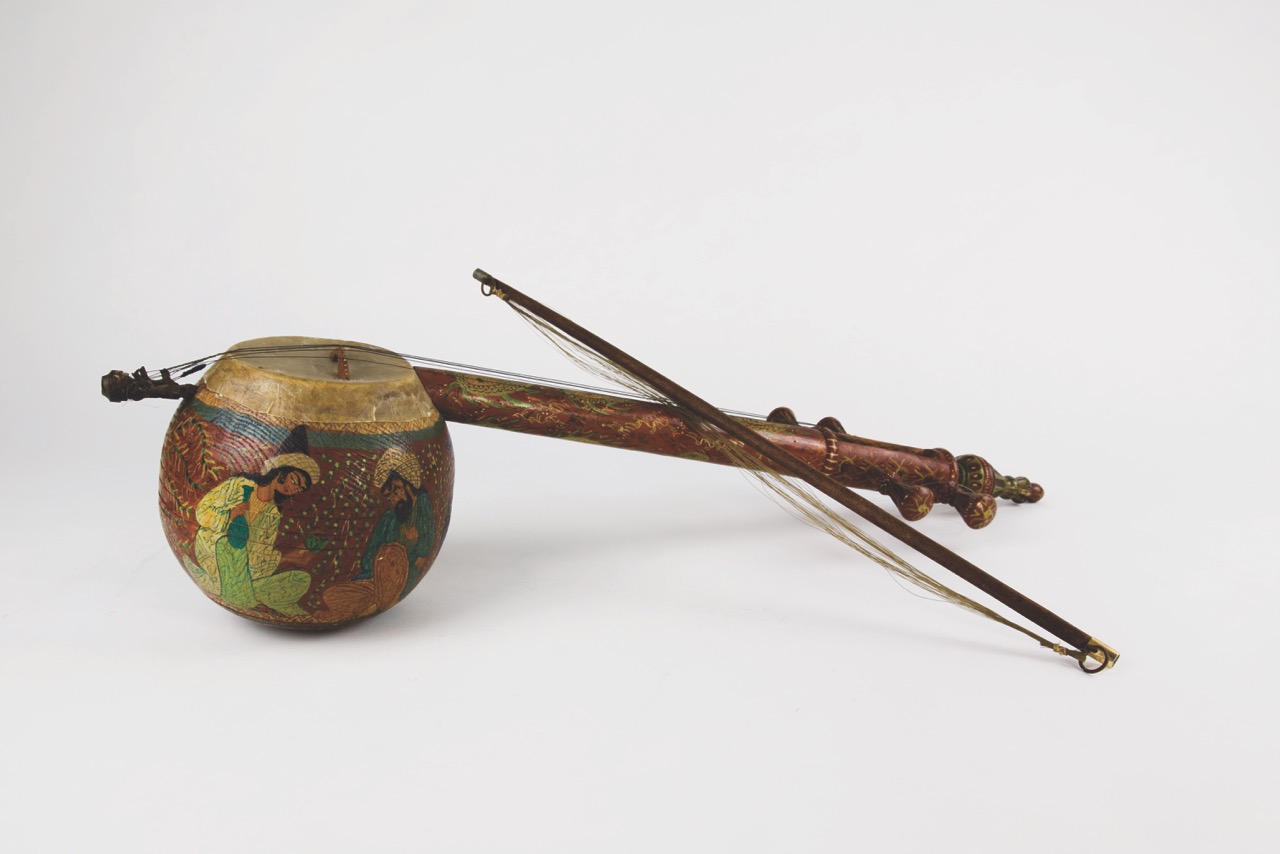
Kamancheh, musical instrument, Iran, 20th century; Walnut or mulberry wood coated in sheepskin, metal strings; Courtesy of Menashe Sasson; Photo by Hadar Saifan
JJ: Where is the exhibition off to next?
DA: I’m really working on having this become a permanent exhibit here in Israel. But for sure it needs to be in Jewish museums around the world. It needs to be in Brazil, in Argentina, in the United States. It needs to be in New York, in Los Angeles, in San Francisco. It’s a chapter in history that vanished. We need to correct the historical injustice. I’m trying to do it now. I’m doing it. I hope people will hop on the train.
“Leaving Never to Return” is on display at Tel Aviv’s Eretz Israel Museum through July 31.
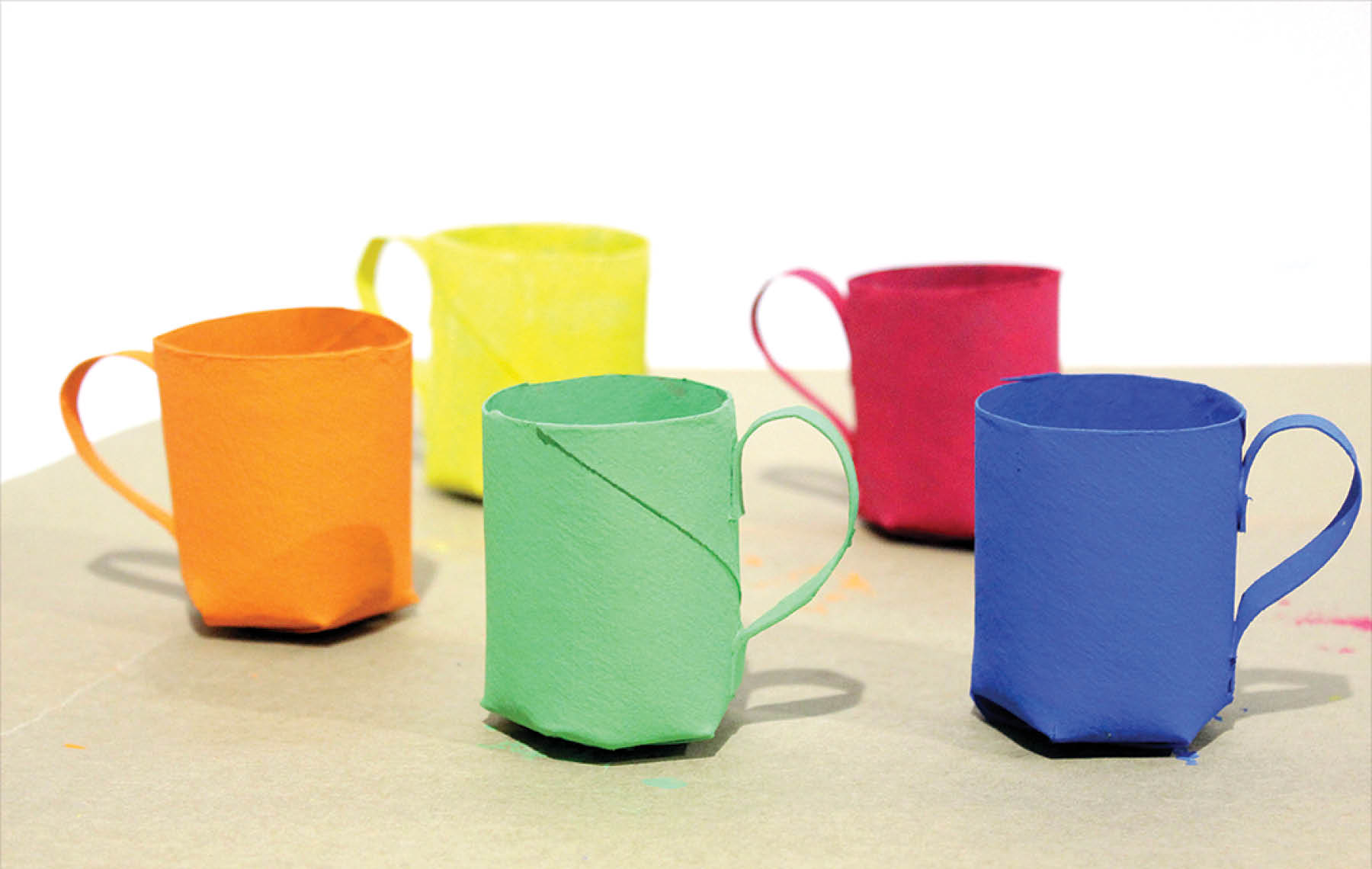
Don’t call me a pack rat, but I save empty paper towel rolls just in case I might need them for craft projects. You just never know. And lo and behold, I had plenty of rolls handy to make these adorable paper coffee cups just in time for Mother’s Day gifts. Because of their compact size, they actually look like little espresso cups. They’re not functional for beverages, but they can be turned into little bud vases for artificial flowers. What cheery gifts or party favors. People will say your cup runneth over with creativity.
What You’ll Need: Empty paper towel roll
Scissors
Glue
Acrylic paint
1. Cut a three-inch segment from the empty paper towel roll. You should be able to make three coffee cups out of a single roll.
2. Cut six one-inch long slits on one end of the paper towel roll. Try to equally space them, but it doesn’t have to be precise.
3. Fold down the sections created by the slits to create the bottom of the coffee cup. Glue the sections in place.
4. From what’s left of the paper towel roll, cut a strip that is about one-half inch wide by three inches long.
5. Glue the top and bottom tips of this strip to the side of the coffee cup to form the handle.
6. Paint the cups with acrylic paint. Note that you can use tempera paint, but it is not colorfast. Add designs like polka dots with more paint or a colored marker.
Late-night talk show host Seth Meyers and ABC’s “The View” co-host Meghan McCain engaged in a lively debate over Rep. Ilhan Omar (D-Minn.) during NBC’s “Late Night with Seth Meyers” May 7.
Meyers pointed out to McCain that she had criticized Omar’s tweets as being anti-Semitic after the recent Chabad of Poway shooting, prompting Meyers to ask McCain if she needed to be more careful with her language given that Omar is facing death threats. McCain replied that she wasn’t trying to say Omar was responsible for the shooting, she was expressing concern that Omar is turning the Democratic Party into Jeremy Corbyn’s Labour Party.
“I stand by every single thing I’ve said and if that makes me unpopular in this room or in front of you, then so be it,” McCain said. Meyers called her response “weird” because he wanted to find “common ground” on the matter.
McCain then asked Meyers if Omar referring to the 9/11 terror attacks as “some people did something” bothered him; Meyers replied that Omar’s remarks were “taken out of context.”
Meyers later asked McCain if it’s possible to criticize the Israeli government without being accused of anti-Semitism. McCain answered in the affirmative, but argued Omar’s tweets about Israel hypnotizing the world and that “it’s all about the Benjamins” crossed the line into anti-Semitism.
“You do keep bringing up the two tweets she’s apologized for, and I think that’s a little unfair to her,” Meyers said. McCain retorted, “Are you her publicist? Are you her press person?” Meyers replied that he just thought that people should be “more careful with their language,” especially when discussing someone like Omar who is facing death threats.
“What would make you happy coming out of my mouth right now?” McCain asked. “I’m genuinely curious.” Meyers said he was “perfectly happy with everything that’s coming out of your mouth and I’m happy we spent this time together.”
There aren’t many reporters who can segue from covering alternative bands in dingy clubs to uncovering the financial problems of a major art museum, but Mike Boehm, longtime Los Angeles Times critic and reporter who died May 2, was one of them. He was 63.
Michael Lewis Boehm was born Oct. 23, 1955, in Connecticut. He graduated from Yale University and Columbia University’s Graduate School of Journalism. Early in his career, Boehm covered government and police for the Danbury (Conn.) News-
Times and the Miami Herald. At the Providence Journal, he moved to the arts and culture beat.
After being hired by the Times in 1988, Boehm covered the burgeoning Orange County music scene, giving early and supportive coverage to emerging bands. He remained at the Times until 2015. He was working at MFour Mobile Research, an Irvine-based marketing firm, at the time of his death, but part of him remained a music critic. Earlier this year, the Times published a letter to the editor he wrote taking a music critic at the paper to task for dismissing a classic-rock performer.
Boehm spent the first half of his nearly 30-year career at the Times as a music critic and the second as an arts reporter. It was in the latter capacity that he made his biggest splash by digging into a budget crisis at downtown Los Angeles’ Museum of Contemporary Art (MOCA) in 2008. Boehm’s doggedness as a reporter, love of music and generous good nature were qualities repeatedly mentioned to the Journal and in online remembrances and memorials.
Times staff writer Carolina A. Miranda paid tribute to Boehm in her weekend arts wrap-up, writing that he turned the tax forms of L.A. nonprofits into “bedtime reading,” and “there probably isn’t a culture publicist in SoCal who hasn’t been on the receiving end of a late-deadline call from Mike, asking about finances.” Randy Lewis, who worked with Boehm at the Times, lauded Boehm’s “knowledge of the subjects he tackled, tenacity in reporting, elegance and insights of his writing, and the unwavering accuracy and authority with which he wrote every piece … [he] was second to none, and provided an example any of us could hope to follow.”
Former Times reporter Scott Timberg said that in Boehm’s reporting on MOCA, he “got something that none of us could. He could take a story that was complex and write about it in a way general readers could understand.” Timberg said Boehm was a “team player. He had no ego; he just wanted to do good work.”
Joel Amsterdam, senior vice president of publicity at Fantasy Records, said Boehm “loved great music and believed deeply in its power to change people’s lives, like it changed his.” Rick Shea, a Los Angeles-based singer-songwriter Boehm interviewed a few times, remembered Boehm as “nice, considerate and thorough as anyone” who interviewed him, and came across as “a sweet guy, quiet and observant when he wasn’t asking questions, a big supporter of local artists and a seriously good writer.”