fbpx

May 8, 2019

Obituaries: May, 10, 2019

Jerome Ackerman died March 30 at 99. Survived by daughter Laura (Marc); 1 grandchild. Hillside

Amin Anavim died April 8 at 88. Survived by daughter Stephanie (Taylor); son Steven; 1 grandchild; sisters Helen (Lotfollah) Shokrian, Fakhri Novian. Mount Sinai

Jeffrey Keith Anders died March 29 at 61. Survived by brother Ronald (Toni) Anders. Mount Sinai 

Gasper (Joe) DeBuono died April 1 at 87. Survived by wife Lenore; stepdaughter Jill (John Kleiner); stepson Jeff Fleiss; sister-in-law, Jan Hillman. Mount Sinai 

Hannah Cahn died March 30 at 95. Survived by sons Howard (Julie), Steven (Rhonda), Randall (Kristine); 9 grandchildren. Hillside

Shirlee Dresser died April 4 at 93. Survived by daughter Linda (Mark) Spiegel; son Glen (Roxanne); 3 grandchildren; 1 great-grandchild. Mount Sinai 

Boris Elkin died March 30 at 101. Survived by daughters Debra Moss, Shaire Goodwill, Nancy (Ronald) Roth; 5 grandchildren; 6 great-grandchildren; brother Leo (Pat) Elkin. Mount Sinai 

Habib Farahnik died March 31 at 95. Survived by wife Shahin; daughter Roya (David) Karvetz; sons Leon (Deborah “Debbie”), Michael (Rachel); 8 grandchildren; 1 great-grandchild; sisters Mahin, Simin, Louise and Pari; brothers Manovcher, Saiid, Cyrus. Mount Sinai 

Gail Freidman died March 30 at 96. Survived by sons Neil (Carolyn), Robert (Nancy); 2 grandchildren. Hillside

Julian Galperson died April 3 at 92. Survived by wife Jacqueline; daughter Ellen (Danna) Lehto; sons Howard, Stan; 7 grandchildren. Mount Sinai 

Norma Groschadl died April 11 at 92. Survived by daughter Geri; sons Joseph, Harold; Hillside 

Adele Gross died April 7 at 97. Survived by daughter Laura Burris; sons Stuart (Barbara Gottlieb), Ken (Roxane); 8 grandchildren; 6 great-grandchildren. Mount Sinai 

Anne Heineman died April 11 at 93. Survived by daughter; son-in-law, 4 grandchildren; 1 great-grandchild. Hillside 

Leonard J. Kanner died April 3 at 96. Survived by daughter Jaclyn (Keith LaQua). Mount Sinai 

Marie Kaufman died April 3 at 94. Survived by daughters Shirl (Steven), Jan; son David; 4 grandchildren; 6 great-grandchildren. Hillside

Carmela Lapin died April 7 at 77. Survived by husband Alvin; daughter Jacqueline; son Philippe; sisters Yehudeth (Chaim) Amiel, Loly Sabah; brothers Raffi (Esther) Zazon, Simon Zazon. Mount Sinai

Henrietta Lavin died April 3 at 92. Survived by daughters Doreen (Michael), Audry; 8 grandchildren; 6 great-grandchildren; 2 great-great-grandchildren. Mount Sinai  

Barbara Ann Lebovitz died April 7 at 91. Survived by husband Joseph; daughters Amy (George) Roland, Mary Rubenstein, Beth Shochet (Marsh) Ramraz; sister Sondra Epstein; brothers Harvey Swack, Bernard Swack. Mount Sinai 

Beth Leder-Pack died March 30 at 60. Survived by daughter Anna; father Robert (Rowena); brother Michael. Hillside

Helen S. Levin died March 29 at 94. Survived by daughter Donna (Gary) Weyman; 3 grandchildren. Mount Sinai

Selma Mahood died April 2 at 89. Hillside

Herbert Rosenberg died April 2 at 83. Survived by wife Diane; son Andy; brother Dennis. Mount Sinai 

Russell Powell died April 7 at 89. Survived by daughter Sandra Dawsone; son Michael (Sheri); 2 grandchildren; 1 great-grandchild. Mount Sinai 

Stephen M. Price died April 6 at 86. Survived by wife Charlyne; daughter Canon; son Chase (Michelle); stepsons Brian (Pana) Gelt, Sean (Wendy) Gelt, Jeffrey (Felicia) Gelt; 8 grandchildren; brother Morty (Merle); sister-in-law, Judy (Sadok) Masliyah. Mount Sinai 

Phyllis Ruttenberg died April 8 at 99. Survived by daughter Anne; son Gary. Hillside

Louise Schwab died April 17 at 71. Survived by husband Robert; daughters Hillary (Jordan), Marisa; son Andrew (Jacqueline); 2 grandchildren; brother Richard (Sharon). Hillside

Linda Silverman died April 5 at 79. Survived by husband Ronald; daughters Jeanine (John), Robin (Ron), Debbie; son Michael (Mindy); 6 grandchildren; sister Mary (Eli). Hillside

Philip Golden Silverman died March 31 at 92. Survived by wife Selma; daughter Deborah (Joseph) Oratz; sons David (Julie), Daniel (Alyse); sister Michelle Cooley. Mount Sinai 

Philip Vein died March 30 at 85. Survived by wife Sylvia; sons Larry, Jon (Ellen), Steve (Quinn); 6 grandchildren. Hillside

Sheryl Walters died April 8 at 73. Survived by husband Marvin; brother Robert (Kay) Miller. Mount Sinai 

Rosalyn Weinberg died April 15 at 83. Survived by husband Jack; sons Ira, Howard, Robert, Daniel; 5 grandchildren. Hillside 

Esther Weiss died on April 5 at 97. Survived by daughter Phyllis Greenberg; son Allen (Debbie MacInnis); 4 grandchildren; 1 great-grandchild. Mount Sinai 

Louis “Lou” Wilner died on March 31 at 72. Survived by son Aaron (Jennifer); 3 grandchildren. Mount Sinai 

David Wolf died March 29 at 76. Survived by wife Jamie; daughter Kate (Zachary); 1 grandchild. Hillside

Stanley Zweben died March 31 at 84. Survived by sons Barry (Nancy), Lee (Janet); 4 grandchildren; 1 great-grandchild. Mount Sinai 

Obituaries: May, 10, 2019 Read More »
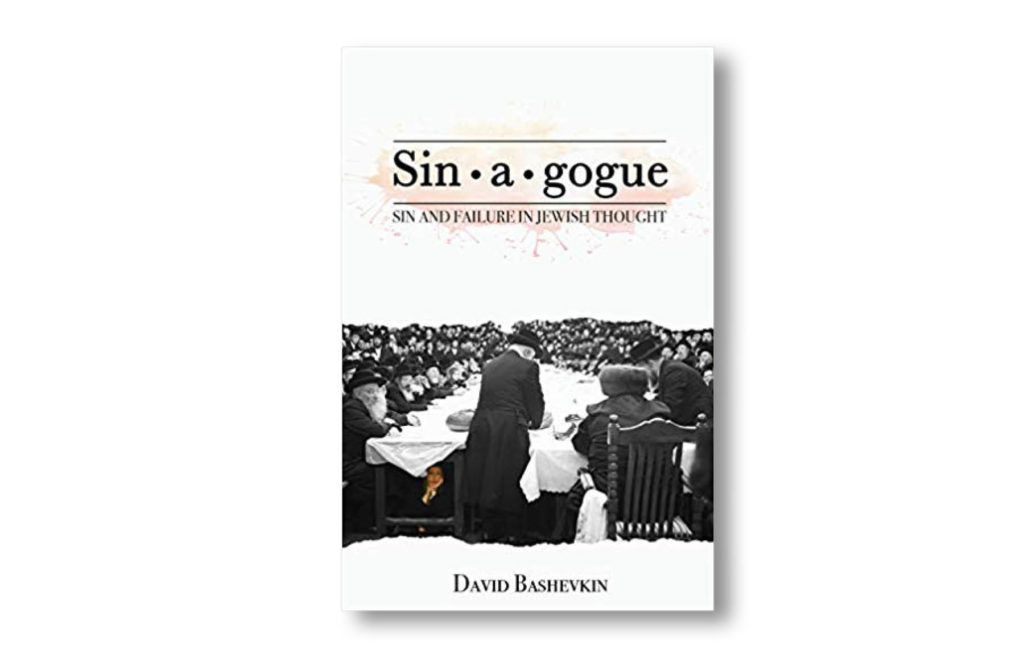
A Jewish Guide to Facing Up to Sin

Nowadays, we hear a lot of talk about bad behavior, both public and private, but rarely does anyone use the word “sin” to describe it. Not so David Bashevkin, who is perfectly willing to use that theologically freighted three-letter word in “Sin•a•gogue: Sin and Failure in Jewish Thought” (Cherry Orchard Books/Academic Studies Press). 

Typically, Jewish storytelling is associated with lofty tales of hagiographic piety that recount the greatness and righteous deeds of religious leaders, T Bashevkin announces.  This, however, is not one of those stories. It is not a racy exposé or tell-all but a frank and honest discussion of some of the lesser-known aspects of sin and failure and their place within Judaism.”

Bashevkin is the director of education for NCSY, the youth organization of the Orthodox Union, an ordained rabbi, and an instructor in public policy, religious crisis and rabbinical thought at Yeshiva University. Although he is a profoundly learned man, he wears his learning lightly in his lucid, witty and wholly winning new book. Indeed, he is perfectly willing to poke fun at himself, as when he pauses to inform us that he “was rejected from the Wexner Graduate Fellowship” and then he adds, “Twice.” And he concludes: “It may take only one sentence to remind yourself that you can laugh at yourself.”

His sources include rabbis and sages, theologians and philosophers — ancient, medieval and modern — but he also invokes poets and authors ranging from John Milton to George Orwell to Raymond Carver. He even pays homage to Leonard Cohen’s iconic song, “Hallelujah,” when he ponders the moral test that God administered to King David: “As students of King David’s life know, he did not pass his test with Batsheva,” he writes, but “the baffled King” was ultimately redeemed. After all, though struggles with sin may cause a minor fall, they can also create a major lift.” 

He freely uses Hebrew words and phrases, always transliterated and translated, including the four different terms that are used for “sin.” He invokes the now-discredited notion that the Eskimo language includes numerous words for various kinds of snow: “Sin for Jews may be the linguistic equivalent of snow for Eskimos.” He ponders the varying kinds and degrees of sin in Jewish tradition, ranging from idolatry, adultery and murder — “sins that require Jews to succumb to martyrdom rather than commit any one of the three” — to mere infractions. “Every word in biblical and rabbinic language for sin tells a different story about the nature of sin itself.”

For author David Bashevkin, the question of sin must always be considered even if Judaism does not provide a single decisive answer.

Bashevkin ponders the finer points of sin in all of its variety. Does God punish us for thinking sinful thoughts? No, he says, “except for thoughts about committing idolatry.” Then again, he allows, one passage of the Talmud states that “thoughts of sin are worse than the sin itself.” What is the commandment against coveting a neighbor’s possessions, he wonders, if not “a prohibition of covetous thoughts”? And is there such thing as an attempted sin? His answer comes in the form of a story in the Talmud about a pious rabbi who engages in intercourse with a woman he thought to be a prostitute but who was actually his wife in disguise: “All the days of that righteous man he would fast for the transgression he intended to commit, until he died by that death in his misery.”

The Bible itself provides numerous examples of sins that are regarded as sacred acts. Esther, he points out, is only “the most prolific” among them. Even in the here and now, “if a life is at stake, Shabbat can be violated,” perhaps the prime example of a doctrine in Jewish religious law known as aveirah lishma, which “arbitrates when it is permissible to perform an action that has components of sin and components of mitzvah.” Sin, after all, is always an occasion for atonement and purification: “[T]he deeper the sin, the deeper the experience of repentance which follows,” writes the author, quoting an article in “Tradition” by Pinchas Peli.

Jewish tradition allows that even God can make a mistake: “God may be perfect, but creation is not,” writes Bashevkin, quoting Rabbi Joseph B. Soloveitchik for the proposition that “[t]he Jewish people bring a sacrifice to atone, as it were, for God’s not having completed the work of creation.” As examples of “the enduring imperfection found in creation,” Bashevkin points to “the diminished size of the moon” and, more disturbingly, the fact that God “allowed for the possibility of sinning.” Bashevkin is always courageous and challenging in the pages of “Sin•a•gogue,” never more so than when he suggests that God is culpable. “As I read through the litany of sins from the previous year while solemnly beating my chest, I wonder (dare I say protest), ‘Why, God, has sinning become so easy?’ ” he writes of the Yom Kippur services. “Why does failure become so inevitable? Our reflections on the previous year are supposed to center around our transgressions, but sometimes my mind can wonder and consider God’s distance.”

For Bashevkin, the question of sin must always be considered even if Judaism does not provide a single decisive answer. “Religious life has both a floor and a ceiling,” the author writes. “The ceiling is built upon the ideals and values we reach toward, which we may never attain. The floor, however, is the framework and perspective from which we deal with failure and those still mired in sin. Much of religious life is spent vacillating somewhere in the middle.”

Dr. Esther Hess, a colleague of my wife, always poses a thematic question to the guests at her Shabbat dinners, which invariably leads to table talk of extraordinary richness and meaning as each of us proposes an answer. The thought occurred to me as I read “Sin•a•gogue” that David Bashevkin has provided enough questions to sustain the participants in a thousand such meals.


Jonathan Kirsch, author and publishing attorney, is the book editor of the Jewish Journal.

A Jewish Guide to Facing Up to Sin Read More »

CEO of Organic Skin Care Line OSEA Tells All

I have no shame to admit that I am a health fanatic. I’m literally that gal you see at Whole Foods spending hours in the organic section of produce, reading almond milk and vegan protein powder labels, or perusing new essential oils to try.  Anything I consume or apply to my skin must be organic, NON-GMO,  and gluten-free.
When it particularly comes to skincare, there’s nothing more refreshing than clean, cruelty free, non-toxic and vegan products. Enter in OSEA, the natural marine-based skin and body care brand, headed by Melissa Palmer, to solve all your skincare needs with the help of a potent blend of organic seaweed concentrates, combined with lush botanicals and essential oils.
Palmer, the CEO of OSEA, is a born and bred entrepreneur and marketer who is passionate about growing innovative wellness brands.
I interviewed Palmer to learn more about her journey as the CEO of OSEA.
Jewish Journal: Tell us about OSEA for those who may not know.
Melissa Palmer: My mom, Jenefer Palmer, founded OSEA 23 years ago with the intention of creating an effective skincare line that was safe for our bodies and good for our planet. Her goal was to create products that actually deliver results by nourishing the skin with potent, bioavailable ingredients.
OSEA was inspired by the roaring waves of the ocean off the coast of Malibu and we unite the elements of Ocean, Sun, Earth & Atmosphere to refresh and rejuvenate your complexion, body and mind. Each and every product we create is infused with a uniquely potent blend of organic seaweed concentrates, lush botanicals and essential oils to deliver safe and effective skin solutions for all skin types at every age.
We use USDA Certified Seaweed (marine algae) in almost all of our formulations because it’s one of the most abundant sources of vitamins, minerals, amino acids, antioxidants and essential fatty acids. This full spectrum of nutrients makes it an incredible source for diminishing fine lines and wrinkles, reducing the look of hyperpigmentation, banishing blemishes and soothing sensitive skin.
JJ: How did the idea of OSEA come about?
MP: My mom was working as the spa director for an amazing mineral springs resort and spa. She had representatives from every company come and pitch her their lines and why they should be stocked at the spa. After hearing brand after brand talk about their products, she realized that it didn’t matter whether the product was five or fifty dollars, the ingredients were virtually the same. She literally went to the library to research the ingredients, and discovered that these “holy grail” products were filled with so many things that she would never dream of putting in her body, so why would she put them on her body?
At that point she began formulating her first product, the Essential Hydrating Oil, and that’s how OSEA was born. Her products and treatments quickly developed a kind of cult following that continues to inspire her to formulate new, innovative products.
JJ: What does a day in the life look like for you as the CEO of OSEA
MP: This is new for me, but for the past few months, I’ve been working to create a true morning routine for myself. I start each day with a self-care practice to set the tone for the rest of my day. When I wake up, for the first 40 minutes I try and make sure to put my phone on airplane mode. At that point, I’m able to meditate and practice Tai Chi without interruption. Once I turn my phone back on, the emails start rolling in and it’s full steam ahead, so for me that first 40-60 minutes of time to myself is really important.
I spend a lot of time at our offices in Venice with our team, having creative and business meetings with our staff about our latest marketing initiatives. Typically I do a check-in daily with our OSEA Skincare Studio on Abbot Kinney or I’m out stopping into new spa & retail locations with our sales team. Then there are the days where I’m at the lab with my mom working on product development, so there is a wide range of things that I could be doing depending on the day.
I’ve also been trying to tap into my creativity more. As our company grows and I’m able to delegate more to our amazing team, I have more space to dive deeper into what I really love to do! I spend a lot of time conceptualizing, creating and manifesting new and innovative ways to grow the business and continue to reach more people.
JJ: What do you believe makes OSEA stand out from other organic skin and body care brands? 
MP: Over the years I’ve really come to see how unique we are and I believe it’s because of our commitment to sourcing and using only the highest quality, plant-derived ingredients and you can see the difference right away. Even though we are an organic brand, we’re all about more is more. We pack as many wonderful ingredients into a formula as we can to create the best products in the green beauty space that actually deliver results.
OSEA will always be product forward as opposed to brand forward. We’ve definitely ramped up our marketing efforts and adapted to the digital landscape, but our commitment to creating the best products is and always will be our north star.
For decades we’ve led the market and created the trends rather than following them. I swear my mom can see in the future and she always knows what the next “hot” ingredient is going to be.
JJ: What is your ultimate goal with OSEA and the impact you’d like it to place on consumers? 
MP: Our ultimate goal is to build consumer confidence so they understand that they can get beautiful results with safe, non-toxic products. We love making people feel great in their own skin!
JJ: As Albert Einstein once said: “Failure is success in progress.”  What have been some of your failures, and how has it helped propel you towards success?
MP: I stepped away from OSEA for a few years to pursue a passion project called Hoopnotica, a hula hoop fitness company. It was a rollercoaster ride. It went from being a huge success, to a huge failure, to ultimately being a huge success. I learned so many lessons during that time and when I finally came back to OSEA, I was able to put those lessons into action. It taught me how to be impactful with creating growth and I also learned what was important to me in terms of integrity and ethics, which are invaluable aspects of how I operate our business.
JJ: What is the biggest piece of advice you’d give someone who is interested in entrepreneurship?
MP: I love the expression “mediocrity makes money.” It’s a good reminder to let go of perfectionism. Painstaking deliberation conflicts with productivity. Instead of ruminating endlessly on getting things done, just get things done. Even if you don’t know where it will take you, it’s what will lead you to the next step. It might even mean failing, but always have the courage to take that first step.
I also like to tell people that if you don’t know where to start, go work for someone who is doing something that you want to do or who inspires you.
JJ: Let’s talk a bit about the business side of OSEA to help provide insight and inspiration to future entrepreneurs. How did you work on growing a loyal customer base for OSEA
MP: Product quality and exceptional customer service. We stand behind our products and proactively communicate when there’s an issue, such as a batch of faulty pumps or a textural issue. We also provide full transparency around any price increases, it’s so important that our customers know they can trust us.
We choose to nurture and harness the power of kindness and honesty. These key attributes hold a lot more weight in business than most people think.
JJ: What are 3 marketing tips you’d give to entrepreneurs?
MP:
  1. Try everything
  2. Stick to your instincts
  3. Find smaller ponds where you can be the bigger fish
JJ: Discuss the process you utilized to get OSEA in major shops and spas such as Four Seasons, Neiman Marcus and ABC Home:
MP: Visualization and manifestation… they all called us!
JJ: Any new inside scoop you would like to share on what people can expect coming up this year for OSEA: 
MP: New products, expanding our spa menu at our Skincare Studio and growing our community!
JJ: We would like to leave readers with a little nugget of inspiration. What has been your greatest inspiration? Is there a particular quote, life motto or mentor you look up to that has given you unforgettable advice that you’d like to share? 
MP: “How may I serve? How may I serve? How may I serve?” -Wayne Dyer
And something I’ve been practicing myself lately, which is to “lean more into who you are….” -Sheryl Sandberg


Berenice Famli is the CEO and founder of the Jewish emoji app Shalomoji and a Los Angeles based writer who covers lifestyle, health, and entrepreneurship. 

CEO of Organic Skin Care Line OSEA Tells All Read More »

Rudi Gernreich: More Than the Monokini

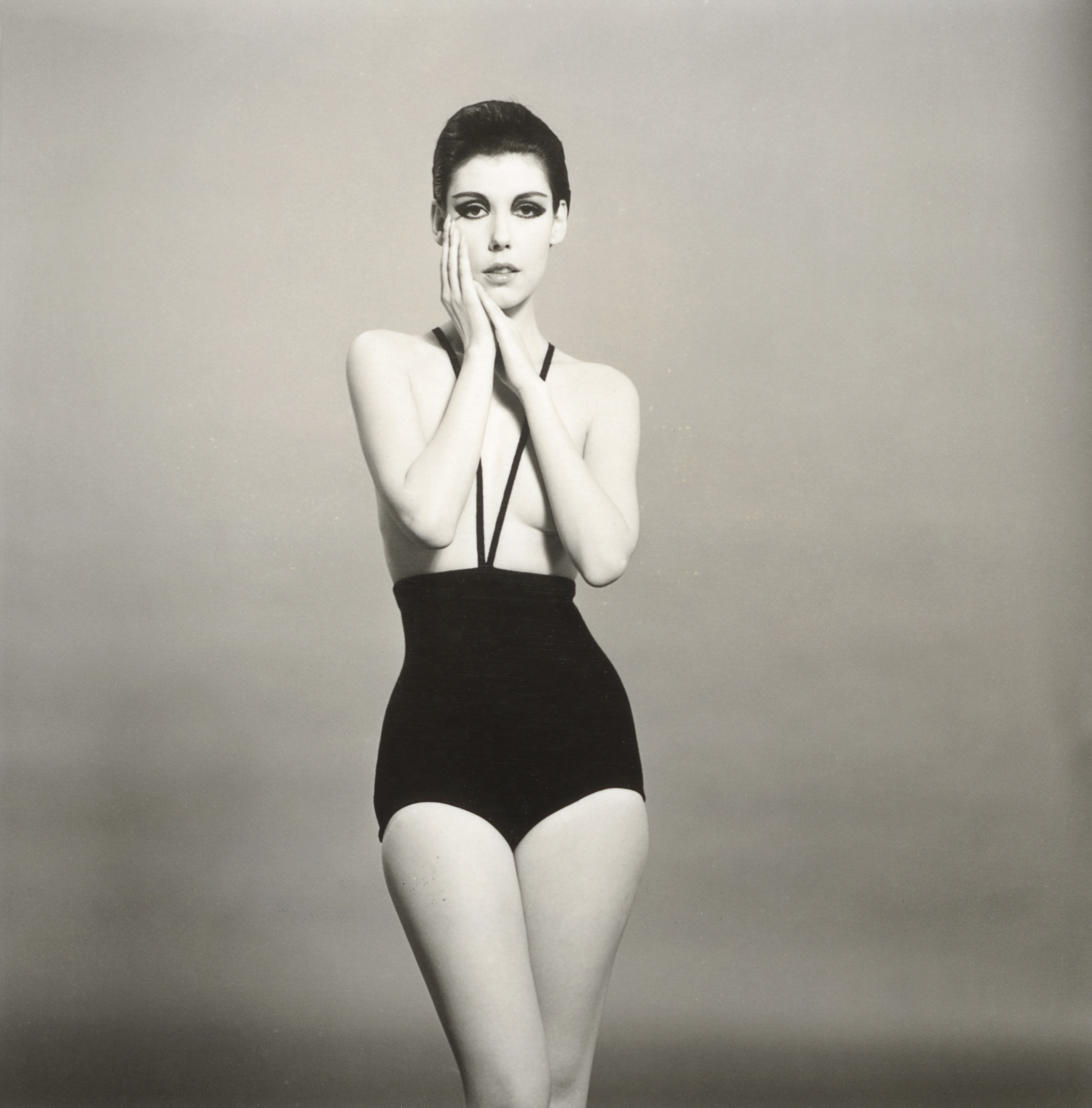
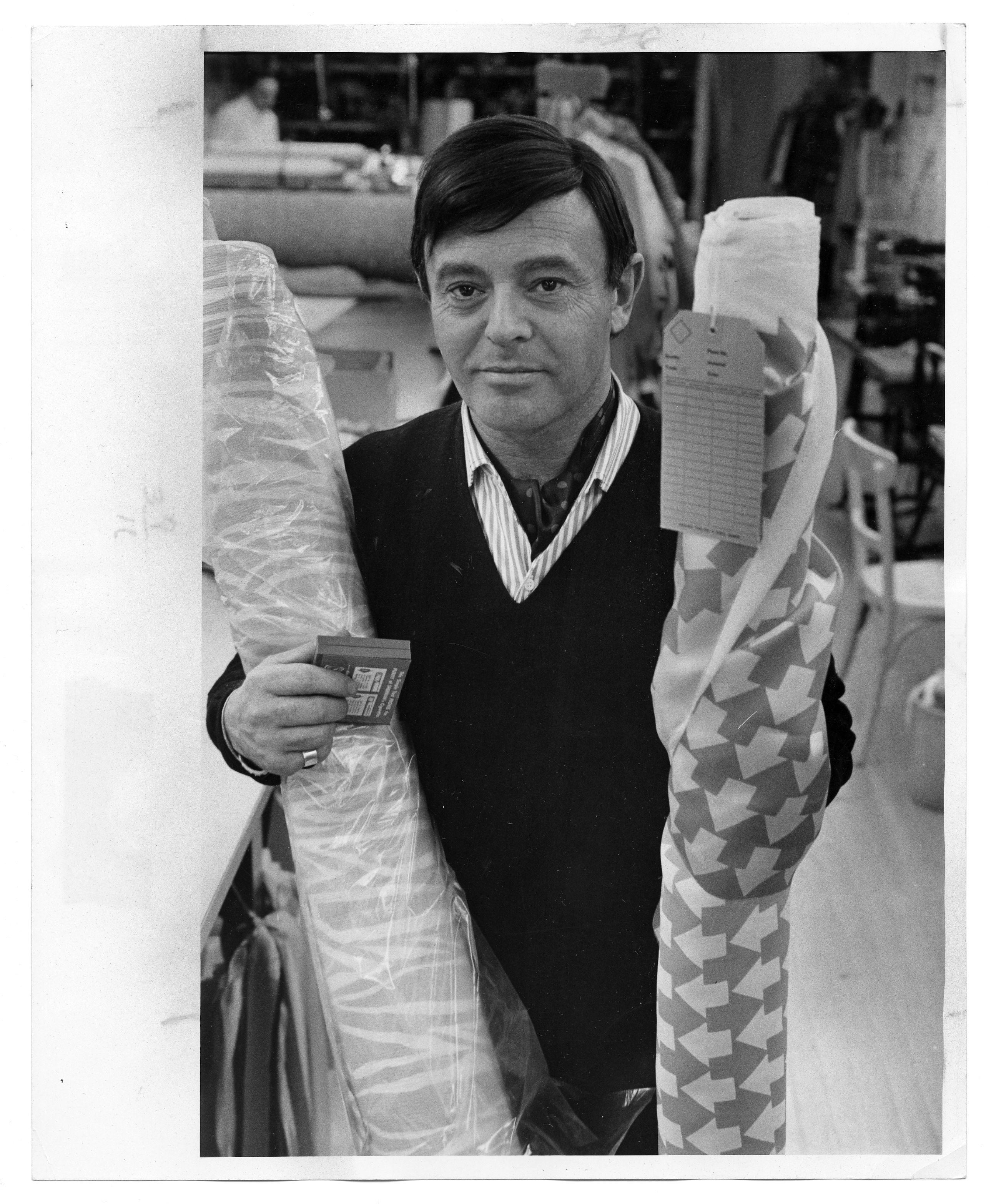
For pop culture aficionados and those who remember the 1960s, Rudi Gernreich will forever be associated with the scandalous topless “monokini” bathing suit he designed in 1964. But the Austrian Jew, who escaped Vienna in 1938, was more than a fashion provocateur. A pioneer of such liberating clothing as the pantsuit, unisex bodysuits and underwear without infrastructure, he was also a gay rights activist. The new Skirball Cultural Center exhibition “Fearless Fashion: Rudi Gernreich” celebrates his life and work.

Featuring 150 artifacts and 50 mannequins, the exhibition takes visitors on a journey from Gernreich’s early life in Vienna through his most iconic looks and their inspirations. Audio recordings of Gernreich and his friends and colleagues add to the experience. Curators Bethany Montagano and Dani Killam gave the Journal a sneak preview, and explained the idea behind the exhibit.

“We decided to do this exhibition not only because of Rudi Gernreich’s Jewish heritage but also what he did when he came here, from his immigrant refugee roots, to start from nothing and have the vision to effectuate cultural change writ large,” Montagano said. “We wanted to convey that we should use whatever means we can to effect social change and this show really gets across the idea of creating a more just society and being more inclusive, all the things we strive for at the Skirball.”

In addition to clothing borrowed from the Fashion Institute of Design & Merchandising, the Los Angeles County Museum of Art (LACMA) and private lenders, the curators obtained artifacts from the UCLA Special Collections, including personal papers and photographs.

“It was about a three-year process,” Killam said. “We found photographs of Rudi growing up in Vienna, a photo album of him and his family, a very early sketch that he created around 1930. We have a photograph of his aunt’s dress shop where he was introduced to fashion and his creativity blossomed.”

Although he wasn’t a practicing Jew, Gernreich identified as Jewish. “His father, who owned a hosiery company committed suicide as the Nazi regime took over Vienna. Rudi escaped with his mother and then sent back for his two aunts. That’s very much tied to Jewish history and the Holocaust,” Montagano said.

Although he wasn’t a practicing Jew, Gernreich identified as Jewish. “His father, who owned a hosiery company committed suicide as the Nazi regime took over Vienna. Rudi escaped with his mother and then sent back for his two aunts. “

                — Bethany Montagano

Aptly, the exhibition kicks off with a mannequin dressed in Gernreich’s topless bathing suit, a panel reading CENSORED across the top. “It’s how people know Rudi,” Montagano said. “It’s also one of the biggest messages behind his work: that it’s not about sexuality, it’s about freeing the body, body positivity, not feeling shame about nudity, about loving yourself. Each section is about freedom: freedom to move, freedom to choose.”

Topless bathing suit by Gernreich

Gernreich’s understructure-free bras, bathing suits and unisex bodysuits celebrated the female form and were revolutionary at the time, Killam said citing thong underwear as an example. “He pushed people beyond their comfort level. That’s what makes change, and we see those changes today.”

Gernreich’s early years in Los Angeles are also represented in the exhibition, showcasing his work with the Lester Horton Dance Company and as co-founder of the gay rights Mattachine Society. There’s also a peplum top and pedal-pusher pants outfit that was sold at the Jax boutique in the 1960s. But the exhibition concentrates mainly on the 1960s and ’70s. “We settled on this specific range of his career, because his fashion aligned with what was going on at the time,” Killam said.

“He’d sit outside his studio on Santa Monica Boulevard and watch kids walk by and see what they were wearing,” Montagano said. “He was also designing in response to flower power, the Watts riots, Kent State [shooting]. He reacted to that and was willing to take a risk.”
One section of the exhibition shows two costume designs from 1976; a striking black-and-white long dress from 1971; a selection of miniskirts and pantsuits; and an area highlighting Gernreich’s brightly colored, ready-to-wear line and his design process. Another section shows how he used unconventional and unexpected materials including transparent plastics, vinyl inserts, bike springs and dog leashes in his avant-garde designs.

“The biggest challenge was to strike the perfect balance between a well-executed exhibition and one that does justice to an underrepresented fashion designer,” Montagano said. She has her theories as to why Gernreich isn’t as well known as other designers of the era.

“There are a couple of explanations,” she said. “One, Rudi died early, at 62. He also got fed up with the fashion industry several times. He broke with high fashion precedence and struck a deal with Montgomery Ward in 1966. Some people may say he sold out to couture, but he made clothing more accessible to people.”

Rudi Gernreich

She added she believes Gernreich would be proud of the exhibition, “because we show the depth and values breadth of his design acumen and we were able to put forward his social conscience and values that drove everything he did.” 

“One of the things I love about Rudi Gernreich is he had such a sense of joy and wit in his approach to fashion and I’d like people to leave with a sense of joy and enthusiasm about the clothing and objects they saw here,” Killam said. “People tend to look at clothing from a superficial viewpoint and lens. But clothing is material culture and it can convey social messages. The message I’d like people to come away with is that what you wear is powerful.”

Montagano emphasized that the exhibit “gets into so many issues that we’re dealing with now, and the very innovative ways that Gernreich traversed very difficult subjects like gender fluidity and body image. I hope people will be inspired by that and moved to use whatever platform they have for good,” she said. “I hope that they come away inspired.”

“Fearless Fashion: Rudi Gernreich” is on view through Sept. 1 at the Skirball Cultural Center.

Rudi Gernreich: More Than the Monokini Read More »

Hit Sitcom Goes Out With a ‘Big Bang’

After 12 seasons, 279 episodes, 10 Emmy awards and countless cartons of takeout Chinese food, “The Big Bang Theory” is coming to an end. The beloved show about misfit geniuses and the women who married them is TV’s No. 1 comedy and the longest-running multi-camera comedy in television history. 

Reflecting its influence on both science and pop culture, there’s a “Big Bang Theory” scholarship endowment at UCLA, a bee species, jellyfish species, a monkey at the Columbus Zoo named in the show’s honor and the cast’s handprints are immortalized outside the TCL Chinese Theatre in Hollywood.

On April 30, the series taped its last episode, which will air on CBS in an hourlong finale on May 16. Later that night, a special retrospective titled “Unraveling the Mystery: A Big Bang Farewell” will share clips, reminiscences and memorable moments from the series.

Why quit while it’s still very much a success? 

“This feels like a wonderful way to take a bow and get out before they start throwing fruit,” creator Chuck Lorre joked in February at the official dedication of Warner Bros.’ soundstage 25 as “The Big Bang Theory” stage. But the truth is that Jim Parsons, who plays Sheldon Cooper, didn’t want to do another season. 

The cast and creators have been planning for the end for the past few months, but that didn’t make saying goodbye any easier. “Most of us on the show have managed to compartmentalize so we can work,” Lorre said in February. “It’s going to be difficult. But I just love that people have made the show part of their lives. It’s a pretty rewarding thing when somebody tells me that their family watches the show and has watched it for years. It makes it worthwhile.”

“This feels like a wonderful way to take a bow and get out before they start throwing fruit.” — Chuck Lorre

Asked why he thinks “Big Bang” has been successful, Lorre made comparisons to other classic sitcoms including “Roseanne,” “Seinfeld” and “Cheers.” “The thing all these shows have in common is an underlying theme of family and affection,” Lorre said. “Whether it’s biological or friendships, there’s a strong bond between the characters.” 

He added, “Even on ‘Seinfeld’ where the characters were abrasive, they ate together, went on adventures together, got in trouble together. I always wanted to sit at the bar in ‘Cheers’ with Cliff and Norm. On [‘Big Bang’] you want to be at the comic book store. Even if it’s not a real family, it approximates one.”

Lorre has kept that winning formula in mind in creating such hits as “Two and a Half Men,” “Mike & Molly,” “Dharma & Greg,” and “Cybill.” Even with “Big Bang” ending, he currently has three other shows on the air to keep him busy: “Young Sheldon” and “Mom” on CBS and “The Kominsky Method” on Netflix, all of which have been renewed for next season. 

The Journal also caught up with several Jewish members of the cast. Melissa
Rauch, who plays Bernadette Rostenkowski-Wolowitz, didn’t know she’d be a cast member when she auditioned, the day after visiting the unemployment office. “When I came in it was as a guest star. I thought I was just going to be here for a week,” she said. “The writers added my character so organically, little by little. I was a fan of the show so I would have been really annoyed if they forced me in and ruined the show that I loved. I never would have thought I’d be here in the
final season.”

Mayim Bialik, who plays biologist Amy Farrah Fowler, also began her “TBBT” journey as a guest star in the third season. “We saw where we’d fallen short and added a female scientist,” Lorre said, and made her a regular the following season. Amy, the perfect foil for the idiosyncratic and often impossible Sheldon, married him in the Season 11 finale. “This is where we show up every day, this is our family,” Bialik said. “We’re going to miss each other.”

Kevin Sussman, initially a guest star as comic book store owner Stuart Bloom, was made a recurring cast member halfway through the run. The role wasn’t a stretch, because he used to work in a comic book store. “I’ve never had to think, ‘How would someone do this?’ My greatest joy is when the director asks me, ‘What would you be doing over here?’ Or ‘What would you do with these?’ It’s my moment to man-splain. That’s been nice.”

Nevertheless, Sussman would like to do something different for his next role, “whatever is furthest from this,” he said. “I always like to do the opposite of what I’ve been doing.” With writing partner John Ross Bowe (Barry Kripke), he has written and sold TV screenplays, “none that have made it to air. But I’ll continue doing that and auditioning. I’ve got to thread that needle and hope people will accept me as I inch my way into doing something else.”

Bialik has a few irons in the fire. “I’ve got a lot of things that I’m in the process of working on,” she said. “I wrote a screenplay that I’m hoping to direct in the fall. I want to act but not in that. Nothing else I can talk about now.” She was also looking forward to spending more time at home. “My boys are 10 and 13 and they need more mom time,” she said.

Rauch has an upcoming movie comedy called “Ode to Joy,” about a man (Martin Freeman) who passes out when he experiences joy. “I play a very boring girl he dates because she doesn’t excite him in any way,” she said. 

Asked if they planned to take home any souvenirs from the soundstage, Rauch wanted Bernadette’s owl salt-and-pepper shakers and Sussman had his eye on the pinball machine. “I lost my yoga mat and I saw one on the set,” Bialik said. “I’ll probably snag that.”  

“The Big Bang Theory” finale airs at 8 p.m. May 16 on CBS. 

Hit Sitcom Goes Out With a ‘Big Bang’ Read More »

Holocaust Survivor Inspires in ‘Reinventing Rosalee’

By any measure, Rosalee Glass has led a tough life. Born in Warsaw, Poland, in 1917, she and her husband, Abraham, were forced to work in a Siberian labor camp during Word War II. Their newborn son died there, from starvation. After the war, the couple was transferred to Kazakhstan, where they lived in a chicken coop and had a baby girl who died from tuberculosis and malnutrition. 

The Glasses eventually escaped in 1951 with their new son, Manny, and headed to Miami, where their daughter Lillian was born. However, the couple soon was separated when Abraham, suffering from tuberculosis, was sent to a sanitarium in Colorado for three years. Rosalee stayed in Miami with the children. 

Finally reunited in 1954, Rosalee and Abraham spent the next four decades together until Abraham’s passing in 1996. Then, in 1999, Manny went into anaphylactic shock, was rushed to hospital and died following a botched intubation.  

Rosalee sank into a deep depression, so Lillian brought her mother to live with her. “I took her to the finest restaurants,” Lillian told the Journal. “She wouldn’t touch her food. I took her to the theater and films but nothing would work. She would just wail and scream and be in a daze. And then, all of a sudden [in 2003], she woke up one morning and it was like the clouds parted.”

Rosalee declared that she wanted to live. And not just live, but live her life to the fullest. “I wanted to make myself happy,” she told the Journal.

Despite the fact that she was already in her 80s, Rosalee starting taking piano lessons, dived into tai chi, took tango and boxing classes, and learned French. In her 90s, she got an agent and embarked on a successful acting career, starring in commercials for Google, Porsche and Hallmark, and appearing in a Super Bowl commercial for Dodge. For her 100th birthday, she went to Alaska to ride with sled dogs, started an online life-advice service called Rosalee’s Personalized Advice and released a book, “100 Years of Wisdom.” 

In her 90s, Rosalee got an agent and embarked on a successful acting career, including appearing in a Super Bowl commercial for Dodge. For her 100th birthday, she went to Alaska to ride with
sled dogs.

In 2018, Lillian made a movie about her now 102-year-old mother’s inspirational life story, called “Reinventing Rosalee.” The film has been shown at 92 film festivals around the world and has won 45 awards. It shows Lillian and Rosalee’s travels around the globe between 2005 and 2017, culminating with Rosalee’s 100th birthday celebration.

During their travels, the globetrotting mother-daughter team visited Poland, Italy and Russia. They toured Stalin’s dacha in Russia — where Rosalee got a kick out of using his private toilet — and buried photographs of relatives that died in the Holocaust in Poland. 

While on a tour of the Vatican in 2005, they stumbled across the coronation of Pope Benedict XVI, where the pope and his priests blessed them both. “That was very good,” Rosalee said. “I felt like a new person.” 

The film also tells Rosalee and Abraham’s love story, using old photos and footage that Lillian found. According to Lillian, the first thing Abraham said to Rosalee when he met her was, “I’m going to be with you for life.” Then, on his deathbed, the last thing he was said: “I was with you my whole life.”

“They had a beautiful life together,” Lillian said.

When people watch “Reinventing Rosalee,” it inspires them to call up their parents and spend time with them while they can, Rosalee said, adding that the film also shows that “it’s not too late to live your dreams. It’s about really going for it and choosing life and not being bogged down by the smallness or pettiness of life. Rosalee’s secret to a long life is that she has no hate in her or prejudice or negative feelings. Everything is positive, and that makes such a difference.”

Rosalee said she is looking forward to her 102nd-and-a-half birthday in June. And for everyone who wants to know how to live to 100, Rosalee has one simple tip: “Have love in your heart.”

“Reinventing Rosalee” was released May 7 on Digital HD, VOD and DVD. 

Holocaust Survivor Inspires in ‘Reinventing Rosalee’ Read More »

The Opioid Problem Is Also a Jewish One

In the summer of 2009, music superstar Michael Jackson’s drug overdose and the complicated circumstances surrounding his death dominated headlines. Jackson died after taking a lethal mix of prescribed opioids. Conrad Murray, Jackson’s doctor at the time, was arrested and ultimately sentenced to four years in jail for administering the drugs. But other doctors had prescribed Jackson opioids. Concerned with pending investigations, several of them called Harry Nelson.

Nelson, 51, a leading health care lawyer who lives in Beverlywood with his wife and their four children, remembers one former Jackson doctor in particular. After a lengthy phone call during which Nelson calmed down the doctor, they set up an appointment for the following day. The doctor was a no-show. A few days later, Nelson learned the doctor had taken his own life by overdosing on opioids.

This personal story is the introduction to Nelson’s new book, “The United States of Opioids: A Prescription for Liberating a Nation in Pain” (ForbesBooks). The book includes a foreword by Lisa Marie Presley.

“Even now, nearly a decade later, I think about this doctor frequently,” Nelson writes in the book. “It wasn’t even a story that made the newspaper. This doctor was just one more faceless victim of the massive crisis we all now face.”

In the book, Nelson states that in 2017 alone, 72,000 Americans died of overdoses, with more than 500,000 dying in the last 20 years; 20 million Americans currently live with addiction; and 50 million Americans suffer from chronic pain but struggle to gain access to opioids because many doctors are afraid to prescribe them.

He also writes that for the last two decades, he has witnessed the devastation the opioid crisis has unleashed while serving as a lawyer for doctors, hospitals, drug-rehab facilities and other health care organizations. 

In the book, Nelson attempts to unpack this complex issue by sifting through the impact of history, government regulation agencies, public policy and root causes of widespread chronic pain.

During a phone interview with the Journal, Nelson said he knew he’d be able to reach members of the health care community, but to reach a broader audience, he made the book very “reader friendly.” It contains graphics, data charts, a glossary of terms, a resource guide and end-of-chapter recaps that highlight key points. 

“There’s overdose in every part of Jewish communities, most shockingly in Chasidic and Orthodox communities.” — Harry Nelson 

“My priority with the book has always been to bring some clarity to the issues,” Nelson said. “There’s so much anxiety, both among patients and health professionals, and everyone I deal with. There’s politics and fear. I’m trying to bring a calm voice and present an impartial view that relays what we need to be focused on.”

In the book, Nelson calls on many entities to do more in combatting the opioid crisis, including the Drug Enforcement Administration (DEA), Food and Drug Administration (FDA), insurance companies and doctors. 

However, as a modern Orthodox Jew, Nelson told the Journal, faith communities also need to step up. “There’s a mistaken belief that the Jewish community isn’t touched by this like other communities,” he said. “In my work, I see Jewish families with Jewish kids dropping dead. There’s a unique problem of shame in Jewish life. We’re a community of such high achievement. But I still think our Jewish institutions are profoundly limited when it comes to stopping this shame about what’s going on.”

Born in suburban Detroit, Nelson is a third-generation lawyer who nearly became a third-generation rabbi. Both his father and grandfather completed law school and began practicing law, then decided to go to rabbinical school. “When I was finishing up law school, everyone kept asking me the same thing,” Nelson said. “ ‘That’s great,’ they’d say, ‘but when are you going to rabbinical school?’ ”

Nelson stuck with law. Still, he’s closely involved in the fabric of Jewish life in Los Angeles, attending services at three synagogues and helping found Kahal Chasidim, a shul in the Pico-Robertson area. Nelson also works closely with Beit T’Shuvah, the Los Angeles residential addiction treatment center that saves lives through a comprehensive program with Judaism at its core. It’s a model Nelson would like to see replicated in other Jewish communities. 

“There’s overdose in every part of Jewish communities, most shockingly in Chasidic and Orthodox communities,” he said. “I’m talking about hundreds of kids every year. I don’t have good statistics. There’s a steady stream of Chasidim from communities on the East Coast sending kids [to Beit T’Shuvah] because there are so few places. Los Angeles, in a sense, has been ahead of the curve.”

In his book, Nelson paints a picture of a nation suffering from chronic pain, but not solely in the physical sense. He writes that more people than ever feel isolated, disconnected and purposeless with the advent of social media and online interaction replacing human interaction. The result is staggering statistics on nationwide anxiety and depression.

“It’s not an accident that if you talk to people who come out of 12-step programs, they focus on spirituality,” Nelson said. “Being in psychosocial-focused peer communities is where you feel recognized and seen and validated. It’s where you develop a spiritual path, a sense of purpose for why you’re in this world. Religion is there for that reason, and these are things that get lost in modern society. Religious community is where people find those things.”

He added he hopes that in the near future, the problem of addiction to numb pain becomes a “burning issue” in synagogues and other houses of worship. “Candidly, I have been in dialogue with many rabbis locally and nationally, some prominent ones, about why the opioid crisis is not a bigger priority in our community,” he said. “The Jewish community has a unique challenge. How do we make our communities a place where people feel accepted and feel they can share what’s bothering them? How do we make synagogues places where they can really connect on that level?” 

To promote the book, which was released in March, Nelson is scheduled to make appearances and attend speaking engagements around the country through the end of the summer. That slate includes events at health care facilities and law offices, and with religious communities and groups of rabbis.  

“I’m glad that it’s getting attention,” he said of the book that to date has sold more than 10,000 hardcover and digital copies. “I feel good that it’s starting different conversations.”

The Opioid Problem Is Also a Jewish One Read More »

After Poway: Security Concerns

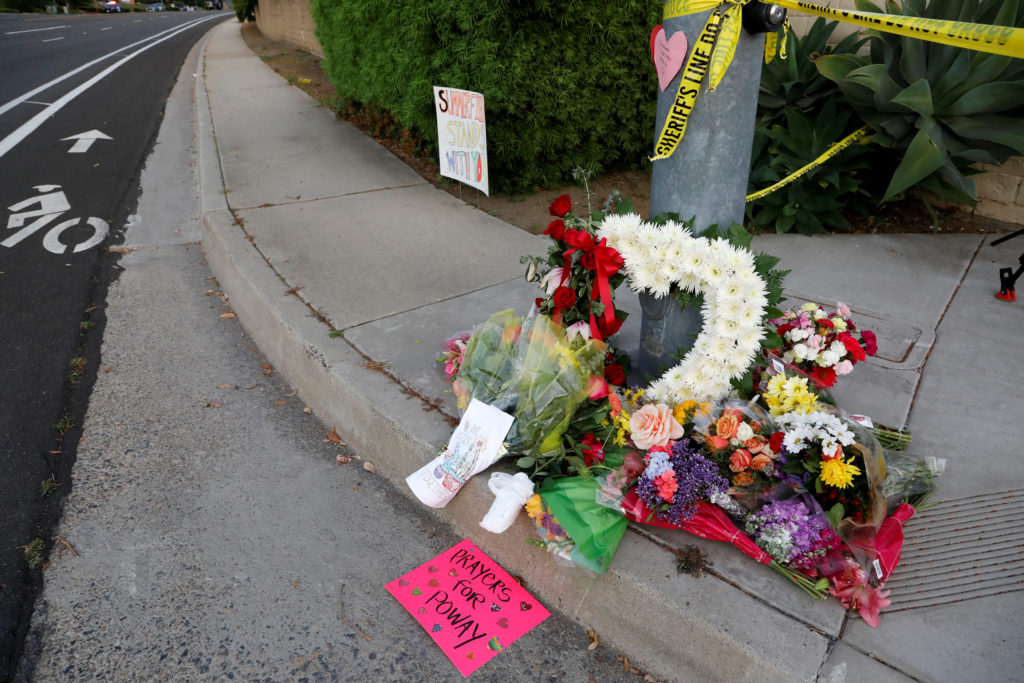
In the wake of the deadly attack on April 27 at the Chabad of Poway, local leaders are evaluating security measures at their respective facilities. 

Among them is Jay Sanderson, president and CEO of The Jewish Federation of Greater Los Angeles, who said Federation’s Community Security Initiative (CSI) is helping to address the community’s concerns.

“In L.A., we started CSI to make sure people feel safe in Jewish places, in synagogues, schools,” Sanderson said. “We have to redouble our efforts to keep the community secure and identify and root out this evil.”

Launched in 2012, CSI bolsters security across the city by serving as a liaison between law enforcement and Jewish institutions. CSI draws on a database linking hundreds of Jewish sites and has a network of more than 250 synagogues, schools and other institutions, and it has trained more than 2,000 people in safety and security measures.

“We’re literally talking moment to moment to every Jewish institution and its leadership, doing everything we can to stop these folks [who would do harm] before they walk into a synagogue,” Sanderson said. “For that, we are relying on law enforcement and we should be relying on the community, too.”

A few hours after the suspected 19-year-old gunman walked into the San Diego County-based Chabad and allegedly fired on worshippers, Rabbi Morley Feinstein of University Synagogue in West L.A. received an email alert from CSI with the subject line: “Attack on Jewish site.”

The email noted that CSI had been in touch with its law enforcement partners about the shooting; that there was no direct threat to the L.A. region at that time; and that CSI was available to address any concerns about safety issues. 

“We’re literally talking moment to moment to every Jewish institution and its leadership, doing everything we can to stop these folks [who would do harm] before they walk in a synagogue.” — Jay Sanderson 

Feinstein told the Journal his relationship with CSI is just one facet of his congregation’s multidimensional approach to security, including measures that had been in place long before the Poway attack, where Lori Gilbert-Kaye was killed and three others were injured, and the Pittsburgh shooting at the Tree of Life synagogue in October, where 11 people were killed.

“Our response [to incidents like those] is we have really good security at the synagogue, and we have to,” Feinstein said following the Poway shooting. “When I arrived 17 years ago, our security was not worthy of the name. Now we have walls and guards and no one questions why. People may clamor for more.”

Local Jewish organizations also are looking to state and federal authorities to bolster safety measures, and elected officials appear to be coming through. Following the Chabad shooting, Gov. Gavin Newsom responded to a request from the California Legislative Jewish Caucus and allocated $15 million for security at synagogues, mosques and other institutions.

California Legislative Jewish Caucus Vice Chair and state Assemblyman Jesse Gabriel (D-Encino) thanked Newsom in a statement, saying, “The most basic and fundamental responsibility of government is to protect its citizens, and we need more than thoughts and prayers to keep us safe from hate-motivated violence. We’re unwilling to accept this as the new normal. Everyone should feel safe and comfortable in a house of worship, regardless of their faith. We are very grateful to Governor Newsom for his leadership to improve the safety of Jews and other groups targeted by hate-motivated violence.”

Anti-Defamation League (ADL) San Diego Regional Director Tammy Gillies was on the ground in Poway within an hour of the shooting there, working with law enforcement. 

Gillies told the Journal, “Everybody should have the right to worship in their own place of worship without having to feel afraid . . .  and I think the community is working toward that goal.”

After Poway: Security Concerns Read More »

Kentucky Derby Horse Races for Poway

Although Gray Magician finished 19th at the 145th Kentucky Derby on May 4, the longshot horse served a greater purpose: to raise money for Chabad of Poway and organizations that work to combat anti-Semitism.

On April 27, Gray Magician’s owners — Aron Wellman, Gary Barber and Adam Wachtel of Eclipse Thoroughbred Partners — decided to send the Southern California horse to run the Kentucky Derby at Churchill Downs. 

Hours later, Lori Gilbert-Kaye was killed, and Rabbi Yisroel Goldstein, Almog Peretz and Noya Dahan were injured in the Chabad of Poway shooting. The next day, the three owners, together with trainer Peter Miller, pledged to donate a portion of the horse’s potential winnings to Chabad of Poway.

“All four of us are Jewish,” Wellman, who belongs to Chabad of Rancho Santa Fe less than 20 miles from Poway, told the Journal in a phone interview ahead of the race. “We knew that we needed to honor Ms. Kaye [and] the Chabad of Poway shooting [victims], and to try and use our platform, as one of 20 horses competing in the Kentucky Derby, to not just contribute monetarily [but] to raise awareness [of anti-Semitism], educate as much as we can and hopefully inspire others to follow suit.

“Even if we can help educate [one person], we’ll feel as if we did something,” Wellman added, “though obviously, [it’s] no consolation for what has transpired in Pittsburgh and now in Poway, which is in most of our own backyards.”

Following the race, Wellman said of Gray Magician’s 19th-place finish, “We’re still proud of him and his effort, and take pride in the cause we were running for and representing.” The partners plan on donating $5,000, which will be split between Chabad of Poway and the Butterfly Project, which helps educate young children about the Holocaust and the dangers of anti-Semitism via the arts. Another industry company, thoroughbred auction house Fasig-Tipton, generously matched Eclipse’s pledge.

“We knew that we needed to honor Ms. Kaye [and] the Chabad of Poway shooting [victims].— Aron Wellman

A licensed attorney, Wellman lives in Rancho Santa Fe in San Diego County with his wife and two children. He fell in love with horses and horse racing when he was 8 years old, and spent his summers working for trainers. In 2008, he left his law practice to become vice president of the renowned Team Valor, which forms partnerships with racing enthusiasts and members of the industry to run thoroughbreds at major racing venues in the United States and abroad. Three-and-a-half years later, Wellman launched Eclipse, which now boasts 85 horses.

Born and raised in West Los Angeles, Wellman attended Temple Emanuel in Beverly Hills, where he went to Hebrew school and had his bar mitzvah. “It was instilled in me from a young age to be proud of my Judaism,” he said, “and to have the faith and the Yiddishkeit of being a Jew.”

While Wellman was raised Reform, his wife, Talya, who was born in South Africa, was raised Orthodox. As a result, Wellman said he has become more observant.

Following the attack at Chabad of Poway, Wellman said “Rabbi Goldstein is a pillar of strength. The manner in which he has been able to speak, represent Chabad, represent the Jewish community and the Jewish faith is a tremendous source of pride. We all come from different backgrounds, but our Judaism and our faith connects us all. We are all irate about what’s going on currently in society, and we need to do everything we can to quash this surge of anti-Semitism.”

Kentucky Derby Horse Races for Poway Read More »

MIXing It Up at Milken Middle School

“At the core of a Jewish education and identity is the development of a curious mind.” 

So said Milken Middle School Assistant Principal Chris Scarlata, and it’s why he is a huge proponent of the school’s X-Learning project. 

“The X-project asks students to formulate their own questions and seek cutting-edge solutions,” Scarlata told the Journal shortly after 200 students from the school showcased their X-Learning projects at the fifth Milken Innovator’s Xpo, or MIX. 

Milken’s X-Learning program teaches students to become innovators, designers and entrepreneurs. The 12- to 14-year-olds identify a passion, explore it deeply, connect with like-minded individuals and propose a way to positively influence society. Then MIX enables them to share their results. 

In the first semester, students take a design-thinking class, a fabrication class and a storytelling class. The school then comes up with proposals and the students select their projects from a menu of options. Then, from winter break to spring break, they spend sessions working with their groups as they prepare to present at MIX.

“We break them into about 13 different X-project groups,” Scarlata said. “They range from a Shark Tank group and Making Music to Cooking Up Change, Fashion Forward and a Kindness Campaign, where students explore what it means to bring positive energy and positive self-image into a community.”

Around 600 people attended this year’s MIX and, after being welcomed to the event, visited the 13 student Xpo rooms on campus. 

In the Making Music group, some students learned how to play an instrument while others wrote their own music and treated the audience to a show. “Five or six different bands performed over the course of about 25 minutes,” Scarlata said.

“In a space like Science Research or Photography, the presentations were laid out like a gallery. The Sports Business group had a whole bunch of products that they created [and] people got to come and [try] them,” Scarlata added.

In the Sports Broadcasting room, “each small group created a segment of ‘SportsCenter,’ whether it was interviewing Milken coaches, doing breakdown analysis of a basketball game or talking to players,” Scarlata said. “Their segments were combined into a 25-minute program.”

“Our Fashion Forward [clothing line] group is looking at starting an Etsy store,” Scarlata added. “A group that’s doing computer building from the Shark Tank [room] is looking at getting some money invested. There were families [at MIX] that were really excited about some of the ideas and want to help [the students] continue their work.”

The MIX is an annual highlight for Scarlata, who has been part of the Milken community for 14 years. He said the event gives him the opportunity to see each student’s growth. 

“For all students, it’s [a new beginning],” Scarlata said. “For some students, their projects may lead them to continue to explore [in ways that are] not connected to their X-project. For other students, it inspires elective choices.”

MIXing It Up at Milken Middle School Read More »