fbpx

May 8, 2019

Volunteering During Israel’s War of Independence

Editor’s note: This article was written in 1948, during Israel’s War of Independence, when the author was serving as squad leader in an anti-tank unit composed of volunteers from English-speaking countries. His unit was part of a force encircling an Egyptian regiment in the Negev’s Fallujah Pocket, commanded by Col. Gamal Abdel Nasser, who would later become Egypt’s president.  

The sergeant hands out hard fruit candies from a tin container. We move out by a narrow trail through the mountain-ringed circular valley across the Fallujah-Hebron road, past the last Israeli guard.

“Good luck, boys.” 

Final remarks always sound artificial in books or movies, but in our mood of slightly heroic renunciation, the words feel singularly appropriate.

We turn left, cutting through our minefield. It is a cool night with a half -moon. Some 1,200 yards in front of us looms the trapezoid-shaped hill that marks the village of Iraq al-Manshiyya, protecting the western approaches to Fallujah.

We are through the minefield and cut to the left, walking along the side of the wadi. In the center of the file, immediately behind the lieutenant, the radio operator listens intensely to the instructions coming over his walkie-talkie. Once in a while, he moves forward a few steps and whispers to the lieutenant.

The man in front of me drops suddenly and before he hits the ground I am down, too. The lieutenant crouches forward and checks the file. We wait 10 minutes. Then we slowly move forward again.

I am intensely alert and aware of everything around me. Every movement or noise makes a sharp impression on my senses. Everything I see, hear and smell etches itself into my memory.

Eight hundred yards ahead of us, our searchlights play their beams on the top of the hill. Suddenly they are turned off and the file of men is etched sharply against the skyline. The scene reminds me of screen shots from various bad war films.

The man behind me silently passes forward a box of machine-gun ammunition. I shift my rifle to my left shoulder and recover the distance.

Some 140 yards from the bottom of the hill, we walk around a clump of prickly pears. This is the landmark. I look at my watch: 10:45 p.m., so we’ve covered 1,200 yards in three-quarters of an hour.

I am intensely alive and aware of everything around me. Every movement or noise makes a sharp impression on my senses. Everything I see, hear and smell etches itself into my memory.

The lieutenant whispers to me in English. He lies down beside the radio operator and the first-aid man. Two riflemen, 10 yards to his right, two riflemen two yards to his left. We are 50 yards from the Egyptian bunker. We can hear the voices of the Egyptian guards across a slight rise to our left.

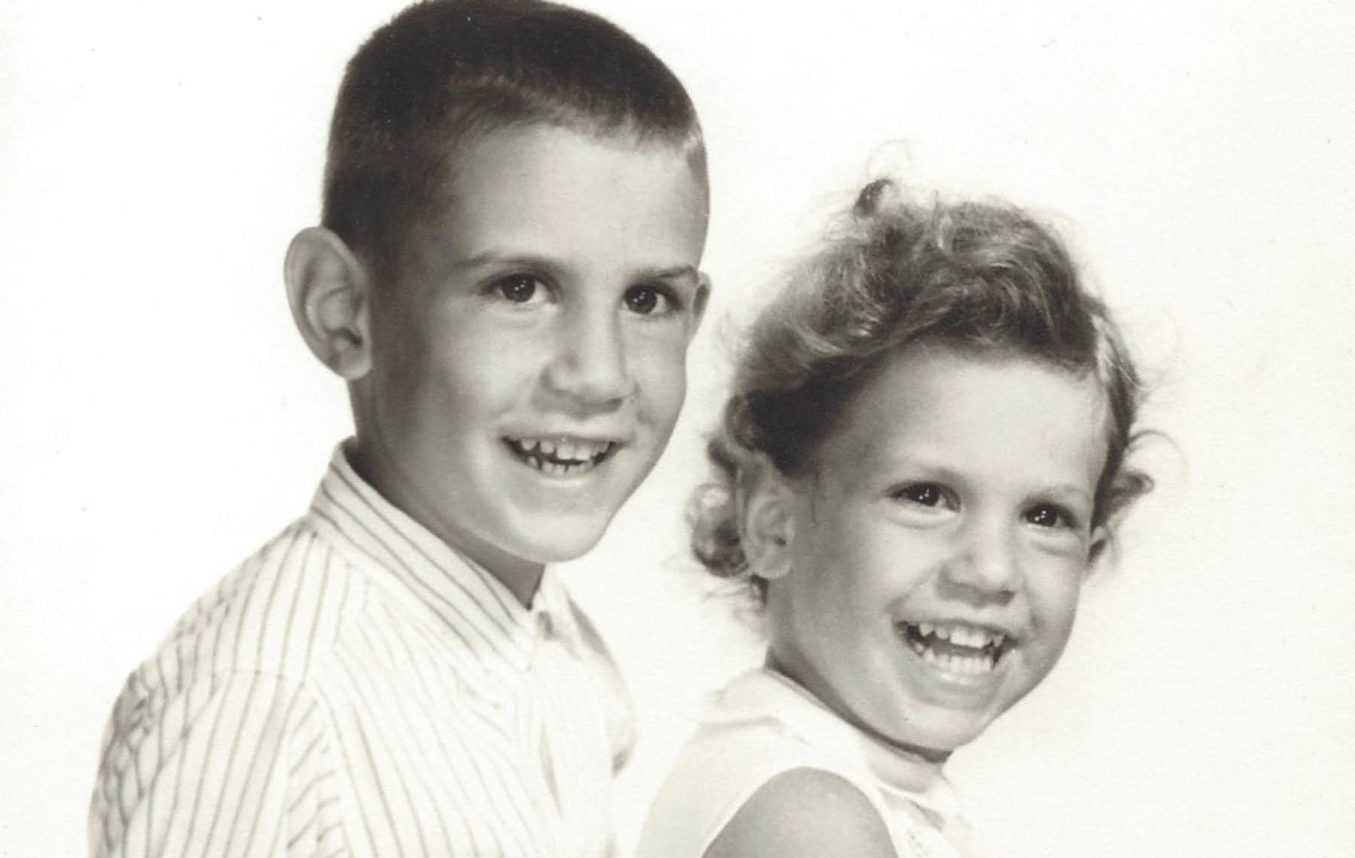
Tom Tugend in Israel in 1948.
Photos courtesy of Tom Tugend

Four of our men peel away and slowly crawl forward: The sergeant with a PIAT (Projector, Infantry Anti Tank) rifle, two machine gunners and one man with wire cutters. Forty yards from the bunker there’s a sharp click and they are through the wire, inching forward. Suddenly, a flash and a shell explode. A few rifle shots from across the rise, but no fire from the bunkers. Either the enemy guards are dead or too clever to give away their position. Our Spandau machine gun opens up. Silence. One more round from the PIAT.

The four men crawl back. The sergeant whispers and we move back, too. Fifty yards farther, a red flare goes up. We drop to the ground. A few rifle shots. The flare dies. We jump up and immediately drop down again as a green flare rises above us, curves and drops beside me.

We are walking very fast now. After a few hundred yards, my stomach muscles loosen, the tension slowly drains from my body and in its place creeps a profound tiredness. My senses are dulled; the box of ammunition gets heavier with every step. I put one foot in front of the other automatically.

Our first guard challenges us: “How was it? Did you hit anything?” “Nothing much,” we say depreciatingly, and a bit contemptuously, as soldiers talk to those who stayed in the rear.

There is lukewarm tea in the tent. No jubilation or self-congratulations. It is part of the daily job. Only the talk, a little too intense, and the laughter, a little too loud, hint at the tension of the last two hours.

There will be another patrol tomorrow night, and another a day after that, and so on. n

Tugend served in the Israel Independence War after serving in World War II, during which he fought with the U.S. 25th Infantry Regiment, which was attached to the First French Army during the fighting in France and Germany.

Uncle Sam recalled Tugend at the start of the Korean War, during which he was in a less combative position as editor of the Foghorn at the Letterman Army Hospital on the grounds of the Presidio in San Francisco. The Foghorn was a weekly newspaper for GIs wounded in the Korean War. Tugend was named to the French Legion of Honor, holding the rank of Chevalier (Knight).

Volunteering During Israel’s War of Independence Read More »

Hamas Rockets Won’t Stop Eurovision

When Netta Barzilai won the Eurovision Song Contest in Lisbon last year with her hit song, “Toy,” the triumph earned Israel the right to host the 64th annual contest. In tune with Netta’s empowering anthem, the Jewish state is not playing around with preparations for the spectacle. Even rocket attacks from Gaza are not impeding plans for the event, which runs May 14-18 at Expo Tel Aviv.

“For months, we have prepared for these kinds of scenarios and responses,” Sharon Ben-David, head of communications for Eurovision for KAN, the Israel Public Broadcasting Corporation, told Army Radio.

In a May 6 statement, the European Broadcast Union (EBU) said: “We continue to work alongside KAN and the Home Front Command to safeguard the well-being of everyone working at and joining us at Expo Tel Aviv. The rehearsals have been unaffected and continue as normal. The artists, delegations and production crew are working hard, and everything is running to schedule and going well.”

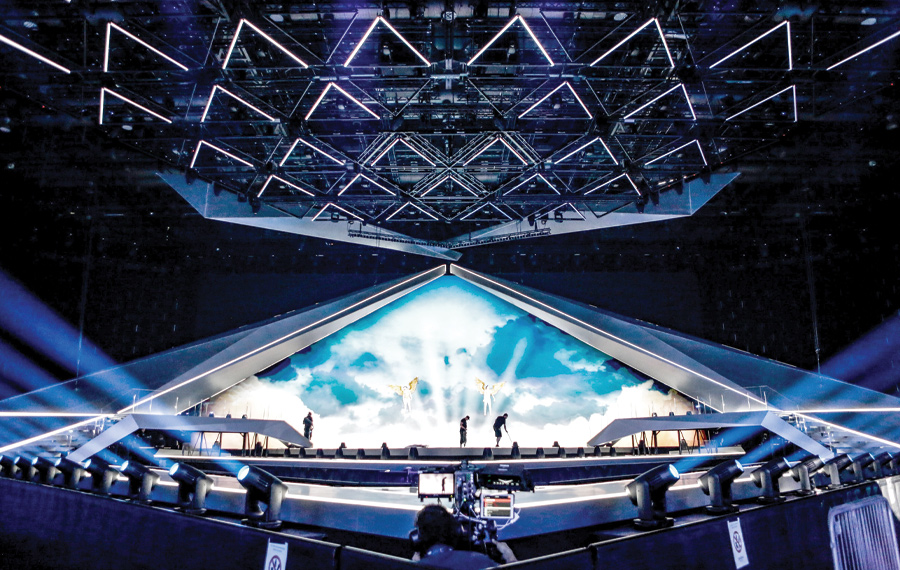
Located 20 minutes from Ben Gurion Airport, Expo Tel Aviv is overhauling pavilion 2 for Eurovision’s 41 competitors, with a dynamic stage, audience seating, and everything needed for television monitors to broadcast foreign-language commentaries from other countries. The Tel Aviv-Jaffo Municipality is creating an official beachside welcome site. KAN and the EBU will broadcast the event to an expected audience of 200 million. Israel will broadcast the semifinals on May 15 and 16, and the finale on May 18. Meanwhile, the city is promoting the event with an emphasis on sustainability and climate-friendly initiatives.

Local organizers are billing Tel Aviv as the most sustainable and climate-friendly Eurovision location to date, and city officials say instead of relying on plastic, catering will use perishable paper, bamboo plates and utensils, and reusable glasses. The Expo has installed power-saving LED lights to conserve energy and is recycling gray water from air-conditioning units to water lawns, Expo CEO Tamir Dayan said.

Israel’s representative this year is Kobi Marimi, who will perform “Home” by Inbar Wizman and Ohad Shragai. The song is an expression of self-esteem for Marimi, who struggled with childhood obesity, and includes the refrain, “I am someone.” The official video already has garnered more than 1 million views.

“We continue to work alongside KAN and the Home Front Command to safeguard the well-being of everyone working at and joining us at Expo Tel Aviv. The rehearsals have been unaffected and continue as normal.”

— European Broadcast Union

Israel’s involvement with Eurovision dates to 1973, with Ilanit performing “Ey Sham.” Israel was the first non-European country granted permission to participate. Israel’s broadcaster, the former Israel Broadcasting Authority, was an EBU member, thereby allowing participation. Israel’s first win was in Paris in 1978, when Izhar Cohen and his backup band, the Alphabeta, triumphed with “A-Ba-Ni-Bi.”
Israel won the following year when Jerusalem hosted, with a performance of “Hallelujah” by Milk and Honey. Dana International made headlines in 1998 when she became the first transgender singer to win Eurovision, with “Diva.”

The competition returned to Jerusalem in 1999 and Israel has made it to the grand finale every year since 2015.

Expo Tel Aviv has a history of staging large-scale international events and hosts hundreds of concerts that bring in 2.5 million visitors per year. Past performers include Lady Gaga, Iggy Pop and Nine Inch Nails. “But this will be a first for Expo Tel Aviv to be hosting one of this scale, scope and size,” Dayan said. He estimates approximately 80,000 people will attend Eurovision.  

To bring Expo Tel Aviv up to international standards for Eurovision, Expo Tel Aviv invested more than 8 million shekels (roughly $2.3 million U.S.) to improve the facility. Crews have installed more than 500 new signs, most of which are in Hebrew, English and Arabic, and overhauled the website to be “inviting, convenient, accessible and international,” Dayan said. A newly inaugurated plaza offers an expansive background for television journalists.

In addition to the improvements at Expo Tel Aviv, the city is constructing a companion site called Eurovision Village. This official festival area is located at Charles Clore Park, in the southern part of Tel Aviv at the end of the beach promenade.

A new main entrance to the compound now is titled the Rokach Gate, which cost NIS 500,000 (approximately $139,000). The gate bears the logo of the “Flying Camel,” designed by artist Aryeh Elhanani when the complex was constructed in 1932. Drone aficionados and passengers in a nearby hot-air balloon will discover the roof of the Expo’s pavilion 1 now boasts the same image.

In the 1930s, Tel Aviv’s first mayor, Meir Dizengoff, promoted the idea of “Levant Fair.” Based on the popular World’s Fair, Dizengoff envisioned bringing together cultures and the region’s produce at an international festival.

At the time, 20-year-old Tel Aviv was home to 100,000 inhabitants, most of them recent immigrants. Lore has it one of the event’s many critics dismissed the fair as a crazy concept, saying, “The Levant Fair will happen when camels will grow wings and fly … .” The event was a success, and the Flying Camel was transformed into the facility’s mascot. It has remained in honor of those who, the Expo suggests, “dare to dream.”

Fittingly, those three words double as the theme of this year’s Eurovision.

The reporter received a tour of the facilities, courtesy of the European Israel Press Association.


Lisa Klug is a freelance journalist and the author of “Cool Jew” and “Hot Mamalah: The Ultimate Guide for Every Woman of the Tribe.”

Hamas Rockets Won’t Stop Eurovision Read More »

A Sister’s Sudden Death, Then a Cavernous Void

My sister Susie, her husband, Peter, and two of their kids had been driving home from Camp Ramah in 2002 in their Toyota minivan. It was visitor’s day up in scenic Conover, Wis.; they’d driven up to see Michelle, Susie’s oldest. I don’t know what went on at camp that afternoon. I never asked. Maybe some skit with a Jewish theme, someone playing a guitar, the sound of young people singing Oasis covers accompanied by an acoustic guitar near a lake. … I don’t know exactly what happened at the site of the accident either. Here’s what I see in my mind’s eye based on what little I was told:

An elderly woman driving a Cadillac down a two lane highway, trees on either side; a “Barney” DVD playing in the minivan, Christian radio in the Caddy. The woman’s eyelids slowly slipping down over tired, old eyes, a dream of a firstborn son from long ago, hands letting go of the wheel, slipping to knees covered by a rayon dress from Walmart, and then an awful crash.

Susie had spoken some words to Peter and her girls from the overturned minivan before she died. Perhaps she said goodbye, I’m not sure. I never asked. Susie was trapped in the wreckage as the rest of her family was taken to a nearby hospital and treated for injuries. Susie had bled too much internally before first responders could extricate her with the Jaws of Life.

Somehow, I always knew she’d be the first of my siblings to die. I used to think it would be breast cancer. I used to imagine all of us suffering — her suffering, just like we did with my dad. Susie was never strongly rooted in the world. I don’t say this as a criticism of her; it’s not a comment about weakness, not at all. She wasn’t the least bit weak. You see, if there were a criticism, I’d direct it toward God. He didn’t make her well enough. You could see right through Susie’s skin. It was like the animal part of her, the very stuff of her was too thin. It was like the shock of suddenly seeing naked flesh through a tear in a blouse — that’s how easily you could see her spirit. She seemed vulnerable too, like something more than human, or something too kind to be human. Like I said, I don’t think God made her very well.

My brother Paul and my mom saw Susie covered with blood on a gurney in the hospital. She was DOA. I don’t know what else they saw. I never asked. By the way, if you ever accidentally kill someone in a car accident, I suggest you study this letter we got from the woman responsible for Susie’s death. It’s good.

“I cannot find adequate words to express my sorrow for the loss of your mother. We lost our youngest son Vernon at the age of seventeen shortly before his high school graduation in a gun accident. I only share this with you to let you know that I have some idea of the horrible pain and loss you are going through.

“I wish your mother’s life would have been spared and mine taken instead. I live with that anguish every day. I would never intentionally hurt anyone. I simply do not know what happened the day of the accident. I will continue to ask for God’s forgiveness and ask him to watch over you and your family.

“I pray that only good things happen to you. I hope that someday you will find it in your heart to forgive me. I’m truly sorry for your loss and pain.”

There are already plates of food piling up on the counter in my mom’s kitchen before the funeral. They hold mostly these items:

Bagels, lox, dill pickles, Spanish olives stuffed with pimentos, pickled herring, whitefish, gefilte fish, red and white horseradish, red onions, cut fruit, rye bread, blintzes, banana bread (some with chocolate chips, some with walnuts) and several kinds of cream cheese.

What strikes me as odd is how these foods, present in every Ashkenazic Jewish house of mourning, are the same foods (down to the Spanish olives and the whitefish) that you’ll find at every joyous celebration, every bris and every baby naming. They are neither foods of joy nor of sorrow but ethnic foods that declare, at times of profound change, that we are a people connected to a tradition and a past. We are the people of the unwavering Rock — the Rock of Israel and neither the deepest tragedy nor the most intoxicating happiness can wrest us from our past or our destiny.

Some friends of mine come to sit with me, and I don’t feel particularly sad. It’s as if the ‘I’ of me has gone away.

I put three pieces of gefilte fish on a paper plate, slather them in blood red horseradish and wolf them down.

A sign reads: “CAUTION! Refrigeration Room. There are chemicals present which are known to the state of Minnesota to cause birth defects.”

Peter Himmelman; Photo courtesy of Peter Himmelman/AJ Martinson

I’m sitting on a musty couch in the basement of Hodroff & Sons Mortuary listening to the low growl of the massive refrigerator’s compressor switching on and off. A month from today, my younger sister Susie would be turning 41 had she not died three days ago. I’m reading psalms as tradition dictates, within feet of her body as it cools behind a huge metal door. Some friends of mine come to sit with me, and I don’t feel particularly sad. It’s as if the ‘I’ of me has gone away. The person with my face and my name, the person sitting in for me will talk and make some wry comments until I return.

After an hour or so, my friends leave and I feel an urgent sense of obligation, a need to clean something or serve food to someone. But no one’s here; it’s just me, Susie’s body, and that hovering spirit of hers that used to peek out from her too-thin skin. I feel like I should open the metal door and sit in the cold beside her corpse, maybe hold her hand, speak some soothing words but I’m afraid, afraid to sit next to the dead. Afraid to see and to confirm what needs no confirmation. Instead, I sit on the couch bemoaning both my loss and my lack of bravery.

The next morning at the funeral, I can’t cry. I float through the service at a remove, watching as Susie’s daughters, bruised and bandaged from the accident, are led into a black Lincoln and driven to the cemetery. At Susie’s open grave, the bereaved are enjoined to complete the burial ritual by shoveling dirt on the casket. It’s a mitzvah and it’s better than letting the cemetery workers finish the job with just a few clattering scoopfuls from the Caterpillar earth mover.

It’s my turn to take the shovel and, although I haven’t slept in days, I feel suddenly strong. I climb to the top of the dirt pile, kick the blade of the shovel with my boot heel and drop the dry soil over the top of the casket. I can hear birds taking to flight over the crosstown highway and I feel the sun on my neck and shoulders.
I imagine I am covering my sister with a warm blanket, tucking her into bed one last time, as though this final act might atone for all the times I failed her.

And finally, I start to sob. The tears, which hadn’t come until now, are precious to me. I listen to the thump of each rocky clod of earth as they land on her casket. I think about rhythm and drums, history, and the missing face of God. I feel unfettered, mystic. I am light and my movements are exquisitely primitive.

Suddenly, as I’m shoveling, a hand gently touches my shoulder. It’s the rabbi from Congregation Beth Emet, and loud enough for everyone to hear, he stage-whispers, “Peter, why don’t you give someone else a chance?” It’s a solemn moment and yet, I can’t help wanting to raise the shovel high above my head and come down hard with the blunt edge on the rabbi’s neck. Instead, I step away from the grave and give the shovel to another mourner.

There are people who have been made wise through grief and time. They learned through their painful lessons, the value of silence. For others, the allure of a performance is just too powerful. I look back at the rabbi from Temple Beth Emet and smile as I see him, away off in the distance. But now, out among the throng of mourners, I see my mother’s best friend, Carolyn. Carolyn is one of the wisest people I know. Her husband, Burton, died a few years ago and immediately after his funeral, at the shivah house to be precise, her 25-year-old son, Marty, dropped dead of a brain aneurism.

My mom got a call from Carolyn the day it happened. “Beverly,” she said, “Martin died.” “No, Carolyn, my mom said with real solemnity and real pity, “Marty didn’t die, it was Burton.” But my mom was wrong, Marty did die, on the day of his own father’s funeral. Trust me, this woman, Carolyn, has mastered the art of being there without ever having to say a word.

Two months after Susie’s funeral, I’m back in Minneapolis and I’m sitting with my mother in her kitchen. She tells me there’s a dead muskrat in the pond at the edge of her lawn. “What should I do?” she asks.

I walk down to the pond as she waits inside. From a distance, the pond looks like a putting green, the algae so thick it’s become a carpet on the surface of the water from too much fertilizer sluicing off the lawns encircling the faux lakefront. Just under a sweeping elm, I see what at first looked like a large gray-black stone. It turns out to be a muskrat that had died face down in the shallow water. All that is exposed is its huge, smooth backside.

Normally, I don’t do muskrat removal. Normally, I’d call a professional but things are far from normal. As I look back from the pond at my mother standing in front of a large picture window, two troubling questions arise: Exactly what is the essential difference between me and the guys you call to haul away the stinking carcass of a rotting muskrat, and why is it assumed that I’d have to call on one of them to do the job? Maybe, it’s my mother’s intense sadness or maybe it was having recently been in Israel (where Jewish men aren’t entirely feminized) that compels me to march back through the evergreen hedges, back through the yard to grab a three-pronged hoe and a snow shovel off the pegboard on the wall of her garage.

At the pond, I don’t flinch as the hoe bites into the rib cage of the muskrat with a dull watery sound. I drag the bulk of it and the entrails that have mixed with the gurgling algae toward me. Then I lift the entire mess with the snow shovel into a double-thick garbage bag. I’m struck by how truly free of sin I feel at just the moment I twist the top shut with the red cord. I see my mother. She’s standing in her living room. Standing alone. Watching me from her large picture window.

Susie’s car crash wasn’t my first encounter with death. It was however, another jarring reminder of this stark — yet hardly noticed fact — we are here, and then we are gone.

Yisgadol v’yitkadosh …


Peter Himmelman is a Grammy- and Emmy-nominated singer-songwriter and rock ‘n’ roll performer. He is also the founder of Big Muse, a company that helps organizations leverage the power of their people’s innate creativity. 

A Sister’s Sudden Death, Then a Cavernous Void Read More »

Counting Our Days

Psalm 90, ascribed to Moses, acknowledges the brevity of the human’s life and his or her finite time on Earth, and so he asks God to “Teach us to count our days, then we shall acquire a heart of wisdom.”

This is an unlikely question from Moses, the person closest to HaShem with the deepest understanding of God’s ways. In fact, God states, “Mouth to mouth do I speak to him …” (Numbers 12:8). Yet, punished for disobeying God, he, too, must die like the rest of us, raising the question, what does it mean to count our days? We get a hint this time of year.

In my previous column, I pointed out that Passover is the beginning of a journey, leaving behind slavery in Egypt and moving toward a life of freedom that culminates at Mount Sinai, receiving Torah and the Ten Commandments. Freedom is not a life of unrestrained and total self-centered determination. Although we have choice, we also live with values and ethics, with love and compassion, making room for others and living out divine qualities. We search for purpose and meaning in our lives and participate in supporting those around us and fulfilling the will of the creator.

Centuries ago, our people lived in relationship with nature and cyclical harvests. This was how they fed their families as well as offered, a number of times a year, a portion to God as a gift of gratitude from their produce. Torah spells out how much, and when, such offerings were made. “You shall count for yourselves, from the day after the Holy Day, when you bring the Omer of the waving, seven weeks … fifty days, you, shall offer a new meal offering to HaShem.” (Leviticus 23:15-16) So the day after Passover, an Omer, a measurement of barley, should be brought to the Temple, and seven weeks later, another offering, this time two loaves of fine flour. Certain animals were also required. In all, gifts that would be burnt on the altar creating a “satisfying aroma to HaShem.”

This 50th day is Shavuot, meaning weeks, which the rabbis turned into a celebration of receiving Torah, but its origin is to mark the harvest of the wheat. So counting was a way to focus on nature with its steady growth and ultimate fulfillment; harvesting, gleaning, cooking/baking, eating and earnestly sharing with HaShem the profound expression of gratitude for sustenance and life.

After the Temple was destroyed, harvested offerings were curtailed but the rabbis saw the above commandment with fresh eyes and newly directed purpose. Counting became an inner process, a spiritual preparation from the second day of Passover until the 50th day, Shavuot, ready to receive Torah. Focusing on each day brought enlightenment and built anticipation, just as when we look forward to a wedding, a bar or bat mitzvah or even a vacation. How often do we count the days until our simcha or anticipated excursion? 

Counting the Omer, as it is known, has taken on new dimensions. Kabbalists, seeing the human being as a template for divine expression, the Etz Chayim (Tree of Life), focus on seven (one for each week) psycho-spiritual attributes, sefirot; chesed — lovingkindness, compassion); gevurah — boundaries, restraint, discernment; tiferet — balance, harmony;  netzach — victory, action, perseverance, accomplishment; hod — humility, empathy;  yesod — relationship, sharing, intimacy; and malchut — imminent divinity, how we express the divine and stand in the world.

Students of Mussar focus on ethical, moral and humane conduct; honesty, generosity, patience, listening, equanimity, etc. Counting is a process of elevating one’s character and purifying the soul in preparation for receiving Torah. Once we harvested grains, moving toward virtual Sinai is now an opportunity to harvest our best selves. 

The Israelites leaving Egypt carried post-traumatic stress disorder from years of abuse and enslavement, needing to go through a process of refinement and healing before standing at Sinai. From now until June 7, we, too, have an opportunity through meditation, study, prayer, deep inner exploration or shared dialogue to examine, and better understand, who we are, how we relate to others and the world, and if the values we hold dear have not slipped away. The genius of the Jewish calendar is that it provides time to acquire a heart of wisdom, time for self-reflection, by counting each day and making each day count.


Eva Robbins is a rabbi, cantor, artist and the author of “Spiritual Surgery, Journey of Healing Mind, Body and Spirit.” For more details and a chart for counting the Omer, visit Robbins’ blog at jewishjournal.com. expandedspirit.org

Counting Our Days Read More »

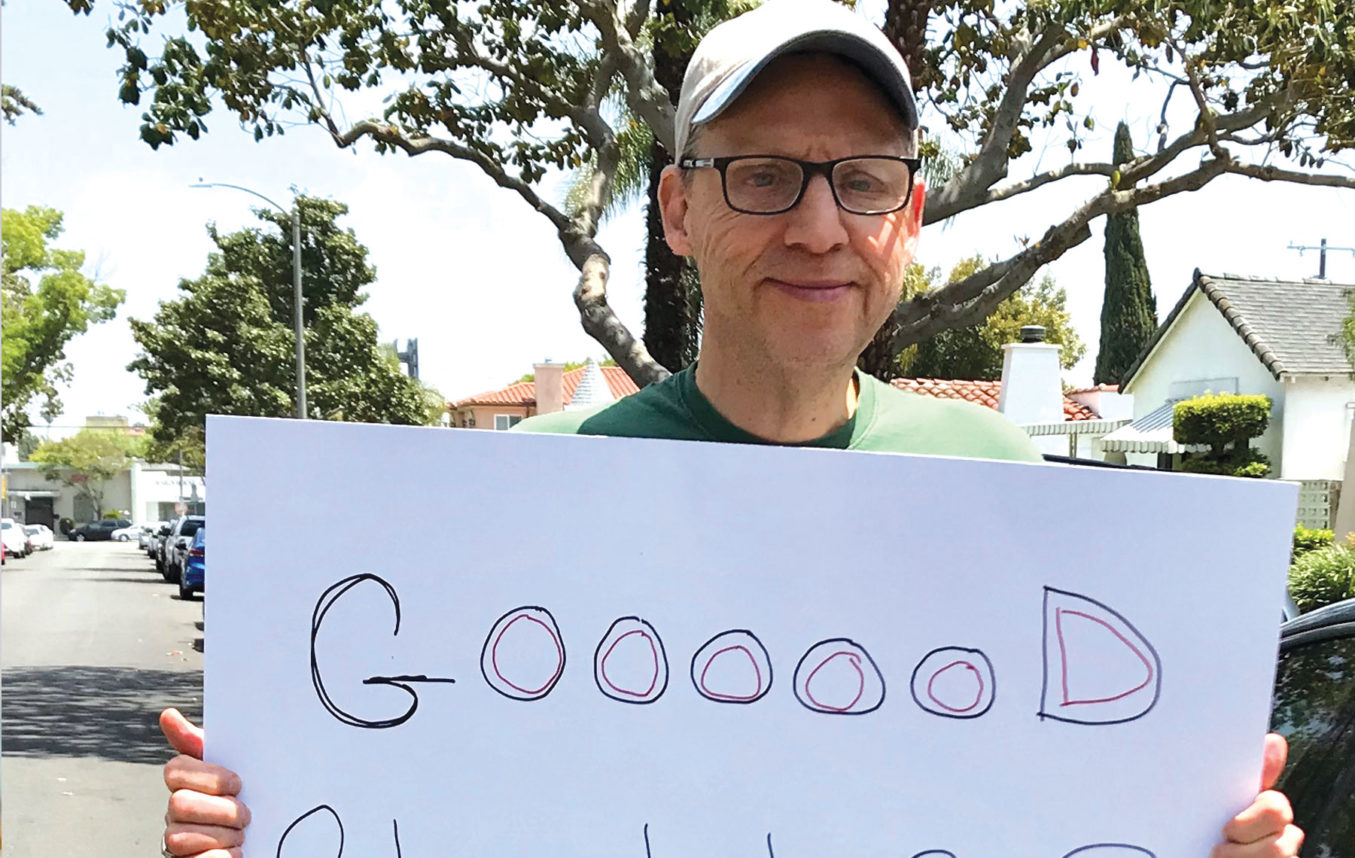
‘Goooooood Shabbos’

Comedian David Brenner once said, “So, I’m in New York and I say to someone, ‘Have a nice day.’ He looks at me and says, ‘No thanks. I’ve got other plans.’ ”

On many Shabbats, I walked with a friend named David to and from shul and I noticed that he said hello to almost everyone who walked by him. In a booming but friendly voice, he gave them a “Good Shabbos. Good Shabbos. Good Shabbos.” Jews and non-Jews, he greeted each person with a smile and a hello. He even drew out the word “good” and made it into “Goooooood Shabbos.” It was a beautiful thing to hear. But I noticed that many of the people he greeted didn’t return his “Goooooood Shabbos” wishes. I guess they had other plans or perhaps they thought about something else and it just went by them (I’m not being judgmental). 

I know there are many reasons why people did not return his kind gesture, but probably few of them were good ones. If someone says hello to me, I need to respond. In “Ethics of the Fathers,” Shammai says “… and receive everyone with a cheerful face.” Our sages explain, “Anyone that does not return a greeting is called a thief.” My mother, from “Ethics of the Moms,” says, “When someone says hello, you’d better say hello back.” Even my dog, who is not known for her manners, responds with a hearty, helicopter-type wag of her tail when someone says hi to her. 

Despite the lack of responses, David kept on “Good Shabbos-ing” everyone and it never seemed to bother him when he got little or nothing in return. He just continued with his smiling “Goooooood Shabboses” and then returned to whatever conversation we’d been having. Don’t you hate people like that? People whom nothing seems to bother.

I have always been big on saying hello and holding open doors for anyone. I’m an equal opportunity door holder. My parents taught me to hold open doors and help blind people to cross the street.

I have always been big on saying hello and holding open doors for anyone. I’m an equal opportunity door holder.

The difference between David and me is that when people didn’t return his kind gesture, he was fine. When they don’t return mine with a thank you or a nod or some acknowledgment, I get very upset. Sometimes I even mumble something under my breath about how rude they are. I might blurt out a sarcastic “Thank you.” 

Why do I do this? Why do I wish people nice things or hold open doors for them if I know that often I’m going to get nothing in return and I’m going to get angry? Why do I set myself up like that? I don’t really have time in the column to figure out that nor do I want to see a therapist for 15 years and trace the root of why it hurts when people let me down or don’t live up to my expectations. A friend once told me that “expectations are resentments under construction.” The more you expect people to react a certain way, the more disappointed you’ll be. 

The much simpler remedy for me is to keep holding open doors and wishing people a good Shabbos, and getting over my petty annoyances. Hopefully one day, I’ll get to the point where I don’t care what people’s reactions are. Where it’s a bonus if they do say, “Thank you” and it’s their loss, not mine, if they say nothing. My job is to be kind. And that means getting hurt sometimes. 

I read that Rabbi Israel Meir Kagan, known as the Chofetz Chaim, let someone stay overnight at his house, and in the morning, realized that person had robbed him. Kagan told his wife that the next time someone wants to stay with them, don’t let him use this as an excuse to say no. I feel the same way. I’m not going to let other people dictate what I do, especially if it’s the right thing to do.

But do me a favor: If I ever open a door for you or help you across the street or say, “Goooooood Shabbos” to you, at least nod or, even better, give me a little smile. It won’t kill you and it might make my day.


Mark Schiff is a comedian, actor and writer.

‘Goooooood Shabbos’ Read More »

The Joe Biden Gamble

Most presidential campaigns are about the economy, or matters of war and peace. Can Joe Biden make the 2020 election a referendum on white supremacy? If he can, he will win. If not, President Donald Trump’s chances for re-election get a lot better.

While most of the other Democratic candidates are debating how aggressive they should be pushing to reverse Trump’s agenda on a number of fronts, Biden is taking a decidedly different approach. He is arguing not against Trump the policymaker, but against Trump the person. While Biden has indicated the outlines of his platform and has promised more details going forward, it’s clear that he will frame his campaign primarily as a moral indictment against the incumbent. 

The safer and more conventional approach, which all of the other 20-plus Democratic candidates are taking, is to try to beat Trump on the issues. That’s how Nancy Pelosi’s forces took back the House last year, by talking about health care and other policy matters rather than taking Trump’s bait. 

On the presidential campaign trail, this has played out as an internal Democratic debate over different degrees of progressivism. Should universal health coverage be achieved through a Bernie Sanders-preferred single-payer system or through less sweeping means? Should the nation institute something along the lines of Alexandria Ocasio-Cortez’s Green New Deal or fight climate change in a more measured Barack Obama-era way? Similar shades-of-blue distinctions are being drawn on criminal justice, taxes, education, housing, immigration and foreign policy.

Biden is arguing not against Trump the policymaker, but against Trump the person.

But Biden is gambling that while the voters who will decide a general election may disagree with Trump on many policy matters, they are much more uncomfortable with the president’s personal conduct. That’s why the most significant aspect of Biden’s launch has been his repeated references to the 2017 white supremacist rally in Charlottesville, Va., and to Trump’s comment about “fine people on both sides” of the events there. Biden clearly believes that this was a defining moment in Trump’s presidency and in recent American history, and he clearly intends to make it the centerpiece of his campaign. The president’s recent efforts to reframe those remarks in a less objectionable context suggest that he knows the harm that a sustained debate about Charlottesville could cause his chances for re-election. 

The conventional wisdom that developed after the 2016 campaign is that Trump’s opponents place themselves at a great disadvantage when they engage in his type of personal combat. So for the last two-plus years, the president’s foes have instead trained their fire on his least popular policy goals.

Until Biden. The unique calculation he has made is that the way to beat Trump isn’t to abandon the strategy that Clinton employed in 2016, but rather to just do it better. Biden’s advisers believe that the former vice president’s “Middle Class Joe” relatability will allow him to connect with the white working-class voters in a way that Clinton simply could not. 

Biden’s first challenge is to make it out of a Democratic primary populated with alternatives that are a more natural generational and ideological fit for the new Democratic Party. His struggles to address the Clarence Thomas-Anita Hill hearings in the first days of his campaign portend ongoing difficulty on this front, as does his habit of praising Republicans with whom he has worked.

If he becomes the nominee, he must then confront Trump’s ability to marshal populist animosity toward the traditional political system. Biden might be more likable than Clinton, but he has been in Washington even longer, which makes him a ready-made target for Trump’s attacks against the establishment.

Biden’s final challenge with this approach is one of consistency. As those of us in the Jewish community know, hatred and prejudice come from both the far right and the far left. Just as ugly strains of nationalism can ooze into anti-Semitism and other racial and ethnic bigotry, the most virulent strains of anti-Zionism in some progressive circles can turn into equally repulsive forms of anti-Semitism. 

Can a character-based message take Biden to the White House? Perhaps, but only if it’s applied evenly.


Dan Schnur is a professor at the USC Annenberg School for Communication and Journalism, the UC Berkeley Institute of Governmental Studies and Pepperdine University. 

The Joe Biden Gamble Read More »

The Resilience of the Jewish People

On Yom HaShoah, I lit a candle in remembrance of the innocent lives lost during the Holocaust. As the flame flickered in front of me, I also reflected
on the resilience of the Jewish people despite genocide, exile and involuntary immigration.

I recently visited the Shanghai Jewish Refugee Museum, site of the former Ohel Moishe Synagogue, at the corner of Changyang Road in Hongkou District, China. Between 1933 and 1941, Shanghai provided a safe haven for 18,000 to 23,000 European Jewish refugees escaping the atrocities in Europe. The majority were Viennese Jews who undertook the 8,500-mile journey by ship or train to create a new life in the most unlikely of places.

A plaque prominently displayed on the wall quotes Evelyn Pike Rubin, one of these stateless refugees: “Tomorrow we would be starting a new life in a strange city, in an unfamiliar country with an unfamiliar language, climate, and people, where we would be safe and free.”

The local Shanghainese welcomed the Jewish refugees and shared their own scarce resources with them despite the vast differences between their cultures. It didn’t take long for the newcomers to adapt to Chinese culture. They learned to appreciate its people, Chinese opera and cuisine. Many learned the language by going to Chinese cinema and learned to write Chinese characters. This allowed them to read the newspapers. At the same time, the immigrants preserved their own traditions. Jewish schools and publications, as well as European-style cafes, restaurants, bakeries and clubs, transformed the Tilanqiao neighborhood into “Little Vienna.”

The local Shanghainese welcomed the Jewish refugees and shared their own scarce resources with them despite the vast differences between their cultures. 

The Shanghai museum displays hundreds of artifacts depicting this mutual respect and peaceful coexistence, including documents, letters, photographs and personal items such as a bamboo rickshaw toy from the late 1930s or early ’40s. One picture is of the wedding of Sylvia and Karl at Ohel Moishe Synagogue on October 15, 1944. A few years later, their son was one of 500 Jewish babies born in Shanghai. Another black-and-white photograph that caught my eye depicted a young Jewish girl and her two Chinese friends happily holding hands.

These photos evoked my own memories of having to immigrate from Iran to Houston in 1987 after the Iranian revolution. I, too, had to leave my home abruptly and quickly adapt to a new culture and surroundings. One day I was wearing the mandatory Hijab, covering my hair with a large scarf and covering my body with a long cloak, and the next day, I was sporting cowboy boots and airy summer dresses.

Many of my Iranian Jewish counterparts, who are neither Ashkenazic nor Sephardic but Mizrahi Middle Eastern Jews, relocated to sunny Los Angeles. Like the European Jews who sought refuge in Shanghai, they adapted to the American culture but at the same time managed to preserve their own Persian Jewish traditions. Farsi language schools and publications, as well as many Jewish-owned Iranian-style cafes, restaurants, bookstores, bakeries and clubs, have turned Westwood Boulevard into “Tehrangeles.”

For the Shanghai Jews, the glory of the city remains in the past because the refugees gradually left after the end of the war. For the Iranian Jews, the glory of Iran remains in the past because they now are at the point of no return. However, the Hebrew words “Am Yisrael chai,” (“The Jewish nation lives”) is an expression of the spirit to survive and to rebuild against all odds.

On Yom HaShoah, in addition to reminiscing about the lives lost and the glory of days gone by, we should celebrate the revival of the Jewish people in unique communities around the world.


Jacqueline Saper is the author of the memoir “From Miniskirt to Hijab: A Girl in Revolutionary Iran” (Potomac Books — University of Nebraska Press) to be released on Oct. 1. jacquelinesaper.com 

The Resilience of the Jewish People Read More »

My Favorite Mothers

She stands extremely close to the mechitzah — the partition that separates the men and women as they dance — wondering whose bright idea it was to separate the sexes during the wedding. When she decides that the moment is right, she moves quickly, fueled by her conviction that she knows best.

Before anyone can stop her, she rips down the mechitzah, dismisses those who implore her to honor the bride and groom’s wishes, and pulls the couples toward one another, motioning for them to dance together. 

The rebellion spreads like fire over coals, and soon most of the men and women are dancing together. She gently brushes past the bride and dances with the groom herself. Nothing is going to stop her from dancing with her grandson at his wedding.

She didn’t escape the Islamic Revolution, endure 50 years of a stable but loveless marriage, hold together a traumatized family in the United States and demand that all of her grandchildren marry Jews but not become “too religious” — just to stand on the sidelines at her grandson’s wedding.

I like Persians, but I love Persian grandmothers, especially those who are so out of their element in this country that it’s taken them 40 years to accept the fact that rice cookers are real things. 

I’m referring to the grandmothers who would rather poke out their eyes with rusty kabob skewers than add tofu to their Persian stews in order to accommodate one “enlightened” granddaughter; the ones who still remember what pre-Passover chametz purification was like in Iran, where they had to open pillows and clean the feathers, slowly chip away at a giant block of solid turmeric because kosher for Passover spices weren’t sold in stores, or wash heavy Persian rugs in a nearby stream until their bulging veins were as blue as the azure fabric. 

These are the women who gloriously cook everything in oil and salt while their daughters (my mother’s generation) use some terrible product called “nonstick spray” and very little salt, because our mothers have become dangerously empowered by healthy living in this country.

These are the women who have seen everything, who married before they could be considered adults, who endured childbirth without epidurals, set their tables the night before so no one would suspect that they were fleeing Iran in the morning and who continue to hope that even one of their American-born grandchildren will ask them to share their stories about Iran during Shabbat family dinners. 

These women know more than we do because they’ve seen more than we have. And they won’t listen to anyone.

In truth, I’m not sure I want to live in a world where Persian grandmothers follow the rules or defer to anyone else — including their husbands. 

Are they all like this? Absolutely not. But I adore the ones who are. 

My maternal grandmother was a menace. I spent my childhood with her in Iran, and I’ve never seen anyone rub her skin to such a healthy, fire-red glow with a hard piece of pumice as that woman did in the shower. The way that my grandmother would attack her skin — in the name of Godliness and cleanliness — was simultaneously charming and awful but when it was my turn to take a shower, she would toss the pumice and use her warm, loving hands on my back and face in a way that made me feel sublimely secure and adored. 

“I like Persians, but I love Persian grandmothers.

I’ve been loved by old, rigid Persian women; I’ve been taught by them, inspired by them and even yelled at by them. I’ve also grieved for them, but only from abroad. I wasn’t able to attend either of my grandmothers’ funerals. 

My maternal grandmother — the pumice aficionado — died in Israel decades after escaping Iran. My paternal grandmother, in whose chunky arms I would abandon all worry and doze off to the smell of cumin and fried onions that lingered in her blouse — died in Iran, and we never saw her again after we escaped. 

There’s no doubt in my mind that had my grandmothers lived to attend my 2014 wedding in Los Angeles, one of them would have pulled down the mechitzah (if we’d had one) and the other would have asked to speak with the Persian caterer because no one had salted the eggplant stew. 

I always wished that at least one of my grandmothers had been able to accompany me to the mikveh, or ritual bath, days before my wedding. Nervous and cold, I slowly walked into the warm water and, for some odd reason, felt as though my heart was beating thump thump to two syllables, sounding out the name, “Le-ah, Le-ah.”

Some time afterward, my mother had a routine surgery, and I wanted to pray for her recovery using a Hebrew name.

“Mom, do you even have a Hebrew name?” I asked, since I’d never heard any reference of it.

“I’m named after your grandmother,” she responded while seated at my table, eating bites of feta cheese. 

“You’re named Iran?!” I cried. That was my maternal grandmother’s Persian name. 

“I’m named Leah,” she responded while trying to hide the cheese from my slightly husky father. “That was your grandmother’s Hebrew name.”

“I’ve never heard about this!” I exclaimed, feeling slightly ashamed. “And what was my great-grandmother’s name?” She had died in Iran long before I was born.

At that point, my mother and father got into an argument over whether he should eat the cheese or stick to a healthier Persian cucumber. She won the quarrel, and holding the last piece of cheese in her vindicated hand, said, “Your great-grandmother? Oh, she was named Leah, too.”

The hairs under my lip, which I had tried dying blond since middle school, stood up straight. 

“God bless her soul, I never did see anyone nearly scrub their skin off as your grandmother used to do,” my mother said. And then, looking down at the piece of cheese, she scowled and added, “This feta has too much salt!”


Tabby Refael is a Los Angeles-based writer.

My Favorite Mothers Read More »

May 10, 2019


Read our previous issues online here.

May 10, 2019 Read More »