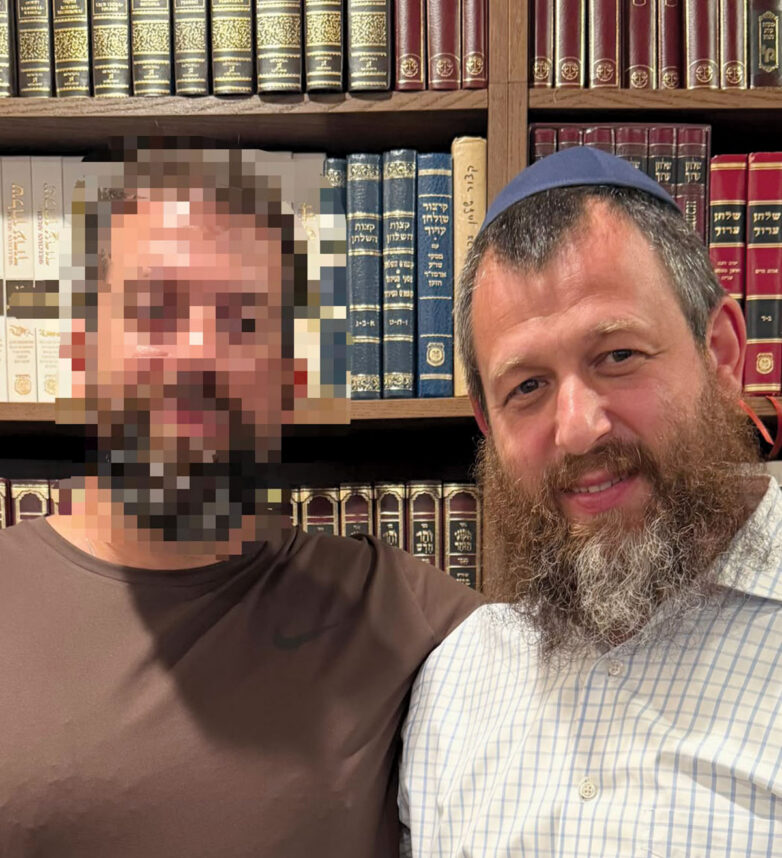
A little over a month ago, my father, Abraham Haimoff, lost his battle with cancer at the age of 73. My father had a strong love of Israel, which started when he was a teenager. In 1963, at the age of 17, he left his comfortable home in Iran to join the Israeli military. Over the next 30 years, as a dedicated soldier and commander, he survived many difficult battles and sustained war injuries. Throughout his life, he always stayed connected to Judaism. Soon after retiring from the Israeli military and moving to the United States, he started to dive deeper into the spiritual and religious studies of Judaism.
While sitting shivah at my parents’ home, we discovered in his library my father’s writings on Jewish philosophy, tradition and history. I was so moved by one of his writings on the afterlife that I decided to translate it and shared it at his memorial service. In his honor, I’d like to share it with our community:
The Torah speaks to the existence of the soul to eternity and being a separate entity from the body. As people, we may think that living 80 years in good health, comfort and wealth, with a peaceful death, is something to aspire to; however, such view of life may be limited. If we are aware of the existence of our soul, we realize that our existence continues into infinity. This world of “now” gives us an opportunity to do things that would ultimately lead and influence our “afterlife.” The deeper spiritual question is who is the one that creates a deeper connection with god? Who is happier, under the infinite life of the soul? The healthy person who lives a life of comfort and pleasure but yet without any spiritual connection to god vs. another person, who is poor, hungry and perhaps physically disabled, but yet with a rich and deep spiritual connection with god? Clearly, material possession represents an artificial and shallow view of the world as compared with a rich and deep spiritual connection with god.
So, what is life after death?
Our “afterlife” is the world of truth and transparency.
When a person passes away from this world and his soul or spirit arrives to the heavens, he may be faced with the first film, titled “This Is Your Life,” which would include every thought, every action, whether good or bad, intimate moments and every detail, which are passed before his eyes. Our “afterlife” is the world of truth and transparency. As we reflect on our actions in life, we quickly realize that hell may be a place where all of our sins are revealed to all in pain and shame. Then, the second film, titled “How It Could Have Been” is shown, and focuses on how life could have been, had a person made the right decisions in his life and fulfilled his potential. The second film reflects the missed opportunities and the resulting sorrow to the soul because of the mistakes made by a person. The second film helps to purify the soul through the feeling of pain and regret and breaks down the barriers that caused the bad deeds and the wrong decisions made during a person’s life, allowing, then, the soul to connect with god. Not all souls require the purification process. Still, other wicked souls, like the one of the Pharaoh from biblical times, who enslaved the Hebrews, do not even get the privilege of going to hell.
So what about heaven?
This is the highest privilege for the soul, allowing the closeness to god. However, the depth of the closeness and experience with god would heavily depend on the preparation of the soul well in advance. While the “afterlife” is not clearly articulated in the Torah, we should look to our actions and deeds, and aspire to live a life of “Torat Emet,” where we look to our morals, virtues and values based on our tradition to get ourselves ready for the “afterlife.”