fbpx

February 21, 2018

Sharing My Father’s Words on the Afterlife

A little over a month ago, my father, Abraham Haimoff, lost his battle with cancer at the age of 73. My father had a strong love of Israel, which started when he was a teenager. In 1963, at the age of 17, he left his comfortable home in Iran to join the Israeli military. Over the next 30 years, as a dedicated soldier and commander, he survived many difficult battles and sustained war injuries. Throughout his life, he always stayed connected to Judaism. Soon after retiring from the Israeli military and moving to the United States, he started to dive deeper into the spiritual and religious studies of Judaism.

While sitting shivah at my parents’ home, we discovered in his library my father’s writings on Jewish philosophy, tradition and history. I was so moved by one of his writings on the afterlife that I decided to translate it and shared it at his memorial service. In his honor, I’d like to share it with our community:

The Torah speaks to the existence of the soul to eternity and being a separate entity from the body. As people, we may think that living 80 years in good health, comfort and wealth, with a peaceful death, is something to aspire to; however, such view of life may be limited. If we are aware of the existence of our soul, we realize that our existence continues into infinity. This world of “now” gives us an opportunity to do things that would ultimately lead and influence our “afterlife.” The deeper spiritual question is who is the one that creates a deeper connection with god? Who is happier, under the infinite life of the soul? The healthy person who lives a life of comfort and pleasure but yet without any spiritual connection to god vs. another person, who is poor, hungry and perhaps physically disabled, but yet with a rich and deep spiritual connection with god? Clearly, material possession represents an artificial and shallow view of the world as compared with a rich and deep spiritual connection with god.

So, what is life after death?

Our “afterlife” is the world of truth and transparency.

When a person passes away from this world and his soul or spirit arrives to the heavens, he may be faced with the first film, titled “This Is Your Life,” which would include every thought, every action, whether good or bad, intimate moments and every detail, which are passed before his eyes. Our “afterlife” is the world of truth and transparency. As we reflect on our actions in life, we quickly realize that hell may be a place where all of our sins are revealed to all in pain and shame. Then, the second film, titled “How It Could Have Been” is shown, and focuses on how life could have been, had a person made the right decisions in his life and fulfilled his potential. The second film reflects the missed opportunities and the resulting sorrow to the soul because of the mistakes made by a person. The second film helps to purify the soul through the feeling of pain and regret and breaks down the barriers that caused the bad deeds and the wrong decisions made during a person’s life, allowing, then, the soul to connect with god. Not all souls require the purification process. Still, other wicked souls, like the one of the Pharaoh from biblical times, who enslaved the Hebrews, do not even get the privilege of going to hell.

So what about heaven?

This is the highest privilege for the soul, allowing the closeness to god.  However, the depth of the closeness and experience with god would heavily depend on the preparation of the soul well in advance. While the “afterlife” is not clearly articulated in the Torah, we should look to our actions and deeds, and aspire to live a life of “Torat Emet,” where we look to our morals, virtues and values based on our tradition to get ourselves ready for the “afterlife.”

Sharing My Father’s Words on the Afterlife Read More »

Israeli Diet: Model for the World

I love the Machane Yehuda Market in Jerusalem, or the Shuk as it is known. The storekeepers are colorful and the crowds a snapshot of the diversity of  Jerusalem residents.

Unlike the United States, where fruits are often on sale year-round, Israel does not import its fruits and vegetables. Thus, the availability of fruits is always changing.

In the Shuk, a certain excitement can be felt when foods make their seasonal appearance. What I love most about the Shuk, however, is its display of Israel’s amazing agricultural productivity and the healthfulness of this bounty.

One day, while walking through the Shuk, I had a thought: Why can’t the Israeli diet become a model for the rest of the world? Israel is a world leader in so many areas — the high-tech industry, agriculture, missile technology, etc. Why not in good nutrition?

Since Israel is a Mediterranean country, the Israeli diet is a Mediterranean diet.These diets vary by country. All Mediterranean diets, however, share certain characteristics. Typically, plenty of vegetables, grains, nuts, legumes and fruits. Olive oil is the predominant fat.

Wine often accompanies meals. Many Mediterranean diets, such as the Italian diet, are low in fat. The Spanish diet has a higher fat content because of its increased use of olive oil.

The Israeli diet is somewhat atypical. It not only contains plenty of fruits, grains and vegetables, but it is Western in its use of eggs, dairy and meat, a consequence of Israel’s early agricultural policies.

All Mediterranean diets share certain characteristics: typically, plenty of vegetables, grains, nuts, legumes and fruits.

A dizzying number of diets are promoted in America, each targeted for a specific issue, such as weight loss, cardiovascular disease prevention, improved diabetes control or other health concerns. However, only the Mediterranean diet favorably influences all of these conditions.

Studies indicate the Mediterranean diet has a positive influence on certain forms of cancer and asthma, and helps prevent dementia and depression.

No other diet can make such claims.

No one knows for sure why the Mediterranean diet is so healthy, but many attribute it to its high antioxidant content.

During the body’s normal functioning, supercharged oxygen and nitrogen molecules are produced, and these can be harmful unless neutralized by the body’s antioxidants.

Fortunately, many of the natural foods we eat are full of antioxidants that can supplement the body’s defense against supercharged oxygen molecules.

The Israeli Mediterranean diet contains extremely healthful foods, including the sheva minim, or seven species listed in the Torah as being special products of the Land of Israel. The fruits of the sheva minim have been shown to be loaded with antioxidants.

The seven species, blessed with certain holiness, are wheat, barley, olives, grapes, dates, figs and pomegranates. Depending on the time of year, the fruits of the shivat haminim are ubiquitous in the Shuk.

The seven species are perfectly adapted to Israel’s climate. Wheat and barley are sown during the winter months when there is rainfall and they ripen under the influence of the “late” rain in the spring. The early rain usually arrives like clockwork shortly after Sukkot. Grape vines and olive, fig and pomegranate trees are able to survive the dry Israeli summer months and the complete absence of rain.

Olive oil is an important component of Mediterranean diets. Extra-virgin or virgin olive oil is rich in antioxidants, although this is not the case for “pure” or “light” olive oil. This is because the “impurities” removed contain the antioxidants. There is considerable evidence that olive oil protects against cardiovascular disease.

The modern Israeli diet has the potential to be a model diet since it combines the healthiest foods of the Mediterranean together with wholesome foods from the West.

Olive oil rather than corn oil is the country’s favored oil. Wines are plentiful. Figs, dates, pomegranates and a multitude of other fruits are readily available (in season).

Vegetables, especially tomatoes, cucumbers and peppers, are easily obtainable and used extensively in salads. Nuts such as almonds and walnuts grow naturally in the country and are also high in antioxidants. Restaurant and takeout meals in Israel tend to contain far more vegetables than in the U.S. Hummus and tahini are popular dips, and are made from natural products.

However, I can already hear the skeptics. How can a diet containing whole milk, eggs and meat be a model diet?

The reality is that there is considerable turmoil nowadays in the world of nutrition. It is becoming increasingly evident that many truisms that were the bedrock of American nutrition for over half a century lack scientific support.

Eggs slightly raise cholesterol levels in a percentage of people, but no scientific study has been able to show that this translates into increased risk of cardiovascular disease, except perhaps in diabetics.

Blood cholesterol levels are indeed raised by saturated fat, but recent studies have concluded that saturated fat does not promote heart disease.

Nor has research been able to show that low-fat milk prevents pediatric obesity.

Admittedly, it is possible to eat too much of a good thing. Many Americans eat more than enough red meat and would do well to substitute some of their meat consumption with vegetable protein and fish, but high meat consumption is rarely the case in Israel. The consumption of dairy products has been shown to have many health benefits, including preventing obesity and providing the calcium needed for bone development and bone turnover.

Nevertheless, just because a diet has the potential to be a model diet does not mean that it necessarily is.

What is the upshot of all this? The Israeli diet could potentially be a model diet for much of the world, but Israelis need to put in the effort to make it so.


Dr. Arnold H. Slyper works as a pediatric endocrinologist for Clalit Health Services and is a former professor of pediatrics. He made aliyah in 2013 and lives in Ma’ale Adumim. 

Israeli Diet: Model for the World Read More »

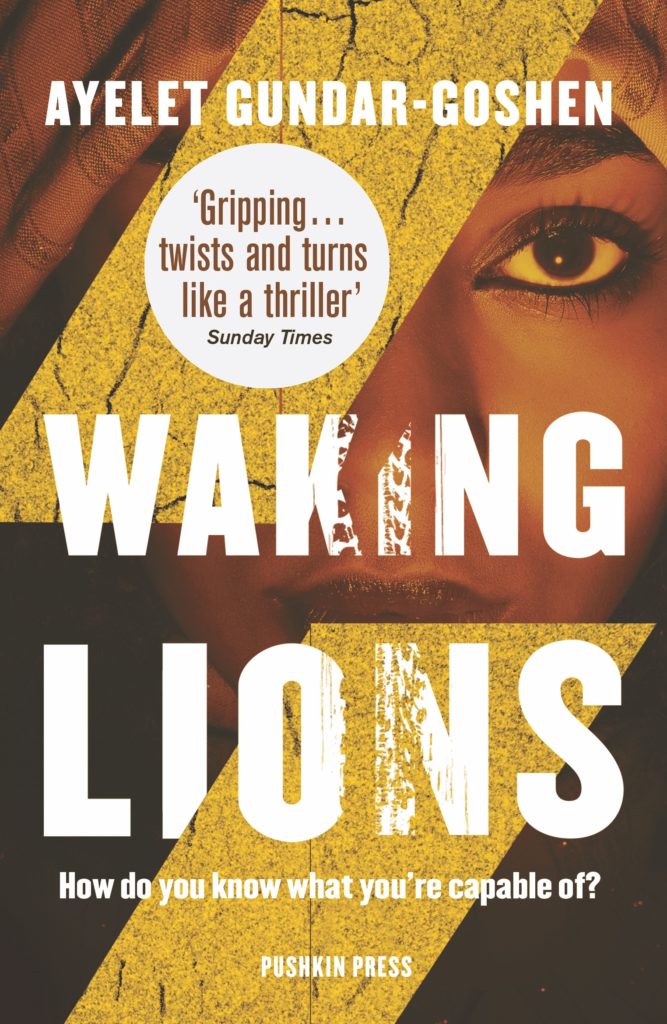
‘Waking Lions’ a Thriller and Morality Tale

Ayelet Gundar-Goshen’s “Waking Lions” (Back Bay Books/Little, Brown), a tense psychological thriller set in Beersheba, was a New York Times Notable Book when it was published last year and won the Jewish Quarterly-Wingate Prize. Now “Waking Lions” is being published in paperback, and the author’s tour of the United States brings her to Los Angeles.

Born in Israel in 1982 and trained as a clinical psychologist, Gundar-Goshen first achieved literary acclaim with the publication of “One Night, Markovitch,” which won Israel’s prestigious Sapir Prize for debut novels and other international literary awards. So it is no surprise that “Waking Lions,” translated from the Hebrew by Sondra Silverston and Gundar-Goshen’s first book to be published in the U.S., has caught the attention of American critics and readers. Indeed, the book is already being developed for NBC by Gideon Raff, the Israeli creator of “Homeland.”

The story that Gundar-Goshen tells in “Waking Lions” plays out in the Negev, and the author evokes the oppressive heat and dust that are a burden of daily life for Eitan Green, a neurosurgeon who is deeply invested in his demanding medical career and struggling to meet the challenges of his complicated family life. On his way home to his kibbutz at 2 in the morning after an 18-hour shift at the hospital, he is forced to brake his SUV to avoid hitting a slow-moving porcupine. The encounter symbolizes his frustration and prefigures the crisis that will soon turn him from a mensch — the good doctor, the good husband and the good father — into a man in moral free fall.

“Suddenly, he felt as if that stop had only clarified for him how hungry he was for movement,” she writes. Eitan puts on a Janis Joplin song as the soundtrack from his drive through the desert. “[Nothing could compare to Joplin’s tormented screams. And she really did scream, at full volume, and the engine screamed as well, and shortly after that, even Eitan joined in, screaming exuberantly on the wild descent.”

As it happens, Eitan is descending into a kind of hell. He may have avoided the porcupine, but now his vehicle strikes a man walking along the darkened road, an African immigrant whose head injury is so severe that Eitan tells himself that the man will surely die within 20 minutes “[u]nless you’ve begun to believe in miracles.” He quickly grasps what he should do — call for an ambulance, call for the police, call his wife (who happens to be a senior detective in the Israel Police).  But what he decides to do is run. “He couldn’t save this man,” Eitan decides. “At least he’d try to save himself.”

“Waking Lions” shows us an aspect of Israeli life that few American readers have ever glimpsed.

Crucially, the author introduces a Hitchcockian twist that raises the stakes of his hit-and-run. The dead man’s wife has witnessed the accident, and she will compel him to pay a price for what Eitan has done. But she does not want a payoff. Rather, she contrives a kind of payment-in-kind that can be seen as an example of perfect justice even if it falls far outside the law. For Eitan, it is life-changing.

To complicate matters, and almost inevitably, Eitan’s wife, Liat, is assigned to investigate the hit-and-run case. The author, who is active in the Association for Civil rights in Israel, now confronts her readers with the additional layers of moral complexity that exist in contemporary Israel. The victim was a Black immigrant from Eritrea, but suspicion falls on the native Bedouins: “Maybe a Bedouin who came here to steal hit him and took off,” says a man from the kibbutz where the dead man had been a kitchen worker. Ironically, he rules out the possibility that the driver was a member of the kibbutz: “None of our members would hit a man like that and take off.”

Eitan understandably struggles to protect himself and his family, but he has passed into the world where the dispossessed are forced to live. “Alice had fallen into a rabbit hole. Ali Baba had sneaked into the cave. But — he’d just been driving home after a day’s work. How had he suddenly entered this dark and twist wonderland that already had three dead people and one blue baby in it?”

More than that, I cannot say, if only out of respect for the suspense that fills every page of “Waking Lions” and reaches a high boil in a climax that explains why the book captured the imagination of the suits at NBC. Yet Gundar-Goshen transcends the genre of the thriller. In one sublime scene, Eitan recognizes the valor of the African widow who has taken vengeance on him in the most imaginative of ways. “[W]hat did he actually know about her?” Eitan muses. “That one battered Eritrean had called her an angel and one grief-stricken Bedouin had called her a devil, and that both of them were wrong, had to be wrong. Because neither angels nor devils exist. Of that Eitan was convinced. People exist.”

“Waking Lions” is a work of exquisite literary craft, a book that penetrates to the heart and soul of its characters. But it also compels us to consider the weight and meaning of a refugee crisis that is no less complicated and no less painful in Israel than it is here in America. In that sense, Gundar-Goshen has shown us an aspect of Israeli life that few American readers have ever glimpsed.


Jonathan Kirsch, author and publishing attorney, is the book editor of the Jewish Journal.

‘Waking Lions’ a Thriller and Morality Tale Read More »

Sherry Karver and the Inner Life of Crowds

At first glance, Sherry Karver’s works look like large photographs of crowd scenes, slightly soft-focused, manipulated in some manner by the artist. But up close, you see the words — stream-of-consciousness ruminations superimposed neatly over the bodies of a few individuals.

These “biographies,” as Karver calls them, present a peek into the imagined thoughts of strangers, many of whom are busily obsessing about minor problems or perceived personal flaws, the kinds of “secrets” all of us wear out into the world, even as we dress for the day, trying to button them in.

Many of these musings are comical and, well, pretty mundane, despite the amount of energy and attention they can take. I certainly felt a jolt of embarrassing recognition seeing my own thoughts, or at least ones running along a similar, anxious vein, circling in the heads of others. It makes you stop and reconsider your own incessant inner monologue, what Michael Singer, author of the mindfulness classic “The Untethered Soul” describes as an “inner roommate,” that chatterbox who has taken up residency in your head, refusing to shut up, ruining “anything you’re doing without a moment’s notice.”

In one Karver piece, called “Inner Thoughts and Outer Actions,” currently on view at Sue Greenwood Fine Art in Laguna Beach, three figures stand on a balcony overlooking the Main Concourse of Grand Central Terminal. They face away from us, gazing down toward the information kiosk and the travelers below. The woman on the left wears a deep purple dress and heels that obviously hurt her feet; she’s crossed her left foot behind her right and is twisting it on its side. Her thoughts (printed in the girly-looking Lucida Handwriting font) turn to a man to her right:

“I’m trying to look sexy, but my shoulder is sore, and these heels are impossible to stand in … they’re going to give me varicose veins if I don’t sit down soon.  … I only dressed up like this because my psychic palm reader said I would meet Mr. Wonderful today if I wore this dress and heels. … I’m giving it another half hour, then going home, changing into my sweats, eating a pint of ice cream, and watching a reality TV show.”

Karver did not grow up in a story-telling family, and this work did not evolve from listening to stories around the table. Both her parents are Holocaust survivors from Poland, and they did not talk about their past, or even share with her their own experience, until she was in her 20s. The biographies in her paintings come from things friends or students say, from her own thoughts, and from the hopes and dreams expressed by contestants on shows like “The Bachelor” and “The Bachelorette.”

“I watch a lot of reality TV,” she admits. “And I always say to my friends, ‘Anything you say might wind up in one of my pieces.’ ”

Sherry Karver in her studio. Photo courtesy of Sherry Karver.

Karver starts each painting by taking hundreds of photographs quickly in an iconic location — a transportation hub, the Metropolitan Museum of Art, a sidewalk café in Paris. Then she downloads the photos onto a computer, picks one she likes and begins subtracting people, changing hairstyles, putting one person’s head on another’s body, even adding people shot in other locations or occasionally taken from archival black-and-white images. Sometimes, they’ll also be ghostly figures. The painting with the woman in purple, for example, has two ghost-like figures visible on the main floor, a suggestion of travelers’ past. “It’s about a time continuum, people who may have been there last week or last year, or people who may pass through five years from now,” Karver says.

“I had been making up these little bios for my paintings, and I thought, ‘I want to keep doing this.’ ”  — Sherry Karver

Once she has a final composition and has identified a few people in it whose stories she plans to tell, Karver prints the image in black and white, then adheres it to a wood panel. She paints in the clothes, hair and background with oil paint, and pours resin over the “colorized” image. She repeats this process two or three times, creating a layered, shimmery, built-up surface that makes faces in the crowd somewhat indistinguishable, even as their stories are so specific.

These works aren’t overtly Jewish, though the reference to our inner lives feels vaguely psychoanalytical, another kind of Jewish “art.” Karver, who has an MFA in ceramics and teaches ceramics at Laney College in Oakland, turned to these paintings after two decades of creating huge ceramic wall pieces based on the Holocaust and the kabbalah. One of these large-scale ceramics is permanently installed in the lobby of Temple Isaiah on Pico Boulevard in Los Angeles.

The word-photo-paintings started almost accidentally. Karver was playing around with Photoshop and with superimposing text on figures. Around the same time, she was slated to be in a group show at the Hebrew Union College-Jewish Institute of Religion in L.A. When the curators hesitated about shipping her huge, heavy ceramics, she offered to send a few of the new paintings instead. The pieces were a hit and a few sold. This was just before 9/11.

“After 9/11, people started posting little bios of those who had died. These biographies gave people a voice, somehow, their own individuality. I had been making up these little bios for my paintings, and I thought, ‘I want to keep doing this.’ ”

Karver’s biographies remind us that we’re not alone in our endless mental planning and scheming, our fretting and problem-solving and rehashing of minor slights. Being cursed with an annoying “inner roommate” is part of the universal human condition, and remembering this fact that can help generate self-compassion, and a good laugh.

See Sherry Karver’s works at Sue Greenwood Fine Art in Laguna Beach, and on her website sherrykarver.com. Her exhibition at the Oceanside Museum of Art, called “Collective Mythologies,” opens April 28.


Wendy Paris is a writer living in Los Angeles and the author of the book “Splitopia.”

Sherry Karver and the Inner Life of Crowds Read More »

One Woman’s Body, Another Woman’s Baby

A large chalkboard in the kitchen of the Sherman Oaks home of Sam and Rachel Simkin proclaims, “Please excuse the mess, we are making memories.” Those memories are being made with their children: Jonah, 9, Penina, 7, Vered, 4, and their 12-year-old golden retriever, Nagy.

Rachel, 38, is finishing pumping breast milk for the fourth baby she gave birth to in November. He was nicknamed “Baby G” while in utero. However, he is not the Simkins’ son. Rachel was a gestational surrogate, implanted with an embryo created via in vitro fertilization with Mr. and Mrs. G’s egg and sperm.

The G’s (who asked not to be identified for this story) have been good friends with the Simkins for six years. The two families live four blocks from each other and Penina and the G’s 7-year-old daughter are best friends. Unfortunately, shortly after she gave birth to their daughter, the G’s learned that Mrs. G would not be able to carry another child.

However, while Rachel says the surrogacy path that brought them together was ultimately bashert, it was not one either couple ever envisaged. The Simkins had no idea that the G’s had attempted to find a surrogate for years via an agency but had given up on the idea. The couple was daunted by both the finances involved (surrogates via agencies are compensated anywhere between $100,000 and $150,000 for their services) and halachic concerns about the surrogate needing to be Jewish.

The desire to be a surrogate was something that Rachel felt strongly about. An occupational therapist who works in several Los Angeles Unified School District schools, she’s surrounded by children on a daily basis. “I know that my body works,” she says. “I can be pregnant. I enjoy it and I’ve had really amazing successful pregnancies and births, and I feel like it’s this gift that I didn’t do anything to receive.”

Sam also had no problem with the idea. “We both looked at it from the beginning as something we could do for someone else,” he says. “It was more about the logistical questions of who we would want to do this for.”

The Simkins ultimately decided to take the private surrogacy route, also known as altruistic surrogacy, partly because Rachel felt uncomfortable being paid. They drew up a list of friends and family members whom they knew were struggling to have children.

Then, in November 2015, Rachel invited a few close friends, including Mrs. G, to celebrate her 36th birthday at the Arboretum. “I was walking with [Mrs. G] and she asked me how I felt about turning 36. I said, ‘I feel like I’ve reached this point in my life and there’s something I’ve really been wanting to do and that’s be a surrogate.’ And [Mrs. G] almost fell over and then told me their story.”

It took several months and lots of legal paperwork and contracts and medical decisions before the deal was sealed with the G’s. “I cried,” Rachel recalls. “It felt like a huge relief that we had finally made this decision and [the G’s] were just over the moon with gratitude.”

Throughout the pregnancy (which took on the first attempt), Rachel says there was a definite psychological shift. “I didn’t have the same kind of emotional attachment to the baby that I had to my own kids. I felt a commitment, but with our children, Sam and I would lie on the bed and feel the baby and there was a connection between us — but in this case, that just didn’t exist.”

“There’s just so much taboo about it in the Jewish community. People are uncomfortable with surrogacy unless it’s for a gay couple.” — Rachel Simkin

One of the biggest conversations the couples had was whether Baby G’s father would be in the delivery room. “We just wanted whatever he would be comfortable with,” Rachel says. “I mean, what would it be like for him to see me giving birth and then see me as a friend afterward?” In the end, Mr. G was in the delivery room (“he took tons of pictures”) Rachel says, “and I could hear him saying over and over, ‘Thank you so much, Rachel.’ ”

Mrs. G was sitting at Rachel’s feet and when the doctor delivered the baby, the umbilical cord was long enough to reach Mrs. G. Baby G was immediately placed on her chest.

An hour after she gave birth, Rachel held Baby G. for the first time. “I was excited to hold him,” she recalls, “but I did not feel like I was holding my baby. I think there was this cognitive override.” She pauses, struggling to describe her emotions. “[His mother] was standing next to me as I held him, and I could look up at her and see this overwhelming joy that she had, and that just spilled over. It felt like I could actually, physically hold joy in my arms.”

As to possible concerns that she might feel a sense of loss and emptiness after she gave birth, this was something the Simkins had discussed at length with a therapist when they started the surrogacy process. “My therapist warned me I might feel these things and that it was normal. Knowing I was allowed to feel those things made it OK.” But, Rachel says, she never did feel them. And three months after giving birth, she still doesn’t. Rather, she says, the loss she feels is of no longer being a surrogate. “It’s not my identity anymore and I have to let that go.”

However, she says she feels that her next step in this process is to go out and become an advocate for surrogacy. “There’s just so much taboo about it in the Jewish community. People are uncomfortable with surrogacy unless it’s for a gay couple.”

Rachel mentions how she knew of one family that left its synagogue community because it was simply too painful for them to watch their friends have children when they couldn’t. “I would like to see more people embrace being a surrogate or wanting to find a surrogate,”
she says.

For now, life has returned to normal. The Simkins still see the G’s regularly and Rachel is delivering breast milk to the family every couple of days. The G family now knows her as “Auntie Rachie.” “We wanted something that wasn’t, ‘the surrogate’ or a name that other family members would call me.” she says. “And overall, our relationship with the G’s is even more full and enriching than we expected.”

As for the Simkin children? How to make everything clear to them was also discussed with their therapist. “Kids are resilient,” Rachel says. “We were clear so there were no gray areas for them. The baby was never ours to begin with and they never thought he was their brother.”

Just then, Sam returns with Vered from preschool. She launches herself into Rachel’s lap, wanting to know who the visiting reporter is. “We’re talking about Baby G,” Rachel says. “OK,” Vered replies. “It’s time to go to ballet. Where’s my tutu?”

With that, she wriggles off the sofa and runs to her room, ready to create more family memories with tulle and tights.

One Woman’s Body, Another Woman’s Baby Read More »

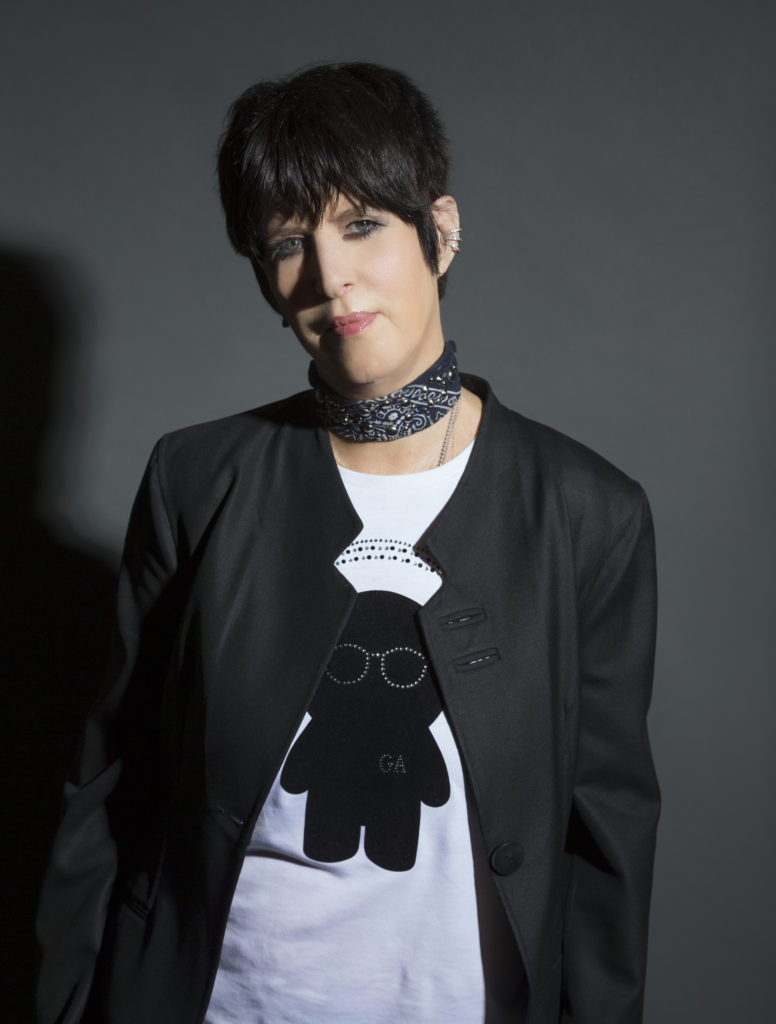
Diane Warren: Nine Nominations, No Oscars. Will This Be Her Year?

Thirty years ago, Diane Warren was nominated for her first Academy Award the Best Song category for “Nothing’s Gonna Stop Us Now” from the movie “Mannequin.” She didn’t win that year. She also lost in 1997 for “Because You Loved Me,” which earned her a Grammy Award, and in 2016 for “Til it Happens to You,” for which she got an Emmy. She’ll have another chance at an Oscar this year with “Stand Up For Something,” the song she wrote for the movie “Marshall.”  And she’s hoping that the ninth time is the charm.

Warren invited friends over for a “slumberless slumber party” to await the nomination announcement, and was thrilled when the fourth name called in the Best Song category was hers. “I think I’m the most excited about this than any song I’ve ever done,” she told the Journal. “The song is so timely, such an important song.”

A rousing soul anthem sung by Andra Day with a rap break by Common, it was written to represent the character of young Thurgood Marshall, the future Supreme Court Justice. But Warren emphasizes its universal message, one that activist organizations including the ACLU, NAACP, Stand Up to Cancer, CNN Heroes, and the Me Too and Time’s Up movements have embraced.

“It’s about integrity and standing up, and with what’s going on right now in our country and the world, we can’t be passive,” Warren said. “This is one of those songs that goes to your heart and your soul and makes you feel like you can make a difference.”

Warren had met “Marshall” director Reginald Hudlin when he produced the Academy Awards telecast in 2016, and contacted him about contributing a song when she heard about the film. “He sent me the script and the moment I read it, I wrote down ‘It all means nothing if you don’t stand up for something’ right on the script,” she said. “I had the chorus and first verse in a half hour. But the rest of it took a week. I kept working on it because I didn’t want there to be one weak line or word in the song. I wanted it to be a classic.”

For inspiration, she listened to Sam Cooke’s 1964 classic “A Change is Gonna Come” on repeat. “I wanted to capture that sixties-era, really stirring, inspiring protest song that made you want to change the world, yet keep it modern,” Warren said.  She had singer Andra Day in mind before she knew Day had a role in “Marshall.” And she thought, “Putting a rap on it would be a cool mash-up of decades and genres.”

“This is one of those songs that goes to your heart and your soul and makes you feel like you can make a difference.”

She and Common had discussed collaborating at the 2014 Oscars, when her song “Beyond the Lights” lost to his and John Legend’s “Glory.” On a flight to the Sundance Film Festival last year, she found the rapper sitting behind her, and promptly sang him the chorus she’d written. She had the demo sent to him after they landed. “We’re definitely going to do more together,” Warren said, adding that she also plans to work with Day.

Warren, 61, knew she wanted to be a songwriter as a kid growing up in Van Nuys, where she listened to her older sisters’ rock albums and her parents’ Broadway records. At 17, she scored her first sale with a tune called “Don Quixote Touches Windmills. “No one ever recorded it, but it was a big deal for me,” she said.

She grew up in a Reform Jewish home, celebrating holidays going to synagogue. But she did not have a bat mitzvah and believes that her parents “rebelled a bit” against their own parents’ observance. “I’m not super-religious, but I’m proud to be Jewish and I celebrate the Jewish holidays and I give to Jewish causes like the Jewish Home for the Aging. I have programs in my parents’ names there,” she said.

“I feel like I have the Jewish immigrant gene in me–people who came to this country to make something of themselves. It’s in my blood, that ambition, that hunger to do better,” she said. “I came from nothing. I didn’t know anybody in the music business. I made something of myself. But it’s a continuing journey.”

Warren has been to Israel twice, for the first time “when I was 15 with a bunch of Jewish kids. I was the rebel. I brought hashish and turned everybody on to it.  When I came back to the States there was a hash pipe in my guitar case and they questioned me about it,” she said.

The second was in 2008 for a concert celebrating the tenth anniversary of the Peres Center for Peace, at Shimon Peres’ invitation. She laughed about how far she’s come, saying, “To go from almost getting arrested to coming back as the guest of the president was amazing.”

Warren, whose songs have been in over 100 movies, was inducted into the Songwriters Hall of Fame in 2001. Of her many accomplishments, she’s especially proud of “Til it Happens to You,” co-written with and performed by Lady Gaga. “It changed the conversation and helped people talk about things like sexual abuse or bullying,” she said. She’s confident that “Stand Up For Something” can be just as impactful.

For Warren, music is “not a job. It’s my life. It’s my lover. I can’t be in a relationship. This is full-time for me,” she said. “It’s like air to me. It’s like breathing. If I couldn’t do this I would definitely die.”

Currently working with Jennifer Hudson, John Legend, and Jason Derulo, Warren said that she hopes to continue writing for established and emerging artists, and explore new areas. “Maybe there’s a movie musical in my future,” she said.

Diane Warren: Nine Nominations, No Oscars. Will This Be Her Year? Read More »

Rabbi Consultant and Jewish Actor Keep ‘Living Biblically’ Kosher

Ten years ago, Jewish writer A.J. Jacobs chronicled his personal spiritual journey in the book “The Year of Living Biblically: One Man’s Humble Quest to Follow the Bible as Literally as Possible.” It has been adapted for a CBS TV series called “Living Biblically,” with a Catholic protagonist who turns to a priest and a rabbi for guidance.

“They say ‘write what you know,’” series creator Patrick Walsh, who was raised Catholic, told the Journal. “Religion is already such an intimidating topic to get right and I didn’t feel comfortable writing from the point of view of a Jewish lead character. I didn’t want to get it wrong, frankly. That said, I didn’t want the show to feel one-sided, and this is what led to the creation of Rabbi Gil. When we got picked up to series, I hired several Jewish writers and a rabbi consultant to fill in the gaps of my knowledge.”

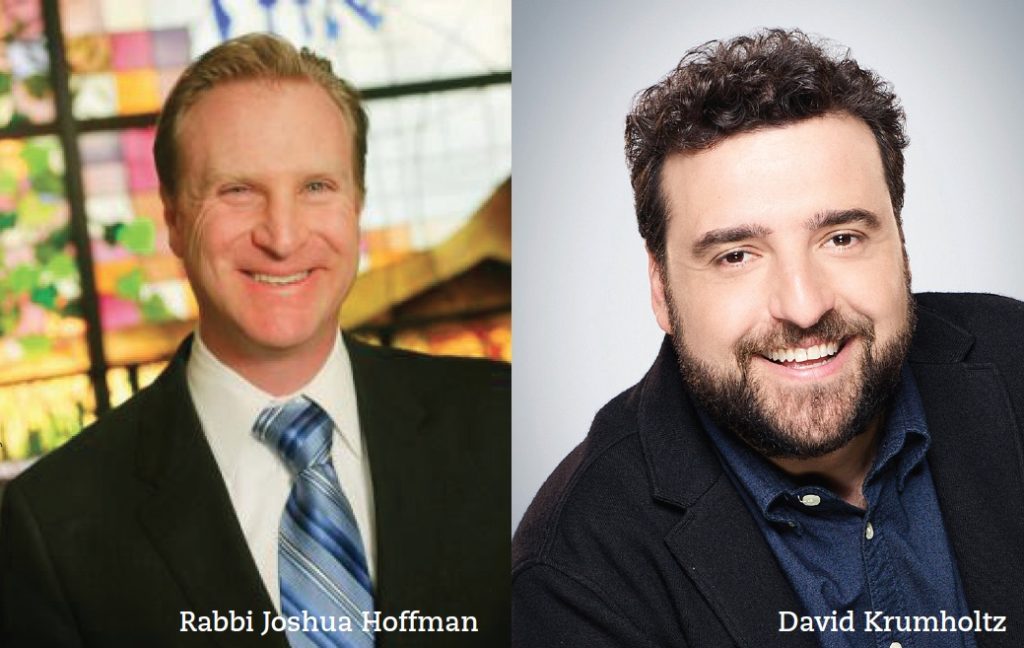
Rabbi Joshua Hoffman of synagogue Valley Beth Shalom serves in that advisory capacity, and Jewish actor David Krumholtz plays Rabbi Gil.

Hoffman was asked to consult by a congregant on the writing staff, and he received the scripts via email. “If there was anything incorrect in the use of Jewish or Biblical values or narrative, or inconsistent with something a rabbi would say, I would submit my corrections,” he said.

One change involved a joke about a McDonald’s food item being kosher and another fixed a line misinterpreting a Torah verse to mean mothers should stay at home with their children. “I was deeply appreciative of the level of respect and consideration that the largely non-Jewish writing staff had when I would make a suggestion, and their responsiveness to corrections,” Hoffman said.

He only visited the set once, for the pilot taping, but he did have lunch with Rev. Gregory Goethals, president of Loyola High School, the show’s priest consultant. “It was fun to share the questions they were asking us about the script. We were very much playing the role of the real life God Squad,” Hoffman said, adding that he’d be “honored to continue” consulting on this series or others in the future.

“Rabbi Gil is a mess. Yet he’s able to provide grounded, sage advice.” — David Krumholtz

David Krumholtz’s resumé is filled with Jewish characters, notably math wiz Charlie Eppes in “Numb3rs,” Bernard the Elf in “The Santa Clause,” the titular old Jewish woman in “Gigi Does It,” and most recently, porn director Harvey Wasserman in “The Deuce,” his favorite to date. But he admits that he “bristled” at the idea of playing a rabbi.

Screen depictions of rabbis tend to poke fun or venerate. “I didn’t want him to be stereotypical, and I didn’t want to be typecast,” Krumholtz said. Patrick Walsh put his reservations to rest.

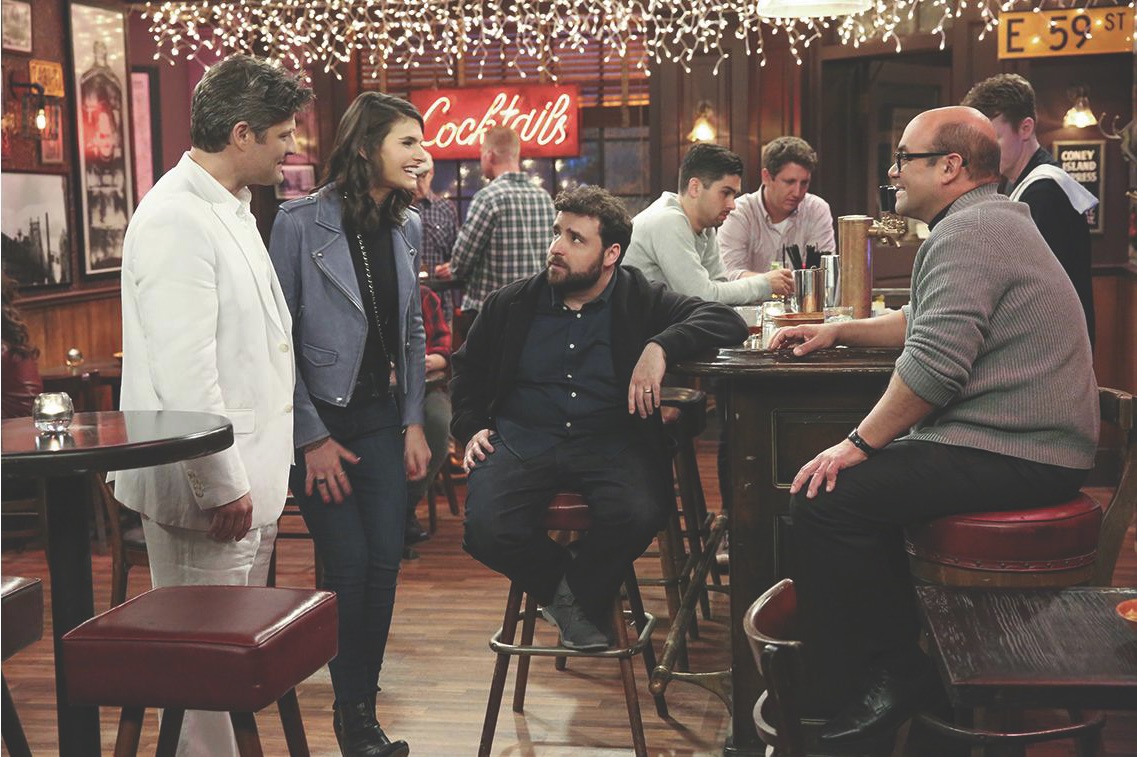
“Rabbi Gil is slightly self-obsessed, strange, deeply neurotic, slightly clueless, unhinged and disconnected from reality. He’s a mess. Yet he’s able to provide grounded, sage advice,” Krumholtz described. “I wanted to play a faulted character. He’s a contradiction, and I love that,” he said. “As I’ve gotten older I’ve gotten stranger, and more irreverent in my comedy.”

A scene from “Living Biblically.” Photo courtesy of CBS.

Born in Queens, N.Y and raised by his mother after his parents’ divorce, Krumholtz is descended from Hungarian Holocaust survivors on her side. “My great-grandmother was one of 12 and she lost all her brothers and sisters. And then they escaped the Hungarian revolution in 1956,” he said.

His father’s family came to the United States from Poland before World War II.

“He wasn’t devout, but he grew up with the traditions” of Judaism,” Krumholtz said, remembering going to High Holy Days services with him. “He didn’t speak Hebrew and it bothered him, so when everyone was praying he’d make up words and hum along. My dad passed away the day after ‘Living Biblically’ got picked up. He was so happy to hear I was playing a rabbi.”

Krumholtz was particularly close to his paternal grandmother, whose death “was a traumatic thing for me. It didn’t seem fair. Later on in life you learn that nothing is fair,” he said. ”But 16-year-old me said, ‘I’m done with following any religion.’”

Today, Krumholtz, 39, considers himself a secular Jew. He’s married to actress Vanessa Britting, who is not Jewish, and they have a three-year-old daughter and a one-year-old son. “I’m not religious but I’m a spiritual person,” he said. “I believe in God. I’m proud to be Jewish.”

The same year as his bar mitzvah, Krumholtz attended an open audition and was cast in “Conversations With My Father,” making his Broadway debut opposite Judd Hirsch, Tony Shalhoub and Jason Biggs.

“We didn’t have money, so getting that acting job wasn’t necessarily about acting. It was, ‘Now I have money and I may have a career so I can support my parents,’” Krumholtz said. Now acting is his passion: “I need to act. It brings me the purest form of happiness, along with the unbridled joy of seeing the world through my kids’ eyes.”

He’s also passionate about fantasy baseball and supporting causes including the annual Alzheimer’s benefit Hilarity For Charity. He donated his salary from “Wonder Wheel” to the Time’s Up movement.

He has been pleased and surprised by where his acting career has taken him.

“I used to try to plan things for my career, but it’s an impossible thing to do. I like the idea of being a feather in the wind for now,” he said, but he hopes  “Living Biblically” becomes a hit and “steady gig” for him. Having moved back east while his father was ill, he lives in New Jersey with his family and books an Airbnb while working here in L.A.

He recently reteamed with the Coen brothers, his “Hail, Caesar!” directors, on a Netflix western miniseries called “The Ballad of Buster Scruggs.” He has no preference between comedy and drama, period and contemporary, or TV and film. “I’m open,” he said. “As long as I can keep surprising myself.”

“Living Biblically” premieres Feb. 26 at 9:30 p.m. on CBS.

Rabbi Consultant and Jewish Actor Keep ‘Living Biblically’ Kosher Read More »

Creator Sarah Gertrude Shapiro Keeps ‘UnREAL’ Relevant

Now entering its third season on Lifetime, the critically acclaimed series “UnREAL” peels back the curtain on the behind-the-scenes drama at a reality dating show called “Everlasting” and the women who produce it. Sarah Gertrude Shapiro, who created it with Marti Noxon, based it on her experiences as a producer on “The Bachelor” from 2002-04.

“It was a time in my life that was full of conflict, and that was because I was a feminist working on ‘The Bachelor.’ It was a really rich time to mine,” Shapiro told the Journal. She emphasized that the show is “100 percent fiction” in terms of story, but its characters and themes couldn’t be more relevant.

“When I pitched the show, the premise was a feminist working on a ‘Bachelor’-type show named Rachel Goldberg has a nervous breakdown over the job she’s doing, and the battle for her soul,” she said. “We’re still tracking Rachel’s moral quandary: She’s trying not to lie but can’t do her job without lying. The idea of somebody trying to cling to honesty in this post-truth Trump era we’re in where facts don’t matter anymore was fascinating to me.”

“The idea of somebody trying to cling to honesty in this post-truth Trump era where facts don’t matter anymore was fascinating to me.” — Sarah Gertrude Shapiro

After two seasons of male suitors, “suitress” Serena, a high-powered, successful tech mogul, is in the choosing position, which enables provocative exploration of gender politics. “The more successful you get, the harder it is to find a partner. That resonated with us and felt like an important thing to talk about,” Shapiro said. “And the idea that every smart, ambitious woman has been told at some point to dumb herself down around men and the dehumanization of that was so interesting to explore.”

Shapiro pointed out that the season was written and shot long before the sexual abuse allegations and the rise of movements such as Me Too and Time’s Up. In fact, “We were writing the season before the [2016] election, and our assumption was that Hillary Clinton would be the next president,” Shapiro said. “We’d had some conversations with the network about whether this stuff would still be relevant after the election.”

While the world of “Everlasting” is fairly toxic, Shapiro emphasized that the working environment at “UnREAL” is “very, very different. There’s a lot of respect for each other in our creative process. It’s a show run by women, written by women who love and respect each other.”

Their own lives often inspire stories, she noted. She sees a lot of herself in Rachel.

“Rachel Goldberg’s name and having her be Jewish was important to me,” Shapiro said. “I felt that her world was a world that I understood and knew. She was raised with the same Jewish ethics that I was — it’s about being honest and being a mensch and being a hard worker, and they’re always being challenged. She feels terrible for being a liar but she’s also a hardworking overachiever so she’s getting a gold star at a job that she hates.”

A native of Santa Barbara, Calif., Shapiro, 40, describes her Jewish upbringing as “pretty secular. My mom was raised Methodist and sort of pseudo-converted. My dad remarried when I was 13, to a Jewish woman; they’re conservative and observant. I always felt a huge connection to the Jewish side of my family and, through that marriage, I’ve had an opportunity to be more involved in their synagogue and to find one of my own here in L.A.”

In June 2017, she married writer-director Jacinto Aganza at Kehillat Israel in Pacific Palisades, and their son Moshe Ixchel, whose names reflect Shapiro’s Jewish heritage and Aganza’s Mexican and indigenous ancestry, was born in October. They are raising him Jewish.

Shapiro, who won an Emmy for outstanding writing in a drama series in 2016 for “UnREAL,” knew early on that she wanted to be a writer. She added directing to that ambition after she took a film studies class at the local city college at age 16. She got her bachelor’s degree in fiction writing and filmmaking from Sarah Lawrence College and made her directorial debut in 2013 with the short film “Sequin Raze.”

In addition to writing, producing and show-running “UnREAL,” Shapiro also directed one episode this season. “To be able to direct a show I created, a world that I understand and know, was like being a kid in a candy shop,” she said.

She’s currently writing a feature film script for Amazon about Yazidi women who were kidnapped by ISIS, held as sex slaves, escaped and formed a battalion to seek revenge on their rapists. She plans to direct as well, but the project’s timing depends on whether there will be a fifth season of “UnREAL.”

The show’s fourth season already is shot and is in the editing stage. Shapiro described it as an “all-star” season with men and women from previous seasons returning.

The current season will end with “a bit of a cliffhanger” and on “an emotionally satisfying note,” she said. And the characters’ messed-up, complicated lives notwithstanding, she believes that “there are happy endings possible for these people. It’s important to give them some wins.”

“UnReal” premieres Feb. 26 at 10 p.m. on Lifetime.

Creator Sarah Gertrude Shapiro Keeps ‘UnREAL’ Relevant Read More »

Letter to God

Rabbi Lori Shapiro, The Open Temple

Dear Ribbono Shel Olam, Sovereign of the Universe,

I am reaching out, as I am unsure that you are there. It’s a time when I feel that You are unknowable — that God is remote and distant, if at all. And when I see the faces of those created in your image forever frozen at 14, I feel compelled in the throes of my existential brokenness to ask You: How can you exist when parents must lose their children and endure eternal pain? When human imperfections manifest evil on this earth?

Am I supposed to close up shop, tell those with broken hearts flocking to Shabbat services that our experiment failed, that You are but a chimera, humanly created for lack of a better explanation for the Mysteries of the Universe?

I’m sorry, but I can’t.  However, I am unsure that I can continue with you so intimately right now. I think that I need to take a break in our relationship. I think that I need to focus on my neighbors right now. As exemplified in your relationships with Abraham and Moses, disagreements between God and humans have restorative potential. And so, I respectfully disagree with your absence right now, and will restore it from exile with the love and care I show my neighbors.

Without you here, my blessing is from one human heart to another: May our love and care for one another heal our brokenness.

Ribbono Shel Olam, can you hear my prayer?

Letter to God Read More »

Proposed Gun Control Doesn’t Go Far Enough

Joseph Sanberg, founder CalEITC4Me

In the wake of another horrific mass shooting, many gun control advocates seem to have accepted defeat before the debate even begins.

It’s hard to blame them. Every time, the NRA wins by treating any attempt at tightening gun control — no matter how feeble and innocuous — as an all-out assault on liberty, and gun control advocates play right into their hands by asking for less and less each time. We propose gun control measures so mild, so reasonable, that surely no one could possibly object to them (remember the bill to ban bump stocks after Las Vegas?). And yet each time, the NRA and their allies do object.

We have to stop debating on their terms. I’m tired of asking for the bare minimum of “common sense” measures and coming away empty handed. I’m tired of hearing that “gun control doesn’t work” from the same people who ensure that it never gets the chance.

We need to dramatically reduce the number of guns in this country, and we need to make it much harder to buy them. We have to start challenging the false notion that the Second Amendment gives any American citizen the right to unlimited firepower, no questions asked.
In order to fix our toxic relationship with firearms, we need to normalize the notion that not everyone has the right to own lethal weapons.

Proposed Gun Control Doesn’t Go Far Enough Read More »