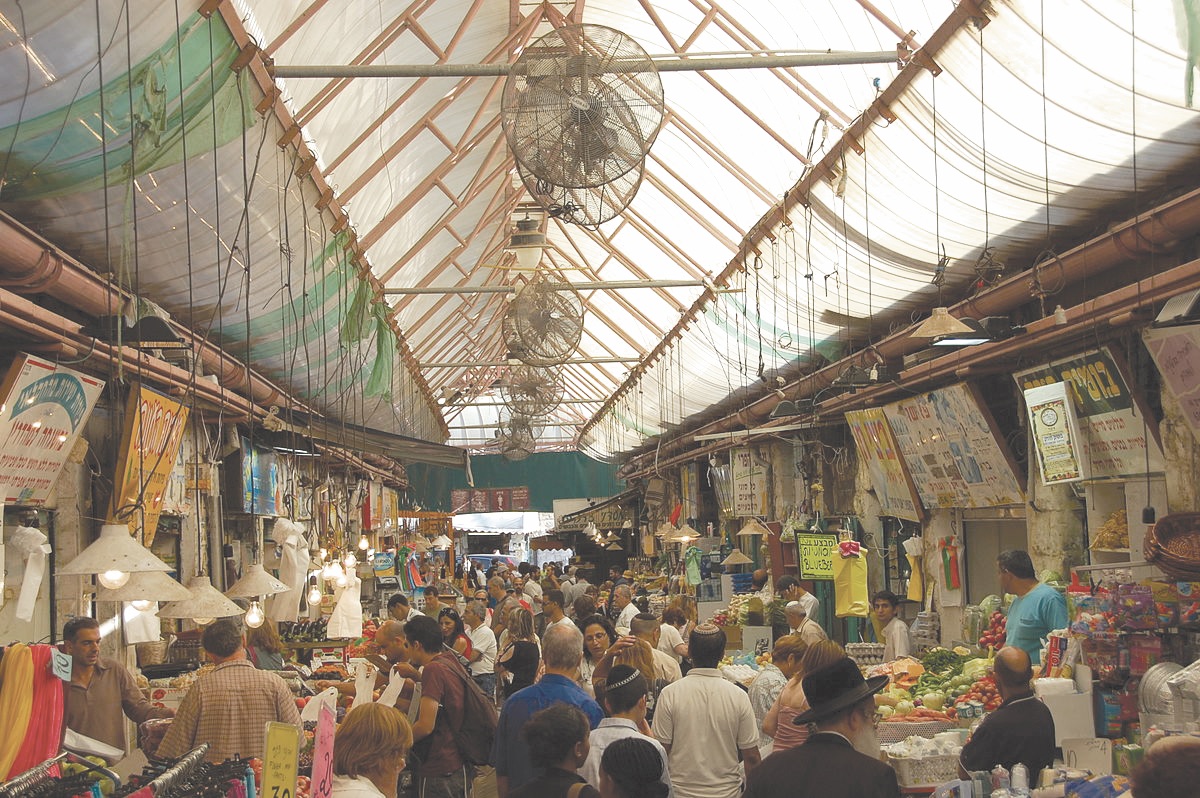
I love the Machane Yehuda Market in Jerusalem, or the Shuk as it is known. The storekeepers are colorful and the crowds a snapshot of the diversity of Jerusalem residents.
Unlike the United States, where fruits are often on sale year-round, Israel does not import its fruits and vegetables. Thus, the availability of fruits is always changing.
In the Shuk, a certain excitement can be felt when foods make their seasonal appearance. What I love most about the Shuk, however, is its display of Israel’s amazing agricultural productivity and the healthfulness of this bounty.
One day, while walking through the Shuk, I had a thought: Why can’t the Israeli diet become a model for the rest of the world? Israel is a world leader in so many areas — the high-tech industry, agriculture, missile technology, etc. Why not in good nutrition?
Since Israel is a Mediterranean country, the Israeli diet is a Mediterranean diet.These diets vary by country. All Mediterranean diets, however, share certain characteristics. Typically, plenty of vegetables, grains, nuts, legumes and fruits. Olive oil is the predominant fat.
Wine often accompanies meals. Many Mediterranean diets, such as the Italian diet, are low in fat. The Spanish diet has a higher fat content because of its increased use of olive oil.
The Israeli diet is somewhat atypical. It not only contains plenty of fruits, grains and vegetables, but it is Western in its use of eggs, dairy and meat, a consequence of Israel’s early agricultural policies.
All Mediterranean diets share certain characteristics: typically, plenty of vegetables, grains, nuts, legumes and fruits.
A dizzying number of diets are promoted in America, each targeted for a specific issue, such as weight loss, cardiovascular disease prevention, improved diabetes control or other health concerns. However, only the Mediterranean diet favorably influences all of these conditions.
Studies indicate the Mediterranean diet has a positive influence on certain forms of cancer and asthma, and helps prevent dementia and depression.
No other diet can make such claims.
No one knows for sure why the Mediterranean diet is so healthy, but many attribute it to its high antioxidant content.
During the body’s normal functioning, supercharged oxygen and nitrogen molecules are produced, and these can be harmful unless neutralized by the body’s antioxidants.
Fortunately, many of the natural foods we eat are full of antioxidants that can supplement the body’s defense against supercharged oxygen molecules.
The Israeli Mediterranean diet contains extremely healthful foods, including the sheva minim, or seven species listed in the Torah as being special products of the Land of Israel. The fruits of the sheva minim have been shown to be loaded with antioxidants.
The seven species, blessed with certain holiness, are wheat, barley, olives, grapes, dates, figs and pomegranates. Depending on the time of year, the fruits of the shivat haminim are ubiquitous in the Shuk.
The seven species are perfectly adapted to Israel’s climate. Wheat and barley are sown during the winter months when there is rainfall and they ripen under the influence of the “late” rain in the spring. The early rain usually arrives like clockwork shortly after Sukkot. Grape vines and olive, fig and pomegranate trees are able to survive the dry Israeli summer months and the complete absence of rain.
Olive oil is an important component of Mediterranean diets. Extra-virgin or virgin olive oil is rich in antioxidants, although this is not the case for “pure” or “light” olive oil. This is because the “impurities” removed contain the antioxidants. There is considerable evidence that olive oil protects against cardiovascular disease.
The modern Israeli diet has the potential to be a model diet since it combines the healthiest foods of the Mediterranean together with wholesome foods from the West.
Olive oil rather than corn oil is the country’s favored oil. Wines are plentiful. Figs, dates, pomegranates and a multitude of other fruits are readily available (in season).
Vegetables, especially tomatoes, cucumbers and peppers, are easily obtainable and used extensively in salads. Nuts such as almonds and walnuts grow naturally in the country and are also high in antioxidants. Restaurant and takeout meals in Israel tend to contain far more vegetables than in the U.S. Hummus and tahini are popular dips, and are made from natural products.
However, I can already hear the skeptics. How can a diet containing whole milk, eggs and meat be a model diet?
The reality is that there is considerable turmoil nowadays in the world of nutrition. It is becoming increasingly evident that many truisms that were the bedrock of American nutrition for over half a century lack scientific support.
Eggs slightly raise cholesterol levels in a percentage of people, but no scientific study has been able to show that this translates into increased risk of cardiovascular disease, except perhaps in diabetics.
Blood cholesterol levels are indeed raised by saturated fat, but recent studies have concluded that saturated fat does not promote heart disease.
Nor has research been able to show that low-fat milk prevents pediatric obesity.
Admittedly, it is possible to eat too much of a good thing. Many Americans eat more than enough red meat and would do well to substitute some of their meat consumption with vegetable protein and fish, but high meat consumption is rarely the case in Israel. The consumption of dairy products has been shown to have many health benefits, including preventing obesity and providing the calcium needed for bone development and bone turnover.
Nevertheless, just because a diet has the potential to be a model diet does not mean that it necessarily is.
What is the upshot of all this? The Israeli diet could potentially be a model diet for much of the world, but Israelis need to put in the effort to make it so.
Dr. Arnold H. Slyper works as a pediatric endocrinologist for Clalit Health Services and is a former professor of pediatrics. He made aliyah in 2013 and lives in Ma’ale Adumim.