People tend to assume that everyone is more or less the same around the world— that members of other societies all think like us, have the same values, yearn for the same things. After all, they’ll say, everyone presumably hopes to live in peace and security with basic notions of justice.
Yet, having just commemorated October 7, and with Simchat Torah upon us, we need to be honest. Do Hamas, Hezbollah, the Iranian regime and other adversaries share our values?
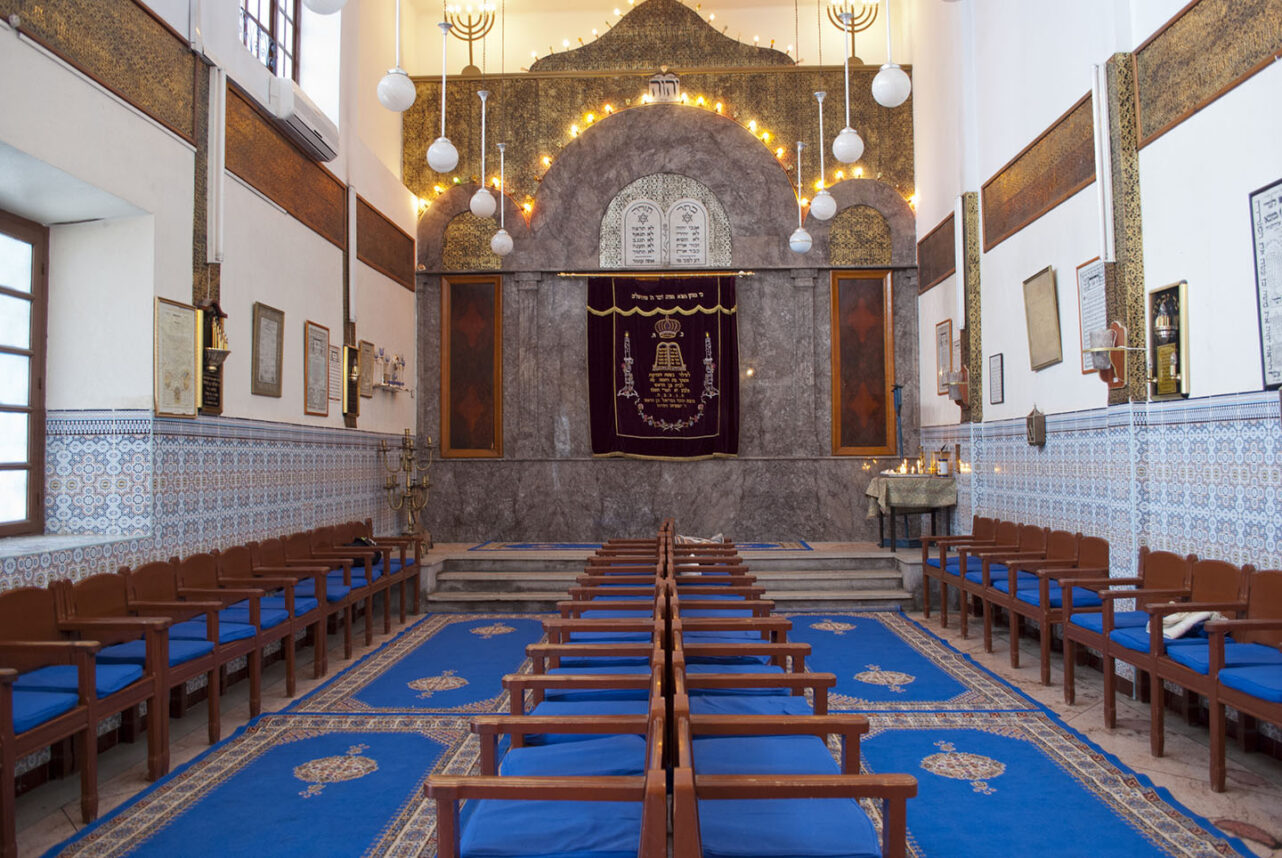
Simchat Torah, the 23rd of Tishrei, which was on October 7 last year, is an ideal day to consider this question. It’s a day to celebrate the law given at Mt. Sinai. It’s a day to appreciate what the Torah teaches.
Under the Torah, we are told that all people are created b’tselem elohim — in the image of God. Each and every individual human being is a child of God, with their own unique, precious soul.
Does Hamas believe that every individual is a child of God? No, considering what they did on October 7.
Under the Torah, we are instructed to sanctify life (acknowledging, at times, the necessity of war). The prohibition against murder is an early Noahide commandment. Moses urges us to “choose life.”
Does Hamas sanctify life? Obviously not. Again, look at October 7.
Under the Torah, we are commanded to be truthful. Notably, one of the Ten Commandments directs us not to bear false witness against our fellow.
Do our adversaries aim to be truthful? They claim that Israel is guilty of genocide. Their supporters call Israel a racist-settler-colonialist state. The lies should be unbelievable, yet they continue to spread.
Under the Torah, we have a comprehensive notion of moral law — meticulously interpreted by our ancient rabbis. It’s perhaps the most extensive concept of justice ever devised. Moreover, everyone is equal under the law — do not favor the rich nor the poor, and, importantly, do not oppress the stranger.
Do our adversaries have a similar moral compass? No. Just look at the Hamas charter, which quotes their holy book: “Oh Muslims, Oh Abdullah, there is a Jew behind me, come and kill him.”
Our Psalms remind us that our adversaries know nothing of our moral law. Psalm 147 says: “He [Hashem] has declared His words to Jacob, His statutes and laws to Israel. He has done this for no other nation, such laws they do not know.”
Our Psalms remind us that our adversaries know nothing of our moral law. Psalm 147 says: “He [Hashem] has declared His words to Jacob, His statutes and laws to Israel. He has done this for no other nation, such laws they do not know.”
Under the Torah and the Talmud, we have a carefully-defined notion of just war — justifying the cause, e.g., self-defense, distinguishing between combatants and non-combatants, minimizing collateral damage when possible, etc.
Does Hamas follow rules of just war? October 7 — along with their use of innocent civilians, including women and children, as human shields — was antithetical to any reasonable notion of just war.
Under the Torah, the law — entailing an eternal and universal moral order — is from God.
Do our adversaries think that the law is from God? Perhaps they believe they’re following the law consistent with their conception of God. But if that God approves of October 7, could that ever be a worthy conception of Him?
Some, including many who support our adversaries, believe that morality is not eternal and universal, but relative. “My truth is my truth, your truth is your truth.” Does “your truth” condone October 7?
Some, including many who support our adversaries, believe that morality is not eternal and universal, but relative. “My truth is my truth, your truth is your truth.” Does “your truth” condone October 7?
These are just a few of the disconnects between our Torah and the ideas of our adversaries and those who support them. These stark differences challenge us to be honest about our adversaries. They also challenge us to be committed to the words of God in Torah.
The prophet Isaiah talked about our being a light unto the nations. The prophet Zechariah talked about other nations eventually finding their way to us. He prophesied: “ … it will happen that ten men, of all different languages of the nations, will take hold, they will take hold of the corner of the garment of a Jewish man, saying, ‘Let us go with you, for we have heard that God is with you!’” If we truly believe in the Torah, would we not agree with the prophetic words of Isaiah and Zechariah?
For some, celebrating the Torah is not always simple or easy, especially in the face of so many who support our adversaries, not to mention widespread antipathy today toward religion and God. But we should remember on this Simchat Torah the words of one of America’s founding fathers, John Adams:
“I will insist that the Hebrews have done more to civilize men than any other nation. If I was an atheist and believed in blind eternal fate, I should still believe that fate had ordained the Jews to be the most essential instrument for civilizing the nations …”
Adams would no doubt agree — The Torah is definitely something to celebrate!
Curt Biren, an investment advisor in LA, has written for First Things, Religion & Liberty, The American Mind, and the Journal of Markets and Morality.