The Hebrew word for coalition is “Ya’chdah” — from the word “Ya’chad.” Together. A coalition of parties is supposed to find a sense of togetherness in working toward agreed-upon goals.
What is the common goal of Israel’s new coalition? Let’s begin by looking at its main characteristics. It was born of necessity and hard labor after three rounds of elections — with the possibility of a fourth in sight. It was born as one side — the outgoing coalition — remained unified amid the turmoil while the other, ultimately, caved and divided under the growing pressure. It was born after a long campaign in which both sides argued that their rival was not just unfit but rather illegitimate. It is a marriage of great inconvenience. The “Ya’chad,” the togetherness, was forced on the participants.
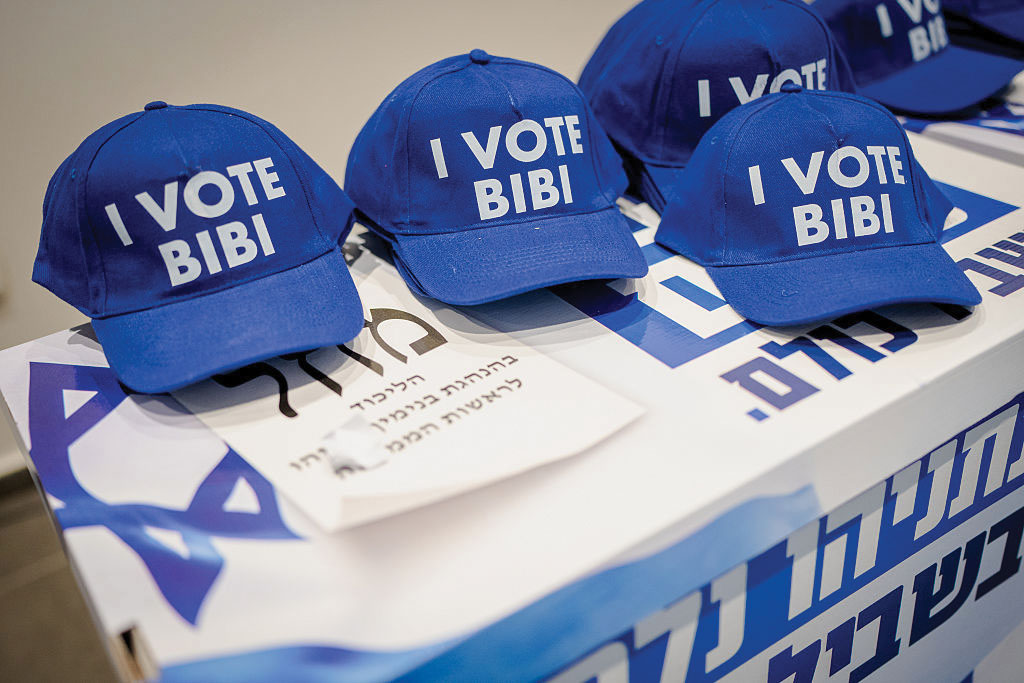
There is great irony in this situation. As Israelis are ordered to keep strict social distancing, their leaders are forced to perform a peculiar act of anxious togetherness. As I write this, talks to form the coalition are ongoing but it already is clear that the incoming coalition is going to be one of the largest in Israel’s history. Prime Minister Benjamin Netanyahu, a politician whose mere presence in politics is deemed criminal by almost half of the country because of the indictments hanging over his head, will lead a group of more than 70 Members of Knesset from 78 parties, ranging from Yamina on the right to Labor on the center-left.
Benny Gantz, the head of Blue and White, compared Netanyahu to Turkey’s autocrat Recep Tayyip Erdogan. Gantz will be “Erdogan’s” defense minister. Amir Peretz, the head of Labor, shaved his decades-old mustache — his way of saying, “I will never sit with that man.” He is supposed to be a junior minister in Netanyahu’s government. Some of their supporters and partners cry foul. But these two leaders figure that the game is over, including overtime and penalty kicks. It’s time to declare the winner, and the winner is Netanyahu.
Some groups are furious but most are breathing a sigh of relief. Giving Israelis a little break from politics is the coalition’s main gift to the public. The other is the ability of the political system to focus on a deadly virus and an economy that has ground to a halt. A sense of togetherness could also be this coalition’s main challenge as it ponders the path forward for the country as a whole. How does a coalition that includes representatives of unruly groups — primarily in the ultra-Orthodox sector — make these groups join the battle against the virus? Can a coalition of leaders with competing socio-economic ideologies deal with the interests of poor and rich, owners and employees?
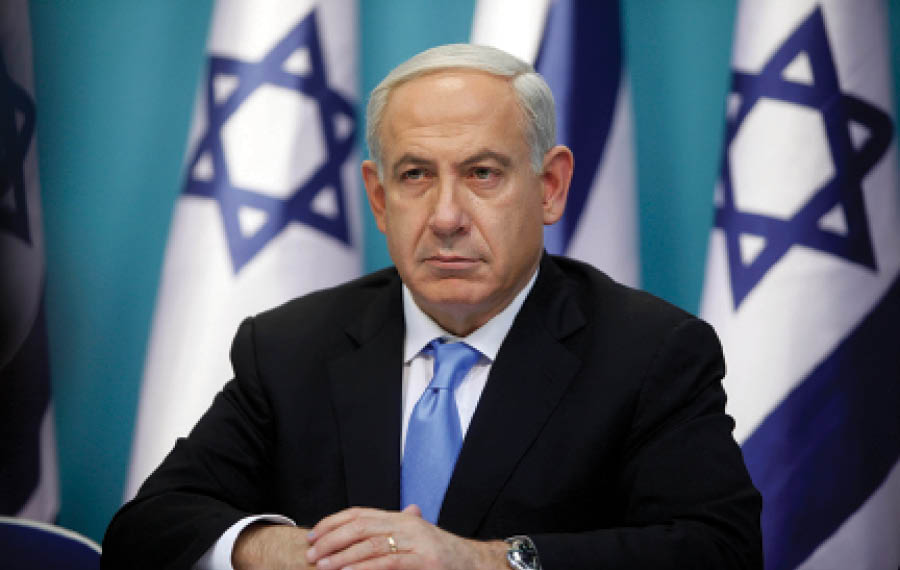
Benjamin Netanyahu, a politician whose mere presence in politics is deemed criminal by almost half of the country, will lead a group of more than 70 Members of Knesset.
Togetherness is what Israel needs. Togetherness is what the human race needs — togetherness and pragmatism. The new and wide coalition is a clear manifestation of such need — a need that trumps all other considerations, at least for a while. Now, we need this new awareness to trickle down to all parts of Israel’s society. We need coalition and opposition leaders to accept a new political reality, to fold their campaigns and go back to being more civil rivals, to have constructive exchanges of contrasting views. We need ultra-Orthodox leaders to accept the need for a little less separateness (from the norms accepted by rest of society) and a little more pragmatism (in accepting the need for ideological flexibility to combat a virus). We need smart-ass youngsters to understand that this is not the time for naughty Israeli mischief. This is the time for obeying rigid rules and forgoing our usual corner-cutting habits.
Coalitions are built on compromise. Compromise is built on the understanding that living in a flourishing community cannot be advanced by playing a zero-sum game. In fact, sometimes it is best not to play any game. Just take a timeout.
Shmuel Rosner is the Journal’s senior political editor.