Anti-Defamation League (ADL) CEO Jonathan Greenblatt held a virtual panel on March 26 discussing xenophobia and anti-Semitism in the age of coronavirus with Reps. Debbie Wasserman Schultz (D-Fla.), Judy Chu (D-Ca.) and Sylvia Garcia (D-Texas).
Greenblatt initially spoke about rising anti-Asian sentiment in the country, saying that politicians calling COVID-19 the “Chinese virus” exacerbate the issue.
Chu concurred. “To say that there has been an alarming rise in anti-Asian coronavirus xenophobia is an understatement,” she said, pointing out that it started with dirty looks toward Asians in January and has since “escalated to spitting, yelling and physical attacks against Asian-Americans and it’s happening all around the country.”
According to Chu there have been more than 1,000 hate crime incidents against Asians in the country during the past five weeks, including a family that was stabbed on March 13 at a store in Midland, Texas. She added that a 16-year-old Asian teen also was attacked at a San Fernando Valley high school in February.
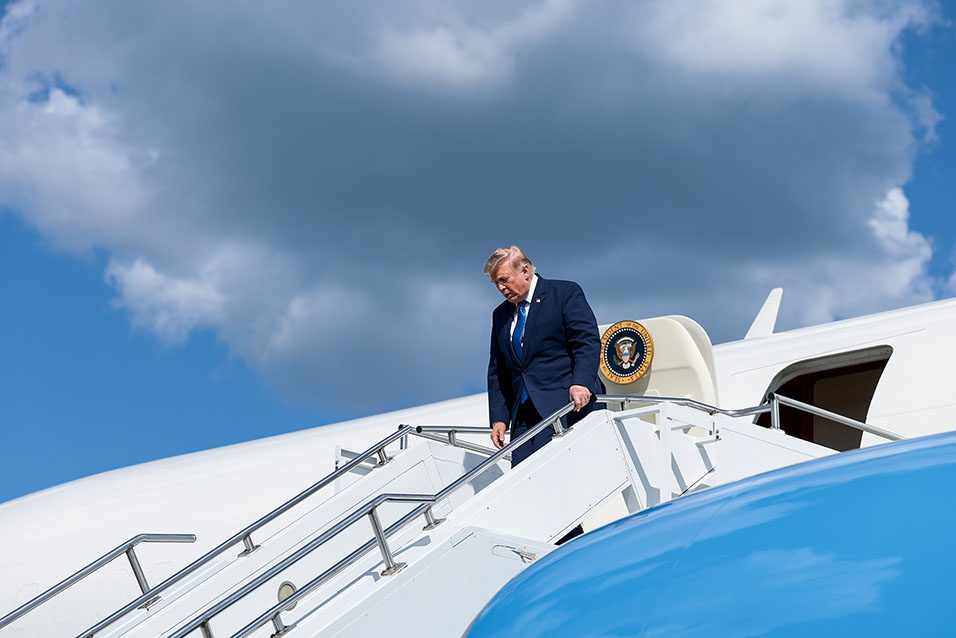
Chu criticized President Donald Trump for his use of the term “Chinese virus.”
“He’s just fanning the flames of xenophobia by insisting on calling it the China virus and that is despite the fact that responsible health leaders have warned against that term because it causes stigma,” she said, citing National Institute of Allergy and Infectious Diseases Director Dr. Anthony Fauci, Department of Health and Human Services Secretary Alexander Azar and the World Health Organization (WHO) as examples.
“We want people to know that this is a global pandemic and now is the time for us to unite and help one another so we can get through this crisis,” Chu added.
Greenblatt also brought up the issue of xenophobia against immigrants. Garcia responded that Trump reportedly sayid earlier this month that the upside to the coronavirus is that he has an excuse for his wall on the southern border. She called that mentality terrifying and criticized Republicans for not wanting to provide money to undocumented immigrants in the $2.2 trillion stimulus Trump signed into law on March 27.
Garcia also raised concerns about the lack of sanitation in immigrant detention centers, saying that immigration courts aren’t providing hand sanitzer or sanitizing wipes to these facilities. “There’s just a level of lack of concern which was there before but has been heightened by this virus,” she said.
In discussing ant-Semitism, Wasserman Schultz blamed the Trump administration for its rise. “This hatred and bigotry is already lurking in the shadows and now many more of us are spending a lot of time shadowed because we’re needed to remain at home,” she said. “People have more time on their hands to foment hatred and bigotry.”
She said among the anti-Semitic conspiracy theories that have been floating is that Jews started the virus, adding that such conspiracy theories are particularly harmful given that there have been coronavirus outbreaks in various Orthodox Jewish communities, such as Westchester County, NY.
The three congresswomen urged people to speak out. Chu pointed out that Trump said on March 24 that Asian Americans needed to be protected after Chinese American groups wrote letters to the White House about Trump’s rhetoric. “The more we speak out, the greater the impact will be,” Chu said.
Garcia said, “If we present data, tell stories, share anecdotes, it becomes more real,” Garcia said.
Wasserman Schultz encouraged people to convene with religious and community leaders. “If we don’t continue to shine a spotlight on this and work together at the local level, then it’s just going to continue to lurk in the shadows and it’s like we’re playing whack-a-mole,” she said.
You can watch the full discussion here.