fbpx

May 22, 2025

How Will We Respond to These Murders?

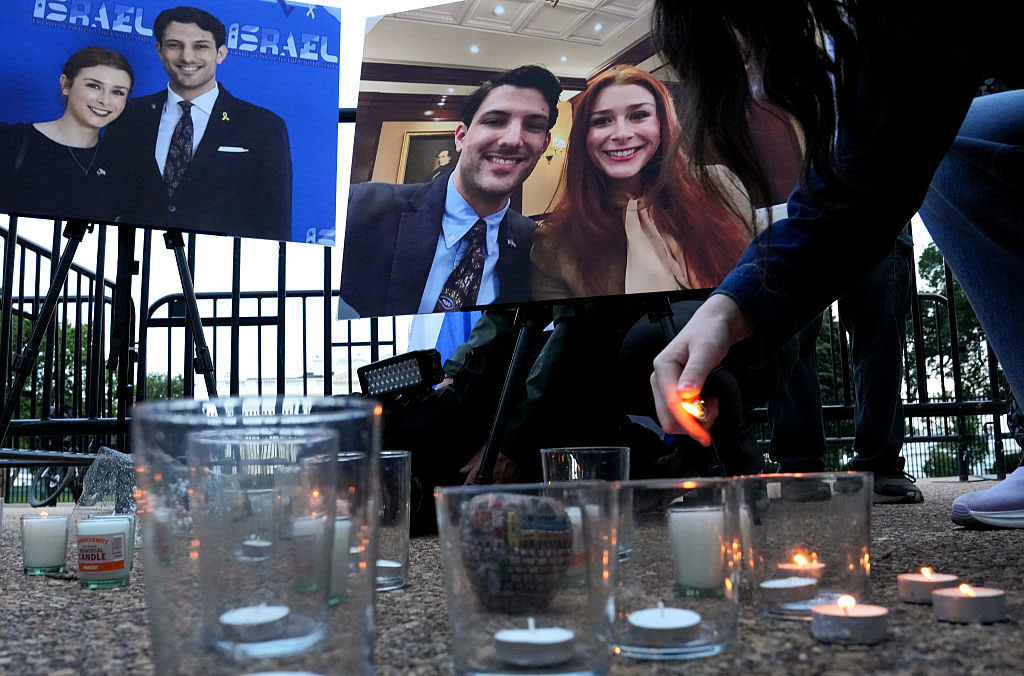
My heart filled with anguish and anger; I could not sleep all night. The cold-blooded murders of Sarah Milgrim and Yaron Lischinsky late Wednesday were just too much to bear. Yaron, 30, had just bought an engagement ring and planned to propose to Sarah, 26, on a trip back home to Israel.

And then they were murdered, just because they were Israelis. It didn’t matter that they were walking side by side, a couple very much in love. It didn’t matter that they were both idealists, firmly committed to bridging the gaps between Arabs and Israelis. It didn’t matter that they were in Washington, DC and nowhere near Gaza.

The only thing that mattered was that they were Israeli, citizens of the Jewish State.

These murders were a shock, but they were not shocking. Violence has been in the air for a long time. Luigi Mangione murdered a healthcare executive on a New York City sidewalk; and for that politically correct crime, he has become a celebrity. In this era of great polarization, politics has replaced ethics and religion. Whether what you do is right or wrong is no longer relevant; all that matters now is if it favors the right or the left.

So we have arrived at the point where one’s personal views on public policy are reason enough to commit murder. Politics has become an all-encompassing passion; advocates are blind to their own subjectivity. In a short personal aside in his Halakhic Man, Rabbi Joseph B. Soloveitchik shares his view that the philosophy of ethical autonomy, that each person can determine their moral obligations on their own, has brought “chaos and disorder” to the world.

Rabbi Soloveitchik wrote that in 1944. But the same is true of 2025, when each political faction remakes what were once universal ethical norms in its own image.

And, as usual, the Jews are the first to suffer. Joshua Trachtenberg, in his book The Devil and the Jews: The Medieval Conception of the Jew and Its Relation to Modern Anti-Semitism, points out that after the Crusades, a particularly noxious form of antisemitism arose in which Jews were associated with the devil. This later strikes deep roots in the Western tradition. In The Merchant of Venice, one of the characters plainly states: “Certainly the Jew is the very devil incarnate.” Both the elite and the masses thought it was normal to believe that Jews murdered Christian children to take their blood to make Matzah, and, in their hatred of Christians, poisoned wells and caused plagues.

A similar demonization is taking place today. On college campuses, Israel is scapegoated for all of the ills of the Western world. Lies about her are front-page news in major media outlets, only to be quietly retracted days later. And to add insult to injury, Holocaust inversion is a staple of pro-Hamas propaganda, turning the language invented to describe the murder of six million Jews against their descendants. Now, a war against Hamas is proclaimed a genocide, even though the population of Gaza has grown during the war. This nauseating picture of Israel and the Jews has corrupted the minds of America’s best and brightest.

Tragically, this demonization has claimed the lives of Sarah and Yaron. There’s a straight line from the encampments to these murders. There’s a straight line from justifying the harassment and assaults of Jews to this attack. There’s a straight line from appeasing Hamas supporters to Hamas-style violence on our streets.

Elias Rodriguez was university educated, an English major who learned well the language of highbrow hatred. Before he murdered Sara and Yaron, Rodriguez penned a manifesto, in which he wrote: “Those of us against the genocide take satisfaction in arguing that the perpetrators and abettors have forfeited their humanity.”

For Rodriguez and his ilk, Israelis aren’t human beings. Sadly, that’s nothing new. Rodriguez would have fit in well with the medieval mobs that believed blood libels and murdered Jews.

Now, we have to confront antisemitism once again. Just this past Sunday, I walked down Fifth Avenue with an Israeli flag on my back. It is a sobering thought to think that its blue and white Magen David is a target for self-righteous haters who want to save the world by murdering people like me.

Since the murders, I have had several conversations about them, conversations clouded over with worry, fury, and sorrow. Our synagogue is ramping up its security once again, making sure that our members are absolutely safe; and once again, the NYPD will increase patrols around Jewish institutions.  As usual, we will press our elected officials to do more, and hopefully they will. We will demand that elite universities finally take anti-Zionist antisemitism seriously; but one has to be skeptical. The same day that these murders occured, a damning report was published in The Free Press about how Harvard did its best at every turn to ignore campus antisemitism.

Most importantly, we will bounce back. Wednesday night, Israel’s Ambassador to the United States, Yechiel Leiter, said, “We are a resilient people.”  Indeed we are. And our response to these murders will be as it always has been: with a determination to continue our mission.

At the opening of Hebrew University in 1925, the renowned writer Chaim Nachman Bialik gave a speech. In it, he spoke about how Jews, in the most difficult of times, found inner strength in their spiritual heritage.  In it, he quoted a Midrash on Parshat Bechukotai:

It is impossible to avoid mentioning at this moment a saying from our sages, one that, in my opinion, is unmatched in its bitterness and sorrow. That Talmudic sage, upon reaching the verse ‘Yet even then, when they are in the land of their enemies, I will not reject them nor abhor them…’ said bitterly: ‘I will not reject them nor abhor them? What, then, is left to Israel in exile that has not been rejected or abhorred? Have not all the good gifts that were given to them been taken away? What remains to them?’ 

His answer: ‘The Torah scroll”…

The verse states that God did not abandon the Jews in exile. The Midrash bitterly wonders what that means, considering all of the persecution and suffering Jews had endured; finally, the Midrash points to the Torah scroll. The Torah was a divine lifeline, and all the Jews needed to survive.

Bialik describes how throughout history, Jews were sharpening their minds while others sharpened their swords; how the Jewish love for the illumination of the Torah took precedence over everything else. This is how the Jews survived the bitterest moments of exile.

We are not in exile anymore, but there still is too much heartbreak. We have to wonder once again: How will we respond to these murders? The answer is: No differently than our ancestors. We will respond with defiance and determination, courage and compassion. But above all, we will respond by not wavering from our mission. We will not let go of Sara and Yaron’s idealism; and at the same time, we will not back down from our love for Zion.

And no matter what, we will continue to declare: “Am Yisrael Chai.”


Rabbi Chaim Steinmetz is the Senior Rabbi of Congregation Kehilath Jeshurun in New York.

How Will We Respond to These Murders? Read More »

United Hatzalah Celebrates, Brothers for Life, Miracle Project Shows, Art of Healing

United Hatzalah’s annual Young Leadership Yom HaAtzmaut celebration brought together over 500 young Jewish professionals to honor Israel’s 77th birthday and raise more than $80,000 for life-saving efforts in Israel.

“This night was only possible thanks to the incredible United Hatzalah Young Leadership team and Carolyn Kangavari,” event co-chair Chloe Sabbah said. “To celebrate our homeland from thousands of miles away, raise over $80,000 in one night, and have Noa Argamani dancing among us was truly a dream.”

Held at the iconic Sheats-Goldstein Residence Club James, the event featured DJ Nathan of LIV Entertainment. Comedian Elon Gold was the evening’s master of cermonies. 

“It’s an honor to be a part of United Hatzalah and bring such incredible events to Los Angeles,” event co-chair Adam Mahboubi said. “Saving lives in Israel is the most important cause, and we’re grateful for everyone who continues to show up and partner with us in this community.”

The evening was a powerful reminder of the resilience of Israel and its people — and the impact of global Jewish unity, attendees said.


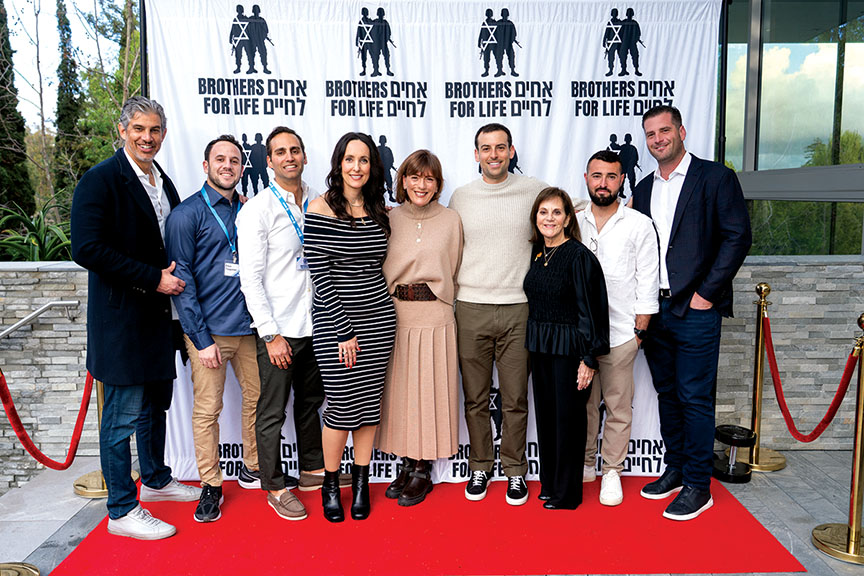
Brad Conroy, Eitan Turgeman, Yotam Cohen, Amy Conroy, Alayne Sulkin, Simon Wenet, Debbie Saidoff, Shon Amar and Michael Gardner. Courtesy of Brothers for Life

A recent benefit evening was hosted by Debbie and Naty Saidoff in support of the work of nonprofit Brothers for Life. Funds raised from the evening will provide rehabilitative support and services for 60 injured IDF combat soldiers for an entire year. Guests heard the heart-wrenching and inspiring stories of soldier survivors Shon Amar and Eitan Turgeman, who were battling Hamas in the days after Oct. 7.

Established in 2008, Brothers for Life facilitates IDF veterans helping other wounded IDF soldiers with crucial assistance, including medical and financial support, job placement, counseling, mentoring and various soldier-to-soldier programs.


The cast of “Out of Our Heads” is joined by Miracle Project Founder Elaine Hall (far right) during a sold-out weekend of performances. Photo by Evan Guston

On May 9 and 10, The Miracle Project’s advanced Company Class presented “The Miracle Project LIVE: Out of Our Heads,” featuring three sold-out audiences happening at The Pico in Los Angeles.

The Miracle Project is a fully inclusive theater, film and expressive arts organization that brings neurodivergent, disabled, and neurotypical artists together to create, perform and thrive. The original production blended sketch comedy, music, and improv into a funny, thought-provoking exploration of the human mind.

This production marks a milestone in The Miracle Project’s 20th anniversary season. Since debuting its first original production in May 2005, The Miracle Project has grown into a nationally recognized model for inclusive arts education and disability representation. Founder Elaine Hall’s vision continues to shape the work — reflected in the ensemble’s spirit of belonging, creative risk-taking, and the belief that the arts can bridge differences and spark meaningful connection.

The show moved from bold satire to deeply personal storytelling, examining the experience of overthinking, the power of imagination, and the courage it takes to share your inner world with others. Every moment — scripted or improvised — reflected the unique perspectives and collaborative spirit of the cast.

Each performance concluded with a lively post-show talkback, where audience members were invited to engage directly with the cast. These conversations offered a rare behind-the-scenes glimpse into the ensemble’s creative process — from the sparks of inspiration behind certain scenes to the collaborative journey of shaping the final production. Hearing from the performers themselves added depth, humor, and heart to the experience, leaving many audience members moved and inspired.


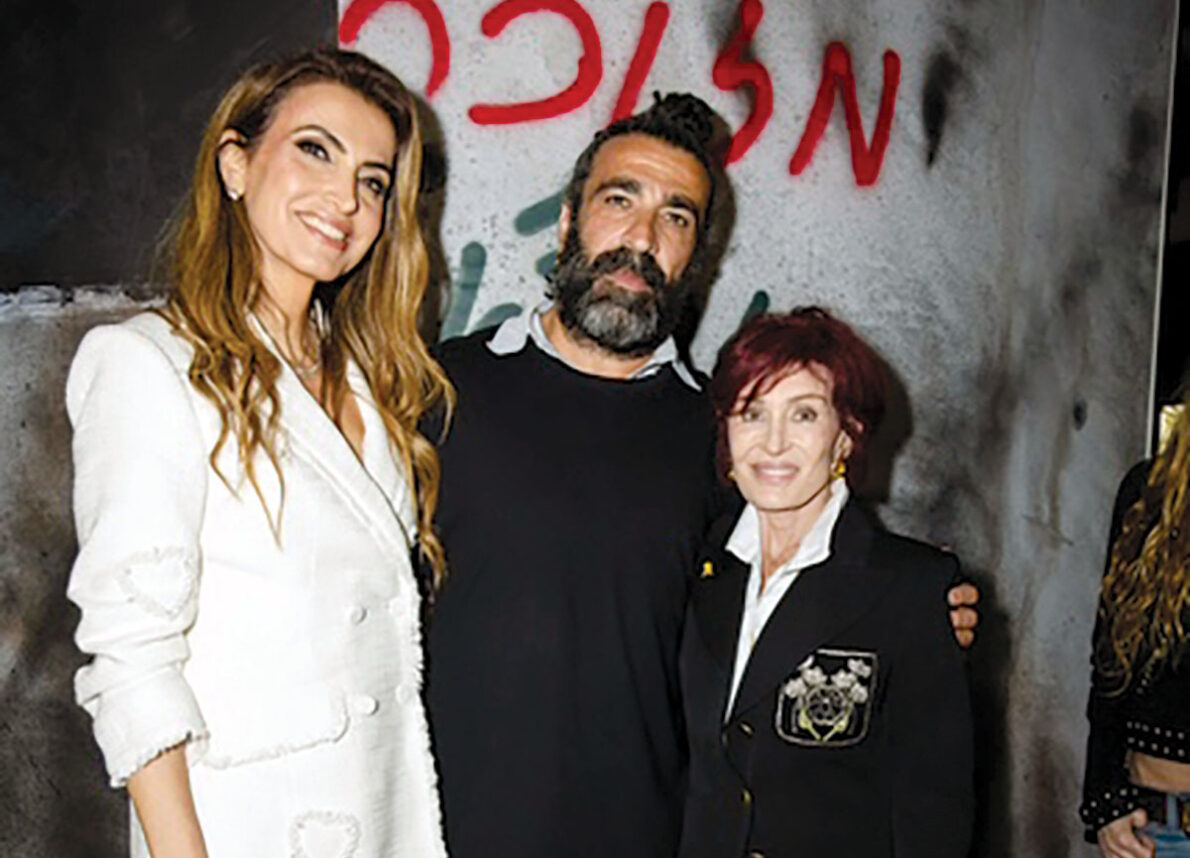
Rona Lalezary, Tomer Peretz and Sharon Osborne attend “The Art of Healing,” an event focused on emotional wellness at the Museum of Tolerance. Photo by Linda Kasian

More than 300 community members gathered at the Museum of Tolerance for “The Art of Healing: Piecing Ourselves Back Together Again.” The event, hosted by Mental Health IsReal, marked the official launch of the Global Healing Blanket, an international initiative weaving art, identity, and resilience together.

The evening brought together a cross-section of community members, families, survivors and public figures, including Sharon Osbourne, musician Gilby Clarke, Daniella Clarke, film producer Howard Rosenman, Chris Collins, Debbie Peiser, Joy Sirott Hurwitz, artist Tomer Peretz and Tal Navarro.

Mental Health IsReal, founded by mindset trainer and motivational speaker Rona Lalezary, emerged in direct response to the Oct. 7 attacks. The organization is working to reshape how Jewish communities approach emotional wellness.

United Hatzalah Celebrates, Brothers for Life, Miracle Project Shows, Art of Healing Read More »

Nine Reasons – A poem for Parsha Behar-Bechukotai

These are the commandments that God commanded Moses to tell the Israelites at the foot of Mount Sinai. ~ Leviticus 27:34

These are the last words in the
third book of the Torah which could
tell you any number of things:

I
My lawyer wasn’t available
to interpret for me the laws of real estate
that appear before these words
in time for me to write this.

II
I don’t actually have a lawyer.

III
My lawyer was busy consecrating
the fields because they had read ahead
and knew exactly what to do.

IV
I was distracted trying to save all
the firstborn animals from being sacrificed
and wondering why the second and third
born animals were off the hook.

V
My lawyer was looking into
the ancient priesthood so he could
get his hands on some of that sweet
firstborn animal meat. (To consecrate
of course.)

VI
I’ve been waiting on the surveyor
to tell me if my backyard could be
sufficiently sowed with a chomer
of barley seed.

VII
I’m waiting to hear back from my
staff on what the word chomer means.

VIII
I only just found out I
don’t have a staff and have a
whole lot of work to catch up on.

IX
I’m trying to gather the strength
to wander through the desert
for forty years. We start walking
next week.


Rick Lupert, a poet, songleader and graphic designer, is the author of 28 books including “God Wrestler: A Poem for Every Torah Portion.” Visit him at www.JewishPoetry.net

Nine Reasons – A poem for Parsha Behar-Bechukotai Read More »

“Get Ya Hotdog Influencer Here!” ft. Jonah Fialkow aka @jewishjonah

This week on Schmuckboys, Marla and Libby start of sharing a bit about what they’ve been up to the last few weeks including a funny yet stressful situation when Libby’s phone almost got eaten by a bus. The two then welcome their guest for this week Jonah Fialkow aka JewishJonah on Instagram. 

Jonah shares about his journey being a diehard Cubs fan who transformed a summer job at Wrigley Field into a thriving content creation career. Starting as a vendor at 18, he shares his story of gaining unexpected fame with videos showcasing the behind-the-scenes world of sports and music events. Jonah talks about how he has reached fans worldwide, connecting them to Wrigley Field and the Cubs in surprising ways, inspiring Halloween costumes and public recognition.

The group continues with an engaging discussions on cultural identity and the power of social media influence. Jonah, shares how his connection to Judaism has evolved over time. With a social media handle like “Jewish Jonah,” he candidly talks about embracing his identity despite initial concerns from his family and how even though his content wasn’t Jewish related, he felt compelled to speak up. They then explore the dynamics of dating across different cities, and end with a funny challenge where the girls make Jonah be a vendor for foods that you most likely wouldn’t find at a baseball game.


Follow Jonah @jewishjonah and Schmuckboys @schmuckboysofficial on Instagram.

“Get Ya Hotdog Influencer Here!” ft. Jonah Fialkow aka @jewishjonah Read More »

We Don’t Need a Resolution. We Need Resolve.

Dear all,

A letter I wrote will soon be published in the Culver City Observer. I share it here as I believe we all need to think deeply and act appropriately regarding Israel and the Middle East. I am concerned, as there are many who want Culver City to issue a cease fire resolution. On the surface, this would be extraordinary.

But dig a little, and the language many use when calling for a cease-fire targets Israel as the worst offender of the most vile of the worlds atrocities. While many truly want a cease fire with peace to follow, there are many who want to see Israel disappear.

And so – we don’t need a resolution. At this moment in time, we need resolve.

Dear Editor,

My name is Zach Shapiro, and I am the Rabbi of Temple Akiba. I write not on behalf of of our congregation, but as a concerned Jewish voice:

I love being the Rabbi of Temple Akiba. For decades, Culver City has been a partner in every way imaginable, and I am so very grateful to our City leadership.

Since October 7, 2023, when Hamas not only terrorized Israel, but showcased to the world how innocent Palestinians live under Hamas’ control, I have taken a deeper interest in City Council meetings.

On a regular basis, speakers approach the podium imploring the City to issue a Cease Fire resolution. Who doesn’t want peace? I believe we all would like the world to embrace goodness and put war aside.

But here’s the problem …. Many (not all – but many) of those demanding a cease fire will casually (yet emotionally) speak about “The Genocide” “White Settler Colonialism” “Racism” “”Imperialism” and “Apartheid.”

They use these words and phrases as though it’s all a given.

Each and every one targets Israel and Judaism as the worst offenders of the world’s greatest problems. This has been the methodology of antisemitism going back thousands of years. We are accused as the perpetrators of the worst evils that exist.

These accusations need to be corrected if there to be meaningful progress. I believe there are incredible, embracing souls who want nothing more than to build a strong future in the Middle East and in Culver City.

It won’t take a resolution.

It will take resolve.

Resolve to listen.
Resolve to be vulnerable.
Resolve to dream.
Resolve to put aside predetermined assumptions.
Resolve to open our hearts.
Resolve to see that we are all family.

With love and Shalom,

Rabbi Zach Shapiro

We Don’t Need a Resolution. We Need Resolve. Read More »

A Bisl Torah~ Can We Take It?

The Torah provides a list of holy rebukes and punishment. If we do not follow God’s ways, there will be various forms of retribution. While many of us do not subscribe to this kind of theology, we can certainly relate to feeling a sense of anger or intense disappointment when someone acts in a manner that we consider, disrespectful or even, dangerous. The question is whether the “offender” can receive the rebuke.

Masekhet Shabbat teaches, “Whomever can stop the members of his household from committing a sin, but does not, is held responsible for the sins of his household.” However, Rabbi Elazar ben Azariah points out that he doubted anyone in his generation was capable of receiving rebuke. On one hand, we are supposed to help others improve; on the other hand, it is likely the person won’t receive our critique with open arms. What are we supposed to do?

There is no simple answer. Years of research informs the ways we should communicate critique. Our tone of voice, where we are located, and our relationship to the person all play major factors. However, we can start with asking ourselves the following questions: Can we take it? Are we open to criticism so that we too, enrich our moral and spiritual development?

We should at least start with what the Talmud advises, “Correct yourself before you correct others.” Let us not be too quick to reprove others before taking the time to examine ourselves. Just as we take our cars in for maintenance checks, our soul could use a quick tuneup as well.

Shabbat Shalom


Rabbi Nicole Guzik is senior rabbi at Sinai Temple. She can be reached at her Facebook page at Rabbi Nicole Guzik or on Instagram @rabbiguzik. For more writings, visit Rabbi Guzik’s blog section from Sinai Temple’s website.

A Bisl Torah~ Can We Take It? Read More »

Diasporic Aporia

Because he wrote so much, they said that what he wrote could not be good.
I am referring to the great composer Georg Philipp Telemann.
That’s also what a lot of people say about my verses. Foul falsehood,
besides which I have never been like Georg Philipp a best-sellerman.

I’m not Baroque; the word that I prefer is Judeo-classic,
which draws me to the great Judeo-Spanish poet, Yehudah Halevi.
My detractors might prefer another term, like Jew-Jurassic:
the line by which these terms are separated isn’t red, but trayfy.

Just like Yehudah Halevi, I regard Jews’ exile from the land of Israel as an aporia,
in my LA diaspora dissenting with opponents of the return of Jews to Zion,
fighting against them with my poetic words, peace-loving warrior
less literate than the great rabbinic poet, whose name the Bible links to praise and to a lion.


“Aporia” denotes an irresolvable internal contradiction or logical disjunction in a text, argument, or theory.

In  “Scattered Seeds: The Origins of Diaspora,” Jewish Review of Books, Winter 2025,   Malka Z. Simkovich points out that the Bible’s first reference to the diaspora of the Jews is made by the Septuagint’s translation of Deut. 25:28. She writes:

Whenָ the Septuagint’s translators arrived at a verse in which Moses predicts that the Israelites would become a horror (za’ava) before the foreign nations if the terms of God’s covenant were violated, they searched for the right Greek word to describe the Israelites’ condition. Although they were not emissaries of the high priest of Jerusalem, the translators seem to have had personal ties to the Land of Israel, which influenced the word they chose. In fact, it was one that didn’t yet exist in that form: “diaspora,” from dia-, meaning over or through, and -sperein, meaning to scatter like seeds (the modern word “spore” is also derived from the verb).

In “The Khazars, the Jews, and Us: The Delusion of Origin and the Question of Zionism,”  5/15/25, David Lemler, a lecturer at the Department of Arabic and Hebrew Studies at the Sorbonne University, writes:

https://k-larevue.com/en/khazars/?utm_campaign=K.LaRevue%23216EN&utm_medium=email&utm_source=Mailjet

How did a classic work of Jewish thought written in Arabic in the 12th century, which claims the absolute superiority of Jews and Hebrew, come to be cited by both the Israeli far right and the most radical fringes of anti-Zionism? To dispel this mystery and the misreadings of this text, David Lemler immersed himself in Yehuda Halevi’s Kuzari. His interpretation reveals an unexpected utopia, that of the Jewish state of the Khazars, whose critical function could help us escape contemporary aporias.

Yehuda Halevi’s Kuzari has recently gained unexpected relevance. This 12th-century work is a distant source of the most radical discourse of the Israeli far right and one of the most popular arguments of radical anti-Zionism. Heraclitus already spoke of the harmony of opposites, but this unnatural alliance is nonetheless surprising. How can this be explained?

In the context of an apology for Judaism, the Kuzari articulates a thesis unprecedented in Jewish tradition: the intrinsic superiority of Jews over non-Jews, of the Hebrew language over all other languages, and of the land of Israel over all other lands. These theses subsequently found their way into many later texts, particularly Kabbalistic ones, and form the backdrop to religious Zionism. Today, they fuel the most extreme discourse within the Jewish and Israeli worlds.


Gershon Hepner is a poet who has written over 25,000 poems on subjects ranging from music to literature, politics to Torah. He grew up in England and moved to Los Angeles in 1976. Using his varied interests and experiences, he has authored dozens of papers in medical and academic journals, and authored “Legal Friction: Law, Narrative, and Identity Politics in Biblical Israel.” He can be reached at gershonhepner@gmail.com.

Diasporic Aporia Read More »

Tara Schuster Isn’t Afraid to Go There—And You’ll Be Glad She Did

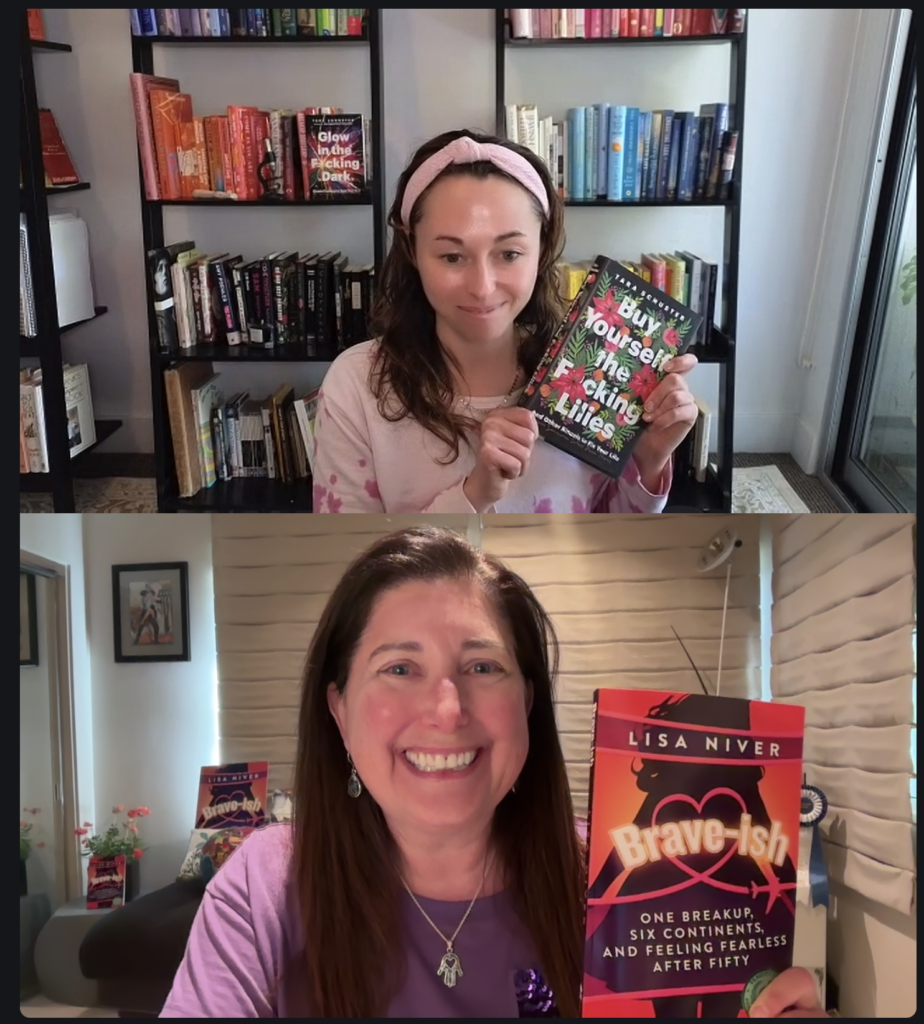
Talking with Tara Schuster is like opening a book where every page feels somehow meant for you. And in this case, it was literally true—I wanted to ask her about nearly every chapter of her powerful, honest, and often hilarious books: Buy Yourself the F*cking Lilies and Glow in the F*cking Dark.
Every story she shares—whether it’s about healing from trauma, battling imposter syndrome or navigating messy relationships—feels like a lifeline. You’ll laugh, you’ll nod, you might cry, and you’ll definitely want to grab a pen and start journaling.

Listen to our podcast interview here:

Tara doesn’t flinch from the hard stuff. Instead, she invites you to sit with it, name it, and gently move through it—with grace, grit, and a good dose of humor. This was one of those rare interviews that left me feeling both seen and inspired. Tara’s work is deeply relatable, disarmingly candid, and refreshingly practical. If you haven’t yet read her books, do. And if you’re ready to go deeper, join her for one of her guided journaling sessions—where healing meets action, one page at a time.
TARA’s NEWSLETTER https://www.taraschuster.com/newsletter TARA’s INSTAGRAM https://www.instagram.com/taraschuster/
Tara Schuster is an accomplished entertainment executive turned mental health advocate and best-selling author of the runaway hit, Buy Yourself the F*cking Lilies and Other Rituals to Fix Your Life from Someone Who’s Been There. She has sold over 250,000 books to date in the U.S. alone. With her unique blend of hilarious, poignant personal stories and refreshingly honest, optimistic advice, Tara launched into the book world as the millennial voice the self-help space craved. In January of 2024, Tara released the paperback edition of her highly-anticipated second book, Glow in the F*cking Dark: Simple Practices to Heal Your Soul, from Someone Who Learned the Hard Way, a relatable, easy-to-follow guide to healing your deepest soul wounds, getting off your “good enough” plateau, developing habits that will give you lasting courage and resolve, and creating the spectacular life that you actually want. Full of practical, free baby steps we can take today, it’s for people who are ready to liberate themselves from their emotional suffering, discover their purpose, and finally sit in the driver’s seat of their experience. Kirkus has called GLOW “an approachable, exuberant combination of memoir and self-help.” It is has been endorsed by thought leaders such as Adam Grant (#1 NYT bestseller), Lori Gottlieb (#1 NYT bestseller), and Glennon Doyle (#1 NYT bestseller and host of the podcast We Can Do Hard Things) who said of Tara, “[She] is a phenomenal storyteller…Glow in the F*cking Dark is a revealing and powerful book that lit me up from the inside out.” Previously, Tara served as Vice President of Talent and Development at Comedy Central, where she was the executive in charge of critically acclaimed shows such as the Emmy and Peabody Award–winning Key & Peele, the Emmy® Award winning @Midnight (now After Midnight on CBS), and many others. Over the last 12 years, Tara has spent her “10,000 hours” on the other side of the couch studying philosophy, therapies, religions, and even memoirs of the adults she admired so that she could find emotional freedom from a neglectful and psychologically abusive childhood. Her only hope is that she can make others feel less alone in their experience and also provide free, accessible tools to help readers reclaim their agency and heal without blowing up their lives. In her free time, Tara enjoys running and weightlifting – a sentence she truly never thought would be true. Tara currently resides in Los Angeles.
 

Find MAKE YOUR OWN MAP PODCAST on Spotify, Apple Music, Amazon Music, YouTube PodcastGoodPods, Audacy, Audible, PandoraiHeart Radio and more — seen on 7 continents & 59 countries. Click here to see all the AWARDS for MYOM!

Tara Schuster Isn’t Afraid to Go There—And You’ll Be Glad She Did Read More »

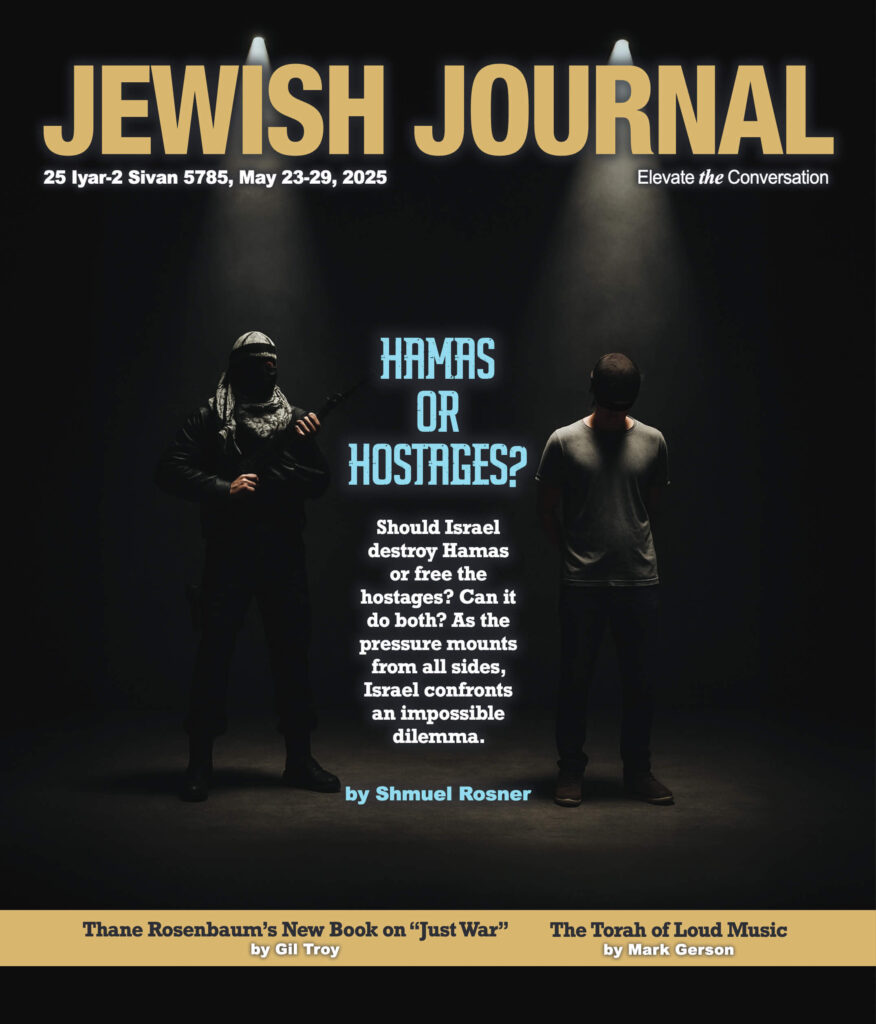
Print Issue: Hamas or Hostages | May 23, 2025

CLICK HERE FOR FULLSCREEN VERSION

Print Issue: Hamas or Hostages | May 23, 2025 Read More »

Sephardic Torah from the Holy Land | BHL – A Modern Sephardic Thinker

“I love Jerusalem, I love Israel, and because of the global boycott of Jewish and Israeli writers, I especially made a point to come here, to the Jerusalem International Writers Festival.”

With these moving words, standing before an enthusiastic sold out crowd in Mishkenot Sha’anim, Bernard-Henri Levy (BHL) opened his talk this past Monday night.

“I defend Israel because it’s a tiny country. I defend Israel because its existence is the result of an incredible war of independence. I defend Israel because it’s a beacon of democracy. Above all, I defend Israel because when the world’s oldest hatred rears its ugly head and threatens Jews around the world, Israel is the one and only safe haven where a Jew has a place of refuge.”

A lifelong activist, philosopher, filmmaker, thinker and defender of human rights, BHL is a proud Zionist and advocate for Israel on the global stage. Based in Paris but active around the world, this week BHL brought his powerful message of hope to an Israeli crowd who welcomed him with thundering applause. The energy in the room was filled with admiration, and appreciation, for BHL’s unapologetic love for Israel.

BHL’s love is not without criticism. His Zionism is mature. He’s unafraid to defend Israel in the anti-Zionist hotspots – online, college campuses, podcasts – but is equally comfortable questioning certain policies of the Israeli government. He is  a moderate voice, a humanitarian and a humanist.

“Very few countries or societies in the world are more open and democratic than Israel,” BHL told us Monday night. “The very nature of Israel encourages debate, dissent and dialogue. That’s why I proudly defend, and at times criticize, this place I love so much. I am not a combat soldier in Gaza, but I will always fight for Israel – its right to exist and defend itself, and the right it fosters, as a true democracy, for tolerance and openness to multiple opinions and voices.”

“How do you respond to the extreme pro-Palestinian voices around the world?” asked the moderator.

“Through my words and ideas,” he responded, “I show them that I am ultimately more pro-Palestinian than they are.” Brilliant.

Listening to BHL speak with his distinctly French accent that rings so familiar from my upbringing, and knowing that his roots are North African-Sephardic – like my parents –  his words, ideas and vibe take me back to the Sephardic Shabbat tables of my upbringing. In BHL, I hear my parents speaking. His ideas are a contemporary expression of the Sephardic way I was raised: an unquestionable love for Israel, Judaism and the Jewish people, a disdain for extremism, an open mind, an open heart, with tolerance and respect for “the other side.”

BHL: Proud, Nuanced, Complex, Rooted, Humanitarian…Sephardic.

Shabbat Shalom


Rabbi Daniel Bouskila is the international director of the Sephardic Educational Center.

Sephardic Torah from the Holy Land | BHL – A Modern Sephardic Thinker Read More »