fbpx

March 13, 2025

Author Aims for a More ‘Active’ Children’s Book

When local author and mother of four Emunah Fialkoff watched her kids playing with coloring and activity books, she noticed something: they didn’t engage on a deeper level. She couldn’t find any books that truly did, so, with some assistance from her kids, she decided to create her own.

Now, her new workbook, “The Adorable Activity Book for Cute and Curious Children: Max, Lily, Dee & Hammy Bake Cookies” is available on Amazon. It features four characters – inspired by her children – and has one cohesive story that takes kids ages five through eight through each activity. 

“This activity book breaks the mold by going beyond standard puzzles and mazes,” Fialkoff said. “I got the inspiration for the activities from watching my kids go about their everyday lives and thinking about how to turn common household problems into an activity you could illustrate with pen and paper.”

The characters — a dog, bunny, monkey and cat — give the kids a chance to “connect to relatable characters in a familiar situation,” Fialkoff, who is also a ghostwriter and writing trainer, said.

Each of the author’s four children collaborated with the author on her project. “My son gave me tips on what to include and helped brainstorm activities,” she said. “My daughter tested all the drawings, pointing out changes that needed to be made. My toddler was silly about ‘being the bunny.’ My baby is oblivious that he’s been immortalized as a monkey, but his siblings love the character. It’s been really heartwarming.”

Kids will encounter situations they’re used to in real life, such as matching kids to the stools that will help them reach the counter, choosing the cookbook likely to have a cookie recipe or putting the ingredients back on the shelves where they belong. 

“They often test kids’ critical thinking in different ways,” said Fialkoff. “And thanks to my illustrator, they’re built into really adorable coloring pages too.”

The author, who is a proudly observant Jew, said the workbook ties into her values in a few different ways, starting with critical thinking. 

“Jews are thinkers. We’re not afraid to do things in different ways. And that’s what this activity book is. It’s doing a kids’ activity book differently, to inspire kids to think differently.” 

There is also the family element, which Jews value highly. “There is so much in today’s world that is challenging the core family values that we cherish,” Fialkoff said. “Every children’s book that focuses on that value, like showing the fun and spontaneity of four siblings doing something together, strengthens our family values collectively.”

Ensuring that the workbook has a story was crucial for the author; Judaism emphasizes storytelling. 

“Story is about meaning,” she said. “It’s about not believing that things are one-off events but seeing the thread that ties them together. As Jews, we know that everything is a story — everything fits into a larger context of meaning. And I love breaking the mold of disjointed activities by bringing the energy of story into this activity book.”

Moving forward, Fialkoff has a vision for a series of workbooks built around the same set of characters and design. She hopes to put out more in the future, and looking back on creating “The Adorable Activity Book for Cute and Curious Children,” she saw just how meaningful it was for her and her children.

“By the end of the process, I felt that the project really showed me the power of family creativity,” she said. “Seeing the illustrations in their various stages was kind of magical for my kids. They’ve learned that they can have a creative vision and pursue it and then share the result with others. That’s something we’ll definitely take with us.”

Author Aims for a More ‘Active’ Children’s Book Read More »

Bringing the Flavors of Machane Yehuda to LA: The Story Behind Arais’ Newest Spot

It all started in a pretty unusual way. Two friends, Izhak Eskayo and Omer Levin, went to a friend’s shivah, when Levin suddenly said, “You know what I’m craving? Arais.”

“Yalla,” Eskayo replied. “Let’s do it.”

For the past three years, Eskayo’s nephew, Ariel Eskayo, the owner of the Arais Machane Yehuda restaurant in Jerusalem, had been bugging him to open a location in Los Angeles. His uncle kept brushing him off, but something clicked at that moment and, this time, he decided to go for it.

Machane Yehuda in Jerusalem is a lively, colorful market packed with stalls of fruits, vegetables, fish and restaurants. Arais, which opened eight years ago, quickly became a favorite — especially among tourists who can’t get enough of its bold Middle Eastern flavors. Following the success, Ariel quickly opened four more locations in Israel, including in Tel Aviv and Rishon Lezion. 

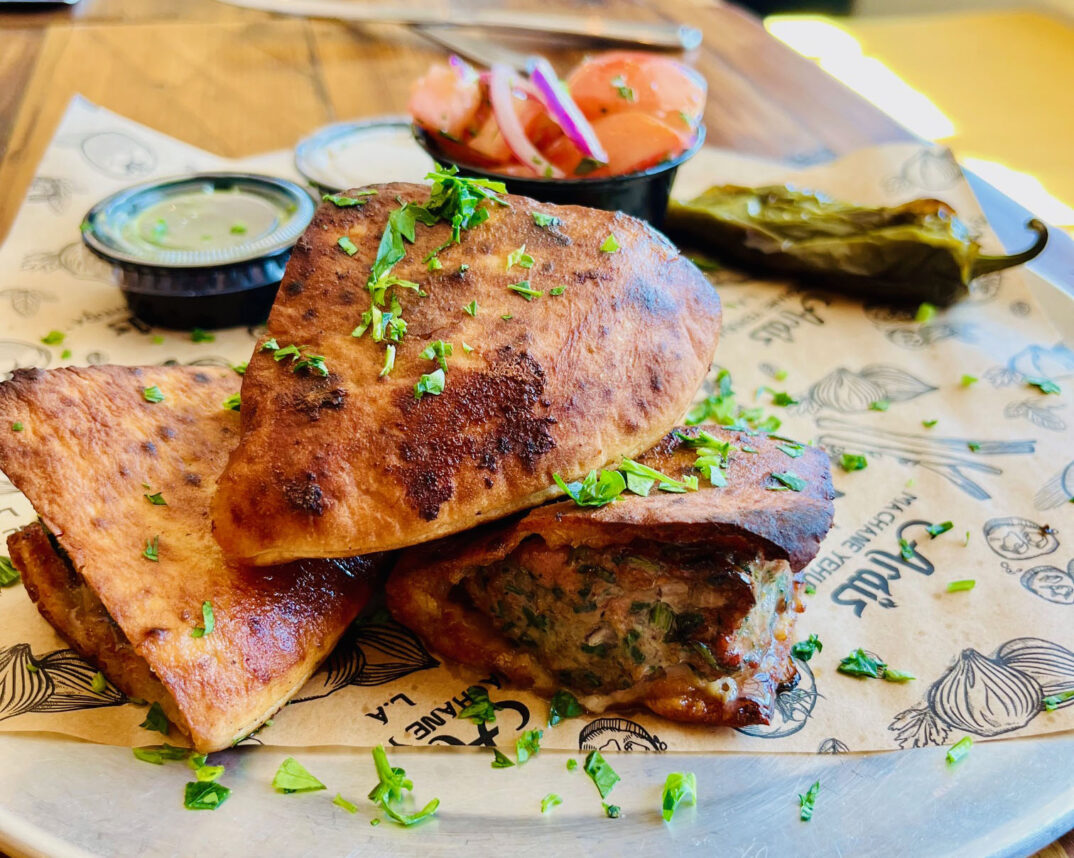
So, what is arais? The word “arais” is the plural of “arus,” which means “bride” in Arabic. But in this case, it’s a handmade pita that’s cut in half, stuffed with juicy, succulent, spiced meat grilled to perfection. As it cooks, the meat’s juices seep into the pita, making every bite crispy, flavorful and absolutely delicious.

With an additional partner, Dana Levy, it took the trio a whole year to find the perfect spot in Tarzana, fine-tune the menu and bring in an interior designer. The moment you step inside, Ventura Boulevard fades away and you’re instantly transported to Jerusalem. A mural sets the scene, but it’s the massive taboon (clay oven) in the open kitchen that really seals the deal.

Mural of Jerusalem at the entrance sets the atmosphere

Unlike the original spot in Israel, this location has a few extra treats on the menu — Jerusalem mix, Impossible Meat for vegetarians and vegans, desserts and a well-stocked bar. But let’s be real: the real stars of the show are the arais, stuffed with beef, lamb, ribeye or a delicious vegan option.

Stuffed pita with beef

The Vegan Jerusalem Mix is also a crowd favorite. Served on a round tray (as are all the dishes), it comes with a mouthwatering combo of grilled onion, tofu, portobello and oyster mushrooms, with sliced pita on the side.

And then there’s the Lachma Jun (Bajan Bread) — an open-face pita sandwich topped with ground beef, tomatoes, onions and parsley. Oh, and don’t skip the potato “medura” — perfectly seasoned, crispy-edged potatoes cooked in the taboon.

At Arais Machane Yehuda, they keep it simple, with just a few dishes — all of them standouts and absolutely delicious.

For now, most of the visitors are religious Jews and Israelis who love this glatt kosher (RCC) spot, with seating both inside and outside. But it won’t be long before the secret’s out and everyone starts flocking to this incredible eatery.

For those in a rush, the food is packed up beautifully in to-go boxes; you can order through Uber Eats, Grubhub or DoorDash. But let’s be honest: nothing beats sitting down, soaking in the vibe and pretending for an hour that you’ve been transported straight to the bustling Machane Yehuda market in Jerusalem.

araismachaneyehudala.com

19527 Ventura Blvd, Tarzana, (818) 457-4075

Bringing the Flavors of Machane Yehuda to LA: The Story Behind Arais’ Newest Spot Read More »

Catching Up with CSS, the National Jewish Defense and Security Agency

Since Oct. 7, antisemitism has exploded in cities across the United States – and Los Angeles has been no exception. From encampments at local universities to protests around the city and the attacks at a Pico-Robertson real estate event last summer, the LA Jewish community has dealt with its fair share of hatred.

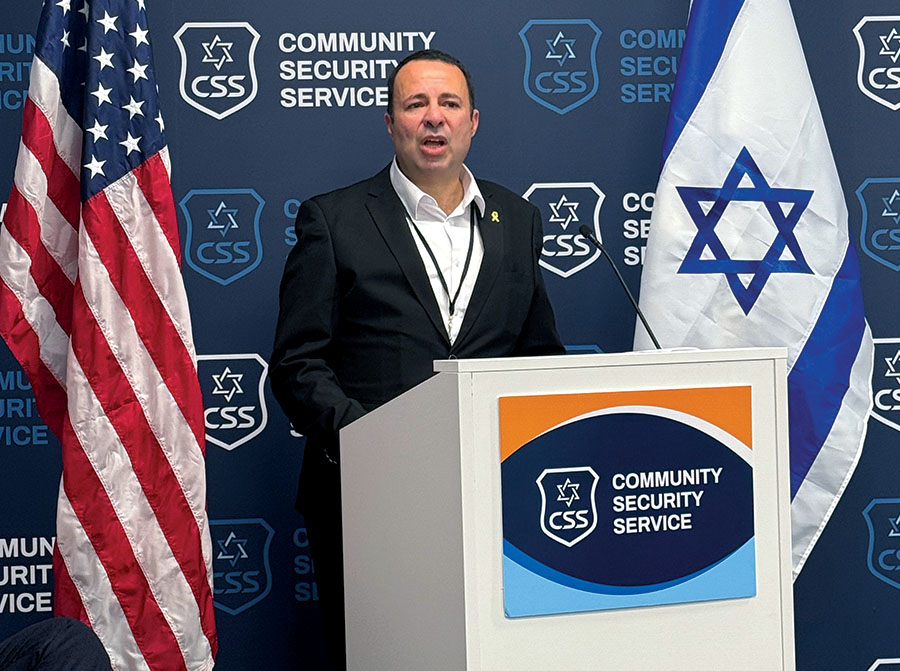
That’s why CSS, Community Security Service, has stepped up. This apolitical national nonprofit organization that was founded in 2007 provides free security training, resources and guidance to Jewish communities across the U.S. They have trained more than 10,000 community members and volunteers and help protect over 400 Jewish institutions every month. They also offer self-defense and Krav Maga classes, and stress situational awareness and emergency lockdown scenario training and preparation — which are crucial during this time.

“We’ve seen a substantial increase in attacks and threats on Jews and Jewish life since Oct. 7,” Dov Ben-Shimon, the CEO of CSS, said. “It’s been a wakeup call for many of us to take security seriously, and to commit to proper procedures and measures to keep our community safe.”

CSS volunteers in LA set up at synagogues and Jewish events, often alongside private security guards, to ensure there is extra coverage. They work hand-in-hand with private security; for instance, a CSS volunteer may be a member of a synagogue who lets the private security guard know who should be let into the synagogue – or not. They also make sure to stay in touch with local law enforcement. 

Since antisemitism is rising, Ben-Shimon recommends Jewish institutions get at least some basic training on how to stay safe. “We can’t go back to the shameful sights of last summer, when Jews were beaten up and harassed and intimidated on the streets of Los Angeles,” he said. “If your synagogue or institution doesn’t have a security plan and hasn’t trained you in basic security procedures – and smaller groups in advanced procedures – then now is the time to ask, what will it take for your security to be a priority? We’re here to help you.” 

Since Oct. 7, CSS has not only increased its work with Jewish institutions; it has also invested more heavily into protecting students on college campuses. The organization has partnered with Hillels and Chabads to train Jewish students with Krav Maga and Jewish Leadership programming, called “Krav and Kesher.” “Together with our active synagogue and event teams, and additional resources, we see that training volunteers is the best form of ‘boots on the ground’ to deter, de-escalate and detect problems and to enhance the community’s security,” said Ben-Shimon. 

At this time, the security expert recommends that members of the community, as well as institutions, reinforce their commitment to security. “That means investing in training, physical infrastructure, building relationships with local law enforcement and making plans for emergencies,” he said. “Training and awareness are key; a locked door won’t be of any use if it’s propped open, for example.”

While CSS is doing its job, it can’t do it alone. Having community buy-in is key to ensuring it works and keeps everyone secure. “CSS’ mission is to protect Jewish life and the Jewish way of life, to defend the Jewish community and its presence, and to empower Jews to take responsibility for our safety and security,” Ben-Shimon said. “There’s never been a more appropriate time to prioritize the security of our community, and to realize that this is a task — and an obligation — that requires all of us.”

Catching Up with CSS, the National Jewish Defense and Security Agency Read More »

Noa Tishby Partners with Heart and Hamsa to Provide Judaica to Wildfire Evacuees

On the second day of the Los Angeles wildfires, Jan. 8, Emily Kane Miller, her husband Nate Miller and their three children lost their Pacific Palisades home. While Emily was grateful her family made it to safety, she kept thinking about the mementos she’d lost – in particular, her great-grandmother Eidleh Istrin’s chopped liver bowl, which her aunt had given Emily when she got married. 

“It was one of the only treasured heirlooms from Europe that I owned,” she said. “Both my paternal grandparents survived the horrors of the Holocaust and came to Los Angeles as refugees. We have very few physical objects – but so much spiritual wealth – from that side of my family. I was gutted at the thought of the bowl being reduced to ash – more than anything else in the house.”

The Millers’ home was also full of Judaica —  kiddush cups, challah plates and candlesticks — which came out every Friday night for Shabbat. After the fire, Emily started to contemplate what those things meant to her and her family.

“It made me think of the power of touch and how physical objects can hold history because of who has touched them, who has blessed them and the stories they carry,” she said. “While a chopped liver bowl isn’t ‘Judaica’ per se, in my home, it was. My husband and I had built a treasure trove of Judaica in our home. Some items were old, some new, [and] all were imbued with stories about who gave it to us, who else had used it, where it had traveled from and the ways we had lovingly used them since they came to be ours.”

“It made me think of the power of touch and how physical objects can hold history because of who has touched them, who has blessed them and the stories they carry.” -Emily Miller

A few days after the fire, Emily and her friend, who also lost everything in the fire, were invited to a woman’s home. She’s in her 80s, and she wanted to share treasures with the two. 

“One of these treasures was a set of beautiful Shabbat candlesticks — the kind that look like they are from ‘the old country,’” Emily said. “My friend accepted them with such joy. They looked like a pair she’d lost. In that moment, I felt her repair just a little bit. Now, when she lights candles on Shabbat, she has the story of receiving these from someone who received them from her Bubbe who wanted her and her family to have them.”

This got Emily thinking: Wouldn’t it be nice if others could give back to the Jews who lost their Judaica in the fire? That’s how her initiative Heart and Hamsa came to be. 

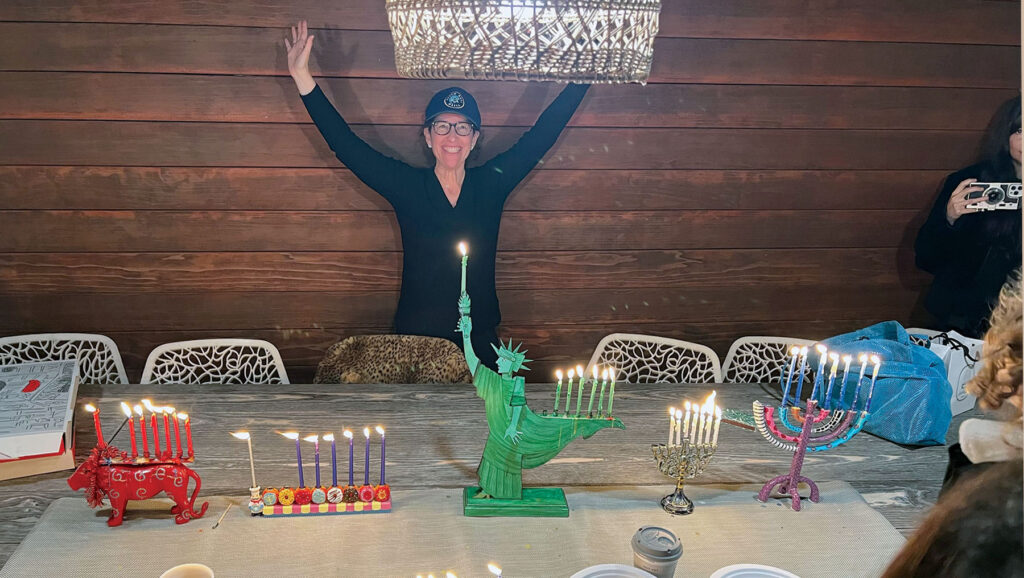
Emily, who is the CEO and founder of Ethos Giving, a philanthropic services company, and a member of Kehillat Israel, which survived the fire, started Heart and Hamsa on Feb. 28. It’s a website where people can list their Judaica during the month of March, and in April, those in need can choose the items they want. The Judaica is coming not only from Jews in LA, but from those all around the world. Some of the items include a kiddush cup from New Jersey, a dreidel menorah in Connecticut and glass Shabbat candle holders in Beverlywood. Now, Noa Tishby is partnering with Emily on this initiative to get the word out. 

“Hearing about how the community rallied together in places like Kehillat Israel, the Pacific Palisades synagogue I visited, I was inspired by the strength and resilience that the Jewish people have once again shown,” Tishby said. “Thinking about all the Judaica lost, items that were passed down dor l’dor — from generation to generation — some that survived the Holocaust, is so painful. But this is the story of Jewish peoplehood, and Heart and Hamsa provides the opportunity to step up to not only restore objects but make meaningful connections.”

Tishby, an LA resident for the past two decades, evacuated her home, but it was fine. However, some of her friends, like Emily, lost everything. “Seeing the destruction, seeing people digging through ash and rubble, it broke my heart,” she said. “It reminded me of some of the worst times in history when people lost everything. But the people of Los Angeles are resilient.”

What Heart and Hamsa is doing is not just physical recovery, Tishby said. It’s about spiritual and emotional recovery, too. 

“Traditions are a part of who the Jewish people are — our songs, our stories, our rituals,” she said. “Donating menorahs, kiddush cups and mezuzahs, along with their stories, helps families rebuild and maintain their connection to our traditions, even in the face of disaster.”

“Traditions are a part of who the Jewish people are — our songs, our stories, our rituals.” – Noa Tishby

According to Emily, Heart and Hamsa needs as much Judaica as possible to help those in need. “We don’t expect anyone to give anything away that would be uncomfortable for them,” she said. “But if you are ready to share anything because you have too many, or it’s not your personal style or it’s not something that your family really uses, then we’d love to share it with someone who is missing theirs.” 

By giving Judaica to wildfire evacuees, the entire community has the opportunity to come together and support one another. “We are bringing a new treasured piece of Judaica, weighted with the story of its history, but also with the story of the gift,” Emily said. “Somebody loved this item and wanted our family to have it. What a blessing.”

Noa Tishby Partners with Heart and Hamsa to Provide Judaica to Wildfire Evacuees Read More »

Moroccan Olive Chicken – Poulet Aux Olives

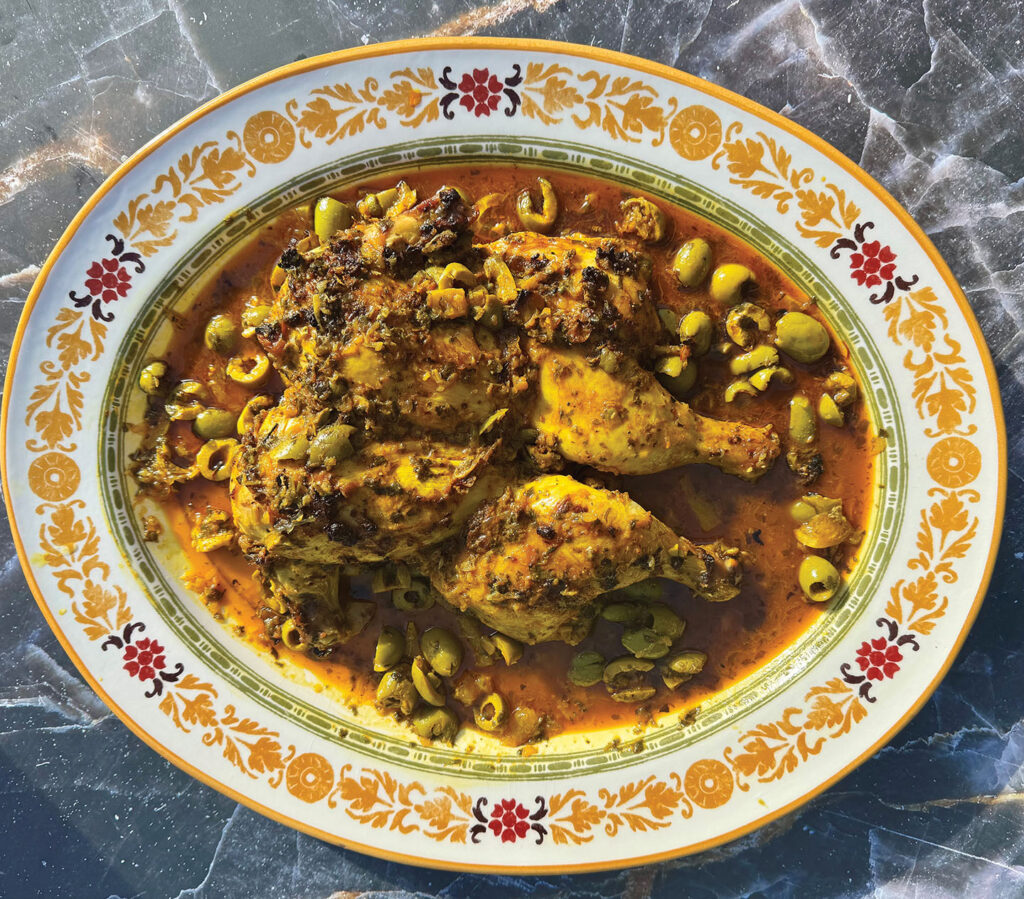
There are always some classic recipes that simply say “Shabbat.” The dishes that make it to the table every Friday night. It might be chicken soup or a brisket or special dips. For my family, one of the favorites is a Moroccan olive chicken, a dish I only ever cook in honor of Shabbat.

On busy weeknights, my cooking style is all about health and speed. Dinner has to be on the table in less than an hour. Usually I throw some fish, chicken or ground beef on my outdoor barbecue and serve it with fresh salad and rice or roasted potatoes. (Lately, my daughter Rebekah and I are loving the Japanese purple and white sweet potatoes. We wrap them in parchment paper, then an outer layer of foil and bake them. A super creamy, extra delicious side!)

Fridays are different.

In fact, my Shabbat cooking usually starts on Thursday night, when I will try to bake desserts and prep some salads. I bake my challah or I prepare my sourdough to be baked early Friday morning. The incredibly warm, comforting aroma of freshly baked bread permeates the house and that Shabbat feeling begins to come alive.

On Fridays, “I work from home,” literally answering phone call after phone call and responding to emails and messages on my iPad. Meanwhile, my cellphone is perched on a tripod as I try to film my cooking for our Instagram reels. (Follow us @sephardicspicegirls for lots of fun, fresh content.) Fridays are the day when I make lots of elaborate, time-consuming dishes for my family and guests.

In Morocco, my mother had household help and didn’t have to work. When she arrived in Los Angeles and began to work full-time, she had to navigate the kitchen in a different, more efficient way. She was very big on using her pressure cooker to soften meat and relied on the oven to roast chicken for simple meals.

Soon enough, she began preparing her once slow, simmered, olive chicken tagine in the oven. The resulting dish was just as flavorful as the original recipe, but there were so many fewer steps.

Traditional olive chicken tagine gets a marinade and sits in the fridge overnight. Then the chicken is seared in a pan to release the juices. The chicken is removed from the pan, the olives are added and sautéed with the juices to create a reduction. The chicken is roasted in the oven and returned to the pot to simmer some more. The chicken simmers and braises for hours.

I don’t know about you, but my mother didn’t have the luxury to spend hours in the kitchen and neither do I. I learned from my mother to simplify the steps of many old school Moroccan dishes, while still retaining the fabulous flavor.

My mother was so clever in the kitchen. One of her shortcuts involved red and green peppers. For many Moroccan dishes, peppers have to be sans peel, a time consuming and messy process. She would bring home a big bag of peppers, wash them, chop them into quarters, bag them and freeze them. A couple of days later, she would take them out and the skin would peel off so easily. Then she would refreeze them in small packets, so that she always had peeled peppers whenever she needed. She used them in her tomato matbucha, her Spanish chicken and rice and her braised meat and peppers in the pressure cooker.

One of the most essential ingredients for olive chicken is preserved lemon. Like my mother, I always have a jar of preserved lemons in the refrigerator. But if you don’t have any on hand, there’s a really clever hack that I learned from Eti Abehsera, the mother of my son’s school friend. You just take a lemon or two. Wash, slice, dip in kosher salt, place in a bag and freeze overnight. The result is pretty darn close to the original. I know my mother would have loved this clever trick!

This recipe for olive chicken is really authentic. The only variation is that I add white wine (because my mother always did). You can use chicken stock or water or even a bottle of beer. The main thing is that a slow braise with briny olives, preserved lemon and pungent, aromatic spices results in a heavenly dish of moist chicken and flavorful gravy.

This is my family favorite — I can hear the sighs of contentment when I serve this olive chicken. I smile when I watch my grown children happily spoon the juices over their rice.

I hope you will enjoy making it for your family.

—Rachel

Have you noticed that spatchcocked chicken has become a thing? Rachel noticed it on social media and informed me that all the kosher butchers are selling spatchcocked chickens now. She thought it wonderful that she didn’t “have to perform surgery on the chicken!”

To spatchcock a chicken, or to butterfly it, is to remove the backbone, allowing the bird to be completely opened and flattened out.

I smiled when she told me this because when I met Alan, his father dreamed of opening a fast food restaurant selling roasted butterfly chicken. Thankfully, he stuck to his day job where he was very successful.

Cooking chicken in this method is foolproof and failsafe, resulting in vibrant flavor, and juicy, moist meat that falls off the bone.

Rip this page out and save this recipe for your Passover menu.

—Sharon

Moroccan Olive Chicken

Marinade

1 cup olive oil
2 Tbsp sweet paprika
1 Tbsp turmeric
1 pinch saffron threads
1 tsp ground ginger
1 tsp cinnamon
1 red onion, grated or finely chopped
1 cup finely chopped Italian parsley
1 cup finely chopped cilantro
3 cloves garlic, finely chopped
1 whole preserved lemon, roughly chopped
1 spatchcocked chicken
1 24 oz can pitted green olives in brine
1 cup white wine
1 cup water

Preheat oven to 350°F.

Place all the marinade ingredients in a medium bowl and combine.

Place chicken in a roasting pan and gently massage half the marinade on all sides of the chicken and under the skin. Set aside the rest of the marinade.

Place the olives in a bowl, then cover with boiling water and let stand for 10 minutes. Rinse several times with warm water, then drain well.

Chop the olives coarsely and combine with the remaining marinade.

Spoon the olive mixture on top of and around the chicken.

Pour the wine and water around the sides of the roasting pan, making sure not the wash the marinade off the chicken.

Place the chicken in the oven for 45 minutes.

Cover with foil and continue to roast for another 45 minutes (add additional water if the liquids are drying up).

Turn temperature up to 400°F

Uncover and roast for 15 minutes until skin is golden brown.

Remove from the oven and spoon juices over the chicken. Serve over couscous or rice.

Note: Recipe can be made ahead and reheated, and freezes very well.


Sharon Gomperts and Rachel Emquies Sheff have been friends since high school. The Sephardic Spice Girls project has grown from their collaboration on events for the Sephardic Educational Center in Jerusalem. Follow them
on Instagram @sephardicspicegirls and on Facebook at Sephardic Spice SEC Food. Website sephardicspicegirls.com/full-recipes.

Moroccan Olive Chicken – Poulet Aux Olives Read More »

Aliza J. Sokolow: Spring Produce, ‘This is What I Eat’ and a Fail-Proof Vegetable Puree

Aliza J. Sokolow, author of “This Is What I Eat: Fun Activities for Mindful Eating,” loves the change of seasons … and the fruits and vegetables that go with it. 

“My eating and cooking and shopping is very seasonal,” Sokolow, a private chef, food stylist and photographer, told The Journal. “Luckily in California we have microclimates, so we get the best of everything all year round.”

She added, “We have such fantastic ingredients available and grown less than 100 miles away.”

For Sokolow, spring also means you get the best ingredients for the Jewish holidays. Hamantaschen with different jams and multiple kinds of charoset for Passover. 

“My favorite one is the Iranian charoset that’s made with pomegranate juice and pistachios,” she said. “Although the Ashkenazi one is delicious with apples and apricots and almonds.”

One of her go-to farmer’s market recipes is a breakfast taco, made with local ingredients: tortillas (from local grain), eggs, avocado and limes. Sometimes she’ll buy salsa at the market or make it herself. 

Another favorite is Israeli salad. She starts with the basics and adds seasonal ingredients.

“I only buy cucumbers from this one farm and I add yellow peppers and … I wait all year for sun gold tomatoes from this one farm; they’re incredible … better than a strawberry,” she said. “I buy some herbs and chop everything teeny tiny and eat it with a spoon.”

Spring also means it’s the best time for snap peas.  

“I like to touch all of the different ones at the different stands to see which ones are very crispy,” Sokolow said. “I want them to make a sound when I bite into them.” 

For Sokolow, the simplest thing is to go to the market and look around. Find a few things that look good, sample and eat them. When you buy great ingredients, you do not need to do a lot to your food.

“I made this really incredible orange olive salad last week,” Sokolow said. “It sounds strange when you say it out loud, but my friend is Moroccan and we made dinner: sliced oranges with these cured olives, and the flavors go so beautifully together.”

Sokolow wrote “This is What I Eat” as a way to get kids excited about healthy eating and cooking. She learned the impact of healthy food on kids, when she worked with chef Jamie Oliver on his “Jamie’s American Food Revolution” television show around 2010, and decided this would be her mission. 

“This is What I Eat” is filled with activities — regrowing produce, food scavenger hunts — designed to make fruits and vegetables fun.

Sokolow has, however, always loved produce, particularly apples. There are so many kinds: some are better for baking, others for cooking and some for eating plain.

“I’m very obsessed with apples; to me they’re the gateway drug into the fruit and vegetable world,” she said. “My second-grade teacher did a unit on apples — we tried maybe 10 different types of apples and we talked about how the peels were different and the textures — and she got me hooked on them; [when] she came to my book party, I told her what an inspiration she was to me.”

Instead of the message of “Eat this, it’s healthy,” Sokolow wants kids to build curiosity about produce through the lens of color, shapes, sizes and seasons. This is fun for adults too.

One activity is to go to the farmer’s market and do a scavenger hunt by color. Choose a fruit or vegetable that matches each color on the page. Then, take it home and learn how to cook it. 

People message Sokolow all the time to ask her what something is or what to do with it. They are fascinated by their new discoveries.

“Whatever it is, it’s probably not that hard to cook,” she said. “Cooking is daunting for many people, but it’s really just washing and cutting things [and knowing] not everything needs to be cooked; certain things you can eat raw.”

Sokolow studied to be an architect, and that creativity comes out in all she does. 

“If you follow me on social media, you see I always make art through fruits and vegetables,” she said. “Everything that I cook and plate is always beautiful, and I often don’t attribute that to myself, but more the fruits and vegetables [from] the farmers.” 

People think delicious things need to be complicated. Sokolow said they don’t. 

“I feel like a little bit of acid, salt and fat goes a very long way,” she said. 

Sokolow added, “Soups are also great for people … who are scared of cooking; they’re so hard to mess up.”  Her recipe for fail-proof vegetable puree is below. 

“I just want to encourage eating things that you find at the farmer’s market or stuff that doesn’t have a nutrition label, because it’s [usually] pretty delicious,” Sokolow said. “And if it’s not, add a little bit of salt to it and it’ll probably bring out the flavors.”

Learn more at SokolowPhoto.com, @alizajsokolow on Instagram, check out her book “This is What I Eat,” as well as the “This Is What I Eat” Substack.

For the full conversation, listen to the podcast:

Watch the interview:

Fail-Proof Vegetable Puree

Photo courtesy Aliza J. Sokolow

The best part of making this vegetable soup is that you cannot fail. All of the flavors build upon one another and it is always delicious. Makes a large batch and is easy to freeze.

2 leeks

1 onion

ghee and/or extra virgin olive oil

2 sweet potatoes (optional)

6 carrots

4 zucchini

1 tablespoon Italian seasoning

salt for each layer

white pepper to taste (not black, white pepper)

4 containers (4 quarts) of broth. Use whichever broth your heart desires. If you want your soup thicker add less broth, add 1 tablespoon or butter or vegan alternative

Wash your hands and all of your vegetables. Leeks are super dirty, I like to chop them, wash and then drain.

Saute leeks and onions until translucent.

Add all other vegetables until tender (you can add more olive oil and salt for this layer).

Add broth and seasoning.

Bring to a boil and then reduce to a simmer. Simmer for 45 minutes.

Use an immersion blender to puree soup to your liking. I enjoy some chunks of veggies.

Add in dairy or dairy alternative to make it into a cream soup.

BON APPETITO! Please let me know if you make it and measure with LOVE!


Debra Eckerling is a writer for the Jewish Journal and the host of “Taste Buds with Deb.Subscribe on YouTube or your favorite podcast platform. Email Debra: tastebuds@jewishjournal.com.

Aliza J. Sokolow: Spring Produce, ‘This is What I Eat’ and a Fail-Proof Vegetable Puree Read More »

Table for Five: Ki Tisa

One verse, five voices. Edited by Nina Litvak and Salvador Litvak, the Accidental Talmudist

When He had finished speaking with him on Mount Sinai, He gave Moses the
two tablets of the testimony, stone tablets, written
with the finger of God.

– Ex. 31:18


Bracha Goetz

Author of 43 Jewish Children’s Books

The only time God ever spoke in public – and it was to a crowd of approximately two million of us – it turned out to be too much for us to handle such a cosmic force. After hearing the first two divine instructions, we begged Moses to hear the rest of the Torah privately with God instead of directly in our presence on Mount Sinai.

When I first learned about this as a young adult, it was also explained to me that if other religions could make a claim of God speaking to a crowd publicly ever since then, they definitely would have. But they couldn’t.  Because it’s just not possible to fabricate a public event like that, with so many witnesses that would need to corroborate such a phenomenal occurrence. 

Learning about how extraordinary this historical happening was actually had a big impact on getting me interested in studying more about my own heritage, which I did not know much about at that time.

So after Moses’ subsequent exclusive study session with God, Moses was given two tablets of stone inscribed by God with 10 core instructions for living a life of joyful gratitude to bring back down to us! And we learn they were engraved on two stones instead of one so that it is conducive to reading them both vertically and horizontally. There are two fascinating groups of five instructions, but discovering what connects each instruction with its counterpart across on the other tablet is also amazingly elucidating!


Benjamin Elterman 

Screenwriter, Essayist, Speechwriter at Mitzvahspeeches.com

The original tablets were living miracles. The Midrash says that they were made of sapphire. The engraving pierced through the stone completely, meaning some of the letters remained in place suspended. Also the words could be read from any direction no matter where the tablets faced. The most astounding miracle? Not only could the whole Torah (written and oral) be derived from these Ten Commandments, if you learned a Torah principle from the Tablets, that idea would never be forgotten. If we ever had a smoking gun, a piece of evidence that God exists, these Tablets would have been it.

Yet not only did Moses shatter them, Rashi praises Moses at the end of the Torah for doing it. Why? The Midrash says that just before receiving these Tablets, Moses had studied with God for 40 days in Heaven to learn the whole Torah. But his mind was unable to retain anything that he learned despite his intensive study. Because of his determination and diligence, God gifted him not only the knowledge, but the exceptionally miraculous tablets for everyone else.  But when Moses saw the Israelites worshiping the golden calf, he realized that a tool that would allow them to remember the Torah laws without effort would be disastrous. Like himself, they would need to constantly refresh their learning with diligent effort if they were to ever overcome their evil inclination.


Rabbi Nicole Guzik

Co-Senior Rabbi of Sinai Temple 

One of the most common theological questions with which we wrestle: who is in control? God? Mankind? This particular pasuk in the parsha seems to convey it is both. 

Rashi explains that the word “eto” (with him) is used to show that while God first articulated words of Torah, subsequently, God and Moses repeated each piece of Jewish law, in tandem. If God wanted Moses to internalize each commandment, Moses alone would have repeated the laws. However, as they spoke in unison, it was as if God was reminding Moses and the Jewish people: in order for the Torah to serve as a guide, we need each other.

The image is powerful. God and Moses, reading verse by verse of Torah like two hevruta, two study partners trying to understand the deeper meaning of the text. Powerful and comforting. An image we are meant to summon as we traverse some of the most difficult times in Jewish history. How many of us have stared up at the heavens and asked, “God, why? Why this? Why now?” And perhaps, like God and Moses pouring over the Torah thousands of years ago, God is asking to sit with us. To comfort each other.

To learn and perhaps discover together, holy secrets of the universe are only revealed when man and God find time for each other. 


Rabbi Chaim Singer-Frankes 

Multi-Faith Chaplain, Spiritual Care Guide, Kaiser Panorama City

Citing Midrash Rabbah, the 18th-century Hassidic master, Avodat Yisrael, emphasizes why there are “*two* tablets of the testimony,” instructing that they are “equivalent to heaven and earth.”  Evidently, even the words on stone — because they were written with “the finger of God” — would be too overwhelming for the People.  Unmoderated, God’s presence isn’t just imposing; it can be lethal.  For as we learned from Pharaoh’s magicians, unable to replicate the plague in Parashat Vay’eira, the handiwork of “the finger of God” is obvious and undeniable.  Why then, does Moses smash the tablets soon after our verse?  At that moment, he realized both our urgent need for Torah and the sheer futility of revealing it pure and unadulterated.

Who is the physician, knowing her patient well, who prescribes the precise dose to heal instead of devastating?  In our tradition, Moses is dubbed “Moshe Rabbeinu,” our teacher, our rabbi.  The foundational rabbinic treatise Mishnah Pirkei Avoth records the genealogy of transmission, the earliest generations of a teaching line which endures; “Moses received the Torah at Sinai, transmitted it to Joshua, Joshua to the elders,” and so on.  What is being transmitted by Moshe on down, is how to unite heaven and earth in Torah without devastating its human beneficiaries.  Inscribing the mitzvoth onto a second set of tablets by his own hand, Moshe preserves the essence of Torah while modulating its blistering truths.  Moshe Rabbeinu became God’s first reputable, devoted commentator, the biblical exegete extraordinaire; veritably, a rabbi to all rabbis.


Niva Taylor

Freelance Writer

And He gave to Moshe when He had finished speaking with him on Har Sinai two tablets …” This unusual sentence syntax beckons the reader to unravel a deeper meaning. After all, when we study a text written explicitly by “the finger of G-d,” we understand that no word, nor turn of phrase is ever superfluous or arbitrary. This strange mid-sentence interjection is no exception, hinting, says the Ohr HaChaim, that the entire Torah was somehow discernible on the tablets. Therefore, G-d waited until he had taught Moshe the whole Torah before giving him the luchot. 

This gives us some startling information  — in the 40 days that Moshe stood on Har Sinai, he was able to learn and integrate the entire Torah. How was this humanly possible? Rashi elucidates through another grammatical aberration. The Hebrew word for “when He had finished,” “kekaloto,” is missing a “vav,” rendering its definition “like his bride.” Hashem taught Moshe the Torah, repeatedly reviewing its precepts with him. But it’s only natural for a frail mortal to forget things. In the end, relates Rashi, G-d handed the Torah to Moshe as a gift, just as a bride is gifted to her bridegroom. 

True wisdom — the kind that deepens our awareness of G-d’s Providence and Majesty — is an extraordinary spiritual accomplishment requiring tremendous toil. But it’s also a Divine gift. When we genuinely desire and pray to draw close to Hashem and understand His teachings, He endows us with special insight, enabling us to reach previously unattainable heights. 

Table for Five: Ki Tisa Read More »

What’s Worth Dying For?

“Imagine there’s no countries
It isn’t hard to do
Nothing to kill or die for
And no religion too.”
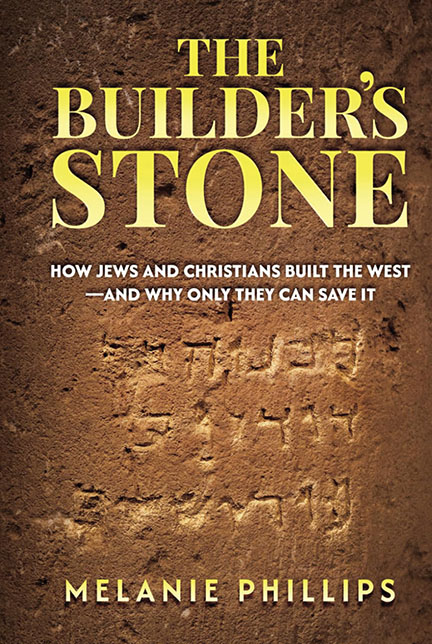
What could be wrong with John Lennon’s “Imagine” — a song many of us listened to endlessly in high school — and his dream of a peaceful “brotherhood of man”? Everything, says Melanie Phillips in her brilliant new book “The Builder’s Stone: How Jews and Christians Built the West — and Why Only They Can Save It.” There are things worth dying and, terrible as it is to contemplate, killing for. A society that no longer believes this is spiritually empty and threatened with collapse. Lennon’s anthem isn’t just saccharine (as those high schoolers often decide when they get older) but, in a sense, the perfect expression of what’s wrong today in the West.

Phillips has been sounding the alarm longer than almost any prominent contemporary intellectual, for over three decades. She’s been predictably dismissed by the usual bien-pensants (Wikipedia, et al.) as an “Islamophobe” and “right-winger,” but Oct. 7, and the waves of antisemitism that followed, are grisly vindication of her warnings. Anyone alarmed about these developments, and who is unfamiliar with Phillips’ work, must read this book.

“The Oct. 7 Hamas pogrom in Israel and its aftermath revealed not one but two cultures of death,” Phillips writes. “The first was Islamism, whose ultimate weapon against the West is, as the Islamists repeatedly declare, that they love death as the West loves life. The second was within the West itself, which has spawned a powerful movement determined to destroy its core values. As a result, the West is stricken with a kind of death wish of its own — a loss of the will to survive.” 

The pathology has been on full display since well before Oct. 7. This is no more obvious than in the lives of children in America and the U.K. Your friendly library Drag Queen Story Hour teaches its young audience that a man with giant prosthetic breasts is an inspiring example of womanhood. Boys are taught that they might “really” be girls and vice versa, a condition requiring life-altering hormones and the removal of unwanted body parts. Violent pornography inundates children with their first smartphone. The family is depicted only as a source of misery, never nourishment, to be discarded in favor of hypnotizing gurus on TikTok. 

Our schools teach children that their nation is entirely racist and imperialist, bringers of nothing but oppression. Why would anyone want to defend such a country, or feel anything but shame for belonging to it? So the past few decades have brought an increasingly frenzied drive to attack everything about the West, above all its religious foundation: not only Christianity, but the Judaism on which Christianity is based. It’s not incidental that Jews, in Israel and the diaspora, are being attacked; it’s essential. “Judaism,” Phillips writes, “is the West’s civilizational soul.” The only way the West can save itself is “by restoring those biblical values,” of Judaism and Christianity.

Phillips realizes this message may make some readers roll their eyes, if not want to hurl her book across the room. In our secular age, religion is widely considered reactionary at worst, or at best superfluous. I think of my mother, who will drive back to the grocery store if she realizes the cashier gave her a dollar excess change. She’d say she doesn’t need to believe in God to be honest. Phillips doesn’t deny that atheists or nonbelievers may behave ethically, or genuinely feel they have no need to believe in a higher power, but insists that doesn’t address the issue on a societal level. “The need to believe in something beyond ourselves to provide a purpose in life appears to be hardwired into the human condition,” she writes. “Atheists may sneer that this is just a sign of intellectual idiocy or psychological weakness. But that doesn’t make it any less true.”

The nonbelievers also need to see that, however dim their view of religion, their entire worldview — their sense of morality, reverence for rationalism and law, belief in equality and the very notion of progress — is rooted in biblical precepts. Monotheism provided the basis for science, because if the sun, moon, planets and stars were the work of a single creator, there must be regular laws governing their motions, which men could set out to understand. The Hebrew Bible gave the world a linear concept of time, which “stopped us from going round and round in circles forever” and made possible the idea of progress. Christian thinkers considered reason a gift from God that was indispensable to faith. This duality spurred great scientists including Francis Bacon, Isaac Newton, René Descartes and Johannes Kepler; faith wasn’t an anachronistic obstacle to their breakthroughs, but central to their worldview. True, faith and science haven’t always coexisted harmoniously; think Galileo. But science has grown in tandem with faith, not in resolute war against it.

It’s hard to appreciate the huge intellectual leaps it took for long-ago generations to proclaim views we take for granted. The beliefs of ancient Egyptians and Babylonians are so remote today, we can’t recognize how overthrowing them meant, at the time, an intellectual earthquake. It takes effort to recognize the emancipatory revolution in that ancient history. Even if you don’t believe God literally spoke to his people at Sinai, or even that he exists, you have to see that a religion whose founding moment centers on one God addressing recently released slaves, his people — men and women of all ages, characters and social status, every one an equal — and enlisting them into a covenant, expresses a profound, and previously unheard of, respect for human dignity.  

And they have survived despite seemingly impossible odds. Phillips argues that the “secret sauce” of Jewish resilience is education: the extraordinary emphasis on not only the Hebrew Bible, but the huge body of laws presented by the rabbis. This especially includes the Talmud, which Phillips calls “a work of genius whose significance both to the survival of the Jewish people and the development of the West is largely unappreciated.” With it, Jews not only gave the world a practical guide to everyday life, but “a mind-blowing fractal of logical reasoning” central to Western thinking. Through diligent study of the texts, Jews in the Diaspora found sufficient reason to go on being Jewish, and to live. Napoleon, upon seeing Jews fast at Tisha B’Av, is said to have commented, “Any nation that still cries after 1,500 years is guaranteed to return.” But the important point is not that Jews wept, but that they’d kept alive the memory of what they were weeping for.

As someone who was staunchly atheist most of my life, and who turned to a fairly destructive way of filling the God-shaped hole, I may have been the perfect audience for Phillips’ book. But it is for anyone, religious or not, who wants to understand why our world seems to be in crisis, and contemplate solutions beyond making another donation to the ADL. Phillips is one of our clear-eyed giants, like Douglas Murray, who needs to be heard.


Kathleen Hayes is the author of ”Antisemitism and the Left: A Memoir.”


Excerpt from ‘The Builder’s Stone’

Elevating the autonomous individual to the center of the universe has not ushered in an age of general contentment and satisfaction. On the contrary, there are increasing rates of depression and other psychological disorders, epidemic cruelty and venom on social media, agonizing confusion about sexual and gender identity, and social division into warring tribes fighting each other for power and privilege. 

Such distress is a civilization’s great cry for meaning. Taking the view that the pursuit of reason, freedom, and happiness necessarily means junking religion, the West has instead rendered existence itself progressively meaningless. 

For life to have meaning, it needs a sense of purpose. In recent decades, however, the West has taught itself that life is purposeless. There is nothing beyond ourselves. Life, the universe, and everything are the result of accidental developments. The appearance of design in the universe doesn’t mean there’s a designer; in Professor Richard Dawkins’s famous image, the watchmaker is blind, working without foresight or purpose. 

For Dawkins, facing up to the randomness of existence is a heroic act. For countless others, however, it is a recipe for despair and demoralization. Random developments produce unforeseen consequences that we are unable to affect in any way. By contrast, moral agency means we make a difference through how we choose to behave. Our actions matter. 

Moral agency is therefore a principal source of individual power; but the West has dispensed with moral codes as a curb on the freedom of the individual. So the paradox is that the more freedom we have, the less point there is to anything. Without moral agency, we become powerless, the plaything of determinist forces beyond our control. Human beings are helpless, in the grip of uncontrollable forces whether they be — as Marx, Darwin, and Freud told us—economic, biological, or psychological. 

If the human being is nothing more than a sack of atoms whirling through space and time, if our consciousness is nothing more than the snapping of synapses and selfish genes, existence is random and therefore pointless. The resulting sense of powerlessness is a recipe for exponential misery, a ratchet effect of unrealistic expectations and the creation of permanent disappointment, dissatisfaction, and disillusionment. 

This has driven, in turn, increasing attempts to forge a meaning to life beyond both religion and the satisfaction of the individual self. 

The most obvious expression of this quest is the array of causes to which young people gravitate to find a focus for their idealism. One cause after the other claims to be about the betterment of the world — eradicating prejudice on grounds of race, sexuality, or gender, promoting the Palestinian agenda, saving the planet. 

In fact, these causes are all based on demonizing and hating other people: white people, men, heterosexuals, Jews, and humanity in general. 

Worse still, since these causes are utopian, they all fail to deliver the perfection of the world that they have promised. From multiculturalism to environmentalism to post-nationalism, Western progressives have fixated on unattainable abstractions for the realization of utopia. Since this inevitably results in disappointment, they consequently seek scapegoats upon whom they turn with a rage that’s as self-righteous as it is ferocious in order to bring about by coercion the state of purity that the designated culprits have purportedly thwarted. 

Traditional liberal values, in the settlement that arose from the Enlightenment, involved tolerance, freedom, and the pursuit of reason. These values have come to characterize modernity in the Western world. Yet what’s called “liberalism” today has involved the repudiation of those virtues and replaced them with intolerance, oppression, and irrationality. Liberalism has mutated into its nemesis. These ideologies are all fueled by a rage against the world that exists and a desire to remake it anew. But rather than filling the existential vacuum, these ideologies merely deepen it.


What’s Worth Dying For? Read More »

Thou Shalt Not Surprise Thy Allies

Surprises can be delightful. A woman surprises her husband with tickets to his favorite band’s concert. He surprises her with pearl earrings she has wanted for years. But in international relations, surprises are problematic. Nations plan their moves in advance, and surprises disrupt these plans. A country formulates policies, and surprises force updates. A nation designs a work plan, and surprises ruin it. A country prepares for one thing and suddenly faces another. Surprises accelerate the heartbeat, provoke anxiety, and increase the risk of misunderstandings. While surprises might be enjoyable for couples, nations, particularly friendly ones, prefer to avoid them.

This is especially true in the relationship between Israel and the USA – a relationship that has seen ups and downs, disagreements, and yes, surprises. Contrary to what one might think, disagreements are relatively simple to manage. Surprises are the destructive element in relationships. One example: Israel surprised the Eisenhower administration by invading the Sinai Peninsula in coordination with Britain and France. At the time, the American administration was not exactly an ally and barely supported Israel. Yet, the surprise provoked a severe reaction. In fact, a dictate that Israel was forced to accept. Another example is when U.S. Secretary of State William Rogers launched an uncoordinated peace plan for the Middle East, which stirred controversy and ultimately contributed to his political decline. In 2015, Prime Minister Netanyahu surprised the Obama administration by accepting an invitation to speak at the U.S. Congress. In his defense, the issue was important (Iran), and it must also be noted that the Obama administration itself surprised Israel more than once.

This week, it appears that Donald Trump surprised Israel by approving significant secret talks with Hamas. This is interesting for several reasons:

First, Trump had already surprised Israel positively more than once. The known example was his decision in his first term to move the American embassy to Jerusalem. Many officials in Israel doubted he would actually do it until the moment he did. This might lead Israelis to think that a Trump surprise is more welcome and more manageable than those from other presidents, which could complicate matters when less pleasant surprises arise.

Second, Trump is a president full of surprises. His policy relies on his personality, which is fundamentally unpredictable. He shifts positions quickly, keeping everyone, including Israel, on their toes. Expecting Trump not to surprise is like expecting the sun not to rise.That’s his very nature.  

Third, Trump did with Hamas what many Israeli prime ministers did in previous decades: he operated through parallel channels of communication and policy. In one channel, Steven Witkoff pushed to prolong phase A of the hostage deal, while in another, Adam Boehler directly explored additional options with Hamas. This raises questions about the level of coordination inside the White House between these various channels. Presidents like Richard Nixon, and Israeli politicians like Shimon Peres, specialized in navigating parallel paths whose operators were not aware of each other’s existence. This also raises questions about how much coordination there was with Israel in pursuing these different tracks. Boehler said this week that Israel was aware of his moves, while Israel hinted that it knew less than it would have liked to know. The U.S. administration hinted that Israel attempted to sabotage the secret talks with Hamas. In Jerusalem, officials leaked that the news of the secret channel came from Israeli intelligence sources, not from proper communication by the U.S. government.

As mentioned, it’s possible that behind the U.S. talks with Hamas there is a significant policy dispute over how to proceed with negotiations with Hamas, how to manage the return of the hostages, whether a day-after for Gaza with Hamas as part of it is feasible, and more. But the significant dispute is less important, and the surprise is more critical. A significant disagreement can be discussed, while a surprise creates an atmosphere of suspicion and stifles discussion. What if the U.S. is conducting unknown talks with Iran about a new nuclear deal? What if the U.S. is having unknown talks with the Saudis about a political move concerning Gaza or the West Bank? What if the U.S. is paving paths unknown to Israel, putting it into policy dilemmas it is not prepared for?

Surprises are gateways to an atmosphere of paranoia. An atmosphere of paranoia is a gateway to miscalculations. Miscalculations are gateways to hasty moves. Hasty moves generate even more surprises — and the cycle repeats. 

Israel had a strange week. A week that in and of itself necessitates a new thinking about opening new paths.

Something I wrote in Hebrew

Trust in the leadership of Israel’s Shin Bet – the internal security service – is low. Why?

It is no wonder that trust in the top brass of the Shin Bet is low. It is absurd to think that public trust in the top brass of the Shin Bet should be high. After all, it is the top brass that failed to identify the preparations for the Oct. 7 attack … But if this were the main explanation for the low trust in the Shin Bet, we should have seen low trust in the top brass of the Shin Bet in all strata of society, all of whom recognize the failure and the tragedy. This is not the case … On the right, 85% have no trust in the top brass of the Shin Bet… a mirror image of opinions in the center and left … The ranking of the Shin Bet’s top brass is derived primarily from a political position.

A week’s numbers

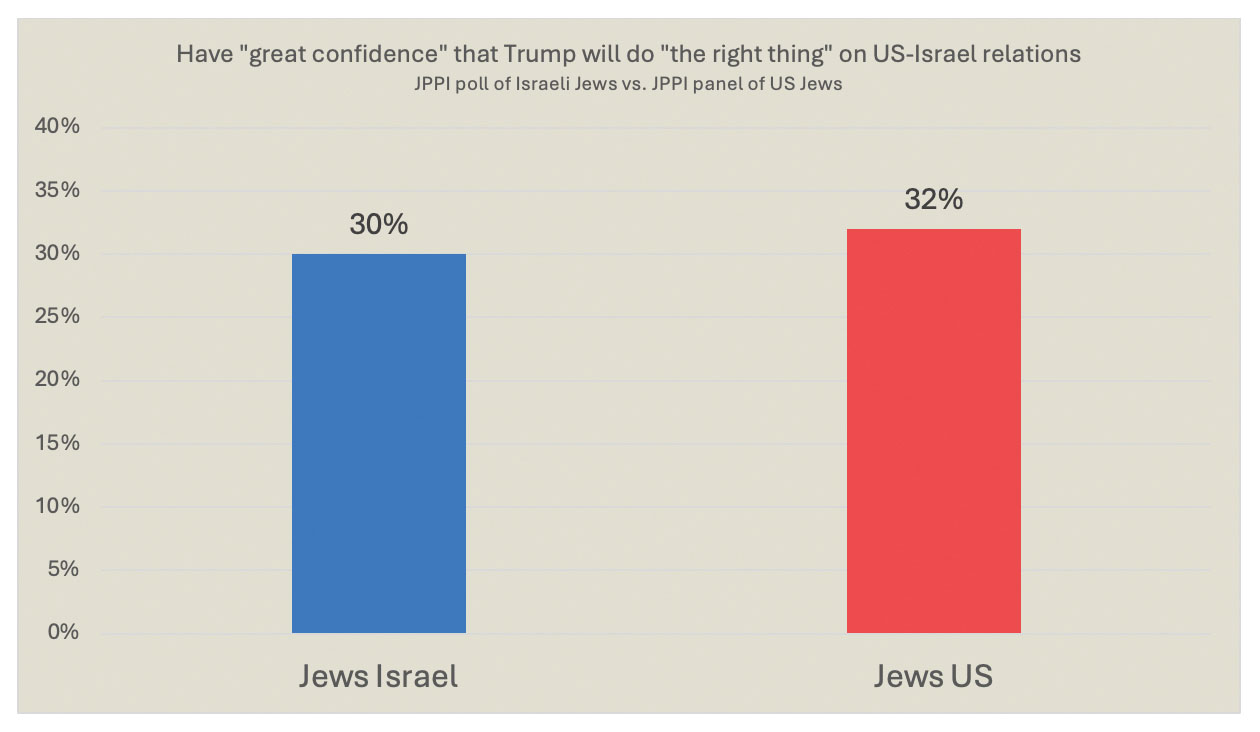
This came out surprisingly close… 


A reader’s response

Ruby Aronson asks: Is Naftali Bennett running for PM again? Answer: All signs show that he is, when there’s an election, and current polls give him a shot at winning.


Shmuel Rosner is senior political editor. For more analysis of Israeli and international politics, visit Rosner’s Domain at jewishjournal.com/rosnersdomain.

Thou Shalt Not Surprise Thy Allies Read More »

Have You Heard the One About…

Jews have been laughing from the very beginning.

When G-d told 100-year-old Abraham and 90-year-old Sarah that they would have a child, “Abraham fell flat on his face and laughed” (Genesis, 17:17) while “Sarah laughed inwardly” (Genesis 18:12). No surprise that they named their son Isaac, which means “he laughs.”  

The Jewish people have made extraordinary contributions to pretty much every field imaginable.  Scientists such as Albert Einstein and Jonas Salk have expanded our knowledge of the universe and extended our lives, while artists such as Barbra Streisand and Stephen Sondheim have helped make our lives worth living.   

But at just 2% of the U.S. population, is there any area where Jews are as disproportionately represented as in comedy?  Groucho Marx, Milton Berle, George Burns, and Eddie Cantor; Mel Brooks, Sid Caeser, Gene Wilder, and Gilda Radner; Joan Rivers, Sarah Silverman, Jerry Seinfeld, and Billy Crystal.  Decade after decade of comedic brilliance.

Some argue that the Jewish sense of humor evolved in response to the obstacles we have faced over time.  An opposing view says that it developed despite those challenges.  That reminds me of an exchange from “Fiddler on the Roof” when Tevye overhears two men arguing.  One says that you should always be aware of what is happening in the outside world even though it can be so depressing.  Tevye is convinced, declaring, “You are right.” The other person maintains that ignorance is bliss, to which Tevye asserts “You are right, too.”  A third man points out that they can’t possibly both be correct, to which Tevye states, “You know, you are also right.”

Some argue that the Jewish sense of humor evolved in response to the obstacles we have faced over time.  An opposing view says that it developed despite those challenges.

It has been said that analyzing humor risks making it not very funny. But perhaps it is incongruence – the coupling of incompatible thoughts – that makes Jewish humor so special.  The ideas don’t make sense together; until you realize that they do.  There is often a pause before you get the joke and begin to laugh.  

As a young boy, I would go to the Catskills with my mom and grandmother, and that is where I was first exposed to Jewish humor.  A woman complains to her waiter that “the food here is really terrible.”  Her friend chimes in, “and the portions are so small!”  It took me years to figure out why that was funny.

Just as the notion that there isn’t enough inedible food is contradictory, so is the nine-word description of most Jewish holidays: “They tried to kill us. They failed. Let’s eat.”  Recalling the horrors of antisemitism on one hand; time for dinner, on the other.  And don’t forget that the difference between a Jewish pessimist and a Jewish optimist is that while the pessimist believes things are so bad that they can’t possibly get worse, the optimist is confident that they can.

Humor can illustrate the power of Jewish identity.  You might know the story of Morris Goldberg.  Morris was the president of his synagogue until he ended up so disgusted with temple politics that he not only left his shul, he left his faith.  He became a Christian and threw himself into the life of his church.  In fact, he received the honor of being named Parishioner of the Year.  When he accepted the award at the church banquet, he began his speech with the immortal words, “My fellow goyim.”

I tried my best to integrate humor into my teaching, and into my administrative duties. My goal was to level the playing field – making the professor and the president more relatable.

But if you haven’t found the stories in this column all that funny, I have an excuse – my academic discipline is economics.  As they say, an economist is an accountant without the personality.  

So let’s keep on laughing.  We should never allow our enemies to wrest the gift of humor from our people, or from the larger world.

A Jew, Irving Berlin, wrote the great classics “God Bless America” and “White Christmas.” But when I need to be cheered up I listen to Adam Sandler’s “The Chanukah Song.”  “Paul Newman’s half Jewish, Goldie Hawn’s half too. Put them together, what a fine-looking Jew!”  Does it get better than that?


Morton Schapiro is the former president of Williams College and Northwestern University. His most recent book (with Gary Saul Morson) is “Minds Wide Shut: How the New Fundamentalisms Divide Us.”

Have You Heard the One About… Read More »