
A Moment in Time: “Vote Now to Help Shape the Future of Israel”
|
|

A Moment in Time: “Vote Now to Help Shape the Future of Israel” Read More »

|
|
A Moment in Time: “Vote Now to Help Shape the Future of Israel” Read More »
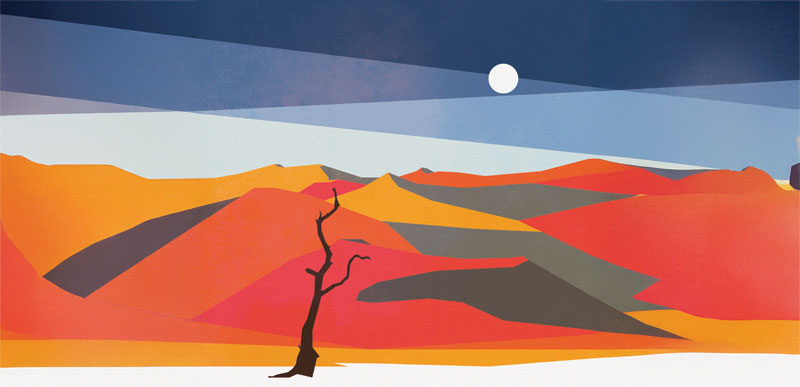
Aaron and all the Israelites saw Moses, and behold, the skin of his face was radiant. They were afraid to approach him. ~ Exodus 34:30
We saw the Burning Bush
on Moses’ face and we
were afraid of him.
We desert bound people
who saw a sea part
and frogs fall out of the sky
We homeward-bound ex-slaves
who didn’t yet know what to do
with our freedom
We empty slates waiting
to be filled with knowledge from
lips on a radiant face.
We were not prepared
for the radiance – A face
glowing with residual God.
We had no idea only our children’s
feet would take this knowledge
to the promised place.
Be careful with our knowledge
with our righteousness
with the things we know we know.
Our self-assured raison d’etre –
this glow of history and promise.
It frightens the neighbors.
Approach with a veil of humility.
Their light, their knowledge
is worth knowing.
Rick Lupert, a poet, songleader and graphic designer, is the author of 28 books including “God Wrestler: A Poem for Every Torah Portion.” Visit him at www.JewishPoetry.net
Fear and Loathing in the Desert – A poem for Parsha Ki Tisa Read More »
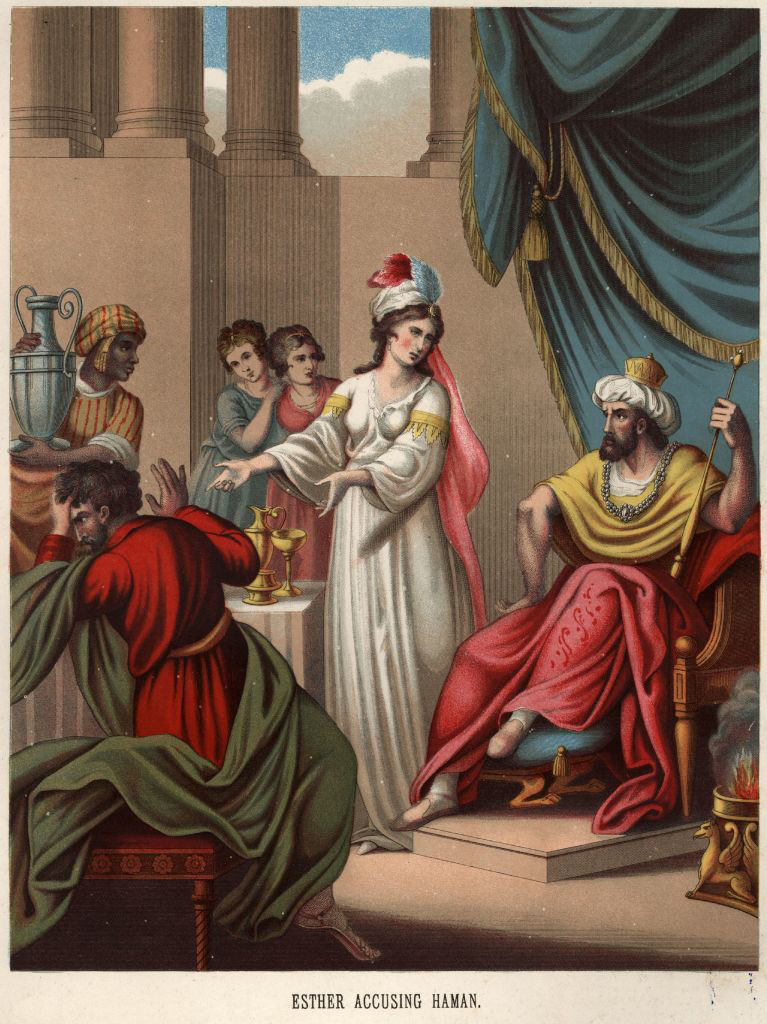
Queen Esther, who is Jacob’s rose,
and purple, Mordecai,
are heroes, for they fought our foes:
their names will never die!
Oh hateful Haman, persecutor
of all the Jews in Persia,
the Queen declared you didn’t suit her—
after some inertia.
For saving Hebrews from this killer,
dear Mordecai, you’re blessed.
When Esther wrote up the Megillah
she said you were the best.
Were you his niece, or is it true
he loved you all his life,
although you married a non-Jew
and once had been his wife?
Make sure that we curse all the others,
above all Haman’s Zeresh!
Their wish was, if they’d had their druthers,
for all us Jews to perish,
and, when their stars appeared ascendant,
attacked us, which is why
we hanged ten Haman chiefs dependent
on their own gallows high.
What else is new? It happened then,
and then so many times….
Again it happened, and again,
there’s no end to the crimes
Amalekites so nearly did
in Persia, and are cursed,
but sad to say, if you’re a yid
you know they weren’t the worst.
Look on the bright side, if you must:
one guy was good, Harvonah,
but if in goyim you would trust,
remember, he’s a loner!
Still, Purim which comes once a year
can soften blows, a cushion
that makes us feel that help is near —
take seconds, as in Shushan,
for Shushan Purim, Purim’s sequel,
implies that it’s no sin
to be as seconds more than equal
in fights we need to win.
The Mishnah in Kelim 17:9 states:
הָאַמָּה שֶׁאָמְרוּ, בָּאַמָּה הַבֵּינוֹנִית. וּשְׁתֵּי אַמּוֹת הָיָה בְשׁוּשַׁן הַבִּירָה, אַחַת עַל קֶרֶן מִזְרָחִית צְפוֹנִית וְאַחַת עַל קֶרֶן מִזְרָחִית דְּרוֹמִית. שֶׁעַל קֶרֶן מִזְרָחִית צְפוֹנִית הָיְתָה יְתֵרָה עַל שֶׁל משֶׁה חֲצִי אֶצְבַּע. שֶׁעַל קֶרֶן מִזְרָחִית דְּרוֹמִית הָיְתָה יְתֵרָה עָלֶיהָ חֲצִי אֶצְבַּע, נִמְצֵאת יְתֵרָה עַל שֶׁל משֶׁה אֶצְבָּע. וְלָמָּה אָמְרוּ אַחַת גְּדוֹלָה וְאַחַת קְטַנָּה, אֶלָּא שֶׁהָאֻמָּנִין נוֹטְלִין בַּקְּטַנָּה וּמַחֲזִירִין בַּגְּדוֹלָה, כְּדֵי שֶׁלֹּא יָבֹאוּ לִידֵי מְעִילָה:
The cubit of which they spoke is one of medium size. There were two standard cubits in Shushan Habirah, one in the north-eastern corner and the other in the south-eastern corner. The one in the north-eastern corner exceeded that of Moses by half a fingerbreadth, while the one in the south-eastern corner exceeded the other by half a fingerbreadth, so that the latter exceeded that of Moses by a fingerbreadth. But why were there a larger and a smaller cubit? Only for this reason: so that craftsmen might take their orders according to the smaller cubit and return their finished work according to the larger cubit, so that they might not be guilty of any possible trespassing of Temple property.
The existence of two standard cubits in Shushan Habirah reflects the celebration of a second day of Purim in Shushan. According to Daniel 8:2 and 16, the river Ulai separated the capital city of Shushan, known as Ir Shushan, from its palace, known as Shushan Habirah (Dan. 8:2 and 16), and the word Ulai means “perhaps,” not only reflecting the use of this word by Abraham’s servant regarding the possible unwillingness of Rebekkah to leave her parental home in Mesopotamia to marry Isaac (Gen.27:39) but, according to a commentary by Joseph ibn Yahya, reflecting Daniel’s doubts about whether the temple in Jerusalem would be destroyed.
Gershon Hepner is a poet who has written over 25,000 poems on subjects ranging from music to literature, politics to Torah. He grew up in England and moved to Los Angeles in 1976. Using his varied interests and experiences, he has authored dozens of papers in medical and academic journals, and authored “Legal Friction: Law, Narrative, and Identity Politics in Biblical Israel.” He can be reached at gershonhepner@gmail.com.
Taking Seconds on Purim Read More »
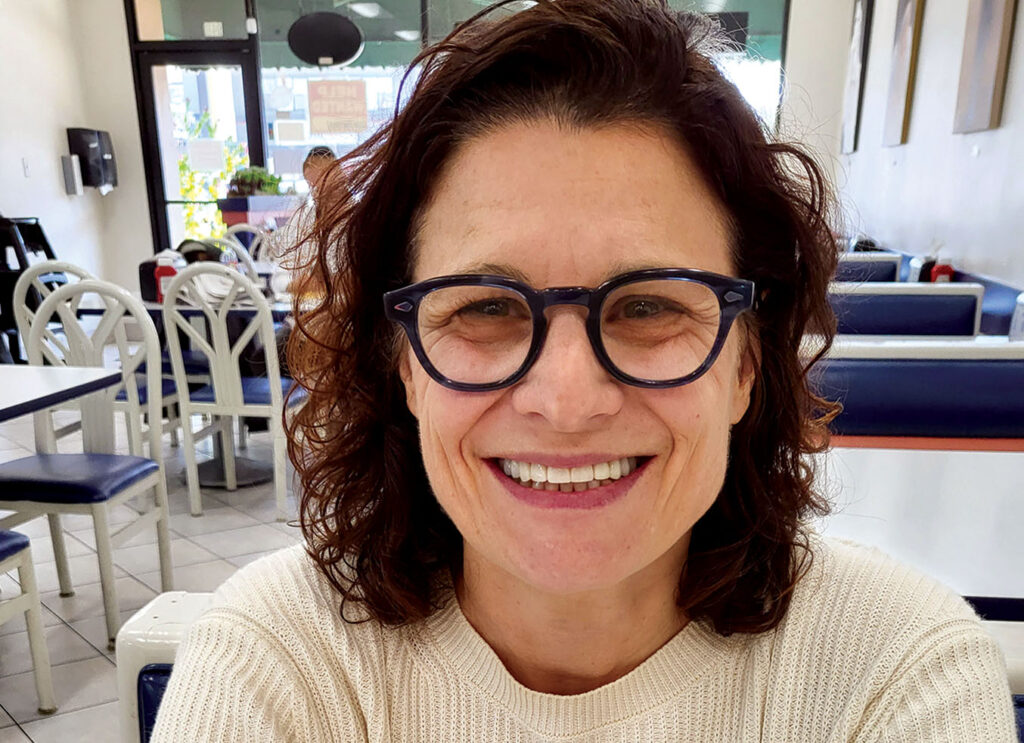
Rabbi Candice Levy — a full-time lecturer at American Jewish University’s Ziegler School of Rabbinic Studies — knew early on where she would land. As a high schooler at YULA and a student at Yeshiva University’s Stern College for Women, Levy knew she wanted to work in a classroom.
She could not have imagined herself as a rabbi, she said, partly because she comes from “a very traditional French Moroccan family.”
But the classroom felt like home. “I love learning,” she told The Journal. “That’s it. I teach because I love learning.” For Levy, the best part of being a teacher is “to walk into a classroom ready to teach a text I know forward and backward. I have written about it. I have researched it. Then a student has a look that asks, ‘What about this?’ And I think ‘Oh, my gosh. I never thought about that.’ Then I rediscover the text. Every time I teach it, I rediscover the text through new eyes.”
Levy remained in New York a few years after she graduated. At one point, she was going to practice law, but discovered she loved studying law more than practicing. “When I came back here, there was a part of me that said, ‘Oh, rabbinical school, that’s great.’ I walked into Rabbi Cheryl Peretz’s office [at American Jewish University]. I told her ‘I’m not really a Conservative Jew, and I don’t really want to be a rabbi, but I want to learn, and there’s learning to be done here.’ I don’t know why. I always say she had such hakaras ha tov [gratitude].” She insisted she was not trying to become a rabbi. At that time, when Levy thought of rabbis, it evoked images of Maimonides, Moshe Feinstein. But she had no idea what motivated Rabbi Peretz to say, “Sure, we have room for you.Somebody else, Levy thought, might have said “‘What are you doing here?’’’
Looking back, after knowing Rabbi Peretz for many years, she suspects Peretz “could have seen something I wasn’t ready — or able — to see.”
Ordained less than two years ago at American Jewish University’s Ziegler School of Rabbinic Studies, the teacher is now known as Dr. Levy, as in PhD.
She spent two years learning at Ziegler – before earning her PhD in Near Eastern Studies at UCLA. Later, she logged nine years at Hebrew Union College, teaching future Reform rabbis. Eventually Levy realized she was doing more than just teaching. “I wasn’t teaching biology. I was teaching something that informed my life, that informed every part of who I was.”
She wondered if part of the reason she avoided deciding on the rabbinate was because “I wasn’t sure. I didn’t know what to make of it myself. I didn’t know what my parents, my family, my larger community, would make of it. “As you grow into adulthood, into your own person, then you learn – okay, I didn’t necessarily start out to be a rabbi, but I kind of am functioning in that way.
“It was a gradual building,” she said
Levy flashed back to a possible turning-point pre-rabbinic moment. “At HUC, a student had come to me, and I found myself speaking to her. I said ‘I am not a rabbi.’ She said something like ‘you are my rabbi.’” The signs seemed to be pointing her in one direction. “I went back to Ziegler where I spoke to Rabbis Bradley Artson and Peretz. They were, like, ‘Finally. We have been waiting for this for 20 years.’ When I went back, it actually had been 20 years since I started.” It wasn’t a breeze. “There was a year when I was teaching at Hebrew Union College, and then I had to side hustle as a rabbinical student on days I wasn’t teaching,” she said. “It was hard, but it was a beautiful transformative experience. To be in the classroom and not have to be responsible for teaching but to be able to learn, reflect and learn from my classmates. Over the course of that year, “there was something about they are the same texts. But I think the way you approach a text as an academic is different from your studying what does this text mean for me as a Jew and for Jewish community today?” One change she noticed immediately after she was ordained was a sharp change among her students when she returned to the classroom. “For a long time, I was just Dr. Levy,” she said. “I found people will respond to you differently as Rabbi Levy rather than Dr. Levy.”
Explaining her circuitous journey, Levy said, “If there ever is a doubt there is a God, my life is proof not only that God exists but that God has a wicked sense of humor. All of the classes I was thrown out of or steadfastly ditched in high school and college I now teach.” She ditched because “I found myself strained. I have said all research is mesearch, I once got thrown out of class in high school because I was horrified by the story of Yiftach and his daughter.”
Explaining her circuitous journey, Levy said, “If there ever is a doubt there is a God, my life is proof not only that God exists but that God has a wicked sense of humor.”
How did Rabbi Levy’s parents respond “when finally I decided to go back to get my ordination? When I told my parents, my dad said ‘This is what you started when you were five, and it’s finally come to be.’
“My parents understood. I am the oldest of four girls — I went to synagogue with my dad always — first to Magen David when it was on Melrose. I was the lone girl staying up studying all night with the men. My father understood I loved it. As a Levi, I would see him washing the hands of the Kohanim. I sat with my dad until it became ‘You’re too old to do that.’ Our family, our home was oriented around the rhythm of Jewish life. It was not separate. The schools I went to were oriented differently, primarily Ashkenazi. It has been a circuitous road.”
Jewish Journal: What is your favorite childhood memory?
Rabbi Levy: Shabbat at my grandparents’ home because it was a three-generation affair. It was just gorgeous.
J.J.: What is your most important unfulfilled goal?
R.L.: There’s always more to learn
J.J.: If you could gain a superpower, what would it be?
R.L.: Time travel, or the ability to move between this world and the next, to revisit those we have lost and those who shaped our tradition whom I never got to know.
Rabbis of LA | Rabbi Candice Levy Chose the Classroom Over the Bima Read More »
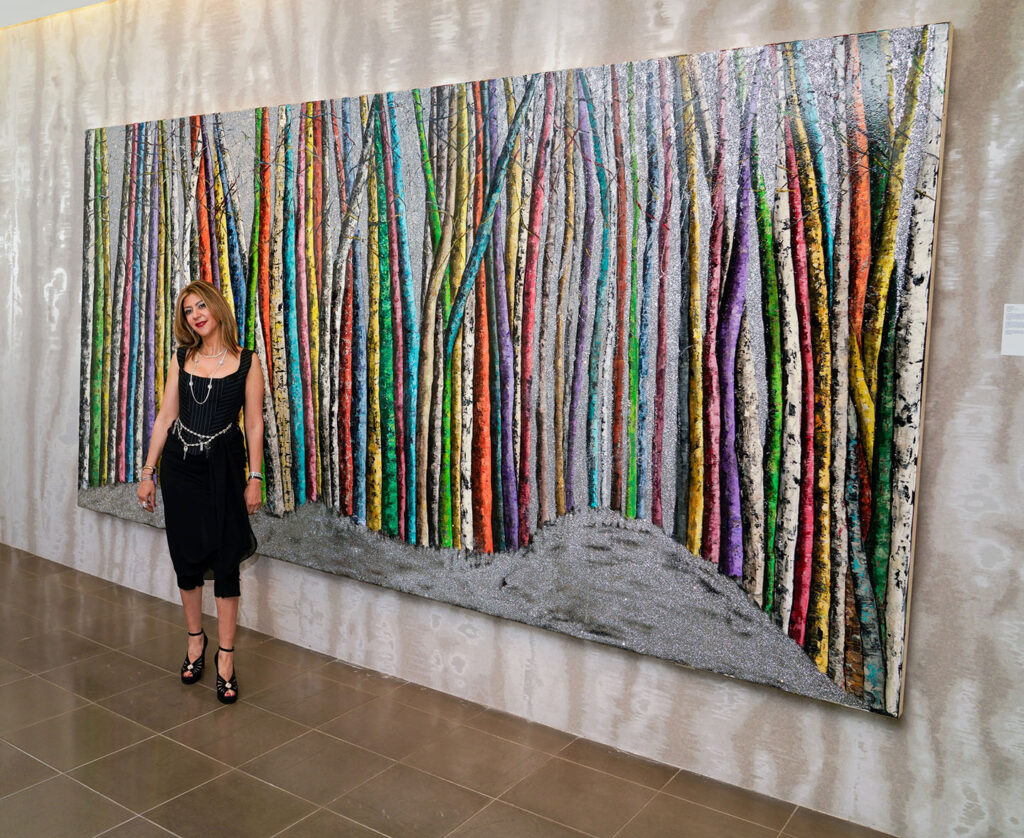
Haleh Mashian, the owner of Mash Gallery, loves to paint trees, flowers, water and nature. In her recent group exhibition, “À Gogo III” at the Pacific Design Center, several of her works were on display — huge paintings of trees forming a forest so dense that nothing was visible between them except tree trunks.
“I want to emulate trees because I feel they are resilient and rooted in the ground, just beautiful,” said Mashian. “They bend to anything that comes their way. They’re surrounded by the elements, but it makes them stronger. I feel their energy.”
In many ways, Mashian is like those trees. She, too, has had to bend and stand strong in the face of life’s challenges. One of the most harrowing experiences of her life began with the abduction of her father in Iran shortly after the 1979 revolution. Mashian believes he was kidnapped because he was Jewish, though no one ever admitted it or acknowledged that he had been taken by the Islamic government.
“Anyone who looked for him was asked, ‘Why are you looking for a Jew?’ So yes, I believe it had something to do with the fact that he was Jewish,” she said.
In 1986, at 20 years old, Mashian escaped Iran with her 13-year-old brother, traveling under Muslim names. “At the time, they didn’t let Jewish people leave the country, so we escaped from the northern part of Iran, first to Switzerland and then to Italy, where we stayed for four months until we were able to come to the U.S. in 1987.”
Her mother remained in Iran and did everything she could to find her husband, but to no avail.
“Imagine dealing with ISIS on a daily basis,” said Mashian. “She tried to get information from all these jihadi people, but they kept denying they ever took him. After all these years, she never got closure, and in the end, she came up empty-handed. They never disclosed what happened to him, but a few years ago, she found out that he was killed.”
Eventually, her mother, now 82, left Iran and immigrated to the U.S. a year ago. Had Mashian’s father been alive today, he would have been 93.
Mashian began painting later in life, at 25. Before that, she was a pianist but never had the opportunity to explore painting. Once she did, she couldn’t stop. “I realized that I was able to express my emotions through art, to let go of anything that needed to come out. No matter what series I do, there is a lot of energy in any art I create. Sometimes it’s beautiful, sometimes painful. I’m very appreciative that I have this outlet.”
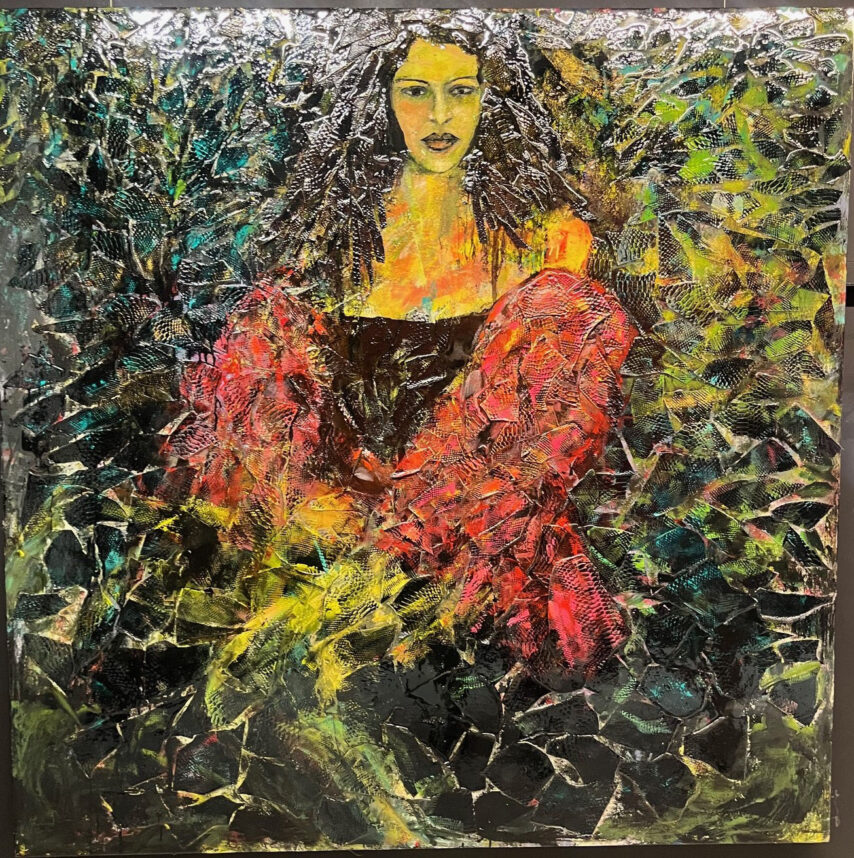
At first, she painted in her home studio, finding solace in art as a form of healing. But the solitude became isolating, leading her to open Mash Gallery in 2018 in the Downtown Los Angeles Arts District. In 2022, she moved the gallery to its current location on La Cienega in West Hollywood.
“I went to a meditation retreat led by Dr. Michael Gottlieb, and during one of these meditations, I saw myself in my studio alone all day, cut off from the world. In that moment, I knew I needed to engage with the world — find a way to be an artist, develop my craft, and continue creating while being part of a community. That’s when I went for it and opened my gallery.”
Initially, she wasn’t focused on representing other artists, especially in the age of Instagram, when artists can showcase and sell their work independently. But eventually, she began filling her gallery with works from other artists, each one unique, yet all resonating with her.

“I look at art differently. It can be pop art, colorful art, edgy art — any kind of art, really — but it has to have a soul, be inspiring and speak to me as an artist.”
Mashian curated “À Gogo III,” featuring a collection of works from over 50 artists of diverse backgrounds. The exhibition showcases an exceptional mix of contemporary pieces by local, national and international artists, featuring bold, pop-inspired works, from a massive wooden statue of King David to an impressive portrait of a woman made entirely out of paintbrushes.
Although she personally wasn’t affected by the Palisades fires, Mashian has friends who lost their homes or were evacuated and are still unsure when they will be able to return. She decided to donate 10% of the exhibition’s proceeds to LA Wildfire Relief, aiding communities impacted by devastating wildfires.
This is not the first time she has donated proceeds from her exhibits to important causes. After Oct. 7, she held a group exhibition of female Jewish artists at Mash Gallery and donated 100% of ticket sales and 50% of sales proceeds to female survivors of trauma and sexual violence in Israel.
Her husband, Bryan Mashian, a lawyer, was by her side, as usual, at the exhibit. The couple married in 1991 and have two children, a 28-year-old son and a 25-year-old daughter.
“He is my biggest supporter; he is my rock,” said Mashian of her husband. “He encourages my growth and believes in me and my work.”
Mashian has showcased the works of nearly 500 local and international artists since opening Mash Gallery. Some of her pieces have been purchased by overseas collectors who she has never met in person and who bought her work online without seeing it first.
“To me, it’s meaningful because they don’t know me, but they resonate with my art,” she said. “They feel a connection to it.”
With her local clients, she has a more personal relationship. One client arrived at her gallery with a bouquet of flowers, deeply moved by her art and wanting to show her appreciation. Some of these clients have become close friends.
“I wanted to create this space as an intimate place of gathering,” said Mashian of her gallery. “I believe that a lot of the old gallery model will become obsolete. I saw the need for people to connect and be part of a community, especially after COVID and the fires. There is power in being together. In my little corner on La Cienega, people come and engage with each other.”
When asked for her best advice to aspiring artists, she emphasized the importance of dedication and refinement.
“Create a cohesive body of work where one can see the intention behind what you’re creating. If you want to go commercial, you have to dedicate enough time and not fall in love with the first thing you do.”
Mashian also composes music for every art series, believing that the music and the art complement one another.
“Creativity is not limited to one act,” she said. “If you’re creative — and everybody’s creative in some way or form — it’s just a matter of bringing that quality to the surface. Whenever you create, you are touching your essence and that, in itself, has so much healing power.”
She continued, “I love celebrating other people’s creativity. If we all tapped into that aspect of ourselves, the world would be a much better place.”
Haleh Mashian’s Journey of Resilience, Creativity and Community Read More »
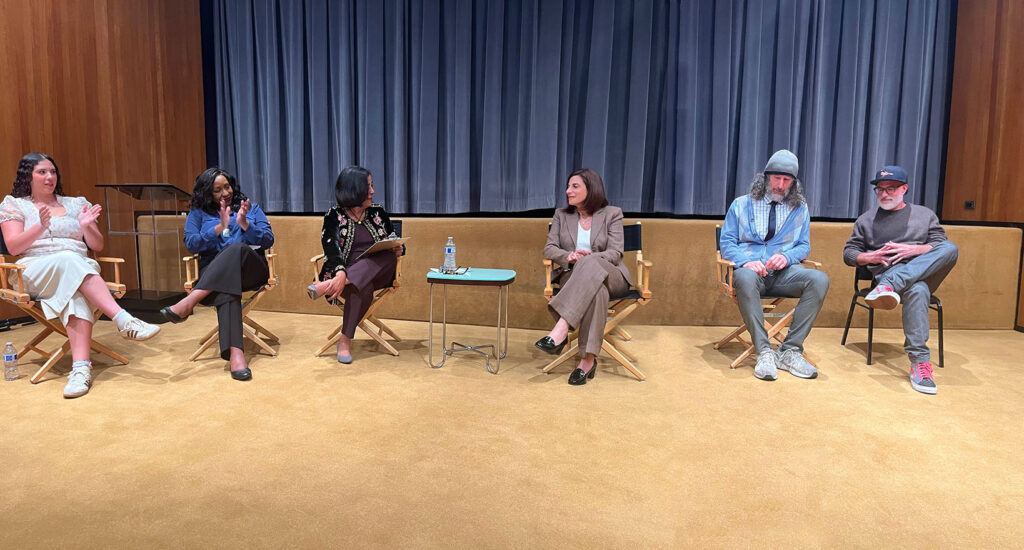
A screening of the documentary film “No Blacks, No Jews, No Dogs” — which follows Jewish students from Los Angeles coming together with African American students in Selma, Alabama — was held on March 6 at Radford Studio Center in Studio City.
Among those in attendance at the screening was former LA City Councilmember Jan Perry, who moderated a panel after the film was shown. Those on the panel were Pressman Academy Rabbi Chaim Tureff, the rav beit sefer at Pressman Academy; Joumana Silyan-Saba, director of policy discrimination enforcement for the City of Los Angeles’ Civil and Human Rights and Equity Department; filmmaker Kenny Stoff; student Miya Peterseil; and Shanda Wolkowitz, director of community engagement and network at Challah and Soul, which seeks to foster relations between Jewish and Black communities through food, storytelling and education.
The film, shot by Stoff, follows a group of eighth-grade students from Pressman Academy as they travel to Alabama and spend three days with students their age from their sister school, RB Hudson, a middle school in Selma. Together, the students visit sites of significance to the Civil Rights Movement, including the Edmund Pettus Bridge, the site of the “Bloody Sunday” conflict on March 7, 1965, when police attacked African American demonstrators with horses, clubs and tear gas.
During their time together, the students also visited the 16th Street Baptist Church, which was targeted in a deadly bombing in 1963.
Though their interactions begin as shy and tentative, the group of Jewish and Black students depicted in the film gradually form friendships as Tureff, joined by community leaders, lead the kids around several stops in Alabama.
During the post-screening panel, the participants spoke about the importance of breaking the cycle of antisemitism and racism that has longed plagued society as well the history of oppression that ties the two communities together.
The screening of the film, which was held before a crowd that included students from local magnet school, Valley Oaks Center for Enriched Studies (VOCES), coincided with the 60th anniversary of the “Bloody Sunday” attack on the Edmund Pettus Bridge. Accompanying the students was Jamal Speakes, a teacher at VOCES.
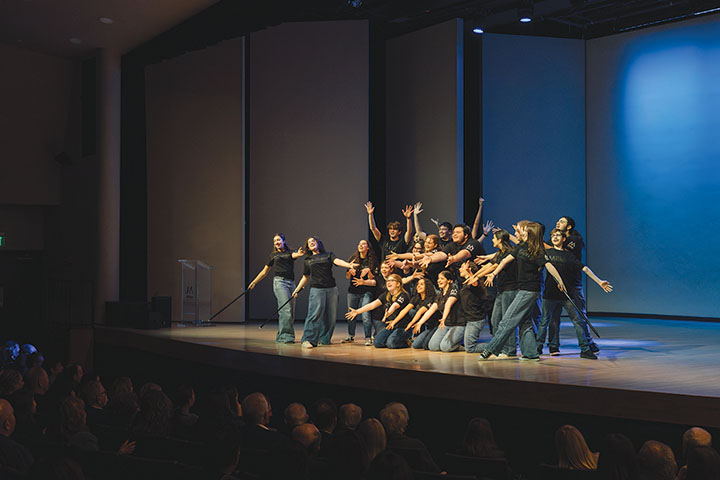
Milken Community School recently held its sixth annual “State of the School” address, featuring Milken Head of School Sarah Shulkind providing an update on the many goings-on at the LA private Jewish day school.
The Feb. 24 event marked the first time that Milken held its “State of the School” address on its recently acquired Milken East campus, a 22-acre hilltop site that Milken purchased from American Jewish University (AJU) in 2024.
The theme of the evening — which included Shulkind’s keynote; remarks from school leaders; and panels and artistic performances by Milken students — was “Only at Milken.”
“‘Only at Milken’ reflects our pride in what we’ve accomplished, our ambition for the future, and, most significantly, our unshakable belief that the world our children will inherit tomorrow is born in the school we build today,” Shulkind said. “In other words, Milken, in our very mission, aims to shape the future of the Jewish people and the world.”
At the start of the evening, Milken Board Chair Richard Sandler said Judaism is core to the school’s identity even as it seeks to outperform the best Jewish and secular schools in the city.
“Our responsibility is not to have the best Jewish school in Los Angeles — our responsibility is to be the best school in Los Angeles,” Sandler said, garnering enthusiastic applause. “And as most of you probably know, since you’ve entrusted us with your students, we are already there.”
Milken parent Ronit Cohen was among those in attendance at the “State of the School.” Her 16-year-old daughter, Noa, is in the tenth grade at Milken and plans to spend an upcoming semester studying abroad in Israel.

ZAKA — a renowned search, rescue and recovery organization in Israel — has played a key role in the response to the Oct. 7 attack. At a recent event, Israel Defense Minister Israel Katz (left) appears with ZAKA CEO Duby Weissenstern. Photo courtesy of ZAKA
Screening Marks Civil Rights Anniversary, Milken State of School, Zaka CEO Read More »

In 1772, a short pamphlet, Zmir Aritzim V’charvot Tzurim was published near Brody, Ukraine. In it were a series of condemnations and edicts against the new Chasidic movement, including an excommunication signed by the Rabbis of Vilna, among them the famed Gaon, Rav Eliyahu. The letters from various communities depicted the Chasidim as people uninterested in Torah study, who sit for hours together singing, smoking, and joking as they get ready for prayer. One letter writes that the Chasidim would say “God forbid, one must not be sad at all, or be pained (in regret) over any sin.” The same author explains “for them, every day is like a holiday…”
Despite the negative tone, these depictions underline how central joy is in Chasidic thought. And, as the letters also make clear, this attitude was dramatically different than the solemn, austere lifestyle of their opponents.
Judaism sees joy as critical to spirituality. One is meant to serve God “with joy and gladness.” Prayer should begin with a feeling of joy; and joy is a prerequisite to prophetic inspiration.
In the late 18th century, Chasidim brought joy back to the center. There are multiple reasons for this new found emphasis. It was in part a reaction to the overly intellectual, ascetic practices of the Rabbinic elite, which alienated many ordinary Jews. It was also a response to dire conditions of Eastern European Jews, who were desperate and downtrodden. But the pursuit of joy was first and foremost a spiritual quest.
A popular contemporary song goes “mitzvah gedolah lihiyot b’simcha tamid” “It is a great mitzvah to always be joyful.” This is a short quote from a leading Chasidic thinker, Rabbi Nachman of Breslov. It is a nice sentiment, but one doesn’t understand its true significance without reading the entire passage:
It is a great mitzvah to always be joyful and to strive with all one’s strength to distance sadness and melancholy. The general principle is that one must exert great effort to always be happy. For human nature tends to draw a person toward melancholy and sadness due to life’s hardships and circumstances, and every person’s life is full of trials and tribulations. Therefore, one must compel themselves with great force to always be joyful.
Joy isn’t automatic or natural; melancholy is. But without joy, one cannot connect to the divine. Therefore, the foundation of all spirituality is the struggle against sadness.
So great is the importance of joy that even empty frivolity is allowed. In another passage Rabbi Nachman explains:
And the main thing is to always be joyful and to bring oneself to joy in any way possible, even through silly things—making oneself like a fool, engaging in silly matters and laughter, or jumping and dancing to attain joy, which is something very great.
Jokes, laughter, and silly dances can help one achieve spiritual greatness. Many Chasidic texts refer to a passage in the Talmud, where Elijah points out two brothers to Rabbi Beroka as uniquely worthy for the world to come. When Rabbi Beroka questioned them to discover what special merit the brothers had, they explained: “We are jesters, and we cheer up the depressed.” Rabbi Nachman of Breslov explains this text succinctly: They “were worthy of unusual merit simply because they made others happy.”
Sometimes silliness is true holiness.
Joy is a very holy pursuit. And no day exemplifies this more than Purim.
Rabbi Joseph B. Soloveitchik points out a dramatic contrast between the obligation to rejoice on Purim and that of other holidays. Maimonides, when writing about the obligation to rejoice on holidays says that “When a person eats, drinks, and rejoices on a festival, he should not be drawn to wine, laughter, and frivolity, thinking that whoever increases these increases in the mitzvah of joy. For drunkenness, excessive laughter, and frivolity are not joy, but rather debauchery and foolishness. However, regarding Purim, Maimonides writes that “One should drink wine until he becomes intoxicated and falls asleep in his drunkenness.”
The difference is striking. On other holidays, joy is meant to be thoughtful and controlled, integrated with prayer and Torah study. On Purim one is meant to simply rejoice until exhaustion, in a manner that would be frowned on otherwise.
Rabbi Soloveitchik explains that other holidays are meant to be divided “half for God, and half for man,” divided between the spiritual and the physical. But Purim is meant to be completely “for man,” without any restraints. And so the rejoicing knows no bounds.
While this explains the difference in practice, one must still ask: Why is Purim different?
Purim is an exile story. God is in hiding. Jews are hated. They are almost destroyed, and just lucky enough to be saved by Esther. After they survive, they are still vulnerable; as the Talmud points out, they are still Ahasuerus’ slaves, and still in exile. Nothing has really changed. New Hamans can, and will, plot against the Jews.
There is much to worry about at the end of the Megillah, which tells of a flawed redemption. But that’s precisely why we need to rejoice more on Purim than any other holiday. As Rav Nachman noted, to find joy amidst tragedy isn’t natural; it requires our full focus.
The joy of Purim is a joy of defiance. We will not let antisemites destroy our spirit; and we will not allow melancholy to rob us of our souls. Joy is simply too holy to give up on. And like the two jesters, we will find joy however we can.
This sort of joy is quite difficult to achieve. If your heart is broken, you can only find comfort in tears. It is painful to smile and laugh. When you get pulled into the public arena, you count the seconds until you can retreat to your cocoon of pain, the only place you feel you belong.
This year, after eighteen months of war, Purim feels like it’s a burden. But we must find a way to laugh, even with broken hearts.
The Purim costumes featured this week in Israeli newspapers remind us that you can celebrate in a time of trauma. Some of the children have dressed as former hostage Emily Damari, with their hands wrapped into the defiant three-finger salute Emily made famous. Others dressed as former hostage Romi Gonen, who loved animal prints. Entire classes at schools dressed in Batman costumes in tribute to the Bibas family.
Even on Purim we have not forgotten those we love, and we have not forgotten the last eighteen months. But we will not let go of joy. The children are smiling in these costumes; and when Purim comes, all of us will celebrate, no matter how difficult it is. As Rav Nachman said:
Therefore, one must compel themselves with great force to always be joyful.
And we will rejoice, no matter what. Just as Jews always have.
Rabbi Chaim Steinmetz is the Senior Rabbi of Congregation Kehilath Jeshurun in New York.
We Will Rejoice, No Matter What Read More »
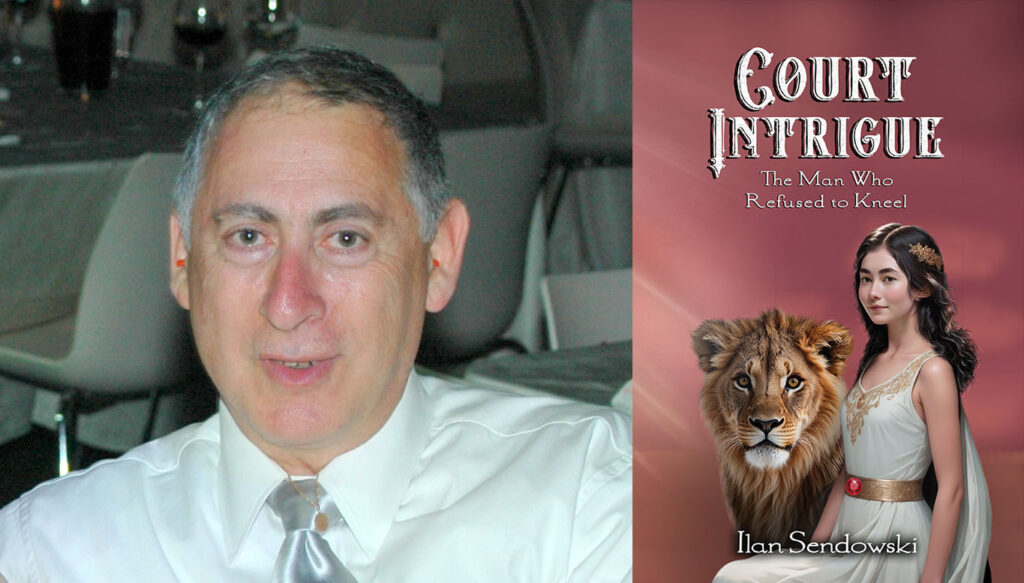
Just in Time for Purim, author Ilan Sendowski is publishing “Court Intrigue: The Man Who Refused to Kneel.” Sendowski’s book offers a fresh perspective on the timeless story of Megillat Esther. This updated English edition of his earlier Hebrew book present readers with a captivating and thought-provoking retelling of the biblical tale.
While the book is a work of fiction, Sendowski ensures that it remains faithful to the historical and textual integrity of the Megillah. At the same time, he brings the events to life in a way that allows readers to appreciate the depth of its political and legal maneuverings.
A lawyer, engineer and registered patent attorney, Sendowski has long been fascinated by the story of Esther. His in-depth research led him to uncover hidden layers of meaning within the Megillah, revealing profound messages about leadership, identity and survival. He challenges the common perception of King Ahasuerus as a foolish and indulgent ruler, arguing instead that he was a shrewd and strategic leader. Similarly, he reevaluates Esther’s rise to power, suggesting that her selection as queen was not a random event but a carefully orchestrated process influenced by the religious and cultural beliefs of the time.
“I was inspired by a series of lectures on the Bible and decided to apply my scientific and legal expertise to offer a fresh perspective on Megillat Esther,” Sendowski said.
Sendowski has written approximately 150 biblical insights for the Hidushim website and contributed around 2,400 pages to the WikiText commentary platform. He has also written an academic paper on the Book of Esther. However, he felt that a purely scholarly approach wasn’t enough — he wanted younger audiences to engage with the story.
“I want children to learn and internalize this: You may not believe it now, but there are solutions. Work hard, make an effort and suddenly, you’ll find one,” he said. “I first tested it on my three grandchildren, telling them the story and seeing their reaction.”
This led him to write “Court Intrigue.” At its core, the book portrays Mordecai and Esther as master strategists — laying traps, securing positions of power and executing calculated moves reminiscent of a chess game.
“My book explores key questions,” Sendowski said. “How did Mordecai orchestrate events to ensure Esther’s selection as queen after years of beauty contests? Why did he defy the highest-ranking minister, knowingly putting the entire nation at risk?”
This is one of Sendowski’s key insights. While many assume Mordecai defiance was an act of blind faith or stubbornness, he presents an alternative explanation.
The Megillah states, “So ordered the king to him.” The word “so,” — “ken” in Hebrew — is typically reserved for divine or royal decrees. Haman sought a royal honor of kneeling, but the singular phrasing suggests the command was heard only by him and he published it in the king’s name without an official decree.
“As a legal expert, Mordecai would have recognized this as unreliable hearsay, possibly an invalid order,” Sendowski said. “While one must obey even an illegitimate decree from a king, Mordecai chose to expose Haman’s usurpation of power by refusing to kneel. When Haman neither punished him nor reported him to the king, Mordecai realized the honor had not truly been granted by the king.”
Born and raised in Israel, Sendowski graduated from the Technion in Haifa with a degree in electronics. He immigrated to the U.S. in 1976 and studied at UCLA where he earned his master’s degree and worked in the U.S. defense industry. Later he studied law at the University of LaVerne, graduating in 1998.
Sendowski’s research also highlights a broader theme in the Megillah: the responsibility of the Jewish people to secure their own survival. Unlike other biblical narratives where divine intervention plays a central role, the Book of Esther is unique in that God’s name is never mentioned. According to Sendowski, this omission is intentional.
Unlike other biblical narratives where divine intervention plays a central role, the Book of Esther is unique in that God’s name is never mentioned. According to Sendowski, this omission is intentional.
“The message of the Megillah is that we must save ourselves — that’s the whole point,” he said. “Unlike the Exodus story, where miracles lead the Israelites to freedom, the Purim story emphasizes that we have to save ourselves. The Jews of Persia were saved not by divine intervention but through their own strategic actions.”
The book also explores parallels between the Purim story and Jewish history. Sendowski notes that Mordecai’s actions mirrored those of God and Moses who led the Israelites to freedom.
He also draws a sobering connection to the Holocaust, suggesting that had a Mordecai-like figure emerged in pre-war Europe to sound the alarm and mobilize the Jewish community, history might have unfolded differently.
“Court Intrigue — The Man Who Refused to Kneel” is available on Amazon.
Unveiling the Strategy Behind the Megillah: A Bold New Take on Esther’s Story Read More »
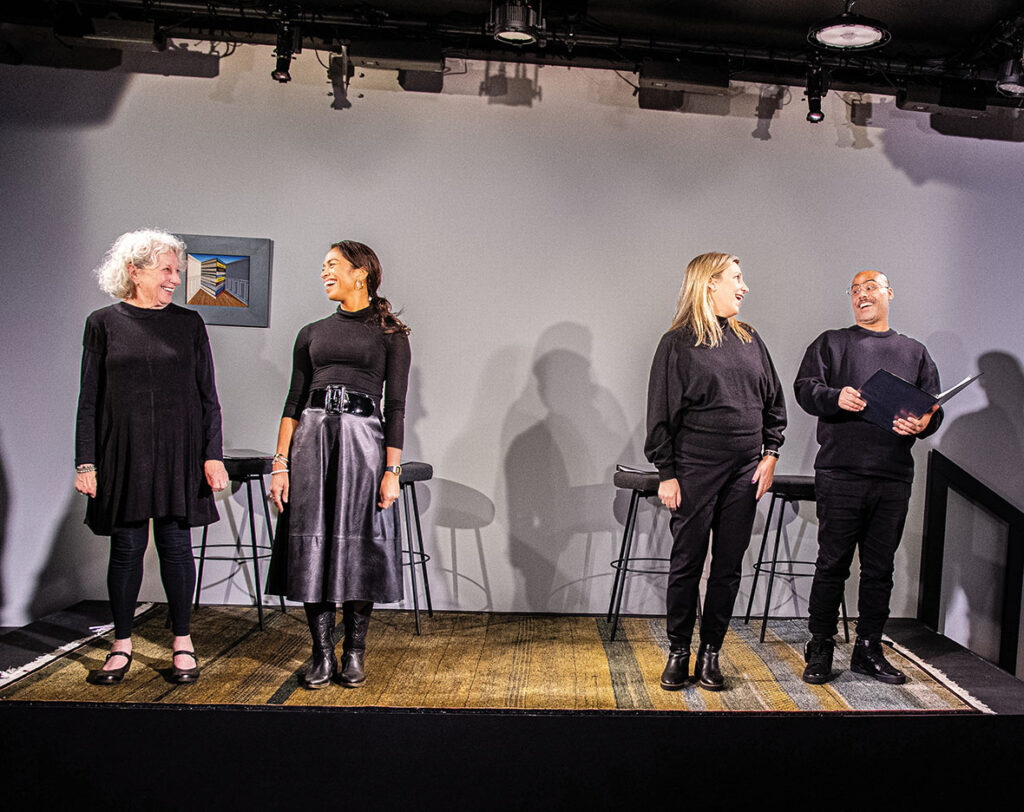
The theme of The Braid’s latest show is, per usual, right on target.
“Hold Me, Heal Me,” which features true Jewish stories of kindness, is the perfect counterprograming for this challenging moment in time. It is designed to make the audience laugh, cry and want to do good.
“This show is a possible antidote to times that feel overwhelming,” The Braid’s founder and artistic director, Ronda Spinak, who is producer of this show, told The Journal. “It reminds us that acts of kindness, great and small, make everyone feel better.”
“Hold Me, Heal Me” premiered in 2014. In January of 2025, just a week after the devastating Los Angeles fires, Spinak decided it was time to bring “Hold Me, Heal Me” back with new stories that feature the best of humanity.
“It is powerful to choose kindness,” Spinak said. “How incredible it would be if we moved through our days with kindness at the ready instead of short tempers, impatience and hate.”
“How incredible it would be if we moved through our days with kindness at the ready instead of short tempers, impatience and hate.” – Ronda Spinak
Spinak, who has a piece in the show, has been evacuated since Jan. 7.
“I walked back into my home on January Jan. 8 and again on Jan. 9 to save my house when fires were burning dangerously close across the canyon and the winds were picking up,” she said. “There were two strangers, who selflessly helped me protect my home.”
She added, “Their actions made a difference, and I was moved to tell this story of their kindness, mostly as a homage to them.”
Stories from the original show include works by famed Holocaust survivor and author Dr. Edith Eger, award-winning playwright Faye Sholiton and poet/art therapist Anna Belle Kaufman. Other additions include the tale of a sickly young boy befriended by a grandfatherly train enthusiast and a story of the bond formed between a Beverly Hills caller and a customer support worker worlds away.
Composer and lyricist Mike Himelstein believes the show’s impact will be lasting and powerful, because “that’s what all Braid shows do,” he told The Journal.
His story has the theme of “paying it forward.” It made him think that “there are people in my past that helped me so much, and I should acknowledge them and pay them back,” Himelstein said. “We know that the new people [we meet] need some help, and we should give it to them, but [let’s] not forget those who have helped us; they may need a boost as well.”
“Hold Me, Heal Me” is co-directed by Susan Morgenstern, The Braid’s producing director, and long-time Braid actor Jasmine Curry. The professional cast includes veteran performers from past Braid productions: Kimberly Green (“True Colors,” “What Do I Do with All This Heritage?”), Jeanette Horn (“What a Surprise!,” “StoryNosh”) and Joshua Reuben Silverstein (“True Colors,” “What a Surprise!”) They are joined by newcomer to The Braid Karen Agam Macarah (“Merrily We Roll Along,” “Into the Woods”).
Silverstein has a story in “Hold Me, Heal Me,” called “Laila and the Tooth Truth,” which he wrote as a testament to sacrifice.
“Sometimes we have to let go of something precious, because someone else in our lives is needing us to do so; they are far more precious than what we are holding on to,” actor/writer/comedian/beatboxer Silverstein told The Journal. “My daughter Laila shows up in a very sweet way in this piece.”
Silverstein hopes this show and his piece inspire people to think about how they can do more for each other.
“Even if it’s small gestures, words of encouragement, leaving something behind that we think a loved one will appreciate in the future [or] helping out a stranger in need,” he said. “We have to remember that we are all in this life together.”
Rabbi Ed Feinstein of Valley Beth Shalom wrote “Always, Charles,” about a night nurse who saved him during a very difficult moment,
“Our culture teaches us, in so many overt and subtle ways, that people are selfish, that life is a competition, that compassion and care are signs of weakness,” Feinstein told The Journal. “Stories of kindness, compassion and care remind us of our better selves; they offer us a vision of who we ought to be, and the redeeming qualities of human community and solidarity.
“The arts can reach the deeper part of us, the part that knows none of that is true,” he continued. “The arts can revive our commitment to care and nurture, uplift and embrace one another.”
Spinak added, “In a time of great uncertainty, and the long shadow of hate throwing its darkness on us all, acting with kindness creates a bit of light.”
As people act with a soft, gentle spirit, the light can grow.
“In the downward spiral of loss and sadness, gestures of kindness take us out of ourselves and by doing good for others, we allow our spirits to lift and faith in others is renewed,” Spinak said. “We are the hands of God when we do good.”
“Hold Me, Heal Me” runs from March 15 through April 10 in person in Los Angeles and the Bay Area, as well as Live via Zoom. For schedule, details and tickets, go to the-braid.org/healme.
The Braid Shares Stories of Kindness in Its Latest Salon Show Read More »
