fbpx

September 11, 2024

A Father’s Fight for Justice: The Quest for Accountability After Oct. 7

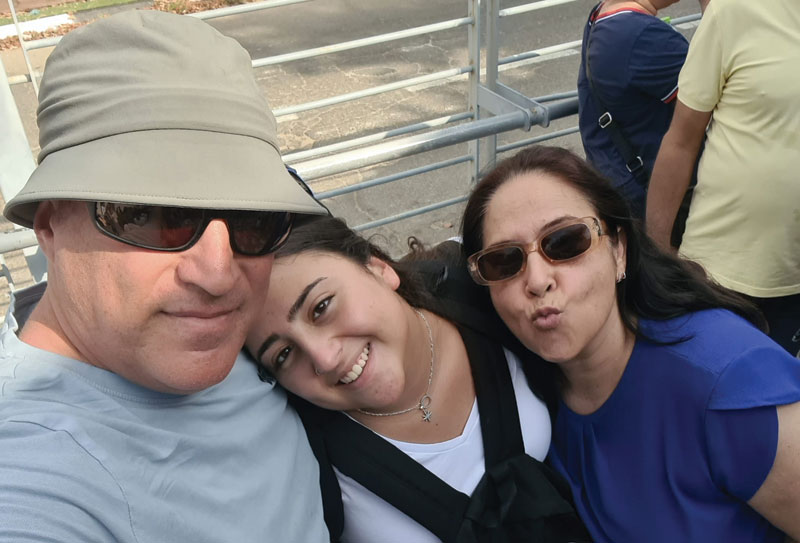
If Oct. 7 hadn’t happened, Roni Eshel would have likely completed her IDF service and enrolled in a culinary school in New York. Eyal Eshel, her father, would have continued enjoying his life as a husband and a father of three, his career and his daily routine. But everything changed that day.

For on Oct. 7, Roni, an observation soldier in the IDF serving with the Border Defense Corps’ 414th unit, was killed. Initially reported as missing, it was only on Nov. 9 that her death was confirmed. Since then, her bereaved father has tirelessly sought answers as to why his 19-year-old daughter had to die, but he has yet to receive any.

“Many times, when Roni visited us at home, she would sit with us and express her concerns, saying that the situation wasn’t good and that no one was listening to the girls — they didn’t take what they said seriously,” Eyal told The Journal. “I used to reassure her, telling her that we have a strong and capable army that would protect us. Many times, I asked her for the phone numbers of her commanders, but she kept asking me not to embarrass her. Now, I torment myself for not insisting on getting those numbers.”

“Many times, when Roni visited us at home, she would sit with us and express her concerns, saying that the situation wasn’t good.” – Eyal Eshel

Roni had been serving in the IDF for 14 months when tragedy struck. However, she saw it coming. She and her fellow lookout soldiers, whose job was monitoring the border, had noticed unusual activities in the months leading up to the attack and reported them to their commanders. Their concerns were largely dismissed, and they were even threatened with court-martial if they continued to raise such “trifles.”

According to Eyal, the commanders were well aware of the threat across the border and purposely didn’t want the observant to speak about it. Three days before Oct. 7, Roni visited her parents in Tzur Yitzhak, in central Israel, and again told them about what she saw at the border — Hamas terrorists preparing to breach the fence. “Dad, they are studying us,” she told him. “They are doing their homework. They know almost all corners of the fence.”

On Oct. 7, at 9:27 a.m., Sharon Eshel, Roni’s mother, received a few texts from her daughter. Roni asked her not to worry, said she was okay and expressed her love.

These texts came three hours after she had witnessed Hamas terrorists running to the fence and breaking it down. “All stations receive, four people are running to the fence, confirm receipt. Two armed people are running at the fence, confirm receipt,” Roni is heard saying in the radio. 

A few moments later, she transmitted another message: “One armed terrorist has crossed [the border], one armed terrorist, confirm receipt.” And then: “The ‘Sand Timer’ fence has exploded. People have blown up the fence, confirm receipt. There is a hole in the fence, two people blew up the fence with a bomb. They are standing next to the hole; they haven’t crossed through it yet.”

In the final broadcast, she said: “Three people are currently standing [inside Israel]. They are armed. Confirm receipt.”

She spoke rapidly but clearly. The scene playing in front of her eyes was what she had been dreading for months. Still, it’s difficult to guess if she actually thought they would take over her base, break into their safe room, kidnap seven surveillance soldiers and murder 16.

For the first month, the Eshel family believed that Roni had been kidnapped to Gaza. It took until Nov. 9 before they were informed by the IDF that she had been killed during the attack. “From the first days of the war, no one from the IDF had called to update us about what was happening. I have met with the Prime Minister, the head of the Shin Bet, the Minister of Defense, but I received no answers. I understood that I needed to conduct the investigation myself in order to understand what happened that Saturday,” the bereaved father said. He established an investigation committee to determine who was responsible for the negligence that allowed Hamas attack on Israel. 

Over the past 11 months, he has visited the U.S., spoken before Congress and at the U.N., met with the mayor of New York City and given lectures in private homes. He has become somewhat of a celebrity. People stop him on the street, offer condolences and ask the questions he himself is still asking: “How did the IDF let it happen?” “Why did it take the IDF so long to come to the rescue?” “Why did nobody listen to the surveillance soldiers’ warnings?”

Even in Los Angeles, he is recognized. A few months ago, while walking on the Hollywood Walk of Fame, he was approached by a family on vacation from Canada. They expressed their sorrow for his unimaginable loss. It can be overwhelming, but Eyal takes the time to talk with everyone. He understands that people want to show their support and acknowledge his daughter’s bravery.

Usually, he travels to the U.S. alone, but this month, he came with his wife and two children, 14-year-old Alon and 18-year-old Yael, who is going to enlist in the IDF in two months. They have come for the Nova Festival exhibition, and Eyal is also the guest speaker at Beit Halochem events, where he tells his daughter’s story. He does this not only because he wants to honor Roni and her friends, but also because he wants to make a change in how things are handled.

“Oct. 7 can happen again,” he said. “I’m worried because we haven’t learned anything from what happened. The political and military ranks failed, and this resulted in what happened that Saturday. No one went home and no one was punished. This disregard [of the observant soldiers] started with previous girls who served in the IDF and were ignored as well. This is part of a failed organizational culture that currently exists in the army, and I am very sorry to say this, but that’s the truth — and it’s a painful one.”

Eyal and other bereaved parents demand that an investigation by a state committee be established so that failures can be recognized and corrected. “If we don’t do that, we won’t know how to become a better country,” he said. “In the end, everything boils down to a message that must be passed on to today’s children, to the younger generation that live in this country. Today they are children, but soon enough, they will be soldiers and commanders in the IDF.”

A Father’s Fight for Justice: The Quest for Accountability After Oct. 7 Read More »
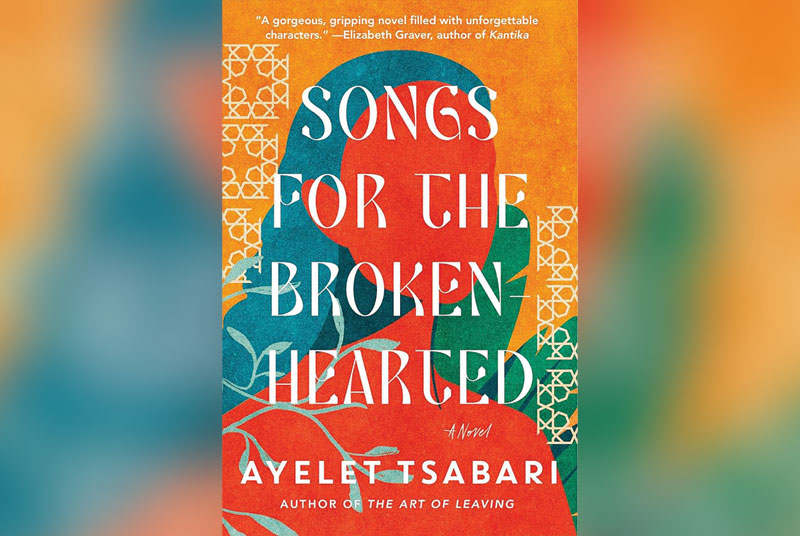
Songs for our Time: A Review of Ayelet Tsabari’s ‘Songs for the Brokenhearted’

“If we’re only relying on written history, what stories do we miss?” our Yemenite protagonist, Zohara, asks her Ashky husband, Zack. “What happens to the stories of people who were illiterate? To marginalized communities?” Zohara has important questions. She wants to know “whose stories are written in history books? And who decides which stories to include?”

These are not new questions; they are the questions that have formed the basis for a groundswell of literature that has emerged since the 1960s, literature that has challenged History (with a capital H) and historical ways of knowing. Yet, every story in this groundswell is different. Each insists on its own imagining, its own visions and revisions of those told before. All are important. When we are lucky, these new stories are masterfully written, gripping, beautiful, tender, complicated—like Ayelet Tsabari’s debut novel, “Songs for the Brokenhearted.”

I’ve been fangirling Tsabari since her publication, more than ten years ago, of “The Best Place on Earth,” a short story collection that won numerous prizes. Her 2019 memoir, “The Art of Leaving” was equally superb. I still think, a lot, about her chapter on Ofra Haza, a compelling and thoughtful examination of racism against Mizrahim in Israel. I suppose this racism was something I already knew a little about. I knew that when people asked where my father was from and I replied “Bat Yam,” I could expect snickers, and I knew, too, that the big gold jewelry he wore was embarrassing. I knew that “Lehiot Ita,” a bourekas-style Israeli television series, tellingly called “Baker and the Beauty” in English, pulled its laughs from the ridiculous pairing of working-class, dark-skinned, Yemenite Amos Dahari (Aviv Alush) with super rich supermodel blonde Noa Hollander (Rotem Sela). And maybe somewhere in my mind, I also knew that Ofra Haza’s famous song “Ani Freha” said something about the country’s attitudes toward Mizrahi women. A freha, after all, is not just a ditz; she’s a big-haired, big-earringed, tight-skirted, heavy-makeup-wearing Mizrahi ditz. A freha is poor Vanessa Maimon, Amos’s Moroccan ex-girlfriend on “Baker and the Beauty,” who is made up to embody the racial slur, and for whose character Haza’s album “Hot House” is the soundtrack. Skillfully entwining her own story with Haza’s, Tsabari had readers of her memoir think about whether Haza had internalized racism against Mizrahim or was subverting it, whether she ever wanted to sing a song about being a freha or not, how she cleared a path for other Mizrahi artists (including, we might note, Tsabari).

“Songs for the Brokenhearted,” Tsabari’s first novel, was worth the wait. While Tsabari returns to many of the same themes explored in “The Best Place on Earth” and “The Art of Leaving,” she does so in this sustained work of fiction through a series of fleshed-out characters: Zohara, closest in age (if a decade older) and life story to the author; Yoni, Zohara’s nephew; and Yaqub, the paramour of yore of Zohara’s mother, Saida. All the characters are lost in one way or another, unable to see how they fit into the world around them. Zohara is recently divorced and newly orphaned, Yoni is struggling with the death of his grandmother and lured by political fanatics, and Yaqub loves a married woman.

The story shifts among the three points of view, though the only first-person narration is Zohara’s, the dominant voice. It shuttles readers between two moments in time: the lead-up to Yitzhak Rabin’s assassination in 1995 and the arrival of Yemenites in Operation “On Wings of Eagles” to Mahane Olim Rosh HaAyin in 1950. Tracking these two moments, Tsabari is informative almost to the point of didacticism. She writes about the dire conditions in the immigrant camps; the Yemenite Children Affair; the Orphans’ Decree; polygamy; racism against Yemenites and Mizrahim more widely; shadism (also known as colorism) within the Yemenite community; the aftermath of the Oslo Peace Accords; the rise of Mizrahi scholarship; and, perhaps most fascinatingly, the incredible, collaborative tradition of Yemenite women’s songs, or “the stories of people who were illiterate” but still wanted to share their experiences, artfully, for generations to come. Bringing the reader completely into her world, Tsabari weaves Hebrew and Arabic words into the English-language book—makolet, ma’abarot, lahuh. I stumbled on the word “mishtaknezet” and texted an Israeli friend to ask its meaning. She answered, “to become more urbane, sophisticated.” And then I caught the root: Ashkenaz. To become more Ashkenazi. Of course.

Despite neither time period of the novel being the present, we see how the long tail of the beastly past endures. At a rally Yoni attends, a young guy “pulled the hood ornament off Rabin’s car … He held it up and said it proves they can get to Rabin just as easily.” Tsabari doesn’t name the young man, but it’s impossible not to clock that the man is today’s Minister of National Security, Itamar Ben-Gvir.

Despite neither time period of the novel being the present, we see how the long tail of the beastly past endures.

“Songs for the Brokenhearted” does more than inform; it also explores relationships deeply and achingly. There are multiple romantic relationships in the novel, but the relationships that fuel the narrative are familial ones between women: mother and daughter, mother and sister. These feel painfully real. Tsabari knows what it means to love but not understand someone—which is exactly what such familial relationships are so often like. Because how do we see someone for who they are, as a whole human, when we are pressed up so close to them? Only when she’s cleaning her dead mother’s house, following a trail made of old papers and recorded songs, can Zohara begin to make sense of the woman whom she looked down upon for being illiterate and superstitious and resented for having shipped her off to boarding school. And only then can she find some peace in her own life.

Like the protagonist Zohara, who decides to change her PhD dissertation topic from Eastern European poets to Yemenite women singers, I have found myself increasingly drawn to the lesser-known Jewish stories, like those of immigrants and descendants of Yemen. I’m grateful to Tsabari for telling these stories in a way that is captivating, moving, and lyrical—a song for our time.


Karen Skinazi, Ph.D. is Associate Professor of Literature and Culture and the director of Liberal Arts at the University of Bristol (UK) and the author of “Women of Valor: Orthodox Jewish Troll Fighters, Crime Writers, and Rock Stars in Contemporary Literature and Culture.”

Songs for our Time: A Review of Ayelet Tsabari’s ‘Songs for the Brokenhearted’ Read More »

Small, Big Moments at the Mall

At the Century City mall, I watch two girls hovering over the counter at the Pandora store, studying the catalog. They turn the glossy pages, reviewing bountiful choices among bracelet charms that shine and sparkle. They’re on a mission to find a new charm for each of their bracelets, currently a sizzling trend among their social set. But the girls are on a budget that won’t stretch to pay for most of the charms, which average 50 bucks or more. Despite generous tips from their customers, takings from their recent lemonade stands and saved gifts of gelt only go so far.  

I watch their expressions slowly deflate and am tempted to say, “It’s okay. Pick what you like and I’ll make up the difference.” After all, isn’t spoiling grandkids the right of every grandparent? Still, I hold back. Instead I say, “Look, both your birthdays are coming up soon. How about you choose something really nice then and Papa and I will get it for you?” At nearly 10 and 12 years old and with a bit of lemonade stand entrepreneurship under their belts, they instantly grasp the logic and agree. As we leave the store, I am proud of them for appreciating — or at least accepting — the concept of delayed gratification. No new charms dangle from their bracelets, but I feel utterly charmed by my good fortune of being a Nana to these and other precious grandchildren. 

The girls had called me that morning to ask if I could take them to the Pandora store. It had been a day of tragic news in Israel, and I was relieved to turn my focus toward the positive. Being a fairly active-duty Nana is one of the highlights of my life, one I appreciate all the more because I grew up with grandmothers who were a big part of my life. While I only felt emotionally close to one of them, I loved them both and felt their love for me. In profoundly different ways, they influenced me spiritually and professionally.  

My eldest granddaughters are rapidly becoming adolescents, when parental patience is sorely tried. I’m not the one who must continually set limits, which frees me to be a parental figure who isn’t a parent, one they can respect without having to fight to assert their individuality. We have fun together, and I’m grateful that so far they’ll accept occasional life lessons I gently advise, such as delaying gratification. As they become teens, I hope this bond we’ve fashioned will make me a safe address where they can come and talk, if they decide that their parents don’t understand them.

As they become teens, I hope this bond we’ve fashioned will make me a safe address where they can come and talk, if they decide that their parents don’t understand them.

The girls may not have achieved their main objective at the mall, but to me, just having fun together was mission accomplished. We quickly swept through H&M and Vineyard Vines at their request, buying a Mommy-approved sweatshirt at H&M and new hair bows from me.  At the sale section of Nordstrom my eldest granddaughter plucked the perfect black skirt for me off the rack. I’d rushed through that rack and missed it. I modeled it for them and wondered if the fit was right. The younger one said, “Yes, it’s perfect. Besides, you’re not growing anymore.” I laughed out loud as I rang it up.  

On our way back to the car, I stopped to buy water from a vending machine. I couldn’t open it because the cap seemed soldered on. I asked one of a trio of young guys if he could open it for us. Despite his youth and strength he couldn’t open it. One of his pals snatched it from his hands, straining to unseal the cap, and I gratefully began drinking. The girls, however, sniffed the cap, claimed it smelled “like the guy” and wouldn’t touch it, which made me laugh all over again.   

Our little excursion wasn’t extraordinary, but was filled with many small, sweet moments and lots of smiles. At a time when my granddaughters are threatening to grow up way too fast — the same trick their father and his siblings pulled on me a few decades ago — this time together has become a memory I’ll always treasure.


Judy Gruen is the author of “Bylines and Blessings,” “The Skeptic and the Rabbi,” and several other books. She is also a book editor and writing coach.  

Small, Big Moments at the Mall Read More »

Rewriting the Holocaust: Where the Far Right Meets the Far Left

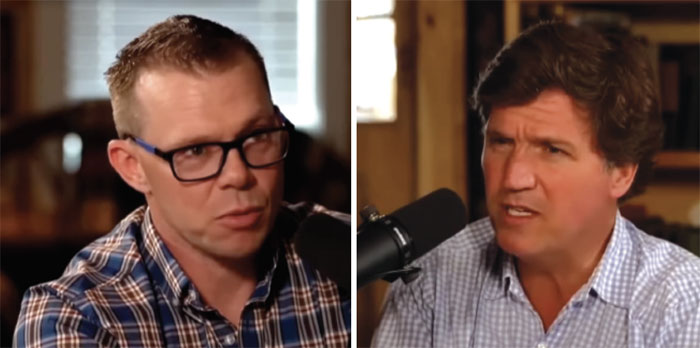
Tucker Carlson finally, more than two hours into the interview, has a thought. “A lot of what we hear about World War II is a lie,” he agrees. “But I’m totally happy to say the Nazis were bad. I think they were. I’m totally happy to say the United States was the most virtuous player among the three [Allies].” 

“But you’re not talking about a historical event,” his guest, internet historian Darryl Cooper, responds. “You’re talking about a myth.” 

It’s one of many jaw-dropping, and chilling, exchanges between two intelligent men with vast followings. Among Cooper’s claims: Winston Churchill was “a psychopath … the chief villain of the Second World War.” Hitler repeatedly signaled for peace but was provoked into war by a bellicose Britain. Germany launched its war on the East “with no plan to care for the millions and millions of civilians and prisoners of war that were going to come under [their] control. And millions of people died because of that.” Yes, they “died,” victims of atypically poor Teutonic planning. But what’s especially incredible about this exchange is the failure even to mention the Holocaust, use the word “genocide,” or allude at all to Jewish suffering in World War II. The Jews do make an appearance elsewhere in the conversation, however, as the financiers to whom evil Churchill was beholden; and in a later segment, there’s the claim that the Jews of Jerusalem murdered Jesus, “uniting around the need to eliminate this victim.” Carlson calls the Nuremberg Trials a “farce,” and Cooper calls them “that sacrificial ritual that was the founding event of the current global order” — a ritual similar, he ever-so-subtly hints, to the scapegoating and martyrdom of Jesus. When Cooper calls it a “myth” that the Nazis were bad, he wants us to think he’s using the word not as virtually everybody understands it — as a widely held belief that is false — but in a more sophisticated, nuanced sense. The pretense is threadbare. He really believes, and is telling his millions of listeners, that the wrong side won in World War II. 

In July, Cooper responded on X to the Olympics opening ceremony by juxtaposing two images of Paris. The black-and-white photo on the left shows Hitler with coterie strutting before the Eiffel Tower; the photo on the right depicts the Olympics opening ceremony, a tableau populated by drag queens in what many took to be a parody of the Last Supper. The performance was not only insulting to Christians, but revolting to the many who feel Western civilization is under siege. For Cooper, however, defending the West against such leftist provocations means resurrecting Hitler’s war on what he called “Jewish Bolshevism.”

“This may be putting it too crudely for some,” Cooper writes, “but the picture on the left [Hitler] was infinitely preferable in virtually every way than the picture on the right.” America’s “best and most popular historian” (per Carlson) is literally saying the world would be a better place if the Nazis had won. 

As I listened to this Nazi apologist from the far right, I was struck by how many of his core beliefs dovetail with those of the far left. I’ll limit myself to four. There’s the fanatical hatred of Winston Churchill — the man who most intrepidly spearheaded the war on Nazism, and whose statue near London’s Parliament is regularly defaced by leftists who call him an “imperialist pig” and, of course, a Zionist. There’s the claim that World War II was merely a showdown between great power rivals, not a war to defend democracy — which is seen as a mere sham — against the terrible menace of fascism. There’s the consistent playing up of war crimes committed by the Allies and concomitant playing down of much greater ones committed by the Axis powers. And, inevitably, there’s the depiction of Jews as villains and the disappearance of Jewish victimhood. Whether far right or far left, everyone can agree: The face of evil is Jewish.

At pro-Hamas protests today, there’s a concerted effort to turn World War II on its head, reversing victims and villains with the aim of chipping away at Israel’s foundation. “Israel = Nazis,” protesters claim, and “Gaza is the new Warsaw Ghetto.” On placards Netanyahu, the supreme Jew, is given a Hitler mustache. Trotskyist demonstrators hawk newspapers proclaiming both their opposition to antisemitism, and the claim that Zionists collaborated with Hitler so were really, in a sense, responsible for the Holocaust. Some argue, like Cooper, that the “Final Solution” was basically (whoops!) an accidental consequence of the war on the Soviet Union; the more Stalinist-minded wrap themselves in a sense of virtue by proclaiming their love for the much-suffering Soviet Union, the chief enemy of Nazism and savior of the Jews. (This breed also, of course, smoothly explains away the Stalin-Hitler pact.) Speakers from podiums scream that the Palestinians today are undergoing a Holocaust, while on countless placards the Star of David is partnered with the swastika, twin symbols of evil, and marchers with Jewish Voice for Peace lament the Jews’ transformation into those who victimized them. The assault on history proceeds day by day.

At pro-Hamas protests today, there’s a concerted effort to turn World War II on its head, reversing victims and villains with the aim of chipping away at Israel’s foundation. 

When history gets butchered — when people mutilate what events of the past mean, overturn society’s understanding of right and wrong, of who played a heroic role and who a monstrous one — real-life butchery in the future looks more and more likely. That’s why it’s particularly disturbing that Cooper, a right-wing pseudohistorian, is making his outrageous claims now, when left-wing and Islamist antisemitism are at an all-time high. A war over World War II is being fought all over again — not the war itself, but its legacy — and the Jews are again in the crucible, caught between two camps who loathe each other but hate the Jews more. Instead of “Never Again” it’s: Ever Again.


Kathleen Hayes is the author of ”Antisemitism and the Left: A Memoir.”

Rewriting the Holocaust: Where the Far Right Meets the Far Left Read More »

A Thousand Years from Now, What Do We Want the World to Know About Jewish Languages?

If you had two days to compile documents and recordings for a time capsule to be opened centuries from now, what would you select?

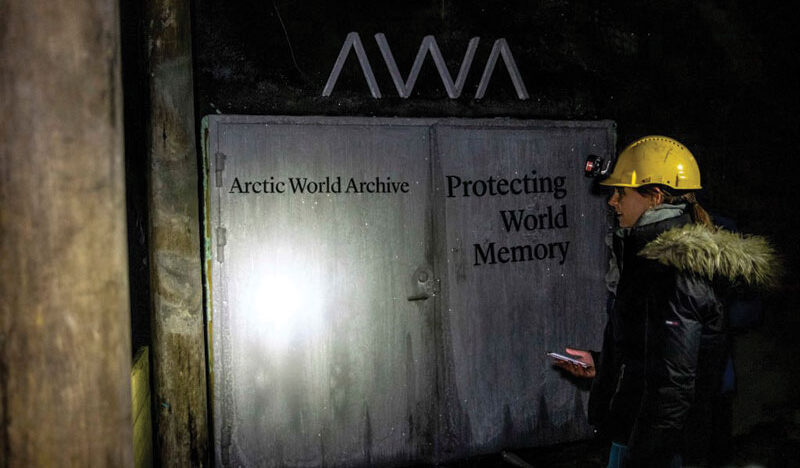
On August 19, 2024, Jack Connor, a computational linguist who runs Lingua Aeterna, contacted the Jewish Language Project – an initiative of Hebrew Union College-Jewish Institute of Religion – and our partner organization Wikitongues about possible collaborations. One of them was to submit items to his endangered language collection, which he would be depositing in the Arctic World Archive for a millennium of safekeeping. The catch? Jack needed the items in 48 hours.

We at the Jewish Language Project dropped everything and spent two long days (and nights) thinking about which languages and types of materials to include. We appreciated the power to make these decisions, but we felt it was important to involve others in the process. Ideally this would be a crowdsourced enterprise; in two days, however, we would only be able to reach a few individuals.

First, we contacted our roster of experts – scholars and activists who have spent years collecting written and recorded materials in and about particular Jewish languages. In the past, we had turned to these experts many times with specific, and sometimes odd, linguistic queries, including words for “peace,” “Golden State Warriors,” and insults using names of animals. From some of our contacts we got vacation away messages (it was summer break), and others replied (understandably!) that they couldn’t help on such short notice. But we did receive materials from several colleagues around the world, including Jonas Sibony for Moroccan Judeo-Arabic, Assaf Bar Moshe for Iraqi Judeo-Arabic, Ophira Gamliel for Jewish Malayalam, and Robert Nudel-Iskhakov for Bukharian. Other contributors included Sam Miller and Alan Niku, members of the Jewish Language Project team who specialize in Jewish Neo-Aramaic and Jewish Iranian languages, as well as other organizations in the Jewish Language Consortium. Together, we compiled 100 items, including dictionaries, grammars, literature, and audio recordings.

While the stated purpose of Jack’s Arctic Archive collection is to preserve endangered languages, our team had additional applications in mind. We kept thinking of the Dead Sea Scrolls and the Cairo Geniza, treasure troves of documents that offered new answers to questions about how people long ago wrote and lived. 200, 500, or even 1,000 years from now, when the Arctic Archive is unearthed (assuming our planet still exists), this collection might be among the only surviving information about the communities and languages represented. What material will historians hope to find there?

Two hundred, 500, or even 1,000 years from now, this collection might be among the only surviving information about the communities and languages represented. What material will historians hope to find there?

We posed this question to colleagues who study Jews in various periods (who were available on short notice). Some initially mentioned the types of sources they already use, like incantation bowls, literary epics, and great works of rabbinic scholarship. We encouraged them to think more expansively: what additional written or recorded materials would they have liked ancient people to collect if they had had the technology? Then, our colleagues suggested diaries, letters, ephemera, and recordings that focus on everyday lives and family relations, recipes, songs, and conversations that include slang. We included these items in our archive as well, incorporating a combination of documents and recordings from older and newer sources, in formal and informal genres. Examples include a 12-year-old girl’s autobiography in Yiddish, a woman speaking Hebrew and Judeo-Arabic about integrating into Israeli society after moving from Algeria, a Jewish Malayalam song about a parrot, and a mother and her young adult son speaking Jewish Neo-Aramaic while preparing haliq (charoset).

As linguists, we think it’s important to document everyday language and the diversity of language use. So we also selected materials not for their historical import but because of their linguistic value. We hope that the Jewish Language Project’s archive of nine languages that are endangered in 2024 – from Semitic, Dravidian, Iranian, Romance, and Germanic families – will offer future scholars a glimpse into the vast historical diversity of Jewish languages (Yiddish is included even though it’s not technically endangered). Future scholars will also see and hear diversity within each language according to region, speaker/writer (gender, religiosity, learnedness, etc.), and genre (literary work, religious translation, diary, song, interview, spontaneous speech, etc.).

In the field of documenting endangered languages, there’s a tension regarding what type of language to record: the “pure” language as it was spoken in the past versus the way people actually speak today, which often combines two or more languages. The vast majority of items in our collection are in the second category, such as a Ladino-Hebrew dictionary, a second-grade Juhuri textbook in Russian, a North African French/Judeo-Arabic song, and scholarship in English about all the languages. This reflects the reality of multilingualism that has been the norm in Jewish communities throughout history, and it is especially a sign of the times in 2024, when most of these languages are endangered and their continued use is primarily post-vernacular.

In the field of documenting endangered languages, there’s a tension regarding what type of language to record.

The materials Jack requested are part of the long-term work of the Jewish Language Project, started in 2020, building on the work of many scholars and activists. To document and raise awareness about many languages spoken and written by Jews around the world and throughout history, we have collected dictionaries, interviews, songs, literature, and other resources, including a map interface featuring a collection of 1251 recordings of endangered Jewish languages. But there’s so much more curation and documentation to be done. Our vision is that by 2045, all known Jewish languages will be well documented, and written, audio, and video materials will be accessible to anyone with internet access. Then anyone who wants to breathe new life into a language – perhaps to reclaim it as part of their heritage – will have the resources to do so. In the coming years, we hope to work with our partner organizations, scholars, and language learners and activists like you to make this ambitious vision a reality. Then perhaps we can curate an even larger collection to deposit in the Arctic Archive – with enough time to gather input from anyone who’s interested.


Sarah Bunin Benor is Founding Director of the Jewish Language Project and Professor of Contemporary Jewish Studies and Linguistics at Hebrew Union College – Jewish Institute of Religion. Eden Moyal is a recent graduate of UCLA’s linguistics department and the Jewish Language Project’s Documentation Manager. You can learn more about the Jewish Language Project, get involved as a language learner or activist through our Heirloom program, follow us on social media, donate to sustain our work, and join our email list at www.jewishlanguages.org.


A Thousand Years from Now, What Do We Want the World to Know About Jewish Languages? Read More »

Rosner’s Domain | The Trumpeldor Question

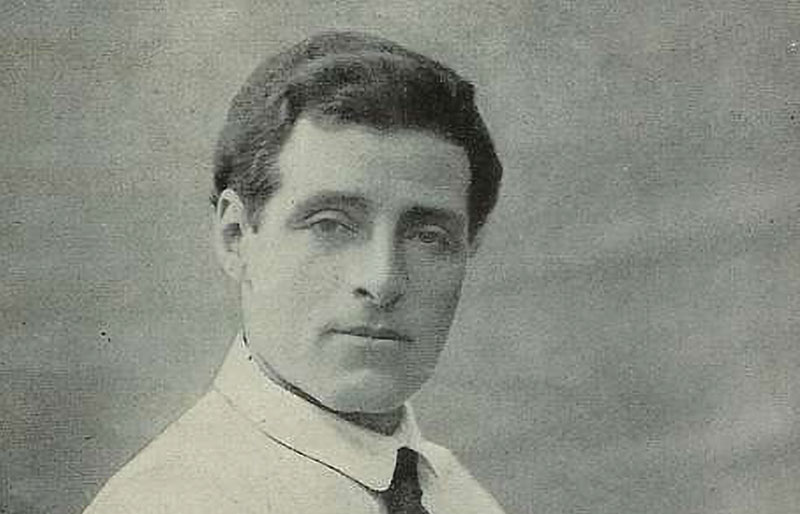
At the meeting of the Provisional Committee for the Jews of Israel, on February 25, 1920, Ze’ev Jabotinsky, a Revisionist Zionist leader, addressed the labor organizations “with a firm request.” In the protocol, his words were summed up in this way: “To immediately call on Joseph Trumpeldor and his friends to evacuate Tel Hai and return to the British occupation territory.” Trumpeldor was a friend of Jabotinsky, a leading Zionist leader, and a Russian war hero. Tel Hai was where he lived. A remote, tiny settlement, in northern Israel, not far from today’s Lebanese border.

If the Arabs would attack Tel Hai, Jabotinsky said, there will be no way for us to protect them. They will have no way to protect the settlement, not for long. It was isolated, small, remote. Attempting to defend it will have one possible result: The blood of the Zionist settlers will be shed in vain. Jabotinsky’s call of reason was simple. Get them back, evacuate, abandon Tel Hai. Staying put is not a sign of resilience, it is just irrational miscalculation. 

The leaders of the Zionist labor-left rejected the request of the right-wing leader. David Ben-Gurion thought that “if we flee because of the threat of bandits, we will have to leave not only the Upper Galilee, but the entire Land of Israel.” On March 1, a few days after Jabotinsky’s emotional appeal was rejected, eight of the defenders of Tel Hai fell, Trumpeldor included. His controversial last words are known to all Israelis: “It’s nothing, it is good to die for our country.” Some historians still argue that he never said those words, but most assume that he did. 

Journalist Ofer Aderet, in a book he penned about seven such Zionist Legends, articulates the question of insisting on staying in Tel Hai amid the grave warning in these words: “Was the battle an example of courage and bravery, or was it the result of an unimportant or meaningful insistence on clinging to the land?” The same question is repeated in the annals of all nations, and in the annals of the people of Israel. In essence, there is no difference between this question and the question of sticking to the Philadelphi corridor – the disputed strip of land separating the Gaza Strip from Egypt.

On the one hand, there is a strategic consideration, which may be real (without keeping the Philadelphi line under Israel’s full control, Gaza will return to being a hive of terror) or may be miscalculated (the Israeli interest can be guarded, and the border can be secured, without having boots on the Philadelphi ground). On the other hand, there is the fear for human lives, the concern for blood of hostages and soldiers shed in vain. 

In some way, Philadelphi is more complicated than Tel Hai, because of the need to take into account both the blood of hostages and that of soldiers. In the short term, the lives of the hostages are on the line, as Israel’s insistence on keeping the Philadelphi corridor complicates any imaginable hostage deal with Hamas. But the long-term concern for human lives is also high. Protecting the Philadelphi corridor will not be without tactical complications. Soldiers stationed there will have to guard themselves against snipers, roadside bombs and all other means of attack against a stationary force. In the case of Tel Hai, Jabotinsky’s conclusion was “evacuate,” while labor leaders were the ones to preach for resilience. In the case of Philadelphi, as different as it may be, Jabotinsky’s successor (Netanyahu as head of Likud) says “do not evacuate,” and the successors of Ben-Gurion are the ones to call for evacuation (for a deal).

Was Jabotinsky right to call for evacuation, considering what happened just days later, the short battle and its tragic consequences? Was the decision to guard Tel Hai by way of signaling to all future enemies that Jews no longer intend to abandon their reconquered land? These are questions to which there is no definitive answer, not even in retrospect. And I’m afraid the same is true about the question of the Philadelphi corridor and its value for Israel’s security. Supporters and opponents of each policy — sit tight, negotiate, abandon — have their own assessment of risk and opportunity, necessity and choice. 

One clear advantage of Jabotinsky and Ben-Gurion compared to the situation we face now is clear and should be noted: Only a few Zionists assumed at the time, or since, that these debating leaders, who often turned to talking about each other cruelly and viciously, would risk the national interest and human lives to advance a political cause or preserve their coalition. Only a few assumed at the time, or since, that their contradicting position was not a principled position. Today we have Benjamin Netanyahu. In his case, justifiable or not, the public is much more cynical and suspicious.

Only a few assumed that Jabotinsky and Ben-Gurion’s contradicting positions were not principled. Today we have Benjamin Netanyahu. In his case, justifiable or not, the public is much more cynical and suspicious.

Something I wrote in Hebrew

As said (see left hand column), most Israelis believe that Netanyahu’s position concerning a hostage deal involves political, coalition-saving, considerations. If that’s true, it ought to be condemned, and yet … 

I have no way of knowing what Netanyahu’s real motive is. I only know what position he is presenting. This is a reasoned position. You can accept it, you can reject it. The question of motive is a little less important to me. I mean, if he’s right, I don’t care what the motive is, and if he’s wrong, I don’t care what the motive is. The situation where the motive is important is a situation where, due to nonmaterial reasons, the government insists on a wrong position. Which brings us back to the more important question: Is the position correct? 

A week’s numbers

Almost a year of war, almost a year of no change in Israel’s approval of its war leader. Can a country fight a war successfully under a leader in which about 30% have high or somewhat high level of trust? 

A reader’s response:

Rob Singer asks: “You wrote a lot about the Haredi draft in the past, but not in recent weeks? Has anything changed?” Answer: No. The Knesset did not legislate, the IDF didn’t get more than a few more recruits. A standstill. 


Shmuel Rosner is senior political editor. For more analysis of Israeli and international politics, visit Rosner’s Domain at jewishjournal.com/rosnersdomain.

Rosner’s Domain | The Trumpeldor Question Read More »

In Remembrance of Hersh Goldberg-Polin

Just a few days after October 7th, I saw, for the first time, a post on my social media feed with his photo and a hashtag: #BringHershHome.

It took me about a week to make the connection.

It was the middle of the night and my wife, Jacqueline, and I weren’t sleeping well, worried sick about loved ones and friends. I was half-asleep when Jacqueline cried out, “That’s our Rachel! It’s our Rachel!”

She showed me an article in The New York Times; it was dated October 12, 2023. The by-line was Rachel Goldberg and she was writing about her son, Hersh.

We realized at that moment what we should have figured out much more quickly—after all, how many people did we know with the name Hersh?

But this one, and his family, we did know. My wife ran to our living room and grabbed the photo album from our daughter’s bat mitzvah. She flipped through it frantically and then pointed to a photo of a twelve-year-old boy in a red sweatshirt wearing glasses and said, “That’s Hersh.”

Thirteen years ago, soon after we had moved to Jerusalem, my wife came home one afternoon and told me she’d made a new friend that day. Her name was Rachel and she and her husband, Jon, had invited us to Shabbat dinner.

The amazing, beautiful family that the world, for the most tragic of reasons, has come to know, is exactly as they appear: loving, devoted, sweet, compassionate, gracious, strong.

Hersh, as we’ve all come to know, was a special person. He was kind and generous. He loved music and music festivals. He loved to travel.

He was a great, great friend.

He was thoughtful.

He was a pure, pure soul.

This is what his mother wrote about him in that New York Times piece, published 328 days ago:

“Ten years ago, we were preparing to celebrate the bar mitzvah of our son, Hersh. His Torah portion was the same as the one Jews around the world will read in the coming days—the story of Noah and how God destroyed much of the world with a terrible flood.

But Hersh’s attention was not on destruction. Instead he focused on how water could save the world. So he swam laps to raise money for an organization that digs wells in Africa to provide clean, lifesaving water.

This is the kind of person Hersh, our oldest child and only son, is: gentle and kind and always finding creative ways to improve things and connect with other human beings.”

Later in her piece, Rachel wrote: “I don’t know if he is dead or alive or if I will ever see him again … The only thing I know is that this is not the fate that Hersh or any of the captives, among whom are several other Americans, deserves.”

We later came to learn that Hersh was alive after the terrorists who stole him from his family forced him to appear in a video that was released in April of 2024.

But Rachel and Jon, Leebie and Orly, never got to see him again. They never got to hold their son or brother. They never got the chance to say goodbye.

I hope that somehow, Hersh knew how hard his family and friends, and all of us, tried. I hope he knew how much we wanted to bring him home.

I’ve been thinking a lot about an image that Rachel used in the piece she wrote when she could not have possibly imagined what the next 328 days would bring: her trips around the world, her address to the United Nations and to the DNC. She and Jon couldn’t have known what the universe had in store for them—the hard, hard things they would somehow endure with a dignity and grace that is simply beyond comprehension.

Five days after Hersh was kidnapped, Rachel referenced the story of the flood that Hersh read about in his bar mitzvah parasha:

“Hersh is my whole world, and this evil is the flood that is destroying it. I really don’t know if anything can save it. If anyone knows, please tell me. To save a life, our sages taught, is to save a world. Please help me save my son; it will save my world.

Every single person in Gaza has a mother, or had a mother at some point.

Every single person in Gaza has a mother, or had a mother at some point.

And I would say this, then, as mother to other mothers: If you see Hersh, please help him. I think about it a lot. I really think I would help your son, if he was in front of me, injured, near me.”

So here is what we have to do with all of our heartbreak, all of our sorrow, all of our frustration, all of our anger and rage: We have to remember the beautiful, precious, kind, and generous soul whose absence causes this sorrow.

Hersh’s soul is like that of his mother and father: kind and loving, gracious and pure. We—all of us—have come to know this family. And when, 328 days later, we re-read Rachel’s words, words directed at the captors and their enablers who could have saved his life, when we hear her say, “I really think I would help your son, if he was in front of me, injured, near me,” we know it is true.

She would help a stranger’s child who was hurting.

So, to honor Hersh Goldberg-Polin let us find the strength, as impossibly hard as it seems right now, to flood this world with kindness, with compassion, with love. Tonight, let us start with one another. Let us be so kind to each other. Let us send our love and our compassion and our prayers for strength and healing to the families of Carmel, Eden, Alex, Ori, Almog and Hersh.

Let us flood the world with righteousness and compassion. Let us drown in togetherness and goodness.

It might not feel like we have it in us, like it’s in our nature.

But of this I am sure: It’s what Hersh would do.

Y’hi zichro baruch.


Rabbi Yoshi Zweiback is the Senior Rabbi of Stephen Wise Temple in Los Angeles, California.

In Remembrance of Hersh Goldberg-Polin Read More »

The Abyss of Eleven Months of War

Nothing is normal in Israel after 11 months of war, after constant battles on three fronts, after 11 months of desperation for our hostages still held captive, after the execution of six of them. We know exactly how many days we’ve been fighting for them and for our survival. All broadcasts begin with: “Today is Day X of the war.” And the number is written in the corner of the TV screen. No escaping it. 

But what does it really mean to be in the abyss of 11 months of war? 

It means that a five-year-old girl, whose father has been in the reserves for months, can tell you with the matter-of-fact seriousness of adults, “My father can die, you know.” 

It means that another child, whose relatives are still held by Hamas in Gaza, can say to you, “My hostages might never come back.” 

It means we are anchored in grief, never able to enjoy pure happiness.

It means some days we allow ourselves not to cope.

It does not mean that we are weakening, that I am weakening. No. I’m active. I volunteer at army bases, attend lectures, meet friends for coffee, swim and go to exercise classes. I am strong and determined. Some days, however, heartbreak and anguish bore holes through that prickly sabra (okay, U.S.-born) skin.

Heartbreak and anguish. Words without much depth. I attempt to describe them, give them physical sensations and texture. I can’t combat what I can’t envision. 

It’s heartbreak, I think, that tightens my chest without warning, that makes taking a breath feel like a desperate search for air. 

It’s anguish, I think, that brings a surge of adrenaline rushing through my body even though there’s calm all around me.

The pressure in my head intensifies with names and scenes and stories and feelings of helplessness, until, like a stick of dynamite, it explodes in a scream that grabs its energy from every inch of me. A silent yet internally deafening scream that starts out slow and low and doesn’t end until I collapse from exhaustion. Then, for a minute, I am free of thinking, of remembering.

For a minute. 

Then it’s back to the brutal, terrifying war. War in the South. War in the North. Rockets from all directions and distances have come from high and low to attack us. 

It’s back to vigilance, awareness and being prepared. 

We stocked up at the beginning of the war, so long ago. With every renewed threat of missiles, power outages, damaged infrastructure, it’s time to buy “just a few more items” to add to the two dozen bottles of water, the cans of corn, hearts of palm, tuna, chickpeas, stuffed grape leaves, more tuna. Crackers, peanut butter, energy bars, chocolate, almonds, peanuts, battery packs and emergency lights. 

We share lists on WhatsApp. 

“Have you bought a generator yet?” a friend asks. “We don’t know if we should.”

“No, but we looked at some the other day. Do you really think we’ll need one?”

Sometimes items disappear from the goodie box in the mamad, the safe room – victims of our cravings for crackers or chocolate bars or some nuts.   We’re allowed to nosh, we tell ourselves. It helps us cope. And, after all, these are semi-perishable items and must be eaten before they go bad. 

Nosh. Restock. Nosh. Restock.

We will allow ourselves a day to feel despondent, to cry, to scream, to pray. Then we will take a deep breath and push forward. We are still at war, but we must — and will — keep going. 

We aim for normalcy as we navigate the maze of our reality. But no matter which turn we might choose in the coming weeks, we will end up in the dead end of Oct. 7. The weight of despair will try to pull us down deeper into the abyss of heartbreak.  But we will not hit bottom. We will allow ourselves a day to feel despondent, to cry, to scream, to pray. Then we will take a deep breath and push forward. We are still at war, but we must — and will — keep going.


Galia Miller Sprung moved to Israel from Southern California in 1970 to become a pioneer farmer and today she is a writer and editor. 

The Abyss of Eleven Months of War Read More »

A Place of Unknowing

Yahya Sinwar is believed to be hiding in a tunnel deep beneath the ground in Gaza, with no electric devices nearby lest his location be discovered. 

He has not seen the surface in nearly a year. His eyes have not perceived daylight. No breath of fresh air has entered his lungs. 

Such a man has few pleasures available to him, but at least he has good news. 

Murdering six Israeli hostages worked out exactly as he hoped. Hostages are the only currency he has available to him, and there are only so many of them—but this expenditure of life turned out to have been very well spent indeed.

Just weeks ago, Biden and Blinken were saying that the ball is in Hamas’ court, that Israel had fully agreed to the latest proposal, and that if things fell apart this time, the blame would be Sinwar’s alone. Now Biden gruffly says that Netanyahu is to blame. 

He’s not alone. This is the consensus of the legacy media and the international community as well. It is also the belief of a growing number of Israelis, who are out in the street begging their government to make a deal. 

Israel has already been pursuing a deal, so what this really means is “make concessions.” Forget the Philadelphi corridor. Leave Netzarim behind. Drop the requirement for a veto on which Palestinian prisoners are released. Do whatever it takes. Just get the deal done. 

To further inflame an already burning public, Hamas released videos of the hostages’ “final messages” to the world. In these wrenching propaganda pieces, we saw Hersh, Carmel, Ori, Eden, Alex and Almog address the camera and berate the Israeli government for abandoning them to their fate. 

If you’ve ever spent any time in Israel, you’ve probably heard the word “freier.” It’s a Yiddish word which means “sucker.” No one wants to be a freier in Israel. No one wants to get taken advantage of, or ripped off, or made to look like a fool. 

I fear, right now, that we are being freiers. We are following Sinwar’s lead. We are letting him call the shots. We are rewarding him for kidnapping and murdering our people which will only motivate him to kidnap and murder more people in the future. We are letting him groom us, readying for a future in which Hamas survives this war and continues its crusade against the existence of Israel. 

But the fear of being a freier can become pathological when we walk away from something we need because we’re too proud to pay a high price.

The fear of being a freier can become pathological when we walk away from something we need because we’re too proud to pay a high price.

Perhaps it doesn’t matter that Sinwar is grinning right now. Perhaps all that matters is saving the hostages. And if it makes us look like suckers, so be it. 

And perhaps also the fear of letting Hamas win has become irrational. Hamas has already won. If we had a leader that earned the people’s trust, perhaps we could have beat them. If Biden had kept pressure on Hamas instead of constantly undermining Israel, perhaps we could have beat them. If the international community had come together to rally for a surrender instead of a ceasefire, perhaps we could have beat them. 

But none of that happened. And so maybe all that’s left is to cut our losses, admit defeat, and get our people back. 

I don’t know. 

I have no suggestion, not that anyone would listen to it if I did. 

All I can offer is this: if anyone is portraying this issue to you like it’s simple, like there’s one moral choice and one immoral choice, like the hostages can wait, or like making concessions to Hamas is no big deal—they are lying to you and to themselves.

If anyone is portraying this issue to you like it’s simple, like there’s one moral choice and one immoral choice, like the hostages can wait, or like making concessions to Hamas is no big deal—they are lying to you and to themselves.

There may indeed be a right path and a wrong path here, but it is far from clear which is which.

The first step to discernment is to confront this complexity and admit to all we do not know.


Matthew Schultz is a Jewish Journal columnist and rabbinical student at Hebrew College. He is the author of the essay collection “What Came Before” (Tupelo, 2020) and lives in Boston and Jerusalem.  

A Place of Unknowing Read More »

A Letter in the Scroll

Last week the Safra Center in New York City held an event commemorating the 20th anniversary edition of Rabbi Jonathan Sacks’ “A Letter in the Scroll,” and his upcoming fourth yahrzeit. I sat down in the packed synagogue and looked up at a compilation video of Sacks speaking at different events through the years. 

I took one look at his face, and my whole body relaxed. For one brief moment, the tsunami of hate, lies, and violence that now fills our lives faded into the background. His face represented everything that’s been missing: A rabbinical figure who is warm, wise, sacred — who fully represents G-d — and can help us put today’s ugly reality into a larger historical perspective.

His face represented everything that’s been missing: A rabbinical figure who is warm, wise, sacred — who fully represents G-d — and can help us put today’s ugly reality into a larger historical perspective.

The video that followed is perhaps his most cherished: “Why I am a Jew,” based on the final chapter of the book. At this point, there were very few dry eyes in the room.

“I am a Jew because, being a child of my people, I have heard the call to add my chapter to its unfinished story. I am a stage on its journey, a connecting link between the generations. The dreams and hopes of my ancestors live on in me, and I am the guardian of their trust, now and for the future.”

The panelists chosen to discuss Rabbi Sacks’ timeless relevance were well up to the task: Natan Sharansky, who has been appointed the Chair of the Global Advisory Board of the Rabbi Sacks Legacy; Michal Cotler-Wunsh, Israel’s Special Envoy for Combatting Antisemitism; Dan Senor, columnist, podcaster and co-author of “Start-Up Nation”; and Rabbi David A. Ingber, the founding rabbi of Romemu, the largest Renewal synagogue in the United States.

“Rabbi Sacks was a moral lighthouse,” said Sharansky, who wrote the foreword for the new edition of the book. “And his light is needed more than ever in these dark times.”

“This is my people, my heritage, my faith. In our uniqueness lies our universality. Through being what we alone are, we give to humanity what only we can give.”

Michal Cotler-Wunsh said that Rabbi Sacks predicted today’s collapse of morality in his last book, “Morality,” and told the audience, “the outrage of the world was at us for refusing to be slaughtered.” Before Oct. 7, “we were living through an anomaly in Jewish history.” This, she said “is the normal.” 

But she also sees this as an “opportunity to strengthen our identity: we are a people. We have to lean into this next chapter.” She said that after Oct. 7 “140% of the people called up, showed up. As volunteers and reservists. And that is the most important notion of “Hineni, here I am, ready to heed Your call.”

“This is on us: We are deployed,” Cotler-Wunsh said. “We are one people with one past and one future. We have to fight.”

“I am a Jew because I cherish the Torah, knowing that God is to be found not just in natural forces but in moral meanings, in words, texts, teachings and commands, and because Jews, though they lacked all else, never ceased to value education as a sacred task, endowing the individual with dignity and depth.”

A couple of nights later, I went to a Shabbat event that can only be described as anti-sacred. Desperate to fit into today’s self-idolatry, it promoted an Instagrammed soullessness. I couldn’t imagine many of them showing up “when challenge calls,” unless they could get a selfie out of it. 

I tried to see the evening through the larger historical cycle that the panelists discussed: We got through idolatry; now we need to get through today’s self-idolatry. But how is that going to happen when so many of our nonprofits, with the promotion of “influencers” and the Instagram self-adulation bubble, have become part of the problem?

“Though we have loved humanity, we have never stopped wrestling with it, challenging the idols of every age.”

A couple of days before the Safra event my son, now 15, had exchanged unpleasant words with a rioter holding a “F— Israel” sign. It was not the first time he had stuck up for our people, but I think it was the first time he fully understood the role his generation, Gen Z, is meant to play. 

“People do not become leaders because they are great. They become great because they are willing to serve as leaders,” Sacks wrote. “What matters is the willingness, when challenge calls, to say, Hineni, ‘Here I am.’”

“People do not become leaders because they are great. They become great because they are willing to serve as leaders,” Sacks wrote.

In 2016, I had dedicated my “Passage to Israel” book to him, using the quintessential Sacks quote below. I pray that more parents begin to understand — using Rabbi Sacks’ extraordinary texts — that the fight for our children’s future begins with their souls.

“You are a member of an eternal people

A letter in their scroll.

Let their eternity live on in you.”


Karen Lehrman Bloch is editor in chief of White Rose Magazine.

A Letter in the Scroll Read More »