Producer Lawrence Bender’s career spans a wide range of acclaimed films, from the pop-culture phenomenon “Pulp Fiction” to the Oscar-winning “Good Will Hunting.” The 67-year-old has also produced some of cinema’s most famously violent stories, including “Kill Bill” and “Inglourious Basterds.” Yet none of those compare to the unflinching subject matter of his latest project.
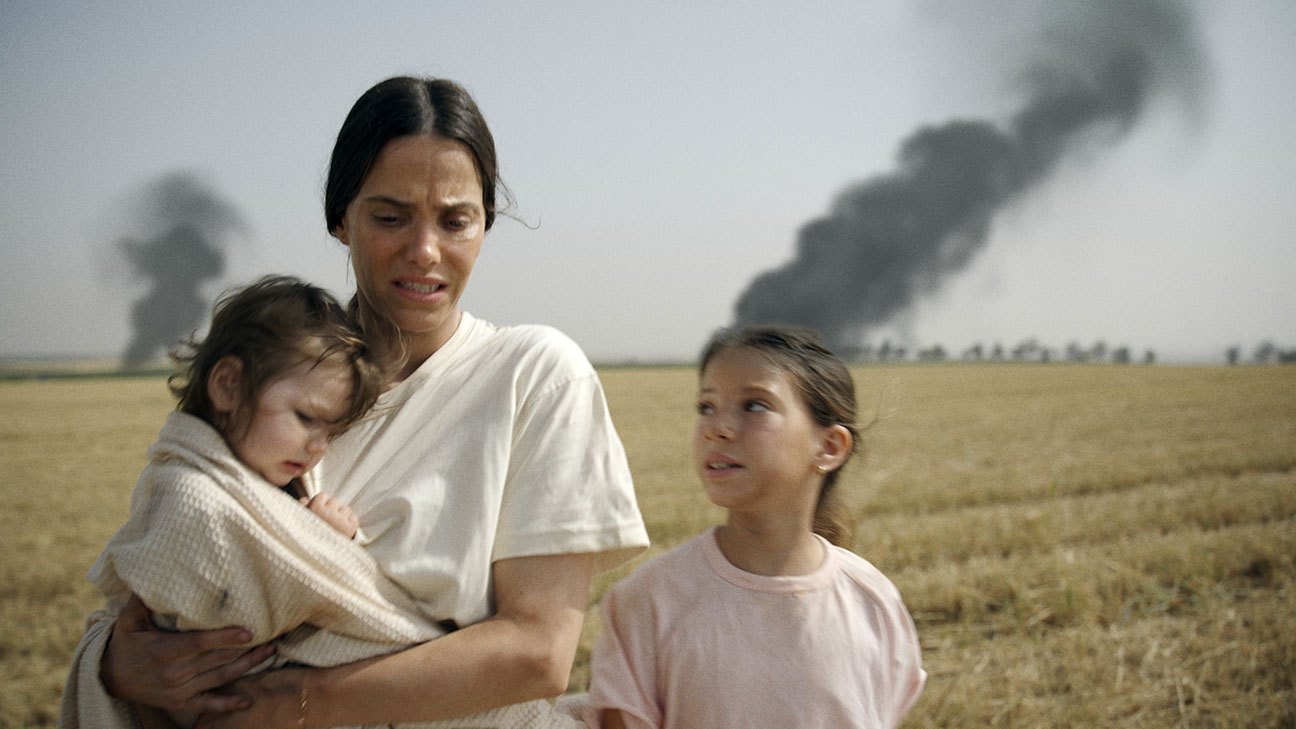
“Red Alert,” which tells the real-life events of Oct. 7, delivers one of the most shocking portraits of violence— not through graphic gore, but through what it forces viewers to feel: the terror, loss and devastation left in the wake of that unimaginable day.
Sure enough, as soon as it was announced that Paramount+ would stream the four-part series starting Oct. 7, the backlash began. Pro-Palestinian voices claimed the series was biased and called on users to cancel their subscriptions to the streaming service. At a time when many studios and streaming platforms are hesitant to acquire or release Israeli content, it was a bold and courageous move by Paramount+.
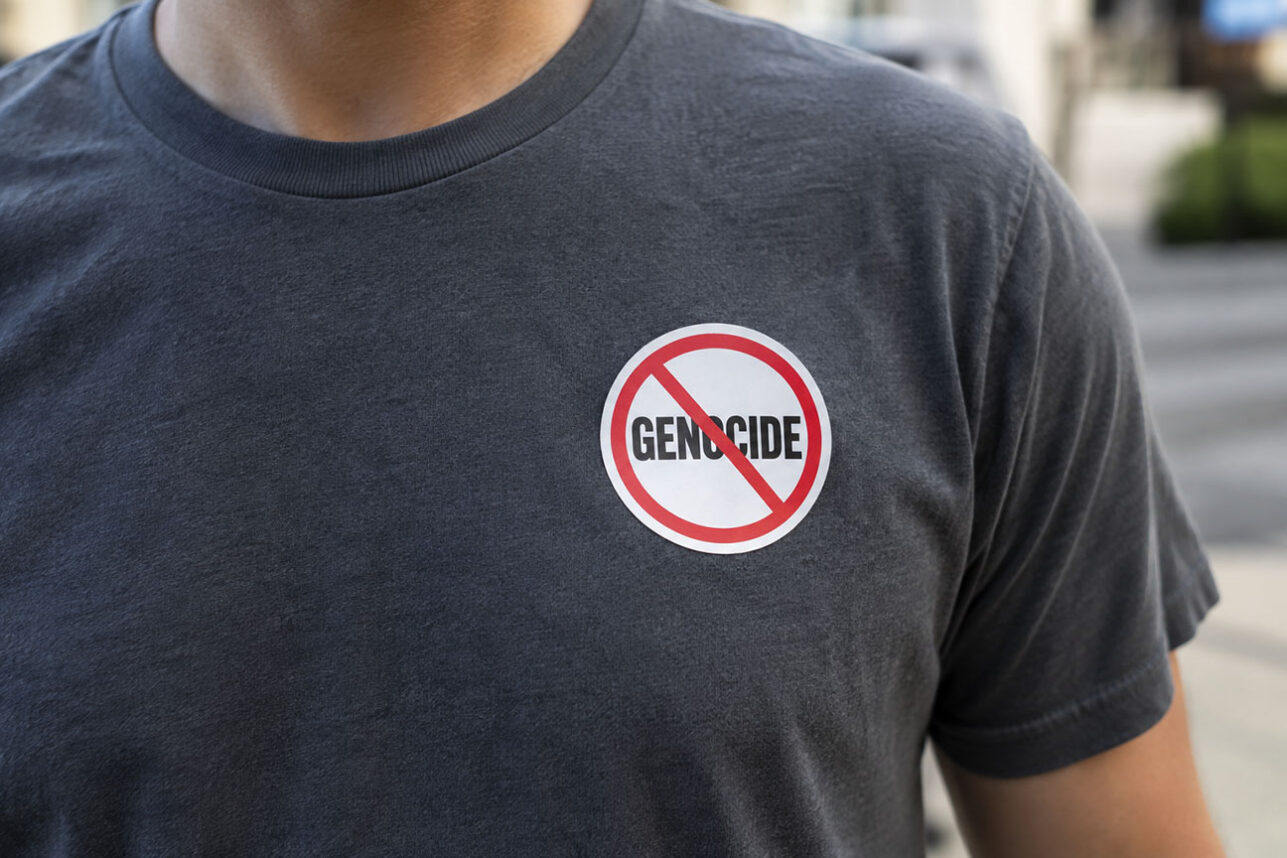
The announcement came shortly after more than 3,900 screenwriters, actors, and filmmakers — including Mark Ruffalo and Tilda Swinton — signed a pledge by Filmmakers for Palestine to boycott Israeli film institutions perceived as complicit in “genocide and apartheid” against Palestinians.
“I just want to say that [Paramount CEO] David Ellison is like a God,” said Bender. “I mean, for this man to be supportive of this show and to come out with a statement saying he does not support the boycott, that, if anything, he supports filmmakers to tell their stories — whatever kind of stories — in this atmosphere it’s very brave, to say the least, and I wish others would do that as well.”
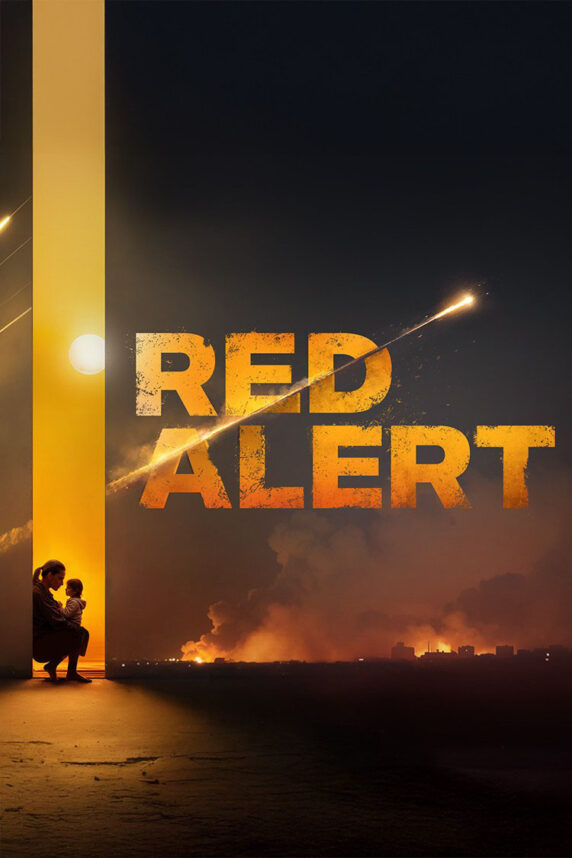 The series tells the true stories of four families living in the Southern part of Israel: Bat Sheva (Rotem Sela) is a mother fleeing with her two daughters after her son was kidnapped to Gaza and her husband, Ohad (Miki Leon), is shot by Hamas. Ayoub (Hisham Suleiman), sees his wife killed in front of him; the killers drive off with their baby. He escapes with his older child and hides, watching in horror as Hamas terrorists continue shooting nearby. Nofar (Chen Amsalem), a border police officer wounded while defending civilians, her husband Kobi (Israel Atias), an anti-terror officer who runs into danger to save his wife; and Tali (Sara Vino), a devoted mother who becomes an unlikely hero, driving wounded civilians to get medical help.
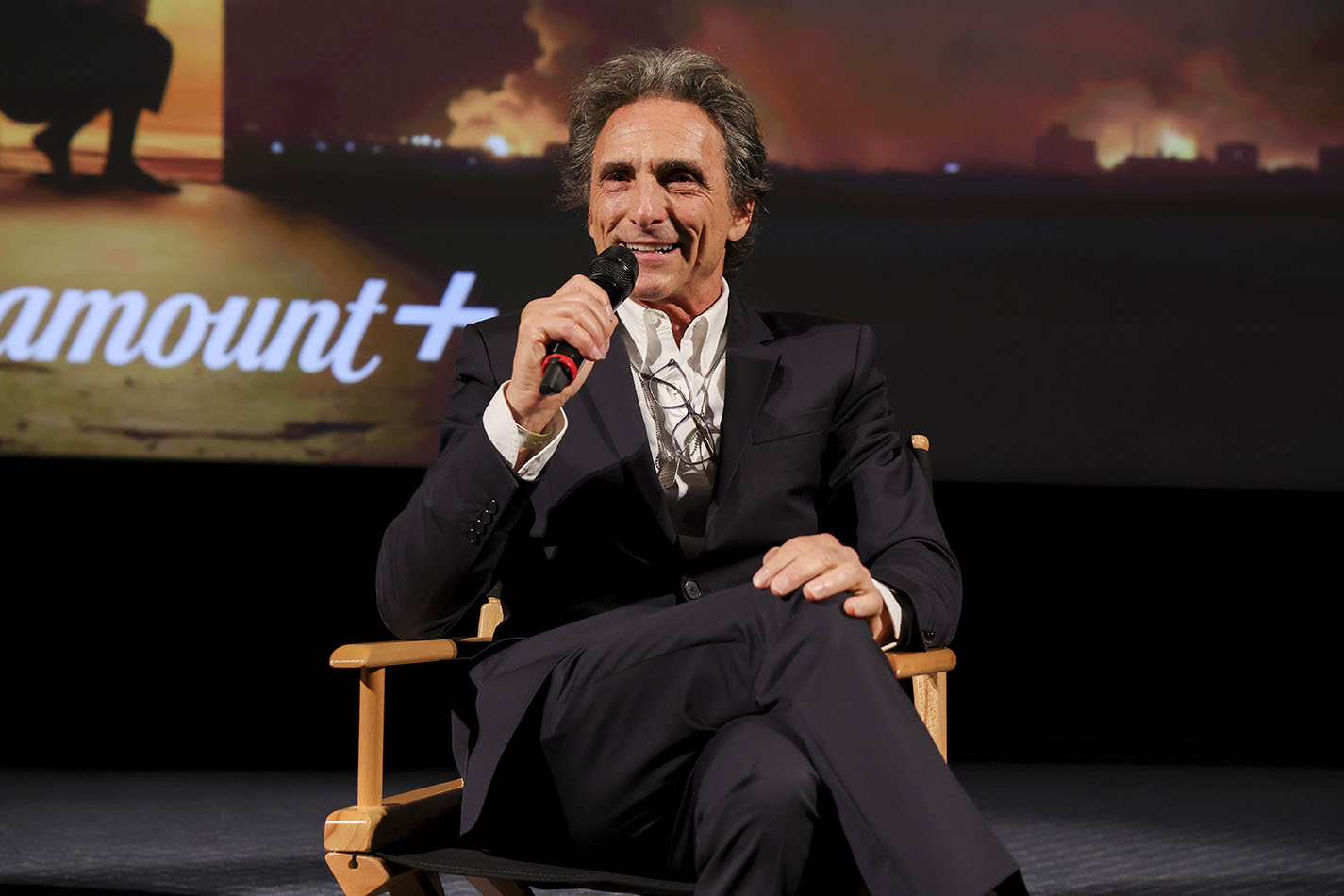
On September 30, Paramount+ held a special preview of the series’ first episode. Following the screening at the Sherry Lansing Theatre on the Paramount lot, a Q&A was held with Bender and Liz Hirsh Naftali, whose niece Smadar Edan was murdered along with her husband Roee, and whose grandniece Abigail was kidnapped by Hamas and held captive for 51 days.
One of the questions directed at Bender came from his 19-year-old son, Misha, who asked if he wasn’t fearful of potential backlash. Bender replied: “I just made a real decision that I don’t care. I’m going to lose friends, I’m going to move forward. Different people have to choose their path. I’ve made it my mission in life … this is probably a big chapter in my life doing this.”
Following the screening, Bender sat with The Journal for a candid talk about the series, antisemitism, what had led him to do the series and filming in Israel while bombs from Gaza served as background noise.
The realization that he wanted to do something for Israel — whether a TV series or a movie — and advocate for it, came on Oct. 8, when nobody reached out to him. Bender, who has always made movies with a diverse group of people, felt hurt. He had always made a point of working with everyone. The year George Floyd was killed, he produced three films dealing with Black issues.
“When my phone wasn’t ringing the way one would expect it to ring, I started to feel isolated and alone. Nobody called and asked, “Are you okay? Do you have friends and family in Israel that have been affected by this?” So, I made a decision. I needed to do something and I started becoming an activist and do anything I could do to help Israel.”

The opportunity came when Bender met Avi Nir, CEO of the Israel-based Keshet Media Group, was in Los Angeles to give a presentation. It was about six months after Hamas’attack on Israel, and the material was raw and emotional. Bender recalled being so moved by what he heard that he immediately approached Nir.
“I told him, we need to figure out a way to make a movie or a TV show that’s going to show the world what happened, and he said, ‘Absolutely.’”
The world needs to be reminded of what actually happened, he said, and “what better way to do that than with a TV show?” When you watch a TV show or a film, it becomes part of the cultural zeitgeist, but it’s still all based on real events. “Half the world doesn’t even believe this happened or doesn’t know it happened,” he said. “We have to put out a massive reminder of why this is all happening in the first place. You want to create something that impacts the world. Just like when I did ‘An Inconvenient Truth,’ I wanted to create something that says to the world: ‘Wake up!’”
A few months later, in November 2024, Bender joined the project as a producer, with Lior Chefetz serving as creator and director.
In the spring of 2025, Bender landed in Israel. At first, everything seemed calm and quiet, almost ordinary, but in Israel, even the most peaceful moments can change in an instant.
“On my first day there I was in a meeting in a building and there was a missile attack from the Houthis,” Bender recalled. “The phones went off like our amber alerts but it goes on. Everyone looked at me and kind of smiled and said, ‘oh, it’s a first time for you’ and apologized to me. Then we all went to the mamad, the safe room and because it was in the morning, people were drinking their coffees and eating their Danish. Honestly, it was emotional and I had to hold back some tears.”
This nonchalant reaction of the locals to the sirens which they’ve gotten so used to, caught up to him weeks later as he was sitting for dinner with a family friend in Tel Aviv.
“We were sitting outside in one of our favorite restaurants and people were walking by, such a lovely atmosphere. Then the alarm goes off and this time as I’ve been there like six or seven weeks, and the waitress who was bringing us the dishes, placed them down and said, ‘The safe room is inside’. We just looked at each other and were like, let’s just eat, we don’t want our food to get cold. That’s what happens after living there for a while, you start to get used to it, which is really kind of messed up.”
Filming scenes that recreated the Hamas attacks came with unique challenges. He said the production took place in a town where residents were still on edge after losing quite a few people on Oct. 7.
“Everyone in that town had a gun and everyone there will run to the fire, through the danger to defend their town.”
The mayor, he said, was especially worried that locals might mistake the actors for real terrorists and soldiers. “Someone from a building up high could look down, see a battle going on, and shoot at a ‘terrorist’ who’s actually an actor,” said Bender. “So every 10 yards we had a massive speaker on stands and every 15 to 20 minutes there would be an announcement in Hebrew, ‘we’re filming a movie, these are actors out in the streets. Everything’s okay.’”
Safety became an all-consuming concern. “The amount of thought we had to put into keeping everybody safe was a whole different thing that one doesn’t think about when you’re shooting a regular movie,” Bender said.
To prevent confusion, crew members all wore matching light-blue shirts, while actors arrived at the set wearing thin white paper jumpsuits that they removed only right before filming.
They had to spend significantly more on security during filming, and Bender didn’t take any precautions lightly. One requirement was to have a portable mamad — just like a portable toilet. Those concrete bunkers were loaded onto trucks and followed the crew to every set. Fortunately, they never had to use them.
Emotions also ran high among the actors portraying real-life figures that experienced the horrors of the war not long ago.

“We were filming a scene where Rotem Sela, who portrayed Batsheva Yahalomi, is sitting under a tree and you hear the bombs going off in Gaza. It was a bizarre feeling to hear it in the background. When actors finish a scene, they might take a moment before going on with their daily lives, but here you felt many times that they would take a couple more breaths before moving on, because they are doing something that’s so real.”
Bender was born in the Bronx, the eldest of four children. The family lived on the Grand Concourse near Yankee Stadium, but when the neighborhood grew rough and dangerous, they moved to southern New Jersey. There were many synagogues in the area, and his family belonged to a Conservative one. Even with a sizable Jewish community nearby, school was a different story.
“As a kid you want to fit in, and being the only Jewish kid in class wasn’t easy. It was embarrassing to be called out and to have to explain what a particular holiday was about. But I didn’t experience antisemitism then, it came later in high school. The Italian kids and the Polish kids used to push me around, throw me into lockers and call me ‘Bender Kike’ and put their hands on their noses like this,” he demonstrates, “for like a big nose.”
Even his best friend used to tease him about being Jewish. Bender learned to accept it as part of the norm. Years later, this friend, who had become a born-again Christian, called him with an apology.
“He said, ‘I feel really bad because we used to push you around for being Jewish. I’m really sorry for what we did, because I realize now you were part of the Chosen People.’ I thought, really? This is the reason?”
Instead of reprimanding his childhood friend, Bender was gracious and accepted the half-apology. “He was doing the best he could, and I was like, okay, I’ll take it — even though it felt almost like another blow.”
Before becoming a producer, Bender was an engineer. He earned a degree in civil engineering from the University of Maine in 1979, but soon later realized his passion lay elsewhere. He studied dancing and became a professional dancer and performed for a time until a back injury ended his ballet career.
That setback eventually pushed him toward acting. He studied acting in New York alongside the likes of Michelle Pfeiffer, Mickey Rourke and Jessica Lange, then decided to move to Los Angeles in the mid-1980s. He hoped to become a series regular, but after a few years of struggling and landing only small roles, he found his new passion in life.
“I quickly realized, this is what I want to be, I want to be a producer. I realized the journey I’ve been on; engineering, dance and acting is all about problem solving and art and producing is really a foot in both worlds, and so I had been training my whole life without knowing to become a producer.”
Through a friend, he met another aspiring actor, director and screenwriter, Scott Spiegel, and the two co-wrote a horror film, “Intruder.” On his first venture as a producer, Bender successfully raised $100,000 to finance the film.
The film earned him only $10,000, but it led to something much bigger: a meeting with Quentin Tarantino at a party at Spiegel’s house. ‘Intruder’ never received a theatrical release; it went straight to video and quickly disappeared without a trace. However, Tarantino did see it, and, like Bender, he was trying to break into the industry. Desperately seeking to sell his scripts, Tarantino eagerly shared with the young producer a script he had written, “Natural Born Killers.” The movie was too expensive to make, but soon enough, Tarantino had another script ready: “Reservoir Dogs.”
Bender and Tarantino made key decisions to reduce costs, shooting the film in black and white using 16mm film. Bender faced enormous challenges as a beginning producer. He had to secure the remaining financing, find locations, hire crew, cast actors and even arrange distribution, all under the pressure of a two-month timeline set by Tarantino.
The breakthrough came when Bender’s acting teacher helped him reach Harvey Keitel. Keitel had read the script and was impressed by Tarantino’s talent. That call marked a turning point for the project. On set, Keitel acted as a mentor to the largely inexperienced cast, which included Tim Roth, Michael Madsen, Chris Penn and Steve Buscemi. He even financed a trip to New York to find actors, helping Bender and Tarantino assemble their team.
Filming was intense, with Bender fully immersed in the process. He could feel that they were creating something special. Every aspect of the production, from the casting to the direction, carried a unique energy and attention to detail that set the film apart. The combination of Tarantino’s vision, Bender’s dedication, and the mentorship of Keitel helped transform “Reservoir Dogs” into a groundbreaking debut that would launch both of their careers and pave the way for future collaborations.
For the promotional tour of “Inglourious Basterds,” a revisionist WWII film about a group of Jewish-American soldiers known as the “Basterds” who hunt and kill Nazis across occupied France, Bender and Tarantino visited Israel.“When you go on tour around the world, you’re doing it to create publicity, boost box office, and build awareness,” Bender explained. “Israel is like 0.0002-something percent of the global box office, so we clearly weren’t going there to help the numbers. Tarantino wanted to go because of what the movie was about. He felt it was important for him personally, which was music to my ears.”
While they were there, Bender took Tarantino to Yad Vashem were they had a private tour and was impressed by Tarantino’s knowledge. It was during this visit to Israel that the famed director met an Israeli woman, singer Daniella Pick, whom he married in 2018 and moved to Israel to live with her.
Despite the enormous success they achieved together, Bender and Tarantino stopped collaborating after “Kill Bill Vol. 2”(2004). Bender admitted he isn’t even sure if Tarantino has heard about the series. The two had lost touch over the years but unexpectedly crossed paths at two somber occasions. The first was at the private memorial service for actor Michael Madsen, who appeared in both “Reservoir Dogs” and “Kill Bill.” The service was held at Tarantino’s theater, the Vista Theatre in Los Feliz in August this year. “We ran to each other and hugged,” said Bender. A month later, they met at another mutual friends’ funeral, Scott Spiegel the man who had first introduced them.
“If not for him, God only knows what would have happened to ‘Reservoir Dogs,’” Bender said about Speigel. “It seemed inappropriate to bring [the series] up then.”
Shooting of “Red Alert” wrapped this summer, and Bender thought it would be smart to hold off before trying to sell it to the world. He believed that in today’s climate of anti-Israel sentiment, it would be difficult to pitch.
“The boycott thing was getting bigger and bigger, and I told them we have to hold tight and figure out the right timing,” he said.
But he didn’t have to wait long. At another memorial for a good friend, he ran into Paramount’s Ellison.
“It was like two and a half weeks ago at Skip Brittenham’s memorial. He was someone we both loved — an incredible lawyer. As my lawyer would say, he should be on the Mount Rushmore of lawyers. He would make deals between studios and big actors, and his thing was always, ‘You’re going to take this and we’re going to make this deal together,’ because a lot of times people try to take everything for themselves and leave nothing to the other person.”
Bender told Ellison about the new series he had just finished filming in Israel, and Ellison had this spark in his eyes. He was all in.
“He said, ‘Send it to me right away’ … And then he told me, ‘I want to release all episodes on Oct. 7.’”
The series was still in post-production, with sound mixing, temp effects and more work to be done. But Bender, Chefetz, and the entire team got so excited that they began putting in extra hours.
“We weren’t prepared for such an early release,” Bender said. “I found myself working all day and then, at 11 at night here in LA, which was nine in the morning in Israel, getting on Zoom calls, reviewing the mixed stage, visual effects, music — basically spending all night working closely with my Israeli partners.”
Bender hopes the world will see the series and understand what really happened in Israel. While there seems to be more global sympathy for what is happening in Gaza, far less attention and sympathy has been given to the thousands of Israelis who were murdered, kidnapped, tortured and raped.
“The goal is to get everyone to see this because if they do, they’ll understand the truth. That can spark conversations and emotional responses, allowing us to say: OK, this had actually happened. You may not like what Israel is doing right now, but now you understand why, and now let’s talk about it.”