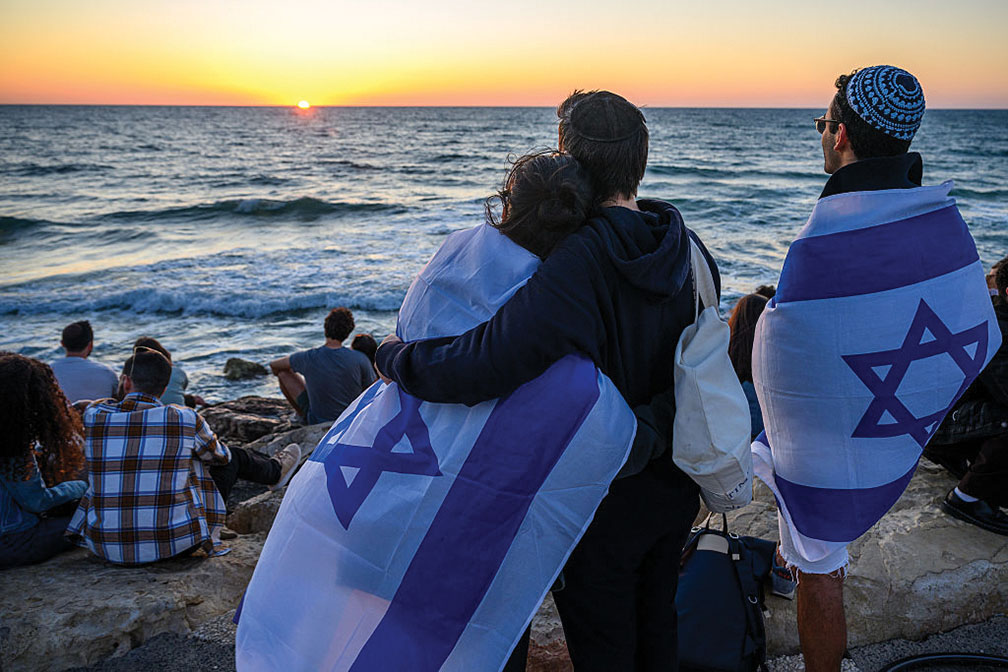
Here in Israel, a country still reeling from the trauma of Oct. 7 and the wars that followed, it’s hard to find anyone who doesn’t think the ceasefire deal with Iran is a disaster.
Times of Israel editor-in-chief David Horovitz, known for his balanced, centrist views, calls the deal a “catastrophic capitulation to Iran’s aggressors,” leaving Israel “vulnerable and constrained.”
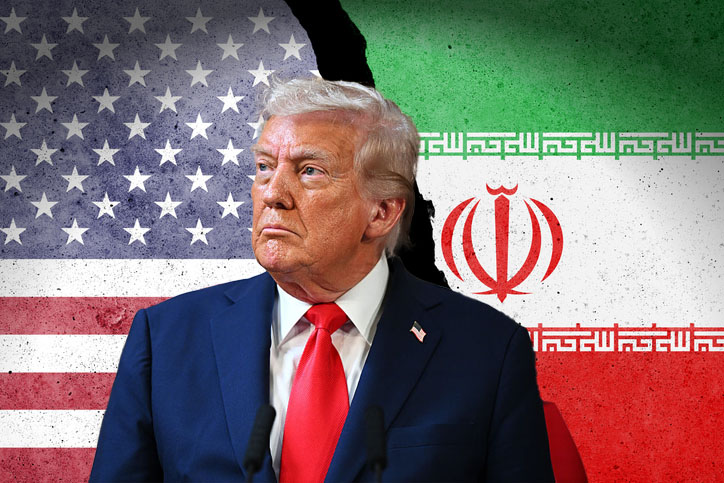
Meanwhile, in an editorial titled “Trump Stages an Iran Retreat,” The Wall Street Journal, which has been strongly supportive of Trump’s Iran policy, joins the broad consensus that the deal is blatant surrender.
“President Trump is touting his latest cease-fire deal with Iran as peace in our time,” the Journal writes, “but the world is more likely to see it as a strategic retreat short of achieving his war aim.”
To put it more bluntly, the theocratic tyrants of Tehran will get billions in financial relief, concrete security commitments and renewed international legitimacy, in return for reopening the Strait of Hormuz (with no long-term commitment to keep it open and toll-free) and simply promising to hold nuclear talks.
One only needs to read one phrase of the first sentence of the deal to see the extent of the surrender: the parties declare “an immediate and permanent end to the war on all fronts.”
A permanent end? Isn’t the definition of a ceasefire “a temporary agreement between warring parties to suspend active hostilities?”
For Trump to commit to anything “permanent” in a temporary deal is just one example of how little leverage he has. The man wants out, and the master negotiators in Iran know it.
They know he’s sloppy and impatient. They know they’re about to get billions that will rescue their regime. They know that the Strait of Hormuz gives them control over the world’s most critical maritime choke point. They know how to drag out negotiations endlessly to tire out the enemy.
Perhaps above all, they know, as the Journal writes, that “Trump’s objective changed from defeating Iran on all fronts to holding on to both houses of Congress in the midterm elections.”
Trump is a master revisionist. He now says, for example, that he never intended regime change in Iran. But, as Middle East expert Dan Perry writes, “On the day he launched the war, [Trump] told the Iranian people they would soon have their country back. That reversal is the clearest illustration of the consequences of a strategic blunder that is ending with a raw deal that strengthens the mafia running Iran and exposes the limits of American power.”
Trump can’t admit the limits of American power, which may be why he constantly blusters. Speaking of the ceasefire deal at the G7 summit in France, he warned that “If I don’t like it, we’ll go back to shooting at them, dropping bombs.”
Sure, but not if it will jeopardize holding on to both houses of Congress in the midterms.
Trump may have the bluster, in other words, but the mullahs know they hold the cards.
As this leverage imbalance becomes more evident over the next 60 days, we should expect the deal to look increasingly worse for the U.S., Israel and, for that matter, the free world.
For one thing, the very notion of offering sanctions relief before negotiating the nuclear program is a clear sign of capitulation.
“If the regime won’t agree to dismantle its nuclear program now,” the WSJ editorial asks, “why would it do so after weeks of oil exports and other relief?”
The mullahs are geniuses at giving little and getting lots in return. The billions they will get, the security commitments they will extract, the prestige they will regain– despite brutalizing their own citizens and aspiring to destroy Israel– will all be real. The promises they will make in return will be just that—promises. Promises from a regime that has a long expertise with the language of deception.
With all of that perceived leverage on hand, will the mullahs try to humiliate Trump to regain the honor they lost while the U.S. and Israel pummeled their country?
Honor is a big deal in that part of the world. Iran survived a massive attack from the Big Satan and the Little Satan, which alone is seen as a major victory. Will they be tempted to push their luck to look even more fearsome in a region where the strong horse wins?
They will certainly try to humiliate Israel. They already have Trump on their side in linking the ceasefire deal to preventing Israel from attacking Iranian proxy Hezbollah. Driving a wedge between the U.S. and Israel must be near the top of Iran’s wish list.
My hunch is that the negotiators on the U.S. side know about their limited leverage, and they’re hoping to distract us with some Trumpian spin.
U.S. officials, CNN reported, “downplay the significance of the specific language in the document,” describing the text as “incredibly vague, mainly intended to create a more favorable environment for the highly technical, in-person talks to come.”
Tellingly, the officials told CNN the text “didn’t reflect critical back-channel commitments Iran has made to the US, which they argued gave them more confidence in signing on to the arrangement.”
Note the lingo: “Back-channel commitments” giving them “more confidence.”
That sounds a lot like naïve Westerners falling for the wink-wink of wily merchants who know just how to push their buttons.
The in-person signing ceremony will take place Friday at the Bürgenstock resort, a luxury hotel in central Switzerland overlooking Lake Lucerne.
The mullahs, however, will know exactly where their heads will be– in a Casbah in Tehran, negotiating with an American who has told them he absolutely must get that rug.