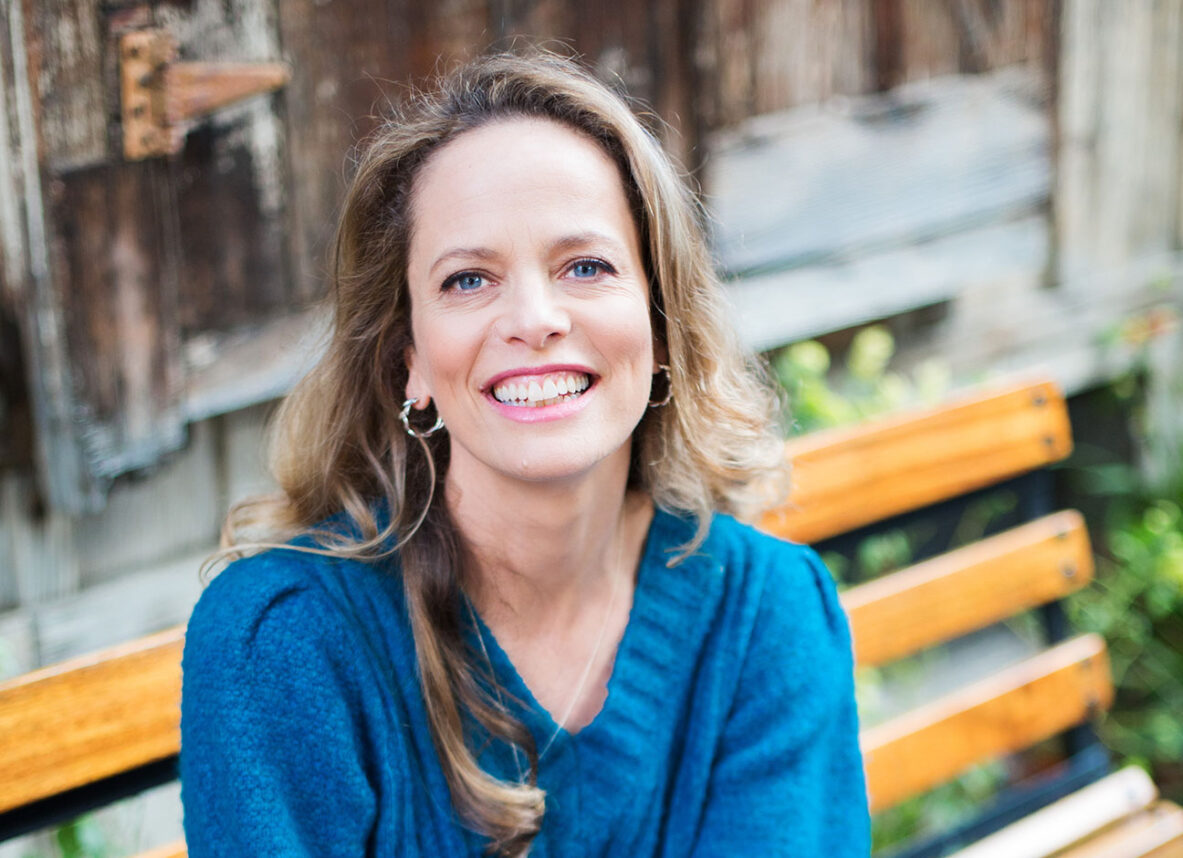
For “Nobody Wants This” creator Erin Foster, art appears to imitate life.
In 2019, when Foster was nearing the end of her Jewish conversion journey, she immersed herself in the mikvah at American Jewish University. Having just completed a 10-week conversion class at AJU, the Los Angeles native anticipated this moment to be one where she’d finally feel Jewish and would literally be touched by God’s presence.
Alas, the mikvah waters felt not that different from, well, being in a jacuzzi, she said.
“And it really scared me because I thought, ‘Am I supposed to be feeling something?” Foster recalled, speaking to The Journal in a recent Zoom interview.

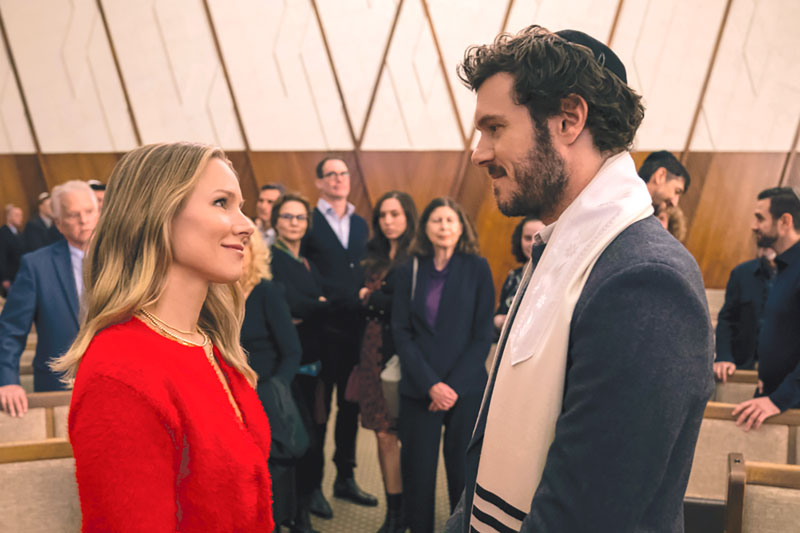
While Foster’s new Netflix series, “Nobody Wants This,” sadly doesn’t have a mikvah scene, it takes plenty of other moments from Foster’s real life as inspiration. In the buzzy Netflix rom-com — which debuted last month and, as of this writing, was the highest-ranked show on the streaming platform — Joanne, an outgoing, non-Jewish podcast host in her mid-30s living in Los Angeles, begins a relationship with Noah, a charming, handsome L.A. dude who happens to be a rabbi.
Created by Foster, the show — originally titled “Shiksa”— is loosely inspired by Foster’s real-life experience of meeting and eventually marrying a Jewish guy and converting to Judaism.
Since its release, the show has generated a wide range of opinions and reactions in the Jewish community. While many viewers say they’ve enjoyed spending time with Joanne and Noah – actors Kristen Bell and Adam Brody, who have a natural chemistry, play the two characters – others have criticized the way the show portrays its Jewish women. This includes Noah’s overbearing mother, played by Tovah Feldshuh, who disapproves of her son’s relationship with Joanne, at one point telling Noah’s Jewish ex-girlfriend, Rebecca, “Everyone knows shiksas are just for practice.”
Along with creating “Nobody Wants This,” Foster wrote the first two episodes in the 10-episode series. Speaking to the Journal, the 42-year-old responded to the criticism, while explaining the show was intended to promote positive Jewish imagery.
“Anyone who’s focusing on stereotypes that are being touched on, I hope that they also pay attention to all the stereotypes that I’m trying to break in this show, by giving us a ‘hot rabbi’ who’s not neurotic, or you know, a nebbishy Jewish guy. There’s nothing about him that feels like you’ve seen it time and time again, and that it’s a Jewish trope, and that was really intentional,” Foster said. “And the whole show is meant to be a love letter to being Jewish and the Jewish community taking me in.”
“Anyone who’s focusing on stereotypes that are being touched on … I hope that they also pay attention to all the stereotypes that I’m trying to break in this show … [by] giving us a hot rabbi who’s not neurotic, or, you know, a nebbishy Jewish guy.”- Erin Foster
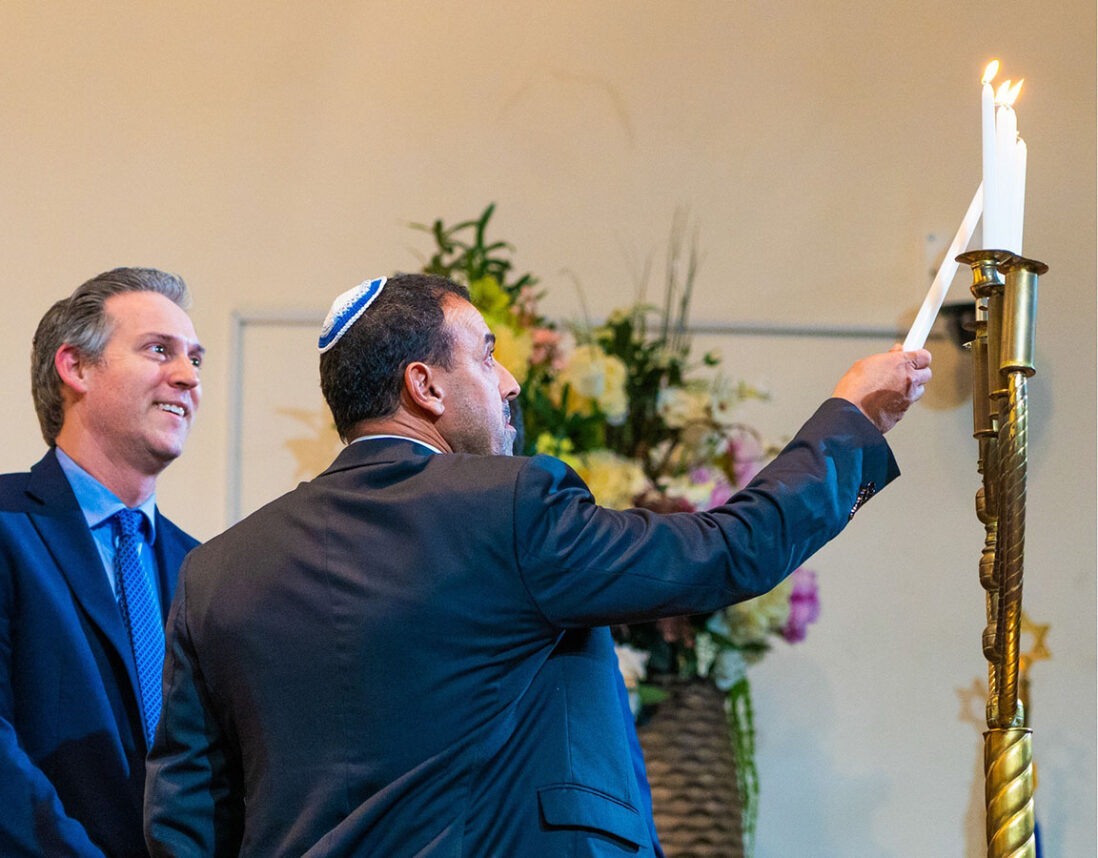
The show was five years in the making, and Foster and her team of creative collaborators — which included Wilshire Boulevard Temple Senior Rabbi Steve Leder, who served as a consultant — worked hard to ensure the show’s Jewish moments felt authentic and accurate. Midway through the season, Noah introduces Joanne to a Friday night Shabbat experience — albeit a shortened one where they recite only the blessing over the candles. While the scene kept getting cut during the editing process, Foster insisted on it remaining in the show.
“I really, really wanted to have a scene where he teaches her what Shabbat is,” she said.
That’s because for the fictional character, Joanne — much like in real life for Foster — Shabbat is one of the first elements of Judaism to appeal to her. During the season, the Noah character, hoping to interest Joanne in one day converting to Judaism, attempts to expose her to fun aspects of the religion, and he goes with Havdalah.
Some situations, though far-fetched, are played for laughs, including when Joanne crosses herself while standing inside a synagogue—filmed at Sinai Temple in Westwood. There’s also a disastrous brunch with Noah’s parents, where Joanne brings prosciutto for the family, thinking it’s beef, not pork. Would a woman from L.A., even a non-Jew, make that mistake? Probably not. But, from the show’s inception, Foster’s goal was making a “mainstream rom com…and so I think the positives really outweigh any perceived negatives,” she said.
At the time of her interview with The Journal, Foster wasn’t sure if there’d be a second season of the show, but she’s hoping for one. It would, among other things, allow her to explore some of the series’ characters, including those some viewers found troubling, more deeply.
“I think all signs are pointing towards a season two, and so hopefully we get one,” Foster said. “I’d love to make one.”
Foster, who grew up in Calabasas and Malibu and currently lives in Los Angeles with her husband, music executive Simon Tikhman, and their 4-month-old daughter, co-hosts “The World’s First Podcast,” with her sister. She’s the daughter of musician David Foster and former model Rebecca Dyer, and she converted to Judaism in 2019 under the supervision of a Reform rabbi.
Talking to the Journal ahead of the High Holidays, Foster shared what her family’s traditions typically include. She described it as an “inclusive” experience, where both Jewish and non-Jewish family members and friends are enjoying dinner together.
In real life, Foster has been outspoken against antisemitism. Her Netflix show doesn’t make any political statements, but in the aftermath of Oct. 7, she’s used her considerable platform to speak up for Jews. In fact, it wasn’t until she saw how widespread antisemitism was that she began to get the feeling of Jewishness she’d expected when she entered the waters of the mikvah several years ago.
“Once I was exposed to antisemitism as a Jewish person, that’s when I started to feel Jewish,” she said. “You know, learning about it is so different than living it. So, the mikvah didn’t make me feel Jewish, and the conversion didn’t make me feel Jewish. Really experiencing the world as a Jewish person did.”
And who knows? If there’s a season two, maybe we’ll get a mikvah scene.