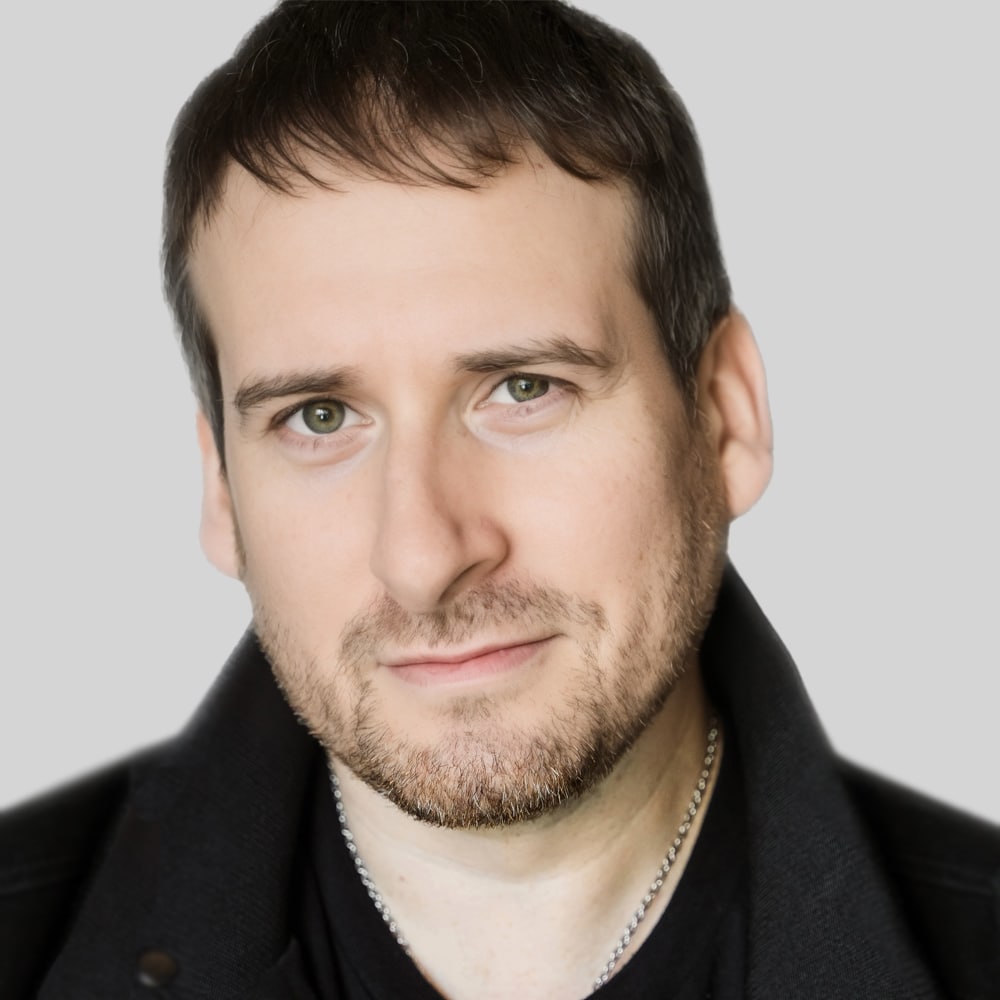

When the Eurovision Song contest finals take place on Saturday, May 17 in Basel, Switzerland, Israel’s contestant Yuval Raphael will take the stage with high hopes and intense scrutiny. It’s a moment that would have been unthinkable 19 months ago, when Raphael was nearly murdered on the darkest day in Israel’s modern history.
Raphael, then age 22, attended the Nova Music Festival on Oct. 7, 2023. She survived with a crushed foot, shrapnel wounds to her scalp, and temporary loss of feeling in her toes. Before the end of October, she found the strength to publicly share her story in the media, and continues to do so.
Israel’s mere participation in Eurovision, which they’ve done dating back to 1973, has drawn criticism. More than 70 former Eurovision contestants from across Europe — including those from Iceland, Portugal, Ireland and the U.K. — have signed an open letter to the European Broadcasting Union (EBU) calling for Raphael’s disqualification and the exclusion of Israel’s public television broadcaster, KAN, from Eurovision altogether.
Eurovision Director Martin Green rejected those demands and said, “Eurovision is a competition between public broadcasters, not between nations, and it must not be used as a springboard for political sanctions.” A similar scene unfolded in 2024 when Israel’s entrant Eden Golan competed at Eurovision in Malmö, Sweden. There were large demonstrations outside the venue, jeers from fellow contestants, and even death threats. Still, after Golan performed “Hurricane,” she placed fifth and returned to Israel a hero.
The contest takes place at the St. Jakobshalle arena, which seats 8,000. Israel’s National Security Council (NSC) has warned its citizens traveling to Basel that there have been 360 protests and anti-Israeli demonstrations in Switzerland over the past year.
“These are expected to continue during the Eurovision song contest, directed at Israelis or the Israeli delegation” NSC said. “It is recommended to stay away from these centers of friction and demonstrations, which may escalate into violence.”
Raphael’s song, “New Day Will Rise,” is an operatic pop ballad that was written by Israeli singer-songwriter and composer Keren Peles, who co-wrote Israel’s 2024 entry.
Raphael sings the first verse in English and the second in French. Each chorus is in English. The bridge after the second chorus is in Hebrew, drawn from Song of Songs: “Many waters cannot quench love, neither can the floods drown it.” The final chorus returns to English: “New day will rise, everyone cries, Don’t cry alone, Darkness will fade, All the pain will go by, But we will stay, Even if you say goodbye, A new day will rise, New day will rise.”
In rehearsals, Raphael wore a black suit with flamenco sleeves. She sang on a chandelier-adorned spiral staircase and balcony, inspired by a famous photo of Theodor Herzl standing on a balcony at the Grand Hotel Les Trois Rois during the Fifth Zionist Congress in Basel in 1901. That particular congress resulted in the founding of the Jewish National Fund and steps towards reclaiming a Jewish homeland in Eretz Israel.
Raphael, 24, comes from Ra’anana where she grew up riding horses and dreaming of being a performer. She even spent three years of her childhood living in Geneva, Switzerland.
Her Eurovision page says that “despite the relatively recent start, Yuval’s life-long dream has always been to become a singer, with a particular interest in the soul and R&B genres. As a child, she listened to classic rock bands like Led Zeppelin and Scorpions, as well as iconic singers such as Beyoncé and Céline Dion.” During her compulsory service in the Israel Defense Forces, Raphael worked at the border of Israel and Gaza and ran a checkpoint for Palestinians going into Israel for work.
Two years later, just five kilometers from the Gaza border on Oct. 7, 2023, Raphael was among the thousands of Nova Festival attendees who were attacked by Hamas terrorists. Raphael and others took shelter in a roadside bomb shelter as terrorists rampaged through the area.
“[The terrorists] went inside the bomb shelter, first, they shot everyone that was in the pathway,” Raphael said in an interview at the Jerusalem Institute of Justice. “Then they came inside and started shooting everyone inside.”
She lay still for eight hours, following her father’s instructions via phone to play dead.
“Then came the grenades,” Raphael said. “That was a new kind of fear. The sound was different, the force stronger, the panic worse.” Her foot was crushed beneath a body, and she used another to shield herself.
“When I saw my family at the hospital, I felt guilt saying it — but I felt like I’d been reset to zero,” Raphael said on the Yael Landau YouTube channel in 2023. “I used to think I had problems. I thought I had issues. But this gave me a whole new starting point.”
She was sharing her story publicly less than a week after the attacks. On Oct. 31, she posted her first video since the attacks—performing a cover of Sia’s “Elastic Heart.” In the caption, she wrote, “music is a huge part of me and my life, and at this time, it is no exception it is the one thing that really helps me through it all. This song really helps me describe what I’m feeling at the moment and hopefully will give strength to those who need it.” Raphael testified at the United Nations Human Rights Council in Geneva in March 2024. “I am here to open my heart — on behalf of myself and the 364 souls brutally murdered during the Nova Festival on Oct. 7,” Raphael said. On the first anniversary of the attacks, she posted photos from the bomb shelter, and wrote “You can’t change, but you can get stronger to be healed.”
In November 2024, she got her break when she competed in Season 11 of the television singing contest, “HaKokhav HaBa” (“The Next Star”). Raphael would continue to advance round after round. By the end of January, she won and was selected to represent Israel at Eurovision. The video for her song dropped on March 9 and evokes moments from Nova Festival when attendees fled Hamas terrorists across dirt farmland.
“There are a few lines [in the song] that say, ‘Everyone cries. Don’t cry alone,’” Raphael said in an interview with StandWithUs on May 12. “That’s a message I would love to spread, because I feel like all of us are going through struggles, all of us are going through ups and downs. Embracing each other, supporting each other, having each other’s backs.”
Before the finals, Raphael has to get past the second day of semi-finals on Thursday, May 15 at 12:00 pm Pacific time. The top 10 out of 16 will advance to the finals two days later.
Israel has won Eurovision four times: Izhar Cohen and the Alphabeta with “A-Ba-Ni-Bi” in 1978, Milk and Honey’s “Hallelujah” in 1979, Dana International’s “Diva” in 1998, and Netta’s “Toy” in 2018. Last year, Eden Golan was the top vote-getter from fans in 14 countries.
Raphael remains optimistic. On May 5, in a meeting with Israeli President Isaac Herzog, she said “On the one hand I come as someone who wants and has all the intentions to win — and on the other hand I can’t help but feel the victory in advance of the fact that I have the right to do it.”
The Eurovision Song Contest semi-finals begin at 12:00 pm Pacific Time on Thursday, May 15, and the finals at 12:00 pm Pacific Time on Saturday May 17. The show can be streamed live on NBC’s Peacock streaming platform. Fans can vote at https://eurovision.tv/vote