fbpx

May 15, 2025

Ancient Carbs – A poem for Parsha Emor

You must take fine flour and bake it into 12 loaves. Each loaf must be made from two-tenths of an ephah of flour. ~ Leviticus 24:5

I bake bread every week
which is a lie as it’s certainly
not every week.

I did bake bread last week.
I’m planning on making it this week
(though by the time you read this

that could be ancient history.)
I follow the recipe exactly.
Whatever amount of ephahs

they want me to include, I include.
Whatever number of degrees they
want me to bake it at,

I bake it that exact number.
What flour should I use?
They’ll tell me and I’ll use it.

Bread is a complex mystery
but one of the simplest things to make
if you don’t count time as an ingredient.

(The best bakers tell you
you should always count time
as an ingredient.)

And what an accomplishment when
you’ve provided the most basic food
through your own kitchen magic.

You sustain yourself like they did
in the desert, like they did in the
tents of Abraham.

You’re ready to bake for the priests.
But you’re off the hook (the bread hook)
because we don’t have priests anymore

Just two loaves for Friday night will do it.
Twist the dough together like we do.
You can do this.


Rick Lupert, a poet, songleader and graphic designer, is the author of 28 books including “God Wrestler: A Poem for Every Torah Portion.” Visit him at www.JewishPoetry.net

Ancient Carbs – A poem for Parsha Emor Read More »

Rabbis of LA | Israel Trips Intensely Personal for the Kahns

Rabbi Yanky Kahn was late for our interview. Even though he recently returned from his eighth trip since Oct. 7 to Israel, he had spent the day visiting Jews at a nearby Valley hospital. In his absence, Rebbetzin Hindy Kahn gave her impressions of their visit over Passover.

“It’s like every trip becomes a continuation,” she said. “We went to Tel Hashomer Hospital to visit wounded soldiers. It’s heart-wrenching to see these young kids. When we got home, the son of a chaplain we know from the north of Israel texted Yanky and said ‘Thank you so much for visiting my friend.’”

During the Kahns’ previous trip to Israel in January,  they participated in the dedication of a food truck that the rabbi facilitated at a soldier’s request.  “On that trip,” said Rebbetzin Kahn, “the chaplain, Rabbi Goldfarb, and his son took us around. We told the rabbi we were going to Tel Hashomer Hospital. The son said, ‘Oh, can you visit my friend? He’s there. He was just injured in the war.’ We said, ‘Sure. We’d love to.’ Ended up, we didn’t have time in January.”

But this trip, they went to Tel Hashomer and they “actually sat with his friend, although we had no idea at the time. When we got back, we saw on Instagram that the son had said, ‘You visited my friend.’ We had no idea it was his friend. We actually sat with his friend a very long time.”

It was “incredible how that worked out,” Rebbetzin Kahn told The Journal. “He’d been injured at Hanukkah time, and he’s still hospitalized. He’ll be there another few months. Pretty incredible,” she said, crediting Hashgacha Pratis (Divine Providence).

During her story, Rabbi Kahn — father of Chana, 18, Eli, 16, Efi, 12, and Menachem Mendel, 11 — came through the front door of their Encino home. Like the rebbetzin, he saw the trip as “a continuation … each time, you meet the same people, and they introduce you to more and more new people. It just keeps on growing from one to another. Honestly, this trip was miraculous.” 

The Kahns weren’t planning to go next to the Gaza border this trip. But then he got a call asking him to visit an Army base there, and another base near Eilat. “They’re about three-and-a-half hours’ drive from each other,” the rabbi said. “I looked in my rearview mirror while I was driving. I thought ‘Why are you taking your kids? You’re schlepping for what?’”

However, “the second we walked onto the army base, the soldiers looked at us with the biggest smiles, and one said ‘OMG, we waited for weeks for you to bring these mezuzahs.’ This was a main Army base. Everyone goes into Gaza from this base. They were so happy to see us, asking for those mezuzahs.”

Telling this story, Rabbi Kahn, based at Chabad of the Valley, broke into a wide smile. “I said straightaway, God answered my question —this is all worth it. This is your job, what you are supposed to do.”

On their trips, the Kahns and their friends meet “widows, soldiers and families who have lost a son, or whose son is being held hostage,” the rabbi said. “Each family has a different story, and we try to help them. One family wanted us to help take their son to New York to go to the Lubavitcher Rebbe. He was injured. He had lost a leg in the war. We gave them money to help with his ticket. We try to help each family, whatever we can do.”

Then the biggest gift, he said, was when “we helped 176 widows by putting cash directly into their bank accounts. Before Pesach, 176 widows, through the help of Chabad of the Valley and donors and my mother — got cash straight into their bank accounts, which is huge.” Most widows in Israel these war days, he noted, are young, with of course young children. In war time, he said, all widows have many more expenses than before.

The rabbi explained his motives for taking these trips. He wants Israelis to know that “the Los Angeles community, the Jews of LA, are thinking about you. You are not alone. I think this feeling may be worth more than the money. Imagine if you get a present in your bank account. Wow! Someone is thinking about me, like Chabad of the Valley. It’s huge.”

The Kahns and their friends bring presents for the children, too. “If we know ages of the.children,” said the rabbi, “we will buy some cute outfits for the kids. If they’re older, we’ll bring ear buds, iPads, Stanley water cups that kids like. If we know the kids, we will try to bring something they like. Our message is universal: We care for you. We feel for you.”

The stories they hear can be wrenching. “In Tel Hashomer Hospital, we met an older gentleman in his 50s who lost his arm. His wife lives up north. He has a two-year-old at home. He has not seen his wife in a long time because it is a three-and-a-half-hour drive to get to the hospital and three-and-a-half to get back. So he is all alone in the hospital with no hand. She is all alone there with a two-year-old. Think about how do they have a seder?”

The Kahns estimated they have a personal relationship by now with perhaps 50 Israeli families. One of them told the rabbi that although they have relatives here, they only want to come when he is in town.

And they’re already planning for their next trip, at the end of summer.

Fast Takes with Rabbi Kahn

Jewish Journal: What is your next goal?

Rabbi Kahn: We have kind of a plan – to bring widows and hostages to California, which is a huge undertaking.

JJ: How have these eight trips affected or changed your home life?

RK: It’s just beautiful. Everything we do is as a family.

JJ: Have these eight trips altered your perspective on Israel?

RK: God gave us Israel. It’s ours. There’s no question about it.

Rabbis of LA | Israel Trips Intensely Personal for the Kahns Read More »

Global Mitzvah Maker Day, Vision Awards, WIZO Brunch, AFMDA Discussion

Actress Emmanuelle Chriqui; author and activist Noa Tishby; and business leader and human rights activist Mandana Dayani joined volunteers at JLA, formerly Westside Jewish Community Center, to pack hygiene kits for Good+ Foundation in Los Angeles for Global Mitzvah Maker Day, a day of service held April 27.

They were among the thousands of Jewish allies and friends that came together for a day of service while bringing light, hope and tikkun olam to local communities worldwide –  from cleaning beaches to preparing meals for those in need. Individuals volunteered with 25 organizations across 14 cities around the world, including Los Angeles, New York, Toronto, Tel Aviv, San Francisco, Philadelphia, Miami and Washington D.C.

Global Mitzvah Maker Day is a program of One Mitzvah a Day, a grassroots movement that focuses on expressing gratitude via daily emails and calls to those who take a stand against antisemitism and support Israel.


Ronnie Wexler, Aunt Shirley (Raymond Zachary), Rabbi Jillian Cameron and Aviyah Farkas. Photo Beth Chayim Chadashim

On May 4, Beth Chayim Chadashim (BCC) held its 2025 Vision Awards at its “house of new life” in Los Angeles.

The world’s first synagogue founded by and for gay and lesbian Jews established its annual Vision Awards 40 years ago to recognize and honor leaders who have made significant contributions towards tikkun olam —  repairing the world.

This year, the community honored its rabbi of almost five years, Rabbi Jillian Cameron, with the Harriet Perl Tzedek Award. In her introduction, Cameron’s sister, Evyn, a winemaker in Napa who donated sparkling wine, praised her sister for devoting her life to “making this world more just, more compassionate, and more whole.”

Accepting the award, Cameron highlighted that justice work takes many forms.

“Our community teaches that saving one life is akin to saving the whole world. If there is a single person who feels they can be how they want to be, one single person whom I have helped to convince, despite the noise coming from so many different directions, that they are worthy of existing, of being loved, of being cherished—that is tzedek, that is justice,” Cameron said.

BCC members Aviyah Farkas and Ronnie Wexler shared the Rabbi Irwin and Agnes Herman Humanitarian Award. Both are docents at the Holocaust Museum LA, where they guide mostly school-age children through the exhibit. The award recognizes them for their tireless work preserving the memory of the six million Jews murdered in the Holocaust and teaching the next generation.

One of BCC’s cadre of cantorial soloists, Raymond Zachary, hosted the afternoon affair in one of their two drag personas, Aunt Shirley. The program concluded with “Do You Love Me,” performed as a duet between the rabbi, who sang in an a cappella group in college, and Zachary/Aunt Shirley.


Consul General of Israel in Los Angeles Israel Bachar, Beverly Hills Mayor Sharona Nazarian, Paraguayan President Santiago Pena and Beverly Hills Vice Mayor John Mirisch. Photo: WIZO California

On May 4, WIZO California, in partnership with Israel Bonds, held a brunch reception in Beverly Hills to celebrate Israel’s 77th Independence Day. The event featured Santiago Peña, president of Paraguay, as a guest of honor—highlighting the enduring alliance between Israel and the global community.

The gathering brought together civic leaders, philanthropists and Zionist advocates for an inspiring celebration of Israel’s resilience and strength. President Peña’s presence underscored Paraguay’s long-standing support for Israel, and his remarks reaffirmed the importance of international friendship in these challenging times. Several dignitaries, including Beverly Hills Mayor Sharona Nazarian, Vice Mayor John Mirisch, and Councilmember and former Mayor Lester Friedman were in attendance, emphasizing the strong ties between the local community and international partners.

WIZO, the Women’s International Zionist Organization, is Israel’s largest social welfare institution, operating over 800 programs across the country—including day care centers, youth villages, domestic violence shelters, and vocational schools. WIZO California is part of WIZO USA.


From left: Zvi Tibber, Jacki Karsh and Jonathan Conricus. Courtesy of American Friends of Magen David Adom

Powered by Repair the World, Club Z LA, a Zionist education group for teens, mobilized their community in service alongside One Big Kitchen Los Angeles over the National Days of Jewish Service, held throughout the month of April.

American Friends of Magen David Adom (AFMDA) held a powerful evening at the Saban Theatre on May 4, bringing together former IDF spokesperson Lt. Col. Jonathan Conricus and Emmy-nominated journalist Jacki Karsh for a discussion on Israel’s challenges and future.

Guests were deeply moved as Zvi Tibber, a senior paramedic with Magen David Adom, recounted his first-hand experiences responding to urgent calls on October 7 — stories of courage, resilience, and unwavering dedication.

The evening also marked a significant moment of action. AFMDA National Board member Fraeda Kopman and her family made a meaningful impact by dedicating an ambulance that will soon be deployed to help save lives in Israel.

Global Mitzvah Maker Day, Vision Awards, WIZO Brunch, AFMDA Discussion Read More »

A Bisl Torah~ Finding God through Abner Goldstine

The Jewish world lost a giant this week: A luminary and a visionary. We mourn the passing of Abner Goldstine, past president of Sinai Temple.

The Talmud ponders the idea of how and where one can find God. Rava interprets the verse, “Lord, You have been our dwelling place in all generations (Tehillim 90:1).” Rava determines that God’s dwelling places must be located within synagogues and study halls. Over the past 16 years as a Sinai Temple clergy member, I took this idea of seeing God in the synagogue for granted. I think one of the reasons why it has been easy for me to feel God’s presence within the holy spaces of Sinai Temple is because of Abner Goldstine.

Abner is synonymous with Sinai Temple. He and his wonderful wife Roz spent every Shabbat in Ziegler Sanctuary. They were constants in Barad Hall during High Holy Days. You would catch them dancing at synagogue galas and often holding hands at synagogue board meetings. They sat in our sukkah for meals and laughed with our children as they raced through the hallways. You were always embraced by Abner’s loving arms and welcomed in with his beautiful, kind blue eyes. Abner was interested in every person in your family and was always asking what you were learning and wondering what you were reading.

As a first-year rabbinic intern, Abner asked me what I wanted to get out of my summer at Sinai Temple. When I responded with, “Everything!”, he laughed and immediately invited me to one of the more exclusive leadership meetings. He told me to pay attention, observe, and come to him with questions. His guidance flowed throughout the next 16 years. I watched him when he was silent, and I watched him when he spoke up. He was thoughtful in his approach with people of all ages, and it was clear why Abner was considered a leader in so many Jewish circles. Abner made a point of helping others feel a sense of belonging within the Jewish community. And in that belonging, many, including myself, felt the presence of the Holy One.

When the Jewish people were exiled, it was said the Divine Presence followed them everywhere they went. I know that Abner’s neshama isn’t too far away, for we will forever need his guidance and forever cherish his spirit. His absence is palpable, but his wisdom is eternal. May Abner Goldstine’s leadership, compassion, mentorship, and nurturing soul remain embedded within the walls of Sinai Temple. With his legacy, we, too, will help future generations seek and find God, growing Jewish identity, and a strong love for Israel.

And as Abner watches from the world beyond, I hope we make him proud.

Shabbat Shalom


Rabbi Nicole Guzik is senior rabbi at Sinai Temple. She can be reached at her Facebook page at Rabbi Nicole Guzik or on Instagram @rabbiguzik. For more writings, visit Rabbi Guzik’s blog section from Sinai Temple’s website.

A Bisl Torah~ Finding God through Abner Goldstine Read More »

Synodality and Leviticus’s Priestly and Holiness Codes

“You cannot be both Catholic and grown up,”
George Orwell once declared to Evelyn Waugh.
The devil with whom you must chose to sup
doesn’t care what gods you might adore
as long as you don’t worship that same one
in whom he finds belief to be impossible.
Though Waugh accepts the Father and the Son,
he said the Holy Ghost is not cognoscible.
Rejecting smelly orthodoxies, he
preferred to be eclectic in belief;
to those who hated him, a Pharisee,
a label he received with great relief.

Orwell hated Stalin lovers,  Evelyn Waugh
hated all arms of the modern age,
but both men were more likely to guffaw
than burst into a horrid fit of rage.
Though Waugh was more funny and convivial,
while Orwell, being earnest, was more serious,
neither man regarded as quite trivial
the fact that they could see a deleterious
decline in the society in which
they both had been brought up, the center failing
to hold, dog biting dog and every bitch
wagged by another tail that it was tailing.
Neither of them could foresee the way that Putin
would dare to bare his breasts with satanodicy,
while with his adversaries disastrously disputin’
removing norms providing cover bodicie.
Orwell and Waugh could not have been aware
of the doctrine of synodality supported
by Popes Francis and Leo Fourteen, papal pair
who have cooperatively this concept courted,
echoing Leviticus’s two holy Codes:

one labeled Priestly Code,

the other: Code of Holiness,
the Catholic synod and
two biblically divergent roads;
synergic paths to priestliness
and universal souliness.


In “The New Pope Might Be Somewhat Like the Old Pope,” NYT, 5/8/25, David Gibson, the director of the Center on Religion and Culture at Fordham University, explains the doctrine of synodality, which is supported by the newly elected pope, Leo XIV, as it was by Pope Francis:

With the election of Cardinal Robert Prevost as Pope Leo XIV, the College of Cardinals sent a clear message of continuity with the reformist agenda of his predecessor Pope Francis. …..Francis’ favorite vehicle for those reforms goes by a bit of church jargon: synodality. It’s a term much bandied about but little understood. It refers to the gathering of church leaders and members to discuss and debate urgent issues. For Francis, it meant bringing together bishops and laypeople, women and young people — and yes, the pope — to speak openly and as equals about issues that were barred from discussion, much less consideration of solutions, in the past. Many conservatives read into how Francis conceived of synodality a veritable heresy that sowed confusion and ambiguity among the faithful. It was a manipulative way of changing the church, his critics believed.

Conservatives ramped up their oratory in the days leading up to the conclave. They made it clear that if the cardinals did not produce a pope more to their liking — demands couched in euphemistic terms like a need for unity and clarity — a schism in the church could be the result. But the cardinals made it clear they would not give in to a heckler’s veto.

When Leo emerged onto the balcony of St. Peter’s Basilica immediately after his election on Thursday, he told the roaring crowd in his characteristically deliberate manner, “We want to be a synodal church.” You could almost hear the air going out of the opposition’s sails. Leo will very likely be more understated than Francis and make every effort to reconcile with those who may disagree with him. But by all accounts, he is very determined……


Gershon Hepner is a poet who has written over 25,000 poems on subjects ranging from music to literature, politics to Torah. He grew up in England and moved to Los Angeles in 1976. Using his varied interests and experiences, he has authored dozens of papers in medical and academic journals, and authored “Legal Friction: Law, Narrative, and Identity Politics in Biblical Israel.” He can be reached at gershonhepner@gmail.com.

Synodality and Leviticus’s Priestly and Holiness Codes Read More »

A Moment in Time: “What would You Do with One Extra Hour?”

Dear all,

We’ve all dreamed about having more time in the day. More time to do what we really want. More time to catch up. More time to tune out. (More time to tune in?)

The Jewish calendar actually provides this once a week. While Shabbat begins at sunset each Friday, it doesn’t end at sunset on Saturday. It ends when we can see three stars in the sky. (If you contact me, I can get into the weeds of questions like: “what happens when it’s cloudy?” or “what happens if I live above the Arctic Circle?”)

So …. we get about 25 hours for Shabbat.

What will you do with that extra hour, with that extra moment in time?

We can start by lighting Shabbat candles.

We can continue by re-igniting the lights in our souls.

And we can ultimately nourish life as we bring goodness to others.

What an opportunity!

With love and Shalom,

Rabbi Zach Shapiro

A Moment in Time: “What would You Do with One Extra Hour?” Read More »

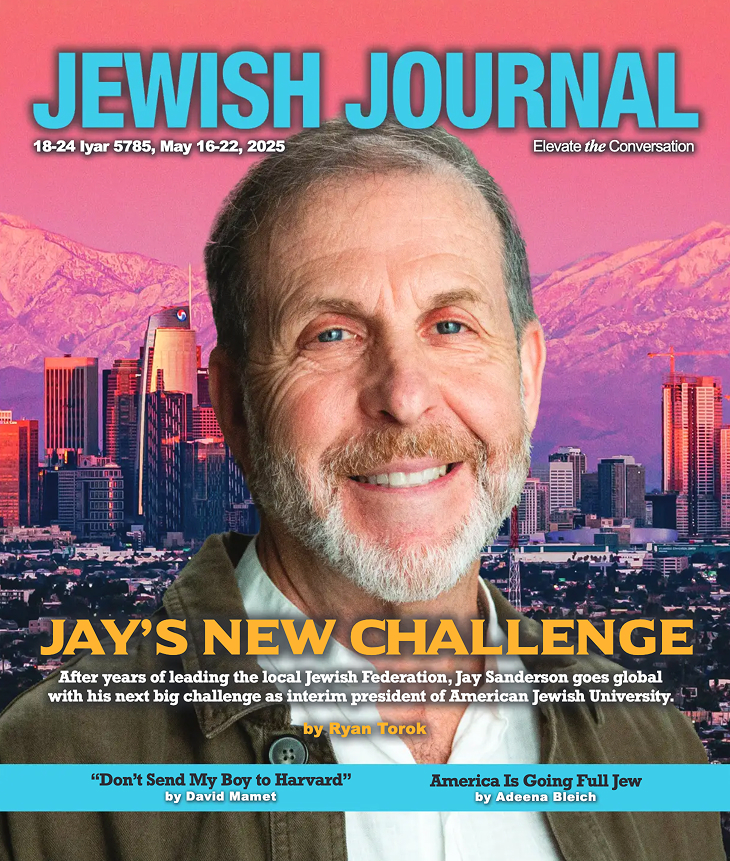
Print Issue: Jays’s New Challenge | May 16, 2025

CLICK HERE FOR FULLSCREEN VERSION

Print Issue: Jays’s New Challenge | May 16, 2025 Read More »

Leading the Way: An Antarctic Expedition with Ryan McDevitt on Quark Ultramarine

When Ryan McDevitt first stepped aboard a Quark Expeditions voyage in 2017, it was as a guest looking for adventure. But somewhere between the icy waters, endless skies, and silent, snow-covered landscapes, something shifted. He was hooked—not just on Antarctica, but on expedition travel itself.

What began as a personal journey quickly evolved into a professional path. After starting in guest services, Ryan worked across different ships and roles, steadily gaining experience in the field. He trained through Quark Academy—Quark’s training program which is now unique, land-based in Ushuaia, Argentina, where future guides learn the art of driving Zodiacs, leading landings, and managing safety in some of the world’s most extreme conditions. It’s a powerful part of what makes Quark’s team so strong.

Now in his fourth season as an Expedition Leader, Ryan is surrounded by an elite team of seasoned polar professionals, many of whom have been with the company for over a decade. Their collective experience and chemistry shine—both on shore and onboard. One of Quark’s longest-serving staff members, Fabrice Genevois, the Penguinologist, has been with the company for over 30 years.

Photo from Quark Expeditions by David Merron

Safety is at the core of every decision, and flexibility is key to maximizing adventure. Ryan and the captain continually adapt the itinerary based on weather, wind, and ice conditions. On this voyage, that meant spending extra days in the south, navigating fast ice, and ultimately crossing 104 nautical miles past the Antarctic Circle—the farthest south the Ultramarine has ever been. The rewards? Orca sightings, crabeater seals lounging on ice, three species of penguins with fuzzy chicks, and stunning views of rarely visited areas like the Gullet and the Lemaire Channel, where glassy water reflected cliffs and sky in perfect symmetry.

Photo from Quark Expeditions Paddle Excursion by Michelle Sole

Quark’s Ultramarine is purpose-built for polar exploration, equipped with a hangar for two bright yellow Airbus H145 helicopters—designed specifically for expedition use. Guests can opt for aerial excursions that offer an entirely different perspective of the ice: seeing vast glaciers, dramatic ridgelines, and untouched snowfields from above. One day, you might be gliding silently across the water in a kayak or on a stand-up paddleboard, and the next, lifting off in a helicopter for a heli-landing on a remote ridge. The mix of experiences is thoughtfully balanced to show Antarctica from every angle—on foot, by boat, and from the air.

Back on board, daily life is designed for comfort and care. Guests are outfitted with Quark’s signature yellow parkas, thoughtfully designed with waterproof outer shells, removable liners, and built-in backpack straps so you can carry them easily onboard or ashore. Layers are key in Antarctica, and the team helps every guest understand how to stay warm and dry—often even comfortably so.

And while the landscapes are remote, guests enjoy beautifully designed suites, fresh vegetables, warm bistro meals, and multiple dining options daily. There’s even internet access and a full medical clinic with a dedicated team on board—adding reassurance for travelers who might be venturing this far south for the first time.

Even with all his time on the ice, Ryan says Antarctica never ceases to surprise him. The weather is more unpredictable than when he first began, adding both challenges and excitement. The beauty of expedition travel, he says, lies in being open to the unknown. The more days you have on the itinerary, the more chances you’ll have to chase the magic—and catch it.

And if you’re on the fence about taking the polar plunge?

“It’s one of the highlights for a reason,” he grins. “You’ll never really know what it’s like until you experience it for yourself. But I promise—it will be remarkable.”

Ryan McDevitt

Expedition Coordinator, Expedition Guide, Expedition Leader, Logistics Coordinator

Ryan McDevitt

Immersed in the high latitudes and surrounded by icebergs or tundra is not the first place you’d expect to find a native Floridian. Ryan’s love for travel brought him to over fifty countries across six continents before discovering the wonders and wilds of the Polar Regions on an Antarctic expedition. He was bitten by the ‘polar bug’!

Eager to continue spending time in these regions, Ryan joined the Quark team in 2017. He feels most at home while at sea aboard our expedition vessels and enjoys sharing with our guests his love for the remote wilderness and pristine beauty of the places we’re fortunate to visit. When not onboard one of our ships, you’ll likely find him roaming the forests and mountains of the Pacific Northwest, North America, spending time camping, kayaking and hiking.

Group Photo from Quark Expeditions by Michelle Sole

Ryan attended the University of Florida, graduating with a Bachelor’s degree in Business Administration, specializing in travel and tourism management. He now combines his passion for the outdoors with his years of experience in the hospitality field to his guiding with Quark.

On his first ride in a Zodiac, Ryan fell in love with these remote areas of the planet. He now looks forward to welcoming our guests onboard and watching as they experience the same awe and wonder.

ard Quark Expeditions’ Ultramarine

What is it like to travel to Antarctica? 60+ videos to show you my expedition with penguins, seals, whales, SUP and my polar plunge!

Learn more about my Quark Ultramarine expedition in my interview series with

Fabrice Genevois, Quark Ultramarine’s penguinologist

Paddling Through the Wilds of Antarctica with Kayak Expedition Leader, Kelly

Soaring Above the Ice: Helicopter Adventures with Quark Expeditions and Sarah Zaubi

The Jet Set TV: Adventuring to Antarctica

Leading the Way: An Antarctic Expedition with Ryan McDevitt on Quark Ultramarine Read More »

Sephardic Torah from the Holy Land | Remembering Ori Danino, z”l

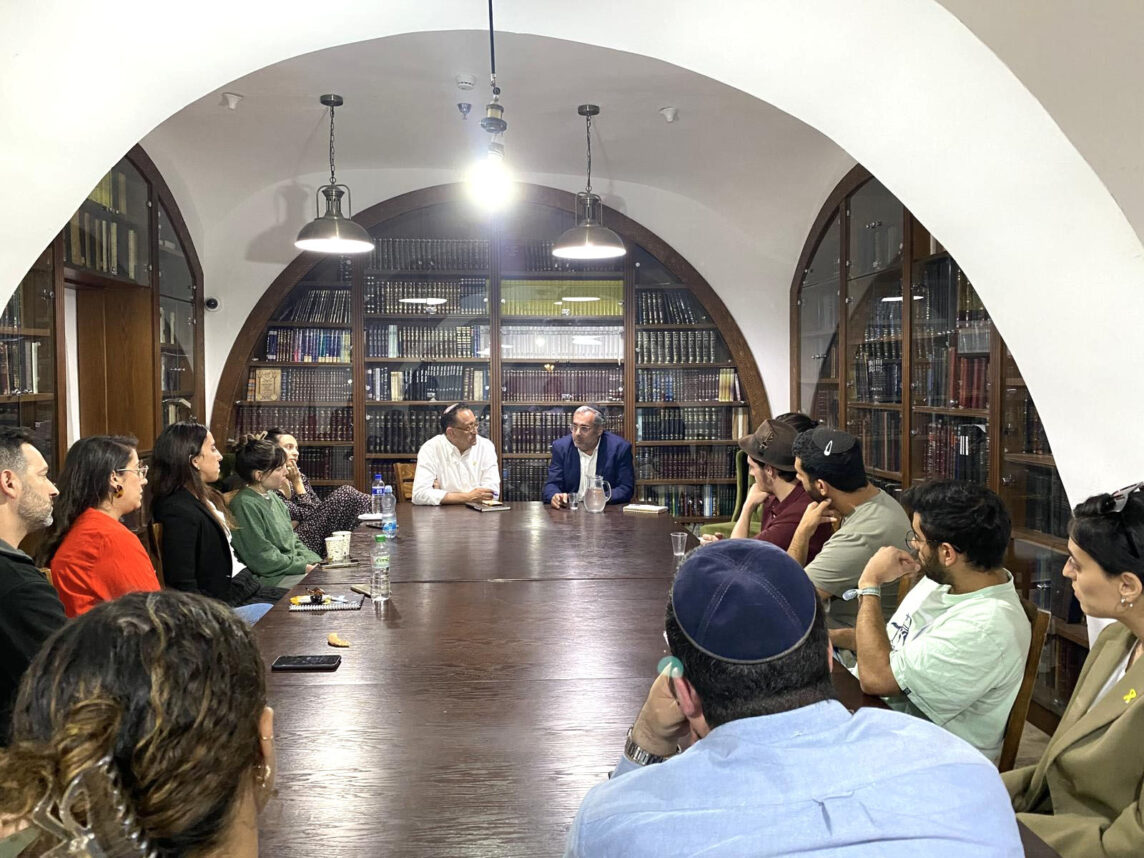
The timing of this event was moving and surreal. A few weeks ago, I invited Rabbi Elhanan Danino, father of Ori z”l, to address my Young Professionals Beit Midrash at the Sephardic Educational Center in Jerusalem. We scheduled it for Monday evening, May 12. Little did we know that May 12 would be the day an Israeli-American hostage from Gaza, Edan Alexander, would reunite with his family after 583 dark days in captivity.

This was surreal, because as Edan was being released, we sat around the table listening to an emotional Rabbi Danino tell us the heroic story of his beloved son Ori. We all remember that awful weekend in late August 2024, when the bodies of six murdered hostages were recovered by the IDF – Hersh, Ori, Eden, Almog, Alexander and Carmel. On this night, we heard Ori’s story.

Rabbi Elhanan Danino speaks to Sephardic Educational Center Beit Midrash students in Jerusalem.

Ori was a brave young man who sacrificed his life for others. On October 7, Ori was close to escaping the Nova party, when he made a fateful decision characteristic of his selfless nature: he turned back and tried to rescue Omer Shem Tov, and siblings Maya and Itay Regev – people he had met just a few hours earlier. They were all taken captive, and the three that Ori saved from potential Hamas gunfire were eventually released. Ori remained hostage and was murdered in captivity.

“From childhood through his military service to October 7, and throughout his 330 days in captivity, my son Ori was a leader whose mission in life was to help others” said an emotional Rabbi Danino. “On October 7, he fought terrorists and saved lives. He fearlessly stood up to Hamas terrorists in the tunnels, making sure the wounded like Hersh received medical treatment, never leaving his side. He refused to eat meat or chicken there, and after every bit of food, he recited Birkat Hamazon out loud for the whole tunnel to hear. My son was a fearless leader.”

On the night a lone soldier from the US was released from captivity, it was moving to hear Ori’s care for lone soldiers: “On many Shabbatot, Ori brought home a lone soldier from his unit. Every Shabbat he brought home their laundry, and always brought them all of the leftover food from Shabbat.”

Like his father, Ori was a unifying force: “My son did not see life through the lenses of religious vs. secular. He was raised in an ultra-Orthodox Sephardic home, but his vision of Israeli society was that all Jews are equal. He loved them all unconditionally. Our rabbis and political leaders should take example from Ori.”

On this emotional night, our inspired Beit Midrash students cried, laughed, learned and resolved to take example from Ori, and from his beloved father. Strength, courage, unity, love, dedication. Like father, like son.

Rest in peace, dear Ori.


Rabbi Daniel Bouskila is the international director of the Sephardic Educational Center.

Sephardic Torah from the Holy Land | Remembering Ori Danino, z”l Read More »

‘Walking on Eggshells’: Caroline Langford Turns Family History Into Debut Novel

Shortly after her father Barry Langford passed away, Caroline Langford visited a psychic who told her, “Your father is here, and he keeps telling me how good-looking he was.”

Until that moment, Langford had been somewhat skeptical of fortune tellers and the like — but this sounded exactly like something her father would say. “And then she asked me, ‘Are you a writer? Because your father is saying, ‘Write my story. I don’t care how I come out, just write it.’”

Langford, an actress who had made a name for herself in a series of Israeli comedy features, had never written anything before. But when she returned home that day, she sat down and began to write.

Nearly 13 years later, she has completed and published her debut novel, “Walking on Eggshells,” a work of fiction inspired by her parents’ story.

The story begins in 1950s London, where Shirley Irene, an innocent 16-year-old desperate to escape the strict confines of her parents, falls in love with Joe — a handsome man with a successful career in the entertainment industry. They marry and have two children, but Irene soon finds herself trapped in an abusive relationship, struggling to find the strength to leave.

 “I could only write it after he died and it was therapeutic for me,” said Langford. “I believe my father would have loved it and it wouldn’t have mattered how he came off, because he just loved the attention. He was very charismatic, and a narcissist. He was able to get away with so much because of his good looks and charm.”

Barry Langford was a British television and music director who directed numerous programs for the BBC during the 1960s and 1970s. He also worked as a manager for David Bowie and Tom Jones. After marrying Shirley Irene, the couple — along with their two children, Caroline and Jeremy — moved to Australia, then back to the U.K., before finally settling in Israel in 1972. There, Langford began working in Israeli television and the local music industry. He and Shirley eventually divorced and she moved back to the U.K. 

“I knew my father very well, so it was easy for me to emulate him,” said Langford. “Being an actress helped, because I know how to take on a character. With my mother, it was harder, because I wasn’t writing about the woman she is today, but the woman she was back then, with all those rules. Today, women wouldn’t put up with that. They’d go to the police. They wouldn’t stand for it. But back in the olden days, you had to do what you were told. Love, honor and obey. That was much harder for me.”

In 1980, Caroline met acclaimed Israeli director Assi Dayan on the set of his film “A King for a Day,” in which she had been cast. Dayan was the son of Israeli general and former defense minister Moshe Dayan. The couple married and had one son together, Lior, today a scriptwriter and journalist.

The marriage didn’t last long, and after her divorce from Dayan, Langford moved to New York, where she worked in theater and took acting lessons at the Lee Strasberg Studio. There, she met her second husband, Michael, who was also an actor. After six years together and the birth of their daughter, the couple divorced.

A few years later, she met her current husband, Gil, a diamond insurance agent. The couple resides in Los Angeles. 

“Every night I read the book to Gil, so he got it like an audiobook and he would give me his thoughts and input on it. I also talked a lot with my mom,” said Langford. “It was very important for me to be historically accurate. I double- and triple-checked everything —down to the type of washing machines they used back then. When my mother read the parts of the book set in the 1930s, she told me, ‘I’m reliving my childhood.’”

Although Langford insists the book is a work of fiction, it heavily draws on her parents’ lives and personalities. That experience led her to start work on a second novel, this time telling the story of their daughter. It’s a book based on Langford’s own life in Israel. 

Writing, she admitted, didn’t come easily to her. She was filled with self-doubt; after all, both her ex-husband and son are well-known writers. That doubt led her to set the book aside for years, until the pandemic.

“I’m such a germaphobe that I refused to leave the house,” she said. “And one day, I found the manuscript I had put away. I looked over what I’d written and thought, ‘You know what? It’s not too bad.‘ That’s when I really got to work on it.”

Working on the book, she said, helped her understand her parents better. She spent hours on the phone with her mother, filling in the blanks and listening to stories about London in the 1930s and ’40s.

Working on the book, she said, helped her understand her parents better. She spent hours on the phone with her mother, filling in the blanks and listening to stories about London in the 1930s and ’40s.

“I didn’t have my father around, so I used my imagination to picture him as a little boy,” said Langford. “It was easier to write the adult parts than the childhood ones.”

After completing her manuscript, she set out to find an agent, a task that wasn’t easy. But she was determined not to self-publish. Eventually, she found a small publishing house and is proud to say they didn’t change a single word in her manuscript.

Choosing the book’s title, “Walking on Eggshells,” was the easiest part. She had known from the start what it would be.

“It summarizes my childhood. My mother and I were always walking on eggshells, never knowing when his temper would erupt. It could be over anything. There were certain things you learned — like never contradict him,” she said. “It was very difficult living with him. My cousins adored him, but as a father, it was very difficult.”

While she acknowledges her father’s faults, Langford admits she inherited certain traits from him. “There’s a lot of him in me. I’m not violent, but there’s an element of narcissism I can relate to. I also got my sense of humor from him.”

One thing she’s made a point to do differently is maintain open communication with her children. “I always tell them, if you have any issues, please talk to me now. —Don’t wait until it’s too late.”

The book, from Rogue Phoenix Press, is available on Amazon and in bookstores.

‘Walking on Eggshells’: Caroline Langford Turns Family History Into Debut Novel Read More »