The month of Tishrei had always been a riddle to me until I saw HBO’s television series “The Leftovers.”
In the heart-racing opening scene of the pilot episode, two percent of the world’s population suddenly disappears in a rapture-like event called “The Departure.” The show then immediately jumps ahead to the three-year anniversary of The Departure and exquisitely explores the struggles of those left behind after The Departure.
Their core struggle can be distilled into the following: “Are you OK?” “I am OK.”
“It is going to be OK.” “You are going to be OK.” Everyone is broken by The Departure and feels a profound sadness that threatens to destroy them. There is no escape from this sadness. There is only trying to “be OK” with it.
This is the soul of “The Leftovers.” It is also the soul of real life.
Societies are built on the faith of tomorrow. Without faith that today’s work will pay off in the future, work becomes an overwhelming burden. People are driven by the need to feel they are going to be OK. We dress up our opinions with fancy arguments and airtight logic, but in the end we choose the option that makes us feel safest.
“Societies are built on the faith of tomorrow. Without that, the work becomes an overwhelming burden.”
Pro-gun rights activists believe they are safer with fewer restrictions on gun ownership. For gun-control activists, the reverse is true. The racist is motivated by the (false) conviction that safety can be found only by living with his or her own race. The pro-diversity progressive is motivated by the conviction that we are safer when all people are treated as equal.
“The Leftovers” distills this idea by raising the stakes. Someone who feels safe now would have a much harder time feeling so if 140 million people suddenly disappeared.
Only one thing in “The Leftovers” can unburden others from their debilitating anguish: a hug. Holy Wayne, a cult leader and pedophile, exorcises the demons of ambiguous loss with a genuinely compassionate hug, as if to say, “I feel your pain, I share in your pain and I am here to help carry your pain. I cannot tell you everything is going to be OK, but you are not alone.”
Like everything in “The Leftovers,” it is unclear if the hugs are magical or a placebo. Regardless, they work.
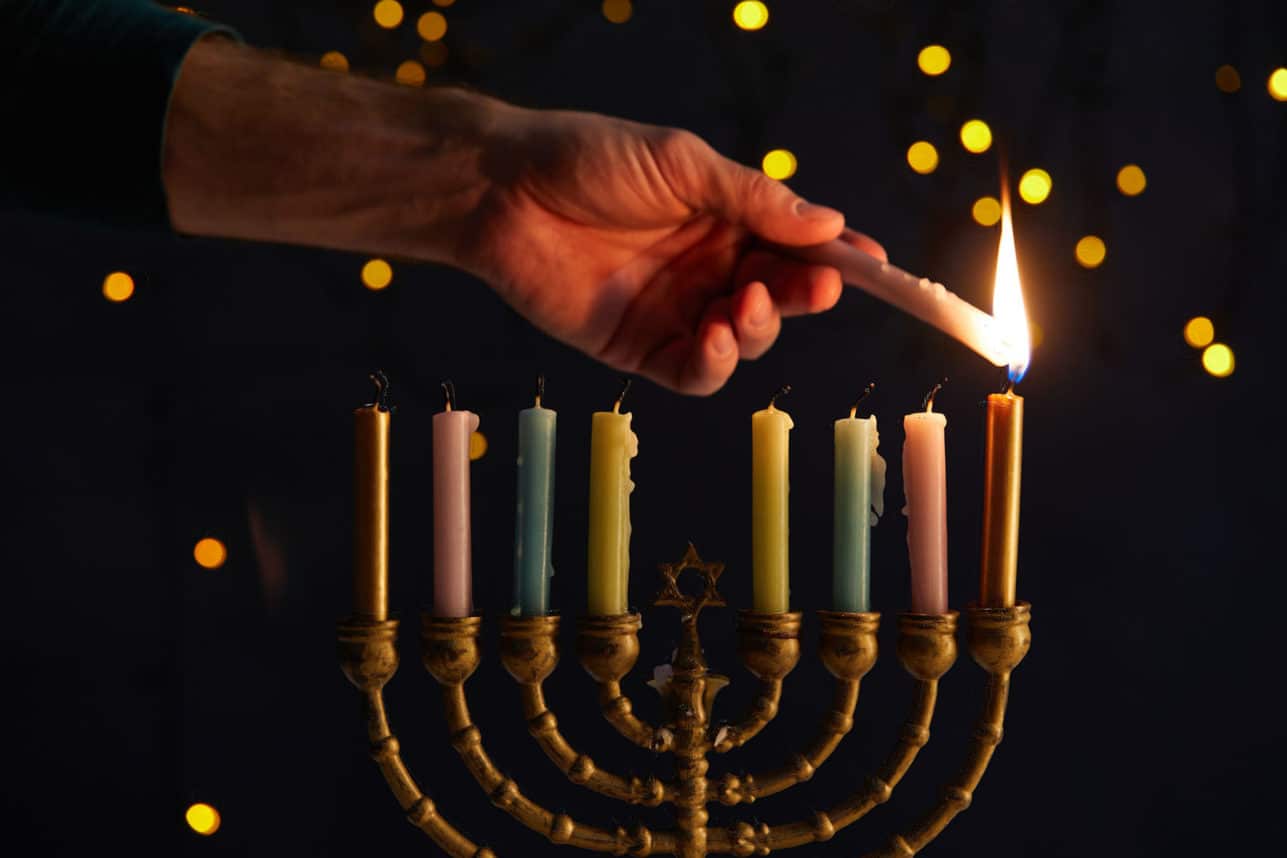
The month of Tishrei begins with the High Holy Days funneling Jews into their synagogues for long days of prayer and introspection. I call Rosh Hashanah and Yom Kippur indoor holidays. A few days later, Sukkot flings us outdoors. For one week, there is a mitzvah to eat, drink and sleep — to live — in a flimsy hut. Sukkot is an outdoor holiday.
The two halves of Tishrei are also a contradiction of emotions. Rosh Hashanah and Yom Kippur are somber days as the fate of the world hangs in the balance. Who will live? Who will die? Then, a few days later, Sukkot flips the mood completely. The Bible calls Sukkot “The Festival of Joy.”
How do such opposing pieces fit together in one single month?
Praying for our lives as we stand in judgment can leave us with a lingering sense of dread and fear. The melodies are haunting, the liturgy is dark and apocalyptic. Worst of all, our verdict is sealed in the Book of Life but we have no idea if we are written in it. We try to have faith that the coming year will be a good one but we do not know if we will be OK. The existential ambiguity can be paralyzing.
A few days later, when we enter the sukkah, we are surrounded by mitzvah, enveloped by its makeshift walls and meager thatched roof. The sukkah is God’s cosmic hug. God is not going to tell us we are going to be OK, but God’s hug has the power to unburden us.
Eli Fink is a rabbi, writer and managing supervisor at the Jewish Journal.