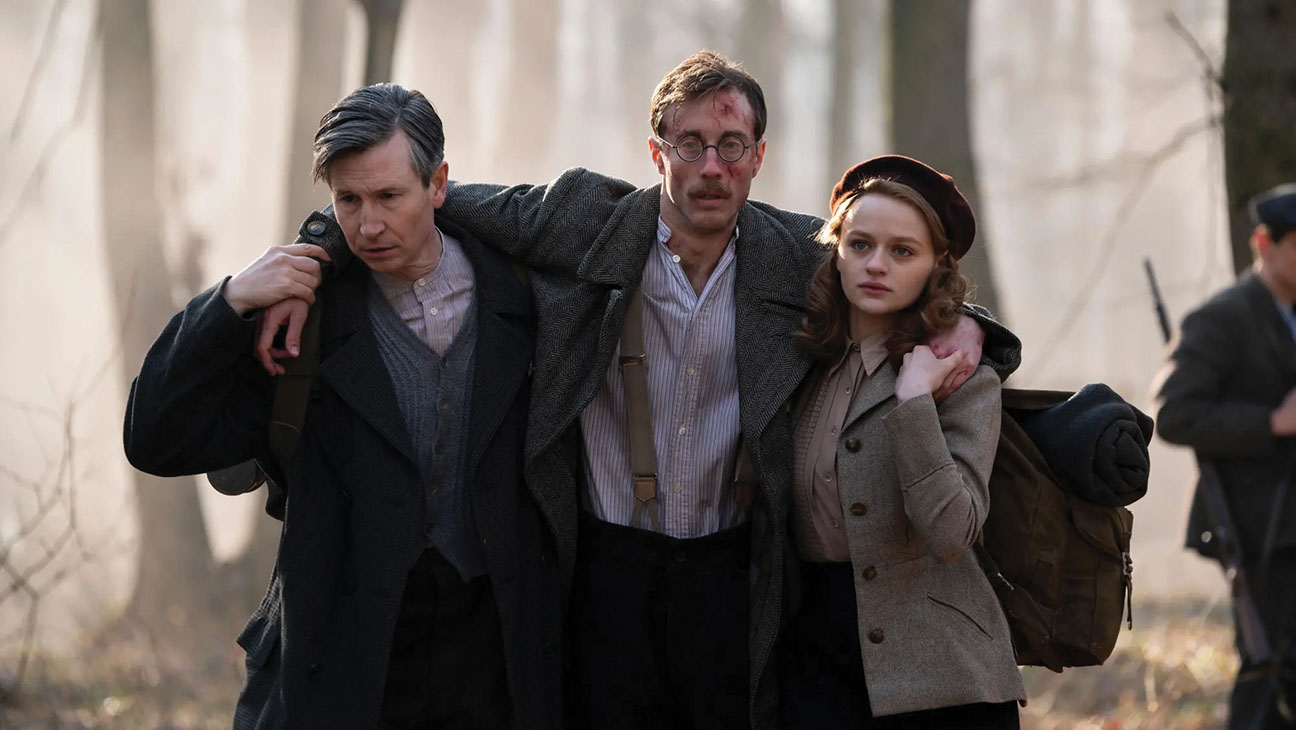
After the Academy-winning documentary “Navalny,” director Daniel Roher could have stayed comfortably in the world of nonfiction. Instead, he jumped into fiction with “Tuner,” an offbeat crime story about a piano tuner whose extraordinary sense of hearing draws the attention of professional burglars.
In the film, Leo Woodall plays Niki White, a gifted young piano tuner in New York whose heightened auditory abilities allow him to detect even the faintest mechanical sounds. His mentor, veteran tuner Harry Horowitz (Dustin Hoffman), becomes both a father figure and professional guide, while Harry’s wife Marla (Tovah Feldshuh) forms part of the small surrogate family around him. Niki’s quiet life begins to unravel when he crosses paths with a group of burglars led by Uri, played by Israeli actor Lior Raz — best known as the co-creator and star of “Fauda” — the owner of a locksmith company that secretly targets wealthy clients’ homes. Raz’s character recruits Niki for a risky scheme, using his extraordinary hearing to crack safes that others cannot.
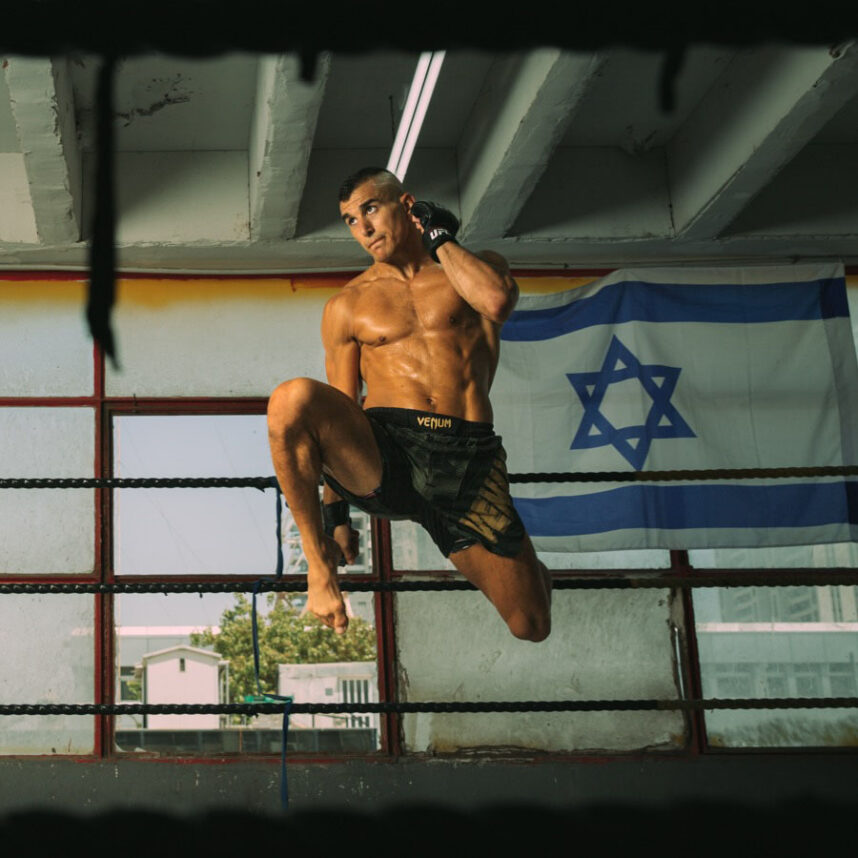
The decision to cast Israeli actors as the film’s criminals — including Raz alongside Gil Cohen and Nissan Sakira—initially raised concerns from Hoffman, Roher recalled.
“He said, ‘Let’s make them French Canadian,’” Roher said in an interview. “I told him, ‘Dustin, do you really want me to fire these three Israeli actors? They’re already having trouble finding work because of the war.’”
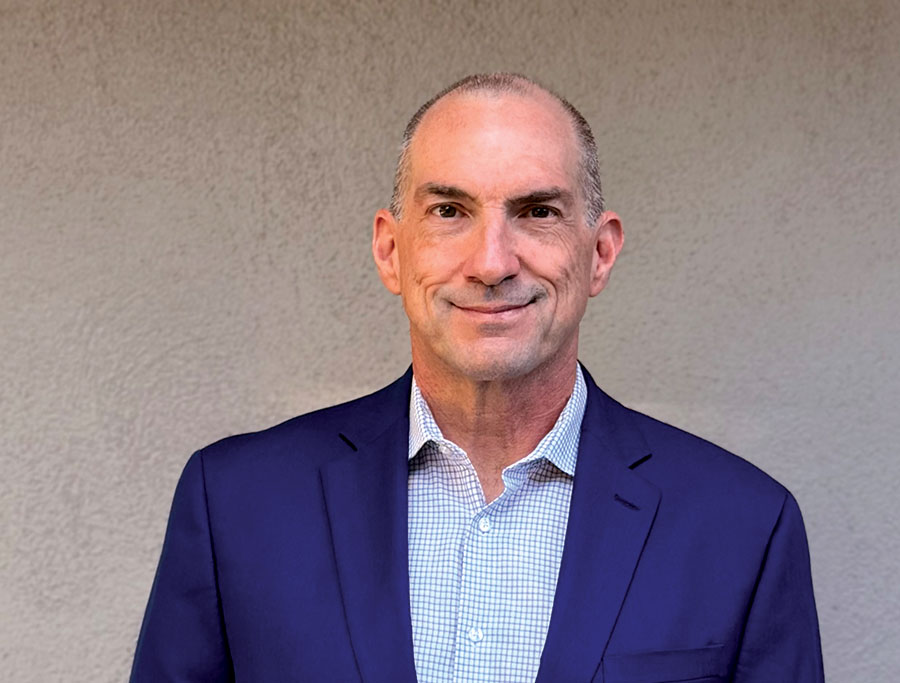
At 32, Daniel Roher has already built an unusually accomplished career in documentary filmmaking. Roher first gained international attention with the political documentary “Navalny,” which follows Russian opposition leader Alexei Navalny as he investigates the poisoning attempt that nearly killed him and confronts the Kremlin operatives believed to be behind it. The gripping film won the Academy Award for Best Documentary Feature in 2023 and firmly established Roher as one of the most promising young directors in nonfiction cinema.
Before that breakthrough, Roher had already explored very different subjects in his documentaries. His 2019 film, “Once Were Brothers: Robbie Robertson and the Band,” chronicled the life of guitarist/songwriter Robbie Robertson and the rise of the legendary rock group The Band, blending archival footage with personal reflections about fame, creativity and loss. Roher has since continued to move between personal and political storytelling, including this year’s “The AI Doc: Or How I Became an Apocaloptimist,” co-directed with Charlie Tyrell. The film follows Roher as he prepares for fatherhood and explores artificial intelligence and the anxieties surrounding its rapid development.
The unusual premise of “Tuner “grew out of a real-life encounter. Roher said the idea first came to him after spending a day shadowing a friend who works as a piano tuner. Watching the meticulous process — and the extraordinary listening skills the job requires — sparked his imagination.
“I followed him around for a day and watched him work,” Roher said. “It’s a very solitary job, and it requires this incredible discipline and concentration. These people have such precise hearing that I started thinking, what else could someone like that do?”
The thought led him to an unexpected idea: what if a tuner’s extraordinary ear could be used not only to perfect a Steinway, but also to hear the subtle clicks inside a safe and uncover its combination?
Although directing an actor of Hoffman’s stature might intimidate many young filmmakers, Roher said the experience was anything but daunting.
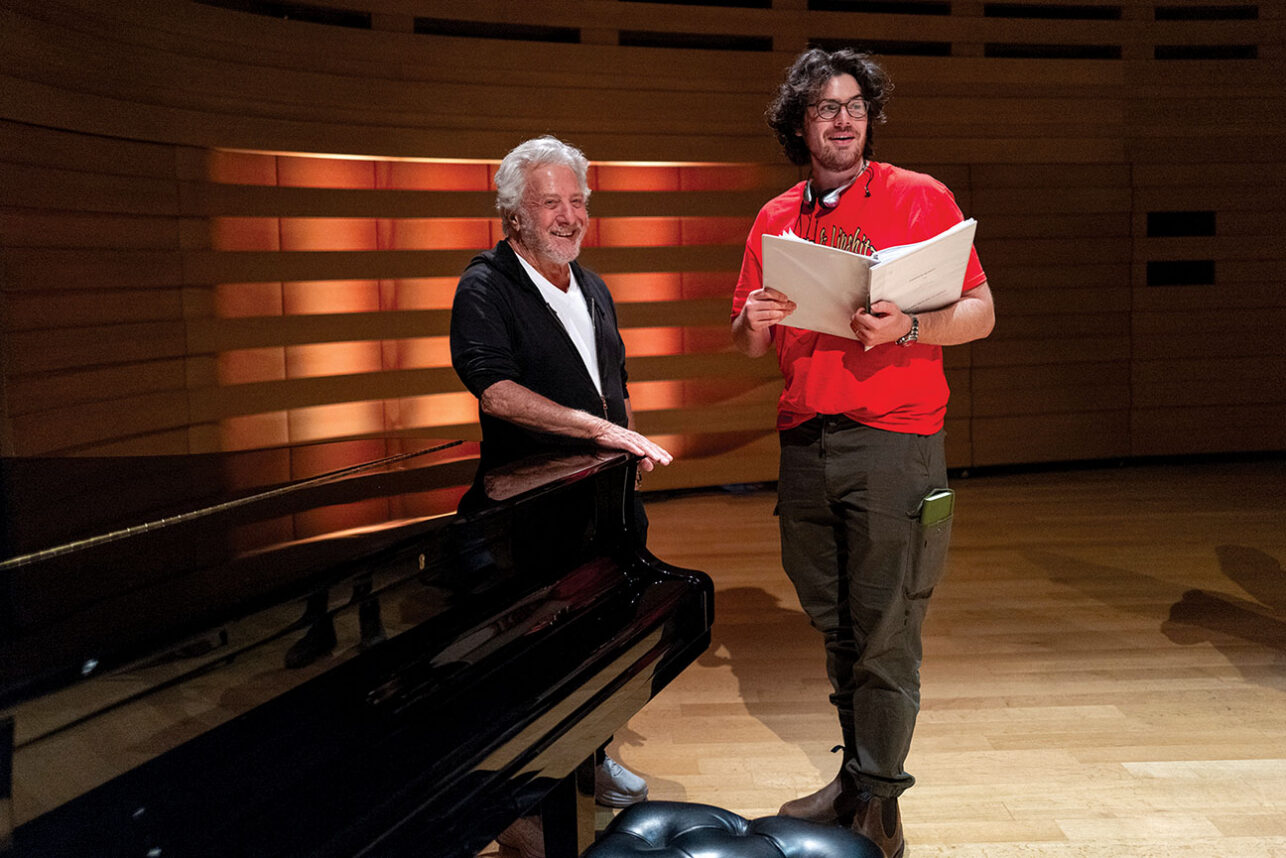
“It could have been intimidating, but Dustin is such a lovely, sweet and sensitive man with a great spirit,” Roher said. “He’s so passionate about making movies and loved being on set. He treated me with such kindness and respect that it wasn’t stressful at all. It felt like I’m having Grandpa or Uncle Dustin on set. I loved him very much.”
Roher was born to a Jewish family in Toronto, Canada. During our interview, he spoke about his fascination with the stories of Holocaust survivors, including those of his grandmother Bella, who had nine siblings — only three of whom survived. One settled in Canada, another in Florida, and a third in Israel.
His step-grandfather was also a Holocaust survivor, sent to Auschwitz. “I can still hear his slow Hungarian accent in my head,” Roher said. “He came to Canada with nothing and married my grandma later in life. I was a little boy then.”
He has visited his cousins in Israel a few times and maintains a close relationship with them. “My cousin, Dr. Yotam Shiner, is an extraordinary guy; he is like an angel, a remarkable person. He helped lead an initiative to treat people who don’t have access to the healthcare system. He and other doctors vaccinated undocumented people, including Palestinians.”
Another cousin, Gideon Shiner, after whom Roher named his two-year-old son, was a professor at the Technion in Haifa.
In January 2017, Roher also traveled to Auschwitz-Birkenau, a trip he will never forget. “I didn’t want to go with a group, so I went by myself. I remember it was freezing and there was nobody there, maybe two tourists. It was a somber place, I didn’t stay too long there,” he said. “I’ve gone on a few road trips in Europe and every time I visit Poland or Germany, I feel shook. You know, these places are haunted.”
One time, he recalled, he visited a friend in Berlin, a city he loves. She suggested he borrow her bike from the cellar and go for a ride. “Once I went there, I felt all those ghosts and I said, I’ve got to get the hell out of here. I got chills.”
Roher spoke to The Journal shortly after he returned to Los Angeles from the Sundance Film Festival, where the film was well received. Still, the film’s Israeli characters sparked debate during a post-screening conversation. One audience member from Australia approached Roher with a question about his decision to make the villains Israeli. “She works on combating antisemitism in Australia, and she was very taken aback,” Roher said.
On the other hand, some accused the film of being “Zionist.” “When you put Israelis in your movie, it’s a lose-lose,” he said. “And that’s ridiculous.”
Overall, audiences and critics alike embraced the film, and Roher said he is pleased with his casting choice. “I’m really lucky I got to work with those guys,” he said, referring to the Israeli actors. “Lior Raz is a national treasure. Gil and Nissan are amazing. I can’t wait to screen the film in Israel. I think people will have a lot of fun.”
“Tuner” is scheduled for release on May 22.