“Among Neighbors,’” Yoav Potash’s new documentary, tells the story of the small Polish town of Gniewoszów and a dark secret the Polish government has been trying to conceal. The film centers on two people who lived in the town during World War II: Yaacov Goldstein, a Holocaust survivor, and Pelagia Radecka, a Polish woman.
While many Holocaust films focus on the atrocities committed by the Nazis, “Among Neighbors” shifts the lens to the Polish people and what occurred after the war. This is a lesser-known chapter of history — when some Polish civilians took part in violent acts against Jewish survivors returning home. One of the most well-documented examples is the Kielce pogrom of July 1946, in which 42 Jewish men, women, and children were murdered by townspeople, police officers, and soldiers after false rumors spread that Jews had kidnapped a Christian child.
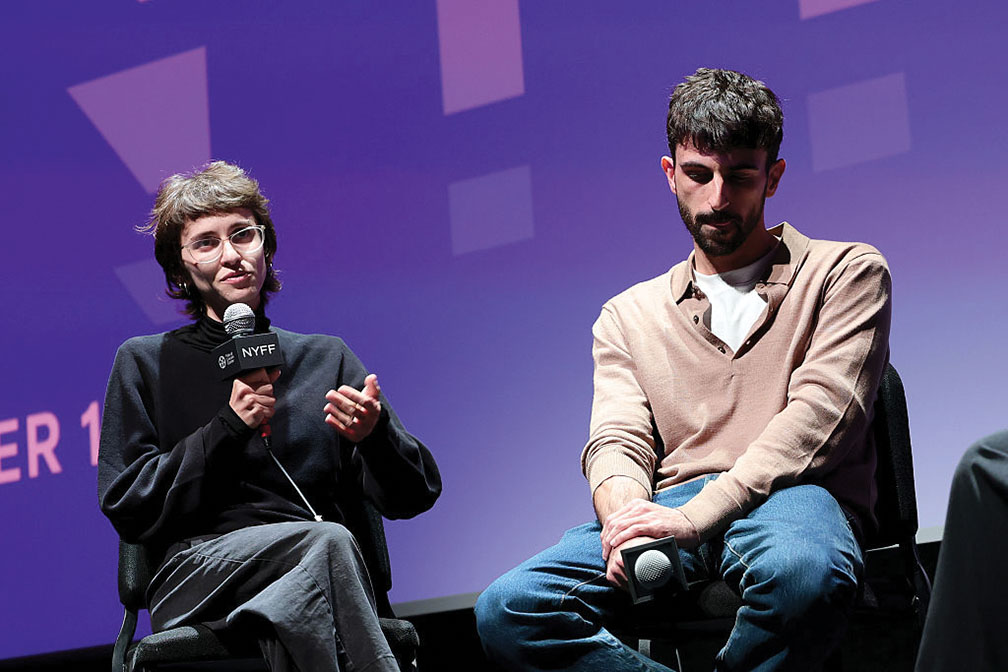
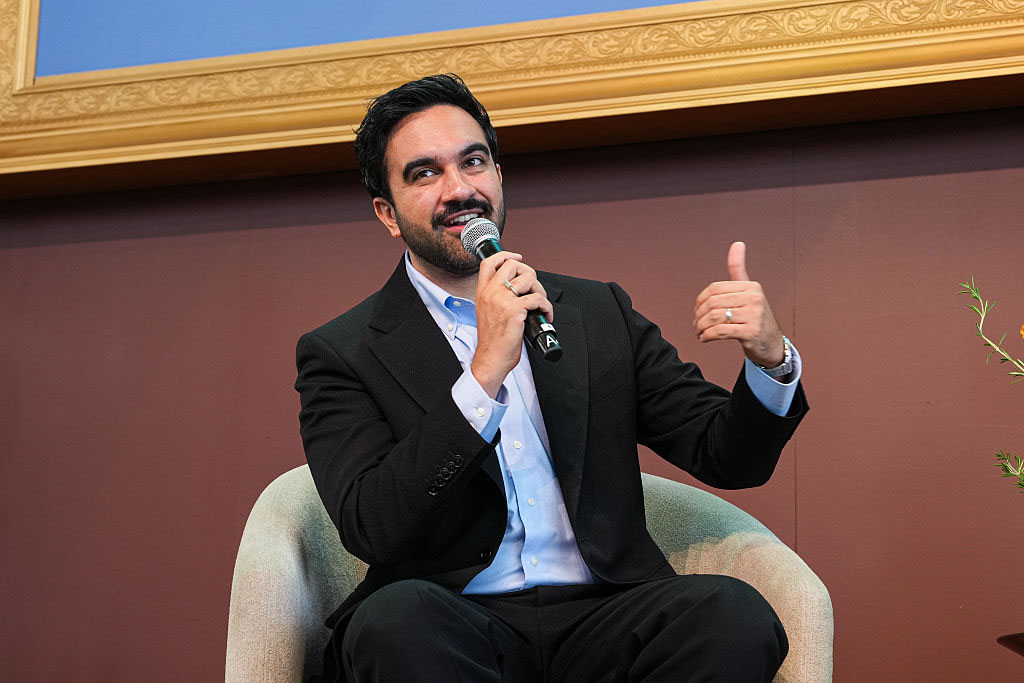
At a preview screening at the Royal Laemmle Theater in Los Angeles ahead of the film’s Oct. 17 release, Potash engaged a small audience in a Q&A. The filmmaker revealed that the project was “reborn three times.” Each time he thought he had finished telling the story and was ready to wrap production, new revelations emerged that compelled him to start filming again.
It all started in 2014, when Anita Friedman and her son, Aaron Friedman Tartakovsky, invited him to travel with them to Poland in 2014. Friedman is the daughter of a Holocaust survivor from Gniewoszów. When they first visited the town, the locals made it clear they were not welcome. They didn’t give up and continued visiting; they wanted to rededicate the old Jewish cemetery for the sake of all those who had lived there once. “I said to them, if you’re going to bring me all the way to Poland, why don’t I spend a few extra days in town and speak with some of the oldest residents and see if they remember any of the Jewish people who used to live there.”
One of the first people Potash met was Jenina Jawarske, an old Polish woman who stood at the entry way to her home. What she revealed to Potash was shocking. “I knocked on doors, and the locals recalled Jewish people in town,” said Potash. “One of them was Jenina, who half wanted to talk with us and half wanted to close the door. She admitted that Jews were killed there after the war. To hear a Polish person say it, and with certainly some remorse and sadness, it really struck me.”
Potash realized at that moment that his film was going to be more than just about a cemetery rededication. This town had a dark secret, and he wanted to expose it. “I felt this was different from the Holocaust stories I heard. In some ways, this wasn’t even a Holocaust story. This was a post-Holocaust story.” Potash began contacting Jewish agencies in Poland, explaining that he was making a film about this small town, and asked for their help, hoping they might know people he could speak with. One year to the day after his arrival in Poland, he received a handwritten letter from an 89-year-old woman who grew up in that town. Her name was Pelagia Radecka.
The elderly woman was eager to talk with the American director. In a way, it seemed as if she had been waiting for him her entire life. “She wrote, ‘in 1945 after the war I saw Jews murdered there. I want to tell someone my story and find the little boy whose family was murdered so I can tell him as well,’” said Potash said as he picked up the nicely hand-written letter. “It blew out my mind. The Chief Rabbi in Poland got involved because it’s part of his job to know where the bodies are buried and then we met with this woman, heard her story and interviewed her.”
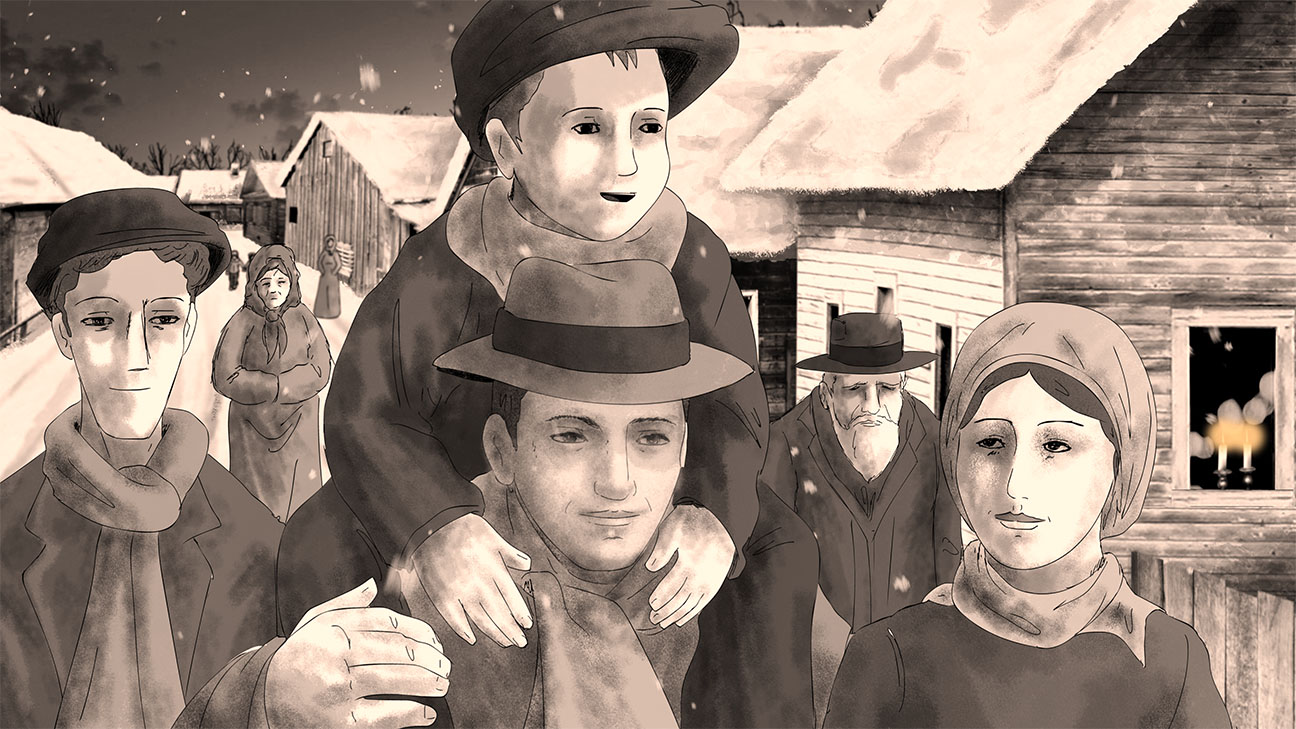
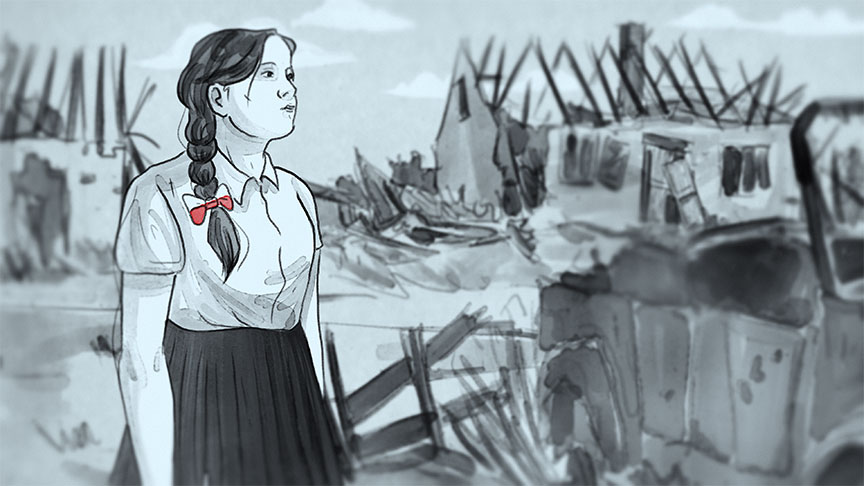
Potash was impressed by her testimony. This woman took a risk upon herself, recounting a story of a murder in a country in which the president warned residents against speaking or else they would be sent to prison. “It was the big rebirth of the film and she became the center of it. I got to a point where I said archival material and interviews are not going to get us into the specific experience of this woman and I decided to work with black and white animation that I felt can work well and allow us to track her as a little girl.”
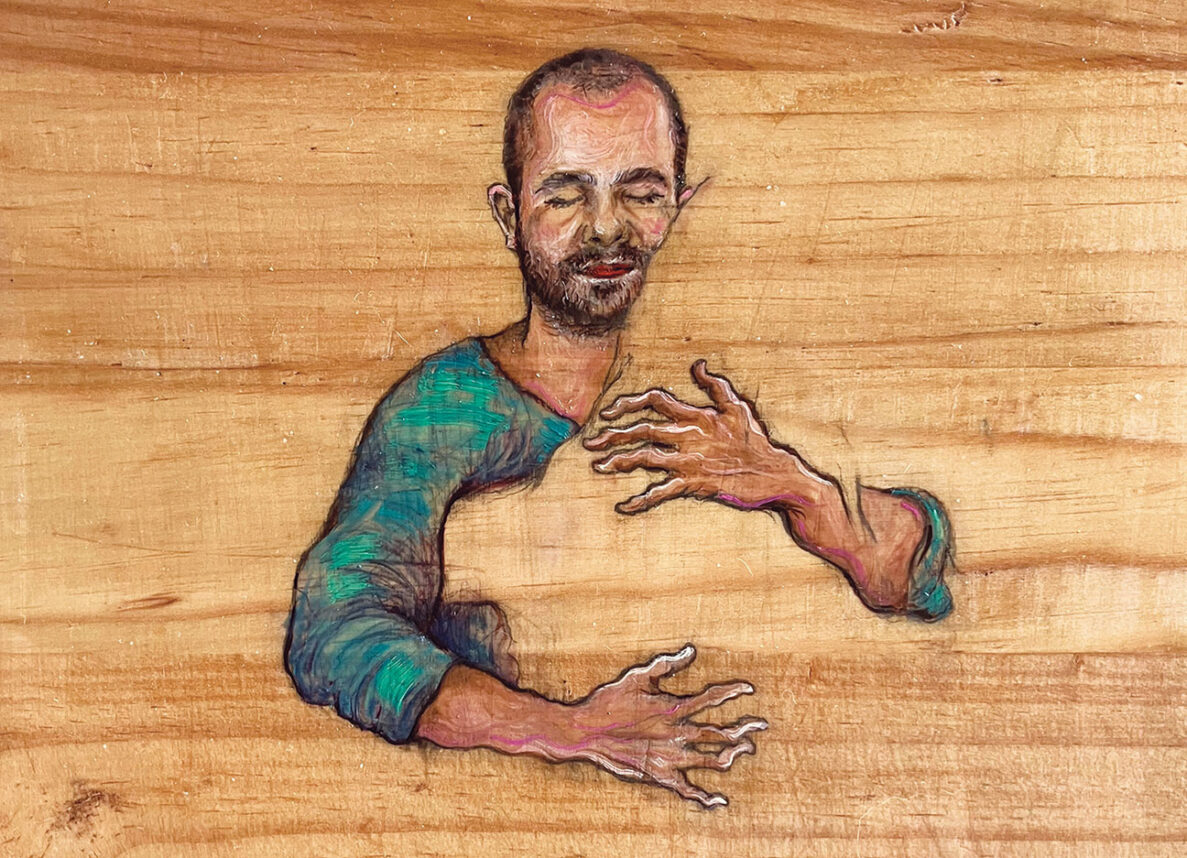
Potash hired an animator who brought Radecka’s story to life. “Anita handed out those printed programs,” he said, “and on the cover was some art work of a 102-year-old man who grew up in that town. His name was Harry Lieberman,” said Potash.
Credit: Courtesy of 8 Above
Lieberman immigrated to the United States in 1906. He was one of thousands of Jews fleeing the hardships and violence of Jewish life in Poland. In New York City, he worked in the textile trades and then operated a candy store on the Lower East Side with his wife Sofie. At 76, he started painting by memory the town of his childhood.
The old man had such a unique story to tell that would make a great addition to the film. And so, four years after Potash began filming, he started again.
The unexpected happened when Lieberman’s granddaughter told Potash that they have a cousin living in Israel and he might want to speak with him. “She said his name is Yaacov Goldstein. I was very excited to meet a Holocaust survivor. When I got in touch with Yaacov, his mind was blown that I’m making a film about a speck of a shtetl; it was unfathomable. He was concerned, however, about what the Poles were telling me. Were they telling the truth or that it was all Kumbaya?”
In order to ease his mind, Potash sent him the testimonies he collected from Jenina, who acknowledged the murders. It took Yaacov 10 days to get back to him, but he was all in. Without giving out any spoilers, an unexpected story emerged yet again.
Yaacov had already written a book about his incredible story of survival, “Against All Odds.” He was only six years old when the war started but recalled a magical childhood before that. His story of survival was fascinating and painful, and after hearing it, Potash knew that he had no choice but to go back to the drawing board and start all over again.
All the original drawings created by the animator were eventually set aside. Determined to do justice to the story’s complexity, Potash assembled two animation teams from highly regarded studios — one to bring Pelagia’s story to life, and the other to depict Yaacov’s journey. The result is a powerful fusion of animation and testimony, where art and memory intertwine.
Through this masterful blend of visual storytelling and firsthand accounts, “Among Neighbors” transcends traditional documentary form, becoming part magical realism, part investigative reporting and part historical reckoning. At its heart lies a chilling truth.
“Among Neighbors” starts Oct. 17 at Laemmle Theaters, with filmmaker Q&A’s Oct. 18-20. TIckets & more info at https://www.laemmle.com/film/among-neighbors