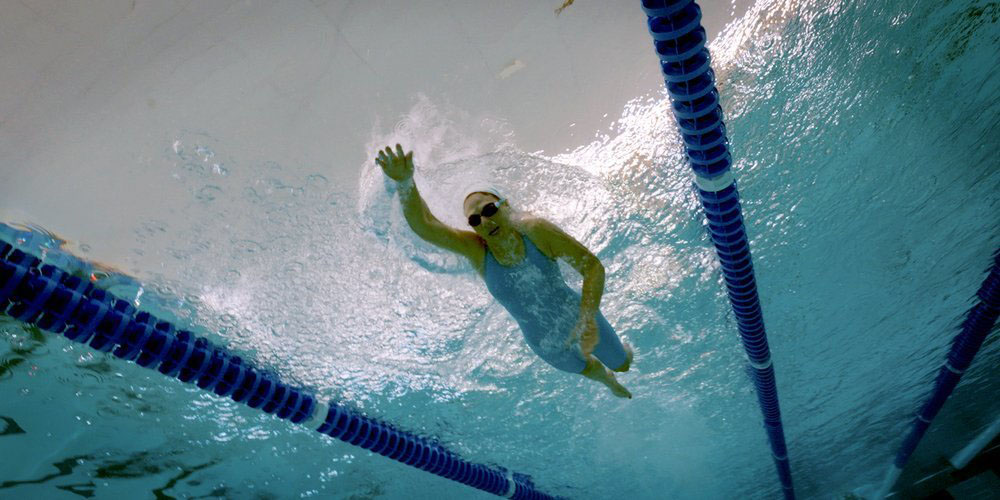
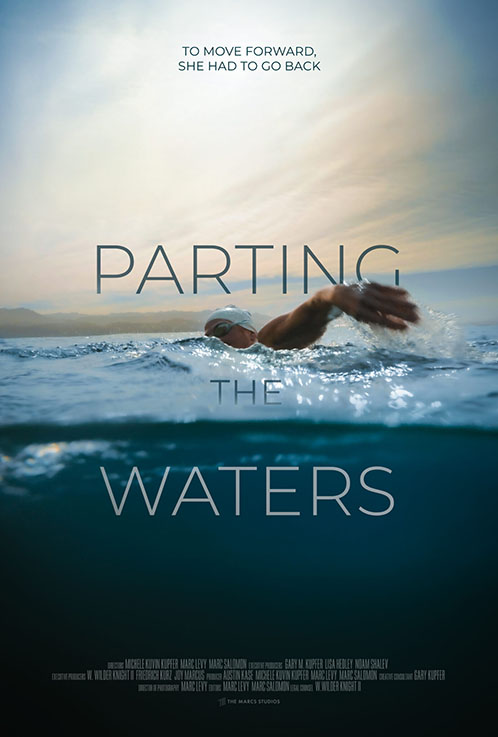
Michele Kuvin Kupfer knew that making “Parting the Waters” would put her on the therapist’s couch, not behind the camera. As both director and subject of the documentary about her return to competitive swimming at age 59, she would be forced to confront decades of buried trauma.
 “I was a therapist before I was a filmmaker… and my first calling prepared me for the second,” Kupfer writes in her director’s statement. “In both disciplines, we tell stories, purge emotions, express our fears and desires, all to try and make sense of the tangle of life.”
But this project required her to excavate her own pain: “growing up the daughter of a Holocaust survivor, overcoming severe learning disabilities, suffering humiliating anti-Semitism daily, struggling to keep my chronically ill son alive, losing my best friend—all while training to swim in an elite competition after leaving the sport for over forty years.”
Kupfer was a member of Israel’s 1980 Olympic swim team when the U.S.-led boycott over the Soviet invasion of Afghanistan crushed her Olympic dreams. She held Israeli national records from 1978-1982 but eventually left competitive swimming behind.
The catalyst for both the film and her athletic comeback was the 2020 death of her best friend and former teammate, Lior Birkhahn, from cancer. Kupfer realized that the stories of her generation of Israeli swimmers were disappearing.
Working with co-directors Marc Levy and Marc Salomon from The Marcs Studios, Kupfer embarked on what she describes as a grueling process of self-examination. “When we began our collaboration, they insisted on sitting me down for hours of interviews and heart-to-hearts, until we exposed the story’s beating heart,” she explains. “And like great therapists, they saw me clearer than I could.”
The film follows four swimmers from Israel’s 1980 Olympic team. Ron Kehrmann lost his daughter Tal in a 2003 terrorist attack and returned to competition to win eight medals in her honor. Nir Shamir grew up on Kibbutz Givat Haim, designed to produce elite Israeli athletes.
For Kupfer, training while filming meant pushing her 59-year-old body to limits she hadn’t tested in decades. She ultimately won eight medals at the 2022 Maccabiah Games—seven gold and one silver—and set a new Israeli record in the 400-meter freestyle.
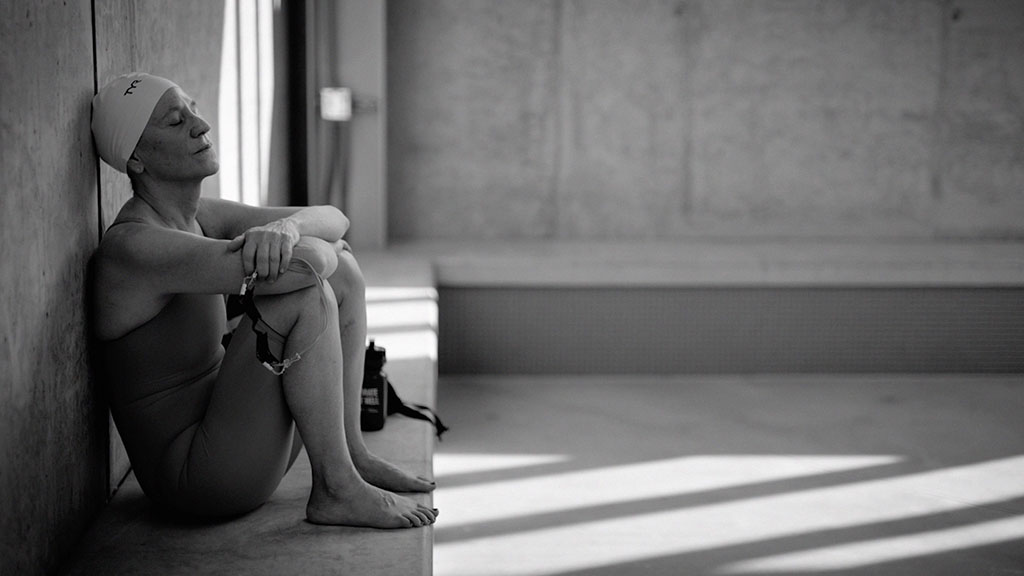
“At times, it felt like this journey would break me,” she admits. “But in the end, it saved me.”
The Maccabiah Games, often called the “Jewish Olympics,” serve as the world’s second-largest athletic competition by participation. For athletes like Kupfer, they represent a space where Jewish identity is celebrated rather than scrutinized—particularly relevant given her personal experience with daily antisemitism.
When the 1980 Olympic boycott affected 65 countries, Israeli swimmers redirected their dreams toward the 1981 Maccabiah Games, where they won team gold with what observers described as “spectacular pride and passion.”
Her background as a therapist informs both her filmmaking approach and her understanding of trauma’s lasting impact. The documentary explores how historical forces shape individual lives and how communities create opportunities when mainstream platforms are denied.
“From where I stand now, I can see that ‘Parting The Waters’ was always about survival,” Kupfer reflects. “It taught me that, no matter how dark things get, no matter how impossible it feels to move forward, I always possess the spark within me to keep going. I just needed to find my light and remember who I am.”
“Together, we took a lifetime’s worth of drama and crystallized it onscreen,” she says of her collaboration with the Marcs. “The film we made together is one of the proudest achievements of my life.”
The documentary arrives as Jewish communities worldwide face increasing hostility, making spaces like the Maccabiah Games more crucial than ever. It offers a story of resilience and the determination to compete on one’s own terms.
For Kupfer, the return to competition was about honoring friends like Lior Birkhahn and proving that survival is possible after a lifetime of trauma.
“I hope that ‘Parting The Waters’ will help whoever sees it, and needs it, to do the same,” she concludes.
In an era when Jewish stories are often defined by victimhood, Kupfer’s documentary offers something different: a meditation on healing and the possibility of finding light even in the deepest waters.
For more information about “Parting the Waters,” visit partingthewatersfilm.com or follow @partingthewaters_film on Instagram.