Over the High Holy Days, a rebbe walked through the marketplace and overheard banter between a merchant and his customer. The customer was clearly frustrated. He was disappointed with the price the merchant offered for the product. “C’mon! I know you can do better than this!” The merchant sighed and offered a different, slightly better price. The customer gave a dirty look. “But you know me! You know my family! How could you not do better than this?”
That’s when the rebbe looked towards the heavens and smiled. “Ahhh, Master of the Universe, this is what the High Holy Days are all about. You look at us and grow disappointed, frustrated, and sometimes, angry. You know, you just know, that we can do better than this.”
This High Holy Day season, we can all do better. We can all be better.
May it be a year filled with introspection, reflection, doing better, and reaching higher and higher.
Gmar hatimah tovah and Shabbat Shalom.
Rabbi Nicole Guzik is senior rabbi at Sinai Temple. She can be reached at her Facebook page at Rabbi Nicole Guzik or on Instagram @rabbiguzik. For more writings, visit Rabbi Guzik’s blog section from Sinai Temple’s website.
Elie Wiesel describes Moses as “the loneliest” character in the Bible. Moses is the ruler of an unruly bunch of former slaves, as well as a prophet and lawgiver, and, for a short time, the High Priest. As Wiesel puts it, Moses “embodies the very concept of leadership, with its collective triumphs and personal disillusionments.” And one of those disillusionments is loneliness.
Leaders often feel isolated. Multiple studies have corroborated the adage that “it is lonely at the top.” If so, Wiesel explains, Moses, the most extraordinary leader in Jewish history, will be lonelier than any other leader.
Loneliness is actually part of a leader’s job. Wiesel explains that “there must be some distance between the leader and those he is leading. Otherwise, he will not be respected; nor will he be obeyed.” Ibn Ezra makes a similar observation about Moses. He writes that “perhaps God arranged things so that Moses would grow up in a Pharaoh’s house….because if he had grown up among brothers and they had known him from his youth, they would not be in awe of him, for they would regard him as one of their own.”
As the leader, Moses must make harsh decisions; after the incidents of the Golden Calf and the rebellion of Korach, thousands are purged. People are too frightened to be friends with someone who wields that type of power over them; and a leader cannot allow friendship to get in the way of his mission.
Wiesel’s insights, as compelling as they are, don’t fully account for the lifelong isolation Moses experienced.
Moses is repeatedly separated from his loved ones. As a child, his parents had to throw him into the river. Pharaoh’s daughter then took him in and raised him. As a young man, he goes out to see the Jewish slaves. On the first day, Moses kills an Egyptian taskmaster who is beating a slave. On the second day, after another altercation with two Jewish slaves, they inform on him. Moses then has to flee his adoptive mother and home. He moves to Midian, and marries the daughter of the local high priest; yet even there, Moses never feels at home. He names his eldest son, Gershom, because “I was a stranger in a foreign land”; the redundancy of stating that he is both a stranger and living in a foreign land highlights Moses’ unending feelings of isolation.
Moses is alternately an Israelite, an Egyptian, and a Midianite; and in a certain sense, he is none of the above. His very name hints at his destiny. Moses, in the Egyptian words used by Pharaoh’s daughter, means “I drew him from the water.” He is a child pulled from a true no-man’s-land, a place that cannot accommodate human habitation.
Loneliness is Moses’ fate throughout his life. His connection to the divine makes him virtually unapproachable. After the sin of the golden calf, he moves his tent out of the camp. Following his return with the second set of tablets, Moses’ face shines with a Divine radiance. This is too frightening for everyone else; Moses needs to cover his face in order to speak to the people. He even separates from his wife, being too holy to live intimately with her.
Even in death, Moses is alone, and his burial place remains unknown.
Moses truly is “the loneliest” character in the Bible
But there is no other choice. Moses is a transcendent figure who brings the Torah down to earth. He is, as the Maharal puts it, part human and part divine. He cannot belong to anyone or any place, because he belongs to everyone, everywhere.
To live as an angel means giving up the company of humanity. And that is profoundly difficult. As Wiesel reminds us, the Bible considers being lonely to be a curse; “it is not good for man to be alone.”
For Moses, this loneliness is a particular tragedy. At the very beginning of his story, he left Pharaoh’s house in search of his Jewish brothers. He is searching for his roots, and wants to connect with them; as Rabbi Isaac Reggio writes, “He so loved his brothers that he could not restrain himself from going out to them every single day.” But Moses never gets to make that connection. First he is exiled, and later, despite great reluctance, made the leader of the Jews. As leader, he will care for his brothers, but he won’t have the chance to connect with them. He stands up for them when they need him; he confronts Pharaoh for them, and intercedes before God for them.
But Moses is always at a distance, camped away from everyone else.
This is why the first two words of Parshat Vayelech are profoundly moving. It is easy to gloss over them; all it says is, “Moses went.” This verb appears in the Torah 30 other times in connection to Moses. But here the context is different.
Moses is about to die. He has a message he wants to share with the Jews: Joshua will lead them, and God will watch over them. They need not worry about their future without him.
But Moses does not sound the ceremonial trumpets to assemble everyone to hear what he has to say; instead, he walks over to each tribe to speak intimately with them.
Hizkuni explains that God had taken the trumpets away from Moses because “no one has power on the day of death.” Moses is about to die and be replaced; and his role is already fading.
Moses no longer carries the burden of leadership. Now he can speak to his people as a loyal friend, someone who loved them all along. The Ramban offers the following description:
Moses walked from the camp of the Levites to the camp of Israel, in their honor, like one who wishes to take leave of his friend and comes to say farewell.
At the end of his life, we get to see Moses unbound, Moses the friend rather than Moses the leader. This is the same Moses who went out to check on his brothers in Egypt, worried about the welfare of the Jewish slaves.
It is heartbreaking that Moses had to wait so long to conclude that mission of love. But life got in the way; to be precise, the most exceptional life in human history. With all of that done and accomplished, he can return to his original dream of connecting with his brothers.
Now, unbound, he finally can embrace his Jewish family.
Rabbi Chaim Steinmetz is the Senior Rabbi of Congregation Kehilath Jeshurun in New York.
On Sept. 14, the Jewish American Summit (JAS) convened at Sephardic Temple Tifereth Israel in Westwood to address the toughest questions facing Jews in America and abroad.
The nearly 500 people who attended the event saw panels on Israel’s future; how Jewish communities can show up for one another; the evolving battle against antisemitism, combatting media bias against Israel, discussions with former Israeli Defense Minister Yoav Gallant, Harvard alumni Shabbos Kestenbaum and Beverly Hills Mayor Sharona Nazarian.
Security was very tight and tension in the room felt elevated; the summit was only four days removed from the assassination of conservative media personality Charlie Kirk. The crowd skewed towards mostly a 35-and-up crowd. The panels did not include Q&A session, but almost every speaker stayed all day at the summit and were accessible to attendees.
The mood of the summit was a mixture of tension, venting, grieving and looking into what has and hasn’t worked in the past. The usual concerns were voiced, but the panels took the conversations a bit deeper.
One constant was the calls to promote Jewish unity over partisan division. The day was filled with sound bites, but certain moments stood out — often with the crowd nodding along and applauding. The best attended panel of the summit was comedian and host of “Real Time” on HBO Bill Maher and U.S. Senator John Fetterman (D-Pa.).
Here are eleven quotes worth repeating from the Jewish American Summit 2025 from some of the most well-attended panel discussions.
Maher and Fetterman discussed double standards held against Israel in both media and among politicians.
“I’ve said it many times, it would be so easy to solve all this: stop attacking Israel. It’s not that big of a deal. But for 75 years, there have been so many attempts on the table beginning in 1937.”
—Bill Maher
Maher point-blank asked Fetterman about his outlook for a two-state solution.
“I am not sure if I believe that’s possible.”
—U.S. Senator John Fetterman (D-PA), on the two-state solution
Maher and Fetterman both warned against polarization, and even among political rivals, coming up with a set of agreements needs to be said out loud.
“We’re tribal, [Senator] not Jewish. I was raised Catholic and I’m an atheist. We’re saying this because I’m for the side that has Western values. I’m for the side that treats women equally. I am for the side that promotes gay rights. I am for the side that promotes free speech. I am for the side that’s not for Sharia Law. How did we get to this place where the people in this country who think of themselves as ‘the most progressive’ are somehow on the side of the people who are the most illiberal people in the world?”
—Bill Maher
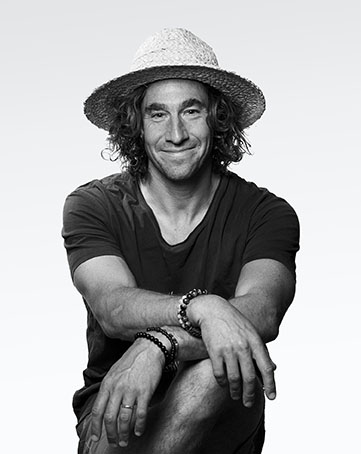
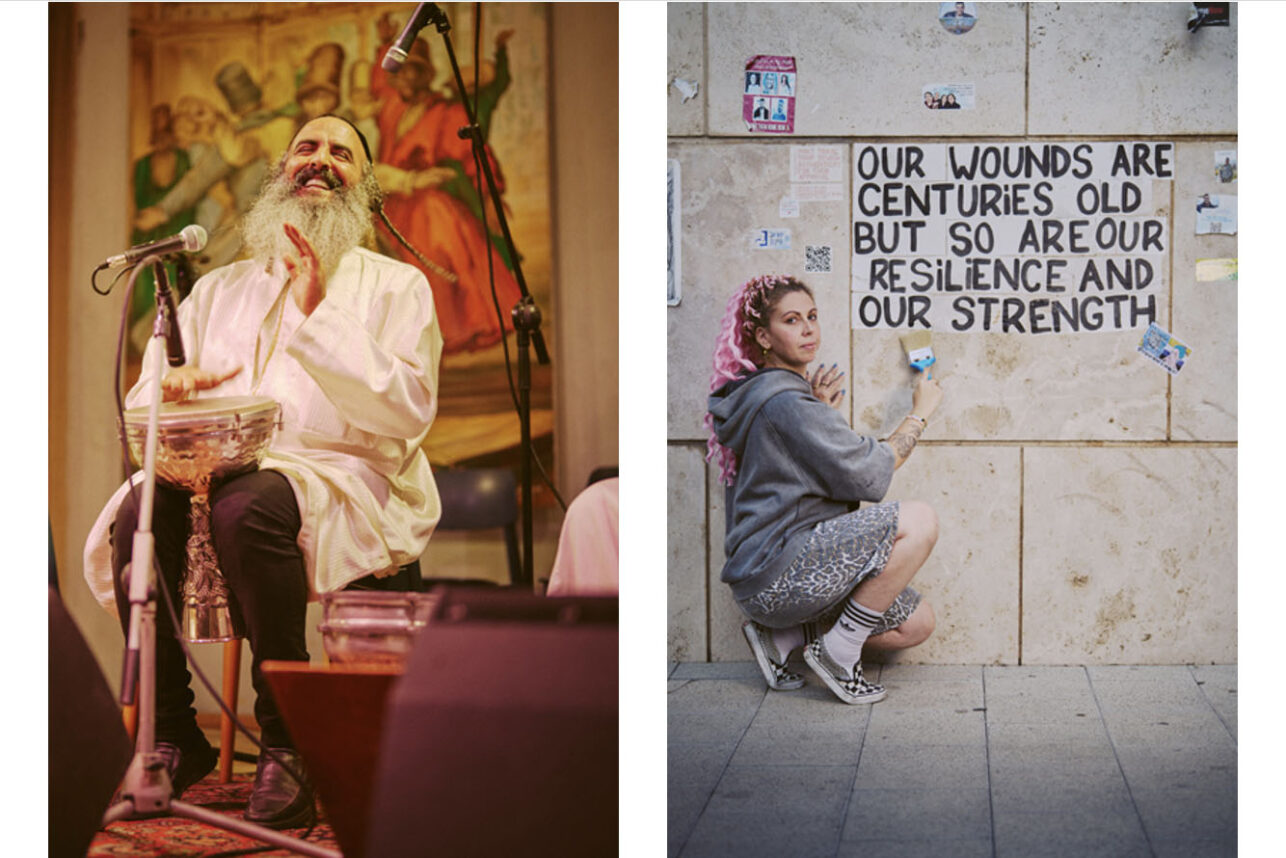
Artist and The 8 Project founder Tomer Peretz said simply telling Israelis “you are loved and we are on your side” matters. Peretz has been flying trauma survivors in Israel out to Los Angeles to be artists in residence at his studio — with many of them indulging in art for the first time in their lives.
“Israel needs your support and not just Israel as a country — the actual civilians, the actual Israelis. Share the love. Tell them you love them. Tell them you’re on their side. It means a lot. Even if those are just words, it’s really warming.”
—Tomer Peretz, artist and The 8 Project founder.
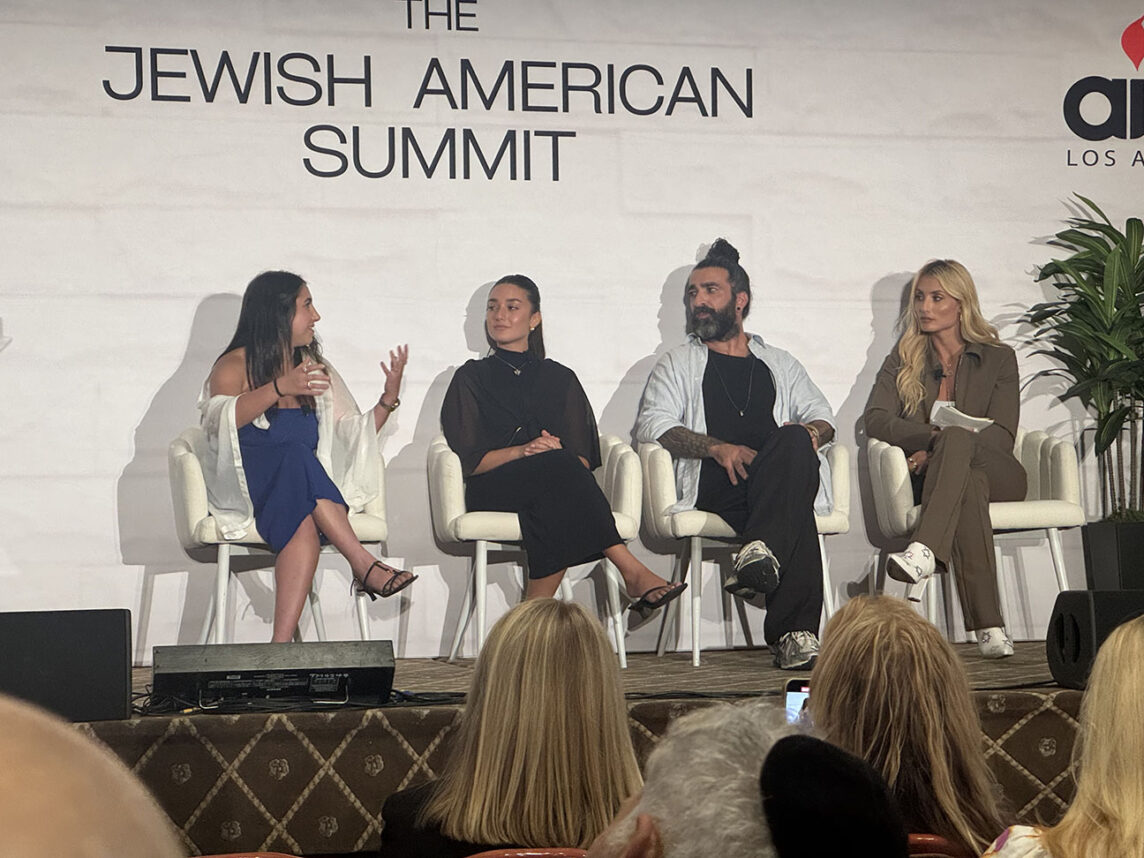
L to R – Shaked Salton, Rotem Zamir, Tomer Peretz, Montana Tucker (Photo by Brian Fishbach)
Two of the artists in residence, Rotem Zamir, 22, and Shaked Salton, 26, were the youngest panelists of the day. Even before their panel, they spent the entire day in the summit’s foyer demonstrating how art can channel pain into resilience and advocacy. Along with Peretz, they painted three murals.
“Two months ago I lost my brother. He was a combat soldier, he went to fight in Gaza. Hamas terrorists planted an explosive device on his tank, it blew up. Only four out of 10 of them came back home. I can’t even explain what it feels like, but art has always been my safe zone, my safe place, the place of healing me, giving me faith and hope.”
—Rotem Zamir
Salton, a creative director who pivoted from advertising to Israel advocacy, lost her best friend Maya who was murdered at the Nova Music Festival.
“I used to work in advertising as a director at an advertising agency, Reuvani Pridan. Now all I want to do is promote Israel and Judaism and fight against antisemitism. We can all see the veiled antisemitism coming in the name of ‘social justice.’ So this is now my new goal, and I would like to ask you all to speak up for Israel. You have no idea how much it helps us.”
Magen Am founder Rabbi Yossi Elifort and filmmaker (and editor of The Journal’s Table for Five) Sal Litvak (“Guns and Moses”) both spoke about crime against Jews and the importance of firearms and self-defense training. Litvak, himself also a licensed Magen Am volunteer, warned that Hollywood and media gatekeepers prefer to portray Jews on film and television as victims, not benevolent fighters.
“Yes, we have allies in this fight, thank God. But it is not easy getting a film made that’s about strong Jews who fight back.”
—Sal Litvak
Filmmaker Sean McNamara, director of the new Holocaust film “Bau: Artist At War,” insisted that Jewish and pro-Israel films will only get made if there’s a concerted effort to attend, donate, subscribe, and support creative Jewish projects.
“More than ever, all of these films [about Jews and Israel] need to be seen by as many people as possible. Visibility itself is resistance.”
—Sean McNamara
Singer and influencer Montana Tucker spoke on two different panels about Gen Z using testimonies of Holocaust and Oct. 7 survivors, even if it doesn’t fit your “brand.” She implored people with massive followings to make Jewish stories unavoidable on TikTok, Instagram, and YouTube.
“We’re in this age now where we all have our own voice, however we can use it. Whether it’s using our art to portray our message or to show up to events like this to show where you stand and who you are. Whether it is content on social media, keep sharing because back in Holocaust times, as we know, it didn’t matter how successful you were and how rich you were, how talented you were. You were a Jew back then, you had no voice.”
—Montana Tucker
Academy Award-winning documentarian (for “The Long Way Home”) Richard Trank shared his favorite quote by former Israeli Prime Minister and President Shimon Peres, the subject of his 2022 documentry, “Never Stop; Dreaming: The Life and Legacy of Shimon Peres.”
“‘Pessimists and optimists live completely different lives but in the end they all die, so why not be an optimist and always go for your dreams.’”
—Richard Trank quoting former Israeli Prime Minister and President Shimon Peres
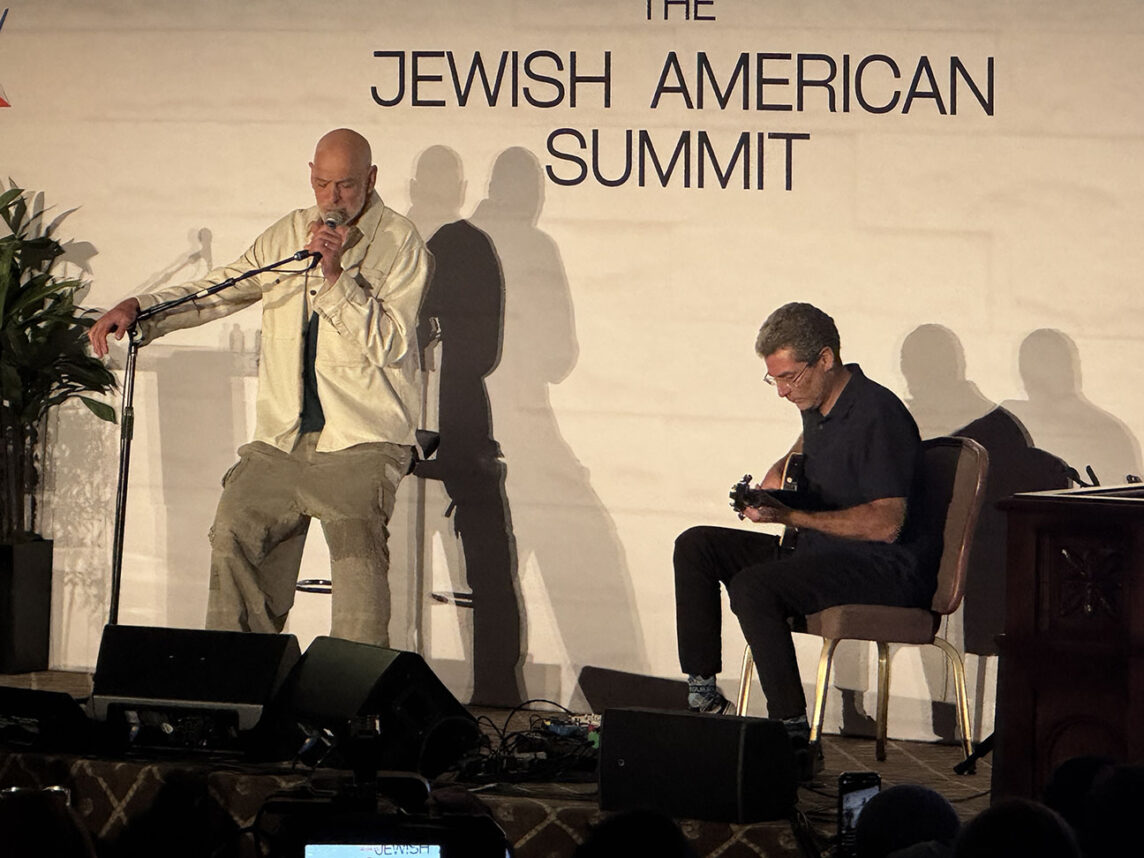
Matisyahu and guitarist Adam Weinberg (Photo by Brian Fishbach)
Even after a long day, at least over 200 people stuck around for a discussion by singer Matisyahu about Jewish identity. The day closed with Matisyahu performing a mini concert (with Adam Weinberg on acoustic guitar) featuring his hits, and tracks from his new album, “Ancient Child” (Oct. 3. Matisyahu said that the attacks of Oct. 7 pushed him to reconnect personally with Judaism, not for others but for himself, and encouraged others to do the same soul-searching. The new song that the audience seemed to connect with most with was a fierce and reggae-punk fusion track titled “Sun Come Up.”
“After Oct. 7, there’s a clear shift for me back into the role of saying, ‘I myself want to reconnect to my Judaism— not for anybody else or for any other reason.’ It’s not for religious reasons, but for the empowerment of knowing who I am and what my truth is. When there’s opposition and there’s a feeling that ‘we have to unite,’ there is something that happens to all Jewish souls — except for the ones who run the other way.
Actors Liev Schreiber, Mayim Bialik, Debra Messing, Jennifer Jason Leigh, Jerry O’Connell, Anthony Edwards and over 1,200 more entertainment figures signed an open letter opposing efforts to boycott Israeli film institutions. More than 1,200 names from across the entertainment industry signed on to the Sept. 25 letter.
The open letter was circulated by Creative Community for Peace (CCFP) in response to a pledge from many prominent actors, musicians and entertainment executives under the banner of “Film Workers for Palestine” (FWFP). Their letter that calls on artists to cut ties with Israeli film and television companies, productions, festivals, and institutions. Organizers of the boycott say it is meant to hold Israel accountable. The number of people who signed FWFP pledge has grown from 1,300 to over 5,000 signatures since it was released on Sept. 8.
CCFP describes itself as a nonprofit of entertainment professionals working to build bridges through the arts, raise awareness about antisemitism in the industry, and oppose cultural boycotts of Israel. Its Anti-Boycott petition has drawn more than 47,000 signatures.
CCFP’s origins took shape in 2011 when David Renzer, then chairman and CEO of Universal Music Group, was in Tel Aviv for a recording session as artists including Elvis Costello began canceling Israel shows. Around the same time, Pink Floyd’s Roger Waters published an op-ed in The Guardian calling for a cultural boycott. By 2012, Renzer and Steve Schnur, president of Music for Electronic Arts, founded CCFP precisely for moments like these.
The list of supporters of the Sept. 25 CCFP letter also includes musicians Gene Simmons, Matisyahu, the lead singer of Disturbed, David Draiman, and Regina Spektor also signed on. Former Paramount chief Sherry Lansing, Saban Entertainment founder Haim Saban, Mattel CEO Ynon Kreiz, and Universal Music Enterprises President Bruce Resnikoff also added their names.
On Sept. 12, Paramount Studios went on record opposing the FWFP boycott pledge, stating, “we need more engagement, not less.” On Aug. 12, the Toronto International Film Festival canceled a screening of the Israeli documentary, “The Road Between Us: The Ultimate Rescue” after boycott pressure; after a public outcry, the film was then reinstated two days later. The film won the festival’s People’s Choice Award. And in Israel, “The Sea,” a feature film about a Palestinian boy visiting Tel Aviv for the first time, took home the Ophir Award for Best Feature, even though the Israel Film Fund that backed it was singled out by boycott organizers.
For CCFP, the concern is that what may look like political protest, functions as exclusion.
“While the Boycott, Divestment, and Sanctions (BDS) movement presents itself as a social justice movement to those in the West, it is actually a political movement that seeks the defamation, delegitimization and eventual elimination of the State of Israel,” CCFP Executive Director Ari Ingel said. He called Israel’s film and television sector “a vibrant hub of collaboration between Jewish and Palestinian artists and filmmakers, who work closely together every single day.”
“While the Boycott, Divestment, and Sanctions (BDS) movement presents itself as a social justice movement to those in the West, it is actually a political movement that seeks the defamation, delegitimization and eventual elimination of the State of Israel,” – Ari Ingel
Saban described storytelling as a way to build understanding.
“Excluding Israeli filmmakers because of their identity betrays that mission and undermines efforts for peace,” he said.
Messing was more blunt.
“When artists boycott fellow artists based solely on their country of origin, it is blatant discrimination and a betrayal of our role as storytellers,” Messing said. “History shows us that boycotts against Jews have long been a tool of authoritarian regimes.”
Bialik argued the pledge to not work with Israelis misses the point.
“Boycotting filmmakers, studios, production companies and individuals — simply because they are Israeli — fuels division and contributes to a disturbing culture of marginalization. … This boycott pledge does nothing to end the war in Gaza, bring the hostages home or help curb the alarming rise of antisemitism globally.”
De Mornay said Israel is treated with a different standard than other nations about a “war that it didn’t start.”
She added that “film institutions engage with countries all over the world, including those with serious controversies … Yet Israel alone is singled out and condemned — for defending itself in a war it didn’t start, for trying to free hostages still being held, and for confronting an enemy still intent on its destruction.”
The letter framed the pledge as part of a history of efforts to discriminate against Jewish participation in entertainment and culture.
“History warns us … Censorship has been used to silence filmmakers before: Nazi Germany’s propaganda machine, Soviet censorship, and even Hollywood’s own blacklists. Every time it was dressed up as virtue. And every time it was oppression.”
The statement claims that Israeli institutions are often the “loudest critics” of Israeli government policy and are not afraid to make content that bemoans state actions. Supporters argue that boycotting Israelis would not challenge the Israeli government and will instead stifle dissent.
It concludes with a call to colleagues to resist the boycott push.
“We call on all our colleagues in the entertainment industry to reject this discriminatory and antisemitic boycott call that only adds another roadblock on the path to peace.”
On Oct. 19, CCFP will be hosting their seventh-annual Ambassadors of Peace gala, where they will be honoring five individuals for their outspoken support, including actor Jerry O’Connell and Universal Music Enterprises President and CEO Bruce Resnikoff.
I heard Kol Nidre on a viola tonight.
It’s not the first time. Last year a piano –
So many instruments have reminded me
of my failure to keep my promises.
A piano, a cello, an electric guitar,
the voice of an angel, a bassoon
for God’s sake (and it is for God’s sake.)
I had every intention to keep these promises
but humans plan and the divine laughs.
This is the contract I will sign tonight
disavowing me of all vows. I’m off the hook
until next year when I’ll be off the hook again.
I appreciate the forgiveness but
they should take away my license to vow
if I’m going to keep missing the mark like this.
When I think of all my mistakes
I wonder how I can trust myself.
How I can see my eyes in the mirror
and believe anything that comes
out of my lips. Didn’t Someone with
a capital S expect more from me when
They brought me out of Egypt?
Or was God smiling like a knowing parent
as I confidently promised my way
through every day of the last year
knowing the cut of my jib was cool, but
my words were larger than my ears?
This is the never-ending circle of this
annual contract. It’s up for review again
and the terms never change.
Next year – you might hear this on
a theremin, or a tuba, or a funky bass.
We’ll see. I’ve learned not to make promises.
Rick Lupert, a poet, songleader and graphic designer, is the author of 29 books including “God Wrestler: A Poem for Every Torah Portion.” Visit him at www.JewishPoetry.net
More than 10 years ago, Los Angeles native David Shlachter moved from California to Tel Aviv with his wife to live and work there for two years. They had the time of their life, and one day, they said they would return.
David Shlachter
Oddly enough, it was October 7 that pushed them to realize their dream. Even though Israel was at war, Shlachter and his wife were determined to go with their three kids in tow. They left California to embark on a two-year sabbatical in the Jewish homeland, securing an apartment and enrolling their kids in public school. Shlachter found out that during their sabbatical, the population of Israel is expected to hit 10 million. That sparked an idea: a book of portraits, “Humans of New York” style, showing the people and personalities of the country.
“I thought, ‘This is too good! Somebody has to document this!’” he said. “Ultimately, the fallout from October 7 only strengthened my resolve to channel a deep well of pent-up energy into something positive – both for myself and for Israel.”
Shlachter’s book, which is available for pre-order now, is called “Hinenu: Israel at Ten Million.” It contains portraits of 100 Israelis who exactly match the country’s diverse population.
“It was like putting together the craziest puzzle ever, with the pieces often changing shape,” he said. “I used the census data to create a spreadsheet with 100 profiles, each with its own data points for age, gender, religion, ethnicity, location and place of origin. I was also careful to ensure integrity within categories, like proportion of specific sects and geographic distribution among the ultra-Orthodox, specific region of origin among the olim, etcetera.”
“It was like putting together the craziest puzzle ever, with the pieces often changing shape.”
The stories are coupled with beautiful photos of the subjects; one story in particular that stands out is about a surfer “who lived a life of absolute freedom until his daughter was born with severe disabilities, unable to see, hear or speak,” Shlachter said. “He is a patented innovator of musical instruments, communicates with her only through vibration, and demonstrates a constant state of gratitude that gives me goosebumps.”
There is also a Muslim Darfurian whose family was killed during the genocide.
“He arrived in the Sinai with human traffickers, crossed into Israel, spent some time in jail, and upon release learned English and Hebrew, excelled at Bar Ilan University, and is now a senior solar engineer in the Arava,” the author said.
Shlachter included Holocaust and Nova survivors, a female medic who was shot in Gaza and is now relearning how to walk, and fellow olim who made aliyah from all around the world.
“Each and every story is raw, powerful, honest, and can be read in less than five minutes,” he said. “I felt that there were untold media outlets trying to present an angle on the country and the conflict, and I wanted to serve up a signal through the noise: documentation of raw, unfiltered human experience in a place that is the subject of so much fascination but is so poorly understood. I asked participants only to share true, meaningful stories—ones that would help others understand who they really are, in their own words.”
It’s clear that Shlachter loves Israel and its unique population. While his country is still at war two years later and antisemitism is raging around the world, the author and photographer knew that this was a way he could contribute to the conversation and make a difference – one portrait at a time.
“The late, great Amoz Oz has this great bit about what one might do when they see a giant fire raging,” he said. “Some run away, some make angry demands, and some bring a bucket of water. He encourages us to find a glass if we don’t have a bucket, and to find a teaspoon if we don’t have a glass. This book is my teaspoon of water. If these stories challenge people’s assumptions about Israel, then dayenu. But if even one person out there is moved by these testimonies and then shows just a little more curiosity and empathy toward the other, then it’s mission accomplished.”
Rarely do I say that a mainstream movie has arrived just in time for the Jewish High Holidays, but Eleanor the Great fits the bill. The movie reprises the ancient story of deception at the heart of the Book of Genesis: a younger son, Jacob, at his mother’s urging, dons goatskins to impersonate Esau, his shaggy brother, and trick his blind father into giving him a blessing meant for the firstborn. Jacob’s deceit is a tale of profound moral ambiguity—a lie told to secure a legacy when telling the truth seems poised to ruin the future. The High Holiday confessional (vidui) has a special prayer (vidiui peh) to deal with precisely the sort of lie that Eleanor tells herself is justified. The movie is also the tale of a converted Jew who profoundly cares about her Judaism and a Jew by birth who is entirely unconnected.
In her well-done directorial debut, Scarlett Johansson takes a sharply written screenplay by Tory Kamen and reimagines this primal deception in a contemporary promised land: Manhattan. The result is a captivating and deeply human film, anchored by its nonagenarian star, June Squibb.
In a bravura title role, Squibb plays Eleanor Morgenstein, a spirited 94-year-old tummler who embraces the whole world as her stage. Following the devastating loss of her friend, Eleanor relocates from Florida to New York City to live with her daughter and grandson, hoping to reconnect. Instead, she finds herself adrift and invisible in the bustling city. Her life takes an unexpected turn when she wanders into a support group where she doesn’t belong and, in a moment of impulse, tells a story that is true but is not hers to tell. This decision brings her unintended attention, particularly from a young journalism student named Nina (Erin Kellyman) who seeks her out as a friend and mentor. What begins as a small deception spirals out of control, forcing Eleanor to confront the truth of her actions.
At 94, June Squibb delivers a performance that is nothing short of a revelation. Having already earned an Academy Award nomination for Nebraska, her turn here as Eleanor is a masterclass in complexity. She is at once cantankerous, rambunctious, witty, and ready to take on the world with a positive spirit. Squibb navigates Eleanor’s contradictory nature with skill, capturing her fear of irrelevancy and her passion for life. Her layered portrayal of a woman grappling with grief, identity, and a profound mistake is so powerful it should place her in the Oscar conversation—a monumental achievement for an actress of her generation. If I turn out to be right in my intuition, she would be the oldest nominee in any category ever, a testament to her late start in on-screen acting.
For a first-time feature director, Scarlett Johansson displays an assured hand. Most risks in the movie pay off, though a few don’t quite hit the mark. Having grown up in Manhattan, Johansson clearly loves the city she is portraying. But while the “love letter to New York” aspect might work for non-New Yorkers, it will land differently for veteran Gothamites. The walks Eleanor takes, while in pain and using a cane, show her traversing improbable distances from midtown to the Gracie Mansion Promenade to a West Side Synagogue. For any New Yorker, these travels are a bit vertiginous to watch. By contrast, the larger risk Johansson takes—her refusal to judge Eleanor—works beautifully, leaving the audience to decide if the dissembling merits forgiveness.
I was happy to learn that Johansson cast multiple non-actor Holocaust survivors to portray the members of the Jewish Community Center support group. This choice makes the film’s central deception all the more poignant, as it unfolds in the presence of real survivors.
The film has a superb multi-generational ensemble. and the unlikely friendship between Eleanor and Nina, the 19-year-old student played with effervescent charm by Erin Kellyman has believable chemistry. We are rooting for them to be BFF’s while knowing that the deception could wreck their relationship at any moment. I liked that their friendship transcends traditional generational gaps as they discover they are both healing from loss and help each other. . Chiwetel Ejiofor delivers a slightly underacted performance as Nina’s father, Roger, a charismatic news anchor who has become emotionally shut down after his wife’s death. His journey toward reconnecting with his daughter is positioned as one of the film’s most main arcs, as Eleanor’s chaotic presence inadvertently becomes a bridge between them.This arc doesn’t quite convince, even if the audience wants it to. On the other hand, Jessica Hecht shines as Eleanor’s daughter, terrified of living with her mother but occasionally amused by her antics.
Eleanor the Great is a funny, emotional, and thought-provoking story about the tales we tell and why we tell them. Like Jacob seeking Isaac’s blessing, Eleanor’s transgression emerges from a desperate human desire—to matter, to connect, and to ensure a remarkable story is not lost to the world. With a tour-de-force performance from June Squibb and sensitive, intelligent direction from Scarlett Johansson, the film asks us to consider that even if a story isn’t one’s own, perhaps the story should be told and, its impact can be profoundly real.
Scott A. Shay is the author of In Good Faith: Questioning Religion and Atheism (Post Hill Press, 2017) and Conspiracy U: A Case Study (Wicked Son, 2021).
This week I offer a synopsis of my Rosh Hashanah morning sermon (the full text is linked below):
The Days of Awe immerse us in words—prayers, songs, sermons. Yet the most powerful gift of these days is not in what we say, but in what we refrainfrom saying.
The Baal Shem Tov taught that every soul is given a quota of words for a lifetime. When we use up our words, we will die. Imagine if each word carried us one step closer to the last. How carefully would we choose them? Which would we save? Which would we regret?
This season invites us to pause, to breathe, to dwell in the holiness of silence. Like the letter Aleph—soundless, yet chosen to begin the Ten Commandments—silence holds space for humility and wisdom. Like the biblical Isaac—quiet, enduring, a man of few words—we too can carry the covenant not by speaking endlessly, by not posting on social media – but by being present.
Still, silence is not the whole story. There are moments when words are required—to comfort, to challenge, to speak truth, to lift another soul. Wisdom is knowing when to refrain and when to give voice.
This Holy Day season, may we recognize each pause, each word, each silence as a sacred moment in time. May we use our words sparingly and courageously, so that they may bring light into the year ahead.
That which we have managed to repair
we may love more than what has always been intact.
The cracks that we’ve repaired cause us to care
for them a lot more than for what had never cracked.
The connection of kintsugi to the taste
for what is savory, known as umami,
to what prevents sins that lay us to waste,
repentance, teshuvah, is quite uncanny.
To the outside of any pot we show less favor
than to its contents its producers might have stirred,
but with repentance may improve the flavor
of our demerits for the ways that we have erred
in ways that only a divine observer saw,
repentance comparable to how kintsugi can
improve a broken pot which after any flaw
has been repaired, as championed in Japan.
Repentance makes sins which we have committed
like broken pots that by kintsugi are repairable,
and by improving acts that never were permitted,
to dry bones of Ezekiel are comparable.
In the Kol Nidrei service on the night of the Day of Atonement all the congregation recite a piyyut, poem, that begins:
For behold, like clay in the hands of the potter, if he wills, he can expand it, if he wills, he can contract it; so too are we in Your hand, Preserver of kindliness and not the accuser.
The mishnah states in the Ethics of the Fathers, Avot 4:20:
רַבִּי אוֹמֵר, אַל תִּסְתַּכֵּל בַּקַּנְקַן, אֶלָּא בְמַה שֶּׁיֶּשׁ בּוֹ. יֵשׁ קַנְקַן חָדָשׁ מָלֵא יָשָׁן, וְיָשָׁן שֶׁאֲפִלּוּ חָדָשׁ אֵין בּוֹ
Rabbi said: don’t look at the container, baqanqan, but at that which is in it: there is a new container full of old wine, and an old [container] in which there is not even new [wine].
On 5/26/24 Meir Soloveichik discussed kintsugi (katsugi) in his podcast “Japanese Pottery and the Nature of Forgiveness,” https://meirsoloveichik.com/journey-siddur/japanese-pottery-and-the-nature-of-forgiveness/, connecting katsugi to the concept of forgiveness which is the rationale of the third blessing of God in the Amidah for being חנון המרבה לסלוח, graciously willing to forgive.
Gershon Hepner is a poet who has written over 25,000 poems on subjects ranging from music to literature, politics to Torah. He grew up in England and moved to Los Angeles in 1976. Using his varied interests and experiences, he has authored dozens of papers in medical and academic journals, and authored “Legal Friction: Law, Narrative, and Identity Politics in Biblical Israel.” He can be reached at gershonhepner@gmail.com.
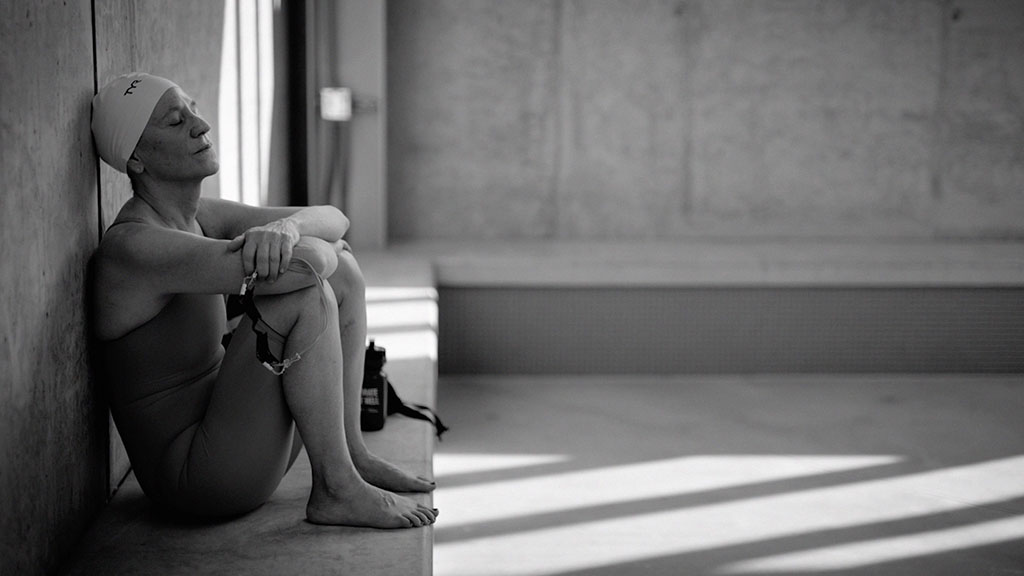
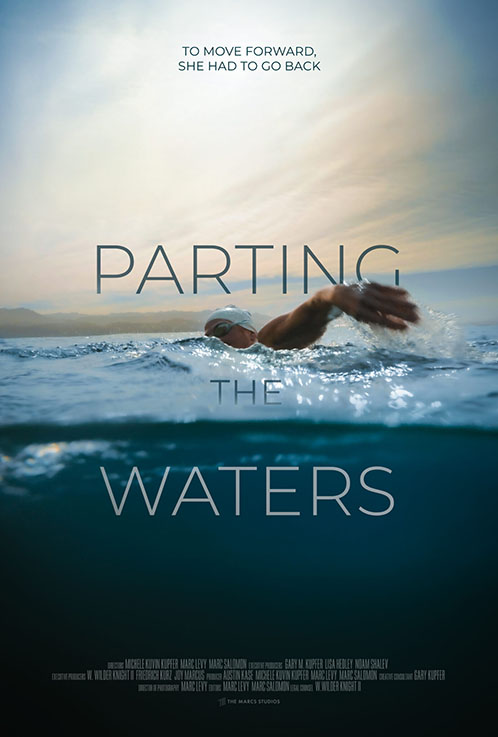
Michele Kuvin Kupfer knew that making “Parting the Waters” would put her on the therapist’s couch, not behind the camera. As both director and subject of the documentary about her return to competitive swimming at age 59, she would be forced to confront decades of buried trauma.
“I was a therapist before I was a filmmaker… and my first calling prepared me for the second,” Kupfer writes in her director’s statement. “In both disciplines, we tell stories, purge emotions, express our fears and desires, all to try and make sense of the tangle of life.”
But this project required her to excavate her own pain: “growing up the daughter of a Holocaust survivor, overcoming severe learning disabilities, suffering humiliating anti-Semitism daily, struggling to keep my chronically ill son alive, losing my best friend—all while training to swim in an elite competition after leaving the sport for over forty years.”
Kupfer was a member of Israel’s 1980 Olympic swim team when the U.S.-led boycott over the Soviet invasion of Afghanistan crushed her Olympic dreams. She held Israeli national records from 1978-1982 but eventually left competitive swimming behind.
The catalyst for both the film and her athletic comeback was the 2020 death of her best friend and former teammate, Lior Birkhahn, from cancer. Kupfer realized that the stories of her generation of Israeli swimmers were disappearing.
Working with co-directors Marc Levy and Marc Salomon from The Marcs Studios, Kupfer embarked on what she describes as a grueling process of self-examination. “When we began our collaboration, they insisted on sitting me down for hours of interviews and heart-to-hearts, until we exposed the story’s beating heart,” she explains. “And like great therapists, they saw me clearer than I could.”
The film follows four swimmers from Israel’s 1980 Olympic team. Ron Kehrmann lost his daughter Tal in a 2003 terrorist attack and returned to competition to win eight medals in her honor. Nir Shamir grew up on Kibbutz Givat Haim, designed to produce elite Israeli athletes.
For Kupfer, training while filming meant pushing her 59-year-old body to limits she hadn’t tested in decades. She ultimately won eight medals at the 2022 Maccabiah Games—seven gold and one silver—and set a new Israeli record in the 400-meter freestyle.
“At times, it felt like this journey would break me,” she admits. “But in the end, it saved me.”
The Maccabiah Games, often called the “Jewish Olympics,” serve as the world’s second-largest athletic competition by participation. For athletes like Kupfer, they represent a space where Jewish identity is celebrated rather than scrutinized—particularly relevant given her personal experience with daily antisemitism.
When the 1980 Olympic boycott affected 65 countries, Israeli swimmers redirected their dreams toward the 1981 Maccabiah Games, where they won team gold with what observers described as “spectacular pride and passion.”
Her background as a therapist informs both her filmmaking approach and her understanding of trauma’s lasting impact. The documentary explores how historical forces shape individual lives and how communities create opportunities when mainstream platforms are denied.
“From where I stand now, I can see that ‘Parting The Waters’ was always about survival,” Kupfer reflects. “It taught me that, no matter how dark things get, no matter how impossible it feels to move forward, I always possess the spark within me to keep going. I just needed to find my light and remember who I am.”
“Together, we took a lifetime’s worth of drama and crystallized it onscreen,” she says of her collaboration with the Marcs. “The film we made together is one of the proudest achievements of my life.”
The documentary arrives as Jewish communities worldwide face increasing hostility, making spaces like the Maccabiah Games more crucial than ever. It offers a story of resilience and the determination to compete on one’s own terms.
For Kupfer, the return to competition was about honoring friends like Lior Birkhahn and proving that survival is possible after a lifetime of trauma.
“I hope that ‘Parting The Waters’ will help whoever sees it, and needs it, to do the same,” she concludes.
In an era when Jewish stories are often defined by victimhood, Kupfer’s documentary offers something different: a meditation on healing and the possibility of finding light even in the deepest waters.












 “I was a therapist before I was a filmmaker… and my first calling prepared me for the second,” Kupfer writes in her director’s statement. “In both disciplines, we tell stories, purge emotions, express our fears and desires, all to try and make sense of the tangle of life.”