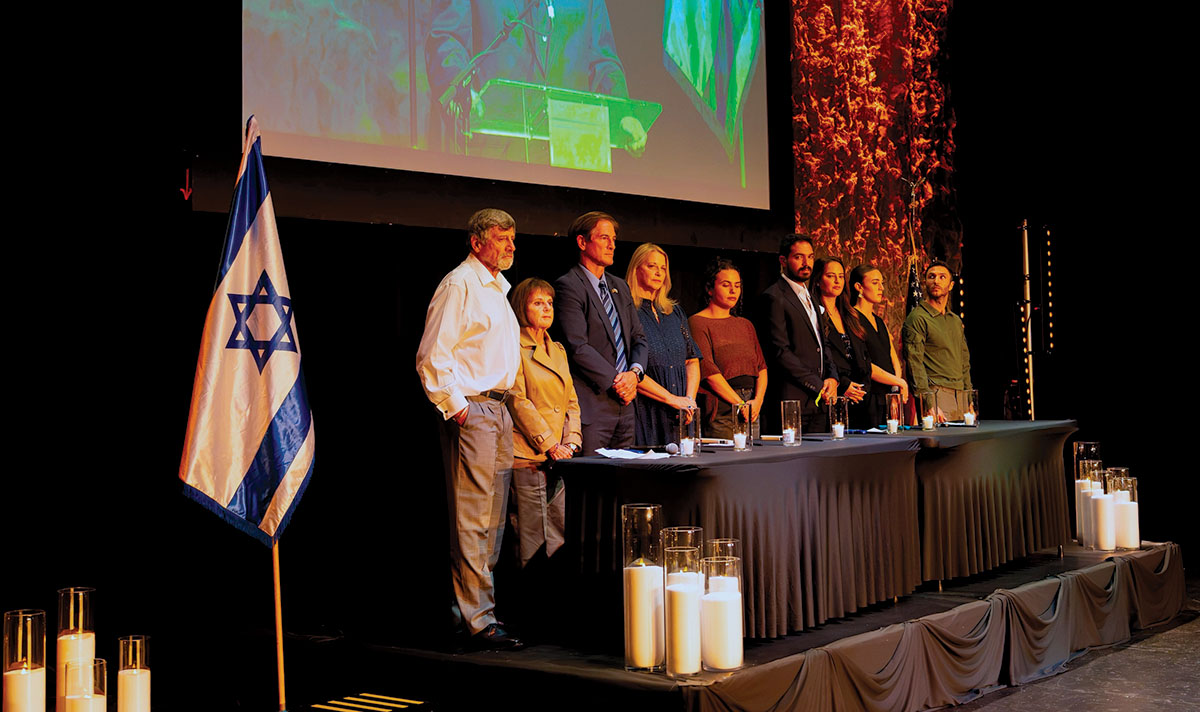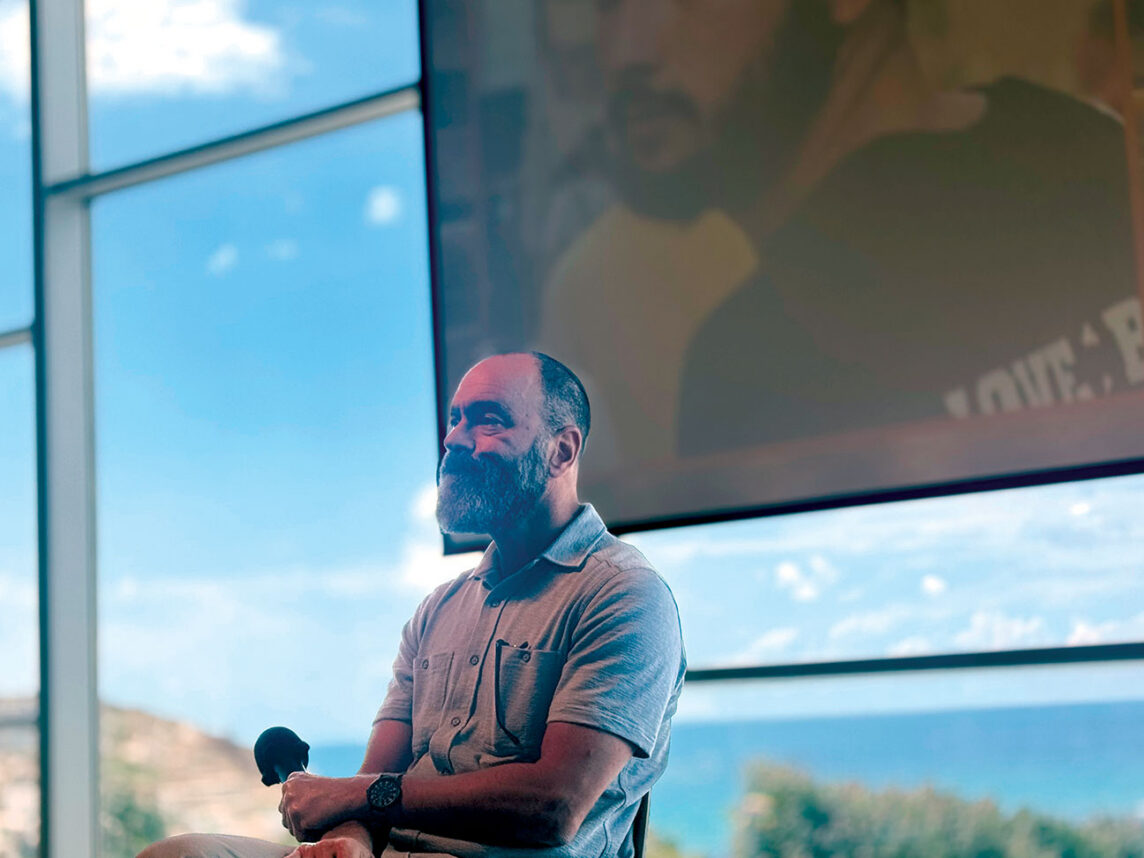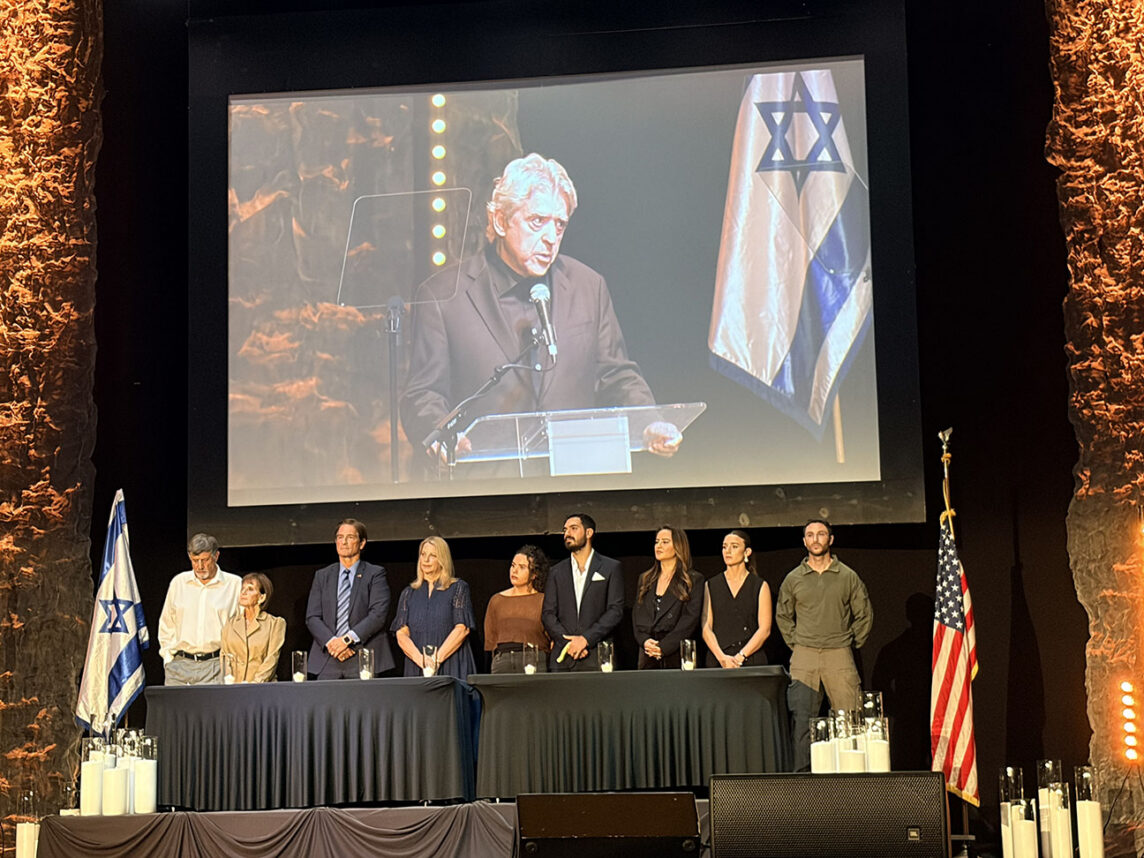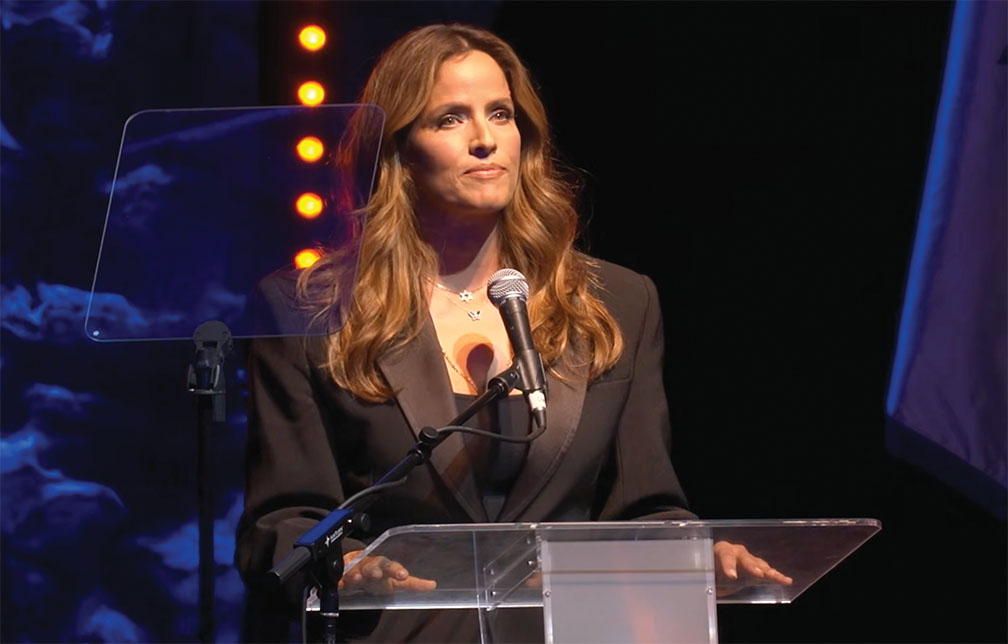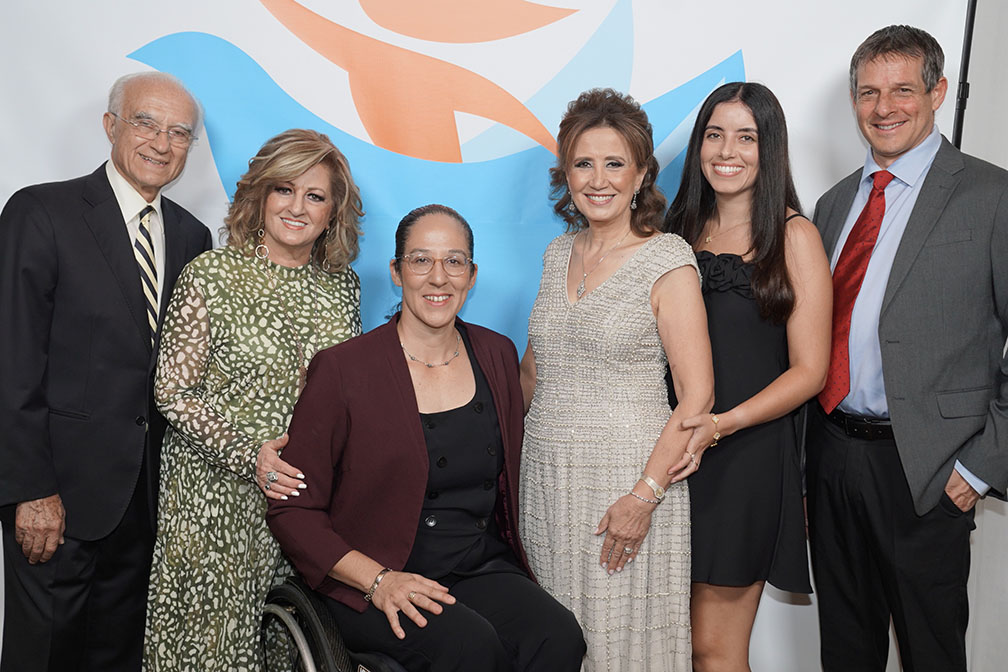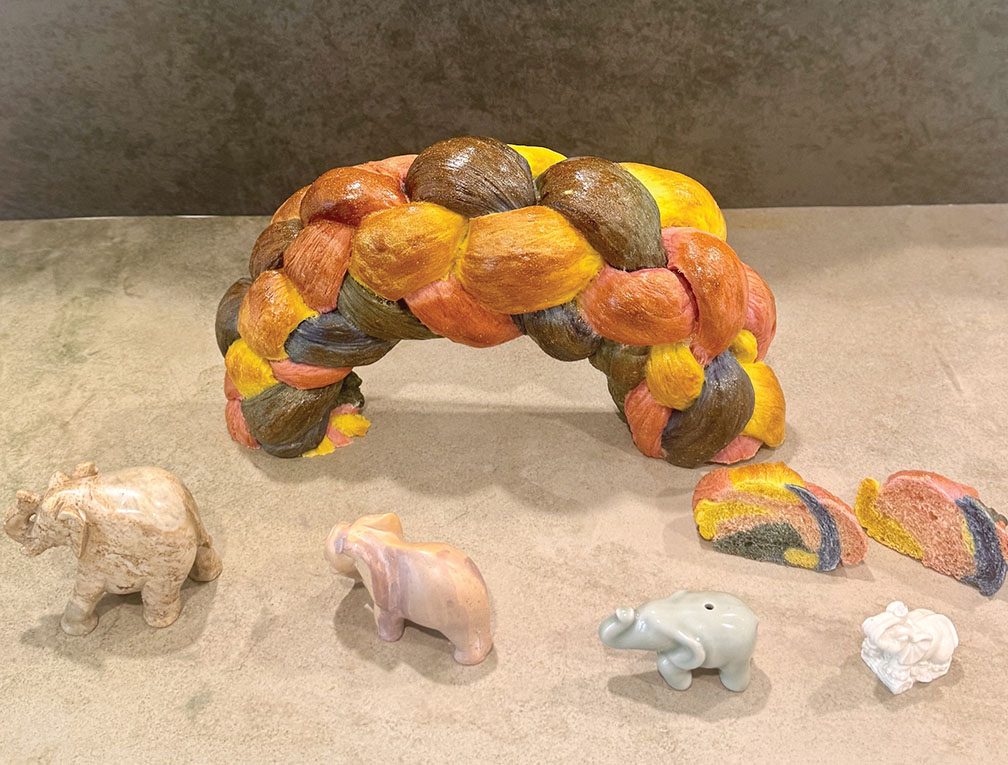

On Sept. 14, the Jewish American Summit (JAS) convened at Sephardic Temple Tifereth Israel in Westwood to address the toughest questions facing Jews in America and abroad.
The nearly 500 people who attended the event saw panels on Israel’s future; how Jewish communities can show up for one another; the evolving battle against antisemitism, combatting media bias against Israel, discussions with former Israeli Defense Minister Yoav Gallant, Harvard alumni Shabbos Kestenbaum and Beverly Hills Mayor Sharona Nazarian.
Security was very tight and tension in the room felt elevated; the summit was only four days removed from the assassination of conservative media personality Charlie Kirk. The crowd skewed towards mostly a 35-and-up crowd. The panels did not include Q&A session, but almost every speaker stayed all day at the summit and were accessible to attendees.
The mood of the summit was a mixture of tension, venting, grieving and looking into what has and hasn’t worked in the past. The usual concerns were voiced, but the panels took the conversations a bit deeper.
One constant was the calls to promote Jewish unity over partisan division. The day was filled with sound bites, but certain moments stood out — often with the crowd nodding along and applauding. The best attended panel of the summit was comedian and host of “Real Time” on HBO Bill Maher and U.S. Senator John Fetterman (D-Pa.).
Here are eleven quotes worth repeating from the Jewish American Summit 2025 from some of the most well-attended panel discussions.
Maher and Fetterman discussed double standards held against Israel in both media and among politicians.
“I’ve said it many times, it would be so easy to solve all this: stop attacking Israel. It’s not that big of a deal. But for 75 years, there have been so many attempts on the table beginning in 1937.”
—Bill Maher
Maher point-blank asked Fetterman about his outlook for a two-state solution.
“I am not sure if I believe that’s possible.”
—U.S. Senator John Fetterman (D-PA), on the two-state solution
Maher and Fetterman both warned against polarization, and even among political rivals, coming up with a set of agreements needs to be said out loud.
“We’re tribal, [Senator] not Jewish. I was raised Catholic and I’m an atheist. We’re saying this because I’m for the side that has Western values. I’m for the side that treats women equally. I am for the side that promotes gay rights. I am for the side that promotes free speech. I am for the side that’s not for Sharia Law. How did we get to this place where the people in this country who think of themselves as ‘the most progressive’ are somehow on the side of the people who are the most illiberal people in the world?”
—Bill Maher
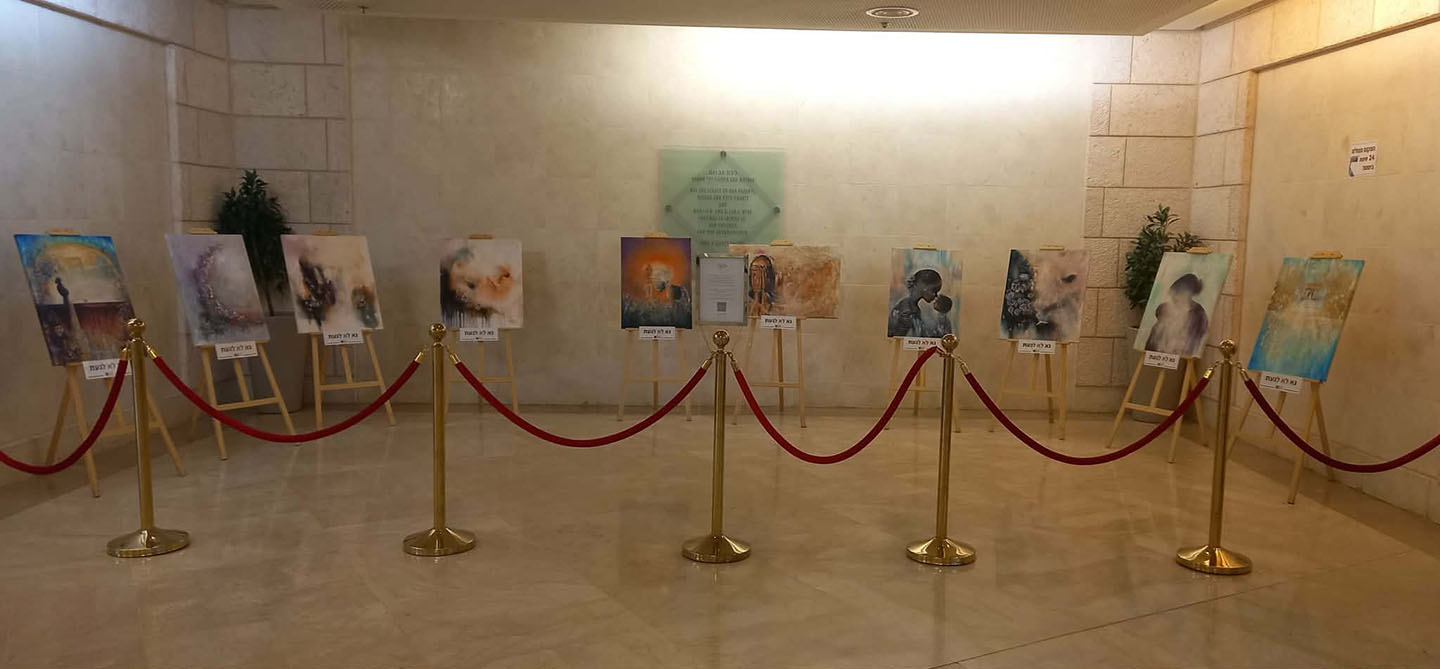
Artist and The 8 Project founder Tomer Peretz said simply telling Israelis “you are loved and we are on your side” matters. Peretz has been flying trauma survivors in Israel out to Los Angeles to be artists in residence at his studio — with many of them indulging in art for the first time in their lives.
“Israel needs your support and not just Israel as a country — the actual civilians, the actual Israelis. Share the love. Tell them you love them. Tell them you’re on their side. It means a lot. Even if those are just words, it’s really warming.”
—Tomer Peretz, artist and The 8 Project founder.
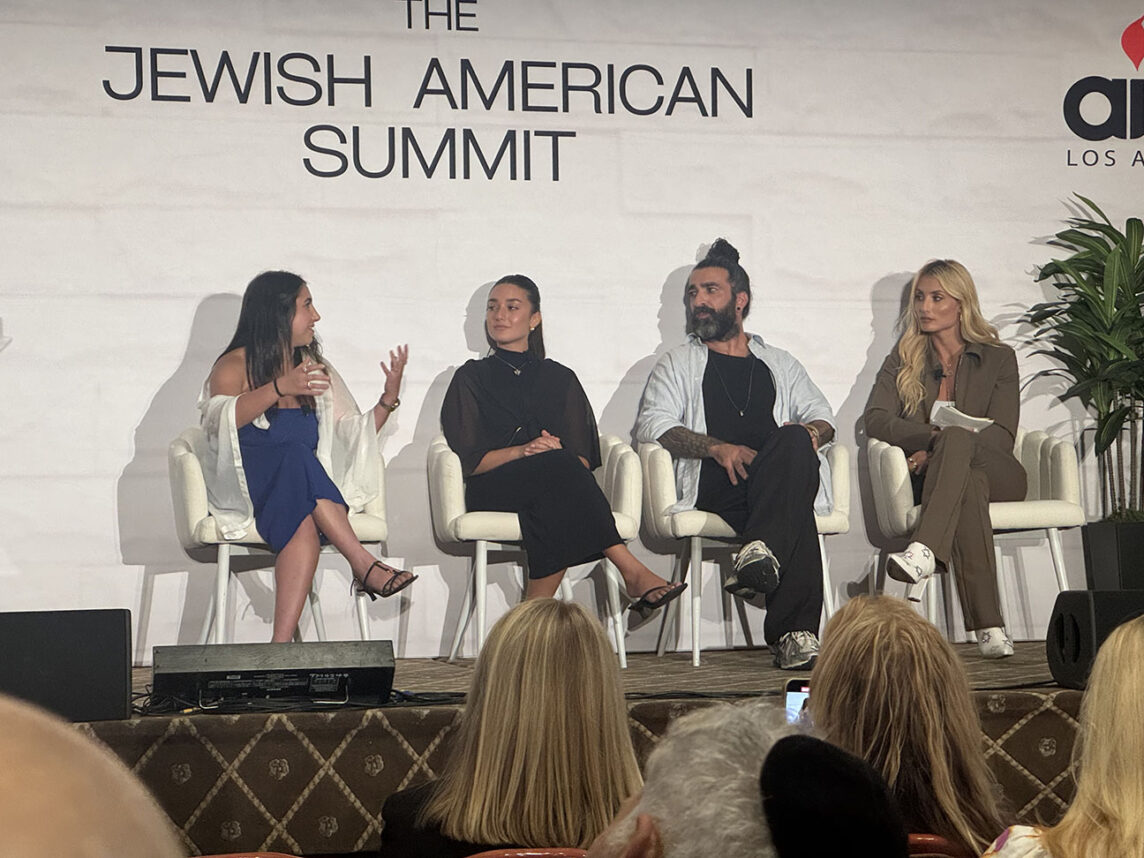
Two of the artists in residence, Rotem Zamir, 22, and Shaked Salton, 26, were the youngest panelists of the day. Even before their panel, they spent the entire day in the summit’s foyer demonstrating how art can channel pain into resilience and advocacy. Along with Peretz, they painted three murals.
“Two months ago I lost my brother. He was a combat soldier, he went to fight in Gaza. Hamas terrorists planted an explosive device on his tank, it blew up. Only four out of 10 of them came back home. I can’t even explain what it feels like, but art has always been my safe zone, my safe place, the place of healing me, giving me faith and hope.”
—Rotem Zamir
Salton, a creative director who pivoted from advertising to Israel advocacy, lost her best friend Maya who was murdered at the Nova Music Festival.
“I used to work in advertising as a director at an advertising agency, Reuvani Pridan. Now all I want to do is promote Israel and Judaism and fight against antisemitism. We can all see the veiled antisemitism coming in the name of ‘social justice.’ So this is now my new goal, and I would like to ask you all to speak up for Israel. You have no idea how much it helps us.”
—Shaked Salton
View this post on Instagram
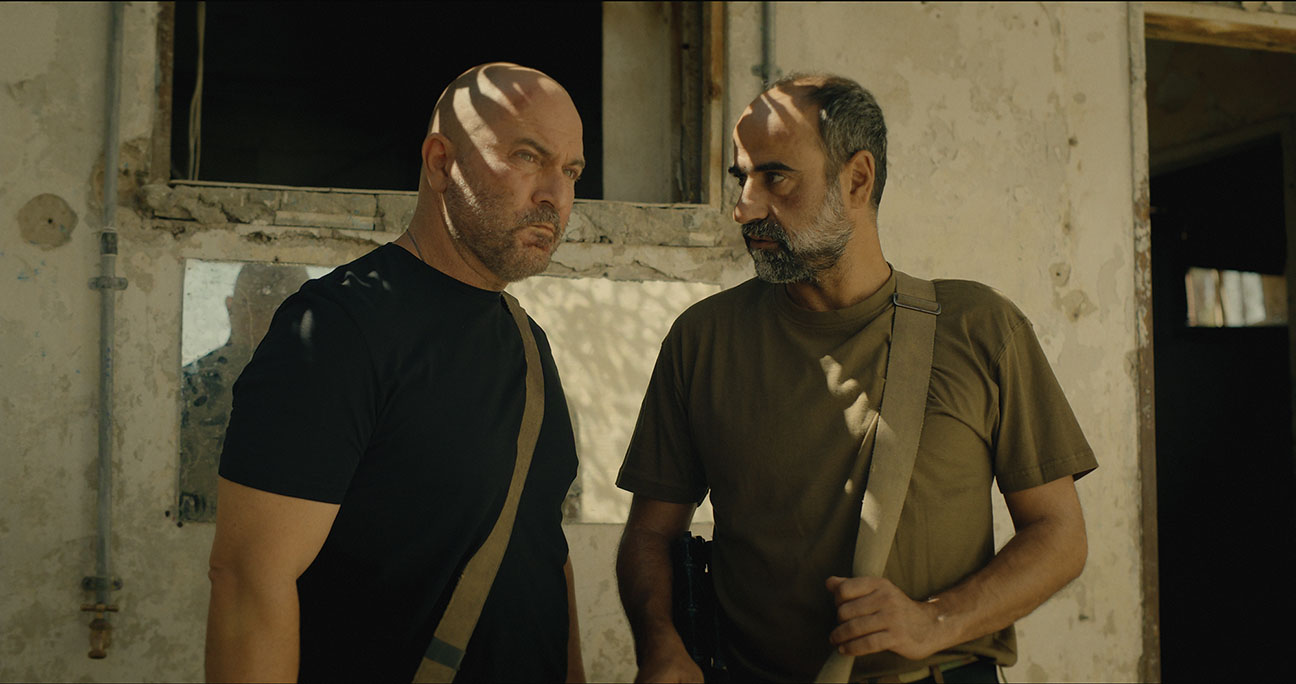
Magen Am founder Rabbi Yossi Elifort and filmmaker (and editor of The Journal’s Table for Five) Sal Litvak (“Guns and Moses”) both spoke about crime against Jews and the importance of firearms and self-defense training. Litvak, himself also a licensed Magen Am volunteer, warned that Hollywood and media gatekeepers prefer to portray Jews on film and television as victims, not benevolent fighters.
“Yes, we have allies in this fight, thank God. But it is not easy getting a film made that’s about strong Jews who fight back.”
—Sal Litvak
Filmmaker Sean McNamara, director of the new Holocaust film “Bau: Artist At War,” insisted that Jewish and pro-Israel films will only get made if there’s a concerted effort to attend, donate, subscribe, and support creative Jewish projects.
“More than ever, all of these films [about Jews and Israel] need to be seen by as many people as possible. Visibility itself is resistance.”
—Sean McNamara
Singer and influencer Montana Tucker spoke on two different panels about Gen Z using testimonies of Holocaust and Oct. 7 survivors, even if it doesn’t fit your “brand.” She implored people with massive followings to make Jewish stories unavoidable on TikTok, Instagram, and YouTube.
“We’re in this age now where we all have our own voice, however we can use it. Whether it’s using our art to portray our message or to show up to events like this to show where you stand and who you are. Whether it is content on social media, keep sharing because back in Holocaust times, as we know, it didn’t matter how successful you were and how rich you were, how talented you were. You were a Jew back then, you had no voice.”
—Montana Tucker
Academy Award-winning documentarian (for “The Long Way Home”) Richard Trank shared his favorite quote by former Israeli Prime Minister and President Shimon Peres, the subject of his 2022 documentry, “Never Stop; Dreaming: The Life and Legacy of Shimon Peres.”
“‘Pessimists and optimists live completely different lives but in the end they all die, so why not be an optimist and always go for your dreams.’”
—Richard Trank quoting former Israeli Prime Minister and President Shimon Peres
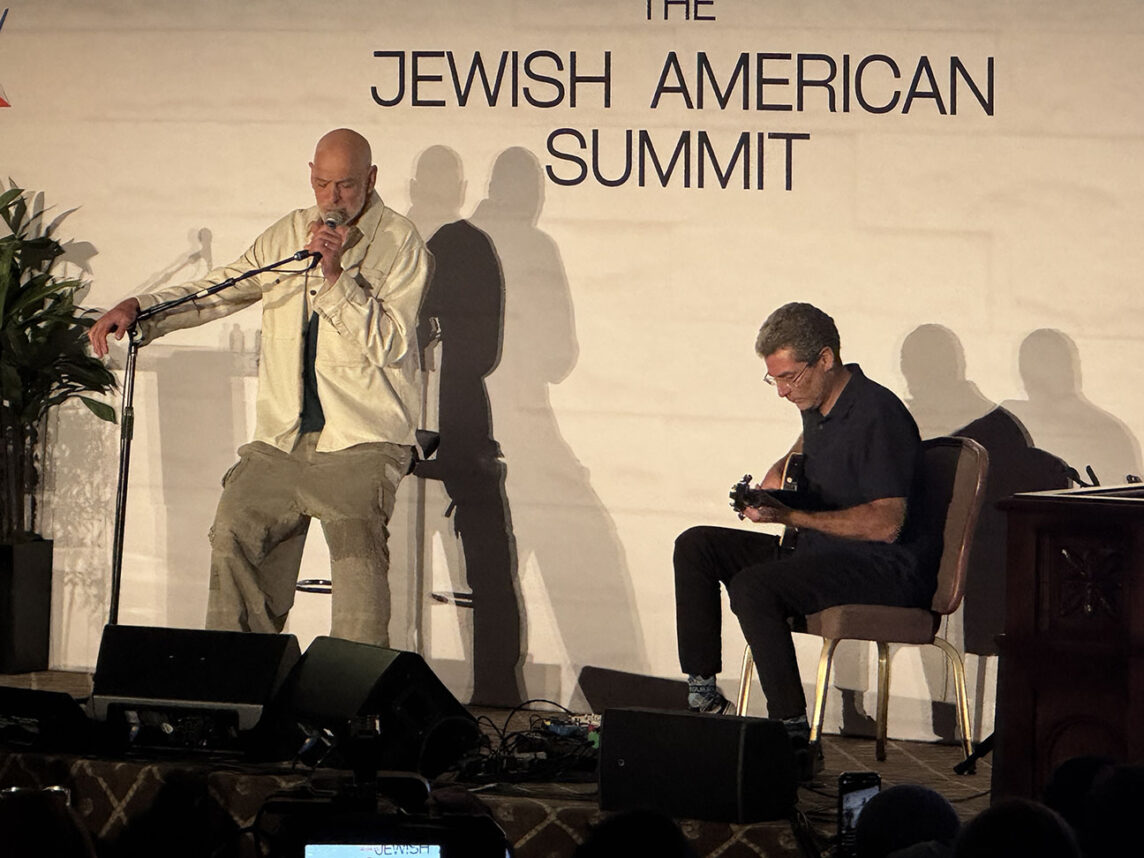
Even after a long day, at least over 200 people stuck around for a discussion by singer Matisyahu about Jewish identity. The day closed with Matisyahu performing a mini concert (with Adam Weinberg on acoustic guitar) featuring his hits, and tracks from his new album, “Ancient Child” (Oct. 3. Matisyahu said that the attacks of Oct. 7 pushed him to reconnect personally with Judaism, not for others but for himself, and encouraged others to do the same soul-searching. The new song that the audience seemed to connect with most with was a fierce and reggae-punk fusion track titled “Sun Come Up.”
“After Oct. 7, there’s a clear shift for me back into the role of saying, ‘I myself want to reconnect to my Judaism— not for anybody else or for any other reason.’ It’s not for religious reasons, but for the empowerment of knowing who I am and what my truth is. When there’s opposition and there’s a feeling that ‘we have to unite,’ there is something that happens to all Jewish souls — except for the ones who run the other way.
—Matisyahu