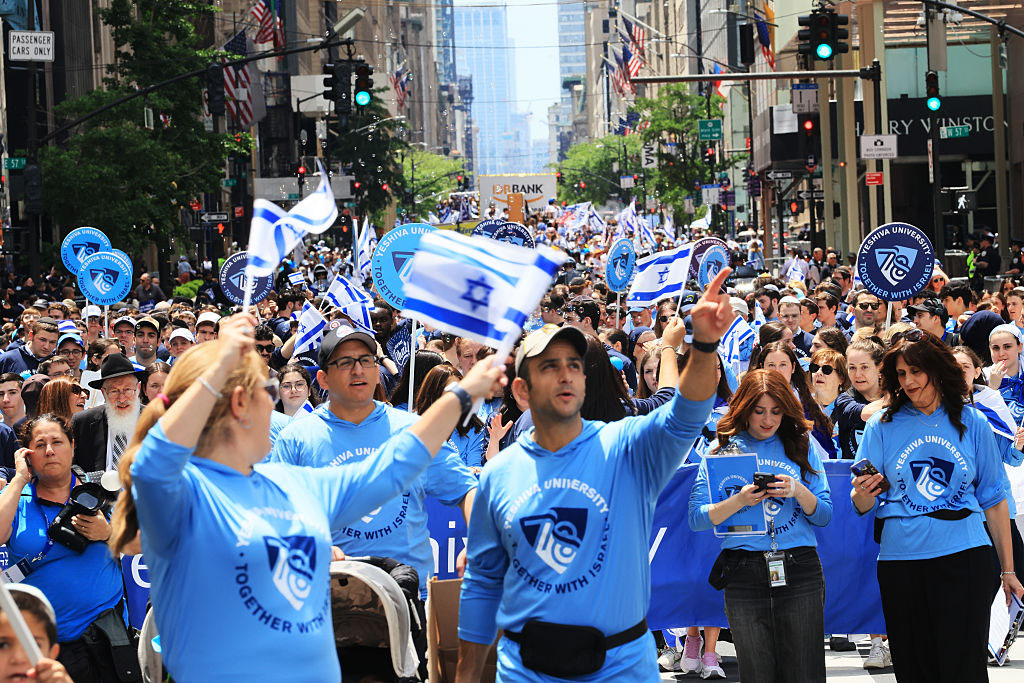
Edward Burns tells a story to illustrate why he was inspired to write his multicultural comedy, "Sidewalks of New York," featuring characters from Puerto Rican to Jewish to everything in between. "I was on a Manhattan movie set, and this Catholic woman goes, ‘My son has his confirmation, I have a baptism to go to, and Sunday is Easter — oy vey,’" the Irish American filmmaker recalls. "You get that because we’re all thrown together on the sidewalks of New York. You step out of your apartment, and you’re immediately confronted with representatives of every ethnicity."
"Sidewalks," a witty romp that pays homage to the films of Woody Allen, one of Burns’ heroes, is helping to place the 33-year-old director among the cadre of filmmakers who’ve built careers telling New York stories. The comedy, whose release was postponed for a month after the Sept. 11 attacks, tells of six diverse New Yorkers who are linked through their romantic relationships. Burns plays hunky, azure-eyed Tommy Reilly, a TV producer wooing the Puerto Rican ex-wife of a Jewish doorman (see p. 26).
The filmmaker says he decided to write about interlocking relationships while strolling down the street with a friend some time ago. "We passed a guy we knew had slept with [my friend’s] girlfriend, and I started thinking how you can pass a person you’re separated from by just one sexual encounter on the sidewalks of New York," he told The Journal.
Burns was raised on the sidewalks of Queens and in Valley Stream, Long Island, where the neighborhood was Irish, Italian and Jewish. "I knew almost as much about what it was like to grow up in a Jewish American home as I did about an Irish Catholic one." Family outings included plenty of trips to see Neil Simon plays and Woody Allen films.
Though Burns’ movies focus on Irish Americans, some are peopled with memorable Jewish characters inspired by friends from his youth. A high school pal, Glen Basner, was the impetus for the Jewish doorman in "Sidewalks," whose last name is also Basner. "Glen was a hopeless romantic," the director recalls. "Every girl who wouldn’t go out with him was a major, crushing blow."
A Jewish college flame (whose name the filmmaker won’t divulge) made Burns tell her grandmother his name was Eddie "Burnstein." He remembered her while writing a hilarious scene for his 1995 semiautobiographical debut film, "The Brothers McMullen," in which one of the brothers sets out to break up with his Jewish girlfriend. Instead, she breaks up with him, citing a litany of reasons, including the fact that he’s not Jewish.
Burns shot "McMullen" with a $25,000 loan from his then-NYPD sergeant father, and eventually won the Grand Jury Prize at the 1995 Sundance Film Festival. He went on to write, direct and star in two more New York sagas, "She’s the One" (1996) and "No Looking Back" (1998), and landed a role as a rifleman in Steven Spielberg’s "Saving Private Ryan." On Spielberg’s set, he began writing "Sidewalks," which like all his films, explores issues of love and infidelity. "It’s the thing that most people are interested in," Burns explains. "People have a thousand different interests, but when you sit down with a group over lunch or dinner, at some point the conversation always turns to relationships and sex."