In recent years, Israeli writer Amos Oz has become as well-known for his liberal political views as for his fiction. In his newest book, "The Same Sea," he has created a novel infused with literary artistry that never directly addresses politics, but allows them to hover undiscussed in the corners of his character’s lives. "The Same Sea," a complex weaving of narratives written in verse and prose about a family coping with loss, features Oz himself as "The Narrator," and he reveals for the first time the suicide of his mother when he was 12. The immense vulnerability Oz describes in himself also drives all of his characters in "The Same Sea."
Oz, born in Jerusalem in 1939, began his career in 1972 with the novel "My Michael." He has published five nonfiction books, including "In the Land of Israel," and more than a dozen novels.
Jewish Journal: The style of this book represents a real departure from your other work in its tone and experimentation. Especially unique is the style of the prose and the inclusion of yourself as a character you call "The Narrator." What inspired that?
Amos Oz: It is a departure, and I regard this as my most significant work, and the one I would most like to be remembered. Five or six years ago I set myself on Cypress, planning to write a long and traditional novel. But in the process I found myself at the end of each writing day preparing notes in rhymes, thus perhaps trying to disperse my hardship in writing. After some time I realized those little rhyming notes were the soul of the book. I wanted it to not only be a story, but also to sing and be a piece of music.
I wanted to break down the wall between prose and poetry, the wall between storytelling and music, and also the wall between fiction and confession. So I turned myself into a minor character in my own novel. I mingle with the characters. They know a hell of a lot about me, but it’s only fair, because I know a hell of a lot about them. I peek into their secret lives, and they peek into mine. It is a playful book, where the line between fiction and confession is not only crossed, but also broken down completely. I relate to every line to this book. It is all autobiographical, but not confessional.
JJ: In the post-Sept. 11 world America finds itself in, what is your opinion of how the leaders of both the Israelis and the Palestinians are handling themselves?
AO: I am a lonely man because I am angry with leadership on both sides. The Palestinian leadership has brought suffering upon its own people by being uncompromising. I’m not saying they had to take what Barak offered to them, but the fact that they have not come forth with a counter plan is in my view unforgivable. And wait until you hear me criticize the current Israeli government — they are guilty of being unimaginative, rigid and much too harsh in their treatment of the Palestinians.
JJ: What did you make of Prime Minister’s Sharon’s comments about America sacrificing Israel in the same way Europe did with Czechoslovakia in 1938?
AO: He must have been thinking much too highly of the American knowledge of history. Many Americans assumed he was comparing the Americans to the Nazis. If he had the urge to bang his fist on the table, when you [America] are putting together this anti-terrorist coalition, I would have offered him a hundred other ways of saying this. There are so many ways to say this without necessarily evoking the worst ghosts of 20th-century history, when you can get even more attention by speaking softly.
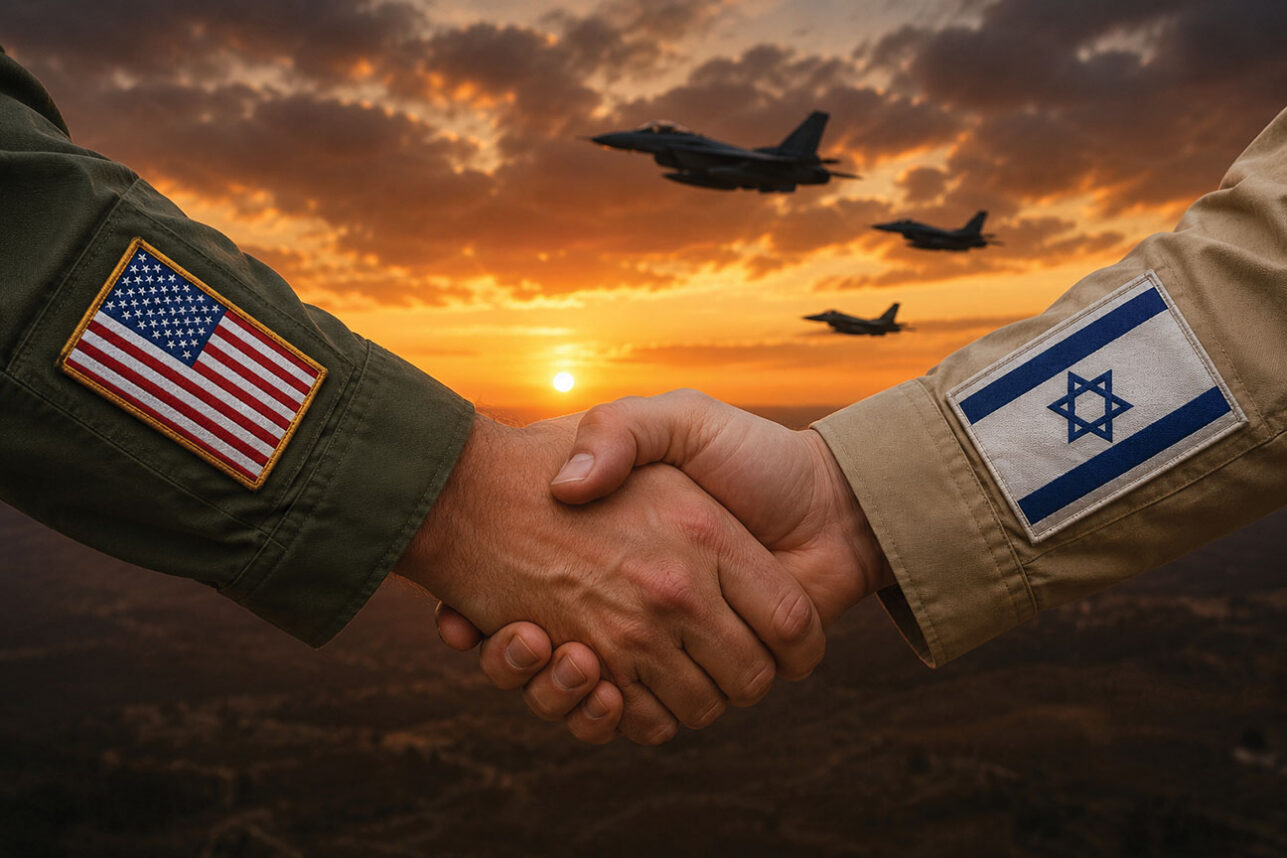
I am not a politician, because I am physically unable to pronounce the words ‘no comment,’ but if I were a politician, I would say to America that Israel is uneasy about certain aspects of the new coalition America is trying to put together. This coalition might eventually backlash on America itself. I think on the whole the role of the United States is essential and wonderful. It is not to say that I am always happy about American policy decisions. Still, from Truman to the present day, the history between Israel and the United States is a remarkable history of friendship.