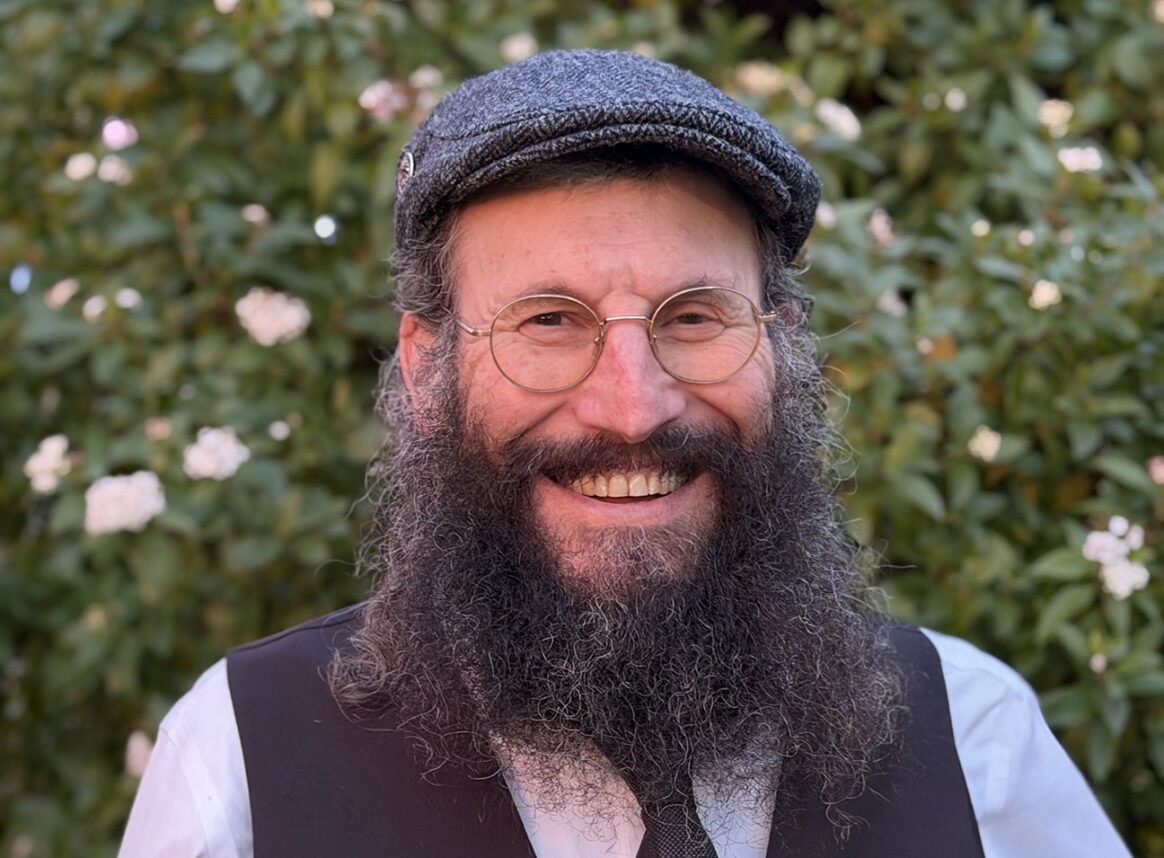
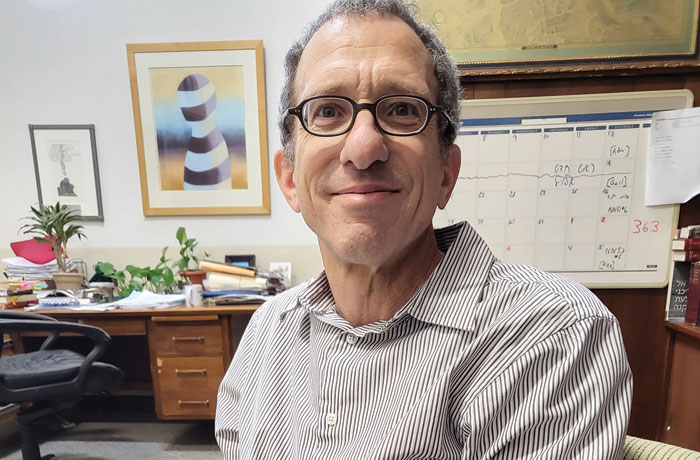
Orthodox Judaism is not usually seen as a place where women are accepted into the clergy. But B’nai David-Judea’s Rabbi Yosef Kanefsky is working to change that stereotype: For the second time in ten years, he is seeking a woman to be his second-in-command.
Rabbi Kanefsky and the Modern Orthodox congregation hired Rabbanit Alissa Thomas-Newborn in 2015, making her the first woman rabbi at an Orthodox synagogue in Los Angeles. She left last year to move to the East Coast with her family, and is now a chaplain at New York-Presbyterian and working part-time at an Orthodox shul in Teaneck, New Jersey, where she, her husband and daughter live.
Rabbi Kanefsky’s decision to be a trailblazer did not shock those familiar with his career.
Ordained at Yeshiva University in 1989, the New York native spent six years as associate rabbi at the Hebrew Institute of Riverdale, led by the activist Rabbi Avi Weiss, founder of “Open Orthodoxy.” In 2009, Weiss ordained the first woman rabbi in the U.S. The appointment of Thomas-Newborn did not meet resistance from his congregation, and Rabbi Kanefsky is confident round two will be quiet, too. He believes this move is tailor-made for his community. “I am hopeful this will go quietly,” he said, “in the sense we will do what is best for our institution, always our goal. This is our clientele. For our population – this is clearly a very important role, that a woman be a spiritual leader here.”
Looking back on Thomas-Newborn’s hiring, Kanefsky believed planning was the key. “We went about it in a thoughtful way,” said the youthful looking grandfather of three. “We wanted to make sure everyone knew what the purpose was, what it would look like. The congregation was very, very embracing. Now it’s not everyone’s priority to be sure. But that is not nearly the same as pushing back against it.”
As an Orthodox rabbi, Kanefsky acknowledged that hiring a woman rabbi has been on his mind since shortly after he was ordained. When asked how the idea came to him, he replied, “That is a good question. But I do not have an answer. It was no one thing, probably an accumulation.
Did women in his life suggest this? “I don’t think so.” Did he discuss it with his wife, Sari Abrams, director of parent and child education at Pressman Academy, and mother of their three sons? “Yes,” Kanefsky said. “She always has been incredibly supportive of the idea. And she has consistently modeled for me what an accomplished, learned woman can be and do.”
Long visible in the shul, Abrams has filled numerous roles, especially with Women’s Tefilah since its inception 25 years ago. “She has taught many bat mitzvah girls, and has been a source of guidance for them,” the rabbi said. “For me, she has been a very clear voice about what women can do and should be given the opportunity to do.”
While he can’t pinpoint a specific moment when he decided to hire a woman, it’s a subject that’s been on his mind for some time. In the mid-1990s, not long before joining B’nai David, he raised the subject at a conference where he was speaking. “I talked about how we are severely underutilizing half of our population,” he said. “This made no sense at all … I am not sure how long, but certainly for a while I had been thinking this would be a positive development for the Orthodox community.” In his strongest endorsement yet, Rabbi Kanefsky declared that hiring a woman rabbi “would make the Orthodox community better, more learned, more observant, and richer.”
Once Rabbanit Alissa was hired, were there subtle (or overt) changes in Rabbi Kanefsky’s life around his shul or in the wider community? Did colleagues treat him differently? “I didn’t particularly notice that,” he said. “Colleagues with whom I have a warm relationship, that has remained so. Others had their minds made up.”
He prefers looking at ordination of women more broadly. “Just the emergence of women in an Orthodox context gave rise to the idea within a larger social context of equal opportunity,” the rabbi said.
He prefers looking at ordination of women more broadly. “Just the emergence of women in an Orthodox context gave rise to the idea within a larger social context of equal opportunity,” the rabbi said. “It gave rise to the idea that women are a) capable, b) entitled to opportunity, and c) can do things men cannot do. Therefore, they can enrich the community in ways that men cannot.”
What are the things men can’t/shouldn’t do? “For sure in pastoral counseling, women can do things men can, and perhaps shouldn’t, do. But also in appreciating halachic questions from the perspective of a woman — and how those halachic discussions impact women in ways only another woman could fully understand.”
The B’nai David search committee is seeking a new rabbanit in institutions that train women in Talmud and Halachah, “but not necessarily giving them ordination.” The notion of an Orthodox woman rabbi remains as controversial as it ever was. “The statement and the positions staked out by the Orthodox Union (opposing ordination) have not changed,” Rabbi Kanefsky said.
He doesn’t have a hard deadline for a successor to Rabbanit Alissa because “we don’t know what candidates will be available.” Hopefully, he said, they hope to do it within the next few months Inevitably, Kanefsky predicts, there will be more women Orthodox clergy. But within Orthodoxy, “its strength and its weakness is that things move slowly.”
Fast Takes with Rabbi Kanefsky
Jewish Journal: What superpower would you like to have?
Rabbi Kanefsky: Making more than 24 hours in a day and more than seven days in a week.
J.J.: Do you have a major unmet goal?
Rabbi Kanefsky: Writing. I have wanted to do much more writing. To get organized thoughts out of my head and onto paper.
J.J. Is there a lesson you learned from your family?
Rabbi Kanefsky: Service.