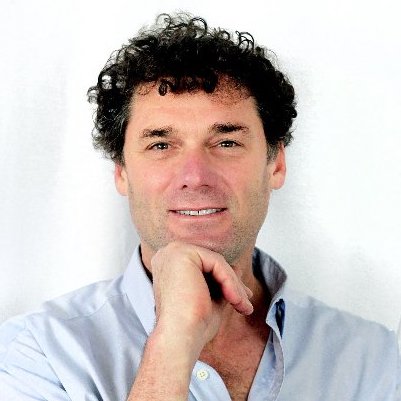
This week, while fires raged, strikes festered and three or four wars smoldered, most of the urgent phone calls I received were about Chaim Seidler-Feller. There were calls from his friends, calls from his enemies and calls — of course — from lawyers.
Seidler-Feller is the Hillel rabbi at UCLA who allegedly kicked and grabbed the wrist of political activist Rachel Neuwirth following a verbal confrontation with her (see story p. 13).
The incident took place Oct. 21 just outside Royce Hall on the UCLA campus, after a presentation inside the hall by attorney and author Alan Dershowitz. Neuwirth claims Seidler-Feller kicked and grabbed at her in the course of an argument related to Israel and the Palestinians. Seidler-Feller claims that Neuwirth first provoked him by calling him a “kapo.” Kapos were Jews who collaborated with Nazis in exterminating their fellow Jews.
Many of those who called asked me if I thought this was a big story. If it weren’t, I answered, you probably wouldn’t have called me.
Some callers suggested The Journal downplay the story as a simple and unfortunate matter of a hot-tempered little set-to. Others insisted we go after the rabbi, who has been openly critical of the kind of campus outreach many pro-Israel activists conduct.
So is this a big story? It’s not a war, fire or strike, but it is not a sidewalk skirmish, either. There are people who see the rabbi’s alleged actions as a reason for Seidler-Feller to resign, or be forced to resign, his position, one he has held for three decades. Seidler-Feller, said a wealthy and influential activist, has turned three generations of Jewish UCLA students off to Israel.
There are others, Seidler-Feller’s supporters, who see this incident as one more example of the reckless and provocative rhetoric of a hard-core band of pro-Israel activists. They believe such rhetoric goes unpunished by communal institutions and donors whose checks support the otherwise responsible lectures and seminars these groups offer.
What do I think?
Next week, on Nov. 5, we will mark the eighth anniversary of the assassination of Israeli Prime Minister Yitzhak Rabin by a fellow Jew. It would be ludicrous to bring up the assassination in the context of a tussle between a couple of middle-aged Jews in Westwood, except that the timing is too tempting to ignore.
The week of the murder, Dennis Prager wrote in The Jewish Journal, “There is almost no group or country for whom the greatest threats do not come from within.” Arabs certainly fall into this category, as do Jews, both biblically and to a great extent politically. Prager’s other lesson: “Rhetoric kills. Rhetoric has consequences.”
Thirty days after the murder, Rabbi Harold Schulweis wrote an essay in The Journal asking what possible response we can have to that tragedy as caring, responsible Jews.
“An intelligent laity must not allow the language of violence to be used by rabbis or lay people, recognizing that the rhetoric of violence … results in the shedding of innocent blood,” he wrote
These are lessons we simply refuse to learn. The last time I wrote on this subject was in May 2002, just after another Jewish activist sent out an e-mail newsletter that contained an angry, ad hominem attack against — yes — Chaim Seidler-Feller.
Then, dozens of people signed a letter in support of the rabbi, including many who disagreed with him politically. The activist apologized to Seidler-Feller, as did the organization, StandWithUs, which carried the letter on its Web site.
Now, to be honest, the shoe is on the other foot. As lunatic as it is for someone to call Seidler-Feller a kapo, it was wrong for him to, as is alleged, strike out.
Seidler-Feller has apologized to several people for the incident, and both sides are weighing the possible resolutions: more apologies, settlement, civil proceedings, reprimand, dismissal, anger management.
Considering Seidler-Feller’s role in this community, a combination of any of these possible scenarios instantly raises this story out of the “small” category.
Seidler Feller is a man of passion and intellect, and his critics should take a deep breath before compounding the foolishness of an instant.
There are many ironies at play here: A peacenik facing accusations of assault. A pro-Israel activist using the same Nazi rhetoric against a fellow Jew that the Arab extremists use against Israelis. Attorney Donald Etra, one of George W. Bush’s best friends, defending a rabbi often associated with the left. And the fact that Dershowitz’s lecture only came about as a result of cooperation between Seidler-Feller and his sometime political opponents at StandWithUs. But the one irony even Seidler-Feller’s most eager opponents dare not lose sight of is that even though ending Seidler-Feller’s career at UCLA Hillel might be, in their minds, a win for Israel, it will be a net loss for the Jews of Los Angeles. As a teacher, thinker, leader and innovator he has few peers in this city. As much as he has tried to wrest the darker threads of messianism from the Zionist ideal, he has also sought, in the tradition of Rabbis David Hartman and Shlomo Riskin, to infuse secular Zionism with a deeper understanding of Judaism itself.
It’s true Seidler-Feller has something to learn from what happened on Oct. 21, but it is also true that he has much more left to teach.