On Wednesday evening, Nov. 12, I was the moderator of a debate between author Christopher Hitchens and Rabbi David Wolpe at the Wilshire Theatre in Beverly Hills. As some 1,500 people filed into the grand space, the rabbi, Hitchens and I sat in a small, plain green room backstage, chatting.
The subject of the evening’s debate, sponsored by American Jewish University as part of its annual Celebration of Books, was: “Is Religion Good for the World?” Hitchens wrote the massive best seller, “God Is Not Great: How Religion Poisons Everything,” and Wolpe of Sinai Temple wrote a just-released rejoinder, “Why Faith Matters.”
But in the green room we talked politics. Hitchens reported on a breakfast he had taken earlier that week with Army Gen. David Petraeus. Hitchens held forth on Osama bin Laden, on the chances of an Israeli preinauguration strike on Iran, and he was brilliant — lucid, deeply sourced and quick with historic parallels. When you have Hitchens, you don’t need Wikipedia.
The start of the event was running late — did I mention it was a Jewish event? — and midway through our green room conversation, Hitchens pulled out a small bottle of Johnnie Walker Black. He emptied it into a 16-ounce clear-plastic cup and drizzled in some Crystal Geyser spring water. And he began sipping.
All this took place with his back almost completely turned, not quite hidden, but not exactly out in the open. If he had offered me a touch, I would have been happy to oblige, but he gave the sense this wasn’t convivial, it was medicinal.
Hitchens brought the cup onstage, tucking it under his podium as Wolpe went first, holding forth on the value of religion.
As the debate finally got under way, it went into the comfortable cul-de-sacs where these debates tend to end up.
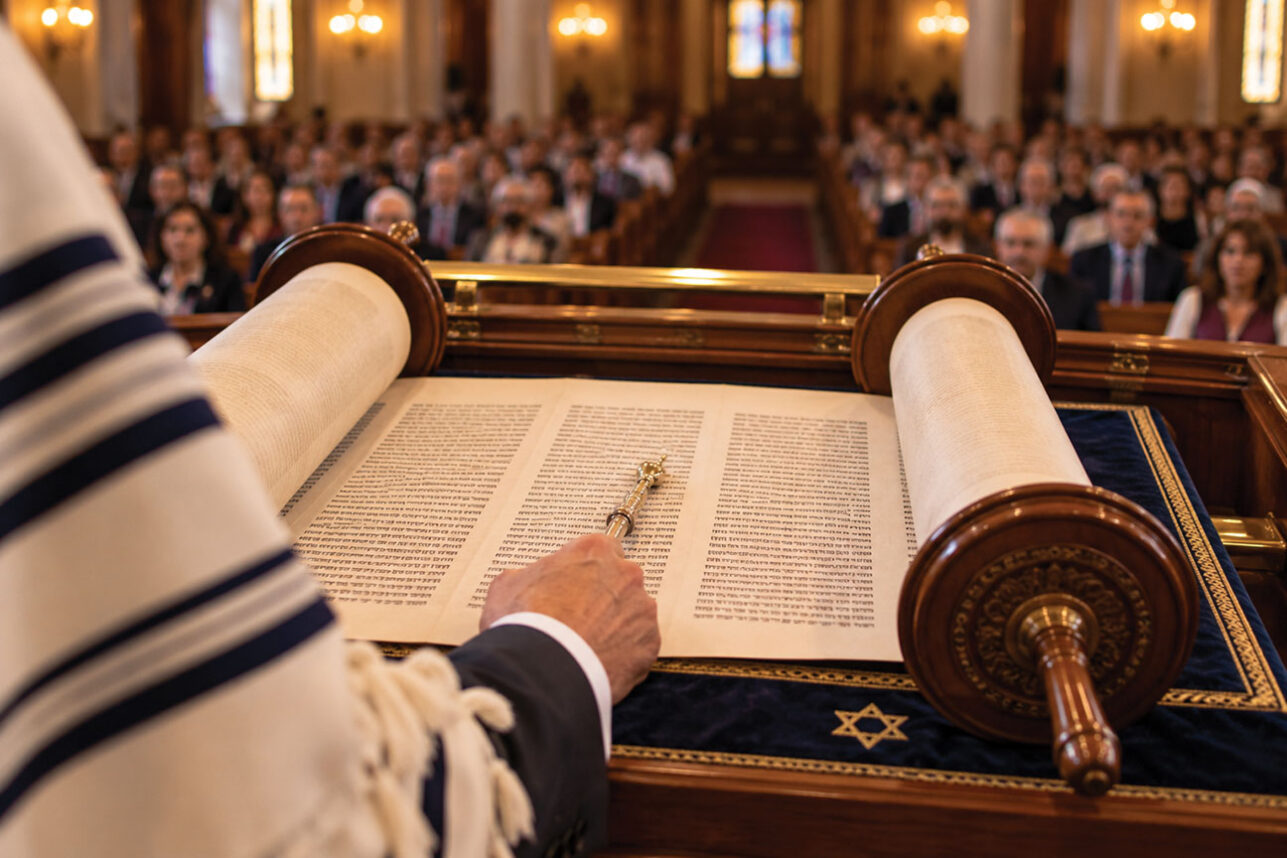
There was Wolpe, who opened by saying religion — a sense of God — ennobles us as humans, lets us know we are not alone and that something greater is demanded of us.
Hitchens went after the God-is-just argument.
“If there is a just God, why do people tremble about things? If God were just, everything would be proportional,” he said.
As for religion improving us, Hitchens began to categorize every atrocity committed in the name of God, from human sacrifice to the stoning of a 13-year-old rape victim for “adultery” in Somalia earlier in the month.
This led to the second cul-de-sac, where each speaker marshaled evidence to prove that his side wins because it massacred somewhat fewer people.
Wolpe recounted the atheistic regimes of Hitler and Stalin and averred that the anti-slavery movement had its roots in the Bible.
Hitchens argued that 20th century fascist movements were synonymous with right-wing Catholicism, that Hitler and Stalin had their roots in religion and that the Bible smiled on slavery.
“Overcoming badness does not require religion,” Hitchens said. “How do we end slavery? We invoke humanism. It is much more noble, logical and ethical, as opposed to a supernatural totalitarian, a celestial dictator.”
There was also the morality cul-de-sac, with Wolpe claiming religion spurs moral action and Hitchens countering that there is no good action a religious person takes that a secularist couldn’t, but plenty of cruelties carried out in the name of religion that an atheist would have no part of.
Space does not permit me do justice to both men’s arguments or eloquence here. You need to see the entire debate online — Jewish Television Network filmed it, and www.jewishjournal.com has a link to it.
The problem for me is that the arguments seemed to be about the fringes, while most people live in the center. Hitchens was attacking religious fundamentalism, not religion, and Wolpe was forced to defend all of religion, when his intellect and heart (and book) are more at ease defending its more common, moderate manifestations.
Hitchens asked Wolpe whether he prefers that a child born in Saudi Arabia today grow up a Wahabi Muslim or an atheist.
“The choices are not only between atheism and religious fanaticism,” Wolpe said. “An average approach in the Saudi Arabian example is to be a moderate Muslim and influence Saudi Arabia for the better.”
“That is a warm and fuzzy sentiment,” Hitchens said.
“It is not just about atheism or being a Conservative Jew,” Wolpe countered. ” There are other choices.”
Isn’t there a middle ground? I asked both men. What’s wrong with moderate religion? With liberal Judaism?
“For one thing,” Hitchens said, “there is not enough to argue with.”
He went on: “I look for contradiction and polarization, not common ground. It is how we learn. Thinking requires confrontation, which brings intellectual combat. Heat produces light.”
Wolpe offered up a brief defense.
“Pluralistic and democratic religious societies are good,” he said. “They lead to more stable families and more charitable behavior. Religion works.”
But Hitchens was rolling his eyes, ready to get on with the post-debate book signing.
By then, he had drained his tumbler, with nothing to cut the booze but a half-empty bag of trail mix he pulled out of his coat pocket and nibbled on during the proceedings. His face, which struck me when I first met him that night as preternaturally youthful for his 60 years, had become blotchy and loose. His temper changed, too, from the erudite discussant in the green room to testy, coarse, impatient.
You could say it’s because the man’s a genius and doesn’t suffer fools, but I had been just as much the fool an hour earlier in the green room.
Nope. Hitchens looked like he’d gotten himself crocked.
Evidently, moderation is not something Hitchens finds worthy — in religion or in Scotch.