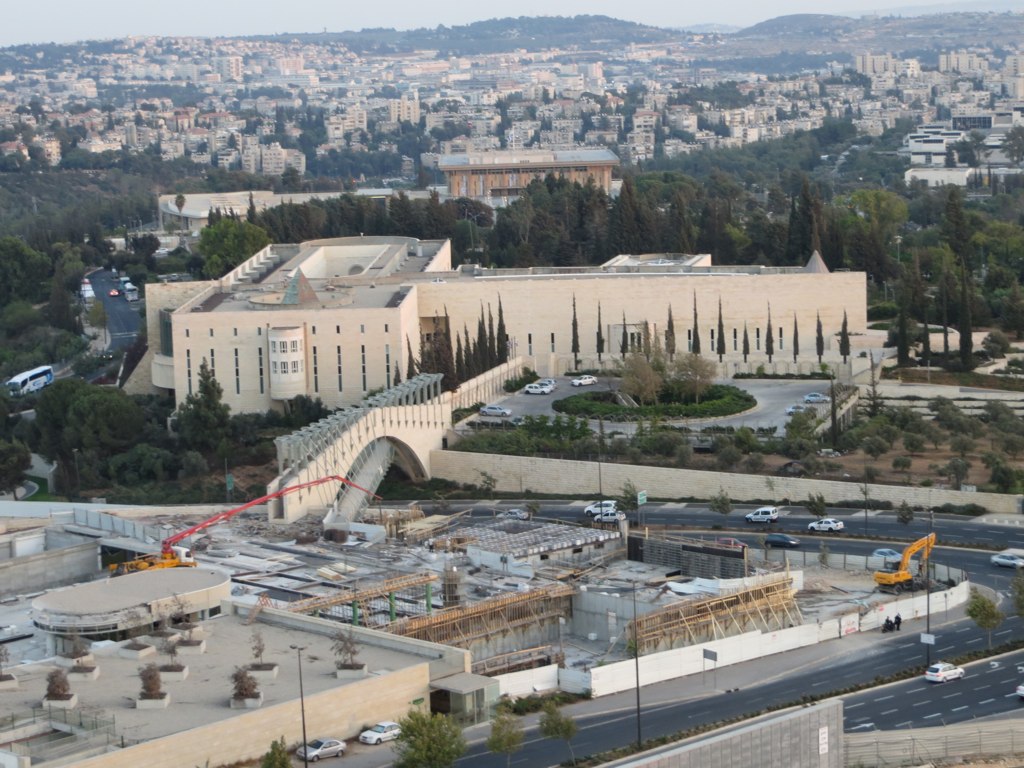
Israel’s Supreme Court is a problematic institution whose problem begins with denial: It denies the obvious fact that many of its decisions are ideologically driven. That is, the background, beliefs and emotions of the justices play a significant role in their rulings.
In late October, for example, the court ruled that the Tel Aviv municipality can keep mini markets open on Shabbat. Expectedly, the ruling was hailed by secular liberal leaders and derided by conservative religious leaders. Was it the right decision? The case is complicated. Was it ideologically driven? Consider the following fact: Five justices supported the decision — all secular; two justices were in the minority opposition to the ruling — the two religious justices on the court.
Israel’s Supreme Court is a strange breed. It functions as a professional court of appeals and as an arbiter of highly politicized motions against the government. It often is called upon to decide what the political class can and cannot do — even though Israel has no full constitution on which to rely in making such assessments.
The court displays, in some cases, interventionist tendencies. It is suspected, in some cases, of having ideological tendencies. And it is guided less by a clear law, and more by a vaguer set of values. If one wants to make a case against the court, one has a long list of dubious decisions on which to rely.
The question remains: Why make a case against the court?
It is not even clear that the government has an interest in changing the court.
Every country has many institutions, and in most countries, not one of them is free of deficiencies. Still, priorities must be applied as a country goes about improving its institutions. The urgent comes before the not urgent. The highly corrupt comes before the slightly inefficient.
The main problem with the many Israelis, most of them in conservative circles, who complain about the Supreme Court is not that they don’t have a case. They do have a case. The problem is that they make it seem as if the Supreme Court is Israel’s most pressing problem or close to being that. And it is not.
The court’s ideological bent should be gradually and methodically corrected by the appointment of a more ideologically balanced cast of justices. But such a process takes time and patience, and the court’s opponents have neither: They want change now, and refuse to acknowledge an obvious fact. When change in the court is made rapidly, and when attacks on the court become a bad habit of the government, the court loses legitimacy. And for a country to have a court without legitimacy is more dangerous than to have a court with a slight ideological bent.
In fact, it is not even clear that the government has an interest in changing the court. More often it seems to want the court to remain as it is and serve as a scapegoat on which to blame the government’s impotence. If the government truly wants all stores to be closed on Shabbat, it can put in place the legislation that will make it mandatory. However, this will be a tough political maneuver — a maneuver and result that the public doesn’t appreciate. It is much easier for the government to refrain from making tough decisions, and blame the court for the result.
This is what happened in many of the other cases that the court was forced — by an inept political machine — to decide. Last summer, the court repealed a tax on the owners of more than two apartments. The politicians who made the decision to levy this tax were furious, but the court said nothing about their right to legislate; it said only that legislation must follow a certain process, and that the Knesset did not follow the proper process — it rushed the legislation in an unlawful way.
You want proof that the court was correct in making this judgment? That’s easy: After the ruling, the government never attempted to re-pass the law. Apparently, when it must play by the rules, it doesn’t have the vote to support the legislation.
So yes, the court occasionally is problematic. But the court is hardly Israel’s most pressing problem. There is a much stronger case to be made against the ineptitude of its political class.
Shmuel Rosner is senior political editor. For more analysis of Israeli and international politics, visit Rosner’s Domain at jewishjournal.com/rosnersdomain.