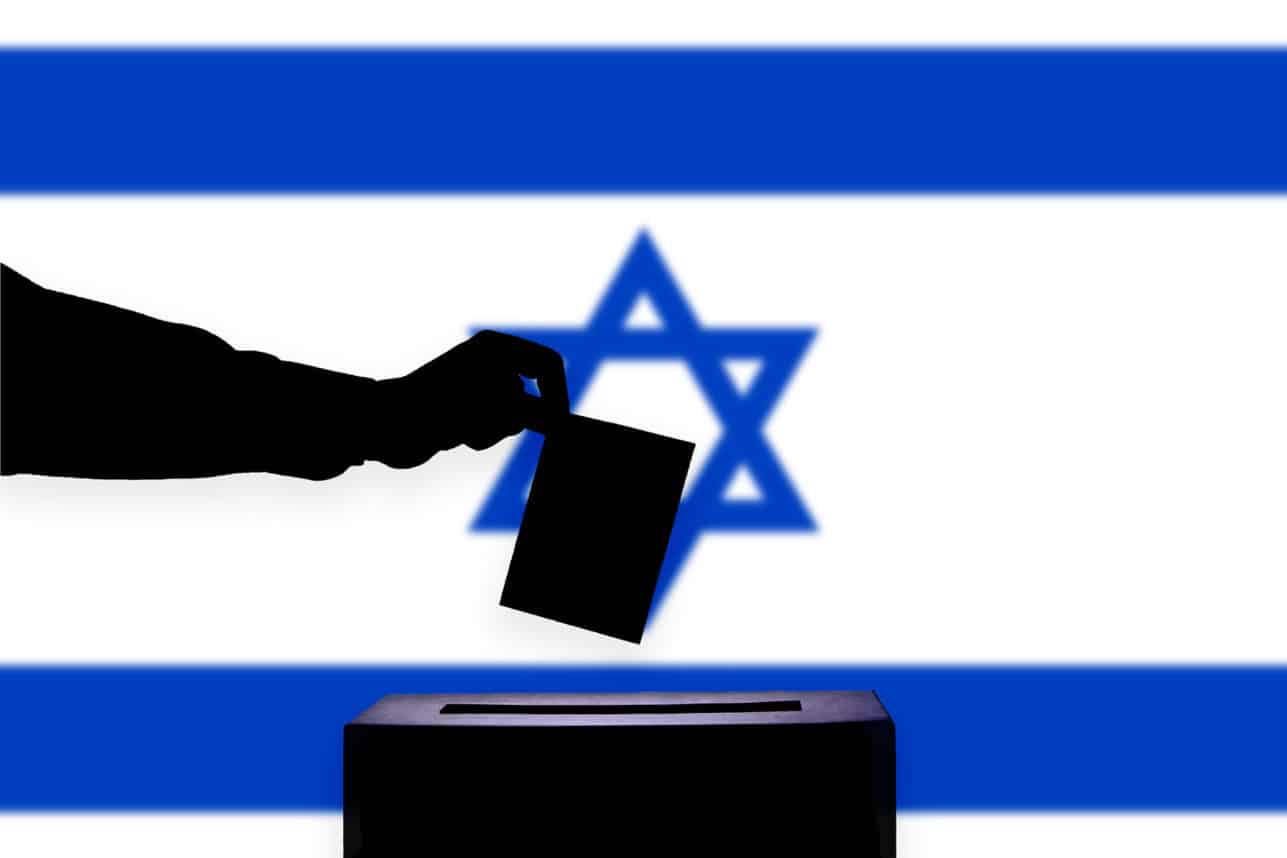
The question: How Jewish vs. how democratic should the Jewish State of Israel actually be?
That was really the question before Israel’s Supreme Court.
More than a legal question, it led to serious and heated debate. The answer would be a defining factor in the very nature of the state itself. It came to the fore as the court was asked to decide if three cities, Jerusalem included, could ban the selling of pork.
The ruling: That cities cannot outright forbid the sale of pork and should respect communities that are predominantly religious but may sell pork in other areas of the city.
Israel is unlike the United States when it comes to the separation of religion and state. In the United States, the separations are fiercely guarded. So much so that there are raging, obsession-driven debates even over the issues of the role of God in the Pledge of Allegiance — one of the holiest of holies for America’s citizens — and the inclusion of the word “God” on currency.
Things are simpler in Israel. There is a fluid boundary between religion and state. In Israel, the balance is not between religion and state, it is between religion and democracy.
The creation of a Jewish — democratic — state, with each element given equal weight (i.e., Israel) is best viewed as a laboratory experiment. The effort to blend the Jewish and the democratic into a state is a constant balancing act, a tug-of-war, a struggle between the more Jewishly inclined and the more democratically inclined elements of the society.
The Supreme Court ruling is certainly not the end of a long story, it is merely another chapter.
For those Israelis who are in favor of banning the sale of pork products, the argument is more about symbols than it is about religion. Historically, that was true and it is still true today.
The Romans, for example, threw pork into the Temple in order to desecrate it. During pogroms, Jews were held down as pork was forced into their mouths.
Playing the music of Wagner in Israel, as world renowned and acclaimed as it is, is another such example and subject of debate. The notes on the page do not resonate with music but with memories of Nazi Germany, Nazi culture, Nazi racism, the Nazi reign of terror.
As Western as Israel is and Israelis try to be, Israel is still Jewish. Saturday, not Sunday, is the Sabbath — the official, not just religious day of rest. Holidays are set by the religious, lunar calendar, not the solar or secular calendar. English is spoken and almost everything is translated into English (even more than in Arabic), but Hebrew is the official language.
All of these were choices — reasoned, thought out, deliberate choices made by the founding, primarily European-born, fathers of the state. The choices were made for a reason — to recreate a Jewish existence in the biblical, ancestral homeland of Israel.
The founding fathers of Israel were staunchly secular, and yet they understood and encouraged the role of religion for a Jewish state. They provided for deeply Jewish, religious and cultural trappings within the society. They realized that it was the Jewishness of the state that would frame its character and inform its democratic attitudes.
The founding fathers of the United States, in contrast, were staunchly religious. Yet, they were skeptical of the role of institutional religion, because they understood the role that religious culture would play in the formation of their state.
By examining the blend of religion and state in the democratic and cultural experiment called Israel, we can better understand worldwide developing democracies of today. Even more, the only chance for reforming and democratizing Arab states will be through a blend of religion and democracy, just as seen in Israel.
Remember, in Arabic, there is no language for even simple pleasantries that does not invoke the name of God, of Allah. A simple “how are you?” or “good morning” is always answered with “praise God” or “thank God.” Even the most secular of all Arabs respond that way, they have no alternative.
The West has high hopes for reforming Iraq and other countries of the Middle East. In order for those hopes to be realized, it is essential that Westerners realize that whatever is created, it will be a blend of each country’s religion alongside democracy.
Israel’s Supreme Court understood. Western lawmakers and leaders must understand, as well. Not to understand is to doom any and all reform to failure.
Micah D. Halpern is a political and social commentator and author of “What You Need to Know About: Terror.”