The internet treated us to quite a debate last week. The issue: Are Zionism and feminism, two of the most successful social revolutions of the 20th century, compatible?
In a New York Times op-ed, Jewish American Emily Shire wondered if her identity as a Zionist would alienate her from a resurgent feminist movement aligned with the Palestinian cause. “I am troubled by the portion of the International Women’s Strike platform that calls for a ‘decolonization of Palestine’ as part of ‘the beating heart of this new feminist movement,’ ” she wrote. “Why should criticism of Israel be key to feminism in 2017?”
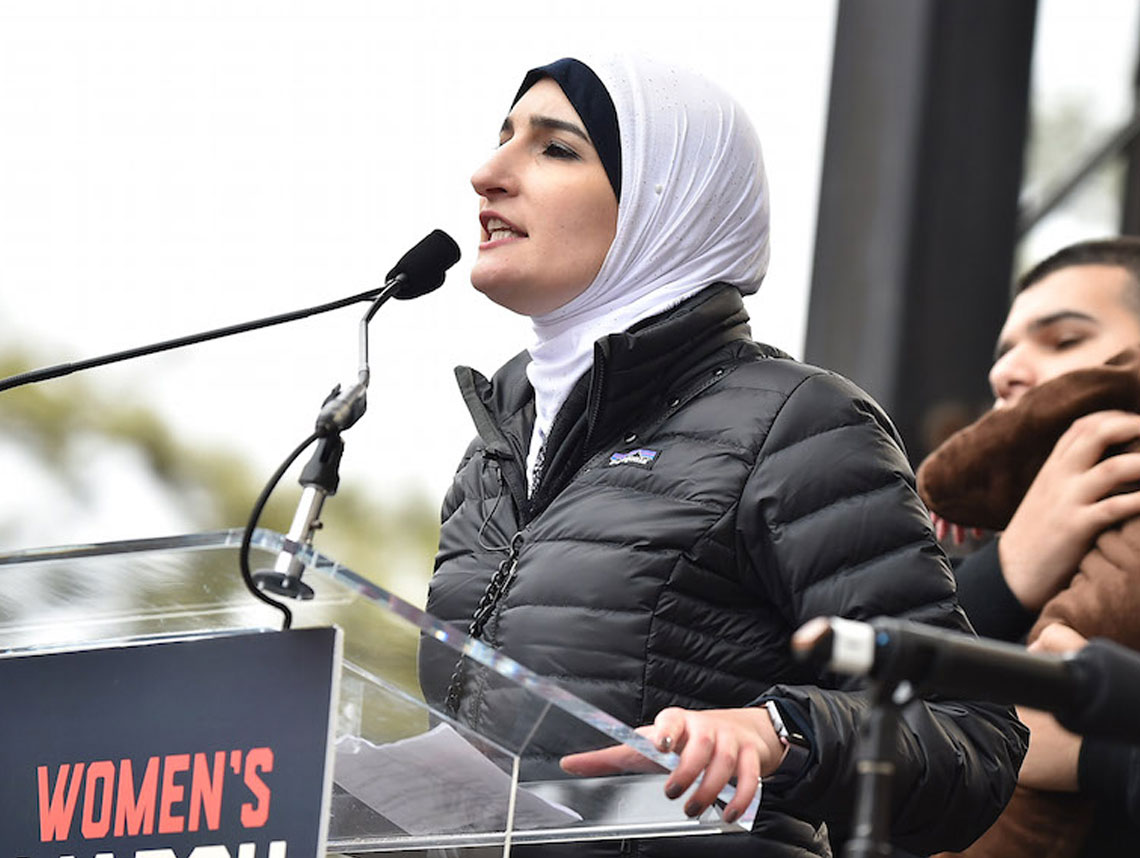
She was answered by Linda Sarsour, a Muslim-American activist and one of the organizers behind the Women’s March on Washington. In an interview with The Nation, Sarsour responded bluntly: “It just doesn’t make any sense for someone to say, ‘Is there room for people who support the state of Israel and do not criticize it in the movement?’ There can’t be in feminism. You either stand up for the rights of all women, including Palestinians, or none. There’s just no way around it.”
On one point, Sarsour is right: To believe in the rights of women is to believe in the rights of all women — including those in Sudan, Afghanistan and Saudi Arabia. A feminism that lacks inclusion is a flawed feminism. There’s just no way around it.
But many in our community only heard Sarsour say: “criticize Israel.” And so the debate descended into something vicious and misguided, helped in large part by The Nation’s deeply irresponsible headline — “Can You Be a Zionist Feminist? Linda Sarsour Says No” — and a reporter who was even more irresponsible. She offered Sarsour an unrestricted soapbox on which to air her views, without ever thinking to ask if she supports the same Jewish right to self-determination that Sarsour is seeking for the Palestinians.
I spent a few days thinking about why this little tempest matters, and you know what I concluded? It doesn’t.
“Basically, this is a conversation about theory,” Anat Hoffman, perhaps Israel’s most famous feminist, said when I reached her by phone. “The practical, immediate repercussions of this are zero.”
Talking is not especially useful to Hoffman, who is one of Israel’s leading activists. She is a founding member of the Women of the Wall movement, which seeks prayer equality for women at the Western Wall in Jerusalem, and the executive director of the Israel Religious Action Center, a legal advocacy arm pursuing gender equality, social justice and religious pluralism. Hoffman spends most of her time bringing lawsuits against the State of Israel, demonstrating that arguments about the definition of political movements are far less consequential than policy change.
If people like Sarsour count no Jewish Zionists among their friends or colleagues, it is virtually guaranteed they will never modify their views.
For women who work in the trenches of Israel’s justice movement, the tension between Zionism and feminism is nothing new. The Orthodox establishment within Israel’s government has precluded women from realizing their full rights since the country’s founding.
“What about the 50,000 women who cannot get divorced because there is no civil marriage or civil divorce in Israel? What about the gaps in salaries? What about domestic violence?” Hoffman said. “To the Jewish woman who says that for the first time she feels a tug between her Zionism and her feminism, I say: ‘Good morning, sister!’ ”
How one Muslim-American woman defines feminism, or Zionism, is irrelevant. Any thoughtful person can define his or her personal politics and has the right to set their own political priorities. What matters is that we stop instantly vilifying anyone and everyone with whom we don’t agree — whether within our own communities or outside of them.
“Zionism needs a good kick in the ass,” Hoffman said, “as long as there’s one condition: that you love Israel, that you are committed to the existence of Israel, and to the right of the Jewish people to have a sovereign state and self-determination. Then you can criticize Israel as much as you want.”
But what about people like Sarsour, who might not love Israel? Should we, as a community, even bother talking to her? Where do we draw the line?
“If you believe terrorizing innocent civilians is the way to achieve liberation, then that crosses my line,” Hoffman said. “Someone who believes the only way to go is to explode buses in Israel — he is my enemy.”
A shared premise of nonviolence is a reasonable rule of engagement. Better to engage — even our foes — than walk away from the table altogether, right? At least if we’re talking, there is hope our views will prevail over time, or that we’ll reach a compromise. After all, if people like Sarsour count no Jewish Zionists among their friends or colleagues, it is virtually guaranteed they will never modify their views.
Sarsour says she is committed to non-violence, but other aspects of her record are troubling. She fights on behalf of the oppressed but seems to have little regard for Jewish history. Nowhere is there a record of her support for the existence of Israel as a Jewish state, and she has tweeted that Zionism is “creepy” and akin to racism. Is it worth talking to her if she doesn’t support Israel’s right to exist? If she’s really an anti-Zionist activist disguised in social justice clothing?
“I believe in Sarsour’s right to self-determination and an independent state of her own,” Hoffman said. “And I would like you to find out if she believes in my right to [the same]. Because I have no other choice: Hebrew is my language and Jerusalem is my home. I have nowhere else to go.”
That’s a Zionist feminist talking.